Indiana might be known for cornfields and the Indy 500, but tucked away in its towns and cities are some of the most wonderfully weird museums you’ll ever encounter.
From antique fans to miniature houses, these spots celebrate the oddball and the obscure in ways that leave visitors scratching their heads and snapping photos.
Each museum tells a story that feels both deeply specific and surprisingly universal, proving that passion can turn any subject into something worth preserving.
Whether you’re a curious traveler or a local looking for something different, these seven Indiana museums offer experiences that are equal parts baffling and delightful.
They remind us that history isn’t just about grand monuments and famous battles; it’s also about the quirky collections that make us wonder, laugh, and say, “Why is this here?”
Get ready to explore the unexpected side of the Hoosier State, where everyday objects become treasures and niche interests find their perfect home.
These museums prove that sometimes the best adventures come from the places you least expect.
RV/MH Hall of Fame & Museum
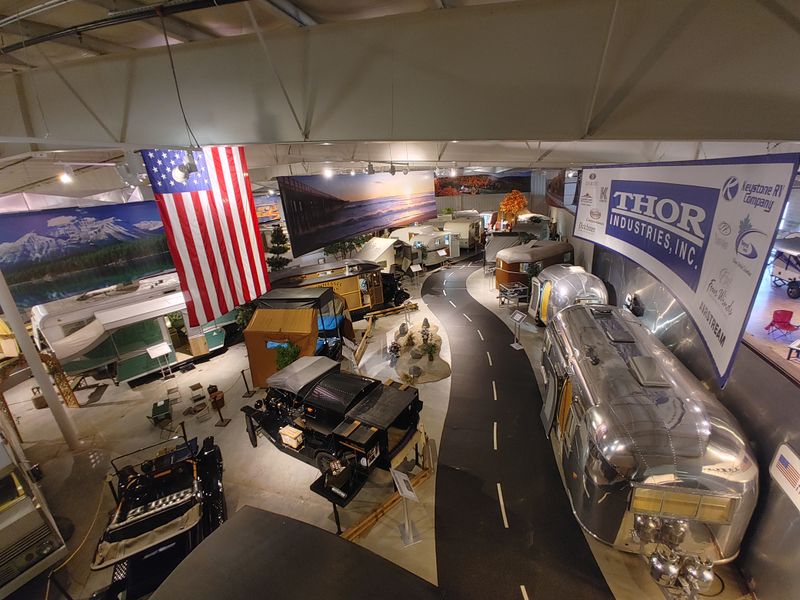
Elkhart calls itself the RV Capital of the World, and this museum at 21565 Executive Pkwy makes that claim impossible to ignore.
The moment you step inside, you’re surrounded by gleaming motorhomes, vintage trailers, and campers that span decades of American road-trip history.
Some look like they rolled straight out of a 1950s postcard, while others showcase cutting-edge technology that makes modern living on wheels feel like a luxury hotel experience.
What makes this place so fascinating is how it captures the evolution of American leisure and freedom.
Families have been hitting the open road in RVs for generations, and this museum honors that tradition with exhibits that feel both nostalgic and forward-thinking.
You’ll see how these vehicles transformed from basic travel necessities into mobile mansions complete with full kitchens, bathrooms, and entertainment systems.
The collection includes over 50 RVs and manufactured homes, each with its own story and design quirks.
Walking through them feels like stepping into different eras and lifestyles, from minimalist pop-up campers to sprawling fifth-wheels that could comfortably house a small family.
The museum also highlights the industry’s impact on Elkhart’s economy and culture, showing how one town became synonymous with an entire way of life.
Kids love exploring the various models and imagining their own cross-country adventures, while adults appreciate the craftsmanship and innovation on display.
There’s something deeply American about the RV lifestyle, the promise of adventure, the call of the open road, and the freedom to take your home wherever you go.
This museum celebrates all of that with enthusiasm and respect, making it a must-see for anyone who’s ever dreamed of life on wheels.
Antique Fan Museum
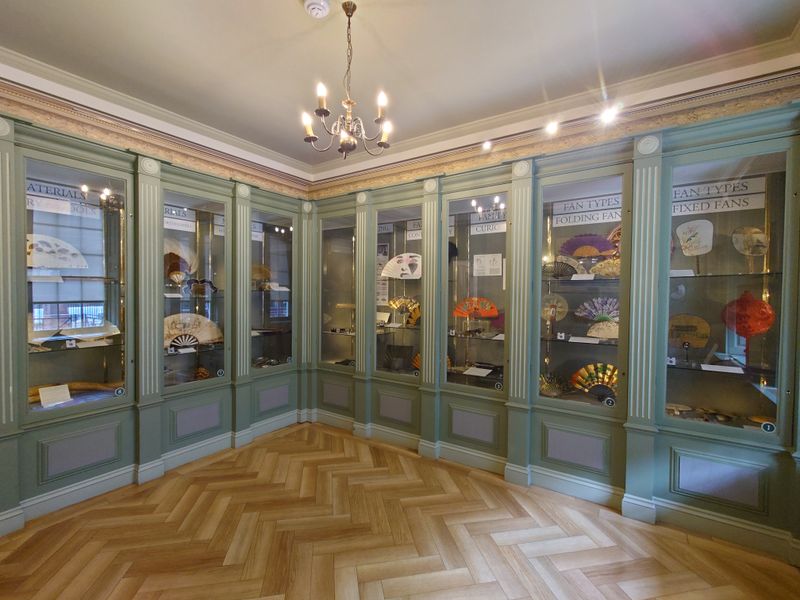
Most people never give their ceiling fan a second thought, but at 10983 Bennett Pkwy in Zionsville, fans take center stage in ways you never imagined.
This small but mighty museum houses one of the most comprehensive collections of antique fans in the country, with specimens dating back to the 1800s.
Each fan tells a story about how people kept cool before air conditioning became standard, and the ingenuity on display is genuinely impressive.
The collection features everything from ornate Victorian-era desk fans with intricate metalwork to massive industrial models that once cooled factories and department stores.
Some fans are hand-cranked, others are powered by early electric motors, and a few even run on water or kerosene.
The variety is stunning, and you quickly realize that fans were once status symbols and conversation pieces, not just functional appliances.
Owner Kurt House has spent years assembling this collection, driven by a passion that transforms the ordinary into the extraordinary.
He can tell you the history of each fan, how it worked, who might have owned it, and what innovations it represents.
His enthusiasm is contagious, and even skeptics find themselves drawn into the surprisingly fascinating world of vintage air circulation.
The museum operates by appointment, which adds to its charm and exclusivity.
It’s the kind of place that rewards curiosity and reminds us that every object has a history worth exploring.
Visitors leave with a newfound appreciation for the engineering and design that went into keeping people comfortable before modern conveniences.
It’s quirky, it’s niche, and it’s absolutely worth the visit for anyone who loves discovering hidden gems and unexpected stories.
Rotary Jail Museum
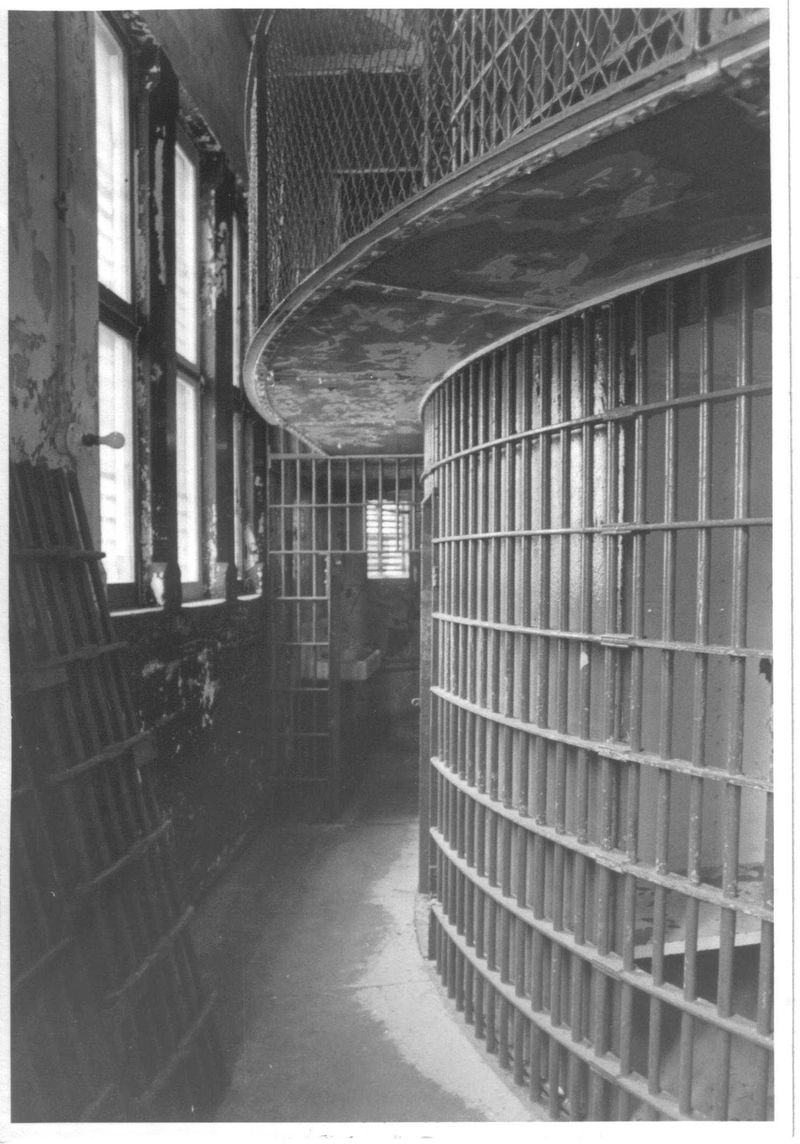
Picture a jail where the cells literally rotate like a lazy Susan, and you’ve just imagined the bizarre reality of the Rotary Jail Museum at 225 N Washington St in Crawfordsville.
Built in 1882, this architectural oddity was designed to maximize security with minimal staff by rotating an entire cell block to align individual cells with a single fixed opening.
Only a handful of these rotary jails were ever built, and this is one of the few that still exists today.
The concept sounds clever in theory, but in practice, it was a nightmare for both prisoners and guards.
The rotation mechanism was heavy and difficult to operate, often requiring multiple people to turn the massive steel cylinder.
Worse yet, prisoners risked serious injury if they had their hands or arms outside the bars when the rotation began.
Several injuries and at least one death were attributed to the rotating design, leading to its eventual abandonment.
Today, visitors can tour the jail and see the rotating mechanism up close, though it’s no longer operational for safety reasons.
The museum does an excellent job of explaining the jail’s history, the logic behind its design, and the harsh realities of 19th-century incarceration.
Standing inside the cell block and imagining it slowly turning is an eerie experience that brings history to life in a visceral way.
The building itself is a striking piece of Victorian architecture, with its distinctive cylindrical shape and red brick exterior.
It’s a monument to a failed experiment, but also a fascinating glimpse into how people once tried to solve problems with bold, unconventional ideas.
Whether you’re a history buff, an architecture enthusiast, or just someone who loves weird roadside attractions, the Rotary Jail Museum delivers an unforgettable experience that perfectly captures the spirit of quirky Indiana.
Museum of Miniature Houses
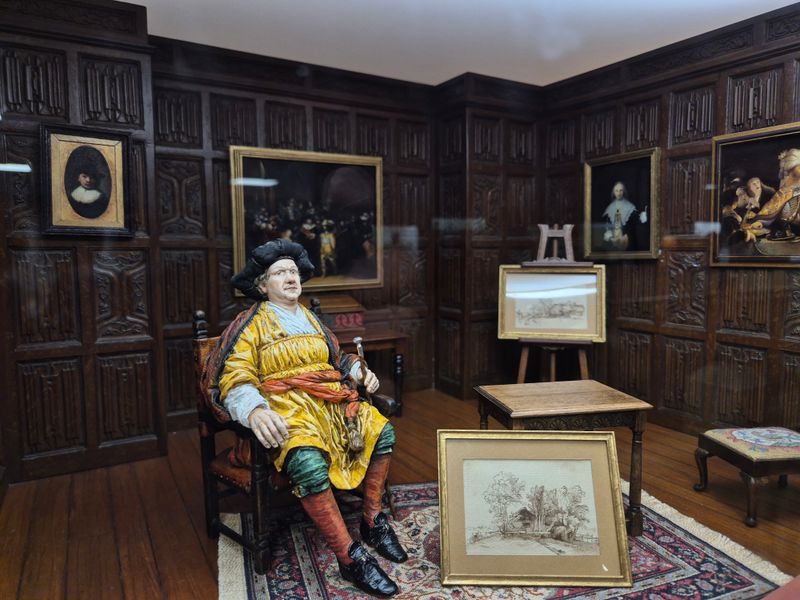
At 111 E Main St in Carmel, a world of tiny perfection awaits inside the Museum of Miniature Houses.
This enchanting collection features over 60 meticulously crafted dollhouses and miniature room settings, each one a work of art in its own right.
From grand Victorian mansions to cozy cottages and modern apartments, the level of detail in these miniatures is breathtaking, with tiny furniture, working lights, and even miniature artwork on the walls.
The museum showcases both antique dollhouses dating back to the early 20th century and contemporary creations by master artisans.
Some are historically accurate recreations of famous buildings, while others are whimsical fantasy structures that could only exist in miniature form.
Walking through the exhibits feels like being a giant peering into dozens of secret worlds, each one telling its own story through careful arrangement and exquisite craftsmanship.
What makes this museum special is how it celebrates both the artistry and the history of miniatures.
Dollhouses weren’t always children’s toys; many were created as teaching tools to show young girls how to manage a household, or as displays of wealth and status among the upper classes.
The museum explores these cultural dimensions while also highlighting the incredible skill required to create furniture, fixtures, and accessories at such a tiny scale.
Children are mesmerized by the miniature scenes, spending long minutes studying each room and discovering new details with every look.
Adults appreciate the artistry and often find themselves reminiscing about their own childhood dollhouses or marveling at the patience required to create such intricate pieces.
The museum also offers workshops and classes for those interested in learning miniature-making techniques, making it both an educational resource and a celebration of a unique art form that continues to captivate people of all ages.
International Circus Hall of Fame
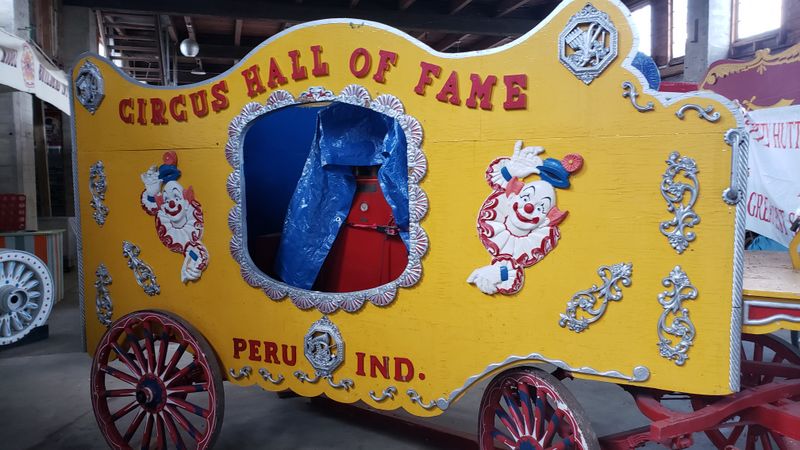
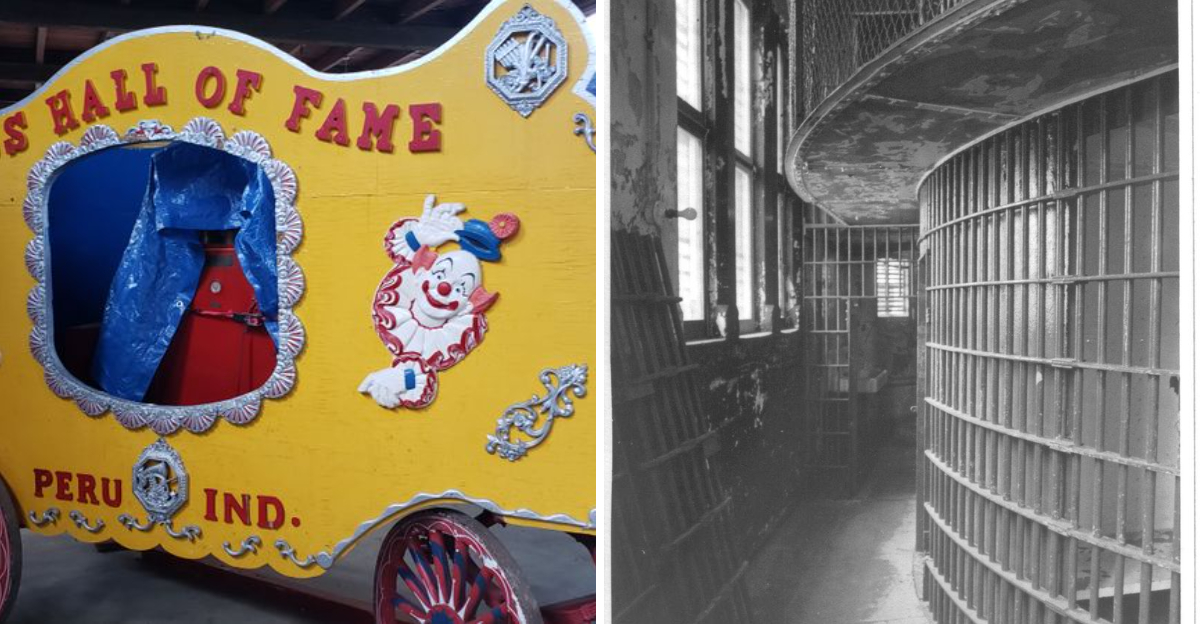
Peru, Indiana might seem like an unlikely circus capital, but at 3076 E Circus Ln, the International Circus Hall of Fame proves this small town has big-top credentials.
For decades in the late 1800s and early 1900s, Peru served as winter quarters for several major circuses, including the famous Hagenbeck-Wallace Circus.
The town’s railroad connections made it an ideal base for circus operations, and the legacy of those glory days lives on in this colorful museum.
The collection includes vintage circus wagons, costumes, posters, photographs, and equipment that tell the story of American circus history.
You’ll see elaborately painted parade wagons that once rolled through small-town streets, announcing the circus’s arrival with fanfare and excitement.
There are costumes worn by famous performers, props from legendary acts, and artifacts that capture the romance and danger of circus life when it was America’s premier form of entertainment.
During the summer months, the museum comes alive with live performances and demonstrations that showcase traditional circus skills.
Visitors might see juggling, acrobatics, clowning, or even animal training demonstrations that honor the circus tradition while meeting modern ethical standards.
These performances add an interactive element that transforms the museum from a static collection into a living celebration of circus arts.
The Hall of Fame portion honors circus legends who made significant contributions to the art form, from daredevil aerialists to innovative animal trainers and beloved clowns.
Reading their stories provides insight into the dedication, skill, and showmanship required to succeed in the circus world.
The museum also doesn’t shy away from discussing the challenges and controversies that have shaped circus history, including changing attitudes toward animal acts and the decline of traveling circuses in the modern era.
It’s a nostalgic tribute to a uniquely American entertainment tradition.
Indiana Medical History Museum
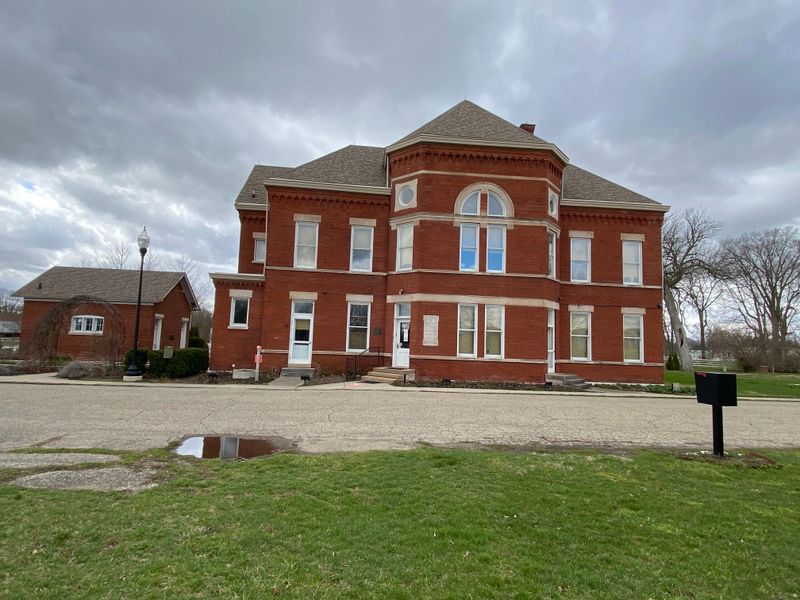
Stepping into the Indiana Medical History Museum at 3270 Kirkbride Way in Indianapolis feels like traveling back to a time when medicine was equal parts science and mystery.
Located in the Old Pathology Building of the former Central State Hospital, this museum preserves the original laboratories, lecture halls, and research spaces used by physicians and scientists in the late 1800s and early 1900s.
The building itself is a stunning example of Victorian medical architecture, with its distinctive red brick exterior and period details intact.
The laboratories are the real stars here, preserved exactly as they were when doctors conducted groundbreaking research into mental illness, infectious diseases, and pathology.
Vintage microscopes, glass specimen jars, medical instruments, and handwritten research notes create an atmosphere that’s both fascinating and slightly unsettling.
You can almost imagine white-coated physicians hunched over their workbenches, peering into microscopes and documenting their findings in careful script.
The museum doesn’t romanticize medical history; it presents an honest look at how far medicine has come and how much patients endured before modern treatments and ethical standards.
Exhibits explore topics like early psychiatric care, surgical techniques, and the development of public health initiatives in Indiana.
Some displays are sobering reminders of outdated practices and beliefs, while others highlight genuine innovations that laid the groundwork for modern medicine.
Tours are led by knowledgeable guides who provide context and answer questions, making the experience both educational and engaging.
The museum also features a beautiful medicinal garden where plants used in traditional remedies grow, connecting visitors to the natural origins of many pharmaceuticals.
This isn’t your typical sanitized museum experience; it’s raw, authentic, and deeply respectful of the patients and practitioners whose stories it preserves.
For anyone interested in medical history, architecture, or the evolution of healthcare, this hidden gem offers an unforgettable journey into Indiana’s medical past.
Indy’s Teeny Statue of Liberty Museum
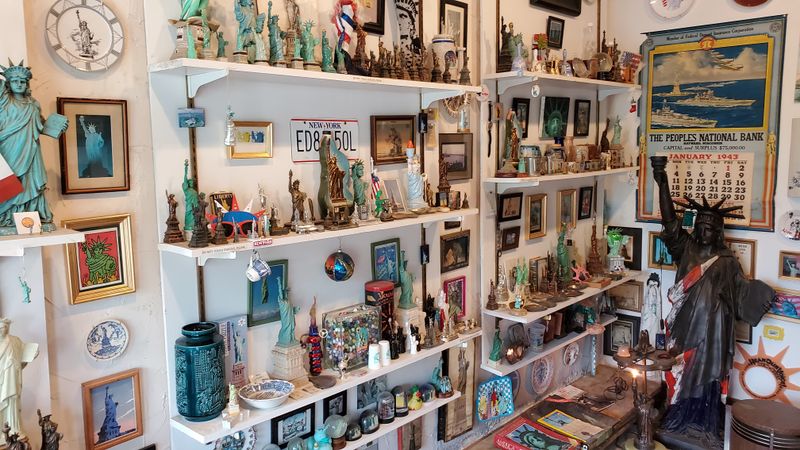
At 1125 E Brookside Ave inside the Factory Arts District at the Circle City Industrial Complex, you’ll find what might be Indiana’s smallest and most charming museum.
Indy’s Teeny Statue of Liberty Museum is exactly what it sounds like, a collection of miniature Lady Liberty replicas ranging from a few inches to a few feet tall.
The museum celebrates America’s most iconic symbol through the lens of collectibles, souvenirs, and folk art, creating a surprisingly diverse and delightful display.
The collection includes statues made from every imaginable material, ceramic, plastic, metal, wood, glass, and even chocolate molds.
Some are vintage souvenirs from New York City, while others are quirky interpretations created by artists who reimagined Liberty in unexpected ways.
There are snow globes, keychains, piggy banks, and decorative pieces that span decades of American kitsch and craftsmanship.
Each piece tells a story about how the Statue of Liberty has been commercialized, celebrated, and interpreted over the years.
What makes this museum special is its unpretentious celebration of everyday Americana.
These aren’t priceless artifacts or museum-quality sculptures, they’re the kinds of objects ordinary people bought as souvenirs or gifts, yet together they form a fascinating commentary on American identity and iconography.
The museum’s small scale and informal atmosphere make it feel like you’re visiting a friend’s quirky collection rather than a formal institution, which only adds to its charm.
The Factory Arts District itself is worth exploring, with studios, galleries, and creative spaces that showcase Indianapolis’s thriving arts scene.
The Teeny Statue of Liberty Museum fits perfectly into this eclectic environment, embodying the spirit of finding beauty and meaning in unexpected places.
It’s free to visit, though donations are appreciated, making it an accessible and fun stop for families, tourists, or locals looking for something wonderfully weird.
This tiny museum proves that you don’t need a massive building or expensive collection to create something memorable and meaningful.
Dear Reader: This page may contain affiliate links which may earn a commission if you click through and make a purchase. Our independent journalism is not influenced by any advertiser or commercial initiative unless it is clearly marked as sponsored content. As travel products change, please be sure to reconfirm all details and stay up to date with current events to ensure a safe and successful trip.
