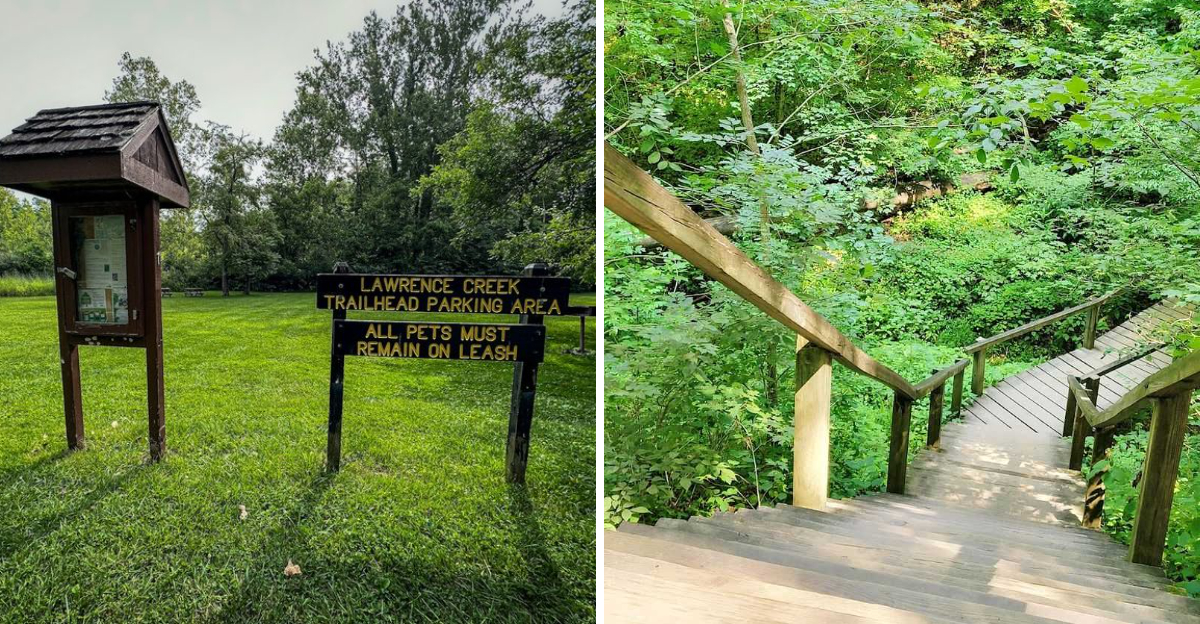
I have walked a lot of Indiana trails in every season, but nothing quite compares to the moment spring finally shows up and changes everything. The bare branches fill in overnight, wildflowers push through the forest floor, and streams that were frozen solid start rushing again with real energy.
Trails you thought you knew by heart suddenly feel brand new. Spring in Indiana is short and sweet, which makes it worth chasing.
These ten paths transform in ways that honestly surprised me the first time I experienced them. Whether you are a casual weekend hiker or someone who logs serious miles, each of these spots offers something worth lacing up your boots for this season.
1. Trail #3 (The Ladders Trail), Turkey Run State Park
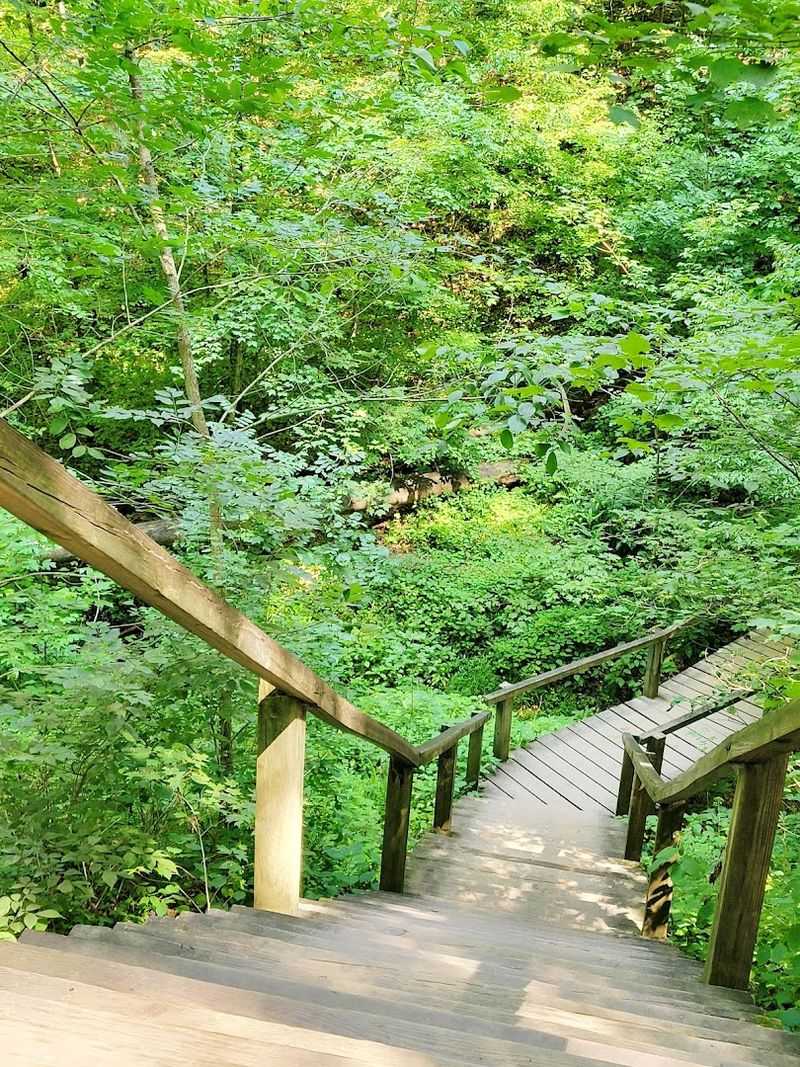
Turkey Run is one of those places where the geology does the talking, and Trail 3 is where that conversation gets loudest. The Ladders Trail winds through deep, narrow sandstone canyons carved by Sugar Creek over thousands of years.
In winter, the canyon walls feel cold and stripped bare. But when spring arrives, ferns uncurl along the ledges, moss turns an electric green, and the whole gorge feels like it woke up overnight.
The trail earns its name from the wooden ladders you use to climb in and out of the canyon sections. It is rated moderately difficult, so expect some scrambling, creek crossings, and uneven footing.
Spring runoff means Sugar Creek runs high and fast, which adds drama to every crossing. Waterproof boots are a genuinely good idea here.
Wildflowers like trout lily and spring beauty carpet the forest floor in April and early May. The canyon walls trap moisture and cool air, creating a microclimate that keeps blooms fresh longer than on open trails.
After your hike, the Turkey Run Inn at 8121 East Park Rd, Marshall, IN 47859 serves a solid meal and sits right inside the park. Plan to arrive early on weekends because this trail fills up fast once the weather turns warm.
2. Cowles Bog Trail, Indiana Dunes National Park
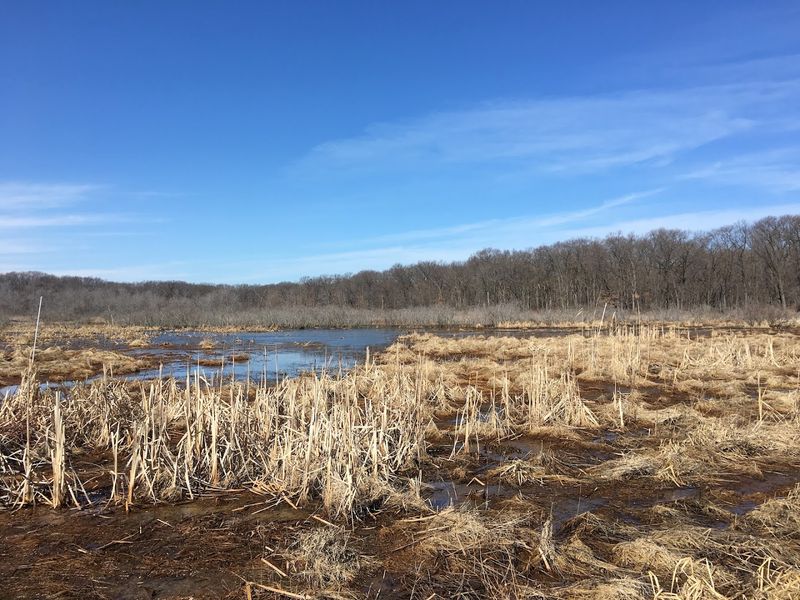
Most people come to Indiana Dunes for the beach, but Cowles Bog Trail quietly offers one of the most ecologically rich hikes in the entire state. Named after botanist Henry Chandler Cowles, this trail loops through wetlands, oak savannas, and forested dunes that shift dramatically with the seasons.
Spring is when it earns its reputation.
By late April, the bog areas fill with skunk cabbage and marsh marigold while the upland sections burst with trillium and wild geranium. The trail covers roughly 4.7 miles and involves some elevation change as it climbs over wooded dunes before dropping back down toward the wetlands.
That contrast between sandy upland and soggy lowland keeps the hike interesting from start to finish.
Birding here in spring is exceptional. Warblers move through in waves during migration, and the dense shrubby areas near the bog hold secretive species that reward patient observers.
Bring binoculars and plan for a slow pace if birds are your thing. The trailhead at 1450 North Mineral Springs Rd, Dune Acres, IN 46304 has limited parking, so arriving before 9 a.m. on weekends is smart.
After your hike, the nearby town of Chesterton has several good coffee shops and the Duneland Harvest Cooperative for local snacks and provisions worth checking out.
3. Trail 8 (Ogle Lake Loop), Brown County State Park
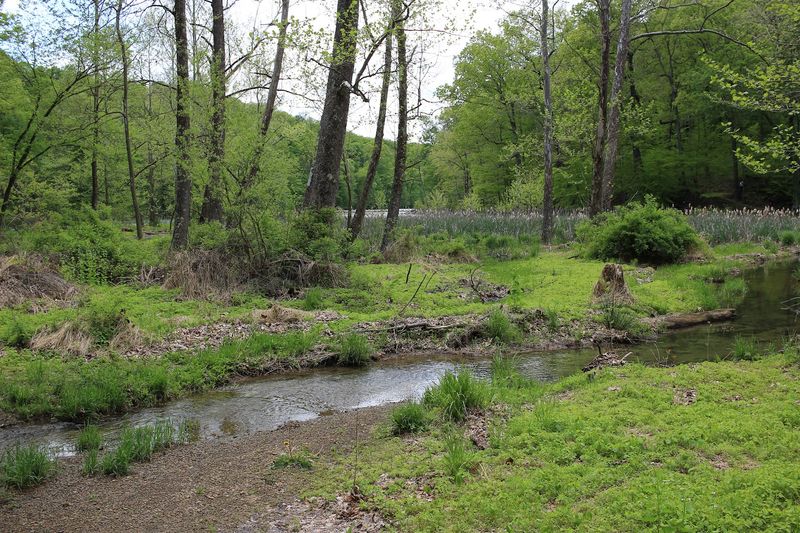
Brown County State Park is famous for fall color, and rightfully so, but Trail 8 around Ogle Lake makes a strong case for spring being the better season to visit. The loop is roughly three miles and stays close to the water for much of its length, giving you constant views across the lake as the forest fills back in around you.
Spring mornings here have a particular quality. Mist sits on the water, wood thrushes call from the hillsides, and the path is soft underfoot from recent rain.
The trail passes through mixed hardwood forest where redbud and dogwood bloom in early April, painting the understory pink and white before the full canopy closes in. It is the kind of color that sneaks up on you.
The loop connects to other trails in the park, so you can extend your hike if energy allows. Brown County State Park also has a saddle barn, fire towers, and the Abe Martin Lodge at 1810 State Road 46 East, Nashville, IN 47448, where you can grab breakfast before heading out on the trail.
The nearby town of Nashville, Indiana, is packed with galleries, bakeries, and small shops worth browsing after a morning hike. Spring weekends here fill up quickly, so booking a cabin or lodge room early if you want to stay overnight is a smart move.
4. Hemlock Cliffs Trail, Hoosier National Forest
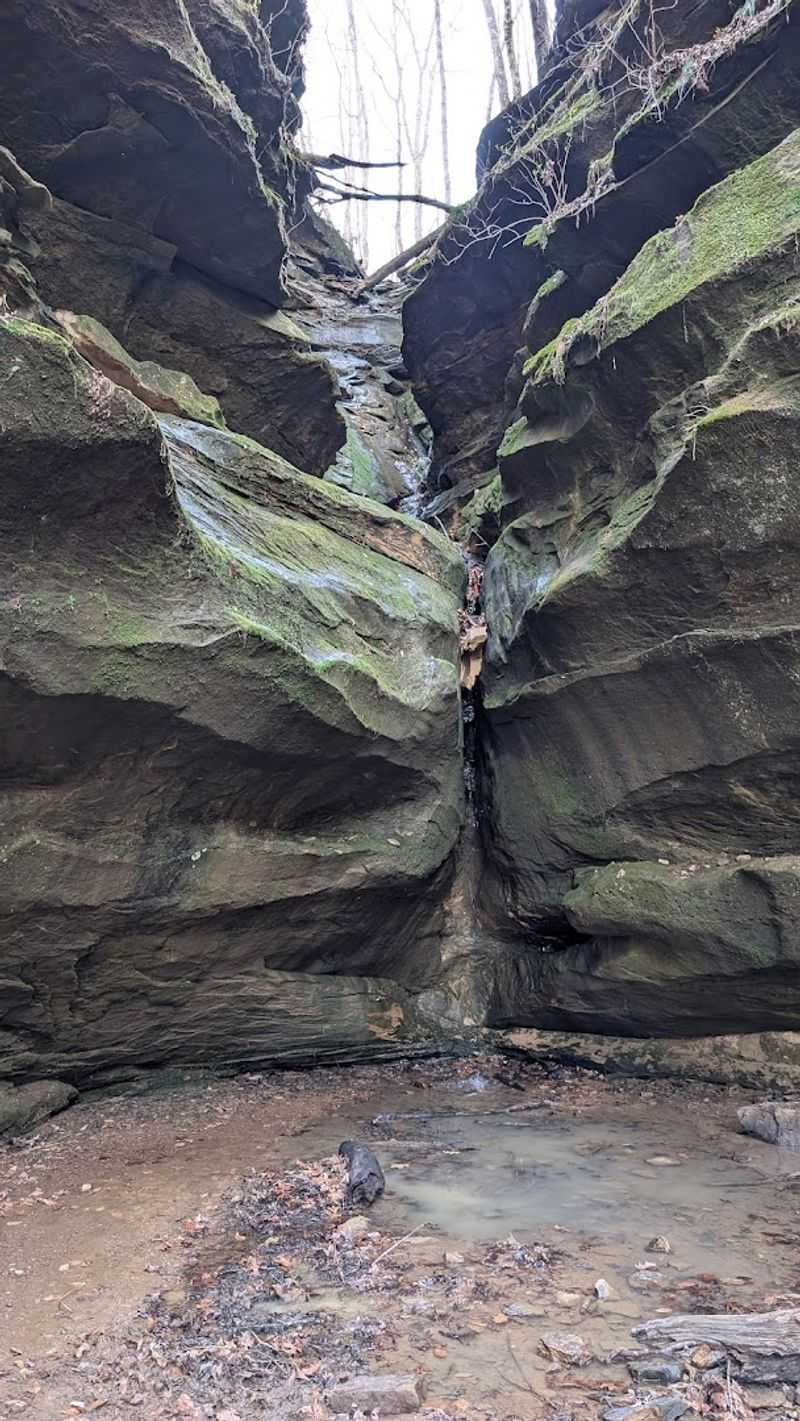
Hemlock Cliffs is the kind of place that feels like it belongs in the Appalachians, not southern Indiana. The trail drops into a horseshoe-shaped sandstone canyon where hemlocks cling to the cliff faces and seasonal waterfalls trickle down the walls after spring rains.
It is a short hike at just under two miles, but the scenery packs in more than trails twice its length.
Spring is when the waterfalls actually flow with real force. After a good rain in April or early May, water sheets over the sandstone ledges and fills the canyon with sound.
The hemlock trees stay green year-round, but the surrounding hardwoods leafing out in spring soften the canyon walls and add layers of color that winter simply cannot offer. Wildflowers like wild columbine and hepatica appear along the trail edges in early spring.
The canyon floor stays cool and shaded even on warm days, making this a comfortable midday hike when other trails bake in the sun. The trail involves some rock scrambling and uneven footing near the canyon bottom, so sturdy shoes are worth wearing.
The trailhead is off National Forest Rd near English, IN 47118, and the area is remote enough that you should bring water and a snack. Cell service is limited out here.
Orangeville Rise of the Lost River is a fascinating natural spring about 20 minutes away and worth combining into a day trip.
5. Ed Dailey Nature Trail, Cataract Falls SRA
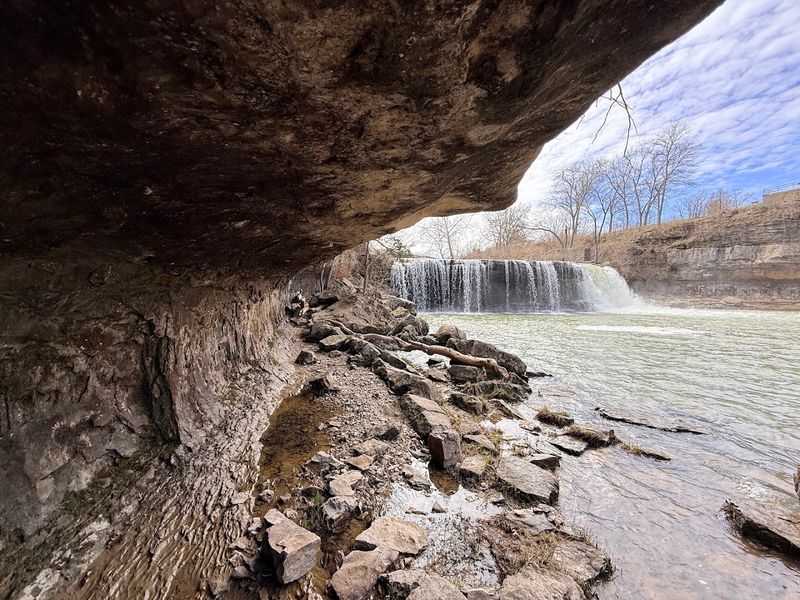
Cataract Falls is home to Indiana’s largest waterfall by volume, and the Ed Dailey Nature Trail puts you right in the middle of the action. The trail loops through the recreation area near both the upper and lower falls, and in spring, when Mill Creek runs full from snowmelt and rain, the falls are genuinely thunderous.
You feel the mist from the overlooks before you even see the water.
The trail itself is relatively easy and well-maintained, making it accessible for families and casual hikers. What changes in spring is the energy of the place.
The creek corridor fills with wildflowers, including wild phlox and Virginia bluebells, and the hillsides above the trail turn green almost overnight. Birds are active and vocal, and the sound of rushing water follows you for most of the loop.
The upper falls at Cataract drop about 18 feet and stretch nearly 90 feet wide, which is an impressive sight even in a dry year. In a wet spring, the whole scene is something else entirely.
The trailhead is accessible from 2605 N Cataract Rd, Spencer, IN 47460. Owen County is also home to the historic Cataract covered bridge nearby, which makes for a pleasant short detour after your hike.
Bring a picnic because the grounds along the creek have several good spots to sit and eat with the falls as your backdrop.
6. Trail 7, Clifty Falls State Park
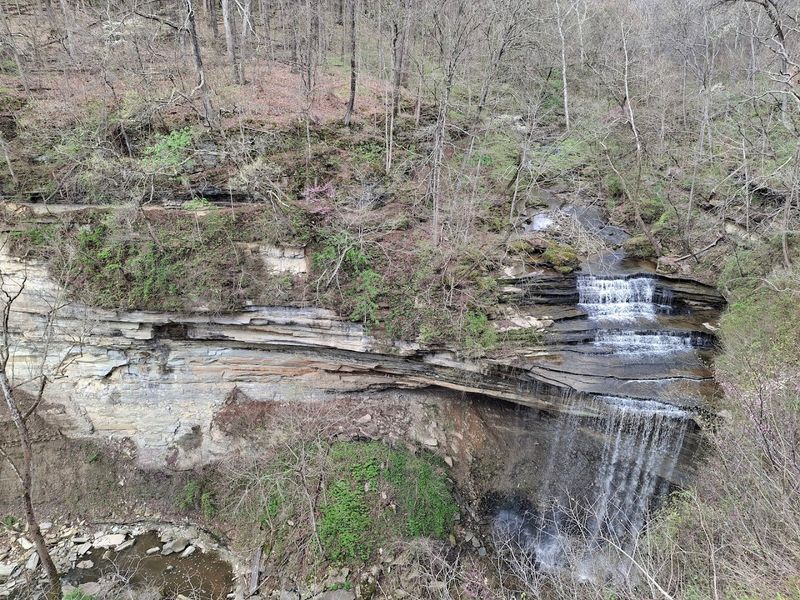
Clifty Falls State Park sits above the Ohio River near Madison, and its trail system cuts through some of the most dramatic gorge terrain in the state. Trail 7 takes you down into the Clifty Creek canyon, where multiple waterfalls drop over layered limestone and shale.
In spring, those falls run at their fullest, and the canyon fills with the kind of cool, damp air that makes you feel like you have stepped into another world.
The geology here is fascinating even if you are not a rock enthusiast. The canyon walls expose hundreds of millions of years of sediment, and fossil hunters sometimes find ancient marine creatures pressed into the stone.
Spring brings that geology to life with a green frame of ferns, mosses, and flowering plants that soften the hard edges of the rock.
Trail 7 is considered one of the more challenging routes in the park due to steep sections and creek crossings, but the payoff is worth every step. The trail is roughly 2.5 miles and connects to other routes if you want a longer day.
The Clifty Inn at 2221 Clifty Drive, Madison, IN 47250 is a classic park lodge with a restaurant and sweeping views of the Ohio River valley. The town of Madison itself is a beautifully preserved 19th-century river town with great restaurants and a lively farmers market on weekends in spring.
7. Lawrence Creek Trail, Fort Harrison State Park
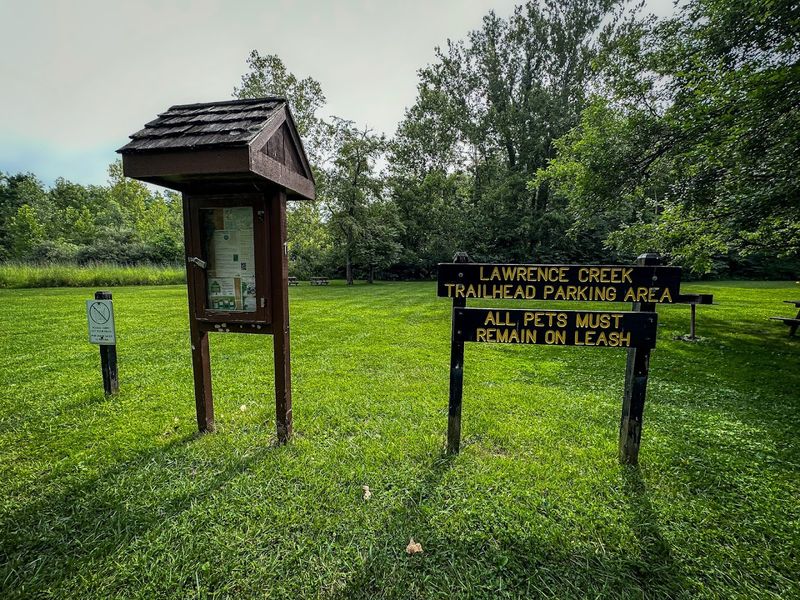
Fort Harrison State Park sits inside Indianapolis city limits, which makes it one of the most surprising nature escapes in the state. The Lawrence Creek Trail follows the creek corridor through mature hardwood forest, and in spring it becomes one of the best wildflower walks in central Indiana.
Virginia bluebells bloom in dense patches along the floodplain in April, turning the forest floor into something that does not look quite real.
The trail is relatively flat and easy, which makes it popular with families, dog walkers, and people who want a genuine nature experience without a long drive. Spring mornings here are especially rewarding because the creek reflects the new green canopy and songbirds are everywhere.
The bluebell bloom typically peaks in mid-April and lasts only a couple of weeks, so timing matters if that is your goal.
The park also has a disc golf course, a historic golf course, and the Harrison House Suites, which is a beautifully restored 1906 officers quarters building located at 6000 N Post Rd, Indianapolis, IN 46216. The Garrison restaurant inside the park serves food in a setting that feels far removed from the surrounding city.
For a longer day, the nearby Geist Reservoir area has additional trails and waterfront views worth exploring. Fort Harrison is proof that you do not need to drive hours to find a meaningful spring hike in Indiana.
8. Trail #1, Shades State Park
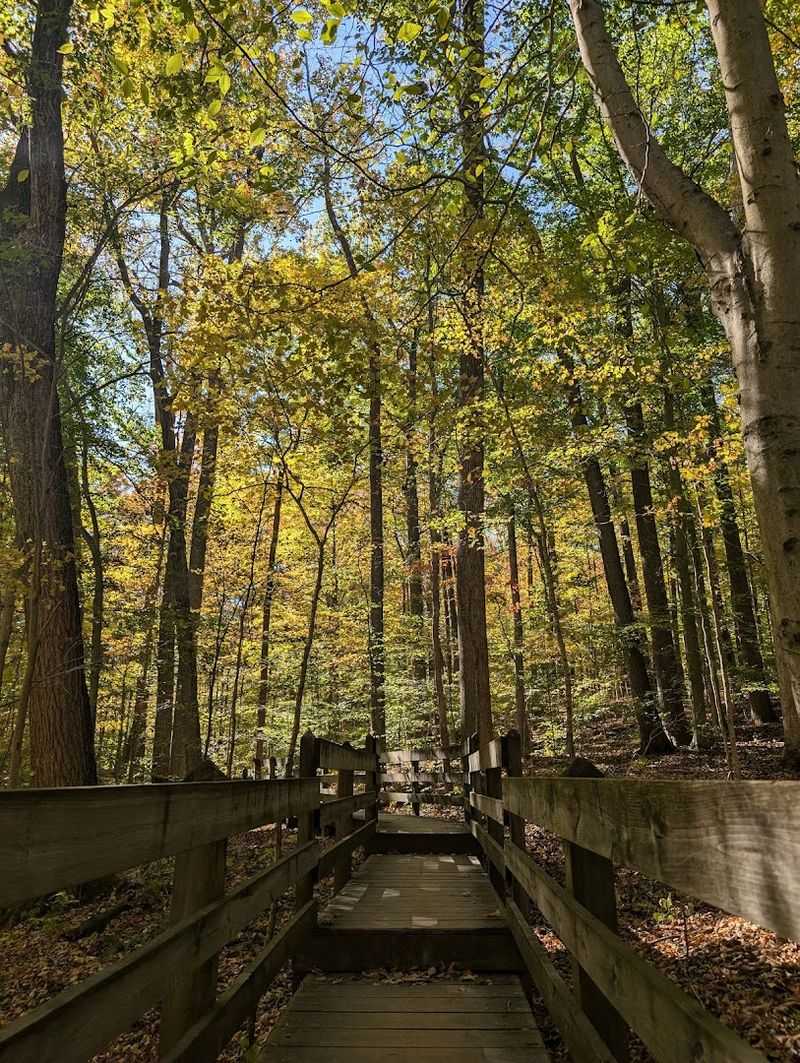
Shades State Park is often called the little sister to Turkey Run, but anyone who has spent time on Trail 1 knows it holds its own. The trail descends into a series of narrow sandstone canyons cut by Sugar Creek and its tributaries, and the walls rise so high in some sections that the sky shrinks to a ribbon above you.
Spring is when those walls come alive with dripping water, new ferns, and the smell of wet stone and earth.
Trail 1 covers roughly three miles and involves some challenging terrain including ladder climbs, canyon squeezes, and creek crossings. The canyons here have names like Devil’s Punch Bowl and Shades Canyon, which give you a sense of the character of the landscape.
After heavy spring rains, waterfalls appear on the canyon walls that are completely absent in drier months, making each visit feel a little different.
The park is less crowded than Turkey Run, which is reason enough to make the trip. Wildflowers bloom along the upland sections of the trail in late April, and the forest canopy is at its most beautiful in that brief window when the leaves are still small and the light filters through in golden sheets.
The park entrance is at 7751 S 890 W, Waveland, IN 47989. Nearby Crawfordsville has the Ben-Hur Museum and several good local diners worth stopping at on your way home.
9. Falls Canyon Trail (Trail 3), McCormick’s Creek State Park
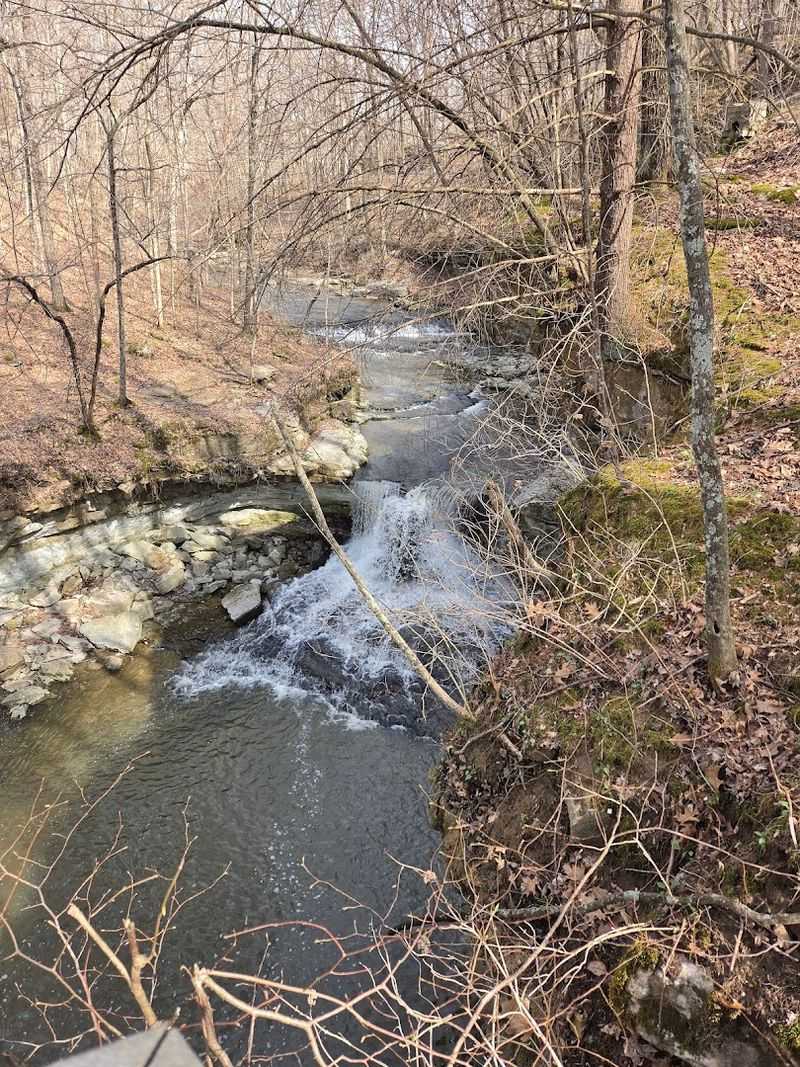
McCormick’s Creek holds a special place in Indiana history as the state’s first state park, opened in 1916. Trail 3 follows McCormick’s Creek through a limestone canyon to the falls, and the walk is short enough that almost anyone can do it.
What makes spring remarkable here is the combination of the rushing creek, the blooming forest above the canyon walls, and the way the limestone glows almost white against all that new green.
The falls themselves drop about 20 feet into a bowl-shaped basin, and after spring rains they roar with surprising force for a creek of this size. The canyon walls are draped in moss and studded with ferns, and wildflowers like wild ginger and trout lily appear in the shadier sections of the trail.
It is a genuinely pretty walk even on an overcast day.
The trail connects to the broader trail network in the park, so you can extend your visit by looping through the upland forest sections where the views open up in spring before the full canopy closes in. The Canyon Inn at 250 McCormick’s Creek Park Rd, Spencer, IN 47460 is a historic park lodge with a restaurant that serves hearty meals and sits right at the park entrance.
The town of Spencer nearby has a charming courthouse square with small shops and a bakery worth visiting. McCormick’s Creek is easy to pair with Cataract Falls for a full day of waterfall chasing in Owen County.
10. Paul H. Douglas (Miller Woods) Trail, Indiana Dunes National Park
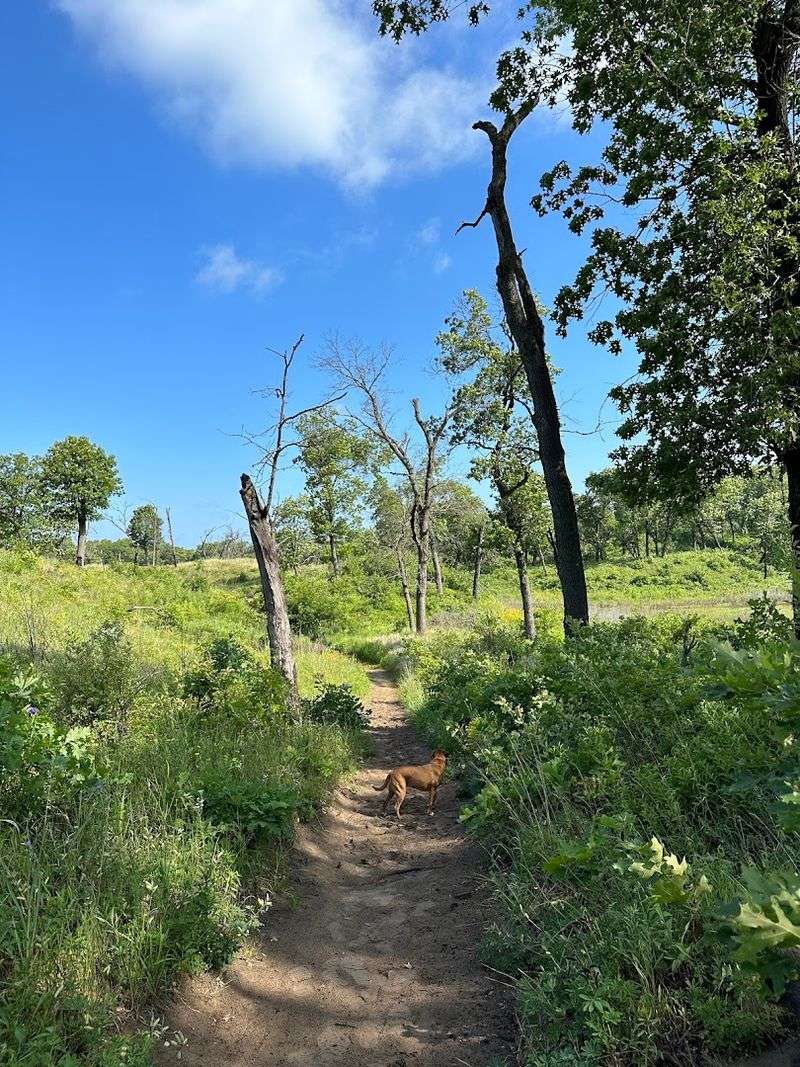
Miller Woods is one of those places that surprises people who expect Indiana Dunes to be all beach and sand. The Paul H.
Douglas Trail winds through a rare interdunal wetland and oak savanna ecosystem that transforms spectacularly in spring. Named after the late U.S.
Senator who championed the creation of the national lakeshore, the trail feels like a tribute to how much can be protected when someone fights hard enough for it.
The route covers about three miles and passes through open sandy areas, wet swales, and shaded oak groves. In spring, the wetland sections fill with water and bloom with marsh marigold and blue flag iris, while the oak savanna floors light up with puccoon and prairie smoke.
These are plants you simply do not see on most Midwest trails, which makes this hike feel genuinely distinctive.
The trail ends near Lake Michigan, where you get a wide open view of the water and the Chicago skyline across the lake on clear days. That combination of rare plant communities, Great Lakes shoreline, and urban horizon is unlike anything else in Indiana.
The trailhead is at 100 North Lake St, Gary, IN 46403. The Indiana Dunes Visitor Center in Porter is about 20 minutes east and worth stopping at for maps and current wildflower reports.
Spring migration makes this trail a top birding destination too, so binoculars are always a good idea here.
Dear Reader: This page may contain affiliate links which may earn a commission if you click through and make a purchase. Our independent journalism is not influenced by any advertiser or commercial initiative unless it is clearly marked as sponsored content. As travel products change, please be sure to reconfirm all details and stay up to date with current events to ensure a safe and successful trip.
