
Indiana has a reputation for farmland, basketball, and small-town charm, but hidden across the Hoosier State are some seriously strange attractions that make visitors do a double-take.
Locals pass these oddities on their daily commutes without batting an eye, treating them as just another part of the landscape.
Tourists, however, pull over with cameras ready, eager to snap photos of things they never expected to find in the Midwest.
From bizarre roadside landmarks to quirky museums, Indiana is full of surprises that challenge what people think they know about this often-underestimated state.
These seven places showcase the weird, wonderful, and wonderfully weird side of Indiana that residents have grown to love and visitors never forget.
Whether you’re planning a road trip or just curious about the strange corners of America, these spots prove that Indiana has plenty of personality hiding in plain sight.
Get ready to explore the unusual, the unexpected, and the unforgettable.
World’s Largest Ball of Paint

At 10696 North County Road 200 West in Alexandria sits a baseball that has been continuously painted since 1977, transforming into a massive sphere weighing thousands of pounds.
Mike Carmichael started this project in his barn as a simple experiment, and decades later, it has become one of Indiana’s most peculiar roadside attractions.
Visitors from around the world have added their own layer of paint, making this a truly collaborative work of art that grows heavier and rounder with each passing year.
The ball started as an ordinary baseball but now measures several feet in diameter, covered in more than 26,000 coats of paint in every color imaginable.
Each layer tells a story, representing different people, events, and moments captured in time.
The Carmichael family welcomes guests to their property, allowing them to brush on their own coat and become part of this ongoing project.
What makes this attraction so memorable is its simplicity and the dedication required to maintain it for so many years.
There’s no admission fee, no gift shop, just a genuine family sharing their quirky passion with anyone curious enough to visit.
Kids especially love the idea that they can contribute to something that will last long after they leave.
Locals drive past the property without giving it much thought, knowing it’s just Mike’s ball getting bigger.
But for tourists, seeing this enormous painted sphere in person is an experience that photos can’t quite capture.
The texture, the weight, and the sheer absurdity of it all make this a must-see stop on any Indiana road trip focused on the unusual and unexpected.
Grave in the Middle of the Road
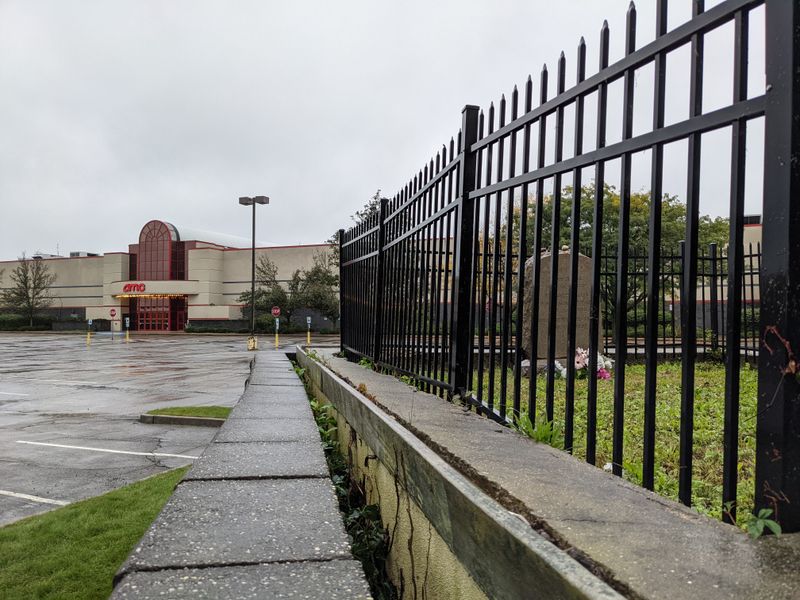
Nancy Kerlin Barnett’s grave sits directly in the middle of County Road 400 South in Franklin, forcing drivers to navigate around it every single day.
Legend says that her husband promised she would never be moved from her resting place, and when the county wanted to build a road through their property, the family held firm.
Today, her tombstone remains exactly where it was placed in 1831, surrounded by pavement and protected by a small fence.
The grave has become a local landmark, with residents treating it as just another quirk of their hometown.
They slow down, veer left or right, and continue on their way without much fanfare.
Tourists, however, find it both fascinating and eerie to see a burial site integrated so literally into daily life.
Stories about why the grave was never moved vary depending on who you ask.
Some say the family refused to sell the land, while others claim supernatural events convinced workers to abandon plans to relocate the remains.
Whatever the truth, the grave has remained untouched for nearly two centuries, a testament to the stubbornness of one family and the respect of the community.
Visiting the grave requires careful attention to traffic, as it sits on an active road with no shoulder or parking area nearby.
Many people snap a quick photo from their car window or pull over briefly to read the weathered inscription.
It’s a strange, sobering reminder that history doesn’t always make room for modern convenience, and sometimes, tradition wins out over progress in the most unexpected ways.
The Courthouse Tree

A large tree grows directly from the roof of the Decatur County Courthouse at 150 Courthouse Square in Greensburg, defying expectations and puzzling visitors since the late 1800s.
No one planted it there intentionally; it simply sprouted from a seed that somehow lodged itself in the tower and found enough moisture and nutrients to thrive.
Over the decades, the tree has become the town’s most famous feature, appearing on postcards, tourism brochures, and countless social media posts.
Locals have long accepted the tree as part of their courthouse’s character, though experts have debated whether its roots could eventually damage the historic building.
Multiple trees have grown from the tower over the years, with the current one being a descendant of earlier specimens that died or were removed.
The tree’s survival in such an unlikely location has made it a symbol of resilience and the unexpected beauty that can emerge from strange circumstances.
Tourists often arrive in Greensburg specifically to see the courthouse tree, circling the building to get the best angle for photographs.
The sight of green branches sprouting from a stone tower high above the street is both delightful and slightly unsettling, challenging assumptions about where trees can and should grow.
The town embraces its unusual claim to fame, hosting festivals and events that celebrate the tree’s enduring presence.
For residents, it’s just another day in Greensburg, but for visitors, it’s a reminder that nature has a way of surprising us in the most unlikely places, turning an ordinary government building into an extraordinary landmark that captures imaginations and refuses to be ignored.
Old Ben and the Giant Sycamore Stump
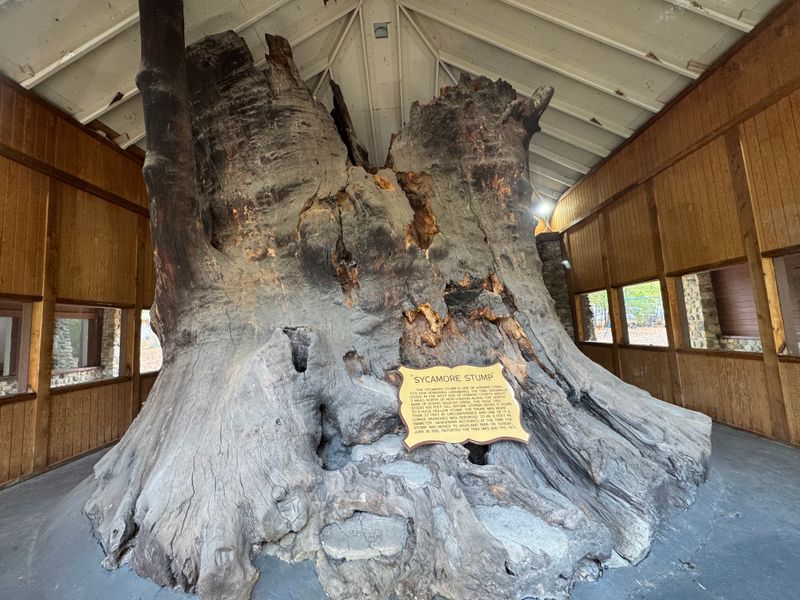
Inside Highland Park at 1402 W. Defenbaugh Street in Kokomo stands a massive sycamore tree stump that once held the title of the largest tree east of the Mississippi River.
Old Ben, as the tree was affectionately known, measured over 50 feet in circumference before it was cut down in 1915 after a severe storm damaged it beyond recovery.
The stump was preserved and moved to the park, where it remains a curious monument to natural history and local pride.
Next to the stump sits a stuffed Hereford steer also named Old Ben, who lived from 1902 to 1910 and weighed nearly 4,000 pounds.
Together, these two Old Bens create one of Indiana’s strangest museum displays, combining botanical and agricultural history in a single exhibit.
The pairing feels random to outsiders but makes perfect sense to Kokomo residents, who view both as important pieces of their heritage.
The tree stump itself is enormous, hollowed out by time and decay but still impressive in its sheer size.
Visitors can walk around it, touch its weathered surface, and imagine what the tree looked like when it towered over the landscape.
Children especially enjoy climbing on the stump, turning it into an impromptu playground that connects them to the past.
For locals, Old Ben and his bovine companion are just part of the park scenery, barely warranting a second glance during their daily walks.
Tourists, however, find the combination of giant tree and giant cow both hilarious and oddly touching, a celebration of the bigger-than-life characters that once defined rural Indiana and continue to capture imaginations decades after their time.
Indiana Medical History Museum

Located at 3270 Kirkbride Way in Indianapolis, the Indiana Medical History Museum occupies the old pathology building of what was once Central State Hospital, a psychiatric facility that operated for over a century.
The museum preserves the original laboratories, amphitheater, and medical equipment from the early 1900s, offering visitors a rare glimpse into the history of mental health treatment and medical research.
Walking through the building feels like stepping back in time, with vintage microscopes, anatomical specimens, and surgical tools displayed exactly as they were used by doctors and scientists decades ago.
The museum doesn’t shy away from the more uncomfortable aspects of medical history, including outdated treatments and the often harsh realities of psychiatric care in earlier eras.
Guided tours explain how understanding of mental illness has evolved and how the facility contributed to advancements in medical science.
The preserved autopsy theater is particularly striking, with its tiered seating and original fixtures intact, creating an atmosphere that is both educational and slightly eerie.
For locals, the museum is a respected institution that documents an important part of Indianapolis history, though many residents have never actually visited.
Tourists, especially those interested in medical history or architecture, find the museum fascinating and haunting, a place where science, compassion, and sometimes tragedy intersected in profound ways.
The building itself is beautiful, with architectural details that reflect the optimism of the early 20th century medical community.
Visiting requires an appointment or joining a scheduled tour, adding to the sense of exclusivity and discovery that makes the experience memorable for anyone curious about how far medicine has come and the human stories behind its progress.
Teeny Statue of Liberty Museum

At 1125 E. Brookside Avenue in Indianapolis, tucked inside the Factory Arts District, sits a museum dedicated entirely to miniature Statues of Liberty collected from around the world.
The collection includes hundreds of tiny Lady Liberties in every material imaginable, from plastic souvenirs to handcrafted art pieces, each one representing a different interpretation of America’s most iconic symbol.
The museum celebrates kitsch, Americana, and the universal appeal of the Statue of Liberty as a representation of freedom and hope.
The creator of this quirky collection started gathering miniature statues during travels and soon became obsessed with finding every variation possible.
The museum showcases the diversity of these replicas, from elegant porcelain figures to goofy novelty items, proving that even the most serious symbols can be reimagined in countless playful ways.
Visitors are often surprised by how engaging a collection of the same subject can be when each piece tells its own story.
Locals familiar with the Factory Arts District might have heard of the museum but often overlook it in favor of larger galleries and studios.
Tourists, however, find the concept delightful and the execution charming, appreciating the humor and dedication required to amass such a specific collection.
The museum is small, but its personality is huge, reflecting the passion of its curator and the joy of celebrating something seemingly ordinary in extraordinary ways.
Visiting the Teeny Statue of Liberty Museum is a lighthearted experience that reminds people not to take themselves too seriously.
It’s a celebration of curiosity, travel, and the strange little treasures that can accumulate when someone follows their passion without worrying about what others might think, making it a perfect stop for anyone seeking the offbeat and unexpected.
Jug Rock

Near Shoals at 722 Albright Lane, a trailhead leads to one of Indiana’s most unusual natural formations: Jug Rock, a sandstone pillar that rises 60 feet above the forest floor with a distinctive mushroom shape.
Erosion over millions of years carved away the softer rock beneath, leaving a narrower base that supports the wider top, creating the appearance of a giant jug or mushroom.
It’s the largest free-standing table rock formation east of the Mississippi River, yet many Hoosiers have never heard of it.
The hike to Jug Rock is relatively easy, winding through scenic woodlands and offering glimpses of the unique geology that defines southern Indiana.
Once you reach the formation, its size and improbable shape are immediately impressive, prompting questions about how it has remained standing for so long.
Geologists study it as an example of differential erosion, while casual visitors simply enjoy its beauty and oddity.
Locals in the Shoals area know about Jug Rock but rarely make the trip unless they have out-of-town guests to entertain.
For tourists, especially those interested in natural wonders or outdoor photography, the formation is a highlight of any southern Indiana adventure.
The surrounding area is peaceful, with minimal development and a sense of timelessness that makes the visit feel like a genuine discovery.
Jug Rock represents the quieter, less-publicized side of Indiana’s attractions, places that don’t have gift shops or admission fees but offer something equally valuable: a connection to the natural world and a reminder of the slow, patient forces that shape our planet over eons, creating beauty in unexpected forms that continue to inspire awe and wonder.
Dear Reader: This page may contain affiliate links which may earn a commission if you click through and make a purchase. Our independent journalism is not influenced by any advertiser or commercial initiative unless it is clearly marked as sponsored content. As travel products change, please be sure to reconfirm all details and stay up to date with current events to ensure a safe and successful trip.
