Indiana might not be the first state that springs to mind when you think of quirky roadside stops, but it hides some truly bizarre attractions along its highways and back roads.
These oddities feel less like carefully planned tourist destinations and more like someone stumbled upon an idea, shrugged, and decided to just go with it.
From graves planted in the middle of streets to giant pink elephants sipping cocktails, the Hoosier State has embraced the wonderfully weird.
Get ready to explore seven attractions that will make you pull over, scratch your head, and wonder how on earth they came to exist in the first place.
World’s Largest Ball of Paint
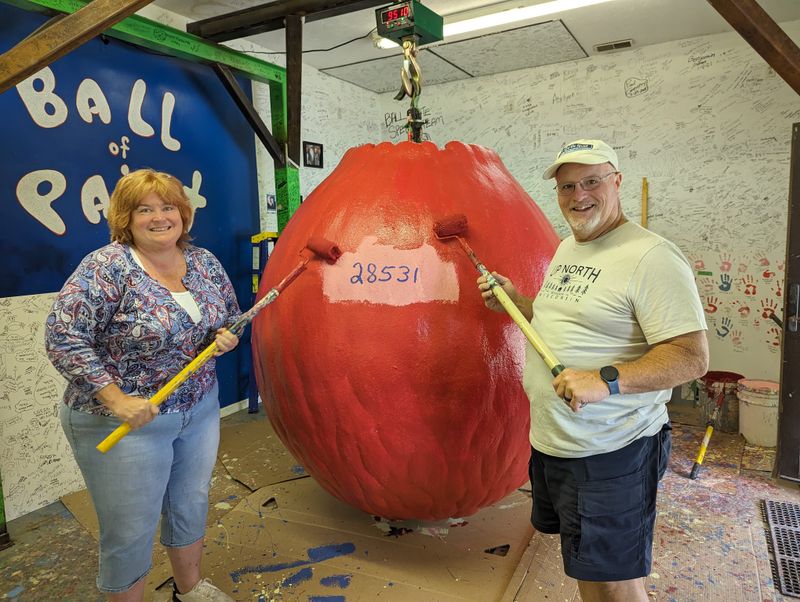
Back in January 1977, a father and son duo in Alexandria decided to paint a baseball blue, and somehow that simple act spiraled into one of the most peculiar attractions in the Midwest.
What began as an ordinary afternoon project has transformed into a massive sphere covered with more than 27,000 layers of paint, weighing over 11,500 pounds.
The ball sits proudly in a modest backyard at 10696 N 200 W in Alexandria, where visitors are welcomed to witness this accidental monument to persistence and quirky creativity.
Mike Carmichael, the man behind this colorful creation, never intended to break records or attract tourists from across the country.
He simply kept painting, layer after layer, year after year, turning what could have been a forgotten childhood memory into a living piece of folk art.
The paint globe now measures several feet in diameter, and each coat tells a story of dedication that borders on obsession.
What makes this attraction feel particularly accidental is the interactive element—visitors don’t just look at the ball, they can actually add their own layer of paint to its ever-growing surface.
Mike provides brushes and paint, allowing guests to become part of the history themselves.
The whole experience feels wonderfully spontaneous, like stumbling upon someone’s lifelong hobby that accidentally became a destination.
There’s no gift shop, no admission fee, just a man, his legendary paint ball, and the strange magic that happens when one simple idea refuses to stop growing.
It’s the kind of place that reminds you that sometimes the best attractions are the ones nobody planned at all.
Old Ben the World’s Largest Steer and The Sycamore Stump
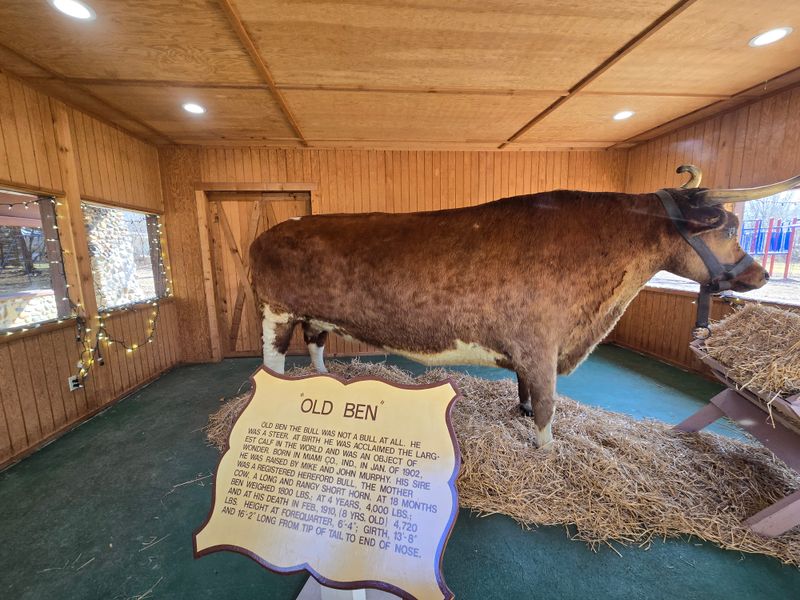
Standing before the preserved hide of Old Ben feels like encountering a creature from legend rather than agricultural history.
This massive Shorthorn steer once weighed an astounding 2,500 pounds and stood over six feet tall at the shoulder, earning him the title of world’s largest steer during his lifetime in the early 1900s.
His preserved hide now rests at 2200 W Gano St in Highland Park, Kokomo, displayed alongside another natural wonder that seems equally impossible, a sycamore stump measuring 50 feet in circumference and estimated to be 1,500 years old.
Old Ben toured county fairs across the Midwest during his life, drawing crowds who couldn’t believe their eyes at his sheer size.
After his death, his owner chose to preserve his hide and display it publicly, creating an attraction that feels simultaneously educational and deeply odd.
The pairing with the ancient sycamore stump only adds to the surreal nature of the exhibit, as if someone decided to gather Indiana’s most impressive oddities under one roof without worrying whether they made sense together.
The display sits in a small museum building that feels frozen in time, with vintage signage and a distinctly old-fashioned presentation style.
There’s something wonderfully accidental about the whole setup, as though the curators simply placed two remarkable things side by side and figured that was enough.
Visitors often report feeling transported to an earlier era of roadside attractions, when spectacle mattered more than slick marketing.
The combination of agricultural gigantism and natural history creates an experience that’s uniquely Indiana, practical, unpretentious, and just strange enough to be memorable.
It’s proof that sometimes the most lasting attractions are the ones that embrace their own weirdness without apology.
Martini-Drinking Pink Elephant
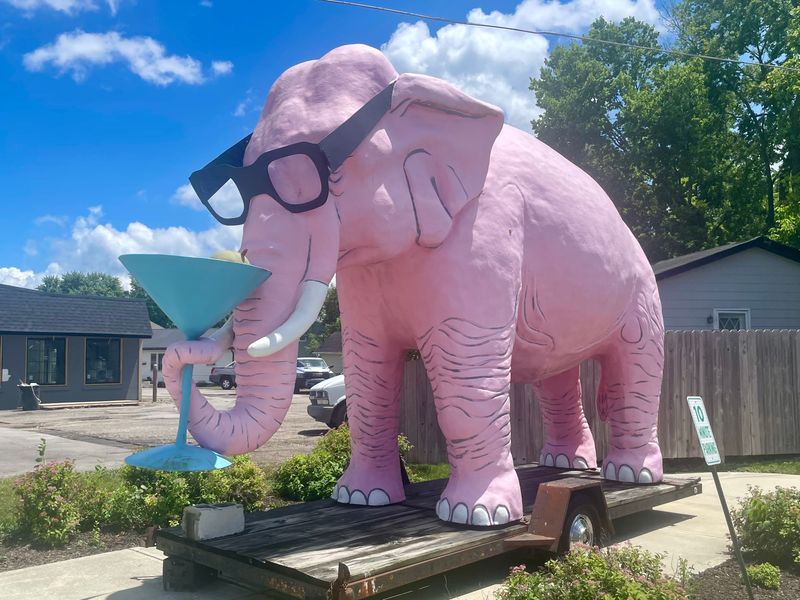
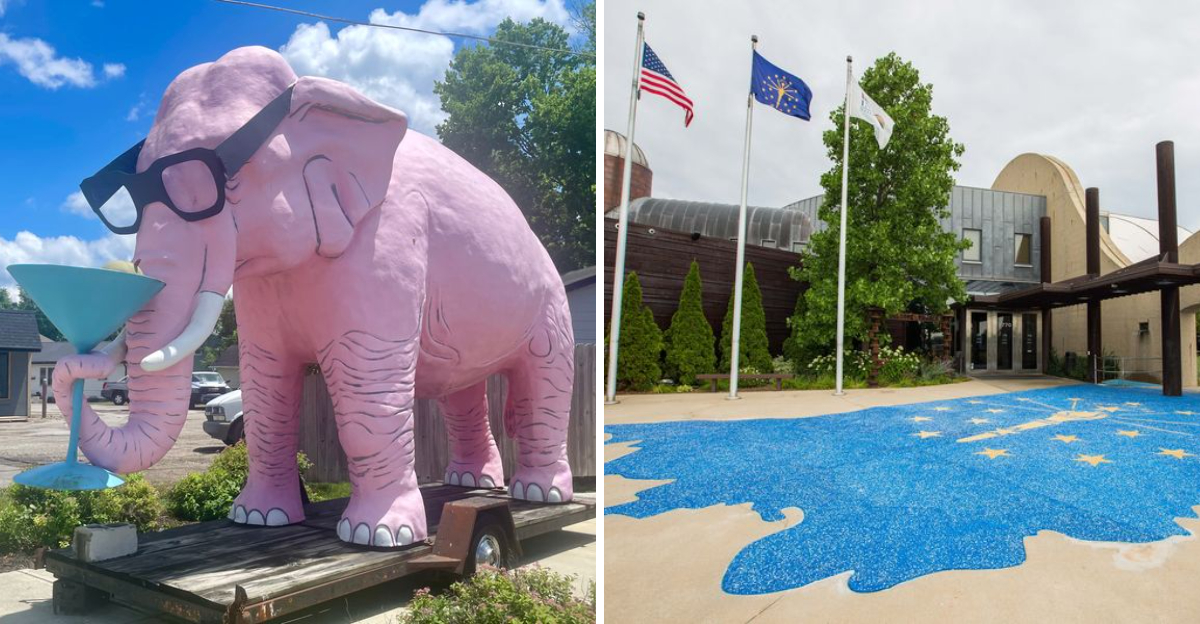
Towering over the parking lot at 1515 W Broadway St in Fortville stands a sight that makes drivers do a double-take, a 12-foot-tall fiberglass pink elephant wearing glasses and casually holding a martini glass.
This flamboyant pachyderm serves as the mascot for a local beverage store, and its presence feels like someone’s fever dream accidentally manifested into reality.
The elephant’s cheerful expression and party-ready pose suggest a creature that’s having a much better time than most roadside statuary.
Originally installed to catch the attention of passing motorists, the pink elephant has become far more than mere advertising, evolving into a beloved local landmark and photo opportunity.
The choice of pink wasn’t random, it plays on the old expression about seeing pink elephants after too much to drink, adding a layer of cheeky humor to the already absurd spectacle.
The oversized glasses give the elephant an air of sophistication that contrasts perfectly with its garish color and cocktail-clutching pose.
What makes this attraction feel especially accidental is how it’s become a cultural touchstone for the community despite its commercial origins.
Locals give directions using the pink elephant as a landmark, and visitors travel specifically to snap selfies with the tipsy-looking beast.
The elephant has weathered storms, endured countless Indiana winters, and somehow maintained its cheerful demeanor through decades of standing guard over the beverage store.
There’s no pretense here, no attempt to be anything other than exactly what it is, a giant pink elephant with a drink, standing proudly in a small Indiana town.
It’s the kind of gloriously ridiculous attraction that reminds you that sometimes the best roadside stops are the ones that fully commit to their own absurdity without a hint of self-consciousness.
The House of Tomorrow and Century of Progress Homes
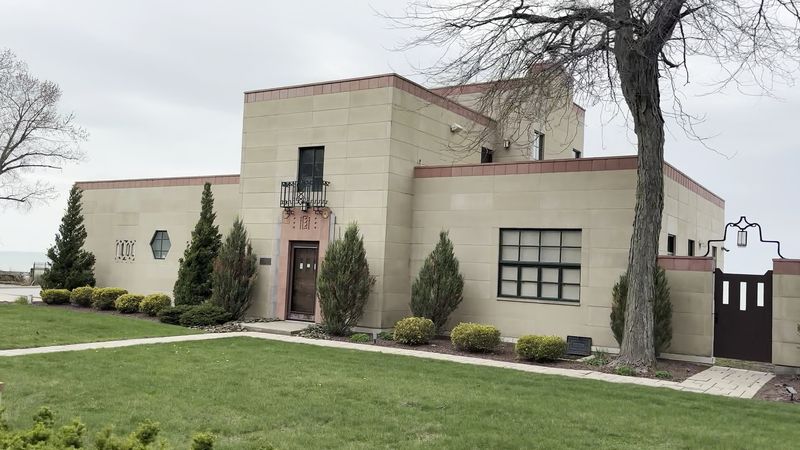
Nestled among the Indiana Dunes at 127 W Lake Front Dr in Beverly Shores sit five futuristic homes that look like they crash-landed from another dimension.
Originally built for the 1933 Chicago World’s Fair, these experimental houses showcased cutting-edge architecture and technology that seemed impossibly advanced for the Depression era.
After the fair ended, developer Robert Bartlett purchased the structures and had them floated across Lake Michigan on barges, then reassembled them on the Indiana shoreline in a move that was equal parts visionary and completely bonkers.
The most famous of the bunch is the House of Tomorrow, a 12-sided glass-and-steel structure that featured air conditioning, a dishwasher, and even an airplane hangar when most Americans didn’t have indoor plumbing.
Walking through these homes today feels like stepping into a retro-futuristic time capsule, where 1930s architects imagined what life in the year 2000 might look like.
The other homes in the collection include the Armco-Ferro House made entirely of porcelain-enameled steel panels, the Cypress Log Cabin, the Florida Tropical House, and the Wieboldt-Rostone House.
What makes this collection feel particularly accidental is how utterly out of place they seem among the natural beauty of the dunes.
These sleek, modernist structures sit surrounded by sand and beach grass, looking like alien spacecraft that decided to retire by the lake.
The homes fell into disrepair over the decades but have since been undergoing restoration efforts by the Indiana Landmarks organization.
Visitors can tour some of the homes during special events, experiencing firsthand the strange disconnect between their futuristic designs and their current weathered condition.
It’s a surreal experience that captures the optimism of a bygone era while also serving as a reminder that not all visions of the future age gracefully.
The Grave in the Road (Nancy Kerlin Barnett Grave)
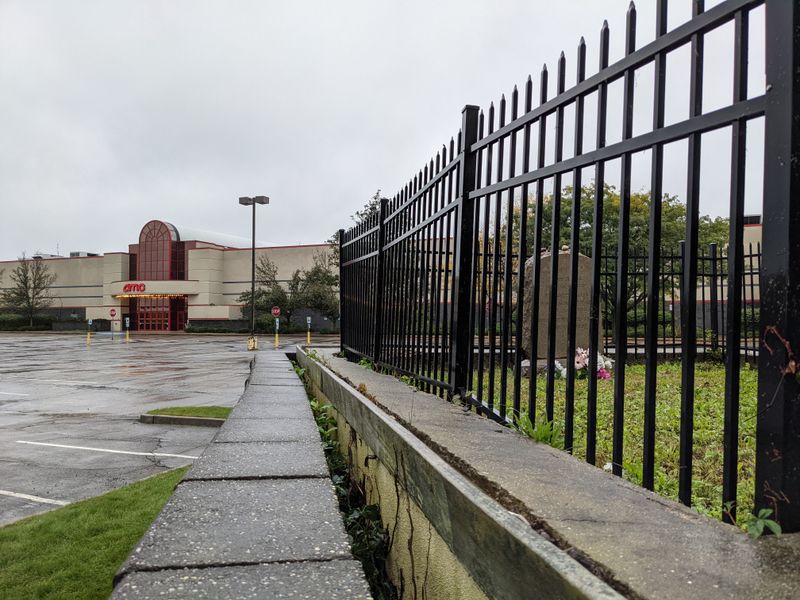
Driving down County Road 400 South near Amity you’ll encounter something that forces you to swerve slightly a single grave sitting smack in the middle of the pavement at 200 E 400 S.
The headstone marks the final resting place of Nancy Kerlin Barnett and it has remained there since 1831 despite the road being paved around it in the early 1900s.
This bizarre arrangement came about not through careful planning but through stubborn legal battles and a family’s determination to honor a promise made nearly two centuries ago.
Legend holds that Nancy’s husband vowed she would never be moved from her burial spot and when the county tried to relocate the grave to widen the road descendants fought the decision in court.
Unable to reach an agreement and unwilling to delay road construction indefinitely county officials made the only logical decision available.
They simply paved around the grave creating a small concrete island that drivers navigate around to this day.
The grave is enclosed by a white fence and surrounded by asphalt on all sides creating one of the strangest traffic obstacles in America.
What makes this attraction feel truly accidental is that nobody wanted it to become a tourist destination it exists purely because of bureaucratic compromise and family stubbornness.
Yet it has become exactly that with curious travelers making pilgrimages to see the grave that refused to be moved.
Some visitors leave flowers or coins on the small plot while others simply pause to contemplate the strange circumstances that led to this arrangement.
The grave serves as a reminder that sometimes the most memorable roadside attractions are created not by tourism boards or marketing campaigns but by ordinary people who simply refused to budge on matters of principle regardless of how inconvenient their stance might become for everyone else.
The Flick Statue from A Christmas Story
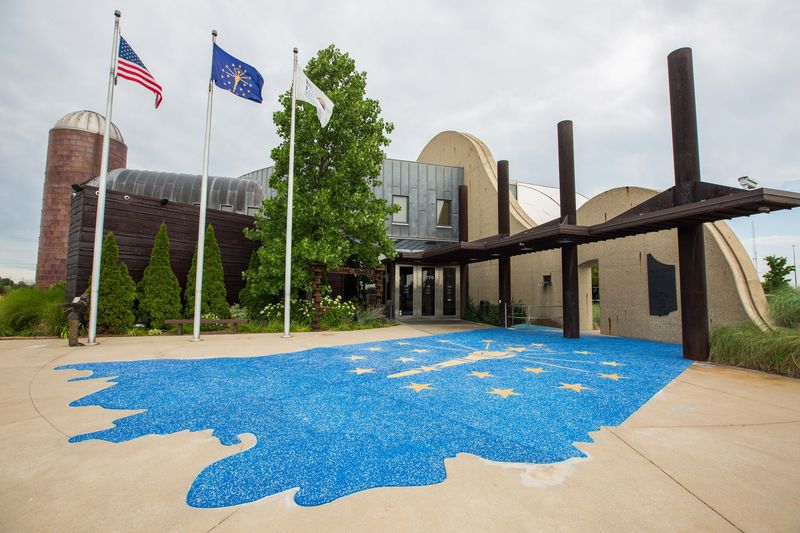
At 4101 Indianapolis Blvd in Hammond stands a bronze statue that immortalizes one of cinema’s most cringe-inducing moments the scene where young Flick gets his tongue stuck to a frozen flagpole after accepting a triple-dog-dare.
The statue depicts the unfortunate boy mid-lick forever frozen in his moment of poor decision-making complete with an actual flagpole that visitors can but probably shouldn’t touch with their tongues during winter months.
While the movie was actually filmed in Cleveland it was partially set in Hammond giving the town enough connection to claim this delightfully awkward piece of public art.
The statue was unveiled in 2003 and immediately became a pilgrimage site for fans of the holiday classic.
Something about seeing this childhood mistake rendered in permanent bronze adds an extra layer of humor to an already funny scene.
The sculptor captured Flick’s expression perfectly a mix of panic regret and the dawning realization that his friends were absolutely right to warn him against this particular dare.
What makes this attraction feel wonderfully accidental is how it celebrates a moment of pure foolishness rather than heroism or achievement.
Most statues honor great leaders war heroes or significant historical figures but Hammond chose to memorialize a fictional kid making a spectacularly bad choice.
During the holiday season the statue becomes a popular photo opportunity with visitors recreating the scene usually with their tongues safely away from the metal.
Some brave souls have actually attempted to replicate Flick’s predicament during cold snaps though local authorities generally discourage this behavior.
The statue stands as a testament to the enduring power of childhood stupidity and the strange ways communities choose to celebrate their pop culture connections even when those connections involve frozen tongues and playground humiliation.
Champ the Great Dane
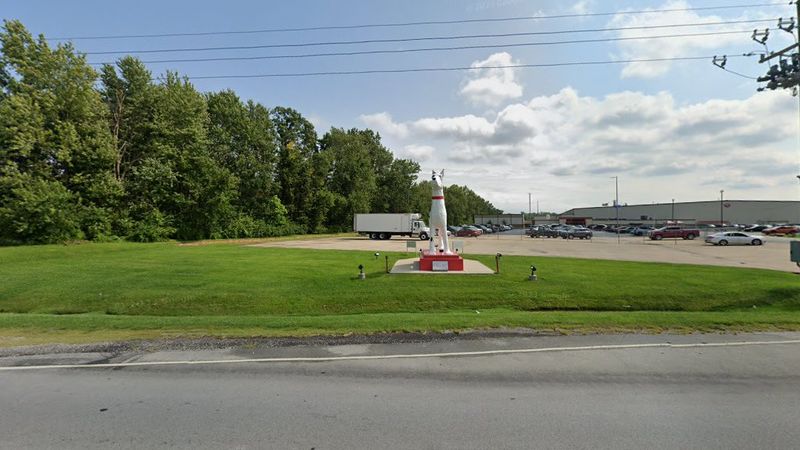
Perched majestically overlooking U.S. Route 40 in Brazil Indiana sits an 800-pound fiberglass Great Dane named Champ watching over traffic with the serene expression of a dog who knows he’s the goodest boy.
This massive canine statue serves as the mascot for the Great Dane trailer manufacturing plant creating a literal interpretation of the company name that’s both obvious and oddly charming.
Champ has become such a fixture along the highway that truckers and regular travelers alike use him as a landmark proving that sometimes corporate mascots transcend their commercial origins to become genuine community icons.
The statue was installed decades ago as a straightforward marketing tool put a giant dog outside the Great Dane plant so people remember the brand.
But somewhere along the way Champ evolved from mere advertising into something more meaningful.
Local residents speak of him with genuine affection and travelers make detours specifically to photograph the enormous pup.
His size is genuinely impressive standing tall enough to be visible from quite a distance down the highway his fiberglass coat weathered by years of Indiana seasons.
What gives Champ his accidental-attraction quality is the complete lack of pretense surrounding him.
There’s no visitor center no historical markers explaining his significance no attempt to turn him into anything more than what he is a really big dog statue outside a trailer factory.
Yet this simplicity is precisely what makes him memorable.
In an age of carefully curated tourist experiences and Instagram-optimized destinations Champ just exists doing his job of representing the Great Dane company while simultaneously bringing joy to anyone who appreciates the absurdity of an 800-pound fiberglass dog.
He’s a reminder that sometimes the best roadside attractions are the ones that never tried to be attractions at all.
Dear Reader: This page may contain affiliate links which may earn a commission if you click through and make a purchase. Our independent journalism is not influenced by any advertiser or commercial initiative unless it is clearly marked as sponsored content. As travel products change, please be sure to reconfirm all details and stay up to date with current events to ensure a safe and successful trip.
