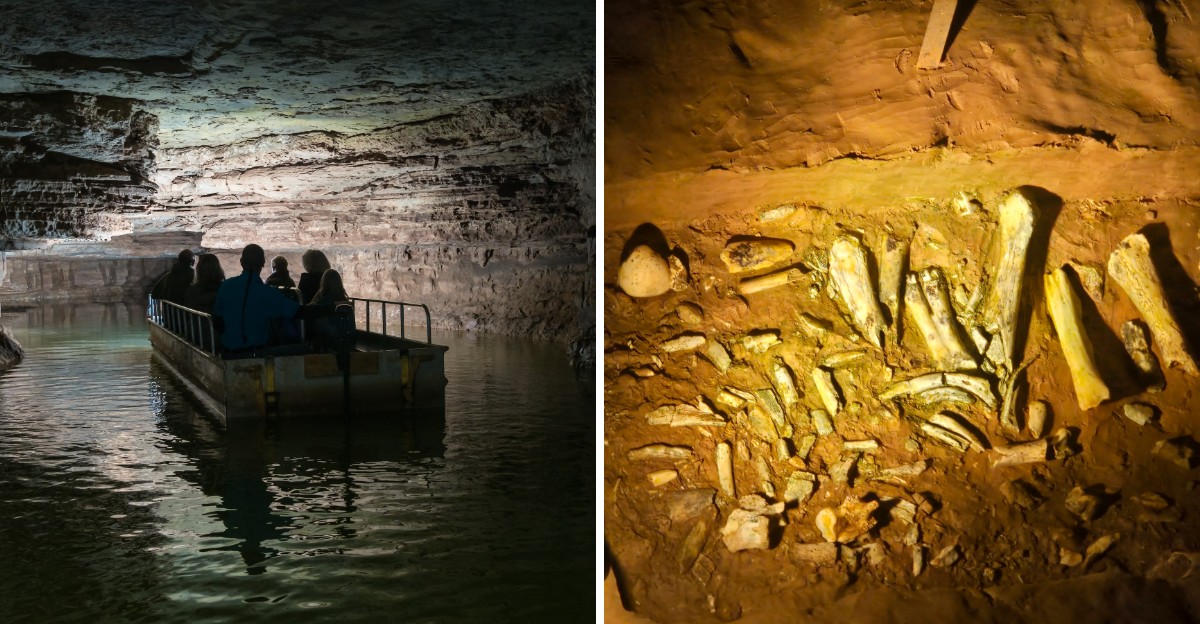
Skulls from Ice Age peccaries are sitting in the mud of an Indiana cave right now, and you can see them on a regular tour. They’ve been down there for roughly 40,000 years.
The same underground room also holds bones from black bears, porcupines, and prehistoric bison. Scientists from the state museum still dig there every year.
I love that a family outing can brush up against real, ongoing paleontology. Most of us only see bones like these behind thick museum glass.
Here, they rest right where the animals left them, about 110 feet below the grass.
Then there’s the boat. A quiet ride on an underground river is part of the tour, and so is a nearly four-story waterfall.
How many caves can pack all that into one afternoon?
The Longest Cave In The State Keeps Getting Longer
Forty-four miles. That was the mapped length of the Binkley Cave System back in October 2016, and explorers think it could top 100 miles someday.
The section open to the public is called Indiana Caverns. It gives you a doorway into the longest cave in Indiana, which also ranks among the longest in the country.
The story starts on a farm. Arvel H.
Miles bought the land in 1918, and people began poking around the cave in the 1930s.
Harvey Binkley bought the farm in 1944. That’s why his name is stuck to one of the biggest caves in America.
Most of the hard mapping work came from the Indiana Speleological Survey. These cavers crawled, squeezed, and measured for decades.
Their big moment arrived on February 11, 2012. Explorers found a link between Binkley Cave and Blowing Hole Cave, locking in the state record.
Development of the tour section began on June 1, 2012. Indiana Caverns opened to visitors on June 15, 2013, which makes it a young attraction with a very old backstory.
The cave formed in St. Louis Limestone. Above it, the land is full of sinkholes, springs, and streams that simply vanish underground, so watch your step on the drive in.
Two Cavers Stumbled Onto A Mountain Made Of Bones
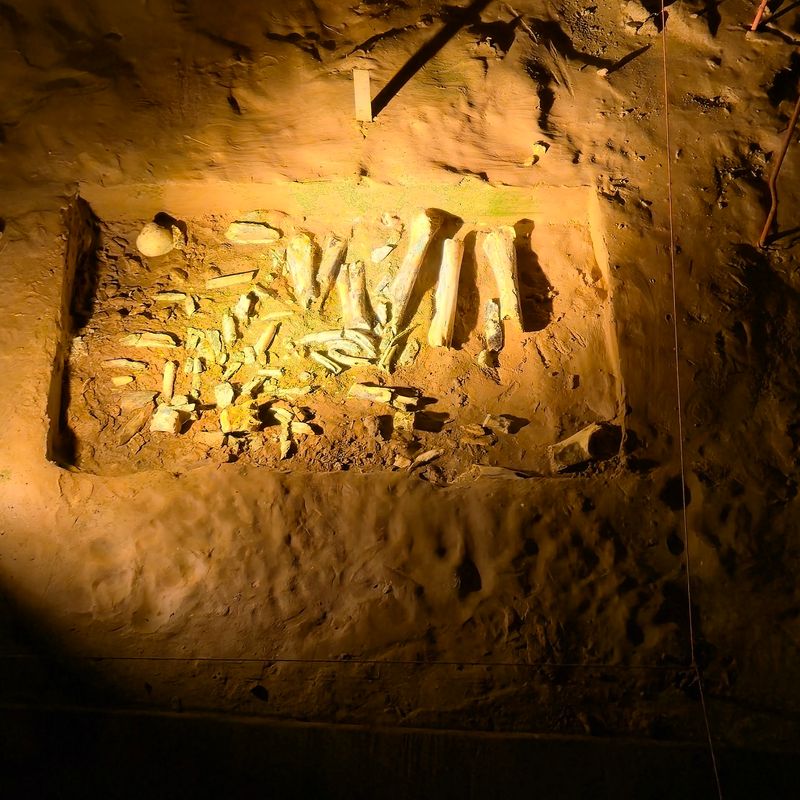
In 2010, Shane Myles and Tim Pride found a room nobody could forget. It was stacked with Ice Age animal bones, so the name practically wrote itself.
Big Bone Mountain is the official nickname, and it fits. The bones date back somewhere between 38,000 and 42,000 years.
The story of how they got here is wild on its own. Animals wandered into the cavern network thousands of years ago, and their remains stayed completely undisturbed in the cool, dark mud.
Cave conditions are great at saving things. A steady temperature and no sunlight helped keep these remains in surprisingly good shape.
What makes Indiana Caverns special is that you don’t need a lab coat to see them. The standard walking tour passes this area, and some skulls are visible right from the route.
That’s a rare deal for regular folks. Many fossil sites stay locked away for researchers only.
Here, you get a front-row seat to a spot that still matters to science. Keep your eyes on the floor, because the history isn’t hanging on a wall.
Meet The Ice Age Neighbors Who Never Moved Out
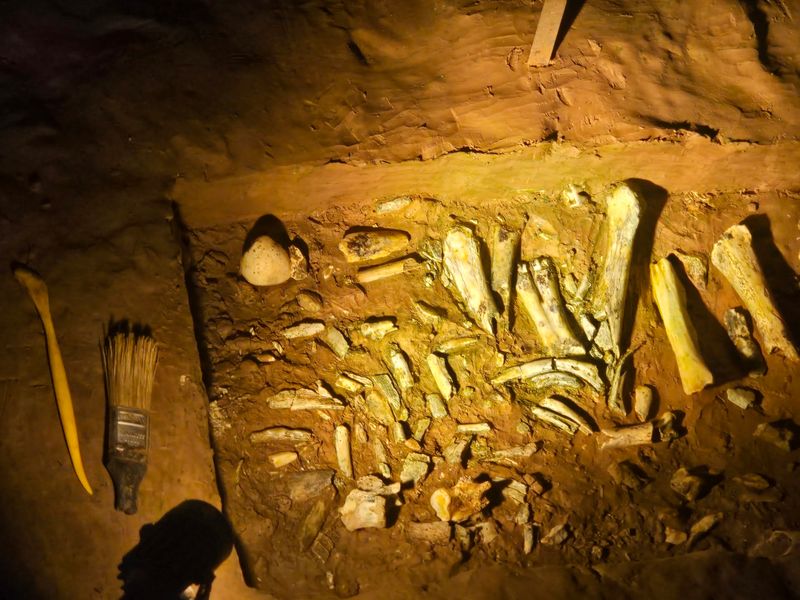
Flat-headed peccaries headline this crowd. These pig-like animals roamed during the Ice Age, and several of their skulls can be spotted on the tour.
The guest list gets stranger from there. Scientists have found bones of porcupines, black bears, and prehistoric bison in the same deposit.
Smaller critters showed up too. Northern and southern flying squirrels, voles, southern red-backed voles, and garter snakes all left traces behind.
Birds are part of the mix as well. Barred owls and passenger pigeons appear in the collection, and passenger pigeons are now extinct.
Then come the scratches. Prehistoric peccary claw marks still mark the cave, like ancient graffiti from a very muddy crew.
A prehistoric bear skull adds another twist. Experts believe it came from a den, which means a bear once treated this spot as home.
I like how each find adds a clue to a giant puzzle. Together, they paint a picture of what southern Indiana looked like tens of thousands of years ago.
Kids especially tend to love this part. Real skulls and claw marks beat a textbook drawing any day, and they make great dinner-table conversation later.
Real Scientists Still Dig Here Every Single Year
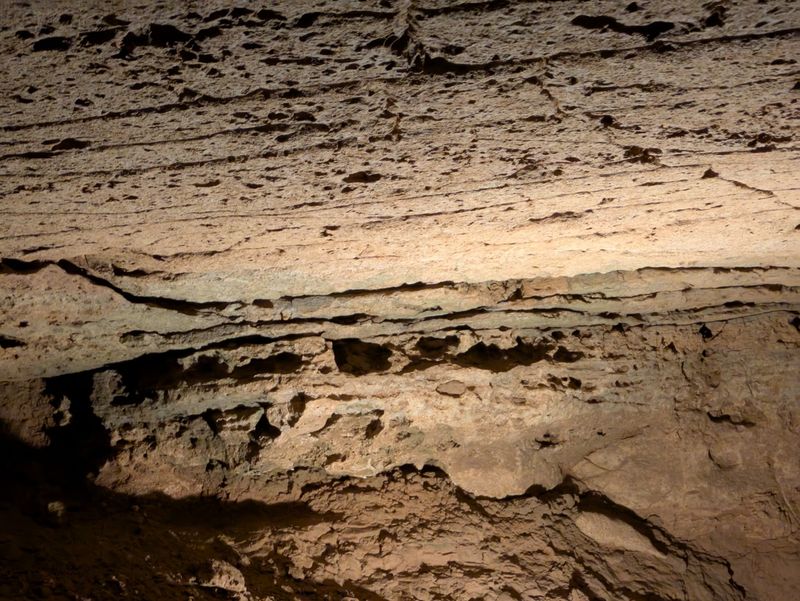
Paleontologists from the Indiana State Museum return to Big Bone Mountain for yearly excavations. That makes this cave an active science site, not a finished exhibit.
Think about what that means for your visit. The bones you see on tour belong to a deposit researchers are still studying.
Every dig can add a new species or detail to the record. The animal list you read today may grow longer next year.
Fun fact: digging in a cave is slow, careful work. Mud has to be moved gently so fragile bones don’t break apart.
Teachers often look for trips like this. Indiana Caverns offers group rates for schools, so classes can see real fossils in their natural setting.
Field trips here hit several subjects at once. Students can talk about geology, biology, and history without ever opening a worksheet.
Families can do the same thing on their own. Ask your kids what animal they think left a certain claw mark, and watch them start guessing.
The best part is how fresh it all feels. You’re not looking at old news, you’re peeking into research that’s still unfolding below Indiana farm country.
Bring A Jacket For The Trip Down To The Waterfall
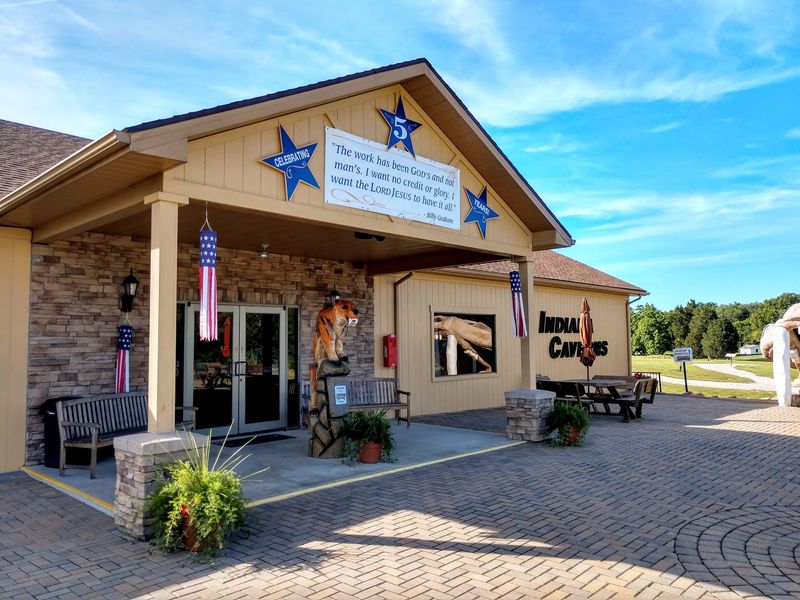
Fifty-six degrees. That’s the cave temperature all year long, whether it’s a sticky July day or a frosty January morning.
A light jacket is a smart move. Summer visitors get instant air conditioning, while winter visitors might feel downright cozy.
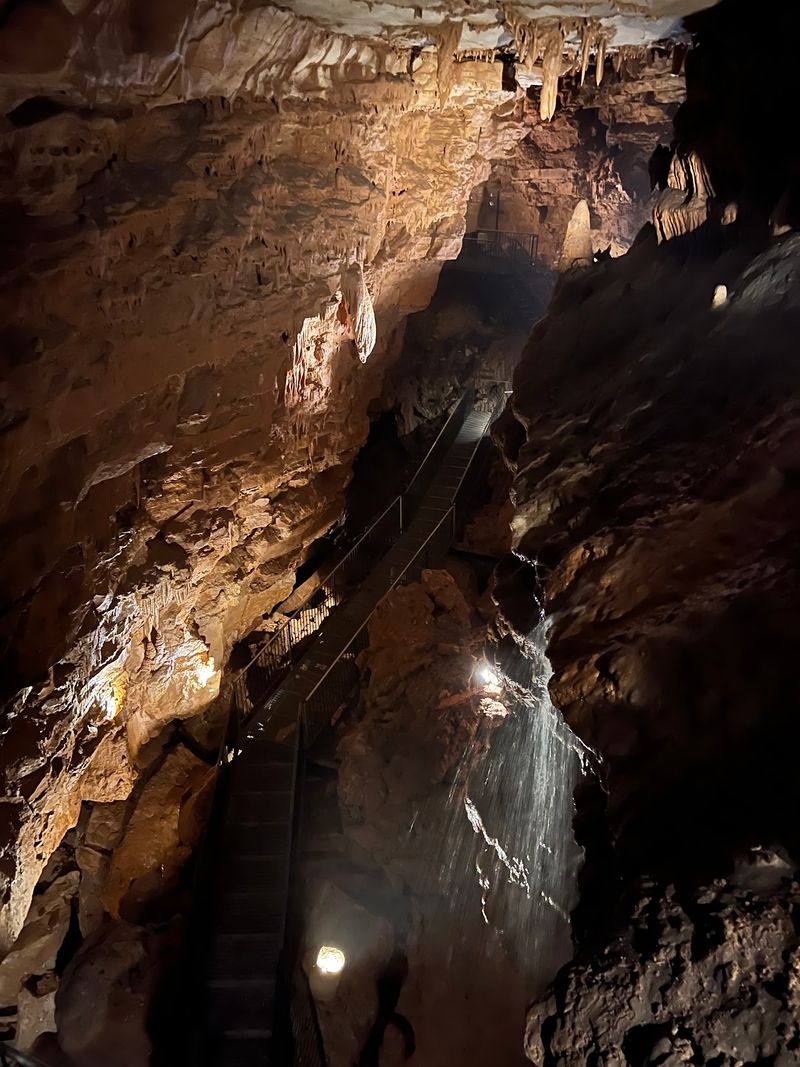
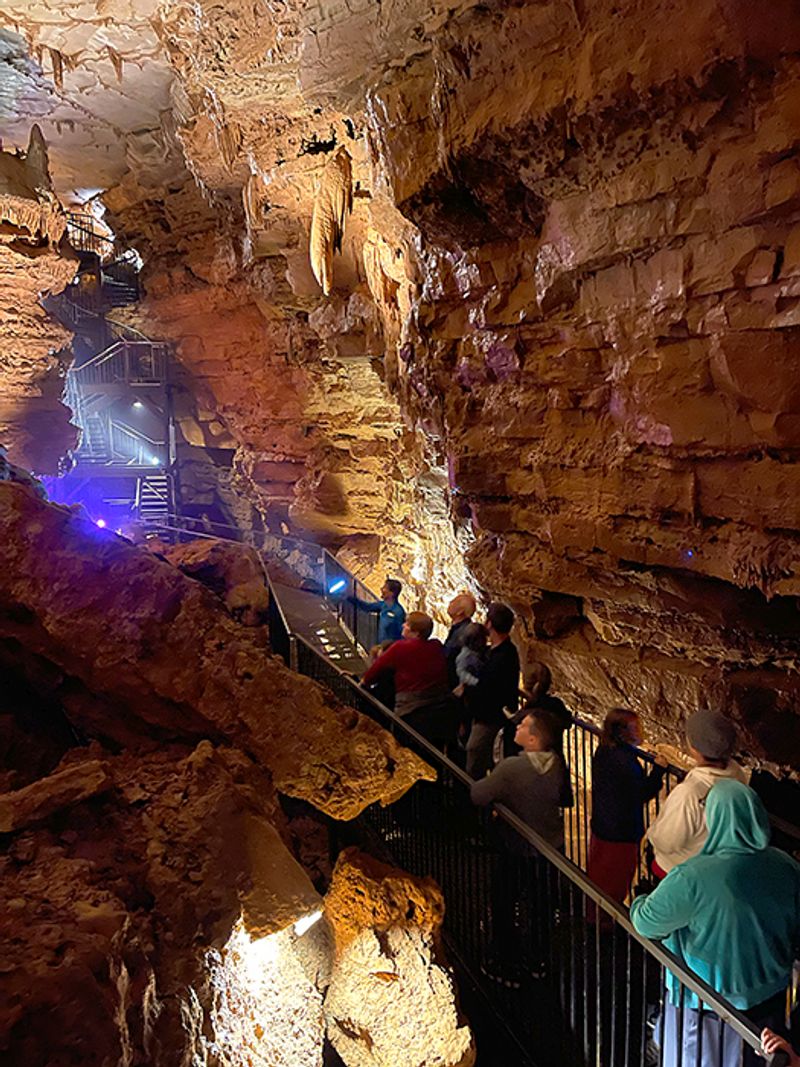
The standard walking tour lasts about 1 hour and 20 minutes to 1 hour and 30 minutes. Along the way, you head roughly 110 to 120 feet underground.
Getting there involves stairs, and some are spiral. Comfortable shoes with good grip will make the trip much easier.
Tall folks should stay alert. A few spots have low ceilings, so ducking is part of the adventure.
The big reward is a nearly four-story underground waterfall. Hearing that much water roar through solid rock is a pretty great payoff for all those steps.
Tours begin with a short video before heading below. Bags, food, and drinks stay behind, so plan snacks for before or after.
Keep in mind that this route isn’t designed for everyone with mobility challenges. If stairs are tough for someone in your group, the fun above ground might be a better fit.
Your Ride Today Is A Boat On A River Under The Ground
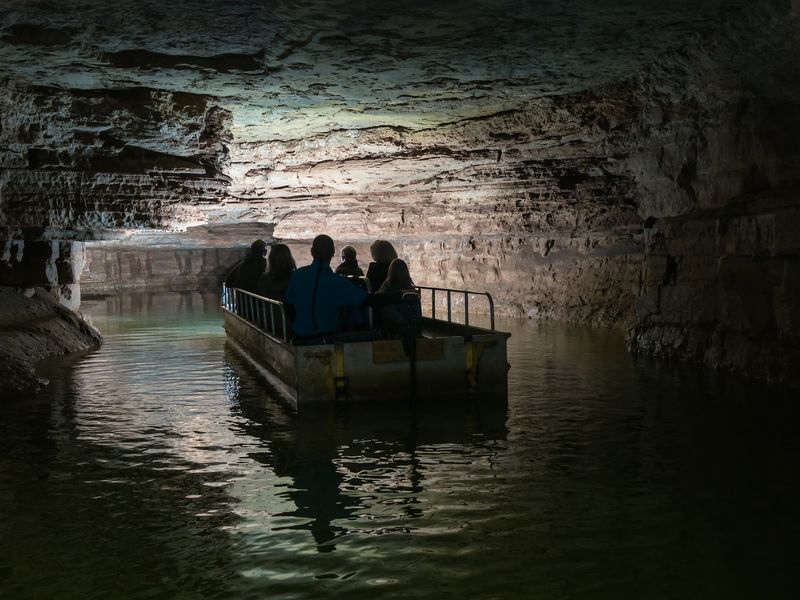
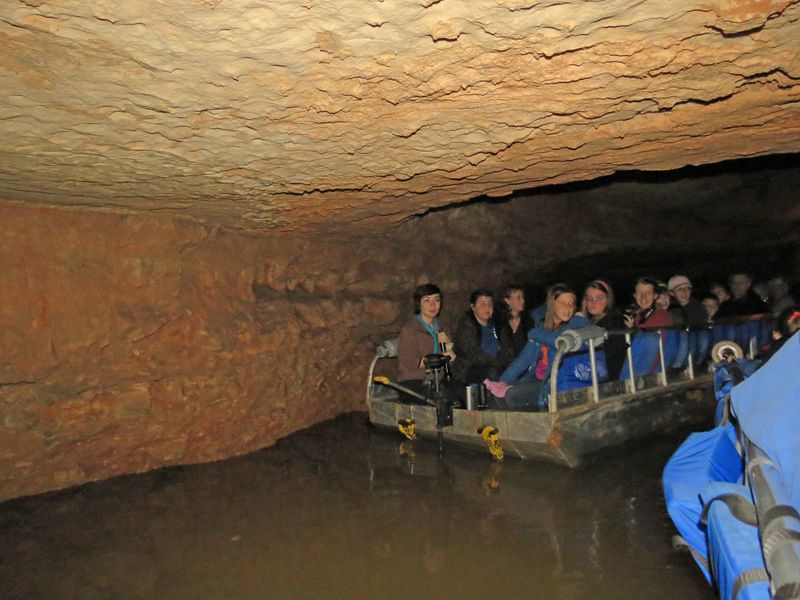
Most cave tours keep your feet on the floor. Indiana Caverns hands you a boat seat instead.
Part of the standard tour is a 25-minute ride on an underground river. It’s one of the features that sets this Indiana cave apart from its neighbors.
The water sits calm and dark. Lights bounce off the surface, and the reflections can make the passage look bigger than it really is.
Sound behaves differently down here too. With no wind, traffic, or birds, the quiet feels almost unreal.
Guides steer the trip and point out shapes along the way. Flowstone and other formations seem to pop out of the shadows as you float by.
Kids usually think this is the coolest part. Honestly, a lot of grown-ups agree, even if they pretend to be focused on geology.
A little patience helps if the boat bumps a wall or slows down. That’s just part of steering through a natural tunnel.
Hold onto your phone and your hat. Rivers don’t return things, and this one is about 110 feet below the parking lot.
Tiny Blind Creatures Run The Show Down Here
Over 21 species of troglobites live in the Binkley Cave System. Troglobites are animals that spend their whole lives in caves and can’t survive outside them.
Many of them are pale or blind. When you live in total darkness, color and eyesight aren’t exactly top priorities.
Cavefish swim through the system’s waters. They rely on other senses to find food and get around.
Crayfish are here too, and some are surprisingly large. The system holds some of the biggest of their type ever found.
Salamanders round out the crew. They’re slippery, quick, and easy to miss if you aren’t watching closely.
Spotting any of these animals takes a sharp eye. Ask your guide where to look, because they know the favorite hiding spots.
Remember that this is their home. Look, don’t touch, and keep your hands out of the water so the tiny residents stay healthy.
I believe this living side of the cave gets overlooked. Ancient bones get the headlines, but these small survivors prove the cave is still full of life today.
Bring curiosity, not a net.
Ready For A Ladder, A Kayak, And Four Hours In The Dark?
A 93-foot ladder descent kicks off the Deep Darkness Tour. You’ll be clipped into a belay system, so safety stays front and center.
This is the wild version of Indiana Caverns. The whole expedition lasts about four hours and mixes real caving with kayaking.
After the climb down, you trek deeper into the cave. Then you hop into a kayak and paddle upstream on an underground river.
Paddling against a current in pitch blackness is a special kind of thrilling. Your headlamp becomes your best friend very quickly.
Gear is provided for you. That means no hunting through stores for helmets or lights before the trip.
Plan to get dirty. Caves don’t care about your favorite jeans, so wear clothes you won’t miss.
This tour suits teens and adults who crave a challenge. If the regular boat ride felt too relaxing, this is your upgrade.
It also shows how big this system truly is. The public walkway covers just a sliver, and Deep Darkness gives you a bigger taste of what explorers face.
Bragging rights are included at no extra charge.
Save Time For Gems, Goats, And A Sabertooth Simulator Topside
Surface fun gets plenty of attention here too. You’ll find Indiana Caverns at 1267 Green Acres Dr SW, Corydon, IN 47112, in the rolling hills of southern Indiana.
Gem and fossil panning is a crowd favorite. Kids pour a bag of sand into water and sift for treasures to carry home.
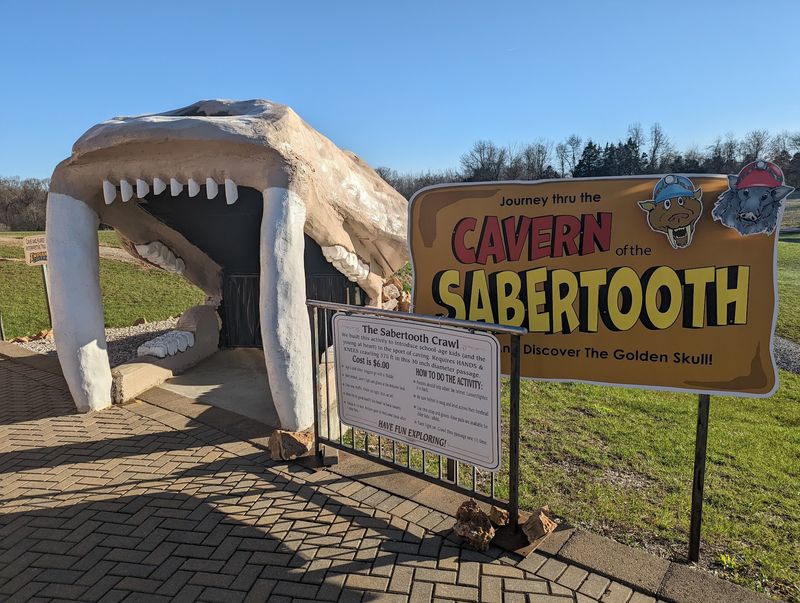
Younger explorers can try the Cavern of the Sabertooth. It’s a caving simulator that lets them crawl and climb without getting muddy.
Parents will appreciate that last part. Clean kids in the car is a win worth celebrating.
A karst trail winds across the property. Signs and exhibits explain how sinkholes and vanishing streams connect to the cave below your feet.
Picnic areas give you a spot to refuel. Since food isn’t allowed on tour, eating outside before or after works nicely.
The attraction also offers an escape room and a big gift shop full of rocks and fossils. You could easily spend half a day here.
Indiana Caverns stays open year-round, closing only on Thanksgiving and Christmas. That means rainy days, snowy days, and scorching days all have a backup plan.
