A trailer from 1913 still sits hitched to a Ford Model T, and it’s believed to be the oldest surviving travel trailer of its kind on Earth. Yes, that trailer has outlasted pretty much everything from its era.
It shares a roof with more than 60 vintage campers, trailers, and motorhomes, including one built for a Hollywood star. Another carried a famous aviator and his wife on their travels.
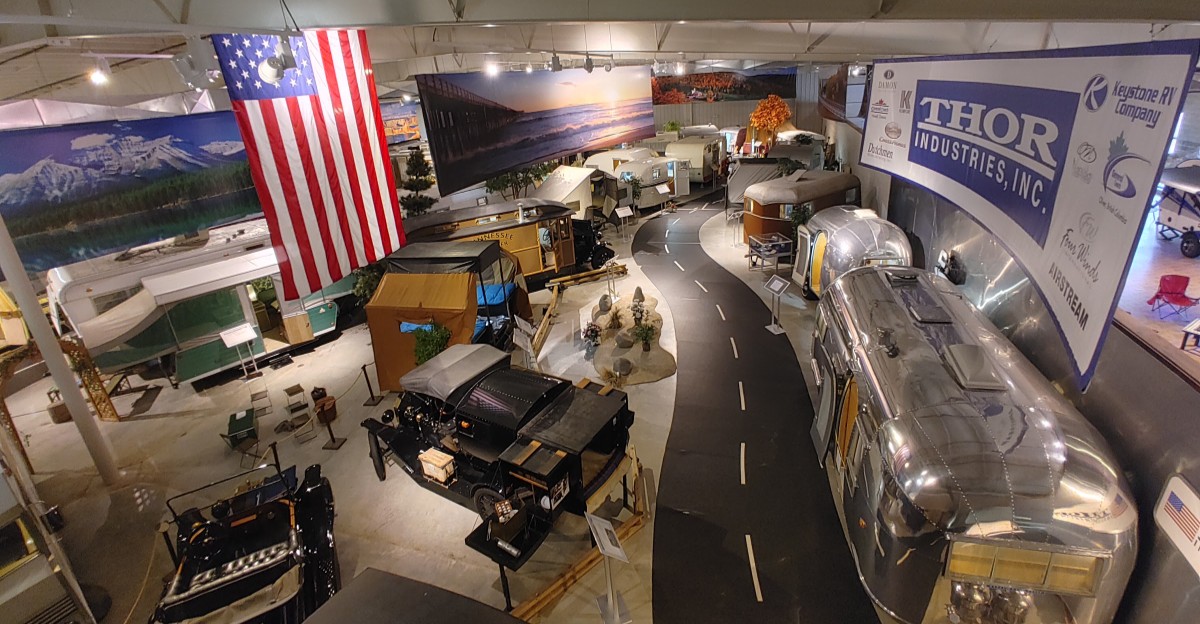
The whole collection lines a fake two-lane highway winding through a pretend campground in northern Indiana, artificial trees and all. I like how it turns a museum stroll into a road trip with zero gas stops.
I can’t imagine a better place to see how Americans fell head over heels for life on wheels.
You Get To Hit The Open Road Without Ever Leaving The Building
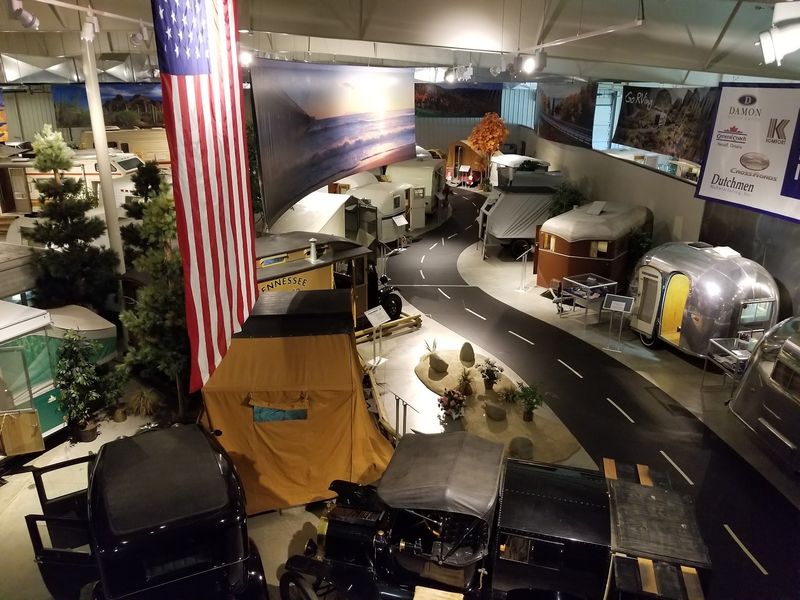
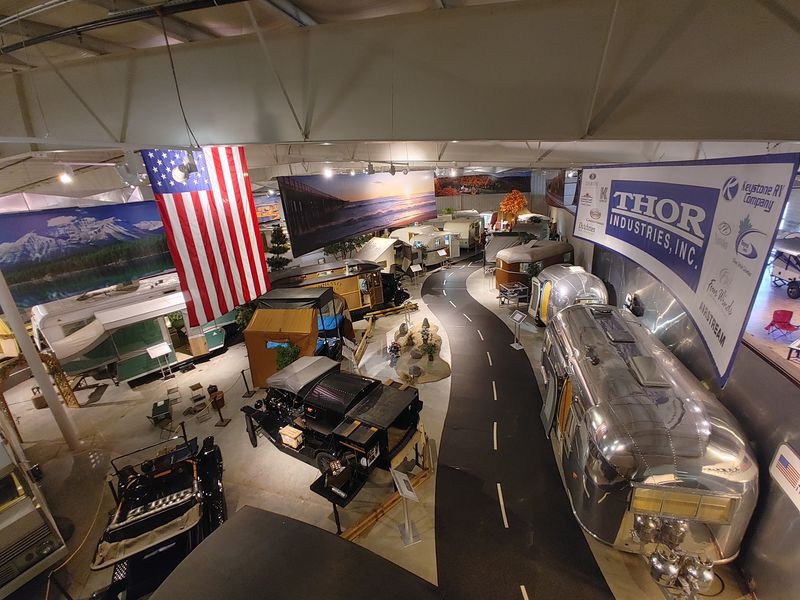
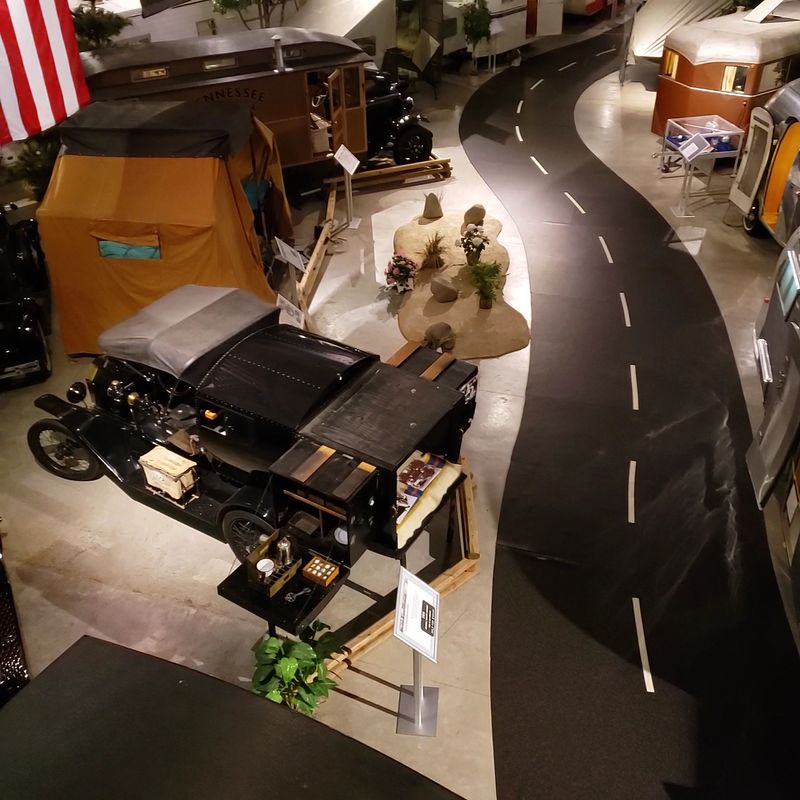
Blacktop under your feet usually means traffic, but not here. Inside the RV/MH Hall of Fame, a winding two-lane road becomes the path through the whole exhibit.
That road runs through the RV Founders Hall, which is set up like an old-time campground. Artificial trees and plants frame each campsite, so the rigs look parked for the night.
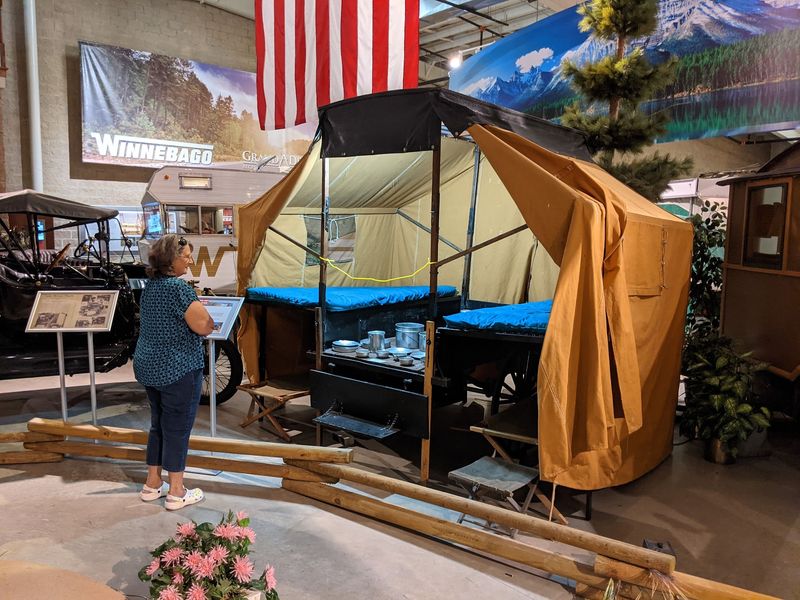
More than 60 vintage campers, trailers, and motorhomes line the route. The oldest dates to 1913, and the timeline keeps rolling forward from there.
I love that the layout tells a story without a single lecture. You literally follow the road, and the decades change around you as you go.
Early house cars give way to boxy trailers, sleek aluminum models, and family-sized motorhomes. Each one shows how people kept finding new ways to bring home along for the ride.
Some rigs let you peek through doors and windows at tiny kitchens and fold-down beds. Others are open for a closer look, which makes the experience feel hands-on.
Benches along the way give tired legs a break between eras. That’s handy, because this road is longer than it looks.
Give yourself time to slow down. Rushing a road trip defeats the whole point, even an indoor one.
The Granddaddy Of Every Camper Is Still Hitched And Ready
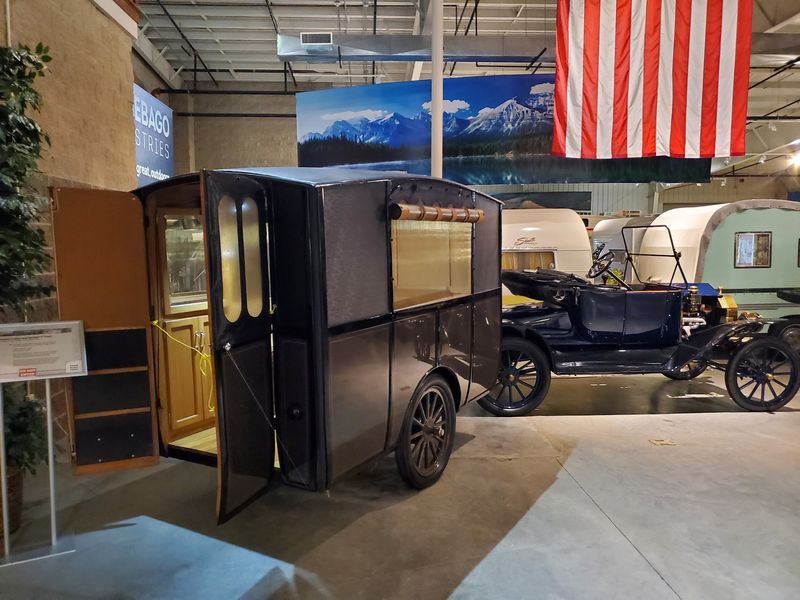
Over a century old and still attached to its ride. The 1913 Earl Travel Trailer sits hitched to a Ford Model T, looking ready to roll out the door.
Here’s the jaw-dropper. It’s believed to be the oldest surviving non-tent travel trailer in the world.
Think about how rough travel was back then. Roads were often dirt, cars were new, and camping usually meant a canvas tent on the ground.
Somebody decided a little wooden room on wheels sounded better. Honestly, I agree with that person completely.
The trailer looks humble next to the rigs farther down the road. That’s exactly why it matters so much in this collection.
Every slide-out, awning, and onboard kitchen you’ll see later traces back to ideas like this one. It’s the first chapter, and everything else in the building is a sequel.
Kids especially tend to get a kick out of comparing it to modern campers. Ask them where they’d sleep, cook, or stash their snacks, and watch the debate begin.
Snap a photo here before moving on. You’re standing next to the starting line of American RV travel, and that’s worth a picture.
Just don’t expect a hidden bathroom. In 1913, that luxury was still a dream.
A Hollywood Star Rode In Serious Style Between Movie Takes
Paramount Studios wanted Mae West badly enough to build her a house on wheels. The result is the 1931 Mae West Chevrolet Housecar, and it’s pure early Hollywood glamour.
The studio used it to tempt the star away from Vaudeville and into movies. Talk about a convincing job offer.
Inside, the housecar features velvet seats and a small dressing room. It gave the actress a private spot to relax between takes on set.
Compare that to the 1913 trailer you just passed. In less than twenty years, camping went from a wooden box to a rolling celebrity lounge.
I like how this rig shows another side of RV history. These vehicles weren’t only for family vacations, they were also status symbols.
It’s easy to spot the custom touches once you know what to look for. The details hint at how much effort went into impressing one very famous passenger.
Movie fans will want to linger here. History buffs will too, since it captures a time when studios went to wild lengths to sign stars.
Stand back for the full view first. Then lean in for the velvet, because that’s where the personality really shows.
Slide-Outs Were Somehow Already A Thing Back In 1916
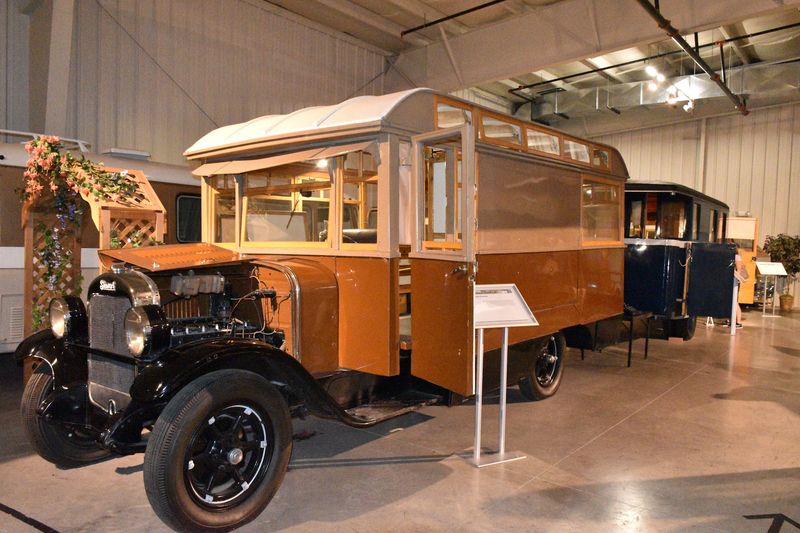
Modern campers brag about slide-outs like they invented them. The 1916 Telescoping Apartment would like a word.
Built on a 1915 Model T chassis, it features fold-out and slide-out sections. Those pieces created space for sleeping and cooking once the vehicle parked.
It gets better. This clever build was one of the first to include a shower and a fold-away toilet.
The water was heated by the engine, which is a seriously smart trick. Someone was thinking about comfort long before anyone used the word glamping.
I can’t help admiring the problem-solving here. With limited materials and a tiny car frame, the builder still squeezed in features we expect today.
Take a minute to study how the sections fold and extend. It’s like a mechanical puzzle that also happens to be a bedroom.
This is a great stop for anyone who loves gadgets or tinkering. Young builders might leave with a few ideas of their own.
It also proves a fun point about invention. Good ideas often show up early, then wait decades for the rest of the world to catch up.
Next time a camper ad shows off its slide-out, you’ll know the real backstory.
Famous Flyers And Shiny Metal Mansions Share The Same Road
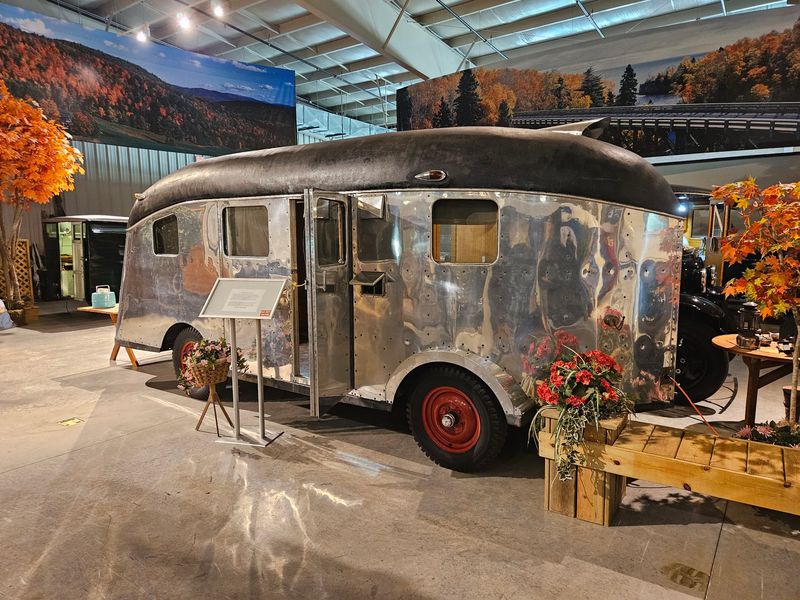
Charles Lindbergh conquered the skies, but he also enjoyed a good trailer. His 1939 travel trailer is parked right here in Indiana.
It’s a lightweight model with an aluminum exterior and an all-wood interior. Lindbergh and his wife, Anne Morrow Lindbergh, used it for travel and as their office.
Picturing a world-famous aviator answering letters inside a trailer is delightful. It makes a legend feel a lot more like a regular road tripper.
A little farther along sits the 1955 Spartan Imperial Mansion. The name sounds dramatic, and the trailer mostly earns it.
The Spartan Aircraft Company built this all-metal beauty. Inside, a high-end birchwood interior gives it a warm, polished feel.
I love that both rigs connect back to aviation in some way. One belonged to a pilot, and the other came from an airplane company.
Shiny exteriors like these explain why vintage trailers are so popular with collectors today. They catch the light and look great in photos.
Compare the woodwork in both units while you’re here. Each one shows how style and comfort kept rising as the years rolled on.
Modern Campers Let You Climb Aboard And Dream Big
After all that history, the Go RVing Exhibition Hall brings you right up to date. This section features vehicles from the 1980s onward.
Best part? Five modern campers are open for visitors to step inside and explore.
That’s your chance to test the beds, eyeball the kitchens, and judge the storage space. Fair warning, you may start browsing camper listings on the drive home.
Big murals celebrate the famous Go RVing slogan across the hall. Vintage advertisements add a fun dose of nostalgia to the newer rigs.
Don’t skip the 1/24th scale model of an RV assembly plant. It shows how these homes on wheels come together, step by step.
I think this model is one of the smartest pieces in the building. It explains a massive industry in a size you can actually take in at once.
Families tend to find this hall a natural break from reading signs. Kids can move around, peek into rooms, and pick their favorite layout.
Contrast is the real treat here. You just saw a 1913 wooden trailer, and now you’re standing in a camper with modern comforts.
Upstairs, The People Behind The Rigs Finally Get Their Spotlight
Every rig downstairs started with somebody’s big idea. Upstairs, the actual Hall of Fame honors the pioneers, innovators, and leaders behind them.
Photos and biographies line the walls, covering both the RV and manufactured housing industries. It puts real faces to the names stamped on all those vintage campers.
I find this part surprisingly personal. You start to see how a few determined people shaped the way millions travel and live.
Read a handful of the biographies, even if you can’t get through them all. The stories behind the inventions add depth to everything you saw downstairs.
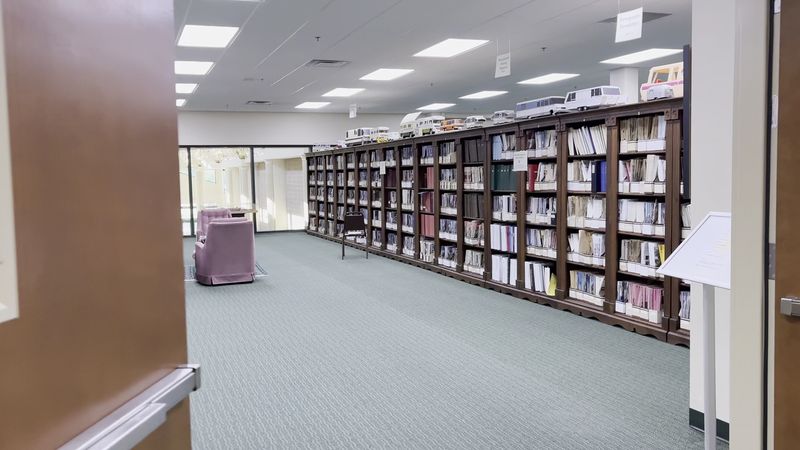
Also on the second floor sits the Kindlund Library and Archives. It holds thousands of periodicals, manuals, photographs, and historical documents.
Researchers treat it like a treasure chest. Curious visitors can enjoy it too, especially anyone restoring an old camper.
Got a vintage trailer in the driveway with a mystery past? Collections like this are exactly where answers tend to hide.
Plenty of visitors run out of time before heading upstairs. Plan ahead, because skipping this floor means missing the heart of the whole place.
Three Furnished Homes Wait Right Next Door For A Walk-Through
RVs get most of the attention, but manufactured homes have a fascinating story too. The Scoular Manufactured Housing Museum sits right beside the RV Founders Hall.
Here, informational placards and videos trace how manufactured housing changed over time. The displays connect that history to the same spirit of building homes in a smarter way.
Then comes the fun part. Three fully furnished manufactured homes are open for you to walk through.
Each one gives you a real sense of the space, from living rooms to kitchens. It’s a lot easier to understand a home when you can stand inside it.
Interior design fans should budget extra time. The furnishings and layouts make for a great lesson in how style and comfort evolve.
I appreciate that the RV/MH Hall of Fame tells both sides of its name so thoroughly. The MH part isn’t an afterthought here.
It also shows how closely the two industries are linked. Many of the same ideas about clever space and efficient building show up in both.
Walk through slowly and notice the small details. Cabinets, lighting, and layouts reveal a lot about how families lived in different decades.
Bring Your Own Rig, Your Leashed Pup, And A Few Spare Hours
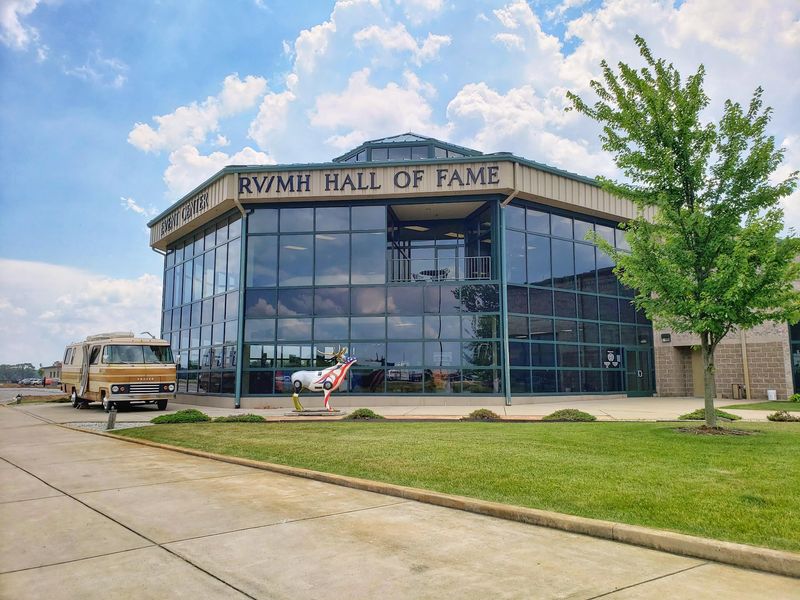
Elkhart calls itself the RV Capital of the World, and the numbers back it up. Elkhart County produces over 80 percent of all RVs built in the United States.
So yes, this museum lives in exactly the right spot. You’ll find it at 5600 Executive Pkwy, Elkhart, IN 46514, just off the Indiana Toll Road at exit 96.
The building is shared with the Northern Indiana Event Center. Follow the signs to the RV Hall of Fame entrance, usually on the back or north side.
Hours run 9 a.m. to 5 p.m. Monday through Saturday.
Sunday hours are shorter, from 10 a.m. to 3 p.m.
Driving your own RV? Pull-through parking fits rigs up to 65 feet long.
Free boondocking is available with at least one paid museum admission per RV, for up to two nights. Electric hookups are offered for a fee if you need power.
Pets are welcome inside when well-behaved and on leashes, harnesses, or in strollers. Your furry co-pilot doesn’t have to wait in the truck.
Plan on two to three hours to see everything. I believe you’ll leave wanting a camper, or at least a road trip.
