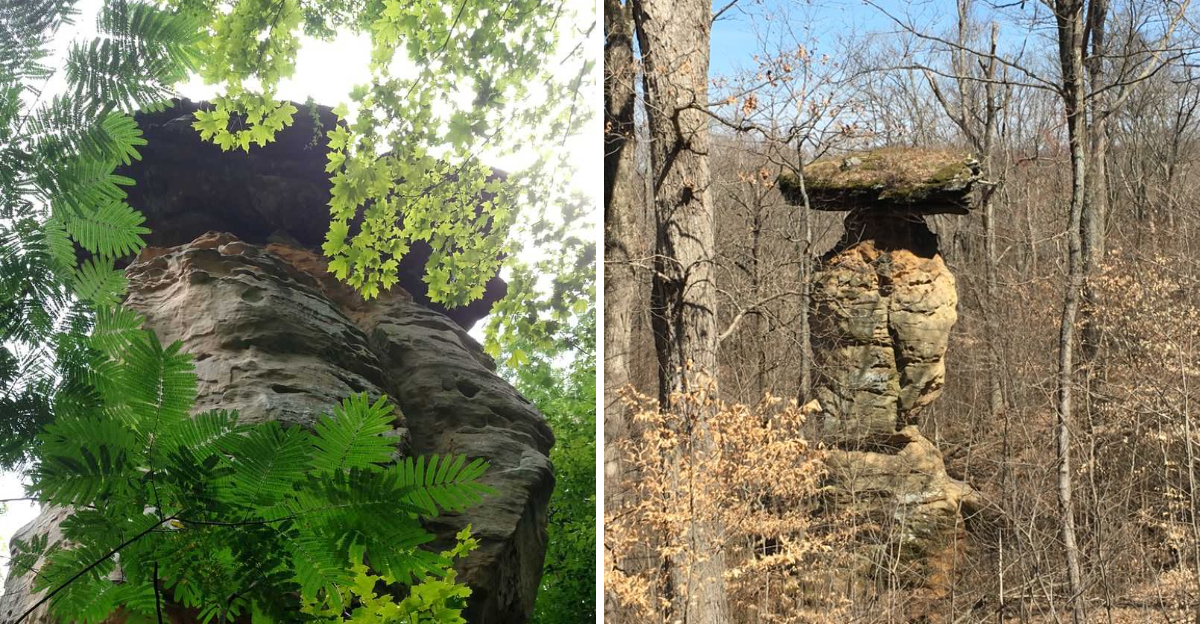
Hidden along a quiet stretch of southern Indiana highway sits one of the state’s most impressive natural landmarks that thousands of drivers zoom past every day. Jug Rock rises from the earth like a giant stone mushroom, standing as the tallest freestanding table rock formation east of the Mississippi River.
This geological marvel has been quietly standing near Shoals, Indiana for millions of years, shaped by ancient seas and weathered by time into its distinctive jug-like silhouette.
Most people have never heard of this place, and even those who have often miss the tiny sign marking its location.
The rock formation towers over 60 feet high, balanced impossibly on a narrow pedestal that seems far too delicate to support such massive weight. Despite its incredible status as a true geological wonder, Jug Rock remains one of Indiana’s best-kept secrets.
Whether you’re a geology enthusiast, a roadside attraction hunter, or simply someone who appreciates nature’s artistic side, this freestanding monument deserves a spot on your travel list.
The short walk from the roadside takes less than two minutes, but the impression it leaves lasts much longer.
A Geological Phenomenon That Defies Gravity
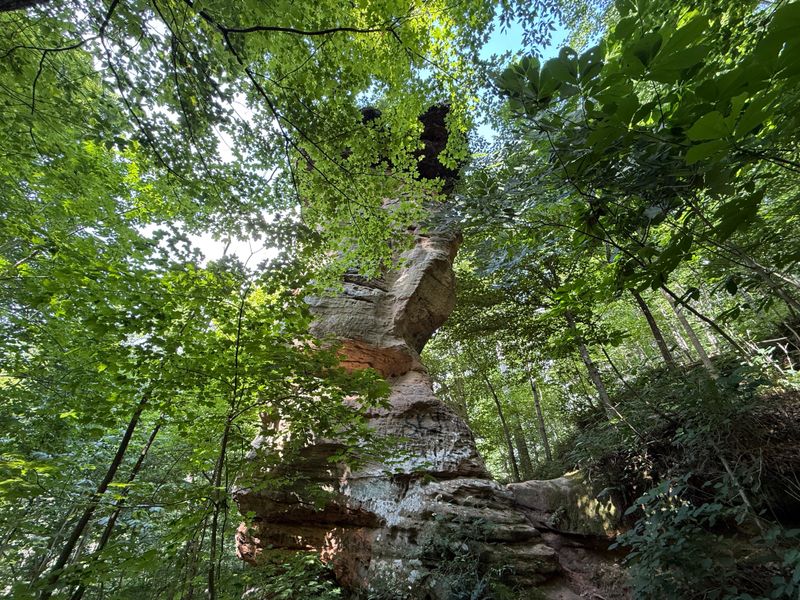
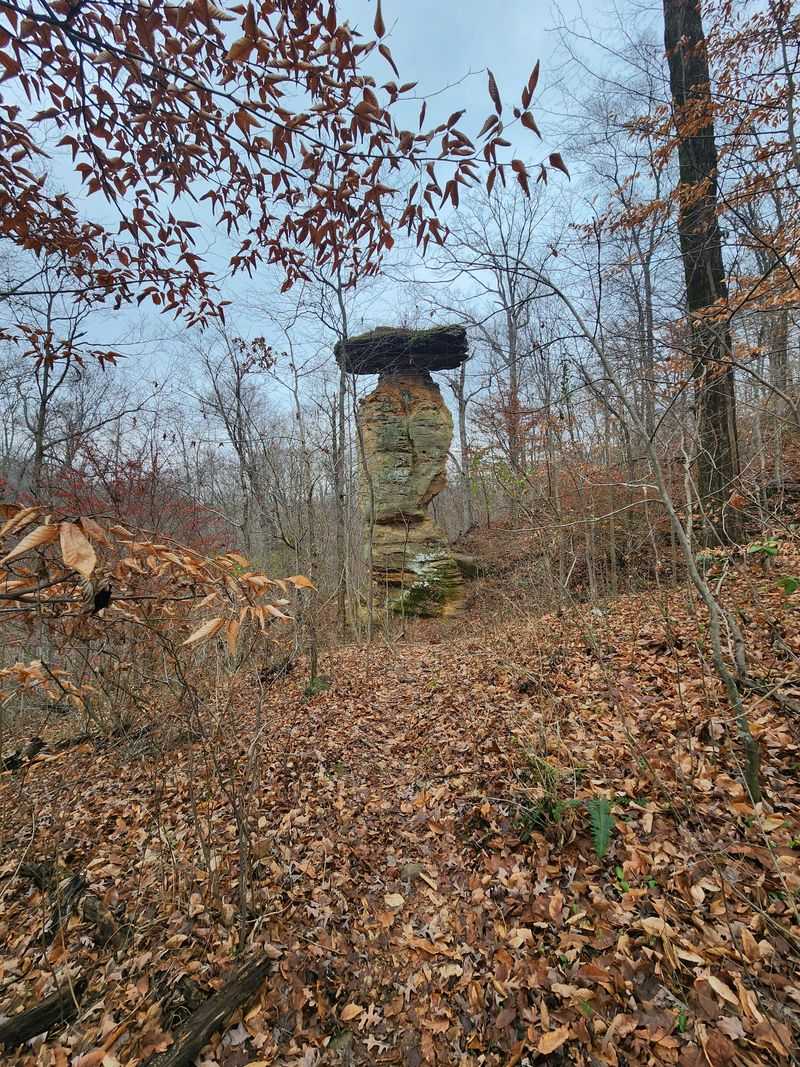
Standing before Jug Rock feels like witnessing something that shouldn’t actually exist. The formation consists of a massive sandstone cap perched atop a narrow column that looks far too thin to support the weight above it.
Mother Nature spent millions of years sculpting this masterpiece through a process called differential erosion, where softer rock layers wore away faster than harder ones.
The rock originally formed during the Pennsylvanian Period, roughly 300 million years ago, when this entire region lay beneath ancient shallow seas. As water levels changed and erosion worked its magic over countless centuries, the weaker surrounding materials gradually washed away.
What remained was this striking tower with its distinctive mushroom profile that earned the formation its jug-like name.
Geologists classify Jug Rock as the tallest freestanding table rock east of the Mississippi River, reaching approximately 60 feet into the Indiana sky. The narrowest part of the pedestal measures only about 15 feet across, creating that impossible-looking balance that captivates every visitor.
Scientists estimate the cap rock weighs several tons, making the physics of its stability even more remarkable.
The formation continues changing today, though at a pace invisible to human observation. Weather, temperature fluctuations, and natural erosion keep slowly reshaping this landmark.
Locals say the rock once featured an actual handle-like protrusion that gave it an even more jug-like appearance until it eventually broke off decades ago. Seeing this geological oddity up close helps you understand why nature remains the greatest sculptor of all, creating art that no human could replicate or engineer with such organic perfection.
An Incredibly Easy Adventure for All Ages
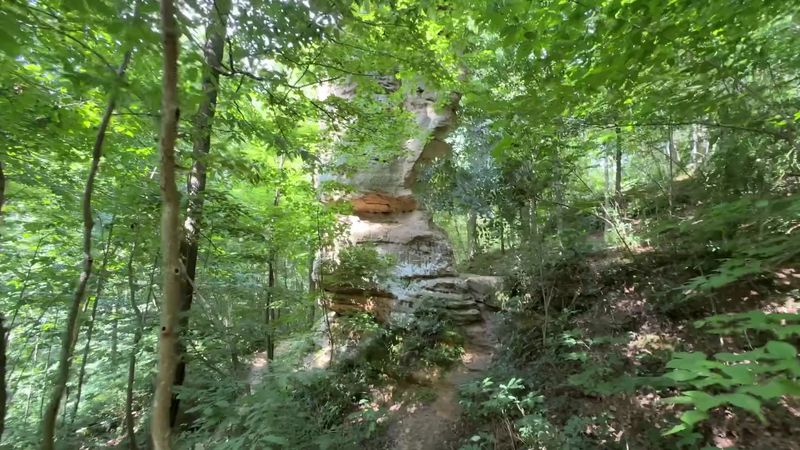
Not every natural wonder requires hours of hiking or special equipment to experience, and Jug Rock proves that some of the best adventures come in small packages. Located at 722 Albright Ln in Shoals, Indiana, this geological marvel sits just 100 yards from the roadside.
The entire visit from parking to viewing and back typically takes less than 10 minutes, making it perfect for families with young children, older adults, or anyone with limited mobility.
The trail leading down to the rock formation is short and straightforward, though visitors should note it does slope downhill and can become slippery when wet or during winter months. Most people describe the walk as taking about 45 seconds to a minute each way.
There are no entrance fees, no tickets to purchase, and the preserve remains open 24 hours a day, seven days a week, allowing you to visit whenever your schedule allows.
Parking presents the biggest challenge, as the roadside space accommodates only one or two regular vehicles comfortably. Some visitors mention that motorcycle groups have successfully squeezed in up to 20 bikes by parking strategically.
The key is watching carefully for the small sign marking the location, as many drivers accidentally turn into a nearby residential driveway thinking it’s the entrance.
Families appreciate that this stop doesn’t require extensive planning or preparation. You can literally decide on a whim to visit while driving through southern Indiana.
Kids get excited about the short nature walk, and the impressive rock formation holds their attention despite our modern world of digital entertainment. The accessibility makes Jug Rock an ideal introduction to geological tourism for children who might find longer hikes tedious or challenging.
A Perfect Roadside Detour on Southern Indiana Road Trips
Road trips through southern Indiana offer rolling hills, charming small towns, and hidden treasures that reward curious travelers who dare to veer slightly off their planned routes. Jug Rock sits right along the highway near Shoals, making it an ideal spontaneous stop that won’t derail your travel schedule.
Locals working in nearby Loogootee often recommend this spot to visitors passing through the area.
The location works beautifully as part of a larger southern Indiana adventure. After visiting the rock formation, many travelers head into Shoals proper to grab a bite at local establishments.
One reviewer enthusiastically recommends stopping at Bo-Mac’s Drive-In to pick up one of their famous malt shakes, suggesting it’s the perfect way to complete your Jug Rock experience. These kinds of authentic local spots add flavor and memory to any road trip.
Southern Indiana’s landscape differs dramatically from the flatter northern portions of the state, offering scenic drives through forested hills and alongside winding rivers. Jug Rock fits perfectly into this geological tapestry, representing millions of years of natural history compressed into one viewable monument.
The formation gives travelers a tangible connection to the ancient seas and geological forces that shaped this entire region.
Because the visit requires such minimal time investment, you can easily incorporate Jug Rock into almost any itinerary without feeling rushed or behind schedule.
A Photographer’s Dream Subject
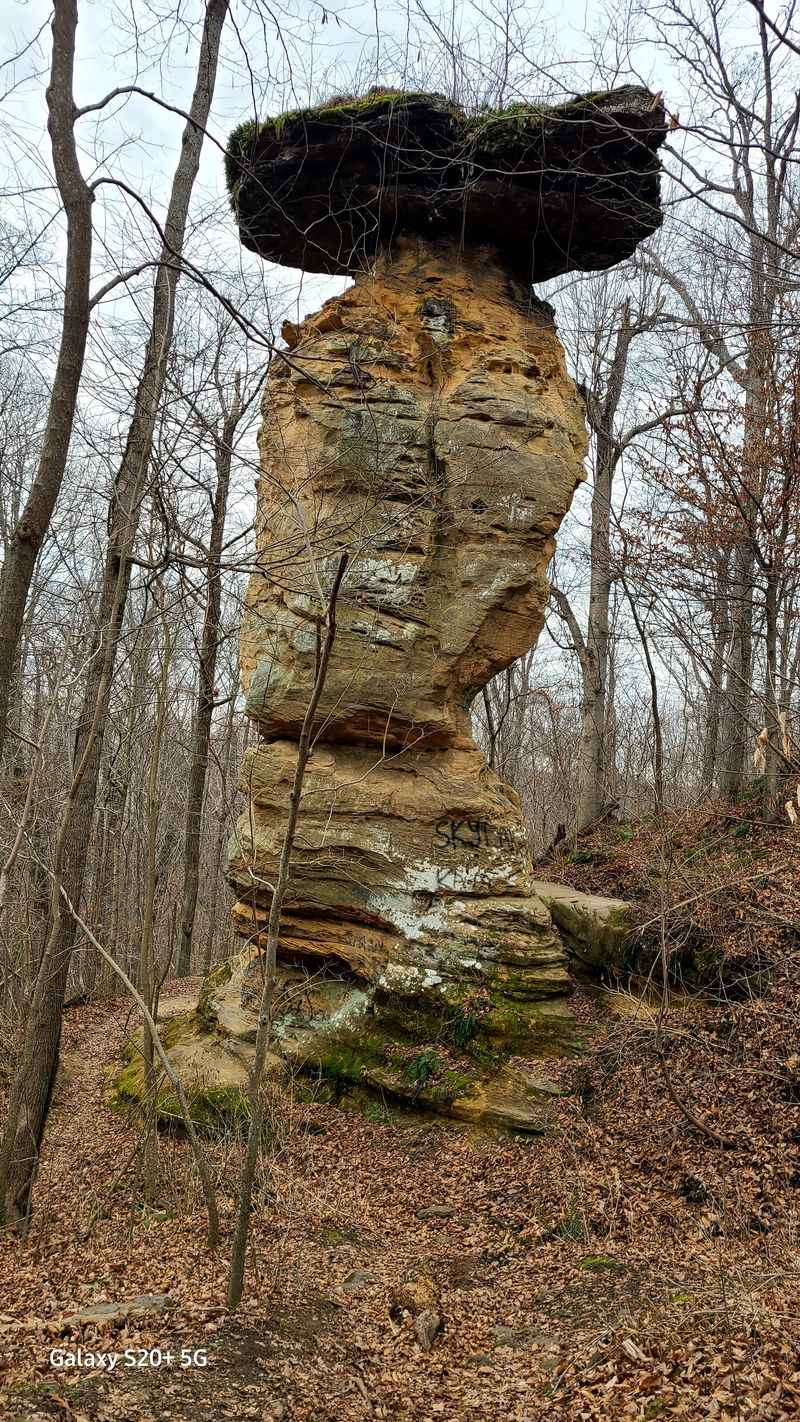
Photography enthusiasts constantly search for unique subjects that stand out from typical landscape shots, and Jug Rock delivers visual interest in abundance. The formation’s unusual shape creates compelling compositions from multiple angles, with the narrow pedestal and heavy cap rock producing dramatic contrast.
Natural lighting changes throughout the day, offering different moods and shadow patterns that can transform your images from morning to afternoon to evening.
The surrounding forest provides a lush green backdrop during spring and summer months, while autumn brings vibrant fall colors that frame the ancient stone beautifully. Winter visits reveal the rock’s structure more clearly when deciduous trees lose their leaves, though some photographers prefer the fuller vegetation that adds depth and context to their shots.
One visitor specifically recommends winter photography at this location, noting that summer’s thick greenery can obscure certain viewing angles.
Unfortunately, graffiti does mar portions of the rock formation, which many photographers find disappointing when composing their shots. However, creative framing and angle selection can minimize or eliminate the spray paint from your images.
Some photographers embrace the graffiti as a commentary on human interaction with natural spaces, documenting both the geological wonder and the unfortunate vandalism as part of the location’s current reality.
The rock’s impressive size becomes more apparent through photography, especially when you include people in your frame for scale reference. Parents often take photos of their children standing beside or beneath the formation, creating cherished family memories.
An Educational Experience About Deep Time
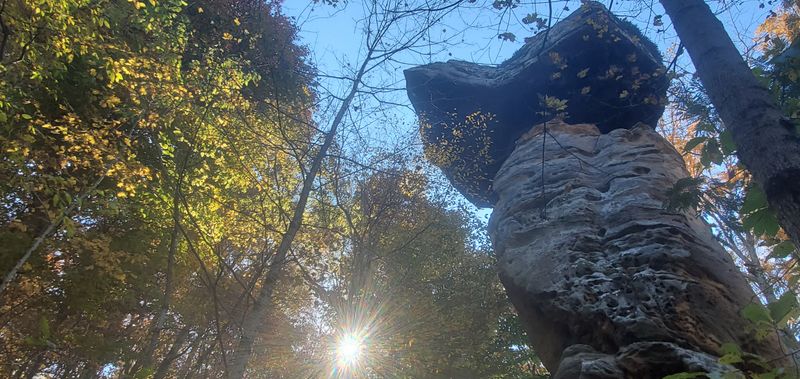
Understanding geological time scales challenges most human brains because our individual lifespans represent mere blinks compared to Earth’s 4.5 billion year history. Jug Rock offers a tangible teaching tool for grasping these immense time periods.
When you touch the ancient sandstone, you’re making physical contact with materials deposited during the Pennsylvanian Period, an era when giant insects buzzed through prehistoric forests and the first reptiles were just beginning to evolve.
The formation tells a story that unfolds across millions of years. Ancient seas covered Indiana repeatedly, depositing layer upon layer of sediment that eventually compressed into rock.
As continents shifted and climates changed, those rocks emerged above water and began their slow transformation through erosion. The softer layers surrounding what would become Jug Rock wore away faster, leaving the harder sandstone cap protected atop its pedestal.
Children especially benefit from this hands-on geology lesson. Reading about erosion and sedimentary rock in textbooks creates abstract concepts, but standing before a 60-foot example makes the information concrete and memorable.
Teachers sometimes bring student groups to observe the formation, discussing how natural forces sculpt landscapes over timeframes that dwarf human civilization. The narrow pedestal demonstrates differential erosion in action, showing how varying rock hardness affects weathering rates.
Visitors often leave with a shifted perspective on time itself.
A Peaceful Escape from Digital Overload
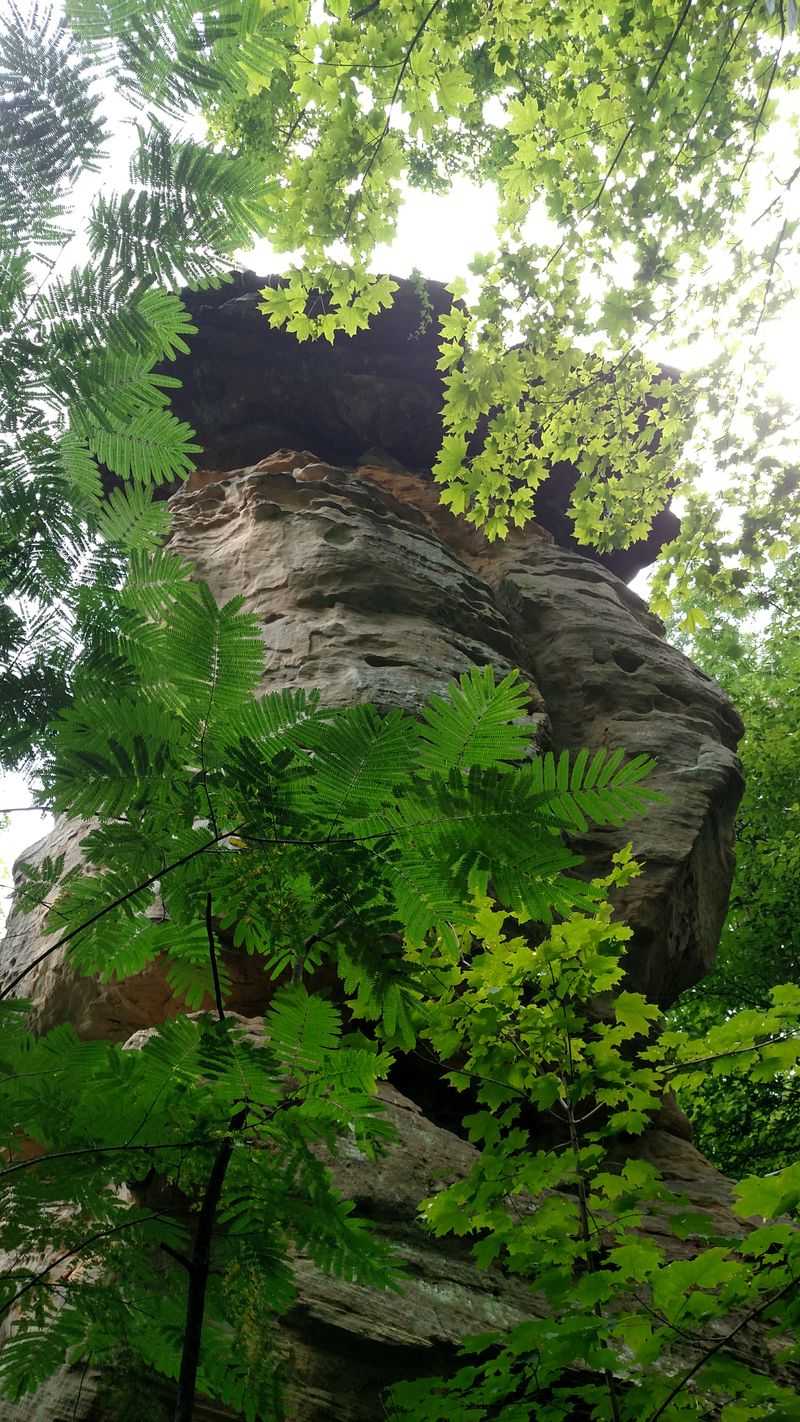
Modern life bombards us with constant notifications, screens, and digital demands that rarely give our minds a chance to simply exist in quiet observation. Jug Rock Nature Preserve offers a brief but meaningful opportunity to disconnect from technology and reconnect with the natural world.
The preserve’s remote location means cell service can be spotty, accidentally encouraging visitors to pocket their phones and engage fully with their surroundings.
The short walk through the woods to reach the formation provides sensory experiences that no screen can replicate. You’ll hear leaves crunching underfoot, birds calling from the canopy, and wind rustling through branches.
The earthy smell of forest soil and vegetation fills your lungs with each breath. These simple natural elements help reset stressed nervous systems and provide mental clarity that busy daily routines often prevent.
Standing before the ancient rock creates a meditative moment. The formation’s silent presence invites contemplation rather than conversation.
Many visitors report feeling a sense of peace and perspective when viewing something that has existed for millions of years, making their daily worries seem smaller and more manageable. The rock doesn’t demand anything from you, doesn’t require interaction or response, simply exists as a patient witness to the passage of time.
A Reminder of Indiana’s Hidden Natural Treasures
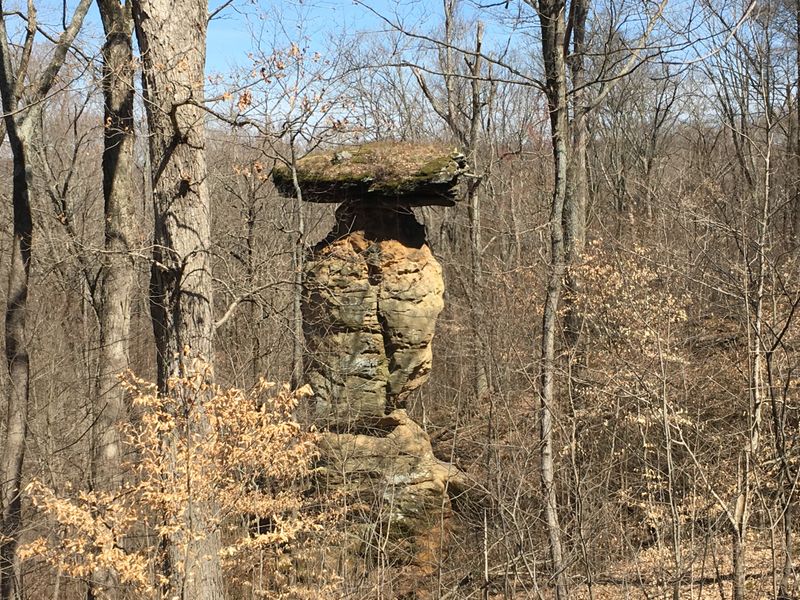
Indiana doesn’t typically appear on lists of America’s most dramatic natural landscapes. Most people associate the state with cornfields, basketball, and the Indianapolis 500 rather than geological wonders.
Jug Rock challenges those assumptions, proving that remarkable natural features exist in unexpected places if you know where to look. The formation represents just one example of Indiana’s surprising geological diversity that residents and visitors often overlook.
Southern Indiana’s landscape differs dramatically from the state’s flatter agricultural regions, featuring rugged hills, extensive cave systems, and unique rock formations created by ancient seas and subsequent erosion. The same geological forces that created Jug Rock also carved out nearby caves and sculpted the region’s distinctive topography.
Visiting this freestanding monument often sparks curiosity about what other natural treasures might be hiding in plain sight across the state.
The preserve’s existence also highlights conservation efforts to protect significant natural features for future generations. While the site lacks extensive improvements or visitor facilities, that simplicity helps maintain its authentic character.
The Indiana Department of Natural Resources manages the preserve, ensuring this geological wonder remains accessible while protecting it from development. The lack of commercialization means your experience feels genuine rather than manufactured for tourists.
Dear Reader: This page may contain affiliate links which may earn a commission if you click through and make a purchase. Our independent journalism is not influenced by any advertiser or commercial initiative unless it is clearly marked as sponsored content. As travel products change, please be sure to reconfirm all details and stay up to date with current events to ensure a safe and successful trip.
