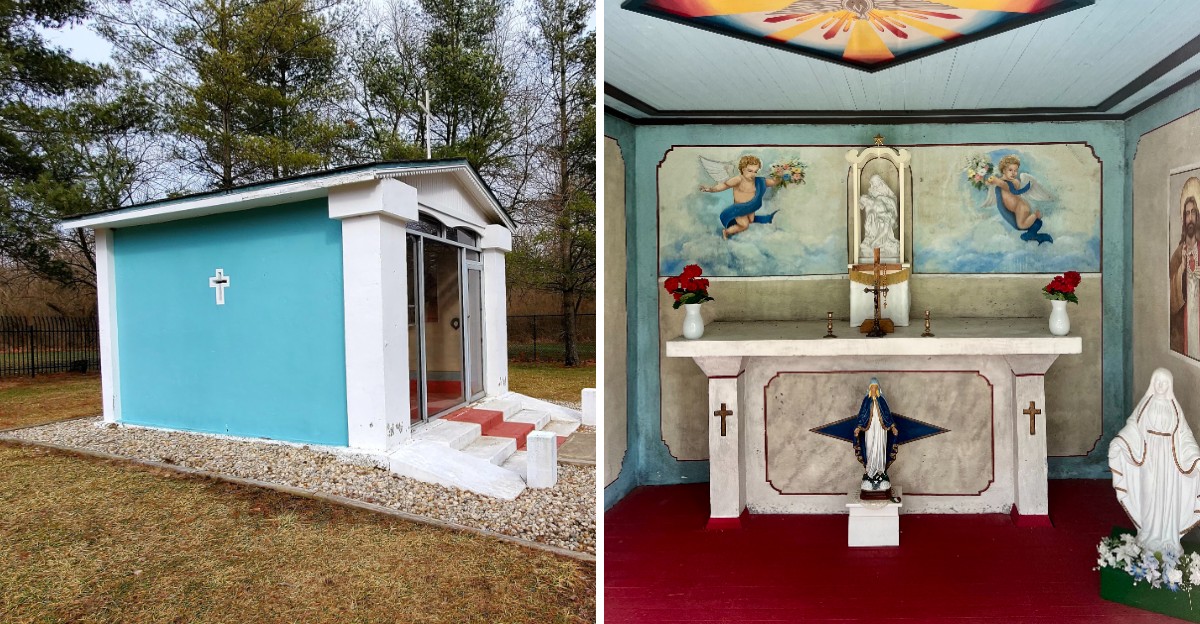
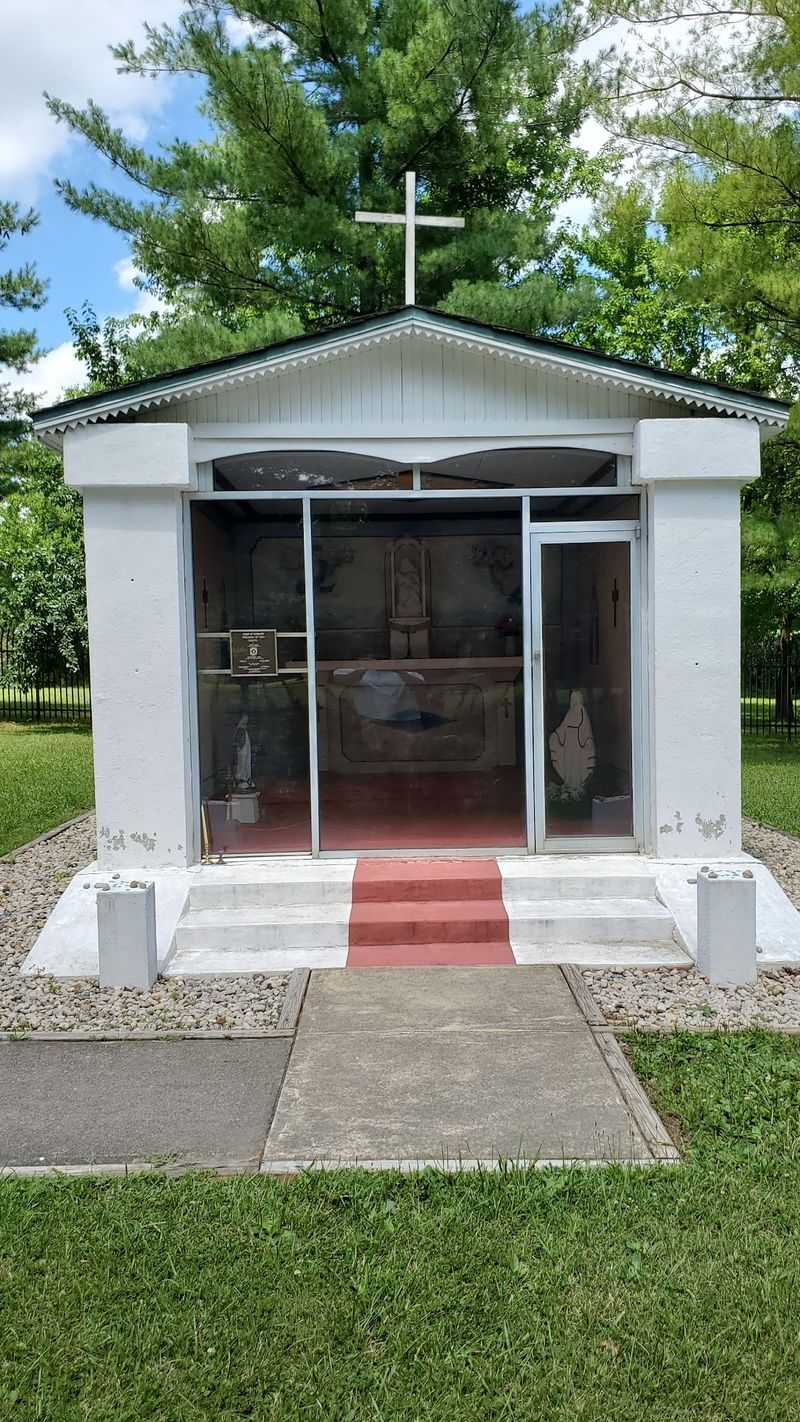
The floor inside this tiny chapel is painted red to look like a carpet. The altar is painted to look like marble, too.
Italian prisoners made it all from leftover brick and stucco.
The whole building measures roughly 11 by 16 feet. That’s smaller than many bedrooms.
Yet the walls glow a bright Mediterranean blue, covered with cherubs, angels, and saints.
What gets me is that these men managed to recreate a little piece of home using whatever materials they could find. Far from Italy and missing their churches, they put their skills to work creating something beautiful in the Indiana woods.
I’d love to see those painted details up close and think about the people who made them. It’s remarkable how much history can fit inside a room this small, especially in a place you might never expect to find it.
Skilled Hands Turned Scraps Into Something Sacred
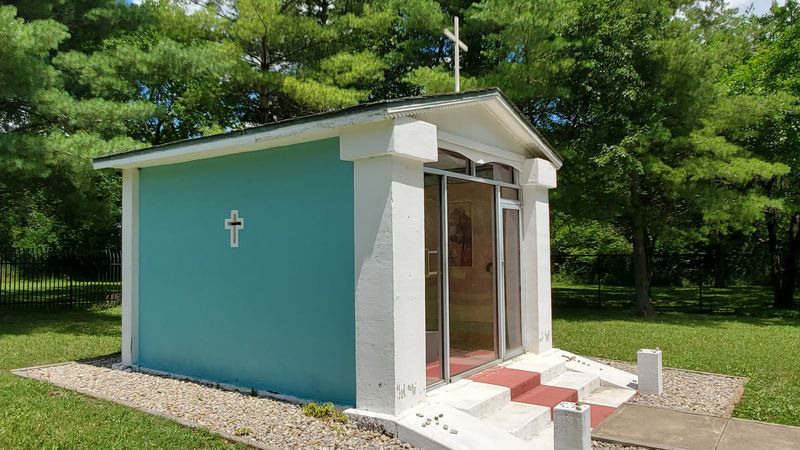
Leftover brick and stucco sound like the start of a shed, not a church. The POW Chapel at Camp Atterbury, also called Our Lady’s Chapel in the Meadow, proves otherwise.
In 1943, about 3,000 Italian prisoners arrived at Camp Atterbury, south of Indianapolis. Many had been captured in North Africa and shipped across the ocean to Indiana.
Plenty of these men were trained artisans. Their skills included masonry, woodworking, stonework, and painting.
They wanted a place to worship that felt like home. Their chaplain, Franciscan Father Maurice F.
Imhoff, encouraged the idea, and camp leaders gave their support.
So the men got to work with whatever they could find. Surplus materials from other camp projects became walls, an altar, and decorations.
That kind of creativity deserves a moment of respect. Most of us struggle to build a bookshelf with a full toolbox and clear instructions.
Knowing this backstory makes a visit feel richer. Before you go, read a little about the camp’s history so the details really land.
You’ll start noticing how every painted surface reflects patience and care. The chapel isn’t fancy, and it was never meant to be.
It was meant to feel like home.
Small Enough To Fit In Your Living Room
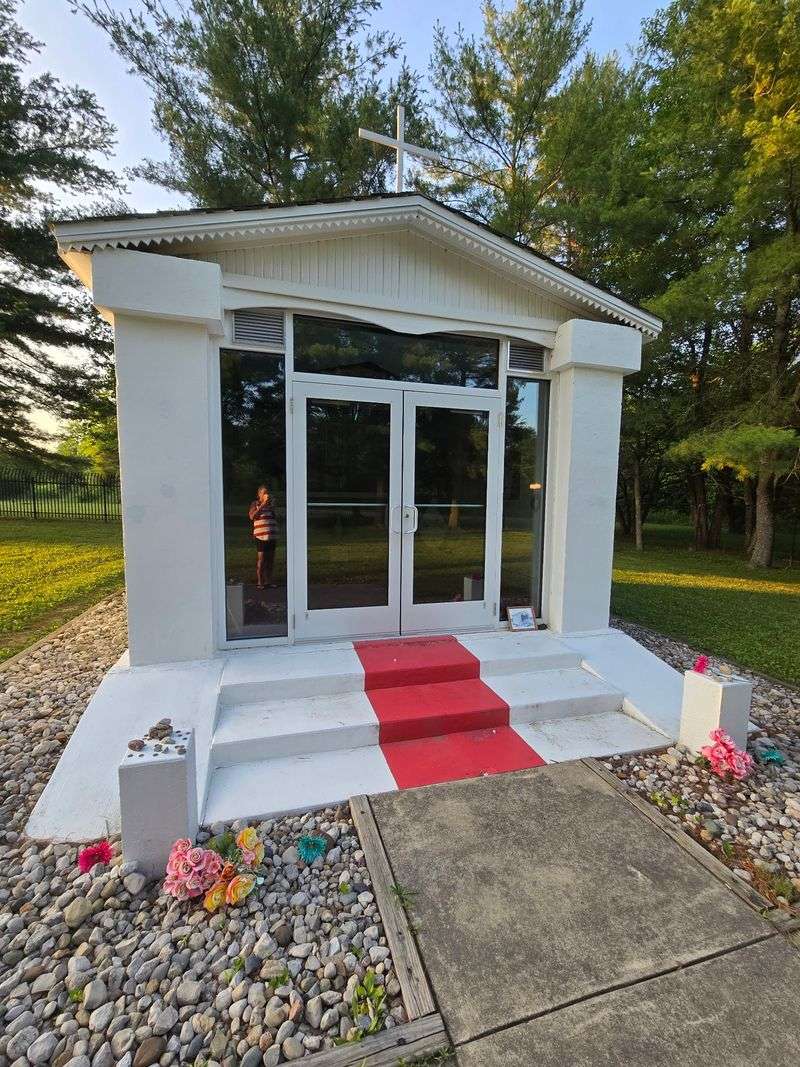
Eleven feet by sixteen feet. Those are the rough measurements of this chapel, and it stands only about 12 feet tall.
Many family rooms are bigger than that. Still, the building carries more meaning per square foot than most cathedrals.
The small size was practical for men using spare supplies. It also creates a cozy, personal feel that big churches rarely match.
Every inch seems carefully planned. Because there’s so little space, your eyes catch each painted detail fast.
Here’s a helpful tip for photographers. Step back across the lawn to fit the whole chapel and its cross in one shot.
Then move closer to study the front and the glass entrance. The contrast between the plain outside and colorful inside is part of the fun.
Families with kids will appreciate how quick and easy the stop feels. Nobody gets lost, and nobody gets bored waiting in a long line.
I think the scale also says something about faith. You don’t need towering ceilings for a place to feel holy.
The builders made a sacred room just right for quiet prayer. Somehow, that modest size makes the story hit even harder.
Bright Blue Walls Bring Italy to the Midwest
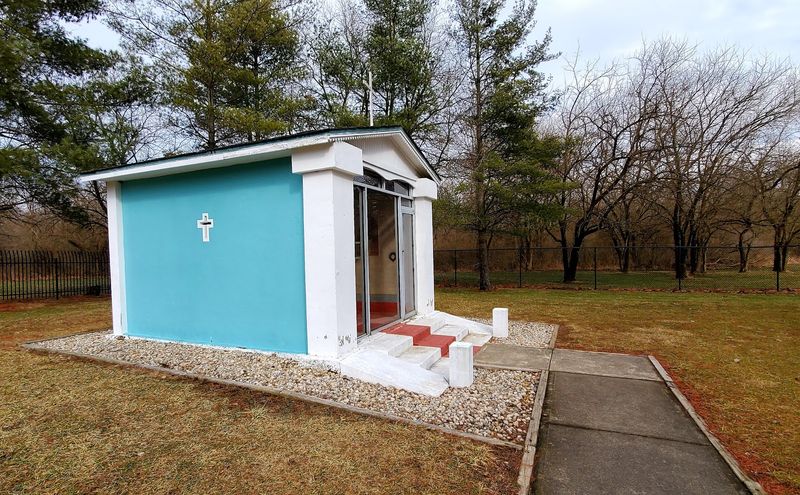
Blue is the first thing that grabs you. The interior walls shine a brilliant Mediterranean blue, like a sky over an Italian village.
The prisoners didn’t have real marble for their altar. So they painted it to look like marble instead, and the effect is impressive.
Then there’s the floor. It was painted red to imitate a traditional carpet, a clever trick that adds warmth to the tiny room.
These choices weren’t random decorating ideas. The men were recreating the look and spirit of churches back in their homeland.
That’s what makes this chapel feel so personal. It’s a love letter to Italy written in paint.
For the best view, plan your trip on a bright day. Natural light helps the colors pop through the glass entrance.
Bring patience along with your camera. Glare on glass can be tricky, so try shooting at a slight angle.
Kids might enjoy a little game here. Ask them which parts look real and which parts are actually painted illusions.
Spoiler: more of it is painted than you’d guess. Those Indiana prisoners were basically master magicians with a brush.
Cherubs, Saints, and a Mystery in the Paint
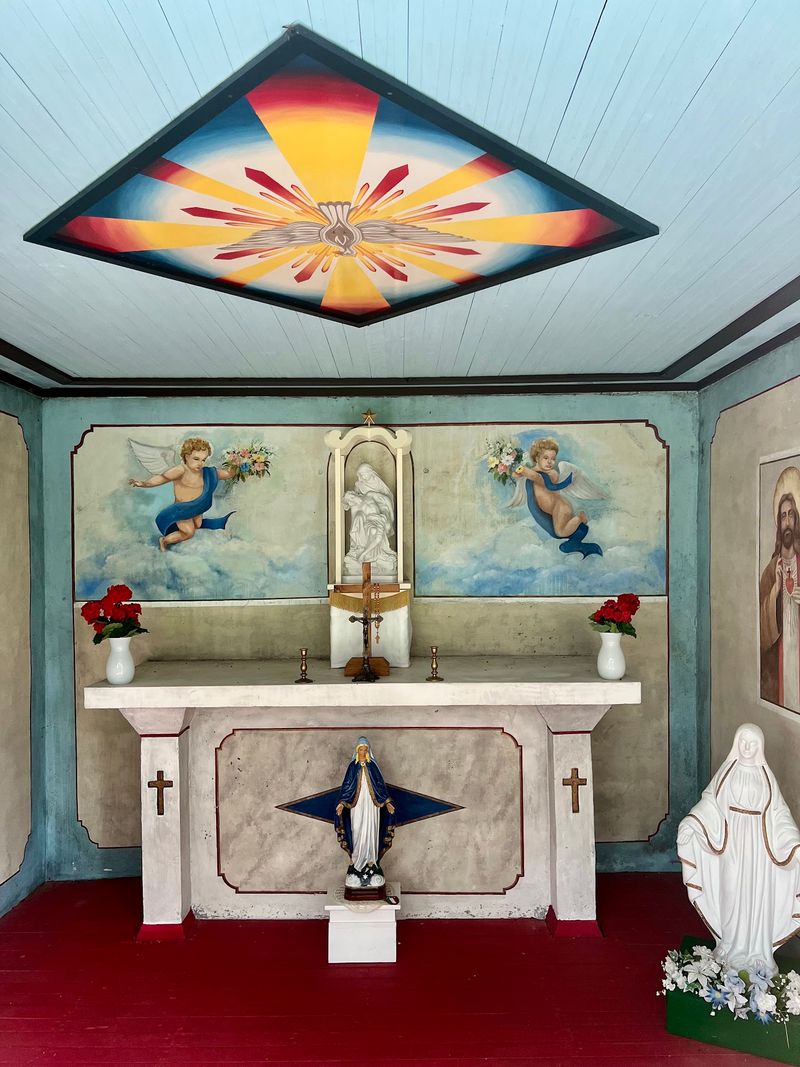
Chubby-cheeked cherubs float above the altar, flanking a cross. Look up, and the eye of God watches from the ceiling.
The murals inside the POW Chapel are small but vivid. You’ll spot Jesus, the Virgin Mary, angels, and a dove for the Holy Spirit.
The side walls hold more treasures. Images of the Madonna, Saint Anthony of Padua, and Saint Francis of Assisi decorate them.
Those saints mattered to Italian Catholics. Saint Francis even links nicely to the Franciscan chaplain who supported the project.
Now for the mystery. Historical accounts say the prisoners mixed colors from berries and other plants.
Some stories go further and claim a few men added their own blood to the paint. Nobody can prove it, but the legend has stuck around for decades.
Either way, the dedication behind these paintings is real. Homemade pigments take serious effort, especially inside a prison camp.
Try picking out each figure one by one. It turns a quick look into a small treasure hunt.
A pair of binoculars or a zoom lens helps. Details hide in corners that are easy to miss at first.
Rescued From Graffiti and Target Practice
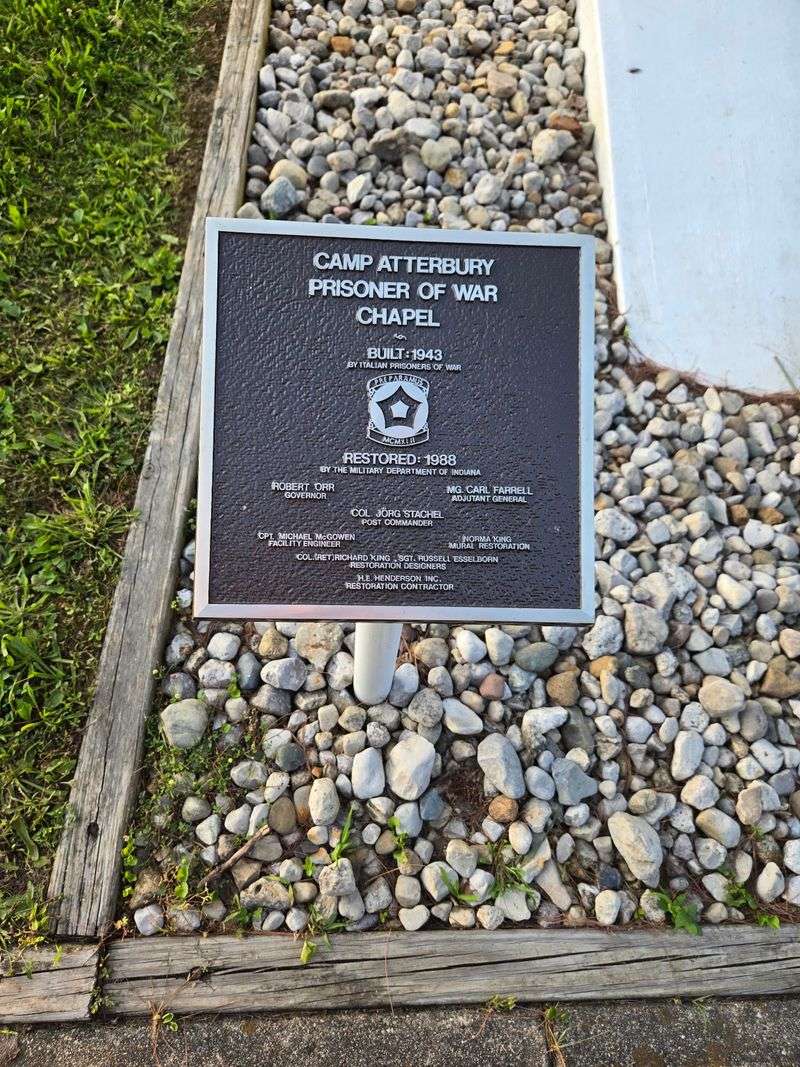
Things went downhill after May 1944. That’s when the Italian prisoners left Camp Atterbury so German prisoners could take their place.
The chapel sat abandoned for years. Weather beat on it, and anglers and campers ducked inside to escape the rain.
Vandals added graffiti. Sharpshooters even used the little building for target practice, which is about as rude as it gets.
Thankfully, people noticed. Local residents, Camp Atterbury leaders, and the Indiana Italian Heritage Society stepped up.
A major restoration began in 1988. The chapel was rededicated in September 1989.
Workers installed a glass window and door to protect the delicate interior. That’s why you’ll view the paintings through glass today.
Trouble struck again in 1999 when an arsonist damaged the chapel. Firefighters saved the structure, and the story kept going.
This comeback is worth remembering during your visit. The neat little building almost didn’t survive.
Please treat it gently when you’re there. Stay respectful, keep hands off the glass, and leave no trace behind.
Every visitor helps keep this treasure safe for the next generation.
The Last Piece Left Standing
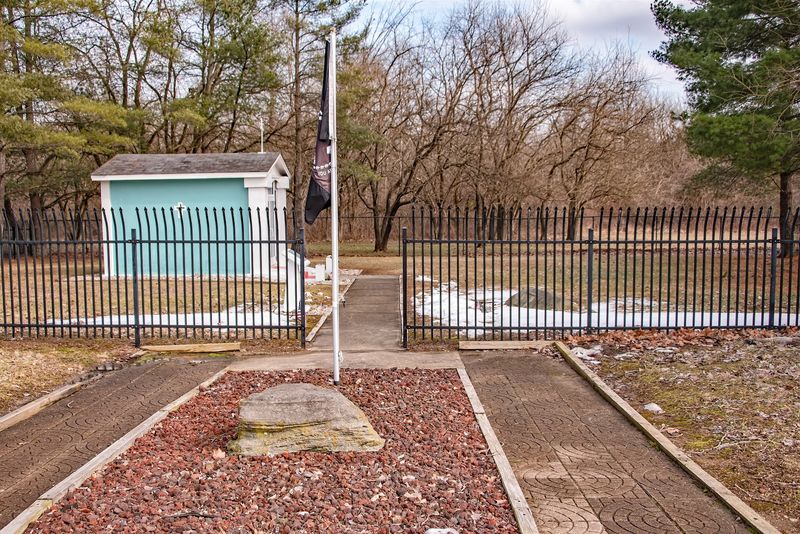
Of the whole World War II prisoner compound at Camp Atterbury, only one structure remains. You’re looking at it.
Barracks and fences are long gone. The chapel stayed, which feels fitting for a building made from hope.
The Italian prisoner story here has some surprisingly warm chapters. Accounts describe a friendly rapport between prisoners and guards.
The men had hobbies and even an orchestra. Their meals reportedly leaned toward pasta, which they preferred.
Picture the camp kitchen trying to keep up with that request. Okay, no picturing, but it’s a fun thought.
These details remind us that people stayed people, even in hard times. Kindness showed up in unexpected places.
Standing in the meadow helps that idea sink in. The quiet setting gives you room to think.
Take a few minutes before heading back to the car. Walk the grounds slowly and notice the stillness around you.
If you’re bringing students, this spot makes a great real-world history lesson. Talk with them about how art and faith brought comfort to men far from their families.
Mark Your Calendar for the Annual Mass
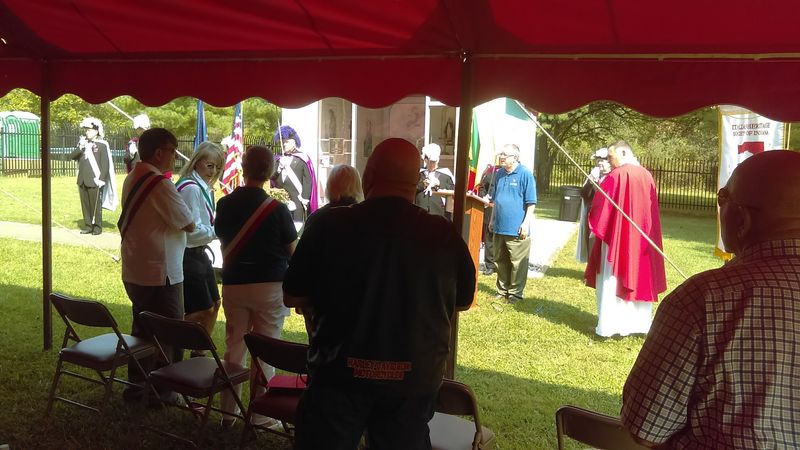
Every year, the chapel comes alive with people. The Italian Heritage Society of Indiana and the Indiana National Guard host an annual Mass and ceremony.
The gathering often includes a rosary and a picnic. It honors the prisoners who built the chapel and the history they left behind.
The 37th annual Mass is scheduled for Sunday, September 20, 2026. Former prisoners’ families and the general public are welcome.
That open invitation is a big deal. It turns a quiet historic site into a living tradition.
Attending is a wonderful way to see the chapel with purpose. You’ll be part of a story that has lasted more than 80 years.
A few practical tips can help. Bring a lawn chair, sunscreen, and something comfortable for sitting outdoors.
Packing a picnic makes sense too, since that’s part of the tradition. Check local announcements closer to the date for details.
Not Catholic? No problem.
Respectful visitors of any background can appreciate the music, prayers, and sense of community.
September weather in central Indiana is usually pleasant too. That’s a nice bonus for an afternoon outside.
Getting There Is Easier Than You’d Expect
Good news for road-trippers. You don’t need special access to the main military base to see this chapel.
The POW Chapel sits at 2949 E North St, Franklin, IN 46131. It’s within the Johnson County Park area, and visiting is free.
Enter from Highway 31 onto Hospital Road. Signs will guide you the rest of the way toward the chapel.
The setting is calm and wooded. It feels more like a nature stop than a military site.
Remember that you’ll view the interior through glass. The door stays closed to protect the fragile artwork inside.
That’s actually a smart setup. The paintings survived graffiti and fire, so a little glass is a fair trade.
Plan for a short visit at the chapel itself. Pair it with other stops to make a full outing.
Wear comfortable shoes for walking the grounds. Bring water, especially on warm Indiana summer days.
Visiting with grandparents or anyone who enjoys history? This makes an easy, low-stress trip.
The quiet, peaceful mood is part of the appeal. Keep voices low and enjoy a rare moment of calm.
Tanks, Helicopters, and More History Nearby
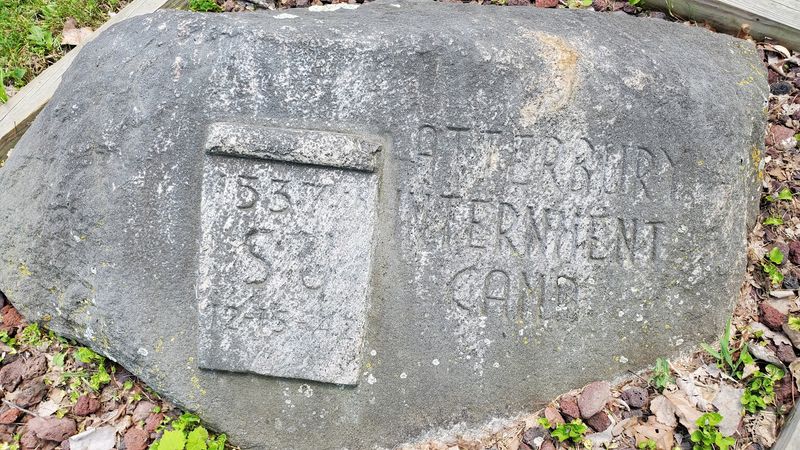
Once you’ve seen the chapel, you’re not done. Camp Atterbury has more to explore nearby.
The Camp Atterbury Museum sits at the Welcome Center. Its indoor exhibits follow the camp’s history from 1942 to today.
Inside, you’ll find a timeline filled with artifacts, photographs, and uniforms. It helps you see where the chapel fits in the bigger picture.
Outside, things get bigger. Literally.
The outdoor museum displays military equipment, including tanks and helicopters. Kids who think history is boring may suddenly change their minds.
There’s also the Outdoor Veterans Memorial. It offers a thoughtful place to honor those who served.
Visiting all three spots makes a well-rounded day. You’ll learn how Indiana played a part in World War II history.
Start at the chapel for a quiet beginning. Then head to the museum for the full story behind it.
Bring a notebook if you’re traveling with students. Jotting down favorite facts turns the outing into a fun learning project.
By the end, the little blue chapel will make even more sense. It’s one tiny room that opens a door to a much larger story.
