I used to think I had Oklahoma figured out. Wide highways, open fields, small towns that look quiet from the road.
Then I started wandering a little farther off the usual stops and realized the state hides some incredible things in plain sight. I am talking about underground tunnels filled with layers of history and mysterious stones sitting deep in the woods that look like they belong in another country.
These are not the kinds of places you see advertised on giant highway signs. Most people drive right past them without even knowing they exist.
The first time you stumble onto one of these spots, you stop and think, how did I not know about this? That moment is what makes exploring Oklahoma so much fun.
And once you see what is hiding out there, you will never look at this state the same way again.
1. Oklahoma City Underground

Most people walk above it every single day without ever knowing it exists. The Oklahoma City Underground is a network of climate-controlled pathways that links office towers, hotels, and businesses beneath the streets of downtown.
It is one of those places where the city’s layered past quietly breathes alongside its modern pulse.
Parts of this underground system trace back to the early 20th century, when below-street spaces housed immigrant communities who built lives in the margins of a booming city.
Over time, those spaces evolved into pedestrian corridors that locals now use to move between buildings without ever stepping outside.
On a blazing Oklahoma summer day, that alone feels like a gift from the universe.
Walking through the tunnels, you get this strange sensation of being inside the city’s ribcage. The hum of ventilation, the echo of footsteps, the occasional glimpse of a vintage storefront window preserved behind glass.
It is part utility, part time capsule, and entirely unexpected. Most visitors to Oklahoma City never even hear about it, which makes stumbling upon it feel like cracking open a secret door.
The best approach is to enter from one of the connected buildings downtown and just start exploring. There are no grand signs announcing its presence.
That quiet invisibility is exactly what makes it special. If Oklahoma City were a book, this underground would be the footnotes that change everything you thought you understood about the main story.
Address: 300 N Broadway Ave, Oklahoma City, Oklahoma
2. Tulsa Underground Tunnels
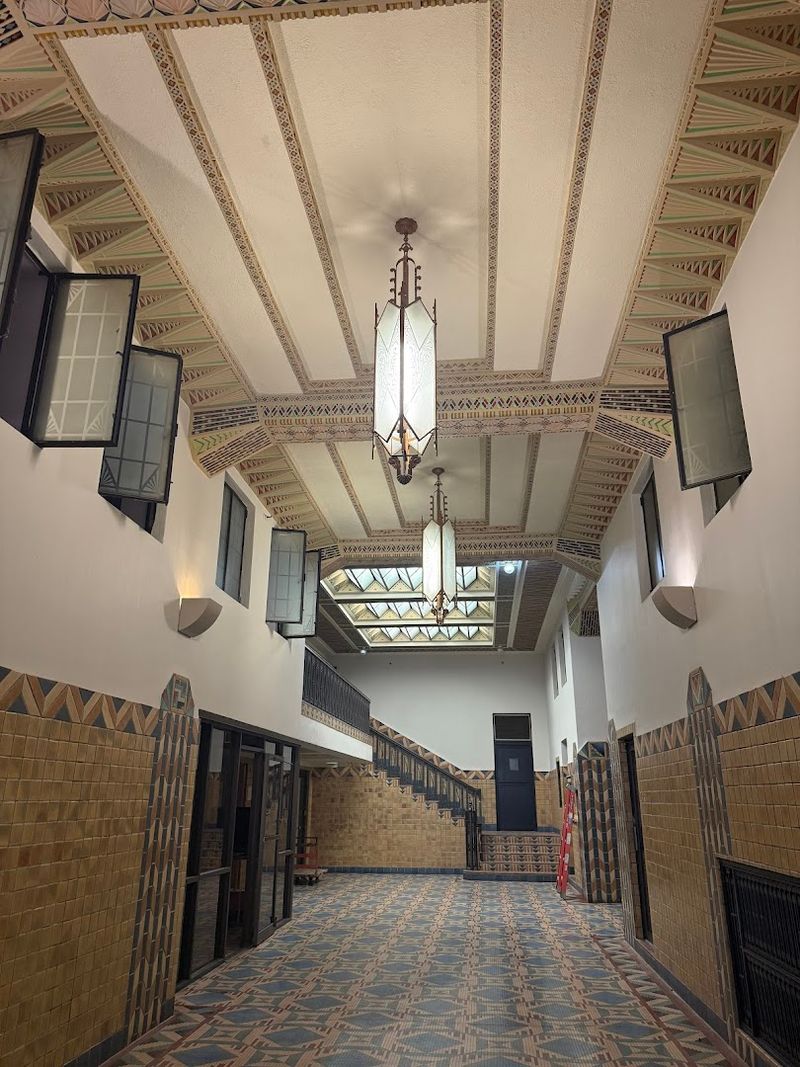
Tulsa has a reputation for Art Deco architecture, but the real surprise is what sits underneath all those gorgeous facades.
Built in the late 1920s, downtown Tulsa’s underground tunnel network connects multiple historic buildings across several city blocks, letting you move between offices, parking garages, and even a hotel without touching the sidewalk above.
There is something genuinely surreal about wandering below busy streets while traffic rolls overhead. The tunnels carry that specific kind of quiet that only exists underground, a muffled, slightly echo-y stillness that makes you hyper-aware of every footstep.
It is not spooky exactly, but it is definitely atmospheric in a way that surprises you.
Tulsa’s tunnel system does not get nearly the attention it deserves, especially compared to the city’s famous skyline and restored historic districts. But for anyone curious about the bones of a city, this is where the real story lives.
The infrastructure itself is a document of how Tulsa was planned and built during its oil-boom heyday, when ambition was written into every brick and beam.
Practical tip: the tunnels are most accessible during regular business hours when the connected buildings are open. Do not expect a guided tour or interpretive signage.
Just go in, pay attention, and let the place do the talking. Tulsa rewards the kind of traveler who is willing to look past the obvious, and the underground tunnels are proof of that in the most literal sense possible.
Address: Tulsa Tours, 511 S Boston Ave, Tulsa, Oklahoma 74103
3. Marland Mansion and Estate Tunnels
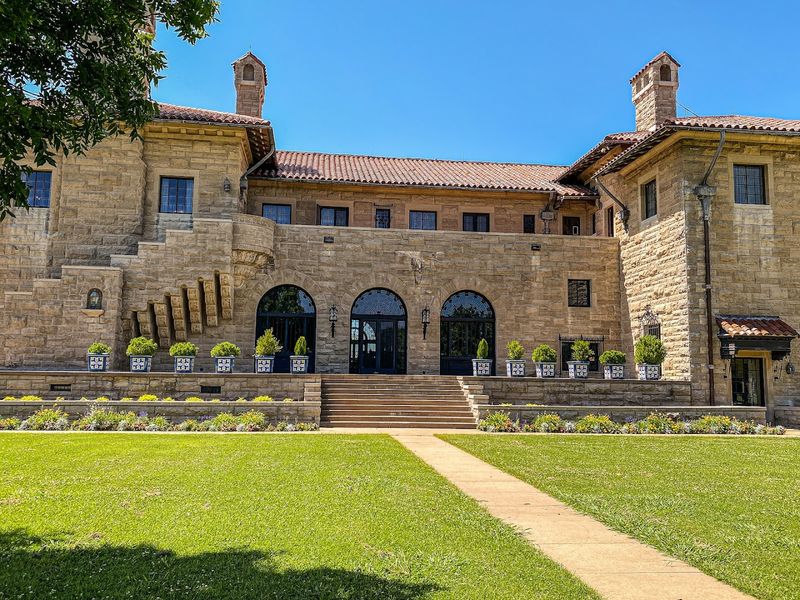
Standing in front of the Marland Mansion in Ponca City, the first thing that hits you is the sheer audacity of the place. Built during the height of the Oklahoma oil boom, this 43,561-square-foot estate was designed to rival the grand homes of European nobility.
It succeeds, almost uncomfortably so, in a way that makes you feel like you have wandered into a different century.
But the mansion’s real intrigue lives underground. The estate includes a network of tunnels that once connected the main house to the boathouse and studio on the property.
Staff members used these passages to move discreetly without crossing paths with the family or their guests. It is the kind of architectural detail that transforms a beautiful building into a genuine story.
Touring the mansion already feels theatrical, with its Italian Renaissance design, hand-painted ceilings, and rooms that seem frozen in a particular kind of gilded ambition. Knowing that tunnels run beneath your feet adds another dimension entirely.
The Marland story itself is worth knowing before you arrive: a man who built an empire, lost it, rebuilt himself as a politician, and left behind a house that outlasted everything.
The mansion is open for public tours and sits within a larger estate complex that includes gardens and additional historic structures.
Give yourself at least two hours here, because rushing through it would mean missing the small details that make the place genuinely extraordinary rather than just impressively large.
Address: 901 Monument Road, Ponca City, Oklahoma 74604
4. Heavener Runestone Park
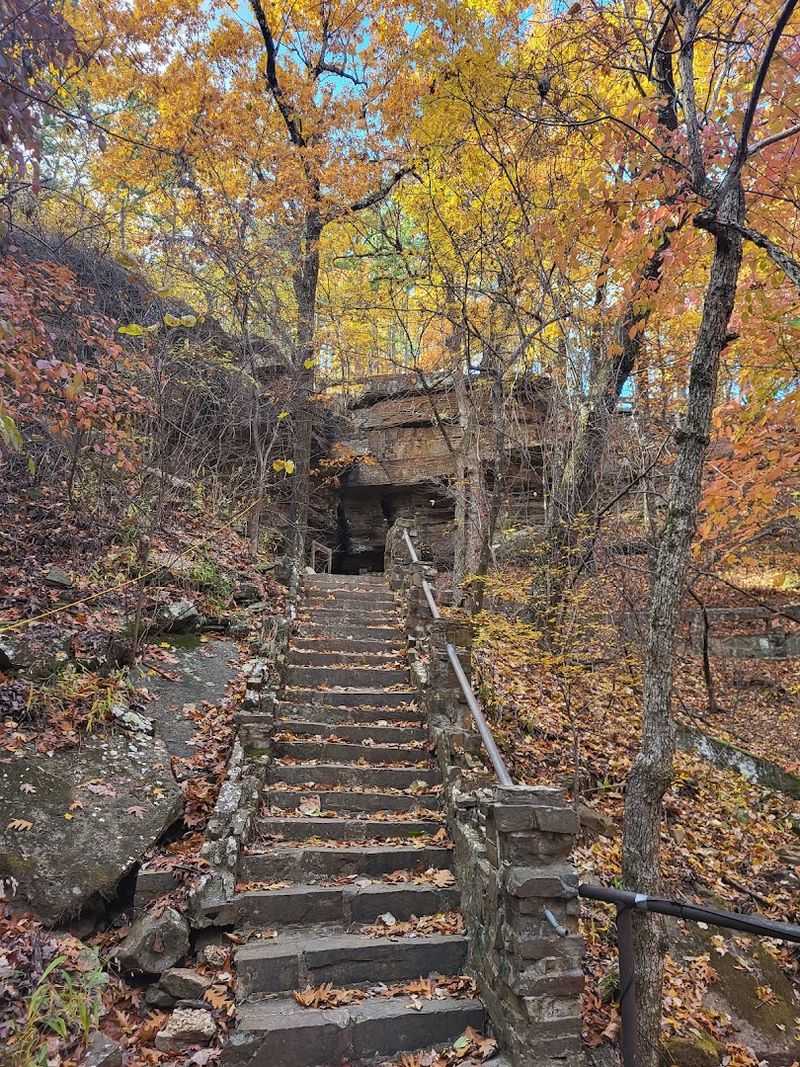
A twelve-foot stone covered in ancient runic carvings, sitting quietly in an Oklahoma forest, sounds like the setup for a mystery novel. But the Heavener Runestone is completely real, and standing in front of it for the first time produces a specific kind of disorientation that is hard to shake.
Nothing in your mental map of Oklahoma prepares you for this.
The stone features eight runic characters that some researchers have dated between AD 600 and 900, predating Columbus’s arrival in the Americas by centuries. Debate about its origins has never fully settled.
Some scholars argue it is evidence of Norse explorers reaching the interior of North America. Others suggest alternative explanations.
The mystery itself is the attraction, honest and unresolved and genuinely fascinating.
The park surrounding the runestone is managed by Oklahoma State Parks and sits within the forested hills of the Ouachita region in eastern Oklahoma. The setting amplifies the experience significantly.
You hike a short trail through dense trees, and then suddenly there it is, massive, ancient, and oddly serene. The forest keeps everything quiet in a way that makes the moment feel weirdly ceremonial.
Heavener Runestone Park is open to the public and offers a small visitor center with additional context about the stone’s history and the ongoing research surrounding it.
If you are the kind of person who loves a good unsolved puzzle layered with genuine historical weight, this is the kind of place that stays with you long after you drive away.
Address: 18365 Runestone Road, Heavener, Oklahoma 74937
5. Wild Horse Creek Cave
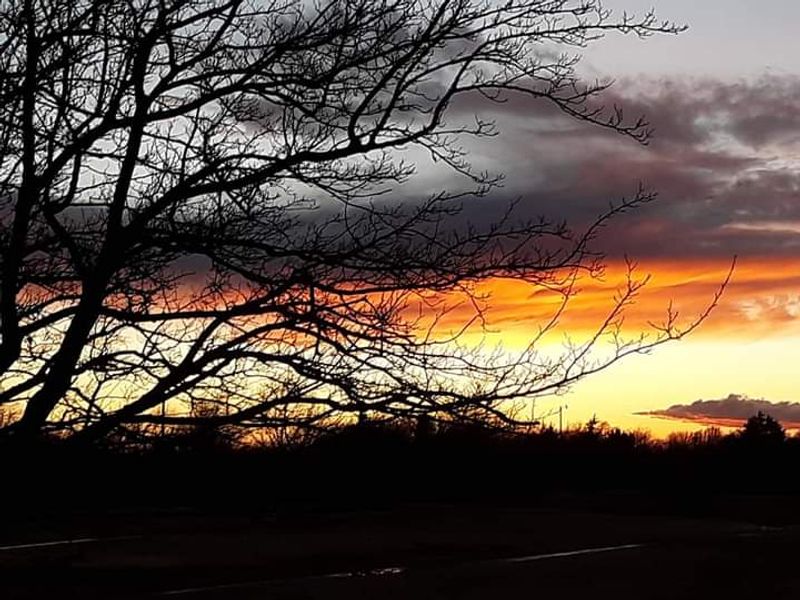
Some discoveries happen not through planning but through a shovel hitting the wrong patch of ground at the right moment. In 2004, a city worker in Marlow uncovered a sinkhole that revealed a long-forgotten cave along Wild Horse Creek.
What came next was the kind of local story that blurs the line between documented history and living legend in the best possible way.
Local lore connects the cave to the Marlow brothers, a group of outlaws from the late 1800s whose story is already dramatic enough without any underground additions. The brothers were real historical figures whose conflicts with law enforcement became the subject of books and even a Hollywood film.
The cave adds a physical, tangible layer to a story that might otherwise feel too cinematic to be true.
Marlow itself is a small city in Stephens County in south-central Oklahoma, and it carries that specific small-town quality where history feels close to the surface. People here know the Marlow brothers story the way other towns know their founding myths, with pride and a touch of theatrical relish.
Asking locals about the cave tends to open up conversations that spiral into fascinating territory.
The cave site is not a developed tourist attraction with interpretive panels and parking lots. It exists in that interesting middle ground between local curiosity and historical significance.
Getting there requires some local knowledge and a willingness to explore without a perfectly manicured path. That roughness is actually part of the appeal for anyone who finds the unpolished version of history more compelling than the curated one.
6. City Place Indoor Spiral Slide
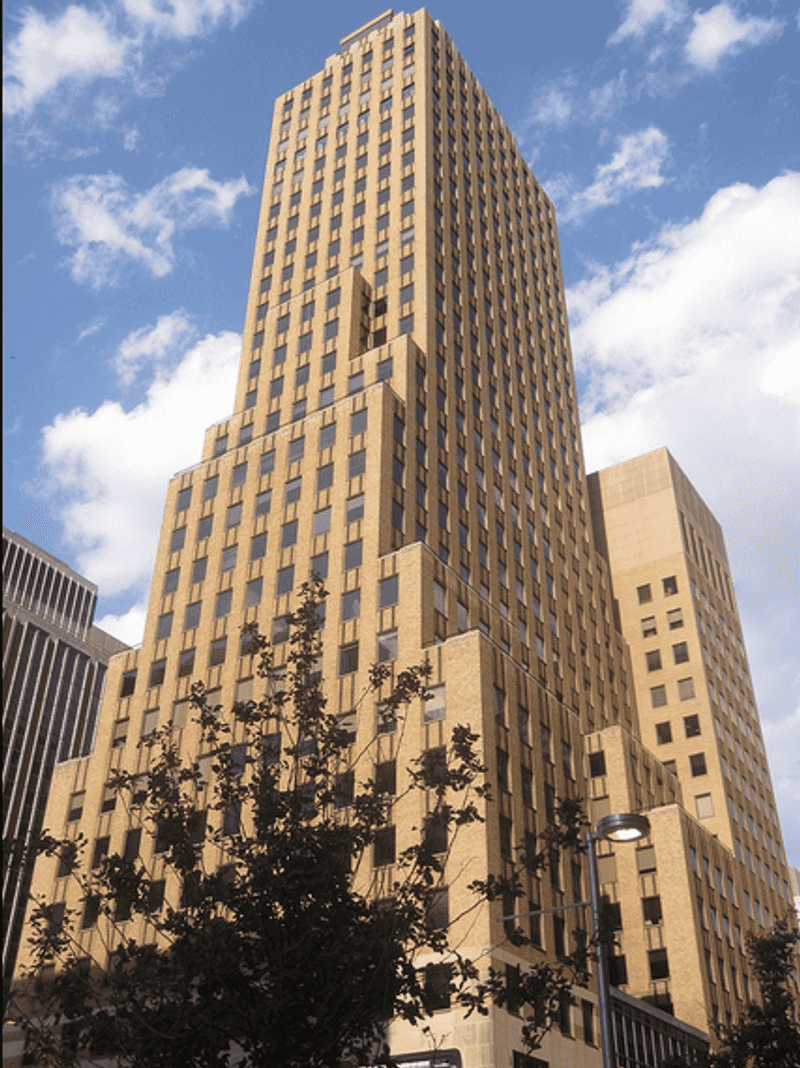
Somewhere inside one of downtown Oklahoma City’s tallest buildings is a 33-story indoor spiral slide, and the fact that most people have no idea it exists makes it one of the strangest architectural secrets in the entire state.
City Place, a prominent skyscraper in the heart of downtown, had this slide built as an emergency escape route.
The design logic is straightforward: in a high-rise emergency, stairs get crowded fast.
The slide is no longer in active use, but the structure still exists within the building, which is somehow even more interesting than if it were operational.
There is something deeply compelling about a piece of infrastructure designed for crisis that now just sits there, quietly occupying space inside a working office building.
It is the kind of detail that sounds made up until you see the documentation.
Oklahoma City has plenty of legitimate architectural highlights, from its revitalized Bricktown district to the striking Oklahoma City National Memorial.
But the City Place slide occupies a different category entirely: the category of things that exist not because they are beautiful or symbolic, but because someone once thought they were a genuinely good practical idea.
That kind of earnest problem-solving has its own charm.
Access to the building’s interior is limited given that it is a working office tower, but the slide’s existence is publicly documented and discussed in architectural and local history circles.
For anyone fascinated by the unexpected engineering choices hidden inside ordinary-looking buildings, City Place is worth putting on your radar the next time you find yourself in downtown Oklahoma City.
Address: 204 N Robinson Ave, Oklahoma City, Oklahoma 73102
7. Automobile Alley Vintage Car Collection

Most people who walk through Oklahoma City’s Automobile Alley keep their eyes at street level, admiring the restored brick facades and the lively mix of shops and restaurants that now fill what was once the city’s automotive hub. That is completely understandable.
But look up, and things get considerably more interesting.
Above street level, tucked inside a downtown building along the corridor, a private collection of vintage cars sits in quiet, almost secretive display.
Polished chrome classics and brightly painted mid-century models occupy the space with the kind of confident stillness that only objects from another era can manage.
It feels less like a museum and more like a time capsule that someone forgot to lock.
Automobile Alley earned its name in the early 20th century when car dealerships lined the street, making it one of the first dedicated automotive districts in the country. That history gives the vintage collection an added layer of resonance.
The cars are not just old vehicles; they are physical artifacts of the neighborhood’s original identity, still present in the very district that was built around their era.
The collection is private, which means public access is not guaranteed in the way a formal museum would be. But the visibility from certain vantage points and the documented existence of the collection make it a worthwhile curiosity for anyone exploring the Automobile Alley district.
Pair it with a walk along the corridor itself, and you get a genuinely layered experience of how Oklahoma City’s commercial history evolved from horsepower to skyline.
Address: Automobile Alley, Oklahoma City, Oklahoma 73103
8. OSU Steam Tunnels
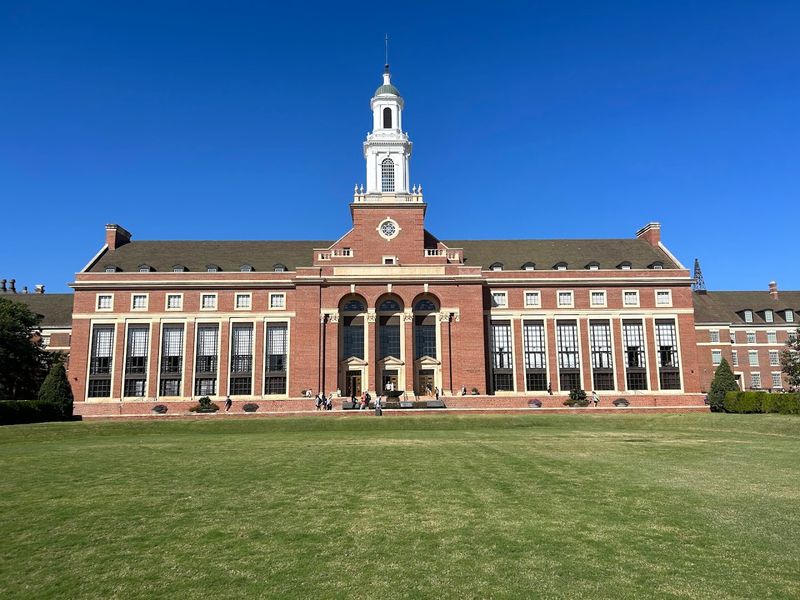
Oklahoma State University’s campus in Stillwater looks exactly as a classic American university should: wide green lawns, handsome brick buildings, and the kind of organized calm that makes you want to sit outside with a book.
What the surface does not reveal is what runs underneath it all, a network of steam tunnels that has been carrying utilities across campus for decades.
The tunnels were built to transport heat and utilities through an efficient underground system, which was a common infrastructure approach for large institutional campuses throughout the 20th century.
In 1936, a gas explosion within the system became part of OSU’s institutional memory, the kind of event that gets passed down through generations of students as part of the campus’s unofficial oral history.
The tunnels are not open for public tours, which actually makes them more interesting in a way.
Restricted spaces have a way of becoming mythologized, and the OSU steam tunnels occupy that specific space in campus lore where fact and legend have been circling each other for so long that separating them feels almost beside the point.
Students know they exist. The university acknowledges them.
And yet they remain largely invisible to anyone who has not gone looking.
For visitors to Stillwater, the tunnels are less a destination and more a reminder that even the most familiar-looking places carry hidden infrastructure beneath them. The campus itself is open and worth exploring on its own terms.
Just know that as you walk across those lawns, there is an entire hidden world humming quietly beneath your feet.
Address: Oklahoma State University, Stillwater, Oklahoma 74078
9. County Road NS 366 Roller Coaster Road
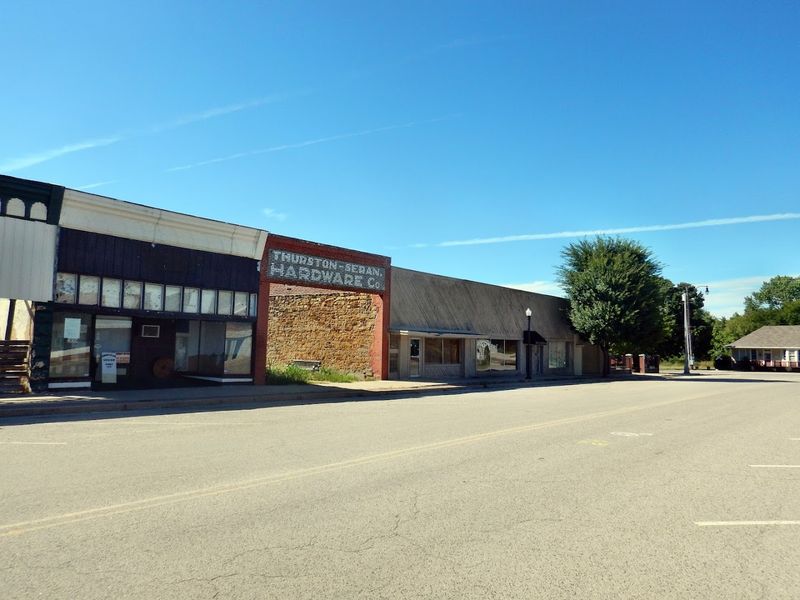
Not every hidden wonder involves ancient carvings or underground passages. Sometimes the discovery is a stretch of ordinary-looking county road that turns out to be anything but ordinary once you start driving it.
County Road NS 366, just north of Wewoka in Seminole County, is exactly that kind of surprise.
The road is known locally for its sudden, dramatic dips and rises that catch drivers completely off guard. The terrain creates a series of natural undulations that, when driven at the right speed, produce a genuine roller coaster sensation.
Locals have been treating this stretch as an unofficial thrill ride for years, and the enthusiasm is entirely warranted. It is the kind of simple, low-stakes fun that feels almost old-fashioned in the best possible way.
Wewoka itself is the county seat of Seminole County and carries a rich history connected to the Seminole Nation, whose tribal headquarters are located in the area. The surrounding landscape is quintessential eastern Oklahoma: rolling hills, scrubby trees, red dirt roads that seem to go on forever.
The county road fits right into that setting, looking unremarkable until the moment it absolutely is not.
Getting there requires a bit of navigation since county roads are not always prominently signed, but that mild inconvenience is part of the experience. Bring someone who enjoys a good laugh, drive at a reasonable speed, and let the road do what it does.
It is a reminder that Oklahoma’s best surprises are sometimes hiding in the most cartographically boring corners of the map.
10. Tinker Air Force Base AWACS Aircraft

Discovery does not always require leaving your house. One of Oklahoma’s more unexpected hidden wonders can be found by zooming into satellite imagery near Tinker Air Force Base, located just east of Oklahoma City near Midwest City.
What appears on screen is a striking lineup of AWACS aircraft, those distinctive planes with the large rotating radar domes mounted on top, arranged in neat rows on the tarmac.
AWACS stands for Airborne Warning and Control System, and Tinker AFB is one of the primary hubs for these aircraft in the United States. The base is one of the largest military installations in the country and serves as a major logistics and maintenance center for the Air Force.
None of that is classified information, but seeing the aircraft lined up from above produces a specific kind of awe that a Wikipedia entry simply cannot replicate.
There is something genuinely satisfying about discovering something significant through nothing more than curiosity and a satellite application.
It democratizes exploration in an interesting way, making the kind of aerial perspective that once required a pilot’s license available to anyone with an internet connection and a willingness to look around.
Tinker’s flight line, visible from above, is the kind of image that makes you appreciate both military scale and the strange modern miracle of being able to see it from your couch.
The base itself is not open to the general public, but its presence shapes the entire surrounding region economically and culturally. Midwest City grew largely because of Tinker, and the base remains central to Oklahoma’s identity in ways that extend well beyond aviation.
Dear Reader: This page may contain affiliate links which may earn a commission if you click through and make a purchase. Our independent journalism is not influenced by any advertiser or commercial initiative unless it is clearly marked as sponsored content. As travel products change, please be sure to reconfirm all details and stay up to date with current events to ensure a safe and successful trip.
