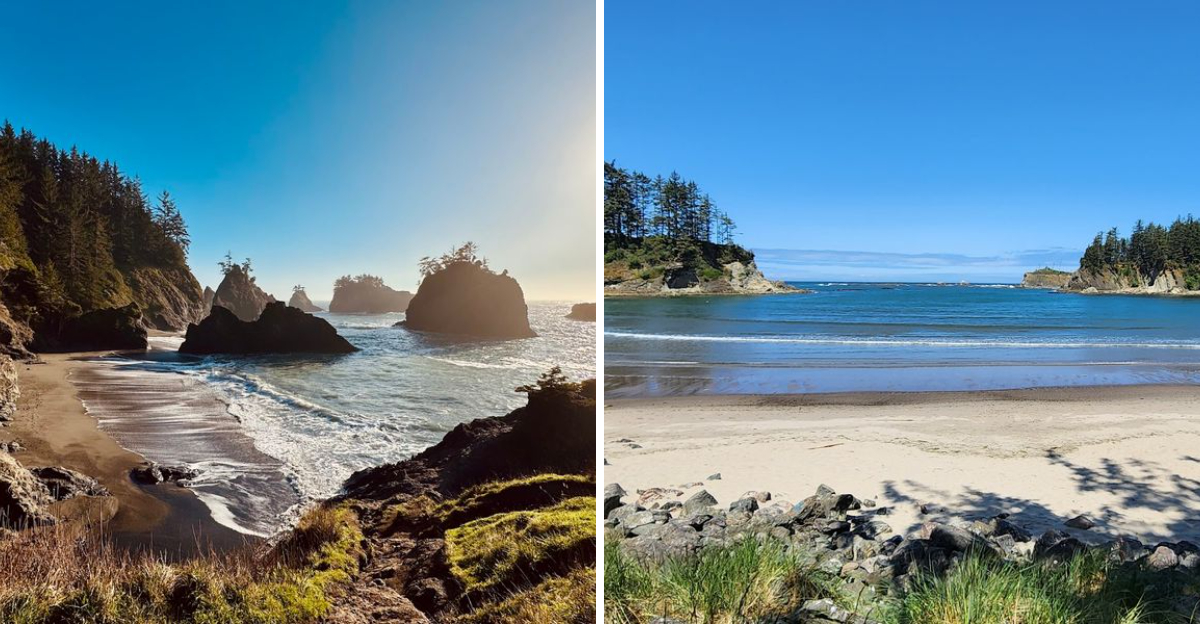
Oregon’s coastline is one of the most dramatic stretches of shoreline in the entire country, and most people only know the obvious stops. Cannon Beach gets the postcards, and Seaside gets the crowds. But the real magic happens at the places that don’t show up on tourist maps.
I’ve spent years driving the Oregon Coast Highway, pulling over on unmarked gravel roads. Also following hand-painted signs to beaches that feel like they belong to nobody but the sea. Some of these spots made me sit down on a driftwood log and just stare.
What you’ll find below are nine beaches that genuinely surprised me. Each one offers something different, from towering sea stacks to hidden coves where the only footprints are yours.
Pack a jacket, charge your camera, and keep this list close.
1. Whaleshead Beach, Brookings
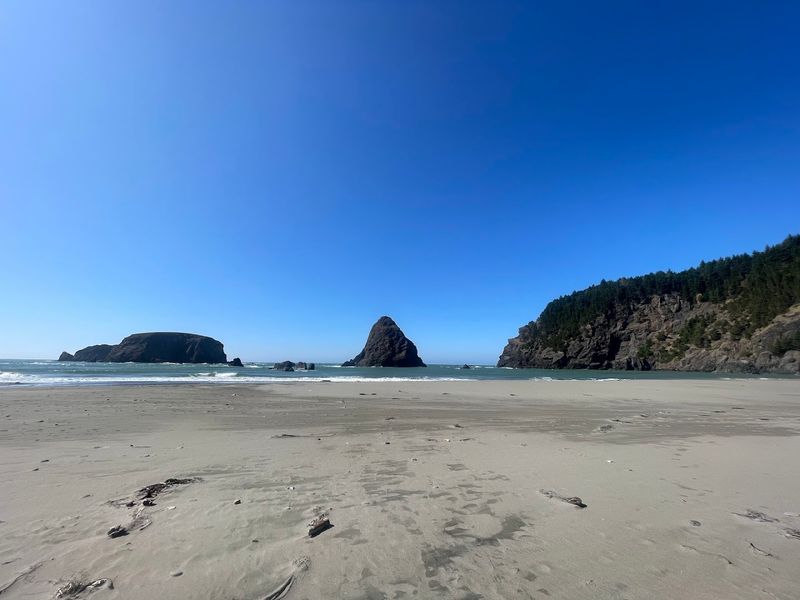
A massive rock formation that actually looks like a breaching whale greets you at this southern Oregon gem tucked inside Samuel H. Boardman State Scenic Corridor near Brookings.
Whaleshead Beach sits about eight miles north of Brookings along Highway 101, and the trailhead is easy to miss if you blink at the wrong moment. The descent to the beach is short but steep, winding through Sitka spruce trees that block the wind until you pop out onto a wide black-sand beach.
The whale-shaped sea stack is the obvious star, but the surrounding scenery earns equal attention. Tidepools stretch along the rock edges at low tide, packed with sea stars, anemones, and tiny crabs going about their business.
Photographers tend to linger here for hours because the light shifts dramatically throughout the day. Early morning fog wraps around the sea stack in a way that feels almost theatrical.
Crowds are rare because most travelers speed past on Highway 101 without knowing the turnoff exists. On a weekday, you might share this entire beach with just a handful of other visitors.
Bring waterproof shoes for tidepool exploration and check tide charts before you go. The best tidepool access happens during minus tides, which occur a few times each month.
Whaleshead rewards the prepared visitor with a coastal experience that feels genuinely untouched.
2. Secret Beach, Port Orford
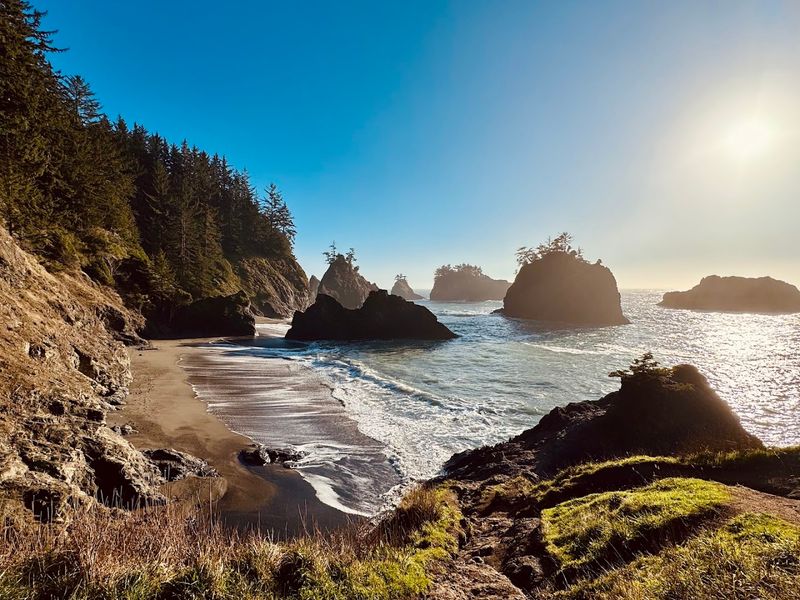
Its name is almost too honest. Secret Beach, located within Samuel H.
Boardman State Scenic Corridor just north of Brookings and accessible near Port Orford, earns its title every single visit.
Getting here requires a short but moderately steep trail through old-growth coastal forest. The path is about half a mile round trip, and the reward waiting at the bottom is one of the most jaw-dropping coves on the entire Oregon Coast.
Enormous sea stacks rise directly from the water just offshore, creating a natural frame that makes every photo look professionally staged. The beach itself is small and crescent-shaped, tucked between rocky headlands that block the wind on calmer days.
During low tide, small pools form among the rocks at the waterline, offering close-up views of colorful marine life. Kids especially love poking around these pools, though the rule is always to look but never remove anything.
The forest trail leading down adds to the sense of discovery. Ferns, mossy logs, and towering spruce trees create a tunnel-like walk that builds anticipation before the beach reveals itself.
Parking is limited to a small pullout along Highway 101, so arriving early on summer weekends is smart. Weekdays in spring or fall offer the best chance of having this remarkable little cove entirely to yourself.
Few Oregon beaches create this level of awe in such a compact space.
3. Proposal Rock Beach, Neskowin

There is a 100-foot forested rock rising straight out of the surf at Neskowin Beach, and it has been confusing and delighting visitors for generations. Proposal Rock is the kind of landmark that makes you stop mid-sentence and just point.
Neskowin is a tiny, quiet village about 15 miles south of Lincoln City on the northern Oregon Coast. The town itself has almost no commercial development, which is a big part of its charm.
No chain restaurants, no souvenir shops, just a small general store and a lot of peace.
At low tide, you can walk across the exposed sand to the base of Proposal Rock and explore the tidepools surrounding it. The ghost forest stumps scattered across the beach are another unusual feature, remnants of a Sitka spruce forest that was buried by a landslide roughly 2,000 years ago.
The beach stretches for about two miles and stays remarkably uncrowded even during summer. Families with young children love the shallow, calm surf conditions near the rock during low tide.
Neskowin Creek flows across the sand near the south end of the beach, creating a fun wading spot for kids on warm days. The surrounding area has minimal development, so the natural setting feels completely intact.
Parking is free at the small lot near Neskowin Beach Road. Arriving at low tide gives you the most dramatic and accessible version of this quietly spectacular beach.
4. Cape Kiwanda State Natural Area, Pacific City
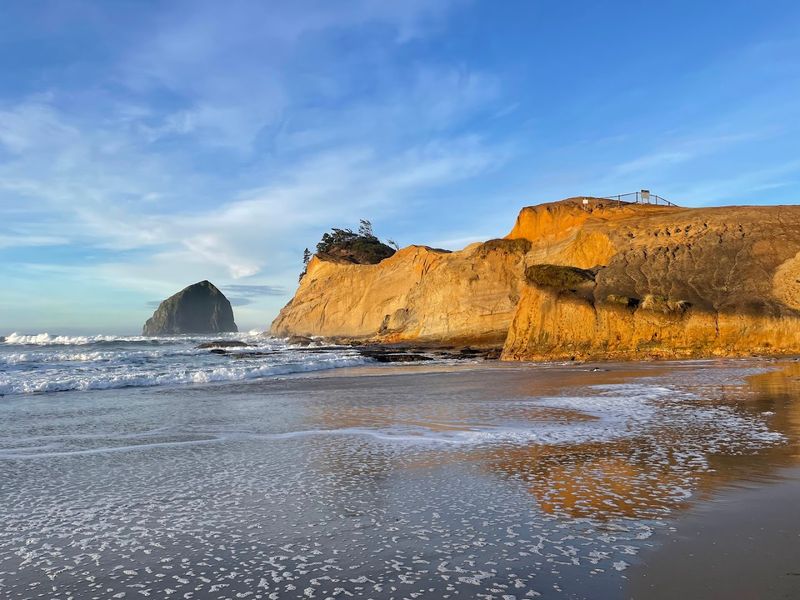
Golden sandstone cliffs don’t usually come to mind when people picture Oregon, but Cape Kiwanda near Pacific City delivers exactly that, along with one of the most unique beach experiences on the entire coast.
Located about 25 miles south of Tillamook, Pacific City is home to a working dory fleet that launches directly from this beach, which is something you won’t see anywhere else in the state. Watching a flat-bottomed boat get pushed through the surf and throttle out into the open ocean is genuinely thrilling.
The sandstone headland itself is climbable, and many visitors scramble up the soft golden rock for elevated views of the beach and the offshore Haystack Rock below. The rock crumbles easily underfoot, so careful footing is necessary.
Hang gliders and paragliders often use the thermal lift off the headland, adding a colorful aerial element to the scene. The wide sandy beach below is excellent for kite flying, sandcastle building, and long walks.
Pelicans and cormorants are frequent visitors, riding the wind currents off the cliffs in casual circles. The Pelican Brewing Company pub sits just steps from the beach parking lot, making a post-beach warm-up easy to arrange.
Sunset at Cape Kiwanda paints the sandstone in shades of amber and rust that feel almost unreal. Plan for at least two hours here because one visit rarely feels like enough to take it all in.
5. Oswald West State Park, Arch Cape
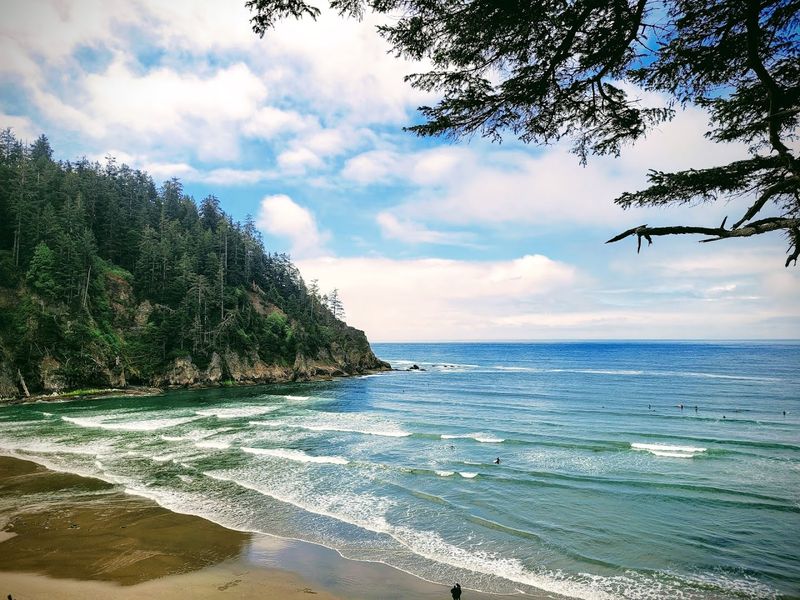
Carrying your gear on a wheelbarrow through an old-growth rainforest to reach a surf beach is not the most conventional beach day, but at Oswald West State Park near Arch Cape, it is absolutely part of the charm.
The park sits along Highway 101 between Cannon Beach and Manzanita on the northern Oregon Coast. A short half-mile trail through towering spruce and cedar trees leads to Short Sand Beach, a protected cove that surfers have quietly claimed as one of their favorite spots in the Pacific Northwest.
The state park provides wheelbarrows at the trailhead for hauling gear, which is a practical and oddly fun touch. The cove’s geography blocks some of the wind, making it more comfortable for families even on blustery days.
Hiking trails branch off from the beach into the surrounding headlands, including routes to Cape Falcon and Neahkahnie Mountain with sweeping ocean views. The forest along these trails is genuinely ancient, with ferns carpeting the ground beneath massive old-growth trunks.
The beach itself is dark sand, framed by rocky outcroppings and frequently decorated with massive driftwood logs. Tide pools sit at the edges of the cove, and the constant mist from the ocean keeps everything a vivid, saturated green.
Camping is available nearby, and staying overnight transforms the experience entirely. Waking up to the sound of surf filtering through the trees is the kind of morning that makes ordinary life feel very far away.
6. Otter Rock Beach, Otter Rock
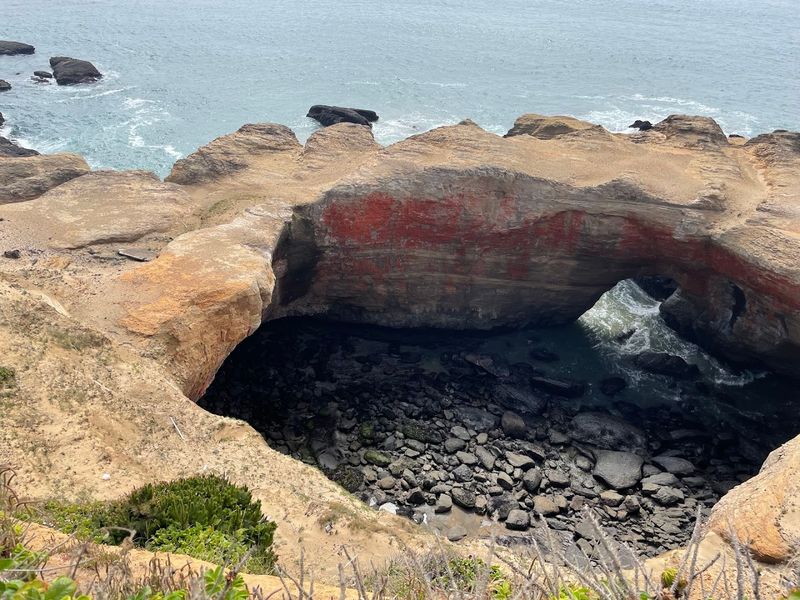
Most people blow right past the Otter Rock exit on Highway 101 on their way to Newport, and that is exactly why this little beach stays so refreshingly quiet. Otter Rock is a tiny community about six miles north of Newport on the central Oregon Coast, and its beach is a proper secret hiding in plain sight.
The beach sits below basalt cliffs and is accessed via a short paved path from the parking area. The setting is compact but dramatic, with rocky headlands on both ends creating a natural bowl that catches the afternoon light beautifully.
Devils Punchbowl State Natural Area sits just above the beach at the north end. The punchbowl itself is a collapsed sea cave where waves surge in and churn the water into a foamy spectacle during high tide.
Watching this from the viewing platform is unexpectedly hypnotic.
The beach below is great for swimming by Oregon standards, meaning the water is cold but the surf is manageable on calm days. Boogie boarders and beginning surfers use the break regularly throughout the summer months.
A small snack stand near the parking area operates during summer, which is a welcome surprise after a long morning of exploring. The Mo’s chowder at nearby Newport is worth the short drive if hunger strikes in a bigger way.
Otter Rock rewards visitors who take five minutes to exit the highway and look around. The combination of the punchbowl, the cliffs, and the quiet beach makes this one of the central coast’s most underappreciated stops.
7. Lone Ranch Beach, Brookings
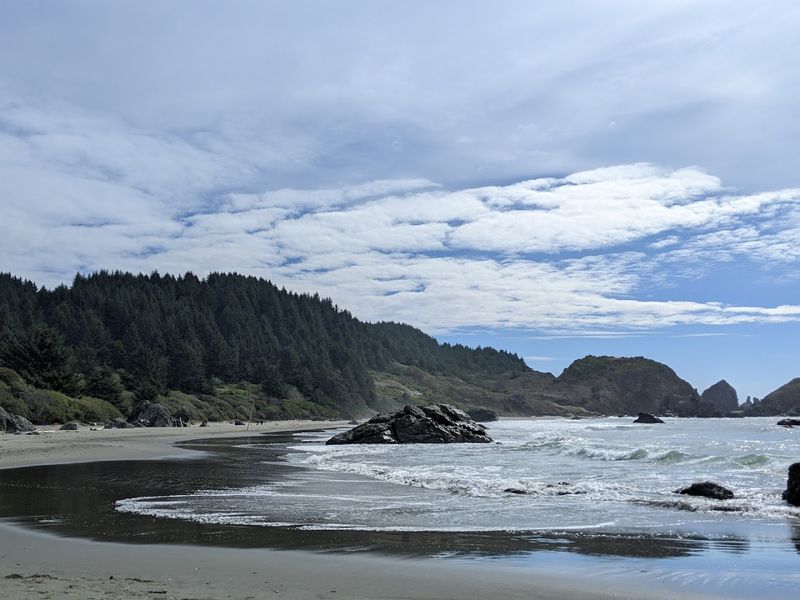
Just a few miles north of Brookings in the southern Oregon Coast region, Lone Ranch Beach offers a flat, accessible shoreline flanked by impressive sea stacks without requiring any serious hiking to reach them.
The beach is part of Samuel H. Boardman State Scenic Corridor, a stretch of coast that honestly deserves its own national park status.
Lone Ranch sits near the southern end of the corridor and is one of its most accessible entry points, with a paved parking area and a short flat path to the sand.
What makes this beach stand out is the combination of open sandy walking space and dramatic rocky scenery. Large offshore rocks create interesting visual layers from every angle, and the tidal area between them fills with clear, calm water that reflects the sky on still mornings.
Birding is excellent here, with brown pelicans, oystercatchers, and various shorebirds working the waterline throughout the day. The rocks also serve as resting spots for harbor seals, which can often be spotted lounging in the sun during calm weather.
The surrounding landscape is unusually lush for a coastal area, with green hills tumbling down toward the sand and adding color to the backdrop. This part of Oregon gets significant rainfall, which keeps the vegetation thick and vivid year-round.
Because it sits south of most tourist traffic, Lone Ranch Beach rarely feels crowded. It is the kind of place where a Tuesday afternoon visit in October might mean you have the whole beach to yourself.
8. Hug Point State Recreation Site, Cannon Beach
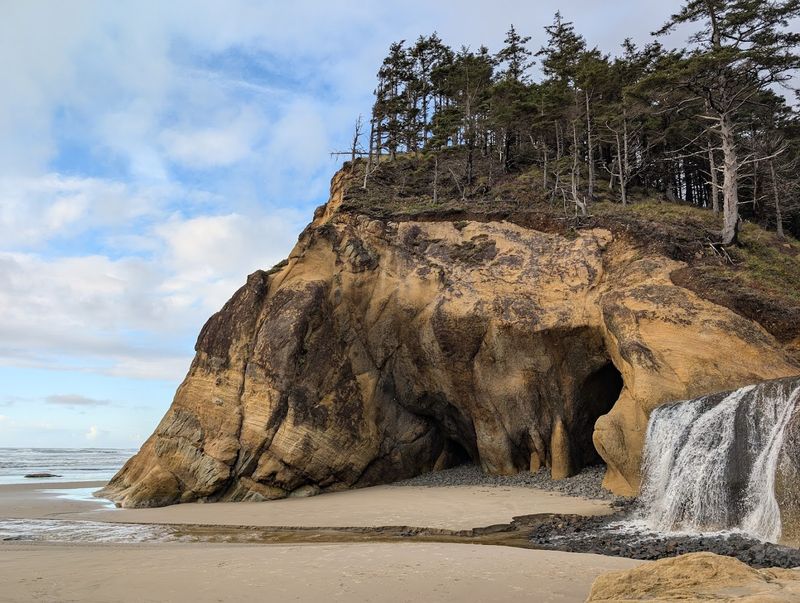
A waterfall, a sea cave, ancient wagon wheel ruts carved into a basalt cliff, and tidepool-covered rocks all share the same beach at Hug Point, just three miles south of Cannon Beach in northern Oregon.
The name comes from the old coastal wagon road, where travelers had to time the tides carefully and hug the point of the cliff to pass. Those original wheel ruts are still visible in the rock today, making this one of the few Oregon beaches with a genuinely tangible piece of transportation history embedded in its geology.
A small waterfall drops directly onto the beach from the basalt headland, which is a detail that feels almost too picturesque to be real. At low tide, you can walk behind it and explore the shallow cave carved by centuries of wave action.
The beach itself is wide and sandy, connecting to Arcadia Beach to the south at low tide and offering a long stretch of walking. Families tend to spread out across the sand while the more curious visitors cluster around the tidepool areas near the headland.
Hug Point is close enough to Cannon Beach that it often gets absorbed into a day trip, but it deserves its own dedicated visit. Arriving at a minus tide in the morning gives you the clearest access to the cave, the wagon ruts, and the pools.
Parking fills quickly on summer weekends, so arriving before 9 a.m. keeps the experience stress-free and the beach blissfully uncrowded.
9. Sunset Bay State Park, Coos Bay

Protected by sandstone cliffs on three sides, Sunset Bay near Coos Bay in southern Oregon creates a swimming environment that is about as calm as the Oregon Coast ever gets. The circular bay traps warmth and blocks the open ocean swell in a way that makes it genuinely inviting for swimmers and kayakers.
The park sits about 12 miles southwest of Coos Bay off Cape Arago Highway. It anchors a trio of state parks along this stretch of coast, with Shore Acres State Park and Cape Arago State Park just a few miles further down the same road.
The sandstone cliffs surrounding the bay are layered in shades of cream, rust, and gold, and the lichen patterns covering them add texture that photographers love. At sunset, the warm light bouncing off those cliffs turns the entire cove into something that looks like a painting.
Camping is available within the park, and the campground is set back in the forest close enough to the beach to hear the water at night. Sites book quickly in summer, so reservations well in advance are essential.
The water temperature here is still cold by most standards, hovering in the low 60s Fahrenheit during summer. That said, it is significantly warmer than the exposed beaches nearby, and many locals treat it as their go-to summer swimming spot.
Combining Sunset Bay with a visit to Shore Acres, which features stunning formal gardens overlooking the ocean, creates one of the best half-day itineraries on the entire Oregon Coast.
Dear Reader: This page may contain affiliate links which may earn a commission if you click through and make a purchase. Our independent journalism is not influenced by any advertiser or commercial initiative unless it is clearly marked as sponsored content. As travel products change, please be sure to reconfirm all details and stay up to date with current events to ensure a safe and successful trip.
