Virginia holds a treasure trove of peculiar monuments that most residents prefer to keep under wraps. From cryptic stone structures to memorials honoring the strangest of subjects, these landmarks tell stories that range from the downright eerie to the wonderfully weird.
Hidden in plain sight across the state, these monuments challenge what we think we know about history and commemorate moments that defy simple explanation.
While tourists flock to famous Civil War battlefields and colonial sites, they often miss these bizarre gems scattered throughout Virginia. Some of these structures honor forgotten tragedies, while others celebrate eccentricities that locals have grown accustomed to ignoring.
Each monument carries a tale so unusual that it makes you question why it exists at all, yet each one offers a fascinating glimpse into the quirky underbelly of Virginia’s past and present.
1. The Foamhenge Replica Stands Proudly in Natural Bridge
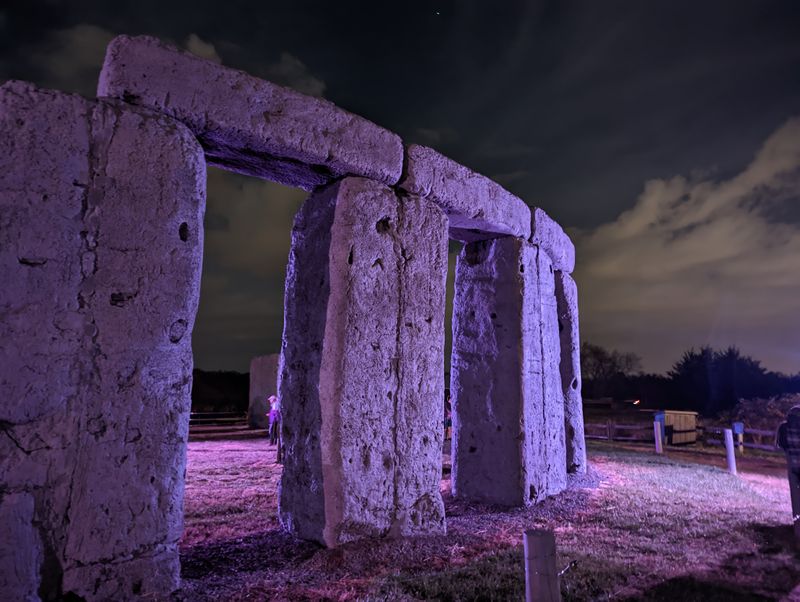
Artist Mark Cline created something truly unexpected when he built a full-scale replica of Stonehenge entirely out of foam blocks. Located at 4181 Natural Bridge Station, Natural Bridge, this attraction defies all expectations with its weathered appearance that makes the foam look remarkably like ancient stone.
The monument stands as a testament to creative vision and the willingness to embrace the absurd in the name of art.
What makes this structure particularly bizarre is how seriously it takes itself despite being made from such an unconventional material. Each foam block has been carefully sculpted and painted to mimic the weathering and texture of genuine megaliths.
Visitors who approach without prior knowledge often express genuine shock when they learn the truth about its construction.
The site serves as more than just a roadside curiosity. It functions as a gathering place for those who appreciate alternative takes on historical monuments and those who simply enjoy a good laugh.
The juxtaposition of ancient mystery and modern materials creates an experience that sticks with visitors long after they leave.
Cline’s creation reflects a deeper commentary on authenticity and our relationship with historical monuments. By replicating something ancient in such a temporary medium, he challenges viewers to consider what makes a monument meaningful.
The foam construction also allows for a level of accessibility that the original Stonehenge no longer offers, as visitors can walk right up to and touch the structures.
This Virginia landmark has become a favorite among photographers and social media enthusiasts seeking unusual backdrops. The surrounding landscape adds to the surreal quality of the experience, creating a scene that feels both familiar and completely foreign.
Whether you view it as art, comedy, or cultural commentary, Foamhenge delivers an experience unlike any traditional monument could provide.
2. The Bunny Man Bridge Carries a Dark Urban Legend
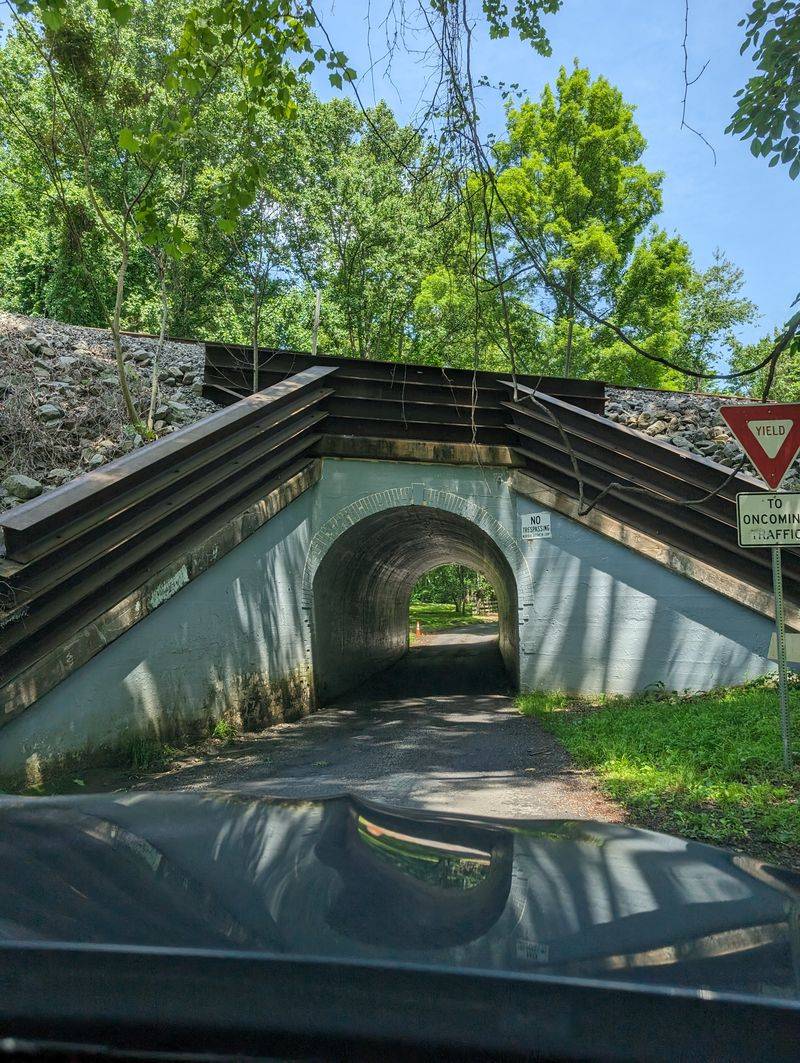
Colchester Overpass on Colchester Road in Clifton has earned a reputation as one of Virginia’s most haunted locations. According to local lore, a man in a rabbit costume wielding an axe terrorized couples parked near the bridge during the early seventies.
While historians debate the veracity of these accounts, the legend has grown so powerful that the bridge itself has become an unofficial monument to urban mythology.
The concrete structure appears unremarkable during daylight hours, but its sinister reputation transforms it after dark. Teenagers and thrill-seekers have flocked to the site for decades, hoping to catch a glimpse of the legendary figure.
Graffiti covers much of the bridge’s surface, with many messages referencing the Bunny Man tale and adding layers to the ongoing narrative.
What started as isolated incidents has evolved into a full-fledged cultural phenomenon that defines this otherwise ordinary overpass. The story has been embellished and retold so many times that separating fact from fiction has become impossible.
Some versions claim the Bunny Man was an escaped asylum patient, while others suggest he was a vengeful spirit protecting his territory.
The bridge’s transformation into a monument illustrates how collective belief can imbue ordinary structures with extraordinary significance. Local authorities have attempted to discourage nighttime visits due to safety concerns, but the allure of the legend proves too strong for many curiosity seekers.
The site has inspired countless Halloween attractions and horror stories throughout the region.
Whether the Bunny Man ever existed remains a mystery that locals seem content to leave unsolved. The bridge stands as a monument to the power of storytelling and the human need to find darkness in the mundane.
Its continued popularity demonstrates how legends can reshape our perception of physical spaces and create lasting cultural landmarks from simple concrete and steel.
3. A Giant Milk Bottle Towers Over Richmond’s Landscape
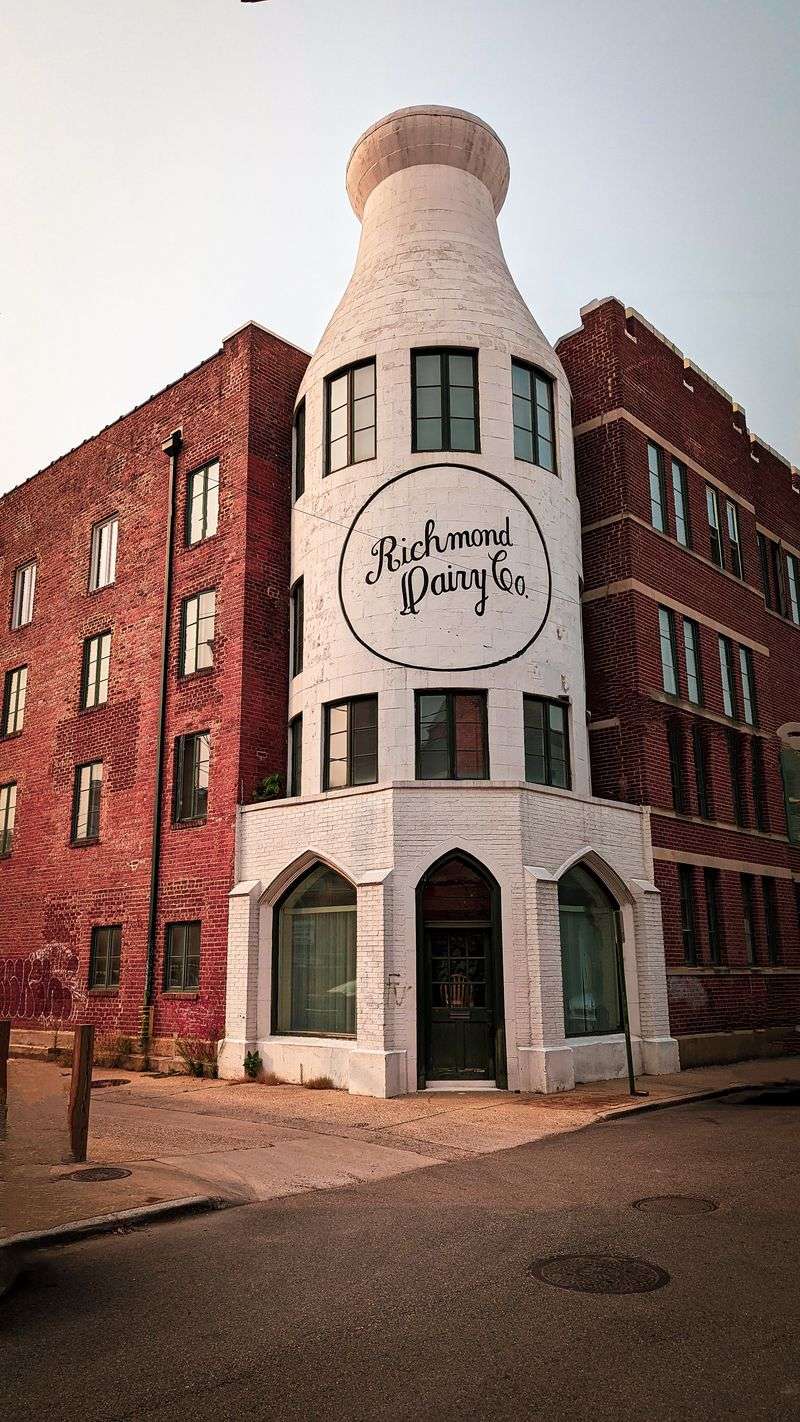
Standing at 2525 Jefferson Davis Highway in Richmond, a colossal milk bottle structure once served as a roadside advertisement for a dairy company. The oversized container rises several stories into the air, dwarfing the buildings around it and creating a surreal sight for drivers passing by.
This relic from the golden age of American roadside advertising has outlived its original commercial purpose to become an accidental monument to mid-century marketing excess.
The bottle’s sheer scale makes it impossible to ignore, yet many Richmond residents have grown so accustomed to its presence that they barely notice it anymore. Its white surface and simple design create a striking contrast against the sky, making it a favorite landmark for giving directions in the area.
The structure has survived decades of urban development and changing aesthetic sensibilities to remain a fixture of the local landscape.
Originally designed to attract customers to a dairy operation, the bottle now serves primarily as a conversation piece and photo opportunity. Its survival speaks to a reluctance to erase quirky elements from the urban environment, even when they no longer serve their intended function.
The monument represents a time when businesses competed for attention through sheer architectural audacity rather than digital marketing strategies.
Preservation efforts have kept the bottle standing despite occasional calls for its removal. Community members have rallied around the structure, recognizing its value as a piece of local character and history.
The bottle has appeared in countless photographs and paintings, cementing its status as an unofficial symbol of Richmond’s eclectic personality.
This Virginia landmark reminds us that monuments don’t always need to commemorate grand historical events or important figures. Sometimes the most memorable structures are those that simply refuse to fade away, maintaining their presence through sheer persistence and the affection of the community that surrounds them.
4. The Curse Tablet Collection Rests in Bath County Springs
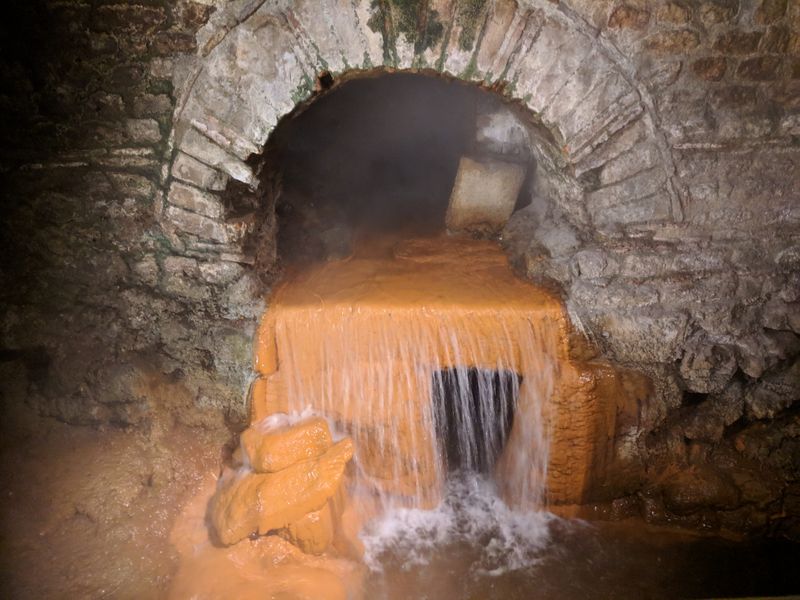
Hidden within the grounds of what were once thriving mineral springs in Bath County, archaeologists discovered a collection of lead tablets inscribed with ancient curses. Located near the historic Warm Springs area, these artifacts date back to Roman-influenced healing practices where visitors would inscribe wishes for harm upon their enemies.
The tablets were thrown into the sacred waters as offerings, creating an unexpected connection between Virginia and ancient Mediterranean traditions.
Each tablet contains carefully scratched text requesting misfortune, illness, or other calamities to befall specific individuals. The practice mirrors similar rituals found at Roman bath sites across Europe, raising questions about how such traditions reached the Virginia mountains.
Scholars continue to debate whether these represent authentic ancient artifacts or later recreations inspired by European practices.
The springs themselves served as gathering places for indigenous peoples long before European settlement, adding another layer of complexity to the site’s history. The mineral waters were believed to possess healing properties, making the presence of curse tablets particularly ironic.
Visitors seeking wellness would share the same space with objects designed to cause suffering, creating a strange duality of purpose.
Modern visitors to the area can explore the historical context of these discoveries through local museums and interpretive sites. The tablets represent a darker side of human nature that contrasts sharply with the serene beauty of the surrounding landscape.
Their existence challenges romantic notions of spa culture and reminds us that healing sites often attracted those seeking supernatural intervention for more sinister purposes.
This bizarre collection has transformed the Bath County springs from simple historical sites into monuments of human complexity and ancient belief systems. The tablets continue to fascinate researchers and visitors alike, offering tangible evidence of practices that seem both foreign and eerily familiar.
They stand as reminders that monuments need not be grand structures but can be small objects that carry enormous cultural weight.
5. The UFO Crash Memorial Marks an Alleged Incident
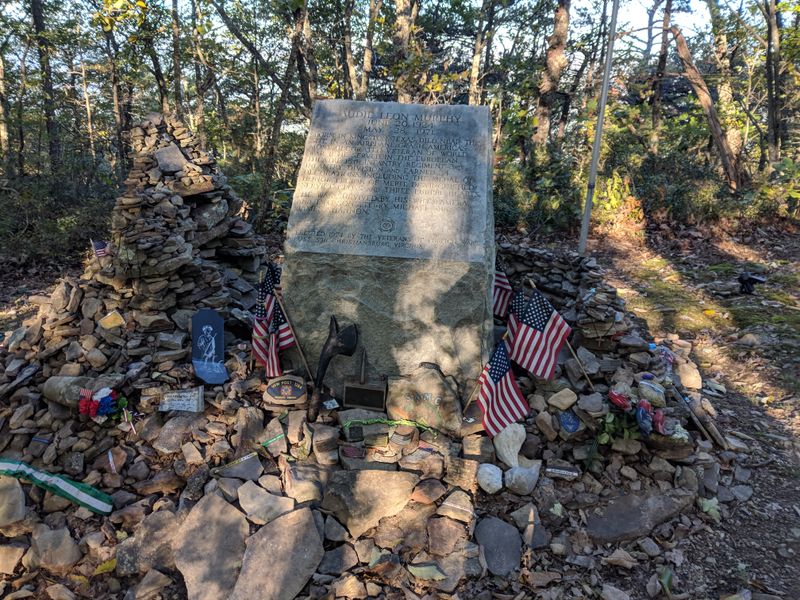
Near the community of Flatwoods in Braxton County lies a marker commemorating one of Virginia’s most disputed events. A small memorial at the Flatwoods Green Monster Museum, located at 4164 Braxton Drive, honors what believers claim was an extraterrestrial encounter.
The monument acknowledges an evening when residents reported seeing a bright object crash into the hillside, followed by sightings of a strange creature that sparked decades of debate and investigation.
Eyewitness accounts describe a towering figure with glowing eyes and a distinctive pointed hood-like head structure. The creature allegedly emitted a foul odor and left physical evidence that skeptics attribute to natural explanations.
Regardless of the truth, the incident has become deeply embedded in local folklore and continues to attract researchers interested in unexplained phenomena.
The memorial itself serves multiple purposes within the community. For believers, it validates their experiences and keeps the story alive for future generations.
For skeptics, it represents the power of mass hysteria and the human tendency to interpret ambiguous stimuli as extraordinary events. The monument has become a pilgrimage site for UFO enthusiasts from around the world.
Local businesses have embraced the story, creating a cottage industry around the alleged incident. The memorial anchors a broader cultural landscape that includes museums, festivals, and commemorative merchandise.
This commercialization has helped preserve the tale while simultaneously raising questions about authenticity and exploitation of local legends.
Whether you believe in extraterrestrial visitation or view the entire episode as a case of misidentification, the memorial stands as a testament to the incident’s impact on the community. It represents a moment when the ordinary rhythms of small-town life were interrupted by something that residents could not easily explain.
The monument ensures that this bizarre chapter in Virginia history will not be forgotten, regardless of what actually occurred on that contested evening.
6. The Witch of Pungo’s Grave Attracts Curious Visitors
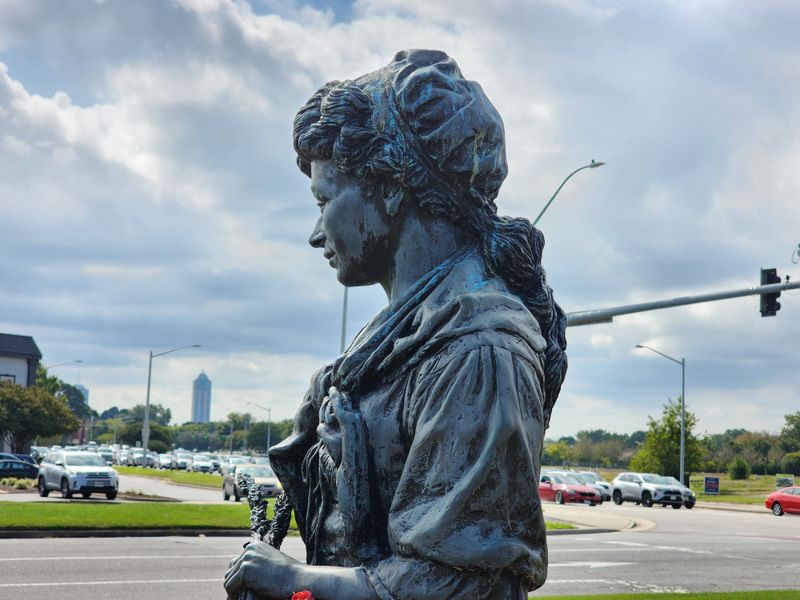
Grace Sherwood’s grave at 2289 Princess Anne Road in Virginia Beach serves as a somber reminder of colonial-era witch trials. Known as the Witch of Pungo, Sherwood was subjected to trial by water, where she was bound and thrown into the Lynnhaven River.
Her ability to float was interpreted as proof of witchcraft, leading to her imprisonment. The grave site has become an unofficial monument to injustice and the dangers of superstition-driven persecution.
Sherwood’s story differs from many witch trial narratives because she survived her ordeal and was eventually released. She lived for many years after her trial, maintaining her independence and continuing to practice herbal medicine despite the stigma attached to her name.
Her resilience in the face of community persecution has transformed her into a folk hero for many modern visitors.
The grave itself is marked with a simple stone that has been worn smooth by time and the countless hands that have touched it over the years. Visitors often leave offerings of herbs, flowers, and small tokens as gestures of respect and solidarity.
These impromptu tributes have created a living memorial that continues to evolve with each new visitor’s contribution.
Local historians have worked to rehabilitate Sherwood’s reputation, emphasizing her skills as a healer and midwife rather than focusing solely on her persecution. The site has become a focal point for discussions about gender, power, and the treatment of women who defied social norms.
Educational programs use her story to explore broader themes of tolerance and the consequences of fear-based decision making.
This Virginia landmark serves as both a grave and a monument to all those who suffered under accusations of witchcraft. Sherwood’s final resting place reminds visitors that bizarre stories often have roots in tragic realities.
The continued interest in her grave demonstrates how historical injustices can be transformed into opportunities for reflection and education about our collective past.
7. The Great Dismal Swamp’s Phantom Light Monument
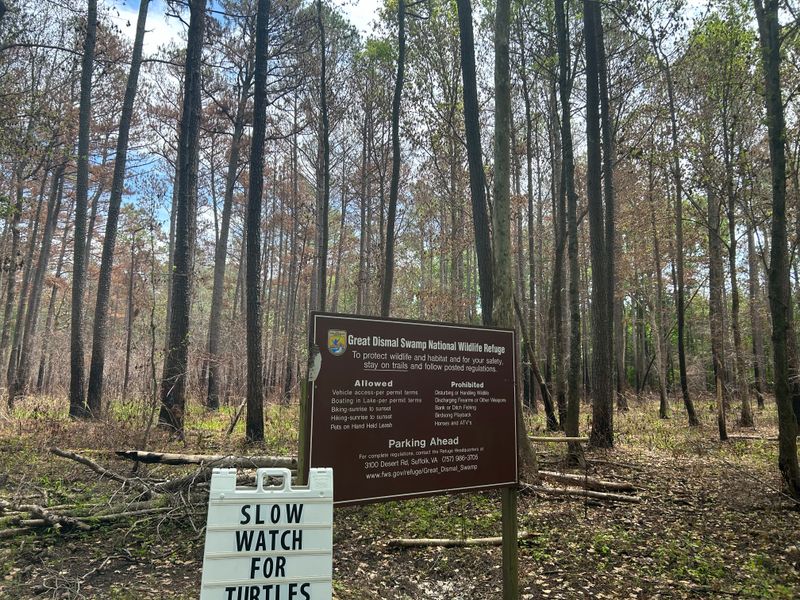
Within the Great Dismal Swamp National Wildlife Refuge along White Marsh Road in Suffolk, a marker acknowledges reports of mysterious lights that have puzzled observers for centuries. Witnesses describe glowing orbs that float through the swamp at night, moving with apparent purpose and defying conventional explanation.
The phenomenon has inspired poetry, folklore, and scientific investigation, yet no definitive explanation has emerged to satisfy all parties.
Indigenous peoples spoke of the lights long before European colonization, incorporating them into their spiritual traditions and cautionary tales. Early settlers attributed the phenomenon to supernatural causes, with some believing the lights represented lost souls wandering the wetlands.
These interpretations reflected the swamp’s reputation as a dangerous and mysterious place where the natural world seemed to operate by different rules.
Scientific theories have proposed everything from swamp gas to bioluminescent organisms as potential explanations. Some researchers suggest the lights result from the combustion of methane released by decaying organic matter, while others point to atmospheric conditions that might create optical illusions.
Despite numerous investigations, the lights continue to appear with enough regularity to maintain public interest and speculation.
The monument serves as an acknowledgment that some mysteries resist simple solutions, even in an age of scientific advancement. It validates the experiences of those who have witnessed the lights while remaining neutral on their ultimate cause.
This approach allows the site to function as both a historical marker and an invitation to ongoing inquiry.
Visitors to the swamp often express hope of witnessing the phenomenon themselves, though sightings remain unpredictable. The monument has helped establish the lights as a legitimate subject of study rather than mere superstition.
It stands as recognition that Virginia’s natural landscapes hold secrets that continue to challenge our understanding and fuel our imagination about what might exist beyond the boundaries of accepted knowledge.
8. The Mole Hill Volcanic Plug Commemorates Geological Oddity
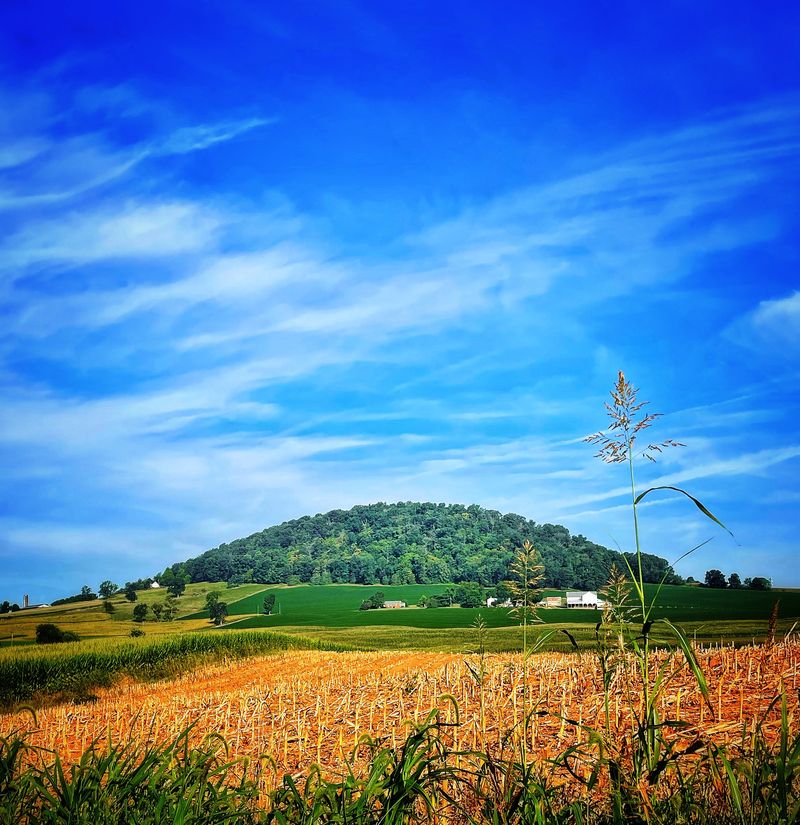
Rising abruptly from the Shenandoah Valley floor near Dayton, Mole Hill at Mole Hill Road represents Virginia’s youngest volcanic feature. A geological marker at the site explains how this exposed volcanic plug formed millions of years ago when magma cooled within the throat of an ancient volcano.
The surrounding softer rock eroded away over time, leaving this resistant core standing alone as a testament to the state’s volcanic past.
The formation’s name reflects the ironic contrast between its modest appearance and its dramatic geological significance. While not particularly tall or imposing, Mole Hill represents a type of geological feature rarely visible on the surface.
Its exposure allows geologists and visitors to observe rock formations that typically remain hidden deep underground, making it a valuable educational resource.
Local farmers have worked around the hill for generations, incorporating it into their land use patterns rather than attempting to remove it. This practical acceptance has helped preserve the feature while allowing it to function as a distinctive landmark within the agricultural landscape.
The hill has become a navigational reference point and a source of local pride despite its unusual origins.
Educational programs use the site to teach visitors about plate tectonics, volcanic processes, and the geological forces that shaped the Shenandoah Valley. The monument challenges common assumptions about Virginia’s geological history, which many people associate primarily with sedimentary processes and ancient seabeds.
Mole Hill proves that the state’s geological story includes more dramatic chapters than most residents realize.
The marker at this Virginia site celebrates the strange and unexpected aspects of our planet’s history. It reminds visitors that monuments can commemorate natural processes as well as human events, and that sometimes the most bizarre stories are written in stone rather than recorded in books.
The volcanic plug stands as evidence that even the most stable-seeming landscapes hide dynamic and sometimes violent pasts beneath their peaceful surfaces.
9. The Gravity Hill Marker Defies Physical Expectations
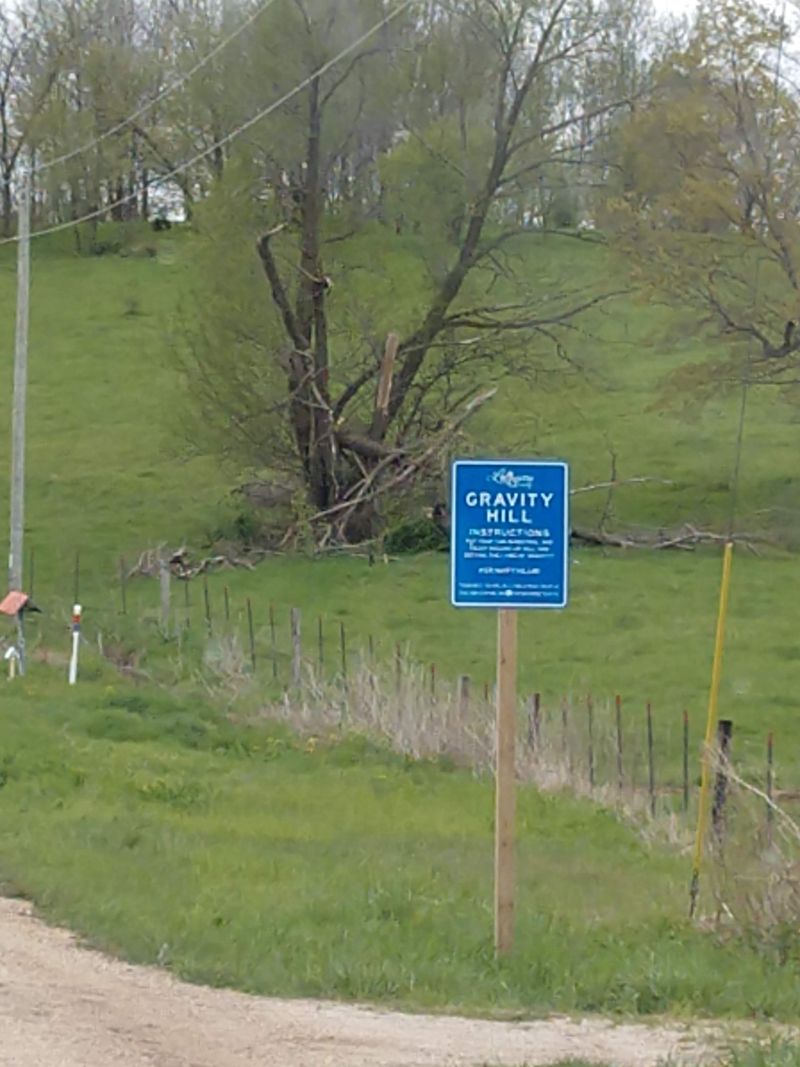
Along a stretch of road near Richlands at Claypool Hill Highway, a small marker indicates a spot where gravity appears to work in reverse. Cars placed in neutral at the designated location seem to roll uphill, defying logical expectations and creating an experience that challenges visitors’ understanding of physics.
The phenomenon has attracted curious travelers for decades, all eager to experience this apparent violation of natural laws.
The effect results from an optical illusion created by the surrounding landscape’s particular configuration. The horizon line and nearby terrain features create a visual context that makes a gentle downward slope appear to be an upward incline.
When vehicles roll in the direction of actual gravitational pull, observers perceive them as moving against gravity because their visual reference points suggest the opposite orientation.
Despite scientific explanations, the experience remains compelling and somewhat unsettling for first-time visitors. The disconnect between what the eyes report and what physics predicts creates a moment of genuine confusion that lingers even after the illusion is explained.
This cognitive dissonance makes the site memorable and encourages visitors to return with friends to share the perplexing experience.
The marker itself is modest, but its presence acknowledges the site’s significance to local culture and tourism. Similar gravity hills exist in various locations worldwide, but each community treats its version as a unique attraction worthy of preservation and promotion.
The monument serves as an invitation to question assumptions and engage directly with phenomena that challenge everyday perceptions.
This Virginia landmark demonstrates that monuments need not commemorate historical events or natural wonders to capture public imagination. Sometimes the most engaging sites are those that create direct, personal experiences of disorientation and wonder.
The gravity hill marker stands as a testament to the human love of mysteries and the pleasure we take in experiences that temporarily upend our certainties about how the world works.
10. The Devil’s Backbone Overlook Commemorates Treacherous Passage
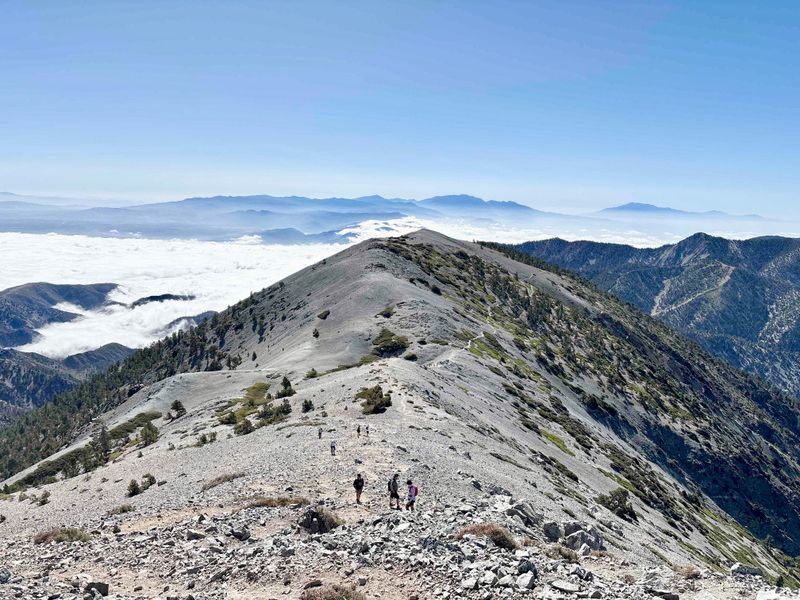
Perched along Route 151 in Nelson County, a scenic overlook at the Devil’s Backbone Brewing Company location marks a ridgeline that earned its ominous name from the difficulties it posed to early travelers. The narrow, rocky spine of land created a natural barrier that was as dangerous as it was unavoidable for those moving through the region.
The name reflects both the physical challenges of the terrain and the superstitious fear it inspired in those who had to cross it.
Historical accounts describe wagon accidents and livestock losses along this treacherous passage, with some travelers refusing to attempt the crossing under certain weather conditions. The exposed ridgeline left travelers vulnerable to storms and provided no shelter from the elements.
These practical dangers combined with the dramatic landscape to create a location that seemed cursed or protected by malevolent forces.
The overlook now provides safe viewing access to the same dramatic vistas that once filled travelers with dread. Modern visitors can appreciate the area’s natural beauty without facing the risks that made it notorious.
Interpretive materials explain the historical context and help contemporary observers understand why this landscape inspired such dark nomenclature.
The site has been reclaimed as a destination rather than an obstacle, with the brewery establishment transforming the area’s reputation from threatening to inviting. This evolution demonstrates how human perception of landscapes can shift dramatically when the practical challenges they present are overcome.
The Devil’s Backbone has been domesticated through infrastructure improvements and reframed as an asset rather than a liability.
This Virginia landmark illustrates how monuments can emerge from the landscape itself rather than being constructed as separate structures. The ridgeline serves as a natural monument to the hardships of early travel and the gradual conquest of difficult terrain through technological advancement.
It reminds visitors that what we now consider scenic attractions were once serious obstacles that shaped settlement patterns and trade routes throughout the region.
Dear Reader: This page may contain affiliate links which may earn a commission if you click through and make a purchase. Our independent journalism is not influenced by any advertiser or commercial initiative unless it is clearly marked as sponsored content. As travel products change, please be sure to reconfirm all details and stay up to date with current events to ensure a safe and successful trip.
