Scattered across Virginia’s countryside, forgotten plantations now stand as hauntingly beautiful ruins.
Weathered brick walls and collapsing porches tell stories of grandeur long gone.
Photographers flock to capture ivy-covered chimneys, sunbeams through broken windows, and the eerie silence of history.
Each site feels like stepping into a time capsule where nature reclaims the past.
For those with a lens and a love of mystery, these ruins are irresistible treasures waiting to be framed.
Ghosts of Grandeur: Virginia’s Lost Plantations
Virginia’s countryside hides stories of once-majestic plantations now crumbling into ruins.
These estates once echoed with the bustle of daily life, grand halls, and sprawling fields.
Today, ivy creeps over brick walls, and broken chimneys rise like monuments to forgotten times. Photographers are drawn to the eerie beauty of collapsing staircases and sunlit windows without glass.
Each ruin whispers of wealth, power, and the passage of centuries.
Nature has reclaimed porches, gardens, and pathways once carefully tended.
Owls nest in rafters where chandeliers once sparkled.
Travelers find themselves stepping into a living museum of decay and memory.
The plantations are both haunting and captivating, blending history with mystery.
For modern explorers, Virginia’s lost plantations are not just ruins—they are timeless stories waiting to be captured.
Rosewell Plantation Ruins: The Grandeur & Scale
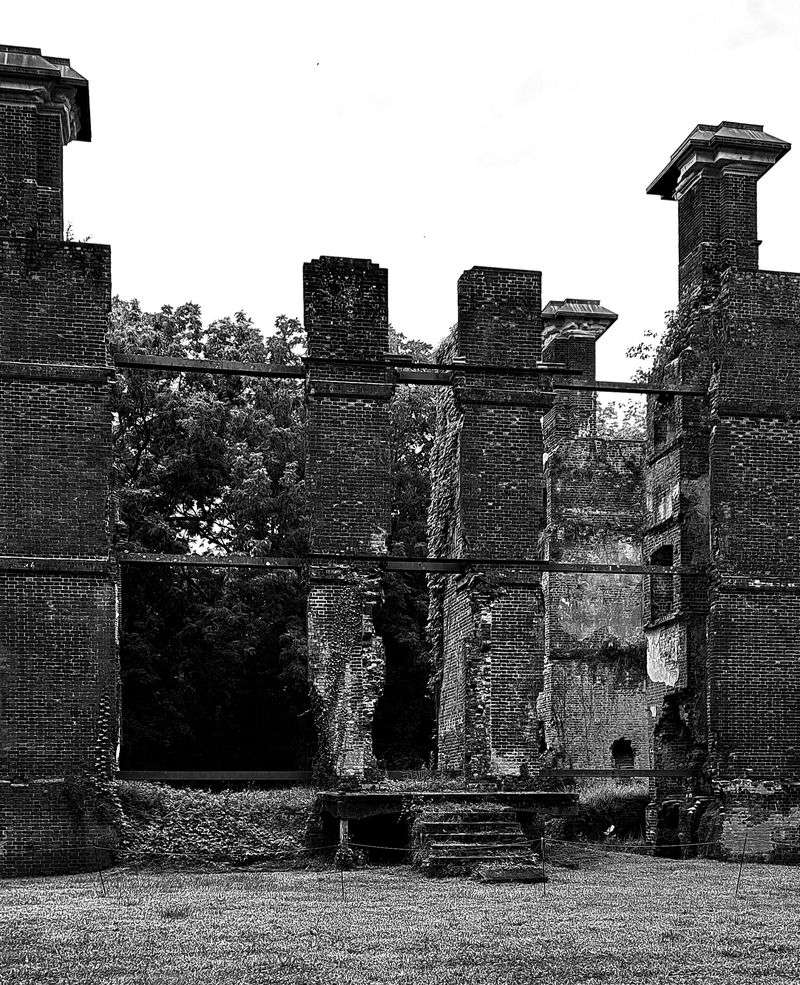
At Rosewell you meet the outline of one of the largest colonial mansions in North America, a Page family dream that once housed conversations with Thomas Jefferson and shaped the social map of tidewater life.
The remaining walls stand like red cliffs, and their rhythm hints at rooms that saw philosophy, politics, and daily ritual woven together in remarkable scale.
A 1916 fire stripped the interior to its bones, and that loss strangely revealed the pure volumes, letting the colossal footprint show itself under the changing Virginia sky.
The structure commands attention with immense brick walls and chimney stacks that lift your eyes upward, giving photographers strong verticals to anchor a composition against drifting clouds.
Exposed arches frame slices of forest and horizon, and vines add soft texture that plays against clean eighteenth century brick bonds and glazed headers.
Angles abound if you move slowly, because side light pulls mortar lines forward and backlight turns gaps into luminous portals.
On a breezy afternoon the sky reads deep blue behind iron toned brick, and the resulting contrast grants a timeless quality that works beautifully in black and white.
The site is stabilized and publicly managed, with clear paths and interpretive signs that help you understand where grand rooms once stood and how they changed over time.
Archaeology continues to enrich interpretation, and the careful stewardship makes it feel both safe and purposeful for repeat visits and thoughtful experimentation.
Convenient proximity to Williamsburg and Yorktown simplifies planning, and you can schedule golden hour with confidence, knowing access is straightforward and respectful of preservation needs.
Rosewell Plantation Ruins: Photographic Opportunity
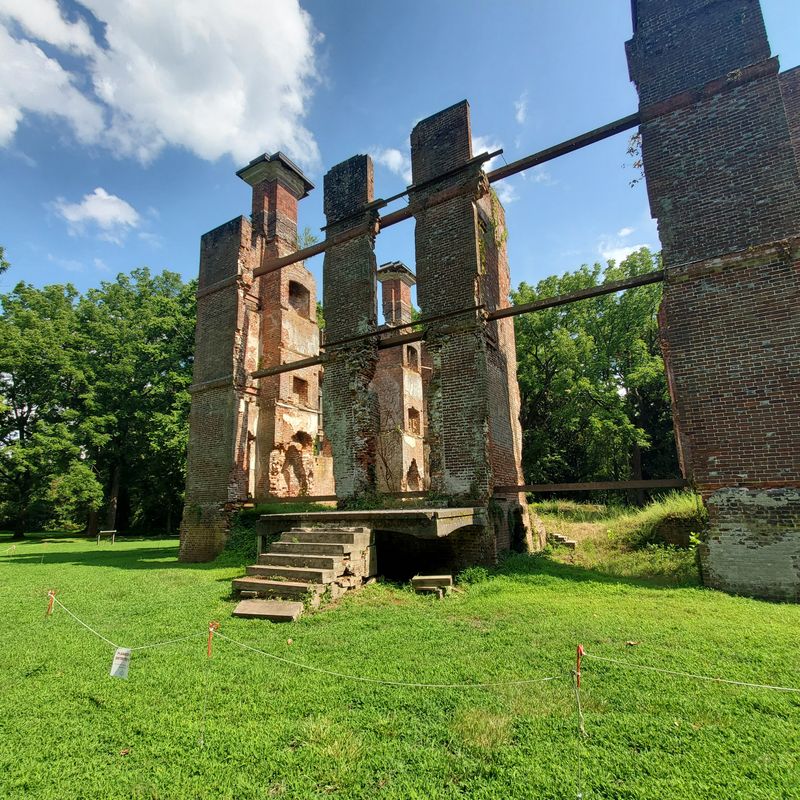
The first glance finds towering brick curtains and chimney stacks that rise like organ pipes, and the scale immediately suggests vertical framing and low angle shots.
Photographers often work under shifting clouds to let shadows move across the walls, which deepens texture and defines the scars of time in a gentle way.
Those high arches create natural windows, and careful positioning aligns their curves with treetops to produce layered depth that feels calm and cinematic.
Morning light slides across the brick and paints the mortar a warmer hue, while afternoon light drops into the cavities and pulls out surprising detail.
I like to isolate individual chimney faces for portrait style images, because their stacked courses and subtle soot patterns deliver strong character.
Wide lenses capture the broad shell with breathing room, yet a standard prime can compress arches into thoughtful sequences that reward minimal compositions.
The interplay between living vines and geometric brick tells a tidy story, and color profiles that favor soft greens and terracotta keep the scene honest.
When clouds break after rain, reflections appear in small puddles near the foundations, granting mirrored arches that look almost painterly.
If you shoot long exposures, moving leaves become gentle veils that balance the solid walls, especially when the wind touches the upper foliage.
Respect the stabilized boundaries and watch footing around uneven surfaces, since safe practice protects both the ruins and your equipment while preserving the privilege of open access.
Rosewell Plantation Ruins: Legacy and Access
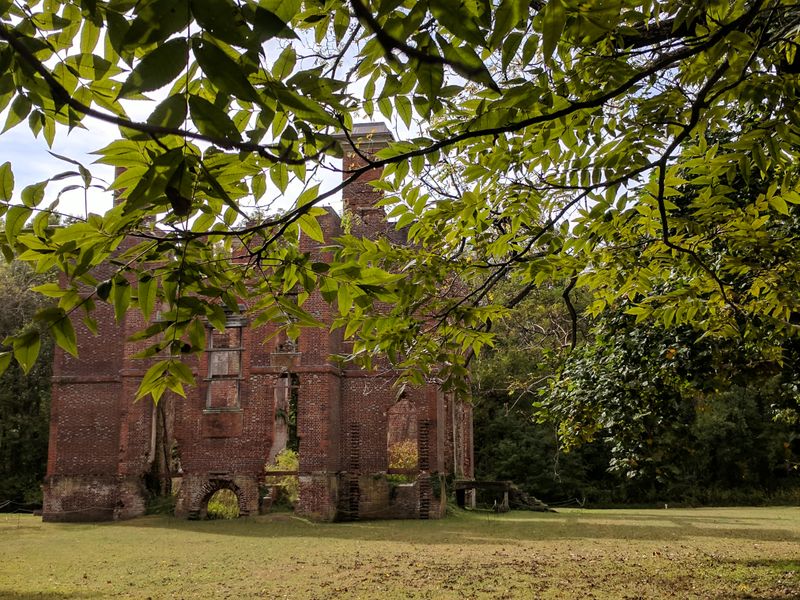
Rosewell stands as a publicly interpreted site with stabilized masonry, and that practical care makes it a dependable destination for careful, creative photography.
The grounds feature informative signage that places rooms in context, so you can compose with knowledge of where staircases and galleries once guided movement.
Archaeological studies continue to refine understanding of materials and household life, and those findings enrich captions and story driven image sets.
The site lies within easy reach of Williamsburg and Yorktown, which simplifies day trips and encourages repeat visits across seasons for light and foliage variety.
Paths are maintained and clearly marked, and respectful visitors find ample space to work without intruding on sensitive areas or damaging surfaces.
Tripods are practical during quieter hours, and the open footprint allows safe distancing that keeps everyone comfortable while preserving good sightlines.
Education and preservation work hand in hand here, and you can frame images that honor both the craftsmanship and the stewardship that protects it.
I recommend checking official hours and event schedules before you go, because programs sometimes shape access to specific viewpoints and interior perimeters.
Rosewell serves as a model for how Virginia can hold space for difficult histories while welcoming artful documentation that inspires thoughtful reflection.
You leave with memory cards full of honest textures and a clearer sense that scale can survive fire, especially when communities commit to patient care and open learning.
Barboursville Ruins: The Architectural Origin
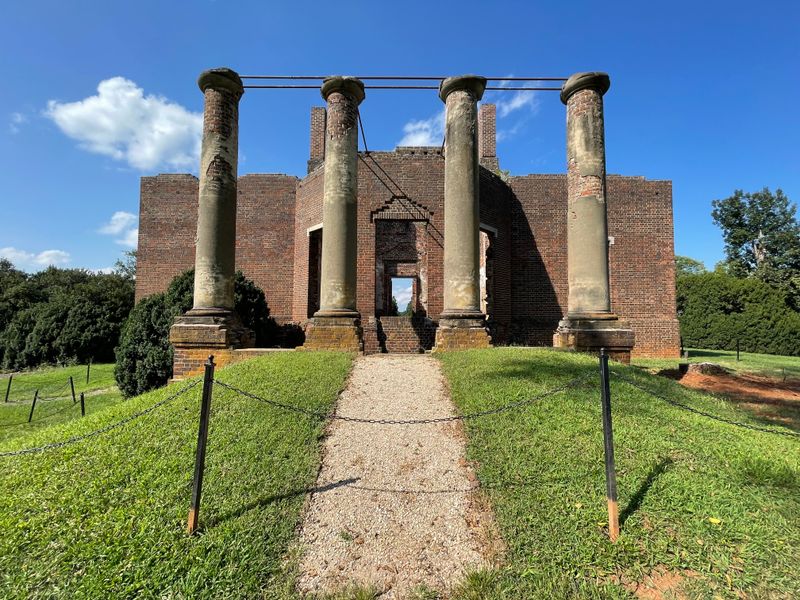
Barboursville tells a different chapter, a home designed by Thomas Jefferson for Governor James Barbour that once stood as a refined statement in the Virginia Piedmont.
The Neoclassical vocabulary speaks through surviving brick walls and elegant proportions, and even in ruin the design pulls your attention into calm balance.
A devastating fire in 1884 ended the house as a residence, yet the remaining shell holds clarity that persists through shifting light and changing seasons.
Standing before the ruins you can read Jeffersonian ideals in the measured rhythm of openings, which still frame hills that roll toward the Blue Ridge.
Arches and fragments hint at refined rooms, and the careful alignment reflects a mind that favored harmony as a path to beauty and function.
Photographers find ample compositions in the interplay of brick planes and sky, and the site rewards both wide context and quiet details.
The narrative sits comfortably in the larger story of Virginia architecture, linking classical influence with local materials and a landscape shaped by labor and time.
Interpretive materials and reputable sources affirm the origins and the 1884 fire, so your captions can anchor images in verifiable history.
You sense a house that once entertained conversation and policy, and the calm ruins turn those echoes into soft lines and patient shadows.
Plan your visit with a steady mind and a flexible lens kit, and give the structure space to breathe so the original geometry can speak to your frame.
Barboursville Ruins: The Unique Setting
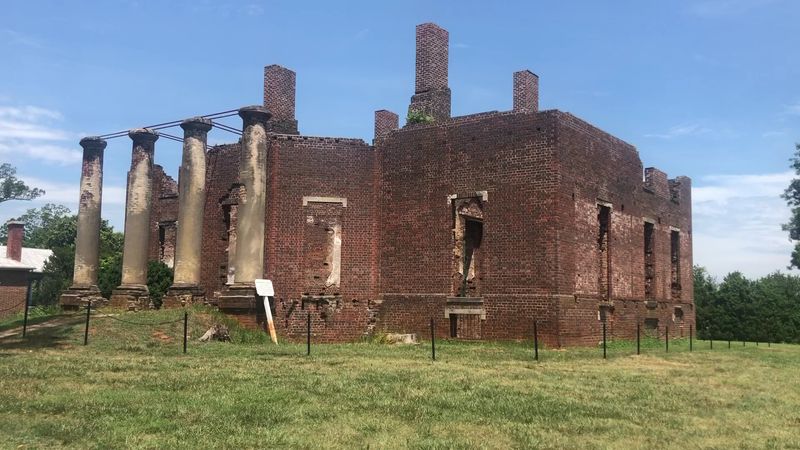
The ruins sit within Barboursville Vineyards, and that placement creates an elegant dialogue between cultivated rows and time worn architecture that photographers love.
Neat lines of vines pull your eye forward, and the brick fragments rise like a gallery wall for clouds and light that change by the minute.
The setting reads Italianate in mood, with stone and brick textures recalling old world scenes that feel both cinematic and grounded in Virginia soil.
On clear days the foothills present gentle contours that frame the site, and long shadows in late afternoon help define volumes without harsh contrast.
I like to start with a leading line composition that begins in the vineyard rows, then resolves at the arches where the geometry neatly concludes.
Telephoto compresses hills and ruins for a graphic look, while a normal lens keeps distances honest and preserves a walkable perspective.
Reflections appear after rain in small puddles and polished leaves, adding subtle highlights that link ground and sky in quiet dialogue.
Because the ruins sit on a working estate, you should plan with respect for operations and any posted guidance that protects plantings and structure.
Framing suggestions favor low angles among the rows, but avoid contact with vines, since good manners and clean paths yield better results and calmer editing later.
The combination of landscape order and architectural fragments feels rare in the region, and it rewards patient compositions that keep lines clean and horizons level.
Barboursville Ruins: Experiential Photography
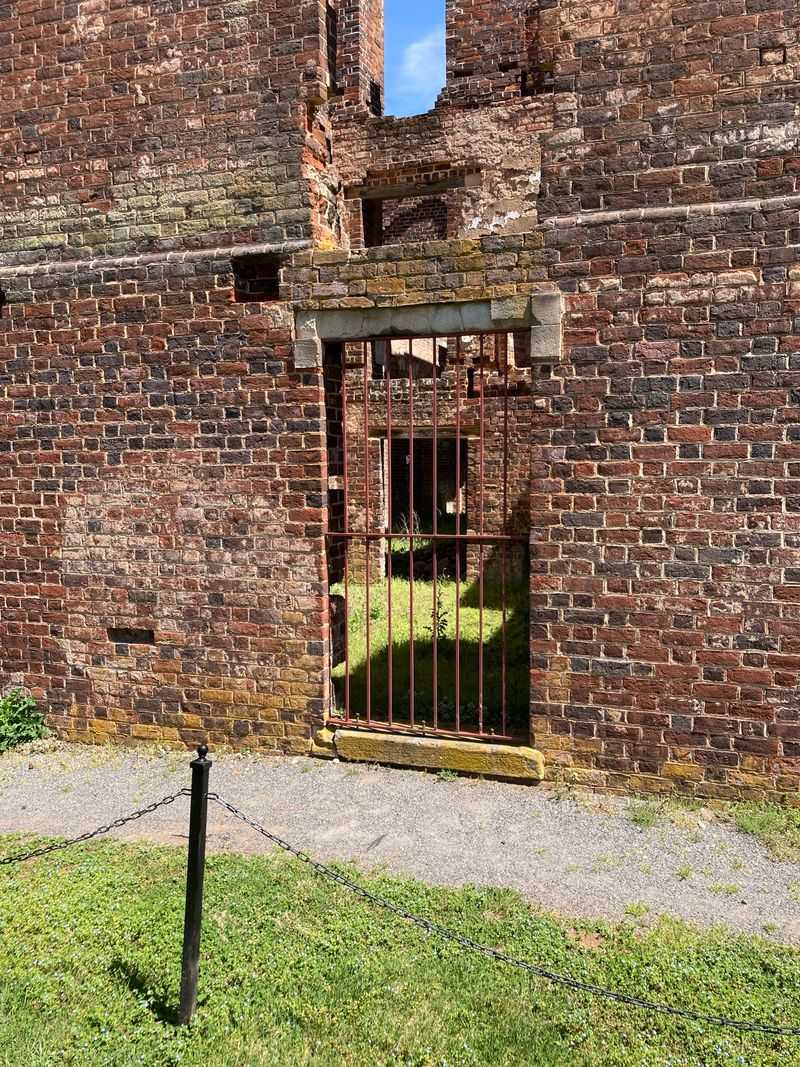
Working at a functioning winery simplifies logistics, since parking and clear wayfinding reduce stress and help you focus on timing and light.
Golden hour pours across the arches and reveals color shifts in the brick, while shade brings out a quiet palette that suits thoughtful frames.
Photographers chase sunbeams that filter through the high openings, using dust and pollen as soft texture that floats in patient rays.
The interior outline of the octagonal reception room remains readable, and careful positioning translates that geometry into clean lines that anchor a set.
A tripod supports long exposures that turn drifting leaves into silky gestures, and that effect pairs well with the firm edges of the walls.
Sound carries gently across the site, so a calm approach respects other visitors while keeping your own focus settled and creative.
I often bracket exposures for subtle HDR that protects sky detail, since the contrast between bright clouds and shaded ruins can be demanding.
Monochrome interpretations excel here, especially when the sun sits low and rakes across texture, pulling mortar and brick into sculptural relief.
Ask staff about current viewing guidelines, and follow posted rules that ensure the ruins remain safe and welcoming for future shoots.
You leave with images that communicate grace under time, and the quiet octagon becomes a signature scene that anchors your Virginia portfolio.
Dunnington Mansion Ruins: Victorian Decay
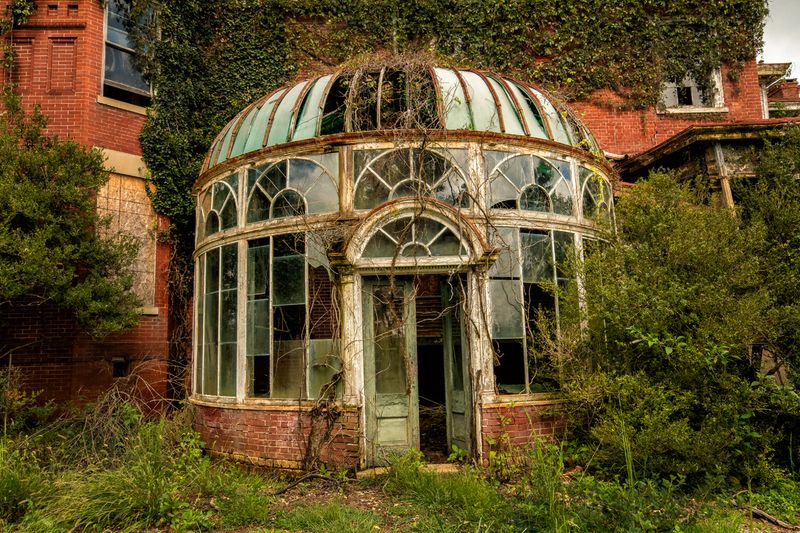
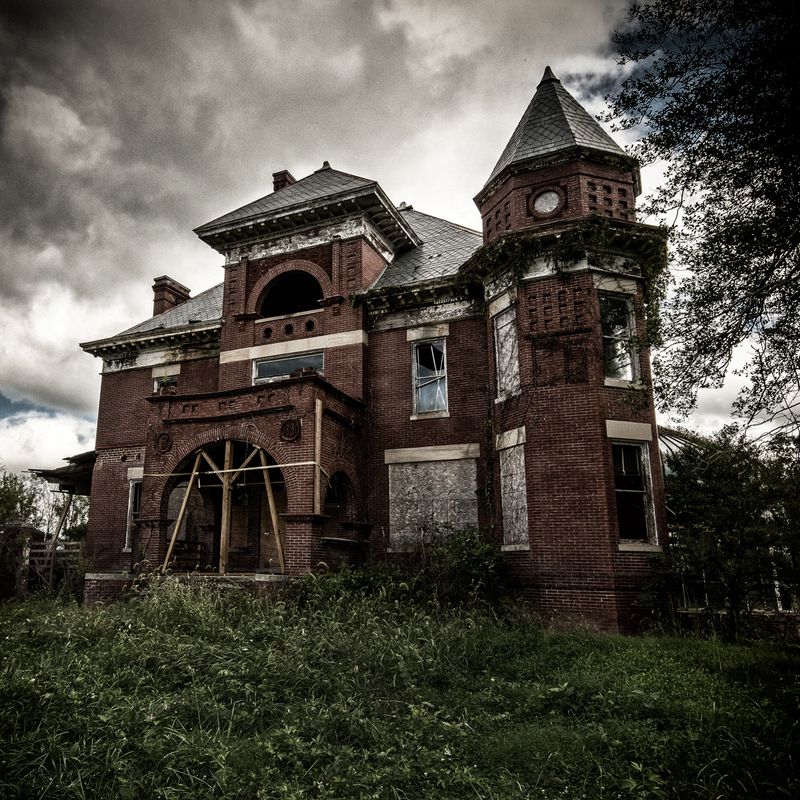
Dunnington Mansion introduces a later story, a nineteenth century residence with Romanesque Revival gestures that contrast sharply with the Colonial shells you may know.
The complex footprint once included turrets, bays, and layered roofs, and even in decline the plan reads as a sprawling composition of volumes and textures.
Brick arches sit heavier here, and ornamental details feel bolder and more sculptural, encouraging tight frames that savor pattern and shadow.
The house fell into ruin over decades, and the surrounding grounds shifted from formal order to a tangle that now adds a solemn stage for light.
Photographers respond to the mood with slower pacing, since the subject asks for study rather than quick snapshots or hurried walkthroughs.
Angles reward patience, and overcast days bring soft contrast that complements the masonry while preserving delicate edge detail.
Unlike stabilized public sites, this property has seen varying conditions, so current status can change and should be verified before planning any visit.
The aesthetic diverges from Jeffersonian refinement, and that difference makes a strong chapter break in a Virginia itinerary that values range and nuance.
Document surfaces honestly and avoid heavy stylization, because the story already carries weight through texture, geometry, and time.
Let the camera linger on transitions where brick meets empty frame and vine, since those thresholds hold the emotional core of the mansion.
Dunnington Mansion Ruins: The Signature Subject
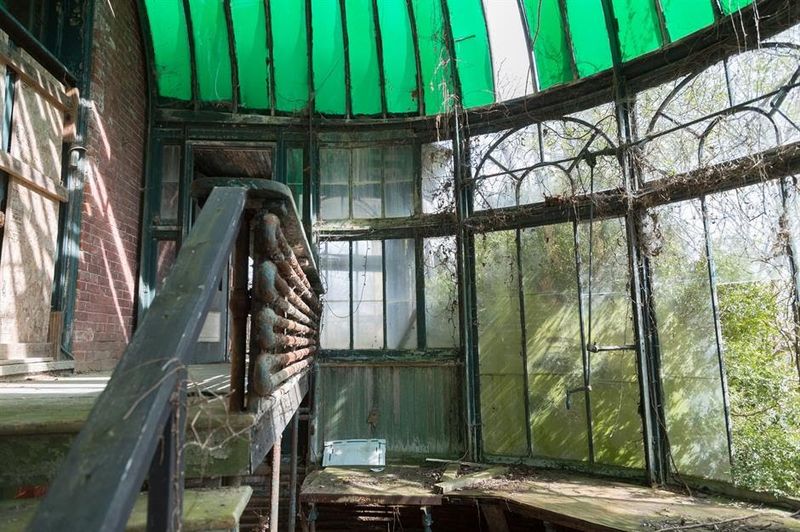
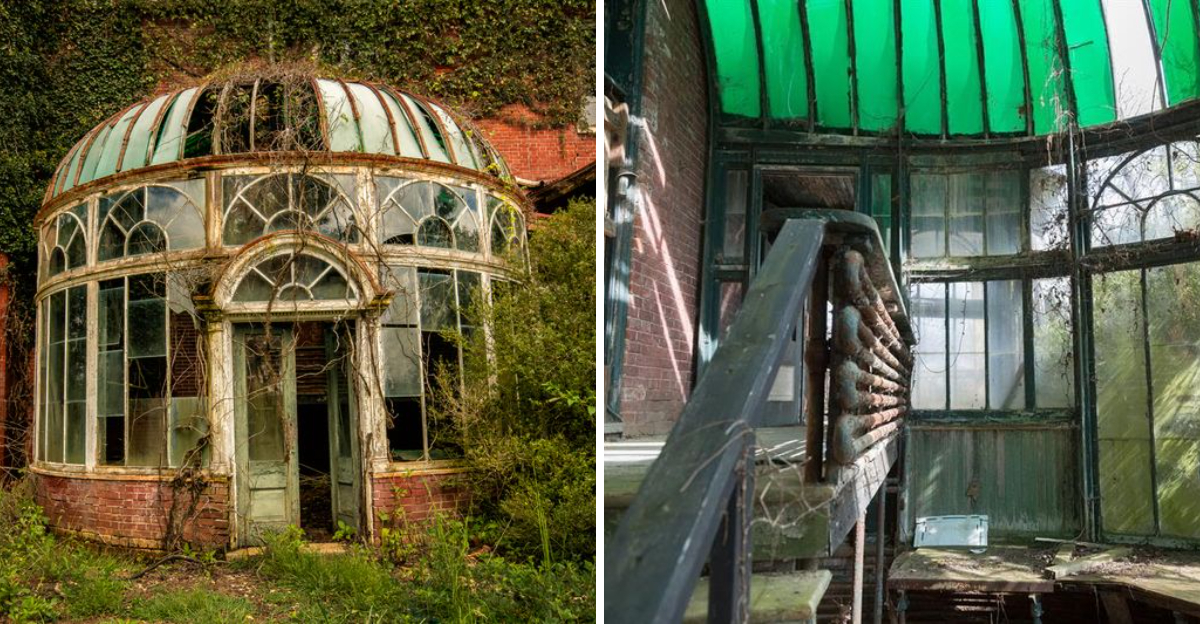
The attached conservatory stands as the signature image, a crumbling greenhouse where broken panes and rusted ironwork compose a ready made stage for light.
When clouds part the beams pour through open grids, and the pattern casts delicate lattices that drift across brick and soil like quiet handwriting.
Photographers explore from safe edges to capture layers of ribs and frames, using shallow depth to draw the eye through empty windows toward soft background greens.
Shattered glass glints at certain angles, so a careful step and mindful footwear matter as much as any lens choice or exposure setting.
Textures reward macro studies that isolate fasteners and paint flecks, yet wider frames preserve the sweep of the structure and the melancholy of absence.
Fog or light rain can enhance mood by muting contrast, and the conservatory glows in soft tones that flatter both color and monochrome treatments.
Legends describe lavish plantings in this space, and while those stories circulate locally they remain unverified and should be treated as lore.
Use a polarizer to tame glare on remaining glass, and keep highlights balanced so the ironwork maintains definition against bright sky.
A slow approach uncovers repeated motifs that lend cohesion to a set, and those echoes help your final gallery feel intentional and composed.
Respect boundaries and posted notices, because safety and permission are as essential as composition when photographing delicate historic fabric.
Dunnington Mansion Ruins: Access and Conclusion
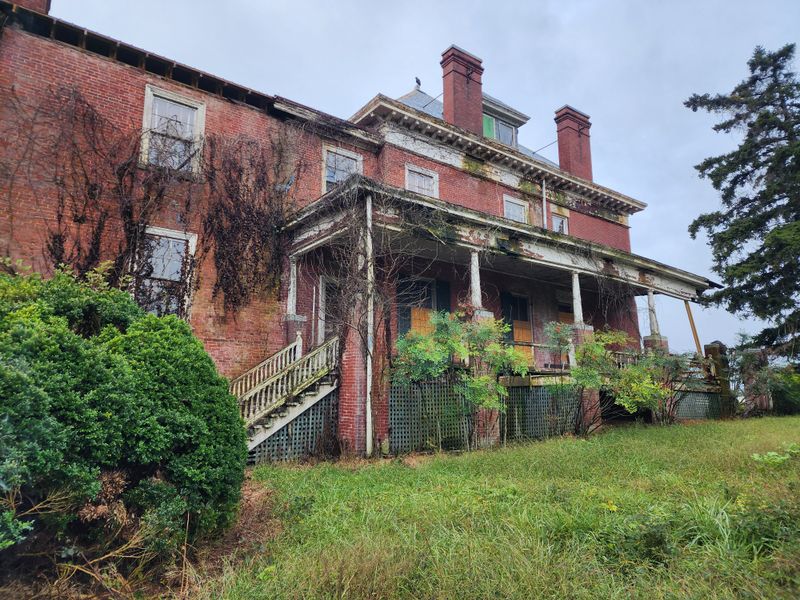
Dunnington often sits on or near private property, so permission matters and plans should begin with research and courteous contact before any steps on site.
Access conditions can shift with ownership or local guidance, and the safest approach is to photograph from public viewpoints unless written approval is granted.
This caution serves as a reminder that responsible photography protects fragile places, and it keeps the welcome open when opportunities appear.
In contrast, Rosewell and Barboursville provide clear, publicly navigable experiences that pair responsible access with meaningful interpretation and steady care.
Together the three sites present different eras and moods, and their ruins become simple classrooms where light, texture, and memory build patient stories.
Virginia appears again and again in your frames, not as a backdrop but as an active partner that shapes color, weather, and a sense of time.
I leave encouraged by how stewardship and respect can coexist with creative exploration, yielding images that feel honest and quietly powerful.
You carry home sequences that reveal grandeur and loss in equal measure, and the path back is already forming as the next season approaches.
Let these places guide your timing and your tone, since the most compelling photographs listen before they speak and find balance in restraint.
The past may be lost in parts, yet these ruins remain reachable waypoints that lead you into Virginia history with care, curiosity, and gratitude.
Dear Reader: This page may contain affiliate links which may earn a commission if you click through and make a purchase. Our independent journalism is not influenced by any advertiser or commercial initiative unless it is clearly marked as sponsored content. As travel products change, please be sure to reconfirm all details and stay up to date with current events to ensure a safe and successful trip.
