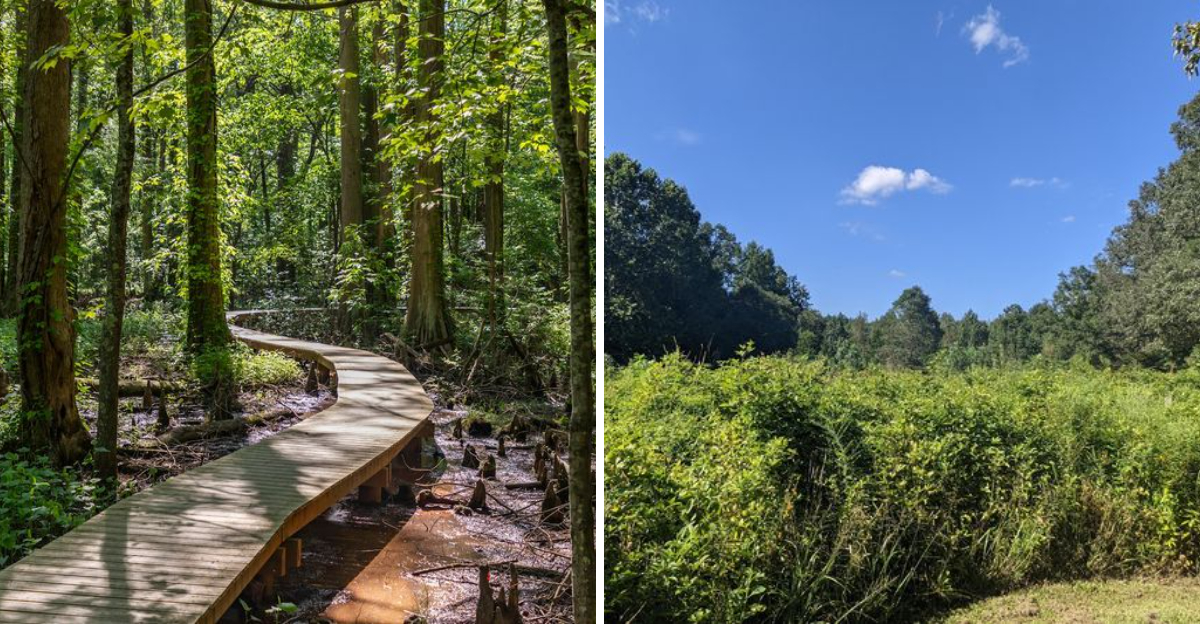
You step onto the boardwalk and suddenly everything changes. The sound of the city fades away.
The trees close in overhead. The ground beneath your feet becomes a path through a landscape that feels ancient and untouched.
Maryland has boardwalk trails that transport you to another world. Cypress trees rise out of dark water, draped in Spanish moss, and the quiet is almost complete.
It feels like a place where time moves differently. Birdwatchers love it.
Photographers can not get enough. Anyone who needs a break from the noise of everyday life will find peace here.
The boardwalk keeps your feet dry while you explore a world that feels prehistoric and magical. That is the power of a Maryland boardwalk trail.
A step into somewhere completely different, right in your own state.
The Boardwalk That Changes Everything
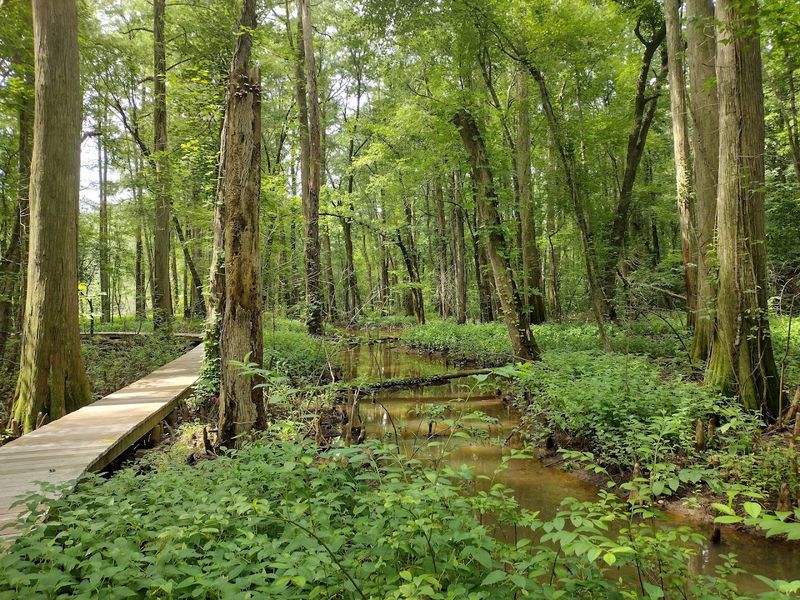
Nothing quite prepares you for the first glimpse of that boardwalk disappearing into the trees. It stretches roughly 1,700 feet through the heart of the swamp, elevated just enough above the waterline to make you feel like you are floating through another era.
The wood underfoot is solid, and the path curves gently so you never see too far ahead, which somehow makes every turn feel like a small discovery.
What makes this trail so different from a typical nature walk is the immediacy of everything around you. You are not observing the swamp from a safe distance.
You are inside it, surrounded by the sounds of frogs and birds and the faint drip of water from moss-covered branches above. The canopy closes in overhead, and the light changes from bright to filtered green within a few steps.
The boardwalk is also genuinely easy to walk. There are no steep inclines or tricky footing, which means people of all ages and fitness levels can enjoy the full experience without any stress.
Families with young kids, older visitors, and anyone in between can move at their own pace. The trail is free to access, and the preserve remains open even though the Nature Center is currently closed following a fire in 2022.
Portable restrooms are available on-site. Keep in mind that pets are not permitted here, so plan accordingly before you head out.
Ancient Bald Cypress Trees and Why They Matter
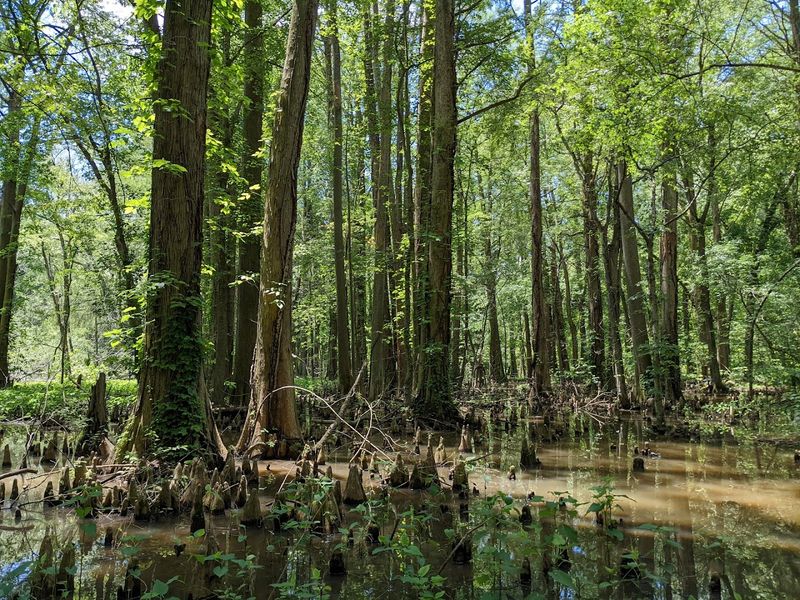
Some of these trees have been alive longer than most countries have existed. The bald cypress trees at Battle Creek are believed to be descendants of a population established somewhere between 5,000 and 15,000 years ago, following the retreat of Pleistocene glaciers.
Individual trees can live for over 1,500 years, and standing next to one feels genuinely humbling in the best possible way.
What makes this grove especially rare is its location. Battle Creek Cypress Swamp is home to one of the northernmost naturally occurring stands of bald cypress trees in all of North America, and it is the only large stand on Maryland’s western shore.
These trees can grow up to 100 feet tall and reach trunk diameters of up to 4 feet. Their shredded, reddish-brown bark in winter makes them easy to identify even without leaves.
The name “bald” comes from the fact that these are deciduous conifers, meaning they shed their feathery, needle-like leaves every fall. That is unusual for a tree that looks like an evergreen.
In autumn, the foliage shifts through warm tans, rich cinnamons, and fiery oranges before dropping entirely. Fossil evidence of cypress knees, cones, and stumps found in this area dates back roughly 100,000 years, which puts the whole place in a completely different perspective.
You are not just walking through a swamp. You are walking through deep, deep time.
Cypress Knees, the Swamp’s Most Mysterious Feature
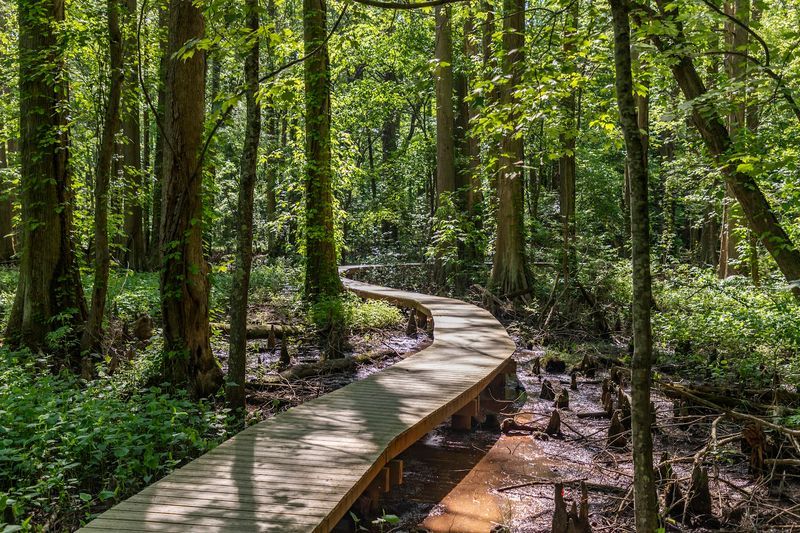
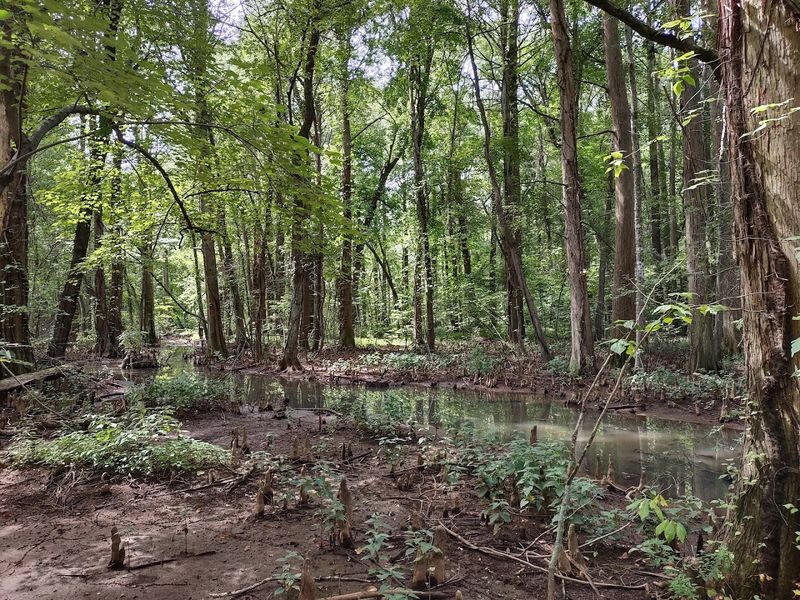
First time seeing cypress knees in person, I genuinely thought someone had planted wooden sculptures in the water. They look too strange to be real, these knobby, rounded protrusions poking up from the swamp floor like something from a fantasy novel.
They come in all shapes and sizes, some barely ankle-high, others rising up to knee level or beyond, arranged in clusters around the base of each massive tree.
Scientists have debated their purpose for a long time. One leading theory suggests they help deliver oxygen to roots submerged in waterlogged, low-oxygen soil.
Another idea is that they help anchor and stabilize the trees in the soft, wet ground where traditional root systems would struggle. Neither explanation has been fully confirmed, which makes the knees feel even more fascinating, a feature of nature that still holds its mystery.
Walking the boardwalk, you will find yourself constantly looking down at them. The water between the knees is dark and still, reflecting the trees above in a way that doubles the visual drama.
Some knees are wrapped in moss. Others have small ferns growing from their bases.
The whole scene feels layered and alive. Fossil cypress knees have been discovered in this very area, dating back around 100,000 years.
That means the ancestors of these strange little formations were poking out of ancient wetlands long before humans ever wandered through this part of Maryland.
Wildflowers and Seasonal Color Worth Chasing
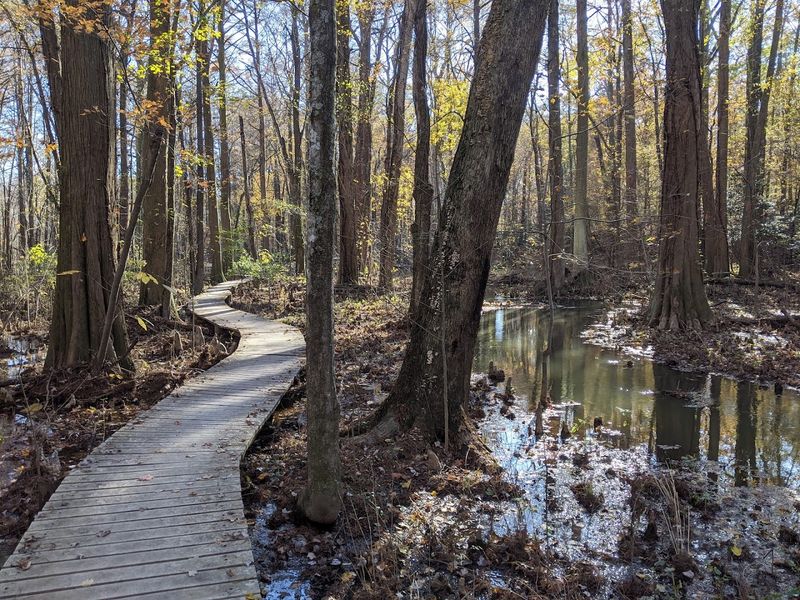
Spring mornings at Battle Creek have a kind of quiet drama that is hard to describe without sounding over the top. The forest floor comes alive with wildflowers that feel almost too pretty to be real.
May-apple, jack-in-the-pulpit, and pink lady’s slipper orchids push up through the leaf litter in a slow, colorful parade that rewards anyone who takes the time to look down while walking.
Late summer brings its own palette. Cardinal-flower blazes red along the edges of the water, and the threatened red turtlehead adds splashes of soft color to shadier corners of the trail.
These are not plants you will find in every Maryland park. The specific conditions of this swamp, its water levels, its shade, its ancient soil, create a microhabitat that supports species most people never get the chance to see in the wild.
Fall might be the most visually striking season of all. The bald cypress leaves shift from green through warm tans and cinnamons to fiery orange before dropping, turning the whole swamp into something that looks almost painted.
The contrast between the dark water, the pale cypress knees, and the glowing foliage above is genuinely stunning. Visiting across different seasons means you are essentially visiting a different place each time.
Each trip offers something new, which is a rare quality in a trail this short and accessible. Bring a camera.
You will use it more than you expect.
Birdwatching in a Living Canopy
The Prothonotary warbler is one of those birds that makes you stop mid-step. Its golden-yellow plumage against the dark greens and browns of the swamp is almost electric, and Battle Creek is one of the better places in Maryland to spot one.
These warblers nest in tree cavities near the water, making the cypress swamp an ideal home for them during breeding season.
Beyond the Prothonotary, the preserve draws parula, hooded warblers, and the Louisiana waterthrush, a ground-foraging species that moves along the water’s edge with quick, confident steps.
Wood ducks nest in hollow trunks throughout the swamp, and if you are lucky and quiet, bald eagles have been spotted perching at the very tops of the tallest trees.
The combination of dense cover, open water, and insect activity makes this place genuinely productive for birders.
Early morning visits tend to yield the most activity. Sound carries differently in a swamp, bouncing off water and bark in ways that make identifying birds by ear a different challenge than in an open field.
Frogs and insects add to the chorus, so a good pair of binoculars and a little patience go a long way.
No formal guided birdwatching tours are consistently offered now that the Nature Center is closed, but an audio tour is available to help visitors connect with what they are seeing and hearing along the boardwalk.
Frogs, Turtles, and the Creatures You Might Miss

There is a moment on the boardwalk, usually around dusk or early morning, when the swamp seems to switch on. The spring peepers start up, then the gray treefrogs join in, and suddenly the whole place is vibrating with sound.
It is one of those sensory experiences that is hard to forget, especially if you are not used to spending time in wetland environments.
Mud turtles are regulars here, often seen basking on logs or moving slowly through the shallows. Lizards and snakes show up along the trail edges, and deer pass through the surrounding upland woods with quiet regularity.
The swamp also supports a population of catfish in its deeper waters, and dragonflies hover over the surface in warmer months in a constant, glittering patrol.
One of the rarest residents is the cypress sphinx moth, whose caterpillars feed exclusively on bald cypress trees. This specificity makes the moth entirely dependent on places like Battle Creek for survival.
Spotting one is genuinely unusual, but knowing it exists here adds a layer of ecological weight to every visit. The biodiversity packed into these 100 acres is remarkable when you start counting it up.
Amphibians, reptiles, mammals, insects, birds, all living in and around the same ancient trees. The swamp is not just a pretty trail.
It is a functioning, layered ecosystem that has been running for thousands of years.
The History Hidden Beneath the Water
Long before anyone thought to build a boardwalk through it, Battle Creek Cypress Swamp was a working landscape. Early settlers recognized the value of bald cypress lumber almost immediately.
The wood is naturally decay-resistant, which made it ideal for boat building, exterior siding, and shingles in a region where moisture and salt air were constant challenges. Lumber mills operated here, harvesting trees that had been growing for centuries.
During the early 1900s, a local family known as the Grays used the swamp for a different purpose entirely. They harvested ice from it during winter months, cutting it from the frozen surface and storing it for use in the warmer seasons.
That kind of practical relationship with the land feels distant now, but it is woven into the name of the road the preserve sits on. Grays Road carries that family history quietly into the present.
The preserve was designated a National Natural Landmark in 1965, recognizing its ecological significance at a federal level. The Nature Conservancy acquired it back in 1957, making it their very first preserve in Maryland.
Since 1977, Calvert County Parks and Recreation has leased and managed the site, keeping it open and free to the public.
The swamp is also part of two national historic trail networks, the Captain John Smith Chesapeake National Historic Trail and the Star-Spangled Banner National Historic Trail, connecting its natural story to the broader human history of the Chesapeake region.
Planning Your Visit to Battle Creek Cypress Swamp
Getting to Battle Creek Cypress Swamp is straightforward. The preserve sits at 2880 Grays Road in Prince Frederick, Maryland, about an hour south of Annapolis.
The drive itself is pleasant, moving through rural Calvert County farmland before the road narrows and the tree canopy thickens around the entrance. There is a parking area on-site, and the trails are accessible without any advance reservation.
Admission is free, which is genuinely surprising given how special the place is. The Nature Center is currently closed following a fire in November 2022, so do not plan on indoor exhibits or staffed programming during your visit.
Portable restrooms are available on the grounds. An audio tour is offered to give visitors context as they move through the boardwalk, and it is worth using because it adds real depth to what you are seeing.
A few practical notes before heading out: pets are not allowed on the property, so leave them home. Wear comfortable shoes with some grip since the boardwalk can be slick after rain.
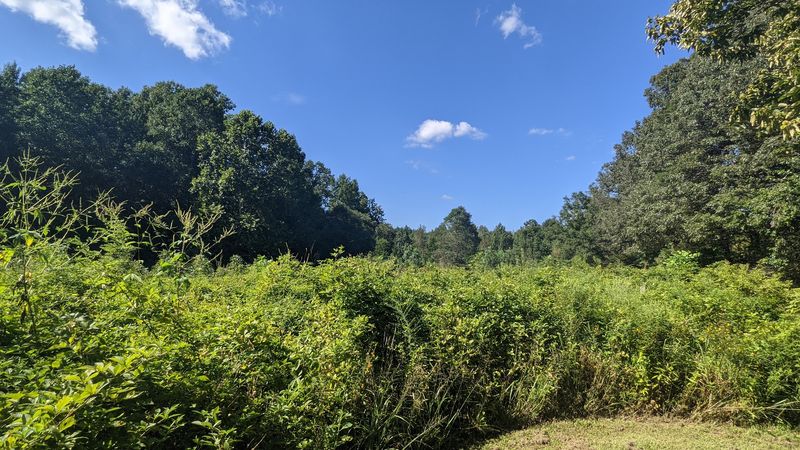
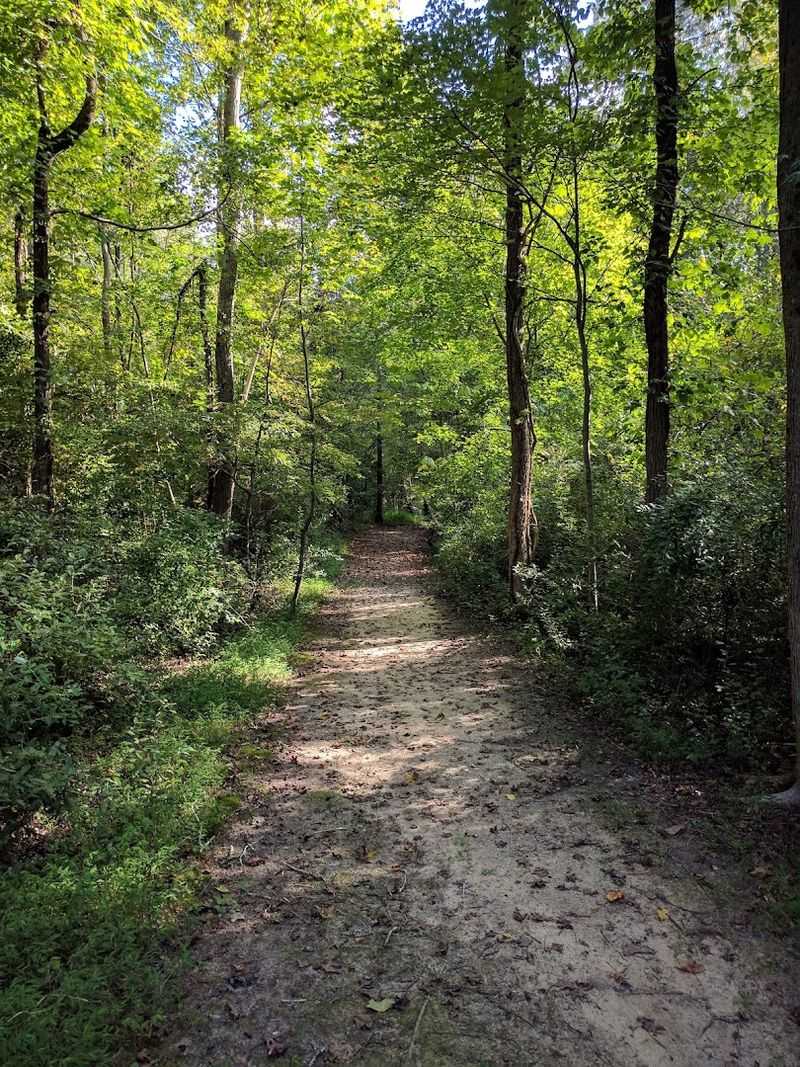
Bug spray is a smart call in warmer months because this is, after all, a swamp. The main boardwalk trail is about a quarter mile, but arboretum and meadow trails extend the visit nicely if you want more time outside.
Morning visits tend to offer the best wildlife sightings and the most atmospheric light. Go early, go slow, and let the place work on you.
