Some markets are quick stops. You run in, grab what you need, and leave.
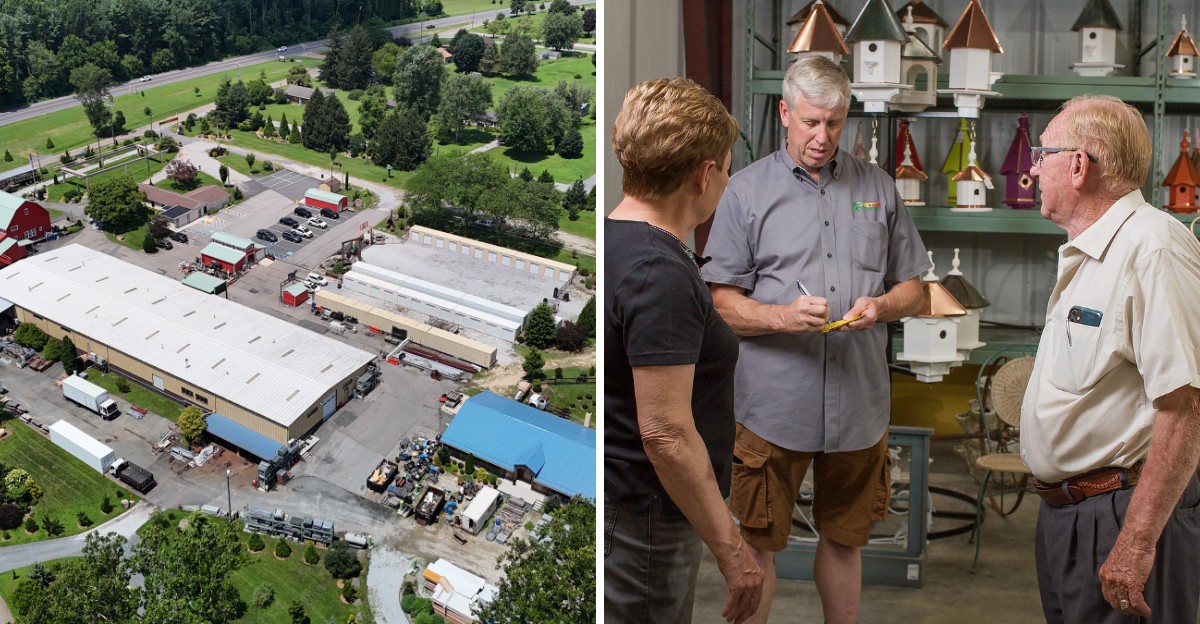
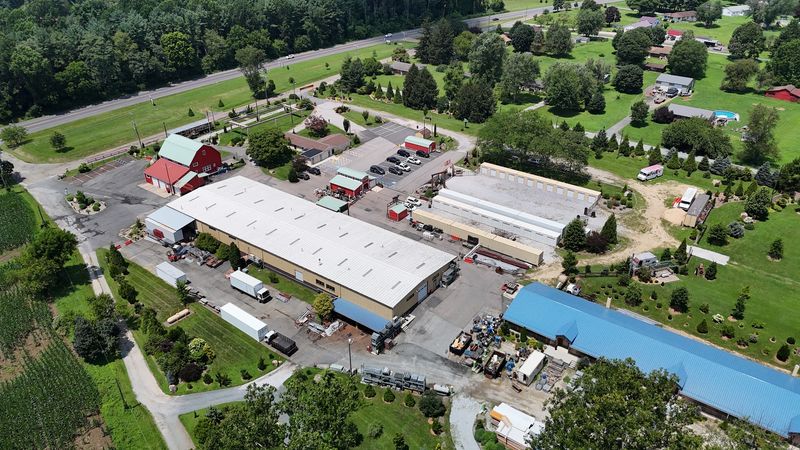
This Maryland spot is the opposite. At 17,000 square feet, it is the kind of place where you plan to spend a few hours and still feel like you missed something.
The stalls are packed with vintage finds, handmade goods, and unexpected treasures around every corner. You can browse furniture, jewelry, art, and small oddities that catch your eye when you least expect it.
The vendors are friendly and happy to chat about what they sell. Locals treat it as a regular destination, while visitors feel like they discovered something special.
A reminder that the best markets reward patience. The kind of place where a quick visit turns into a full afternoon.
A Sale Barn With a Second Life
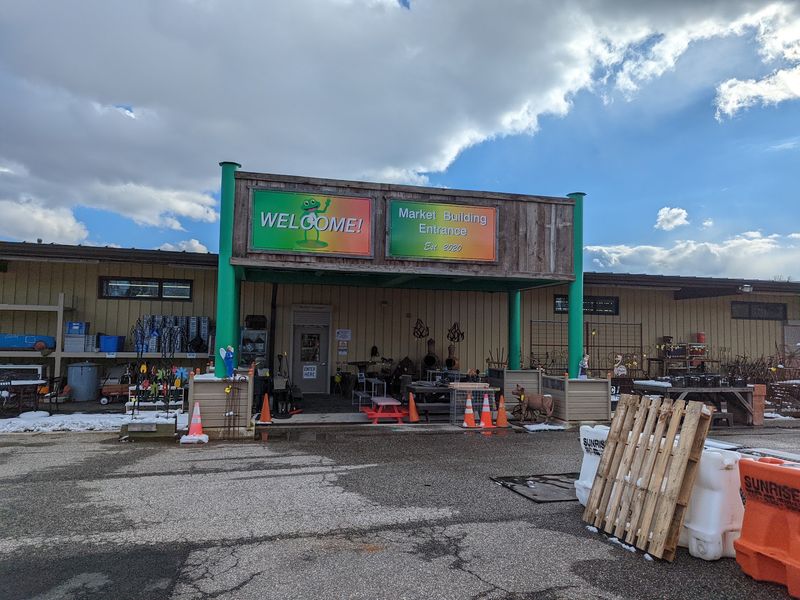
Before it became a market, the property operated as Hunter’s Sale Barn for over forty years, a working auction spot that locals knew well. That history isn’t hidden away or scrubbed out.
The original barn still stands on the grounds, red and unmistakable, and vendors set up inside it.
Founders Nick and Sue Thrappas took on the property and began reshaping it piece by piece rather than gutting everything at once. The result feels layered instead of freshly built, and regular visitors often mention noticing something new each time they return.
Nick’s background matters here. Two decades of visiting markets across the East Coast and Midwest, plus hands-on work in demolition, shaped an approach centered on upcycling and giving architectural materials another shot at usefulness.
Old beams, salvaged metal, and reclaimed pieces show up throughout the space in ways that feel intentional.
The frog logo scattered across signage is a small wink at that environmental mindset, a family shorthand for taking care of what’s already here.
Plans for the site keep moving forward, including an ice cream parlor slated for the original sale barn building. Renovation and expansion are ongoing, which is part of the charm for people who like watching a place grow.
What makes the setting work is the contrast. Rural highway outside, farmland stretching in the distance, then a bright, organized, climate-controlled interior packed with more variety than the modest exterior suggests.
First-timers frequently underestimate the square footage, then realize they’ve barely covered half of it.
Vintage Hunting Without the Dusty Pile Digging
Flea market veterans know the tradeoff. Great prices, but you’re elbow-deep in bins hoping something good surfaces.
That’s not the setup here.
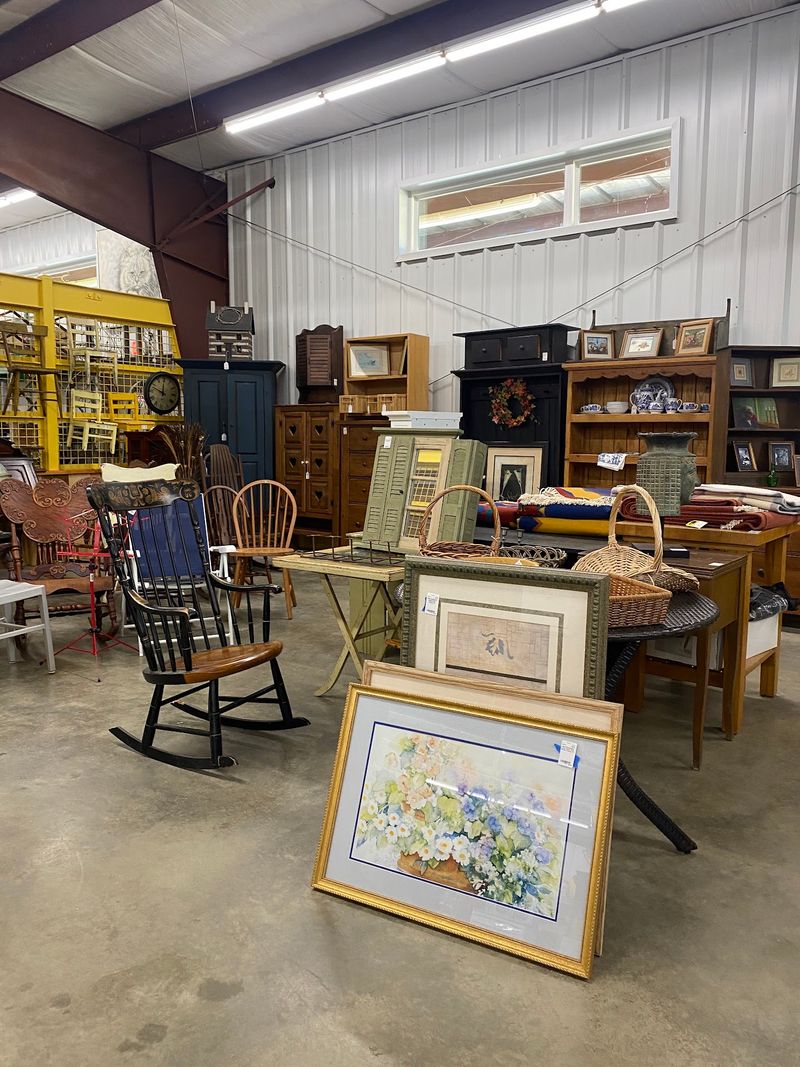
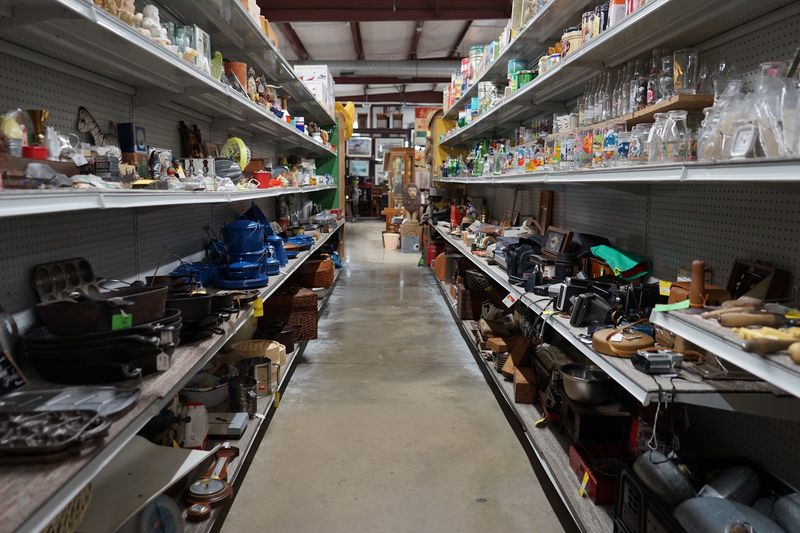
Roughly 30 percent of the inventory falls into the picked vintage and antique category, and it’s displayed rather than dumped. Items are grouped, cleaned, and arranged so the hunt still feels like a hunt without requiring gloves and a tetanus shot.
The picking happens through travel. Sourcing trips across regions bring in pieces that don’t circulate through every local shop, which explains why inventory shifts week to week.
New treasures arrive constantly, and the mix rarely looks the same twice.
Expect to come across old signage, enamelware, furniture pieces, oddities with no obvious category, and collectibles that spark recognition in anyone who grew up around them.
A practical tip for serious browsers: walk the whole building once without stopping, then circle back. The space is big enough that fixating on the first interesting shelf means missing entire sections.
People routinely spend an hour or more and still leave with rooms unexplored.
Antique furniture and larger pieces do turn up, so measuring your vehicle’s cargo space before the trip isn’t a bad idea. Nothing stings quite like finding the right washstand and realizing the sedan won’t cooperate.
The vintage side also blends with new merchandise throughout, meaning a hand-forged antique tool might sit near something made this year. That mingling keeps the browsing unpredictable in the best way.
Handmade Goods Straight From Local Makers
Operating as a Maker’s Market changes the whole texture of the inventory. Merchandise comes directly from local craftsmen, and a large share of the creative work is handmade in the USA.
That sourcing choice shows up in the details. Small batch pottery, hand-poured candles, stitched textiles, carved wood, and metalwork sit alongside artwork and home decor, and the pieces carry the small irregularities that mass production sands away.
For gift shoppers, this is the section that earns the drive. Finding something one of a kind for a hard-to-shop-for relative is far easier when the shelves aren’t stocked with the same items available at every strip mall in three counties.
Categories stretch wider than expected. Home decor and artwork make up a good chunk, but there’s also apparel like graphic tees, socks, hats, gloves, and comfortable loungewear, plus bath goods, dishes, and scented candles.
Maryland pride gets its own moment too. Crab-themed goods, Old Bay tie-ins, and local sports paraphernalia give visitors from out of state an easy souvenir with actual regional character.
Because makers rotate and restock, repeat visits rarely feel repetitive. Something that catches your eye one week may not be there the next, which is either thrilling or mildly agonizing depending on your decision-making speed.
Worth knowing: the staff and vendors are generally happy to talk through where pieces came from. That context turns a purchase into a small story, which is half the appeal of shopping handmade in the first place.
The Garden Shop Is a Whole Destination
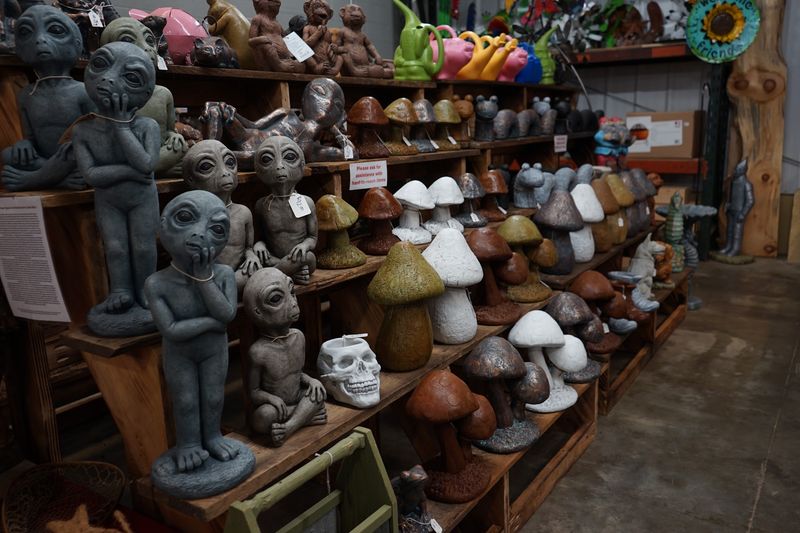
Gardeners tend to lose track of time in this corner, and honestly, it’s understandable. The dedicated Garden Shop inside the Market Building carries quality garden tools, supplies, and a deep bench of outdoor decor.
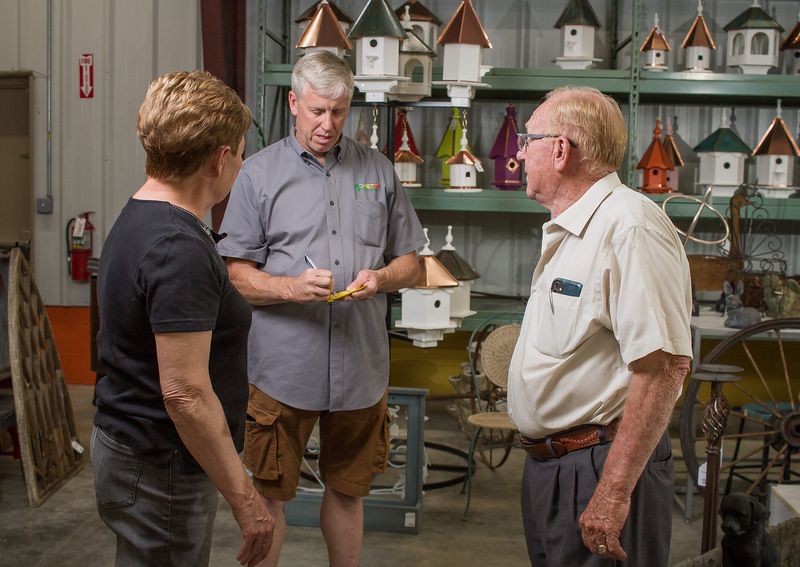
Stone and concrete statues anchor the space, along with birdbaths, birdhouses, flower pots, gnomes, and metal yard art in a range of sizes. Trellises show up too, including whimsical shapes like butterflies and dragonflies that work well on decks and small patios.
What separates this from a big box garden aisle is the character. Pieces feel picked rather than ordered by the pallet, so a shaded garden nook or a newly cleared backyard patch can get furnished with things neighbors won’t already have.
Practical note for anyone eyeing the heavier items: concrete and stone pieces are no joke to move. Bringing a truck, an SUV with folding seats, or a strong friend will save some awkward parking lot problem solving.
Shopping seasonally pays off here. Spring and early summer bring different stock than the holiday months, and the selection reflects whatever’s rolling in that week.
The garden section also pairs nicely with gift shopping. A small stone frog, a decorative stake, or a compact birdhouse makes an easy present for someone who spends weekends in the dirt.
People who care about attracting wildlife will find plenty of options, from bird-friendly features to pieces that simply make a yard feel more finished and lived in.
A Tool Shop Built Around a Welded Tool Wall
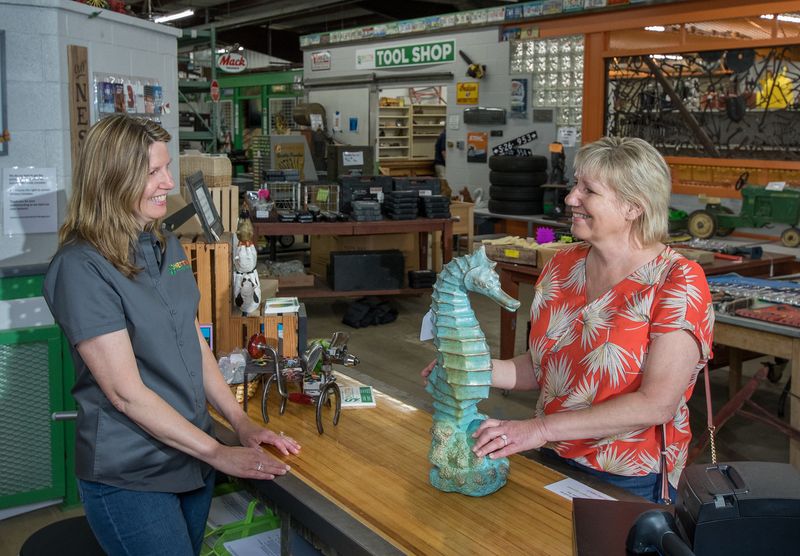
Here’s the section that surprises people who thought they were just tagging along. The Tool Shop stocks high quality tools across three categories: vintage, brand new, and gently used.
The centerpiece is a feature known as the Tool Wall, built by a retired welder and blacksmith. It’s functional display and craftsmanship at the same time, the kind of thing that makes tool people stop mid-sentence.
Inventory ranges from old hand planes and wrenches with real patina to modern power tools that still have plenty of working life ahead. That blend means both collectors and weekend fixers find something useful.
Anyone restoring furniture, tinkering in a garage, or outfitting a first workshop should budget extra time. Used tools at a market like this often outlast cheap new alternatives, and the selection shifts as fresh finds come in.
Vintage tools double as decor for plenty of shoppers, mounted on walls in workshops, kitchens, and home offices. Old iron and worn wood handles have a look that reproductions never quite nail.
Pro tip: inspect moving parts and handles before committing, the same way you would at any secondhand tool source. Most pieces here are in solid shape, but a quick check builds confidence.
The Tool Shop also reflects the market’s broader philosophy of keeping good materials in circulation. Rather than letting decent tools rust out in a forgotten shed, they get handed off to someone who’ll actually put them back to work.
Specialty Sections Covering Nearly Every Interest
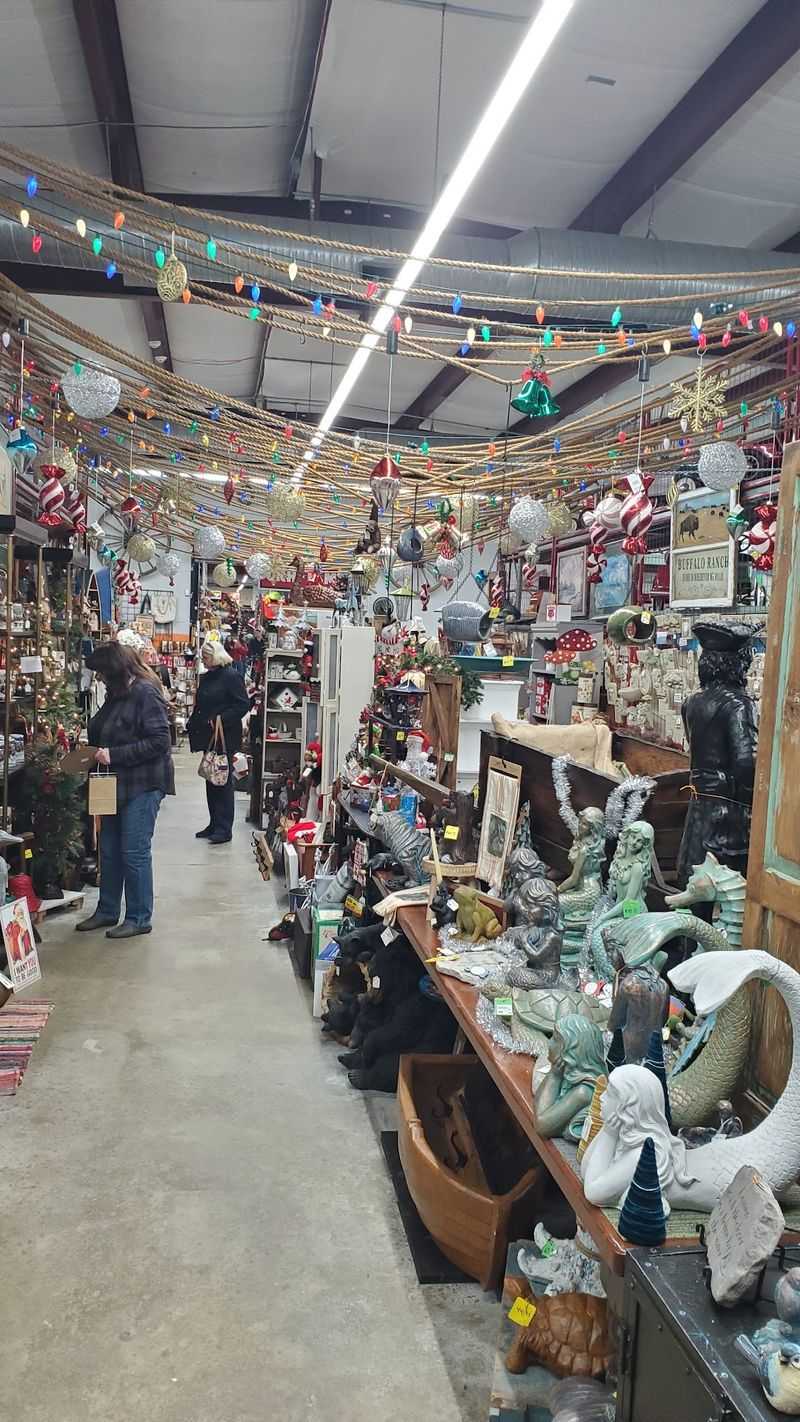
Organization is what keeps a 17,000 square foot space from becoming overwhelming, and the themed sections do a lot of heavy lifting. Rather than scattering everything randomly, goods are grouped so shoppers can zero in fast.
Fair Trade products occupy their own area, with globally sourced home goods and accessories that longtime shoppers of certain now-closed national chains will appreciate. Nearby, upcycled and recycled items lean into the market’s repurposing streak.
Polish Pottery gets a dedicated display, its hand-stamped blue patterns instantly recognizable and genuinely hard to find in this part of Maryland. Military memorabilia has a section too, alongside gifts aimed at supporters of police and armed services.
A faith-based area carries devotional items and gifts, and pet accessories cover both the animals and the humans who are slightly obsessed with them. Cat people, dog people, and the general critter-loving population are all accounted for.
Sports memorabilia and local team gear round things out, which makes this a reliable stop for Maryland-themed presents.
The real benefit of this layout is efficiency with room for wandering. Shoppers on a mission can head straight for what they need, while browsers can drift from Fair Trade baskets to pottery to novelty goods without backtracking.
Address for the GPS: 2084 Jacob Tome Memorial Hwy, Port Deposit, MD 21904. It sits just minutes off I-95, which makes it an easy detour on a longer drive rather than a dedicated expedition.
Festivals, Car Shows, and Food Truck Weekends
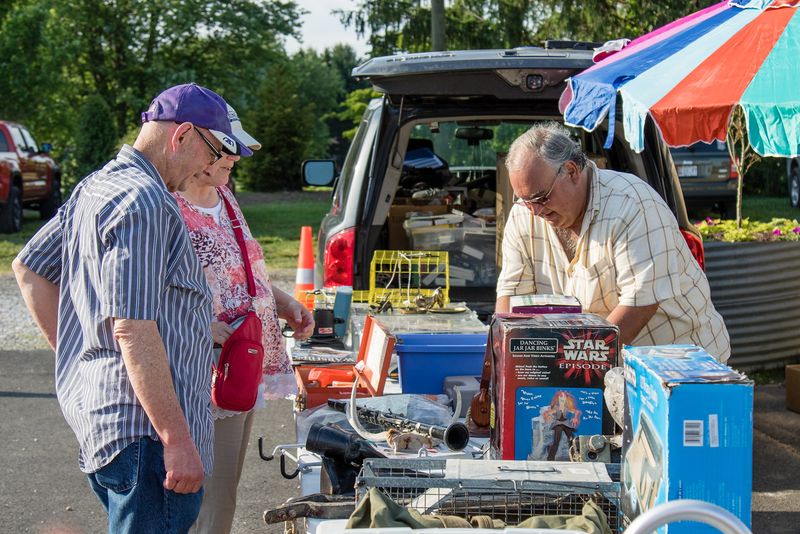
Special event days transform the whole property. Classic car lot parties, seasonal festivals, concerts, and holiday celebrations turn a shopping trip into something closer to a small fair.
Food trucks typically roll in for these gatherings, and a picnic area gives visitors somewhere to sit down with whatever they picked up. Live music and artisan vendors often join the lineup, spreading activity across the grounds and into the red barn.
Flea market style events bring outside sellers too, which expands the variety well beyond the permanent inventory. For anyone who enjoys wandering between vendor tables and hood-up classic cars, these are the dates to target.
Timing a visit around an event takes a little planning since the market keeps a set schedule: Wednesday through Saturday, 10 AM to 6 PM, closed Sunday through Tuesday. Checking the official site before driving out is the smart move.
Event days naturally draw bigger crowds, so arriving earlier in the day usually means easier parking and calmer aisles inside.
Beyond the fun, there’s a community purpose behind the programming. The Sonetta Cares initiative supports local small businesses, nonprofits, and community organizations through partnerships, fundraisers, and donations.
That gives the gatherings a different feel than a straightforward retail promotion. Shoppers, makers, and local groups end up in the same place at the same time, which is more or less the point of calling it a community market in the first place.
How to Make the Most of a Visit
Plan for longer than seems reasonable. Two hours is common, and plenty of visitors admit they still didn’t cover everything on a first trip.
Comfortable shoes help more than you’d think. The Market Building is air conditioned and well lit, so browsing stays pleasant, and a lounge area offers a spot to rest partway through without cutting the visit short.
Bring measurements for any furniture, garden statue, or wall piece you might be hunting. Nothing kills momentum faster than second-guessing whether a stone bench fits the patio.
Consider vehicle space ahead of time too, especially if garden decor or antique furniture is on the radar. A hatchback and a hopeful attitude only stretch so far.
Since inventory turns over weekly, the pieces that catch your eye may not be there on a return trip. Decisive shoppers tend to fare better here than the ponder-it-for-a-week crowd.
Families do fine in this space. It’s clean and organized rather than chaotic, with enough variety that kids find something interesting while adults dig through tools or pottery.
Location makes it an easy add-on. Just off I-95 in Cecil County, it slots neatly into a day trip toward nearby attractions or a drive north toward southeastern Pennsylvania.
Staff are known for being helpful and easy to talk to, so asking about a specific section or a recent arrival is worthwhile. Wednesday through Saturday, 10 AM to 6 PM, is the window to work with.
Planning Notes Worth Keeping
Timing shapes the experience more than most people expect. Holiday months bring seasonal stock and decorations, while spring pushes the garden side into full swing.
Arriving shortly after opening gives the quietest browsing conditions, particularly on Saturdays. Late afternoon visits can feel rushed once the six o’clock close approaches.
Keep the closed days in mind. Sunday, Monday, and Tuesday are dark, and that catches travelers off guard when they build a weekend itinerary around it.
Photographers and decorators will find plenty of inspiration in the displays themselves, since the arrangements often suggest how pieces might work at home.
The market sits in a scenic stretch of Cecil County, so pairing the stop with a drive along the Susquehanna River area rounds out the day nicely. Port Deposit’s historic main street is close by for anyone wanting a short walk afterward.
For gift shoppers working through a long list, the section-based layout is a genuine advantage. Faith-based gifts, pet items, military memorabilia, Fair Trade goods, and Maryland souvenirs all live in defined areas.
Anyone chasing a specific collectible should treat visits as ongoing rather than one and done. Stock rotates, picking trips bring in fresh material, and the expansion work means the footprint keeps evolving.
Above all, arrive curious. The appeal here isn’t a single showstopper item but the accumulation of odd, useful, handmade, and salvaged things sitting side by side under one very large roof in Port Deposit.
