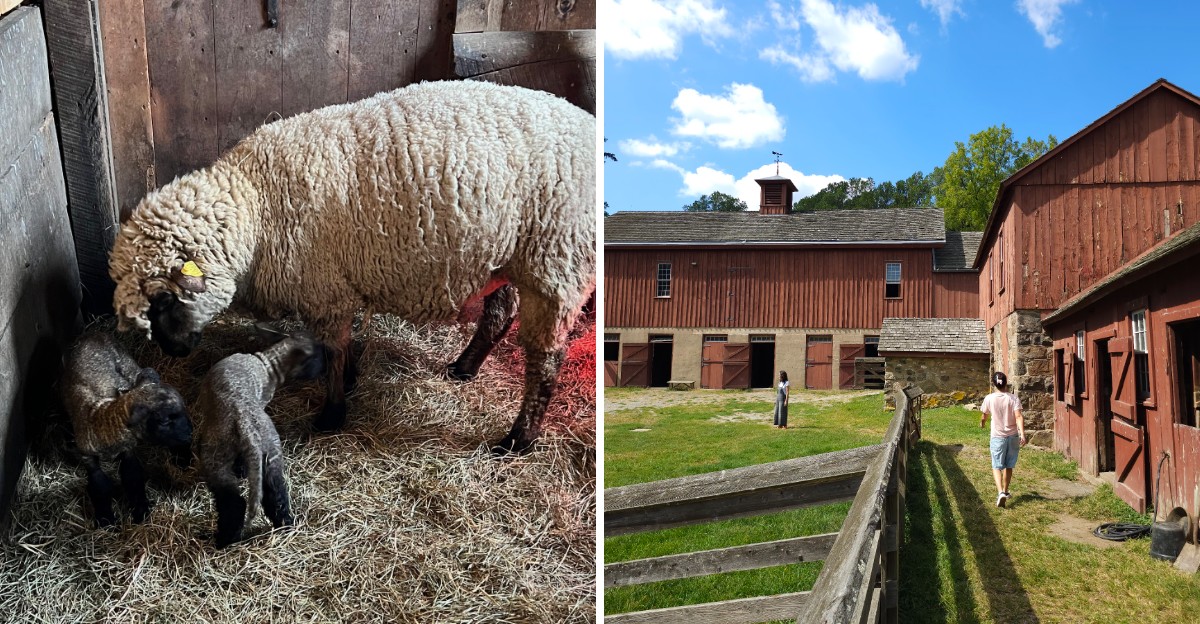
History is considerably more fun when it refuses to sit quietly behind glass.
At this working historical farm, the past comes with barns, fields, animals, old equipment, and the daily routines that once kept a country estate running.
New Jersey designated the property as its first Living Historical Farm, preserving a place where agricultural history can be experienced rather than simply read about.
The story stretches back to a prosperous working farm and estate, where new agricultural techniques once mixed with the rhythms of rural life.
Today, demonstrations and programs help bring that world back into focus.
There is something satisfying about hearing the sounds of a farm while learning how people actually worked here.
No time machine required. Just comfortable shoes, a little curiosity, and perhaps an appreciation for how easy modern laundry suddenly seems.
Trading Traffic Noise For Barnyard Quiet
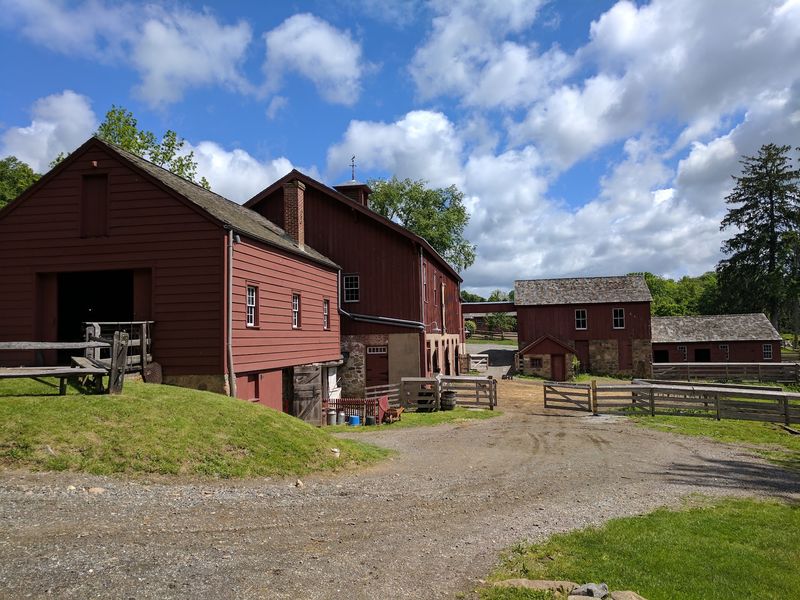
The parking lot sits close to a busy road, yet a few minutes down the path the modern hum simply dissolves. Fields open up. Birds take over the soundtrack.
Fosterfields Living Historical Farm interprets agricultural life from roughly the turn of the twentieth century, focusing on the years around 1918 to 1927.
That narrow window matters, because it keeps everything consistent, from the tools in the barn to the clothing worn by staff.
Instead of glass cases and velvet ropes, you get muddy boots, working fields, and chores happening on schedule whether anyone is watching or not. Paths are wide and mostly flat, which makes wandering easy for families with strollers or grandparents who prefer a gentle stroll.
Bring comfortable shoes, because the ground can be soft after rain and you will cover more distance than expected. Give yourself at least two hours.
Rushing through this place defeats the entire point of coming here in the first place.
The Willows, A Gothic Revival House With Serious Presence
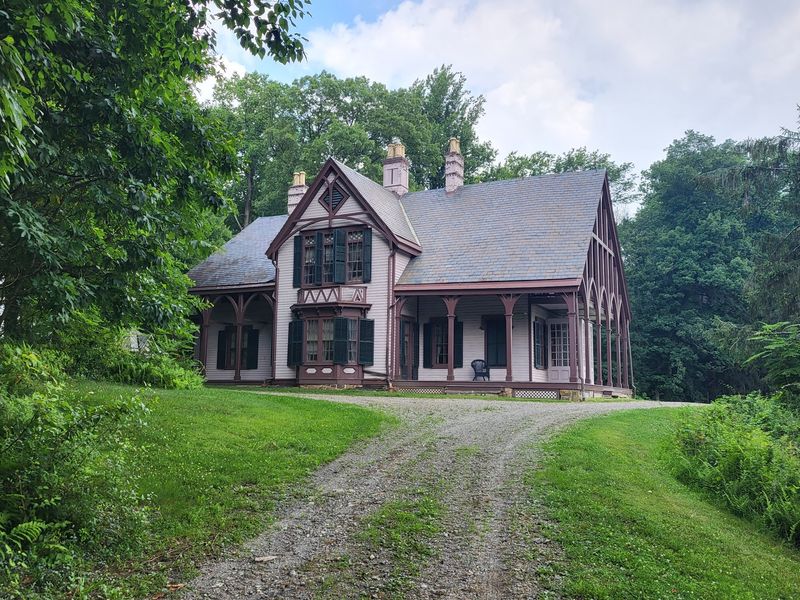
Perched above the farmland, The Willows is impossible to ignore. Steep gables, pointed details, and an air of quiet confidence give it a storybook silhouette.
Built in 1854 for General Joseph Warren Revere, a grandson of Paul Revere, the house later became home to the Foster family. Its architecture reflects Gothic Revival taste, which was fashionable among wealthy landowners of that period.
Touring the interior shows a completely different side of estate life, one shaped by parlors and polished furniture rather than plows and feed buckets. The contrast between the mansion and the working buildings below is honestly the most interesting part.
Access to the house can vary depending on the season and any ongoing preservation work, so it helps to check availability before planning your day around it. Guided interpretation brings the rooms into focus far better than reading a placard ever could.
Look up when you step inside. Ceilings and woodwork tell their own story.
Inside The Farmhouse Where The Real Work Got Planned
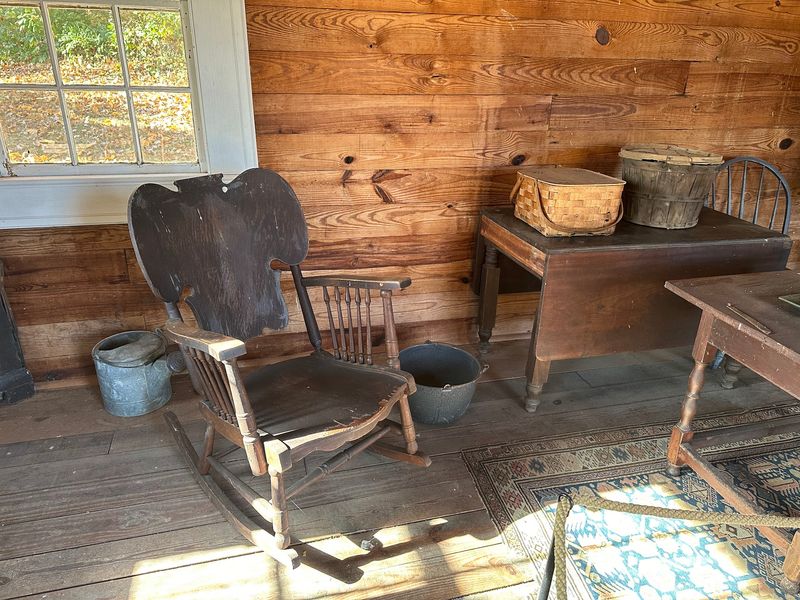
Down the slope from the mansion sits a far humbler building, and it might be my favorite structure on the property. No grand staircase, no formal parlor, just rooms built for getting things done.
Known historically as the Ogden House, its foundation dates back to 1774, making it the oldest building here. The interior is interpreted to the 1920s and reflects the household of the farm superintendent and his family.
Kitchens tell you everything about an era. Here you see where bread was mixed, where laundry was wrestled with, and where a family gathered once the light finally faded.
Staff working inside often demonstrate domestic tasks, and they answer questions without turning the conversation into a lecture. Kids tend to fixate on the stove.
Comparing this house to The Willows within the same visit gives you a surprisingly honest picture of how differently people lived on one single piece of land.
Chores You Can Actually Roll Up Your Sleeves For
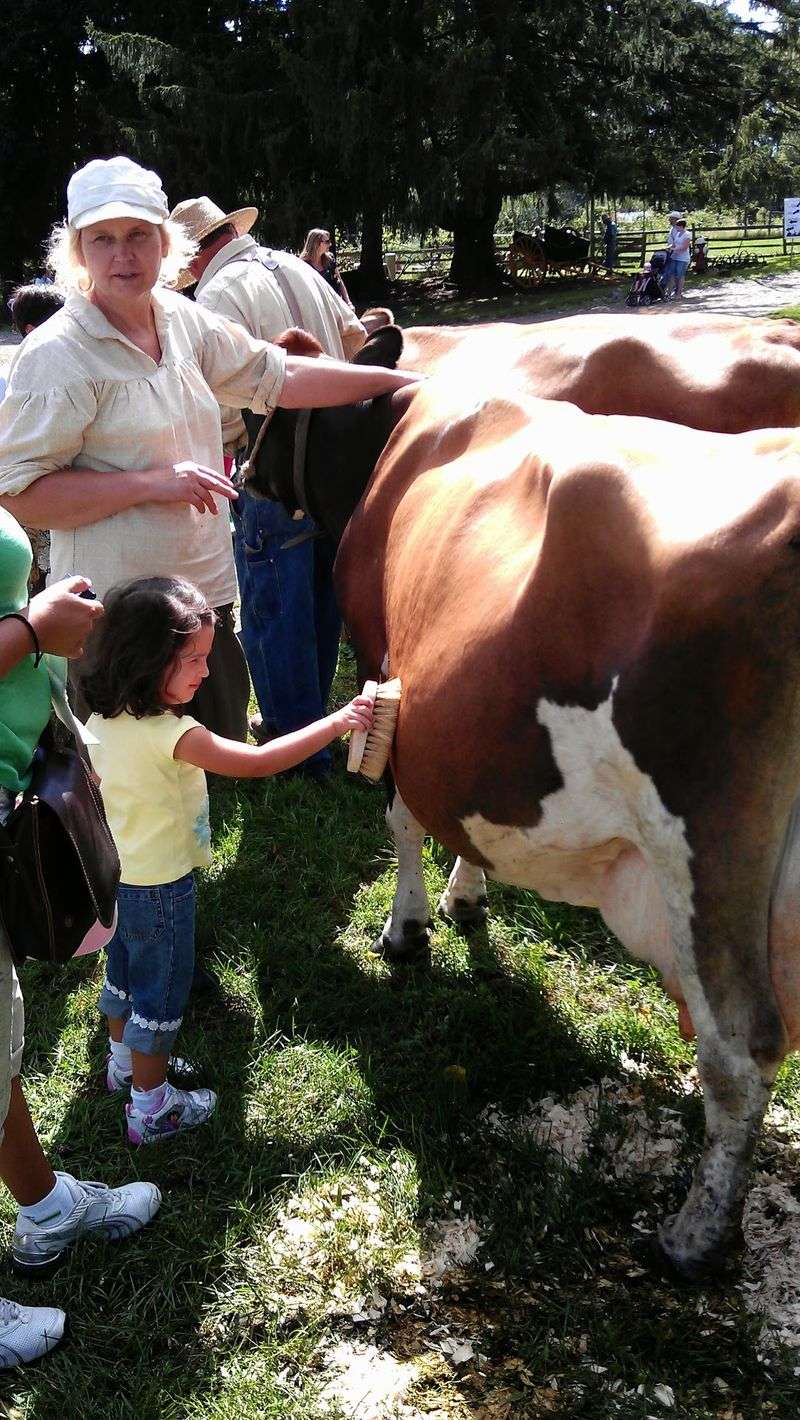
Watching is fine. Joining in is better.
Daily activities here lean hands-on, and depending on the day you might help crack corn for the animals, gather eggs, or take a turn at a butter churn. None of it is staged for show, which is exactly why it lands.
Fields are worked using period-appropriate methods and antique equipment, so crops go in and come out roughly the way they would have a century ago. Seeing how much muscle and patience a single task demanded changes how you think about modern convenience.
Younger visitors especially love the small jobs, since there’s a real result at the end, butter in a jar or a basket of feed carried across the yard.
Dress for a bit of dirt. Sleeves get pushed up, hands get dusty, and nobody minds.
Staff are generous with explanations and genuinely enjoy walking people through the steps.
Cows, Goats And A Whole Lot Of Clucking
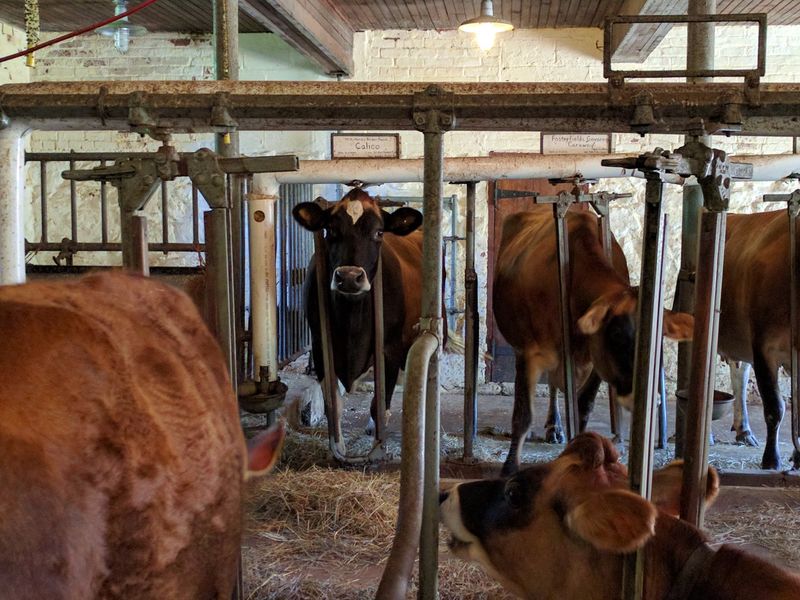
Animals steal the show, and everyone knows it. The pastures hold Jersey cows, sheep, goats, pigs, chickens, ducks, and turkeys, each with a practical role in how the farm once ran.
Jersey cows were prized for rich milk, which connects directly to the dairy work demonstrated on site. Draft horses handle heavy pulling, and seeing one harnessed makes their strength obvious in a way photos never capture.
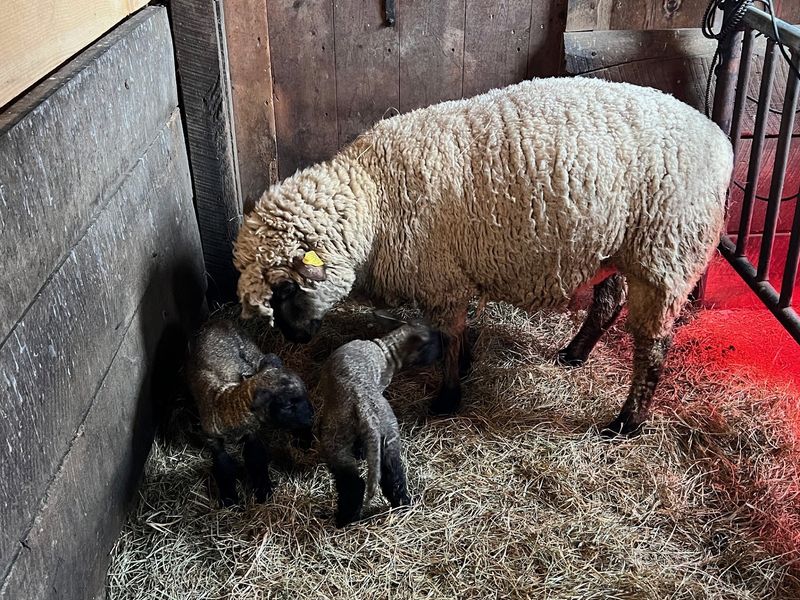
Depending on the day, visitors may get the chance to brush a cow, walk alongside a goat, or scatter feed for the chickens. Lambs arrive seasonally and predictably melt everyone.
Fences are low enough for small kids to see over, and the animals seem thoroughly unbothered by attention.
Staff nearby will happily explain breeds, feeding routines, and why certain animals mattered so much to a working household.
Bring a camera. The goats have opinions and they are not shy about sharing them.
A Model T And Machines That Changed Everything
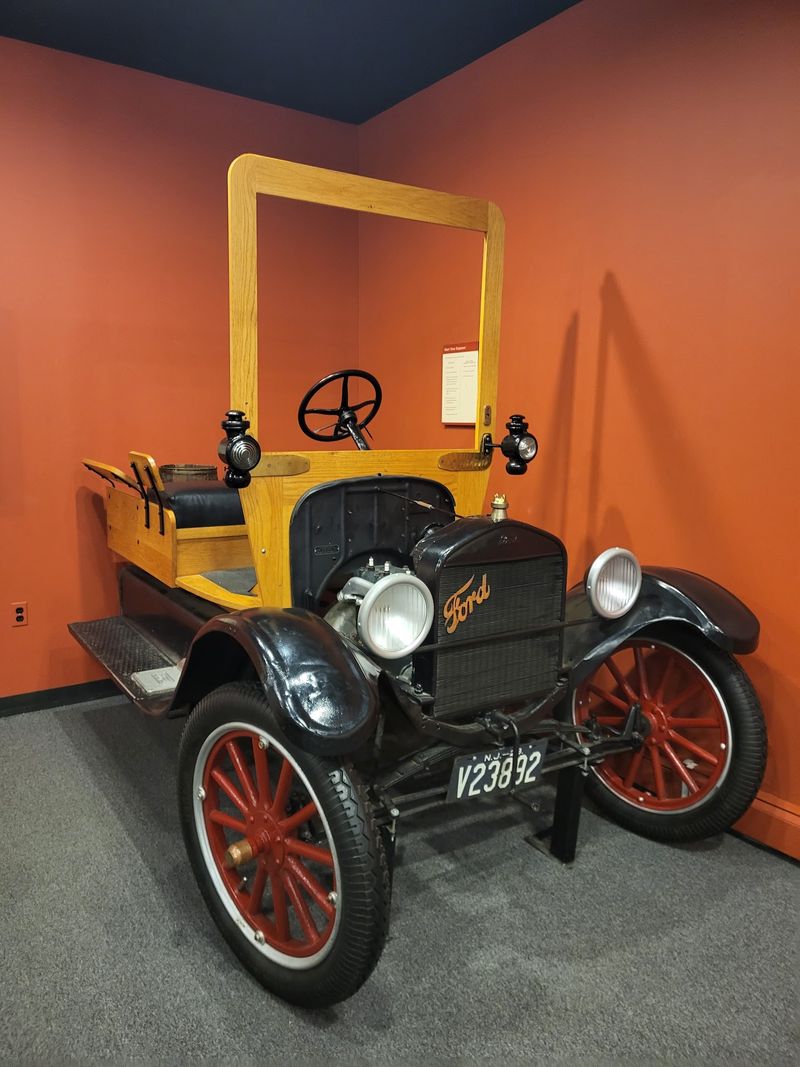
Tucked among the historic buildings sits an exhibit that surprises a lot of people. Called Driving into the 20th Century, it centers on a 1922 Ford Model T that once traveled the roads of Morris County.
There’s also a climb-on Model T truck simulator, which is easily the most photographed spot for kids under ten. Steering wheel included.
Elsewhere you’ll find early twentieth century steam engines, corn shellers, and barrel butter churns, all pieces that quietly revolutionized how much one person could accomplish in a day.
Seeing the machinery beside the fields where similar equipment still gets used ties the whole story together nicely.
What struck me most was the scale of effort behind ordinary food. A jar of butter suddenly seems like a significant achievement.
Take a slow lap through this section rather than breezing past. The labels are clear and the objects are worth the extra few minutes.
The Woman Whose Gift Made All Of It Possible
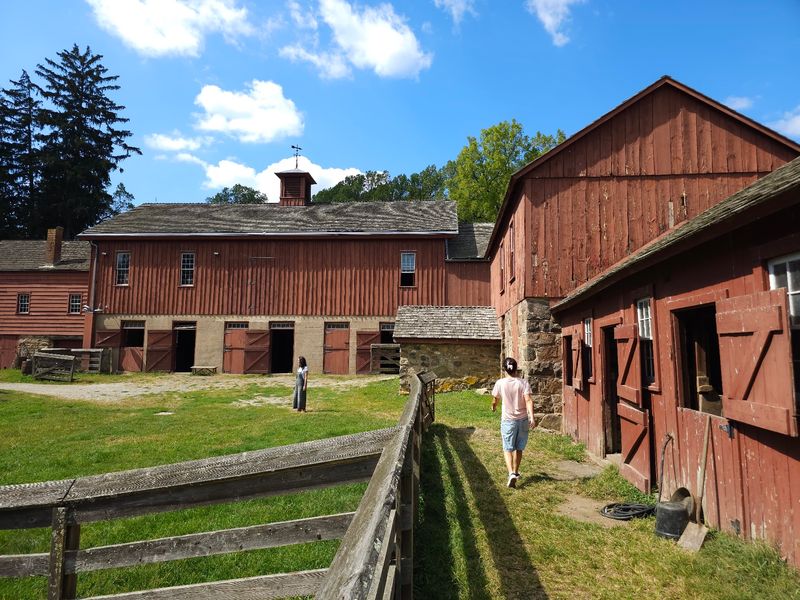
None of this would exist without one remarkable decision. Caroline Foster lived on this property for 98 years, until her death in 1979 at the age of 102.
She left her 174-acre estate, buildings included, to the Morris County Park Commission, with clear instructions that it remain an educational and historical place kept simple and natural.
Her interests were well documented, particularly a fondness for horse-drawn vehicles and an enthusiasm for gardening that shaped the grounds for decades.
Rather than allowing the land to be carved into lots, she chose permanence. That choice is why visitors today can still walk fields that have been farmed continuously for generations.
Knowing the backstory changes how the place feels. Every fence line and outbuilding carries a little more weight.
It’s a rare thing, a private estate turned into something anyone can experience, and the preservation work here honors those original wishes with obvious care and consistency.
Seasonal Events That Turn A Visit Into A Celebration
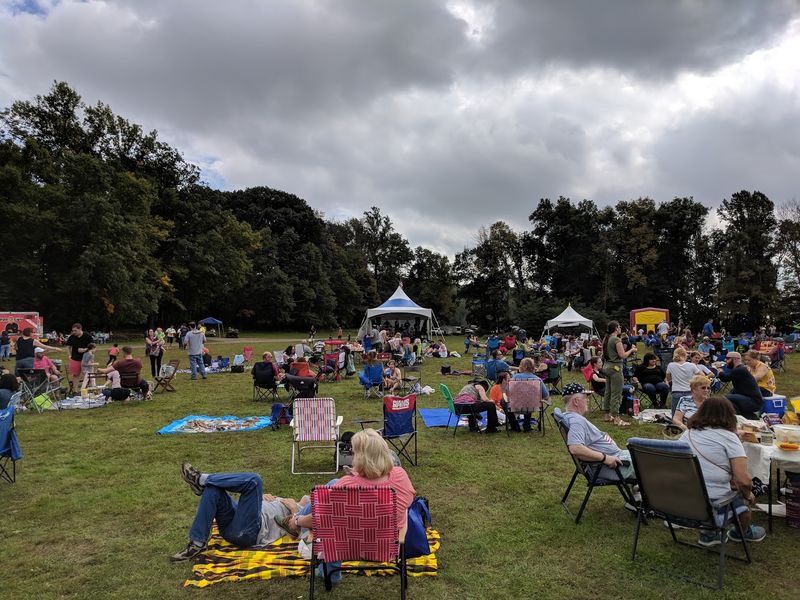
Timing your visit around a special program adds a whole extra layer. Spring brings the Baby Lamb Frolic, when newly arrived lambs take center stage and everyone suddenly becomes a sheep enthusiast.
Farm to Fleece focuses on wool, with shearing demonstrations done using traditional methods and follow-up activities showing how fleece becomes yarn. Watching that transformation step by step is oddly mesmerizing.
Autumn leans festive, with apple pressing for cider, wagon rides, and pumpkins ready for picking during Fall Farm Fun.
Vintage baseball games have also been played on the grounds, which fits the period atmosphere perfectly.
Programs shift year to year, so checking the current calendar before you go saves disappointment.
Popular events can fill quickly, and advance tickets are often the smoothest route in.
Each season reveals a different rhythm of farm work, which is really the whole idea behind keeping a place like this alive and moving.
Costumed Staff Who Make The Era Click Into Place
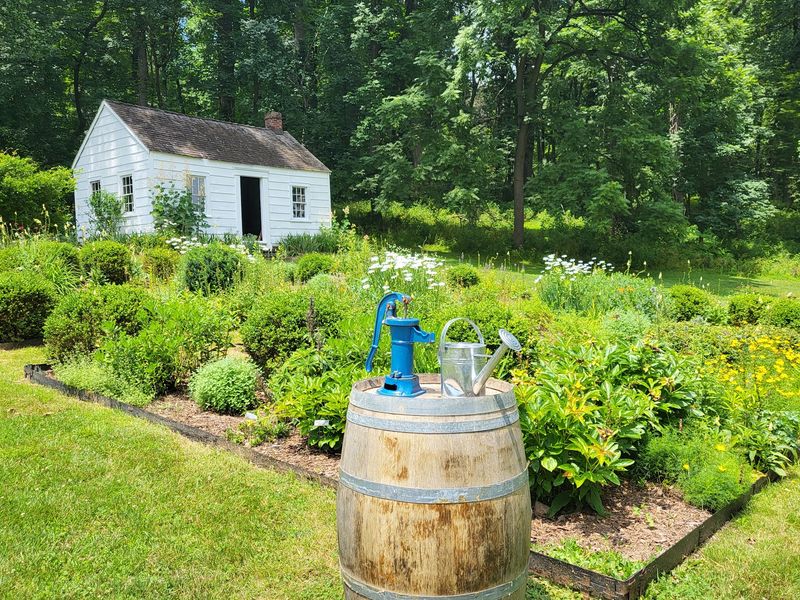
Period clothing could easily feel gimmicky. Here it doesn’t, mostly because the people wearing it are busy actually working.
Interpreters carry out daily tasks while answering questions in plain, friendly language, sharing details about life on the farm during the 1918 to 1927 window. Ask something specific and you’ll usually get a thoughtful answer rather than a memorized script.
Their knowledge extends beyond the buildings, covering animal care, crop cycles, and the tools scattered around the property.
Conversations tend to happen naturally while you’re standing beside a fence or watching a chore in progress. That casual setting makes the history stick.
Kids warm up fast, particularly when handed a small job to help with.
If you’re curious about something oddly specific, ask anyway. The staff clearly enjoy the unusual questions, and those exchanges often end up being the part of the visit you repeat to friends afterward.
It’s teaching without feeling anything like a classroom.
Planning A Day That Feels Unhurried And Worth Repeating
A little preparation goes a long way. Operating days run Wednesday through Sunday during the season, generally mid-morning into the afternoon, with Monday and Tuesday closed.
Buying tickets online ahead of time is the easiest approach, especially on weekends and during special programs.
Food isn’t permitted on the farm itself, though there’s a picnic area on the grounds where you can eat before or after exploring. Packing snacks for the car is a smart move with younger kids.
A short marked trail winds from the pond area through the woods toward the mansion drive, which makes a nice quiet stretch if you want a break from the barnyard.
Wear shoes you don’t mind getting dusty, bring water, and leave your schedule loose.
Fosterfields Living Historical Farm sits at 73 Kahdena Rd, Morristown, NJ 07960, and it remains one of the most genuinely grounding ways to spend a slow afternoon anywhere in New Jersey.
