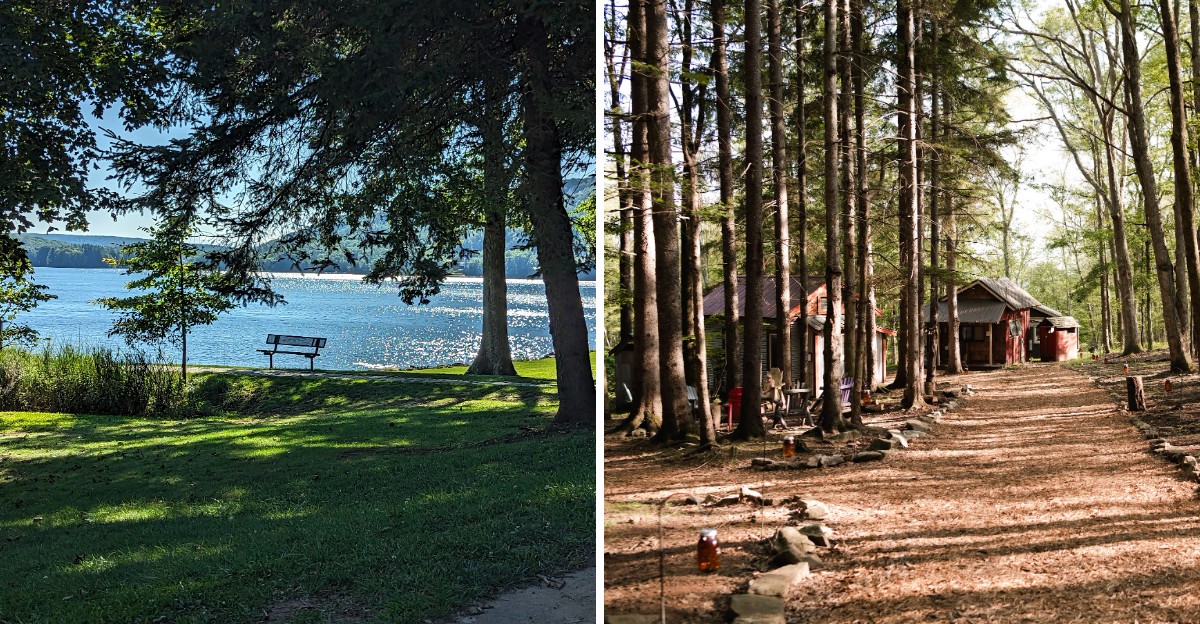
Some getaways are about doing more. Others are about doing less, and doing it somewhere beautiful.
This Maryland cabin village falls into the second category, with 14 one of a kind hideaways hidden into the mountains. Each cabin has its own personality, so no two stays feel the same.
You can wake up to tree views, drink coffee on a small porch, and let the quiet settle in. The village is small enough to feel private but close enough to trails and small towns if you want to explore.
Evenings are for fires, board games, and doing absolutely nothing. It is the kind of place where a weekend stretches into something that feels longer.
A reminder that escape does not require a long flight. The kind of stay that resets you.
Fourteen Cabins, Not One Repeat
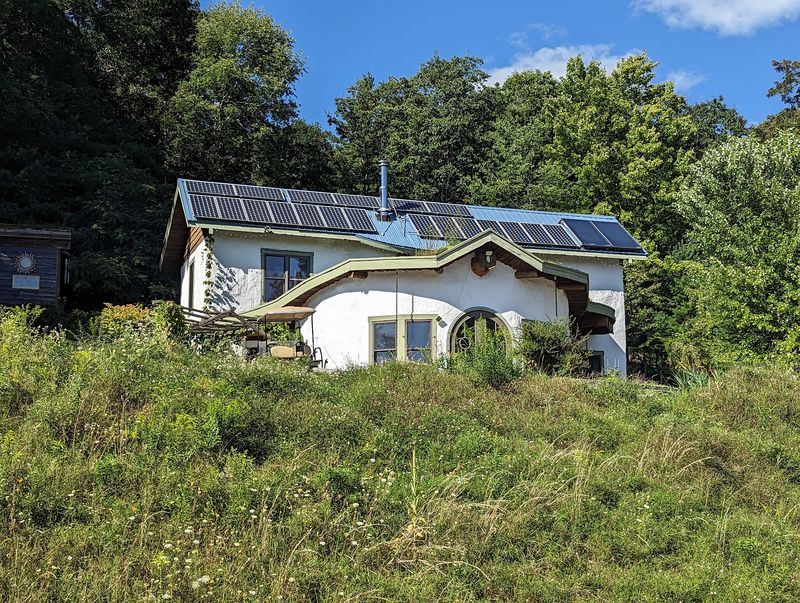
Cookie-cutter rentals have their place, but not here. All fourteen cabins scattered across the hillside were built as individual pieces, which means the photo you saw online is probably not the cabin you will end up booking next time.
Reclaimed materials do a lot of the heavy lifting. Old barn boards, salvaged timber, antique windows pulled from who knows where, all of it stitched together into structures that feel lived-in from the first night.
Bella Donna has an antique half-oval window with a spider-web pattern that throws strange, pretty shapes across the kitchen island in the morning. Custom heart pine shelves line the walls, and twin loft beds sit above a queen on the main level.
Morning Glory earns its name honestly. A wrap-around porch catches the earliest light, cedar shake siding faces a conifer forest, and dark walnut floors run underfoot beneath a vaulted ceiling.
Cairn goes a different direction entirely with a gothic revival porch, steep roof pitches, and high-peaked gable shelters that keep rain off no matter how sideways it falls. A rotating Blue Moon emblem near the roofline marks the spot.
Then Funkomatik 513 shows up in purple. Trim, cabinets, accents, all of it, playing against wooden beadboard and straw plaster with a sliding glass door opening over a fern-filled gully.
MoonShine wears reclaimed Appalachian barn wood on walls and floors, with a porch view of a living roof and the lake beyond. Picking a favorite takes several visits.
Built From What the Land Gave Back
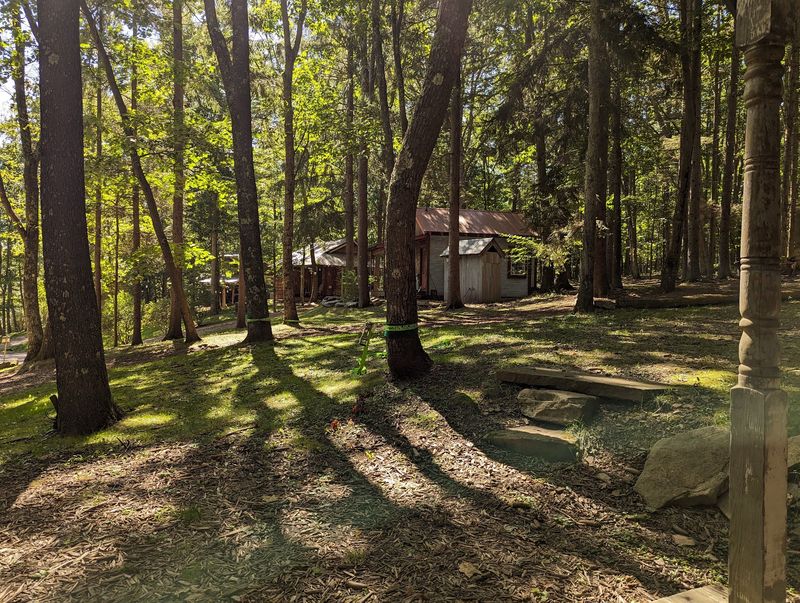
Sustainability gets tossed around a lot in travel writing, usually meaning a sign about reusing towels. The approach at this village runs considerably deeper, and the buildings themselves are the proof.
Founder Lisa M. Jan shaped the property around one stubborn idea: comfort and beauty should not have to be traded away to live lightly on the planet.
Every choice during construction followed that line of thinking.
Trees that had to come down during development never left the site. They became trim, support posts, or fuel for the efficient masonry stoves that heat the cabins through cold mountain nights.
Even the dirt got a second life. Soil dug out during foundation work was sifted, then blended with clay, water, and lime to coat the straw bale walls of the flagship building called The Leap.
Small details carry the same logic. Eco-friendly sheets and towels, locally made organic soap in every cabin, and a general absence of plastic-wrapped anything.
What surprises people is how little of it feels like a lecture. The cabins are warm, quirky, and genuinely comfortable, so the environmental thinking reads as craftsmanship rather than sacrifice.
There is also something satisfying about knowing the wood above your bed once stood a few hundred feet away, or that the plaster on the wall started as the hole the building sits in. Architecture with receipts, basically.
A Hillside That Keeps Changing Its Mind
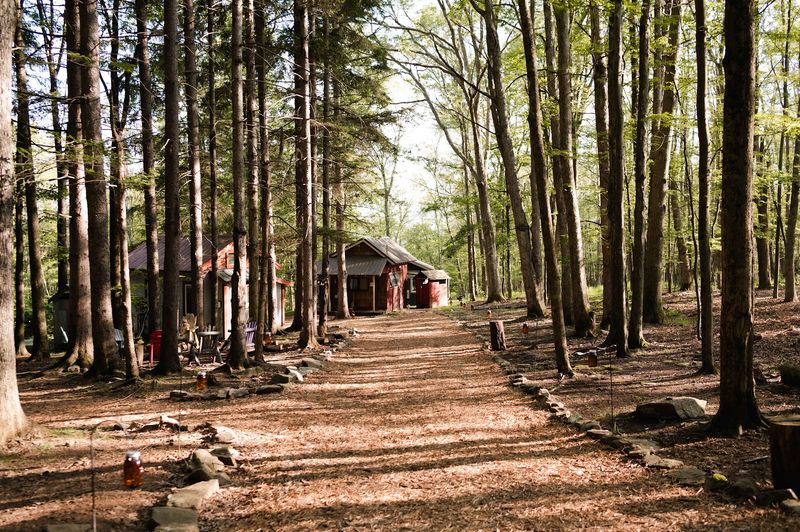
One hundred sixteen acres sounds like a number on paper until the terrain starts sloping away toward open water. Rolling hillsides drop gradually toward Deep Creek Lake, and the view rearranges itself every time a cloud drifts past.
Timber wraps the whole property. That dense canopy of hardwoods and hemlocks does something clever, muffling road noise and giving each cabin a pocket of privacy even though neighbors sit close by.
Trails wind straight out from the cabin doors. No trailhead parking, no driving somewhere else first, just boots on and gone.
Walking those paths feels unhurried. Ancient hardwoods lean over the trail, hemlocks darken the shade, and the air carries that sharp mineral smell of damp earth and pine that flatland air never quite manages.
Mountain bikers get their fun too, since the designated routes handle two wheels nicely. Birdsong runs nonstop in the warmer months, and anyone who moves quietly stands a decent chance of spotting deer or smaller woodland residents.
Seasons swing the character of the land hard. Summer turns everything an almost aggressive green, autumn lights the ridges up in red and gold, and winter hushes the whole hillside under snow.
The lake stays visible through it all, a silver strip below the treeline. Worth noting that some of the best views come from the porches themselves, which means exploring can wait until after coffee.
Small Kitchens That Actually Work
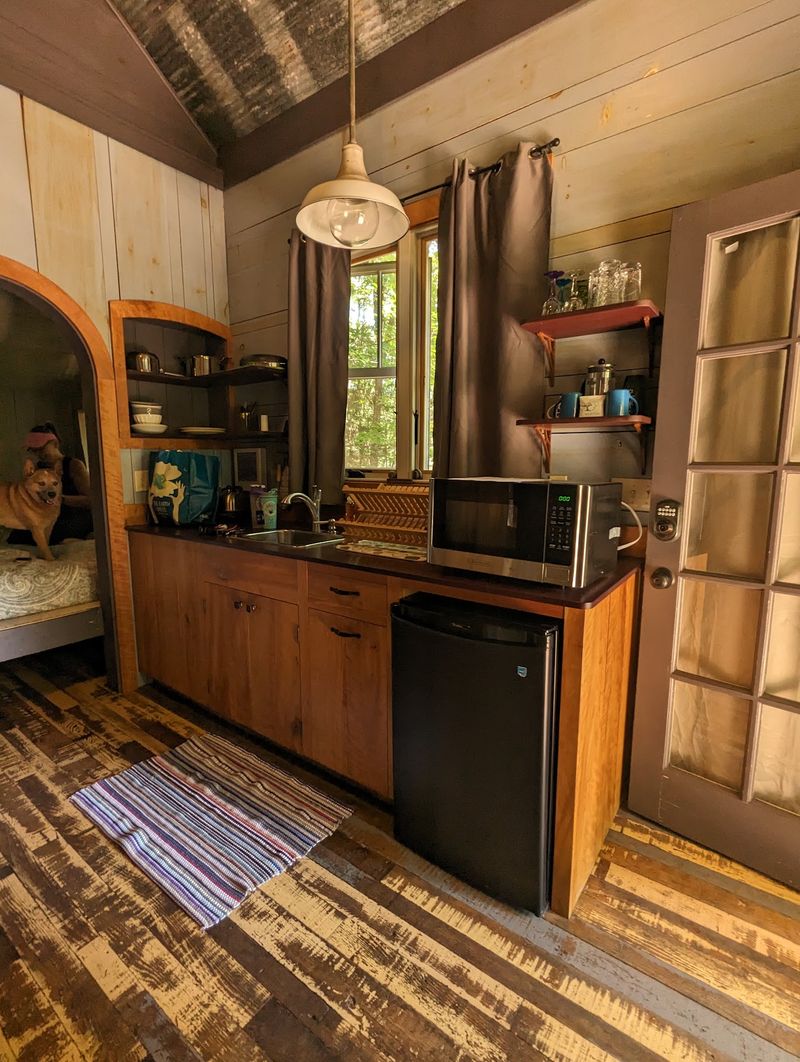
Tiny living usually means somebody gave up on cooking. Not the case in these cabins, where every hideaway comes stocked with a full set of kitchen essentials designed for people who would rather eat in than drive out.
The setup is smart rather than fancy. A mini-fridge holds groceries, a NuWave cooktop handles anything that needs heat, and a toaster oven covers the rest.
Coffee gets proper respect here. A French press waits on the counter alongside Basecamp Coffee roasted in nearby Cumberland, Maryland, which is a nice local touch first thing in the morning.
Free Wi-Fi exists for anyone who needs it, though most guests seem to use it once and then forget about it. Packing tip: bring simple ingredients that cook fast, because the cooktop rewards one-pan meals over elaborate projects.
Eating on the porch turns even scrambled eggs into an event when there is a lake in the background. That is really the trick of the place, ordinary routines improved by setting rather than by equipment.
Masonry stoves handle the heat in cooler months and hold warmth far longer than a standard woodstove would. Firewood is provided, so the evening ritual involves very little work.
Nothing feels stripped down or camp-like. Everything needed is there, and the things that are missing turn out to be things nobody misses anyway.
Evenings Belong to the Campfire
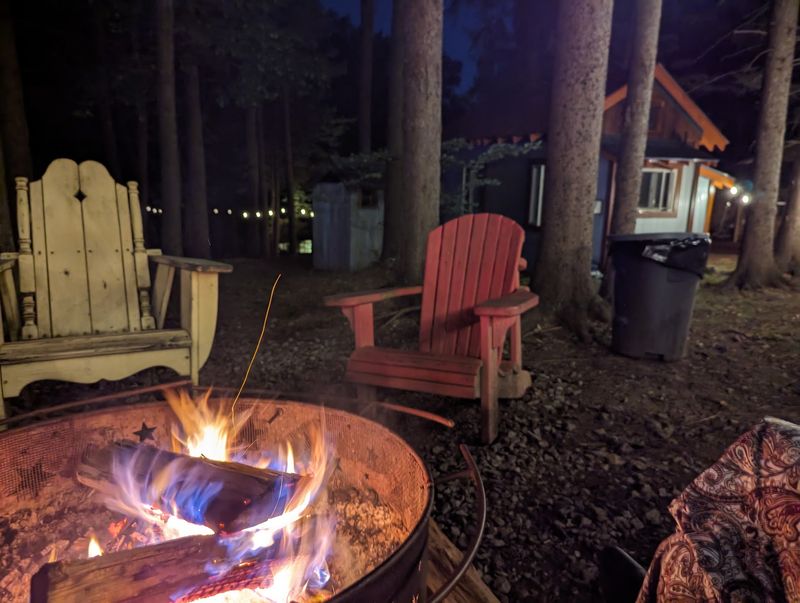
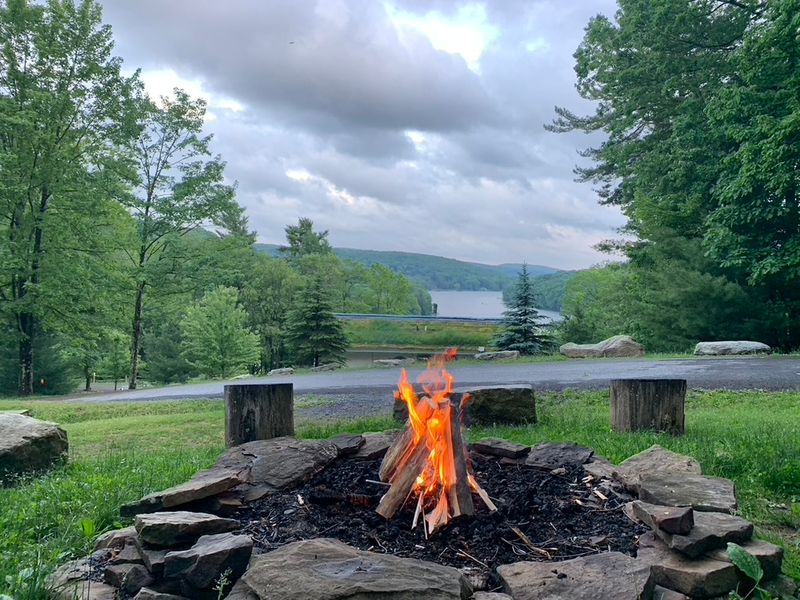
Something shifts around dusk. The hillside goes quiet, porch lights flick on one by one, and then smoke starts curling up from the shared fire pit.
Staff members usually get the bonfire going as the light fades, with extra firewood set out so the flames keep going as long as people stick around. It is a simple gesture that ends up shaping the whole evening.
Strangers become chatty around a fire in a way they never do in hotel lobbies. Conversations start about which cabin somebody booked, then drift into trail recommendations, then into wherever conversations go when nobody is checking a phone.
Nobody is obligated to show up, though. Plenty of guests stay hidden away on their own porches, listening to the crackle from a distance and watching the sky fill in with stars.
Light pollution up here is minimal, which makes the overhead show genuinely impressive on clear nights. Bring a blanket even in summer, since mountain temperatures drop faster than people expect.
The balance between private and communal is the thing that works. Each cabin gives real solitude, then the fire offers a low-pressure way to be around other humans if the mood strikes.
Kids love it, adults relax into it, and the whole ritual costs nothing more than showing up. Best seats go early, naturally.
Water, Trails, and a Two Minute Walk
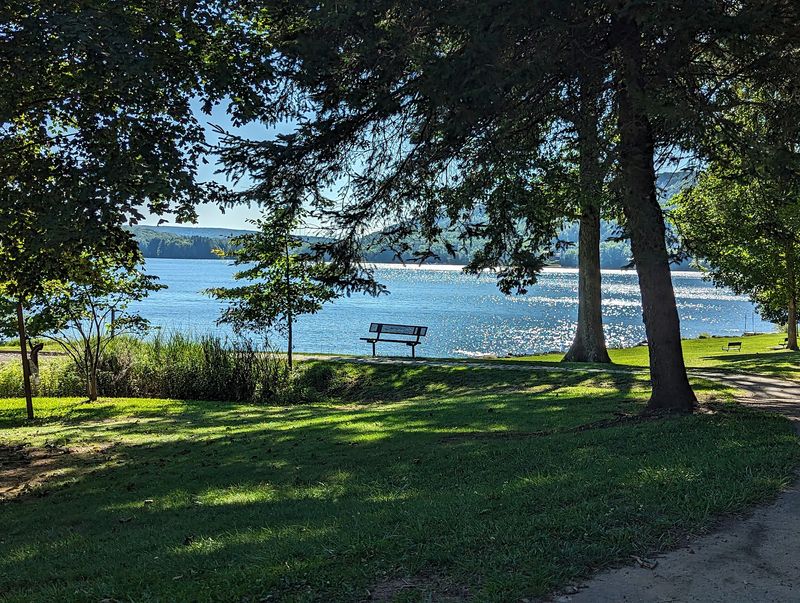
Two minutes. That is the walk from the cabin village down to Deep Creek Lake, which is a rare kind of convenience for anyone who has ever hauled paddleboards across a parking lot.
The lake handles just about every kind of water activity. Boating, paddleboarding, water skiing, tubing, and fishing all happen out there, often at the same time on a good summer afternoon.
Guided kayaking tours run for anyone who prefers a little structure and local knowledge. Quieter mornings on the water tend to be the best, before engines wake up and the surface goes glassy-calm.
On land, the property trails come first since they start at the doorstep. Hiking and mountain biking both work well across the 116 acres, with grades that climb enough to feel earned.
Beyond the property line, the state parks are worth the short drive. Deep Creek Lake State Park stays popular, while Swallow Falls State Park hides ancient hemlock groves and the 53-foot drop of Muddy Creek Falls.
Herrington Manor State Park adds more trails and picnic-friendly space for slower days. Wisp Resort sits nearby with a mountain coaster and canopy tours that run through multiple seasons.
Winter opens up snowshoeing and cold-weather sports across the region. The variety means a weekend can lean fully active or barely active, and both feel like a reasonable use of the time.
Where Accessibility Got a Seat at the Table
Tiny houses and accessibility rarely show up in the same sentence. Blue Sky cabin quietly breaks that pattern, built to be ADA compliant and genuinely navigable for guests using wheelchairs.
A queen bed sits on the main floor with real room to move around it, no awkward squeezing past furniture. The bathroom includes an ADA-compliant tub and shower setup.
One detail stands out above the sink area. The overhead light was made from a hubcap, which is exactly the kind of playful reuse that runs through the whole village.
An outdoor shower comes with the cabin too, and that turns out to be a minor luxury after a dusty trail walk or a swim in the lake. Rinsing off under open sky beats a cramped stall by a wide margin.
Thoughtful design here means more than checking boxes. The cabin carries the same character as the others, with the same reclaimed materials and handmade feel, rather than reading as a clinical afterthought.
The address to plug into a map app is 89 Blue Moon Rising Way, McHenry, MD 21541, which puts the village in Garrett County near the northern end of the lake.
Families traveling with someone who needs step-free access finally get a tiny cabin option in the mountains. That matters more than any single design feature.
Four Seasons, Four Very Different Weekends
Ask a few visitors when to go and the answers will scatter across the calendar, which says something good about the place. Each season rewrites the experience almost completely.
Spring wakes the forest up in stages. Fresh greens push out along the trails, the woods get noisy with birds, and hiking feels easy before summer humidity settles in.
Summer turns attention toward the water. Long warm days pull people to the lake for swimming and boating, and evenings stretch out late on the porches.
Autumn is the showstopper. Ridges around Deep Creek Lake burn through reds, oranges, and deep golds, and scenic drives through Garrett County fill up with photographers chasing the peak week.
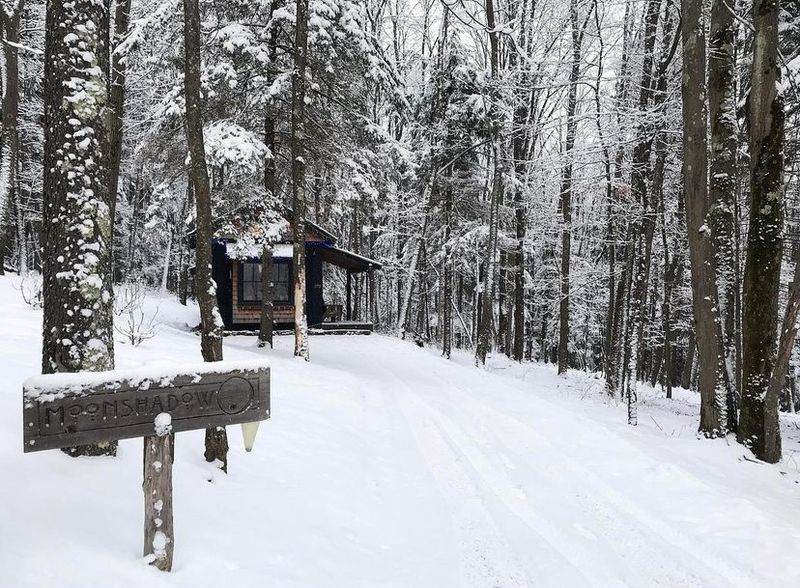
Winter does the opposite, quieting everything down. Snow settles on the hillside, the masonry stoves earn their keep, and walks through hushed forest have a stillness that is hard to find anywhere else.
Wisp Resort handles the cold-weather sports crowd nearby, and snowshoeing works well right on the property trails. Cabins feel especially good in this season, small enough to warm quickly and cozy in a way that larger rentals never manage.
The pull of the place stays consistent though. Simple mornings with coffee, unhurried afternoons outside, and fires after dark add up to the kind of weekend that keeps surfacing in conversation weeks later.
Book early for fall. Everyone else has the same idea.
