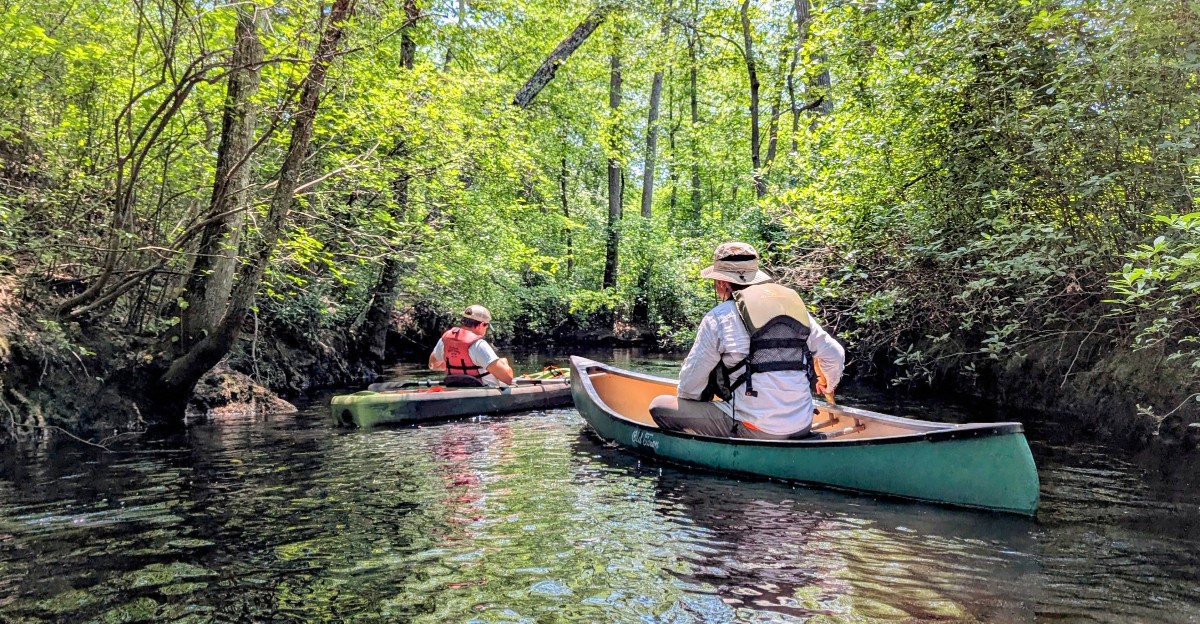
Traffic noise disappears pretty quickly once the paddle hits the water.
This New Jersey adventure sends kayakers and canoeists into the Pine Barrens, where narrow waterways and thick forest make everyday suburbia feel remarkably far away.
It currently offers paddling trips along with guided hiking and nature tours, giving newcomers several ways to explore the region.
The best part may be the change of pace.
No traffic lights. No crowded sidewalk. Just your boat, the water, and whatever happens to rustle somewhere in the trees.
Okay, that last part might make you paddle a tiny bit faster.
Still, there is something wonderfully satisfying about seeing this wild side of the state from water level. Bring your sense of adventure and prepare to get very familiar with your paddle.
Where the Adventure Begins Along Atsion Road
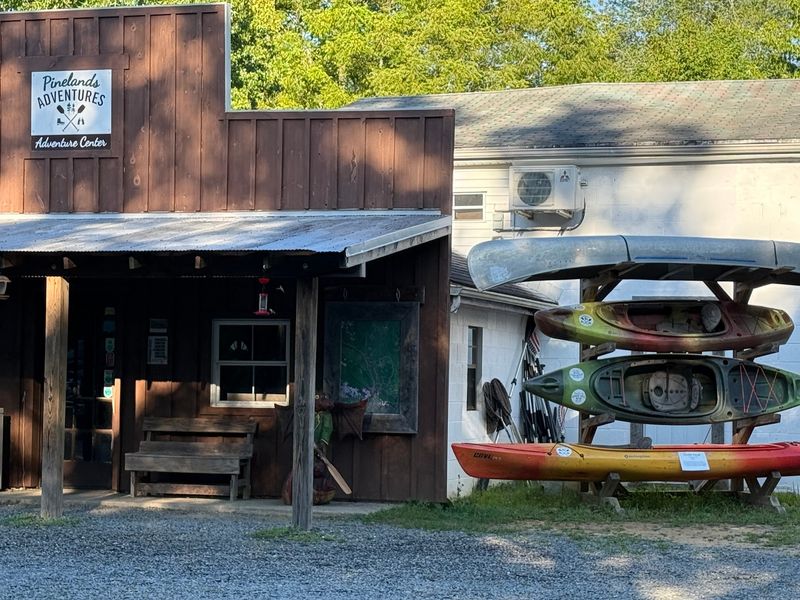
Kayaks stacked in neat rows are usually the first thing you notice pulling up to Pinelands Adventures, tucked along a sandy stretch of road across from Atsion Lake. The setting is simple and unfussy, with pines towering over the lot.
Check-in moves quickly. Staff walk you through what to expect on the water, hand out life vests, paddles, and maps, then load everyone onto a bus headed for the launch point.
What surprised me most was how relaxed the whole process feels. Nobody rushes you, and questions get real answers instead of a shrug.
Trips run daily from April through October, and the operation is a program of the Pinelands Preservation Alliance, a nonprofit focused on protecting this landscape. Knowing your paddle helps support conservation work adds a nice layer to the day.
Doors open at 8:30 in the morning, which means early starts are possible if you want cooler air and softer light on the water. Arriving early also gives you time to sort out snacks and sunscreen before boarding.
Tea-Colored Water That Tells a Story
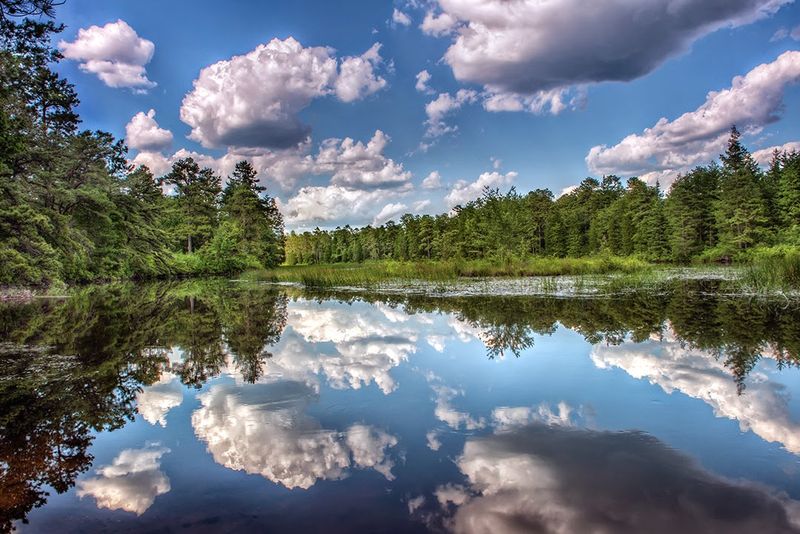
That unusual color catches everyone off guard. The rivers of the Pine Barrens run a deep reddish brown, almost like cola in the shallows, and it has nothing to do with pollution.
Tannins leaching from Atlantic white cedar trees along the banks give the water its stain. Underneath that dark surface sits some of the purest water in the country, fed by the enormous Kirkwood-Cohansey aquifer.
Guides at Pinelands Adventures explain the chemistry in plain language, which makes the whole thing click. Once you understand it, the color stops looking odd and starts looking beautiful.
Sunlight hitting the surface creates a mirror effect, doubling the cedars overhead. Paddle slowly and you can watch the reflection ripple and reassemble behind you.
The water also stays noticeably cool, even during hot stretches of summer, which is a small mercy when you are several miles into a trip. Dipping a hand in feels like reaching into a spring.
Bring a waterproof bag anyway. Cameras and cedar water do not mix well.
Six Miles of Twists on the Batsto River
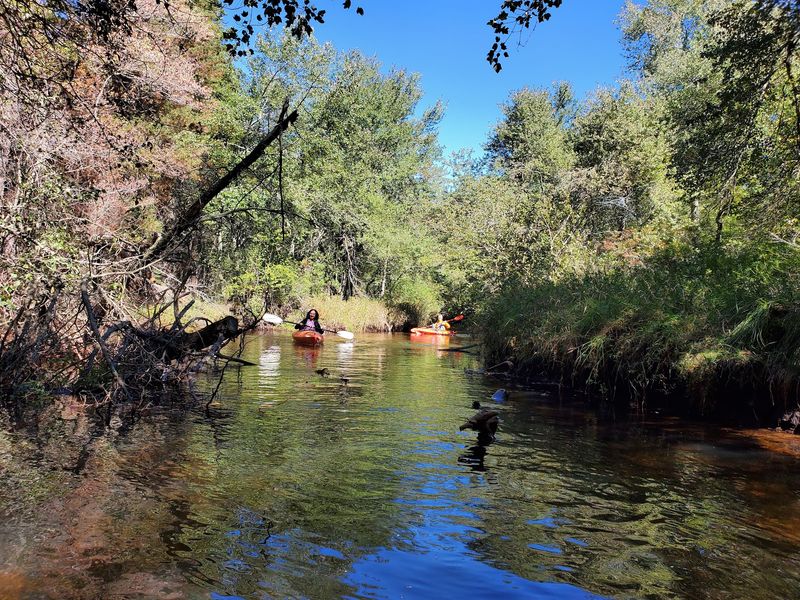
Ask around about the most popular route and the Batsto River comes up again and again. The classic run stretches roughly six miles from Quaker Bridge down to Batsto Lake, usually taking four to five hours depending on your pace.
Narrow and endlessly winding, the Batsto keeps your hands busy. You steer far more than you paddle, letting the current carry you around tight corners shaded by pines.
Downed trees and low branches show up regularly, and the challenge level shifts with river conditions. Beginners manage it fine, though a little steering practice helps.
Sandy pull-outs appear along the way, small beaches perfect for stretching your legs or unpacking lunch. Sitting on one of those banks, listening to nothing much at all, is a highlight in itself.
The finale is the best part. After hours of tight bends, the river suddenly opens into Batsto Lake, wide and scattered with lily pads, near the historic Batsto Village site once known for colonial-era iron making.
Long Days and Deep Quiet on the Mullica
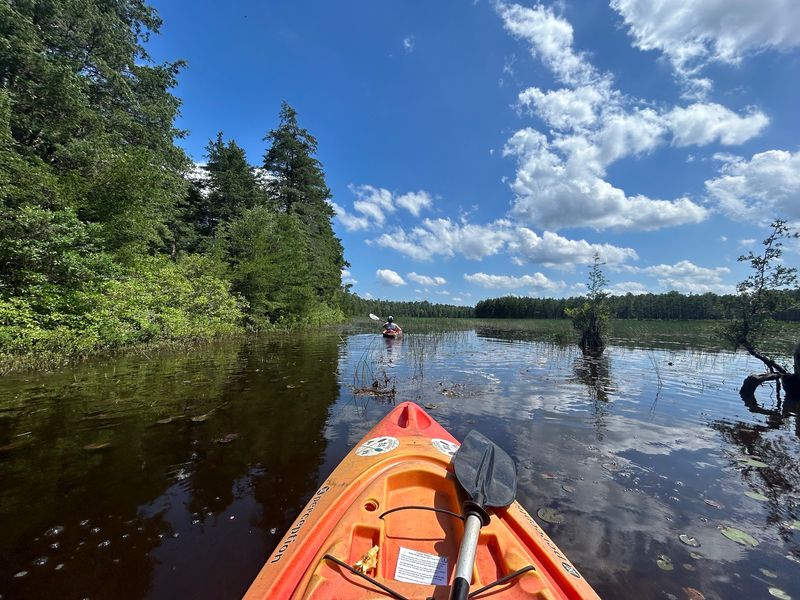
Longer trips belong to the Mullica. Options range from short two-hour floats to full eight-hour hauls, with overnight camping available at the Mullica campsite for people who want to stretch the adventure across two days.
The big one covers about eleven miles from the Atsion Lake dam down to Pleasant Mills. That route is built for experienced paddlers, mostly because of the stamina it demands.
Early sections squeeze between tall cedar stands, tight enough that you duck without thinking. Then the channel widens and everything changes.
Water lilies in white and yellow spread across the surface, joined by spikes of purple pickerel weed. It looks almost arranged, though nobody planted a thing.
Silence is the Mullica’s signature. Away from the narrow bends, the loudest sounds are insects and the occasional wingbeat overhead.
Submerged logs are part of the deal here, especially when water runs low. Learning to scoot over them becomes its own small skill, and honestly a bit of a game.
Hands-On Science With the Discovery Tour
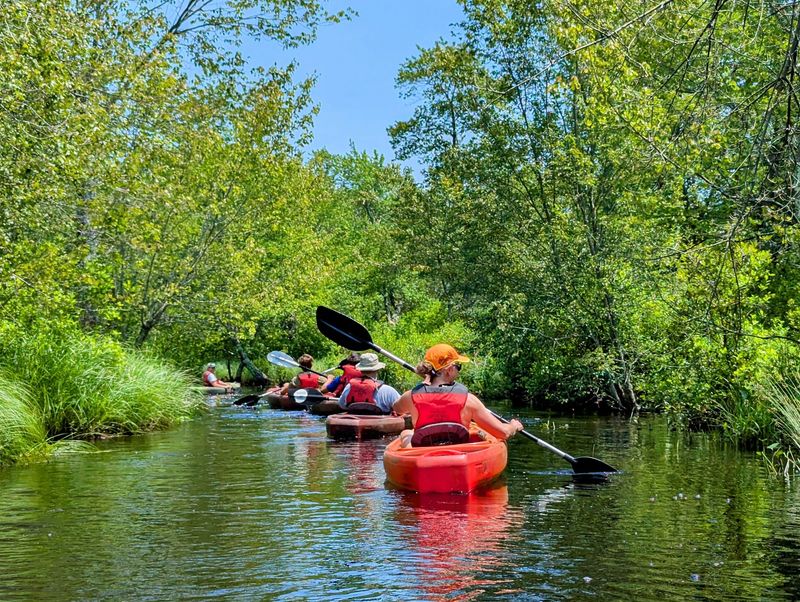
Curious types should look hard at the Pine Barrens Discovery Tour. Running three to four hours, it blends a guided paddle with a walk through the woods and some genuine field science.
The hiking portion moves through upland forest and into Atlantic white cedar swamps, where guides point out how sandy, acidic soil shapes which plants survive. Pitch pines, orchids, and carnivorous plants all get their moment.
Then comes the part kids tend to love most. Water sampling, seining, and dip-netting pull up fish, insects, and other creatures living just below that dark surface.
Seeing what comes up in a net changes how you look at the river. Suddenly the water is not empty at all, just private.
Guides handle the explaining without turning it into a lecture, which keeps families engaged. First-timers get a solid foundation before ever attempting a longer route.
Fire comes up too, since many Pinelands species actually depend on it to reproduce. Strange but true.
Wildlife Sightings You Will Not Plan For
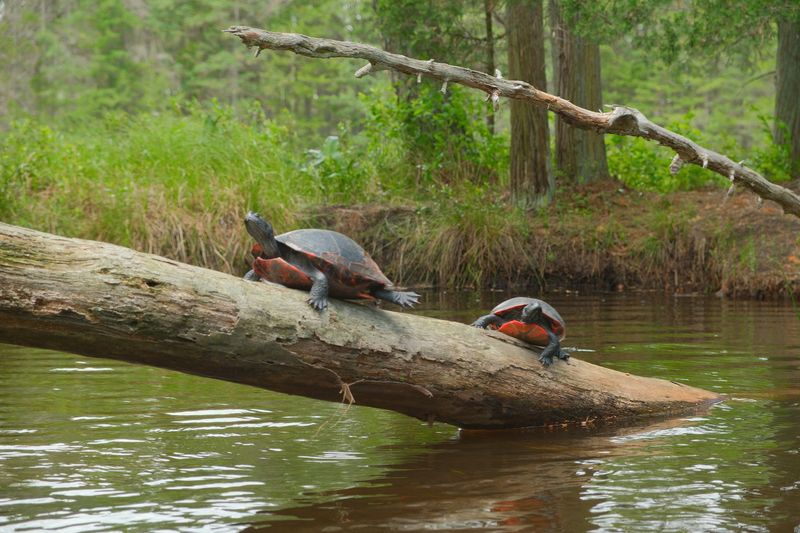
Turtles get the most attention, and rightly so. They line up on fallen logs like commuters waiting for a train, sliding off one by one as your boat drifts closer.
Great blue herons are the showstoppers. One will lift off a bank with that slow, prehistoric wingbeat and glide ahead, landing again just around the next bend.
Dragonflies patrol the wider stretches in ridiculous numbers. Butterflies drift over the wildflower meadows near the sandy banks, especially in midsummer.
Birdsong fills the cedar corridors, though spotting the singers takes patience and a decent neck angle. Stopping paddling entirely is the trick.
Fish flicker in the shallows where sunlight reaches the bottom, small shapes darting under the boat. The clarity surprises people once they adjust to the color.
My advice is to build in float time. Racing to the takeout means missing the good stuff, and there is plenty of it hiding in plain sight along both rivers.
Bug spray helps. Bring it.
Legends Lurking Among the Pines
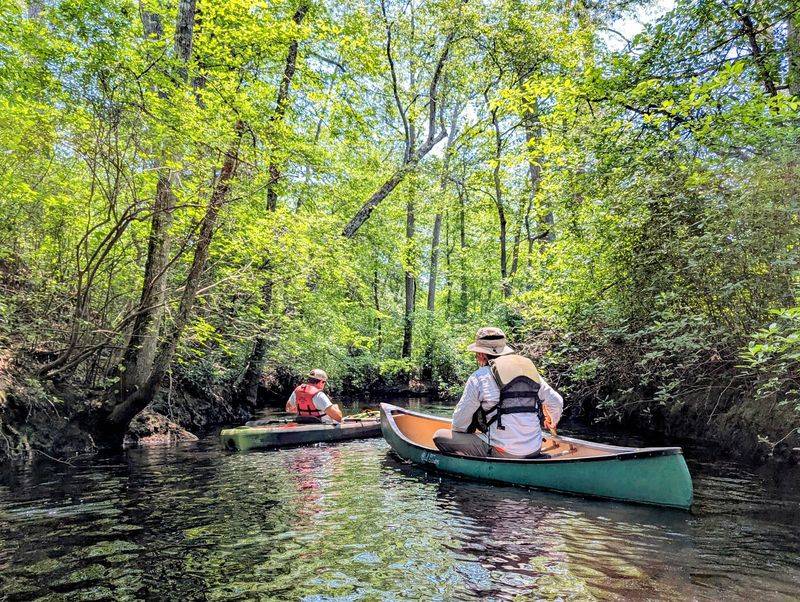
Folklore clings to this forest the way fog clings to the bogs. The most famous story belongs to the Jersey Devil, described in local legend as a winged creature with a horse-like head, hooves, claws, and a forked tail.
According to the tale, it was the thirteenth child of a woman known as Mrs. Leeds, born at Leeds Point in 1735. Reported sightings date back as far as 1820, with a notable surge in 1909.
Do I believe it? Not really.
But paddling through a cedar swamp where the light dims and sound disappears, the story starts to make a certain kind of sense.
Ghost towns add to the atmosphere. Batsto and Ong’s Hat are both remnants of industries that boomed and then vanished, leaving quiet ruins behind.
Ong’s Hat even picked up an odd conspiracy theory about an interdimensional portal. Pure fiction, but it shows how the Pine Barrens invites invention.
Guides share the history without overselling the spooky parts.
How the Shuttle System Keeps Things Simple
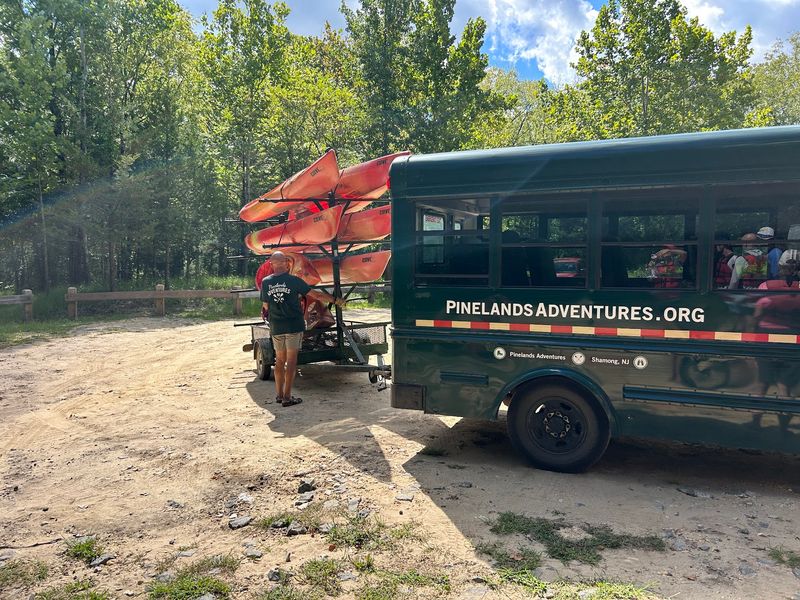
Point-to-point paddling sounds complicated until someone else handles the logistics. Here the shuttle does all the heavy lifting, and that changes the entire feel of the day.
Everything you need comes included with the trip. Boats, life vests, and paddles are provided, and transportation runs both to the launch and back from the takeout.
The bus ride out is more entertaining than expected. Drivers share background on the Pinelands along the way, so you arrive already knowing something about the water ahead.
Paddlers who bring their own kayaks can still use the shuttle service, which solves the classic two-car problem. Loading and unloading assistance is part of the routine.
Reaching the endpoint means you are done, with no upstream slog waiting. That one detail makes these trips far more appealing than lake paddling.
Participants need to be at least six years old. Families with younger kids should plan around that rule before booking, and tandem boats are worth considering for mixed-ability groups.
Packing Smart for a Day on the Water
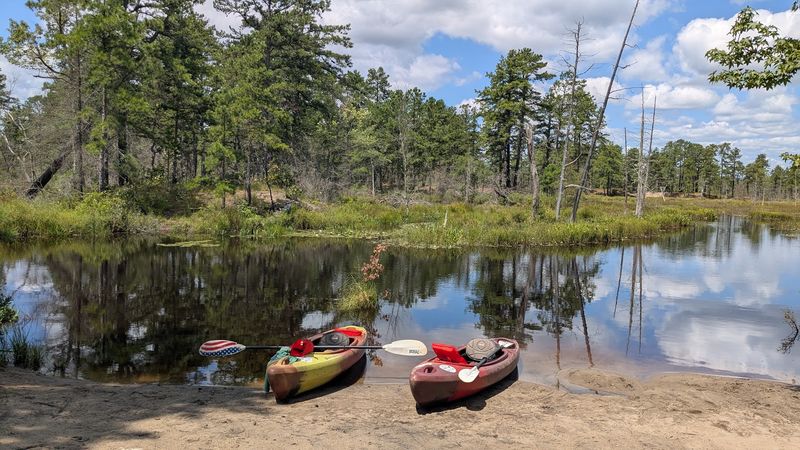
A little preparation separates a great paddle from a soggy, sunburned one. Sunscreen tops the list, and here is the odd tip experienced paddlers pass along: cover the inside of your knees, because that skin faces the sun for hours.
Water matters more than people expect. Four or five hours of steering under open sky gets warm fast, so bring more than you think you need.
Snacks improve everything. Those sandy pull-outs along the Batsto practically beg for a riverside lunch break.
Shoes that can get wet are essential, since shallow spots sometimes require stepping out and nudging your boat along. Flip-flops disappear into muck.
Insect repellent belongs in the bag too, particularly for swampy stretches and evening returns. A hat and sunglasses cut glare bouncing off the dark water.
Groups paddling together might toss in a length of rope. If someone gets pinned on a log, having it along saves time and frustration for everybody.
Picking the Right Season for Your Paddle
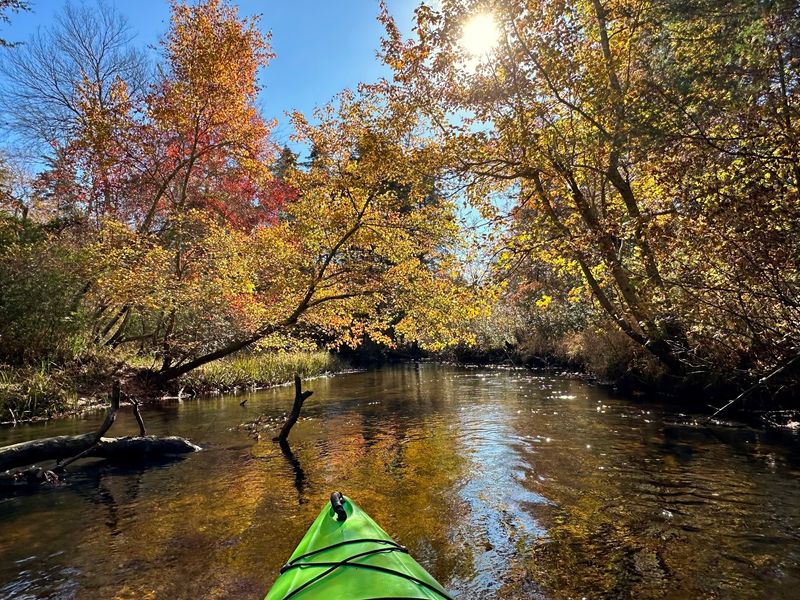
Timing shapes the whole experience. The season runs April through October, and each stretch of those months has its own personality on the water.
Spring brings higher water levels, which smooths out the shallow spots and submerged logs. Cooler air makes long routes like the eleven-mile Mullica run more manageable.
Midsummer delivers the lily blooms and heavy insect chorus, plus genuine heat. Early launch times help enormously during that stretch.
Autumn is my favorite guess for anyone who loves color. Foliage reflects across the tea-dark surface, and the forest quiets down as the season winds toward October.
Lower late-season water means more obstacles to navigate, so factor that into your route choice. Shorter two-hour options work well if you would rather not wrestle logs.
Whichever month you pick, Pinelands Adventures keeps regular hours from 8:30 in the morning until 5 in the afternoon throughout the season. You can find them at Pinelands Adventures, 1005 Atsion Rd, Shamong, NJ 08088, right in the heart of New Jersey’s Pinelands.
