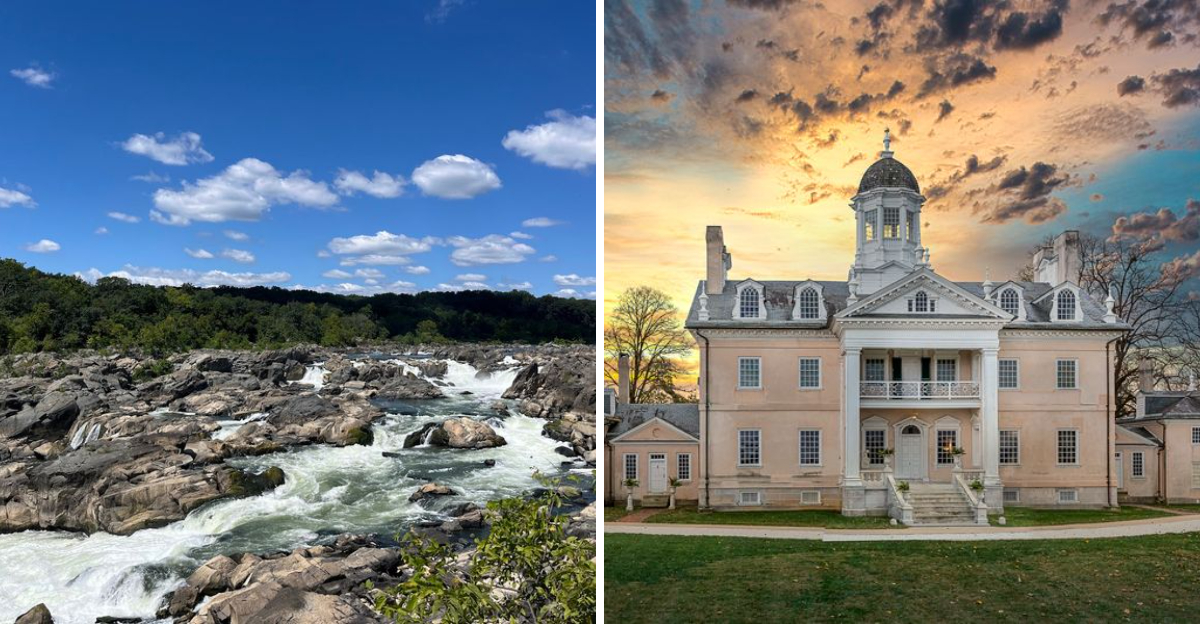
Some places are hard to find on purpose. Hidden away, off the main road, requiring a little effort.
But others are surprisingly easy to reach, right there in plain sight, yet they still feel completely hidden. A park behind a strip mall, a garden next to a busy road, a trail that starts in a neighborhood.
You drive past them all the time without noticing. Until one day you stop, explore, and wonder how you missed it for so long.
That is the beauty of these Maryland spots. They are not trying to hide.
They just quietly exist, waiting for someone curious enough to look closer. That is the magic of a place that feels hidden but is actually easy to find.
A quiet escape right where you least expect it.
1. Patterson Park, Baltimore
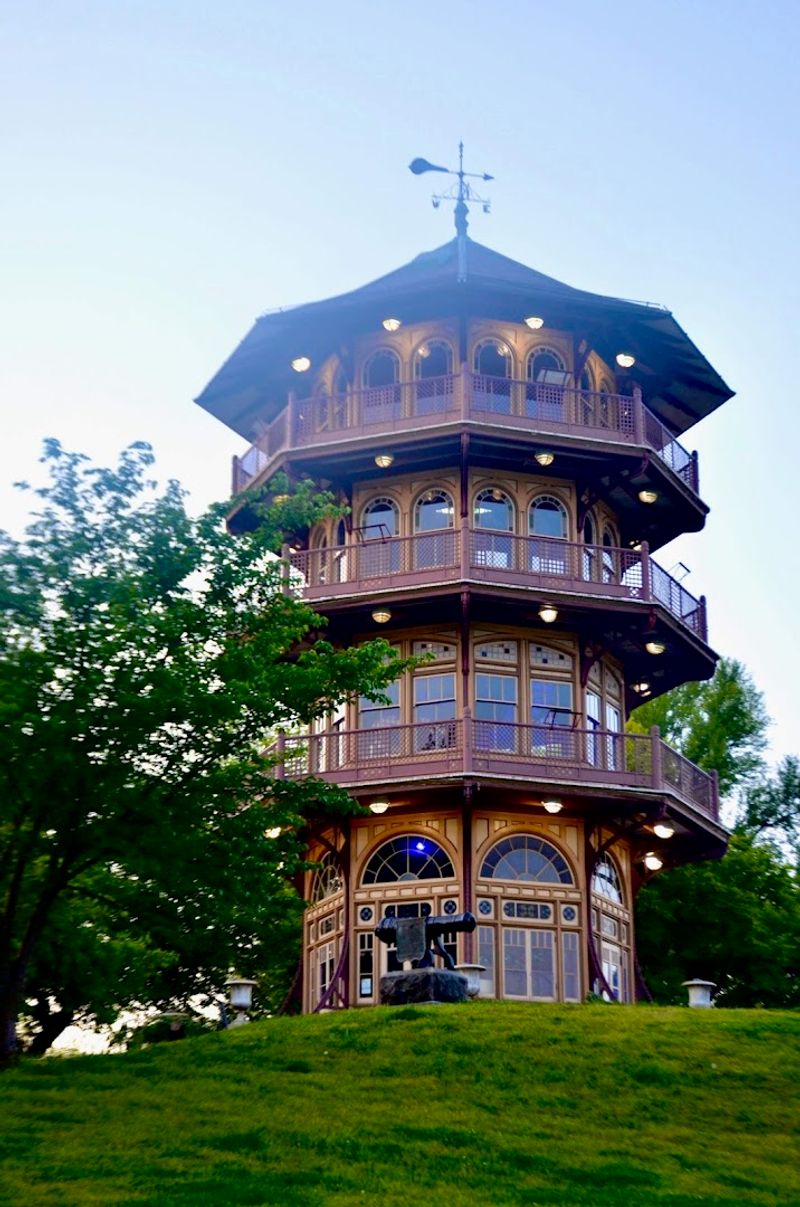
Right in the middle of Southeast Baltimore, Patterson Park manages to feel like a countryside retreat that somehow ended up in a city neighborhood. The park stretches across 137 acres, and once you step past the iron fence line, the hum of urban life softens in a way that genuinely catches you off guard.
Trees are everywhere here, over 1,500 of them, ranging from native oaks to exotic species that have been planted and tended for generations.
The centerpiece that most visitors notice first is the pagoda-style Observatory, built between 1891 and 1892, rising above the treeline like something out of a storybook. It started as an observation tower for city views and now stands as a war memorial, quietly honoring those who defended Baltimore.
The park’s history stretches back even further, to the War of 1812, when the hill beneath that tower served as the city’s main defensive position against a British land invasion.
During the Civil War, the grounds were converted into a hospital encampment for injured soldiers, a layer of history that adds weight to every quiet walk. The boat lake is a favorite spot for fishing and reflection, surrounded by the kind of natural calm that feels almost impossible this close to a major city.
With over 220 bird species identified within its boundaries, birdwatchers find themselves genuinely rewarded here. Patterson Park is one of those places that earns your affection slowly and keeps it permanently.
2. Conrad’s Crabs and Seafood, Parkville
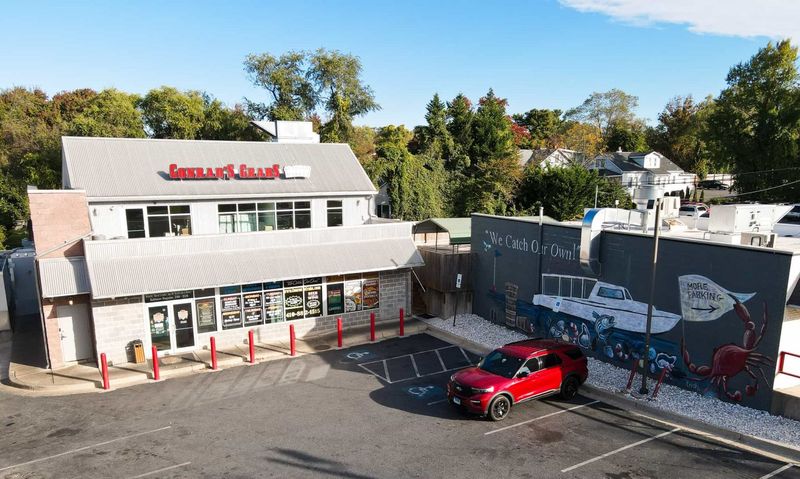
Maryland seafood culture runs deep, and Conrad’s Crabs and Seafood in Parkville is one of those places that embodies it without any pretense. The kind of spot where the focus is entirely on what lands on the table in front of you, not on how photogenic the dining room is.
Tony Conrad, a commercial waterman with 18 years on the water, sources the live and steamed crabs directly, which means the quality speaks for itself before a single shell is cracked.
The menu goes well beyond crabs, though they are absolutely the headline act. Crab cakes, steamed shrimp, fried oysters, and various sandwiches round out a selection that reflects genuine Maryland coastal tradition rather than a rehearsed imitation of it.
The raw bar adds another dimension for those who want to sample the bay’s offerings in their most honest form.
What makes Conrad’s feel hidden is not its location on East Joppa Road but its atmosphere. There is no flashy signage screaming for attention, and the crowd inside tends to be local, knowledgeable, and loyal.
The staff carries that same character, friendly and genuinely familiar with everything on the menu. Sitting down here feels less like dining out and more like being welcomed into a tradition that Maryland watermen have kept alive for generations.
It is the kind of place you stumble upon once and then quietly tell your closest friends about, never wanting it to get too crowded.
Address: 1720 E Joppa Rd, Parkville, MD 21234
3. Chesapeake and Ohio Canal National Historic Park, Great Falls, Potomac
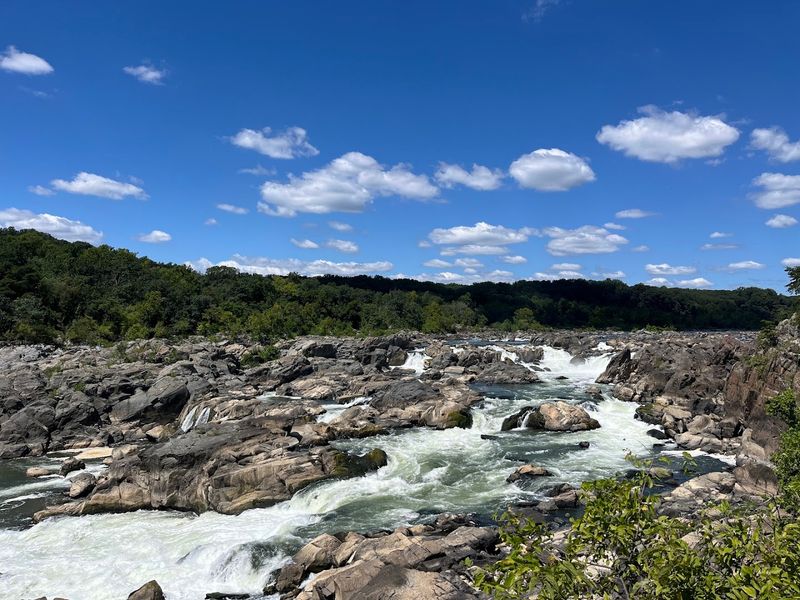
There is a moment on the trail near Great Falls when the sound hits you before the view does, a roaring, unmistakable rush of water that builds with every step forward.
The Potomac River here drops over a series of dramatic, craggy rock formations, creating one of the most visually powerful natural scenes in the entire mid-Atlantic region.
It is genuinely hard to believe this spectacle exists just off MacArthur Boulevard, accessible to anyone willing to make the short walk.
The Chesapeake and Ohio Canal was built specifically to bypass these falls, allowing boat traffic to continue along the waterway without navigating the impossible rapids below.
The historic Great Falls Tavern, dating back to 1831, once housed canal travelers and now operates as a visitor center full of fascinating context about the watermen and lockkeepers who made this route function.
During certain seasons, replica canal boat programs bring that history back to life in a way that no exhibit panel could fully replicate.
The Billy Goat Trail is the most popular hike here, and it earns its reputation with rocky scrambles, river views, and a genuine sense of adventure. The towpath stretches 184.5 miles in total, offering everything from casual afternoon strolls to serious multi-day rides for cyclists.
Whether you come for the falls, the history, or the trails, this park rewards every kind of visitor. The combination of natural grandeur and layered human history makes it feel far more remote than its address suggests.
Address: 11710 MacArthur Blvd, Potomac, MD 20854
4. Hart-Miller Island State Park, Essex
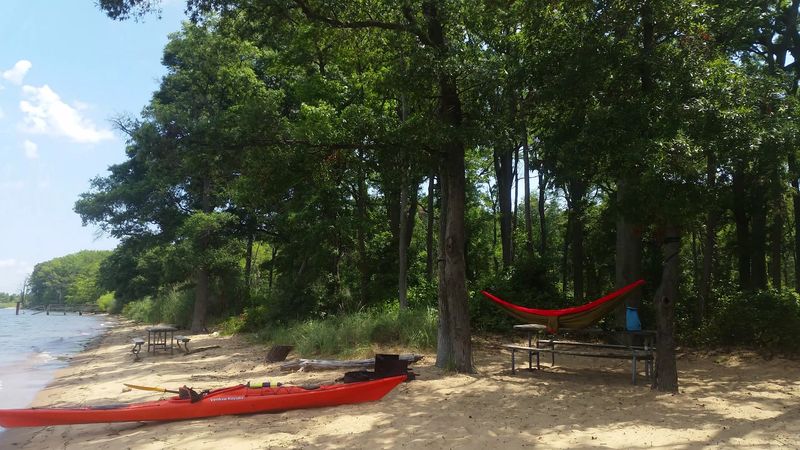
Getting to Hart-Miller Island requires a boat, and that single requirement is exactly what keeps it feeling like a genuine escape. No bridge connects this 1,100-acre island to the mainland, no ferry runs on a set schedule, and no crowds pile in from a parking lot.
You arrive on your own terms, anchor offshore, and suddenly the pace of everything slows down in a way that is hard to manufacture anywhere else.
The island itself was created from material dredged from Baltimore Harbor and the Patapsco River, and what was once two separate islands, Hart and Miller, became one when a dike was constructed in 1981. Nature moved in quickly after that.
The western shore offers a 3,000-foot sandy beach that feels almost tropical in summer, backed by thick vegetation that hums with bird activity throughout the year.
Hart-Miller is considered one of the largest single concentrations of waterfowl in the entire Mid-Atlantic region, and serious birdwatchers plan trips specifically around migration season. Herons, owls, songbirds, and even deer and foxes have all made the island home.
Five miles of trails wind through varied habitats, giving hikers and bikers a genuine sense of exploration. Camping overnight here transforms the experience entirely, trading city lights for a sky full of stars reflected in the bay.
For anyone willing to make the effort of getting there, Hart-Miller delivers a sense of discovery that feels genuinely rare in a state as developed as Maryland.
5. Patuxent Research Refuge, Laurel
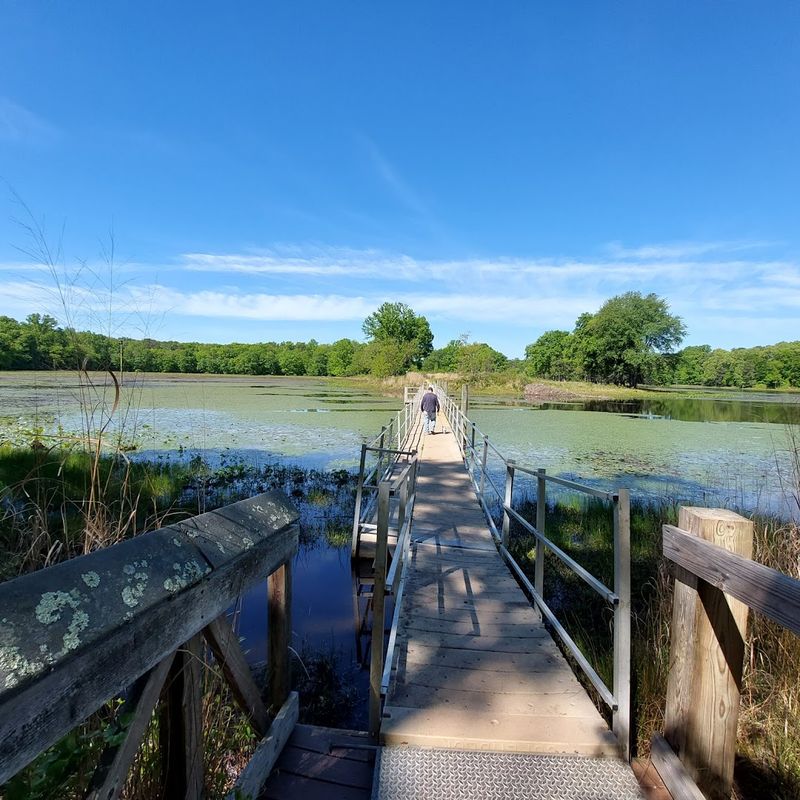
Squeezed between Baltimore and Washington, D.C., the Patuxent Research Refuge somehow manages to feel like the middle of nowhere, and that contrast alone is worth the trip.
At 12,841 acres, it is the only national wildlife refuge in the country created specifically to support wildlife research, a distinction that gives it a quiet sense of purpose beyond simple recreation.
President Franklin D. Roosevelt established it in 1936, and the land has been carefully managed ever since to protect the species that call it home.
The National Wildlife Visitor Center is a smart starting point, offering interactive exhibits that explain the refuge’s ecosystems and the research conducted within them.
From there, the trails fan out through mature forest and wetlands, curving around lakes like Cash Lake and Merganser Pond where herons stand motionless and eagles occasionally drift overhead.
The namesake scarlet tanager flashes through the forest canopy in summer, almost too bright to be real.
Patient visitors also encounter box turtles crossing the path, deer grazing in clearings, and butterflies drifting between wildflowers in the warmer months. The trails feel genuinely secluded, shaded by old trees that create a canopy thick enough to muffle outside noise almost completely.
There is no admission fee, no crowds jostling for space, and no commercial distractions pulling attention away from the natural world. For anyone craving a few hours of honest quiet within easy reach of two major cities, this refuge delivers something that feels almost impossibly peaceful.
Address: 10901 Scarlet Tanager Loop, Laurel, MD 20708
6. Rocks State Park, Jarrettsville
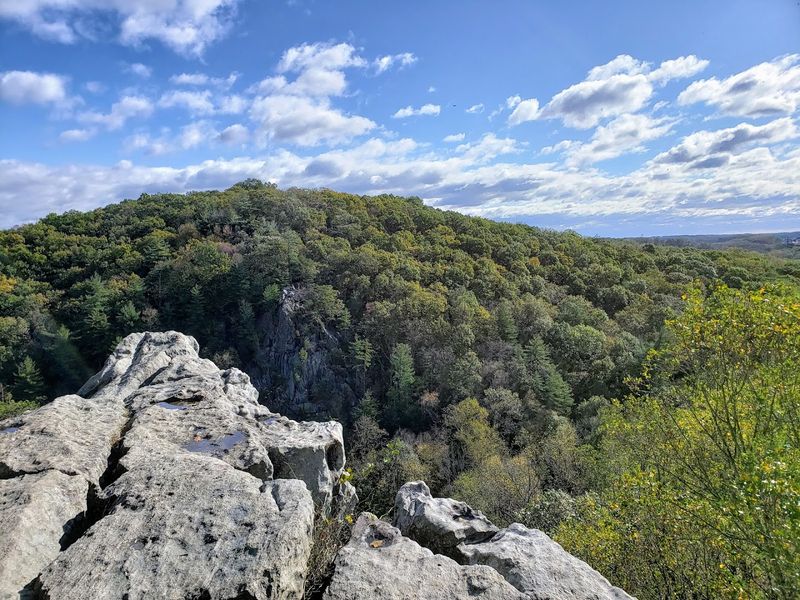
The King and Queen Seat does not ease you into the experience.
You follow the trail through dense forest, pushing through groves of mountain laurel and fern-carpeted slopes, and then suddenly the trees open up and you are standing on a stack of boulders 190 feet above Deer Creek with the wind moving freely around you.
It is the kind of view that earns a long pause and a deep breath before you say anything at all.
Local lore suggests this dramatic rock formation served as a ceremonial gathering place for the Susquehannock and Mingo peoples, and that history adds a layer of meaning to the silence up there.
The park itself covers a rugged stretch of Piedmont landscape, with non-contiguous sections spread along the Deer Creek Valley, all connected by the character of the terrain rather than a single continuous boundary.
Rock climbers are drawn to the King and Queen Seat for obvious reasons, though the sheer drops demand respect and careful footing from anyone exploring the upper formations. Down at creek level, Deer Creek offers a completely different kind of appeal.
Fishing, kayaking, canoeing, and tubing fill summer weekends with activity, and some sections of the creek carry enough current to excite experienced paddlers. Picnic areas and a children’s nature exploration zone make the park genuinely welcoming for families too.
Rocks State Park rewards every type of visitor, from the adventure-seeker to the quiet nature walker who just wants the trees and the sound of moving water.
Address: 3318 Rocks Chrome Hill Rd, Jarrettsville, MD 21084
7. Franklin Point State Park, Shady Side
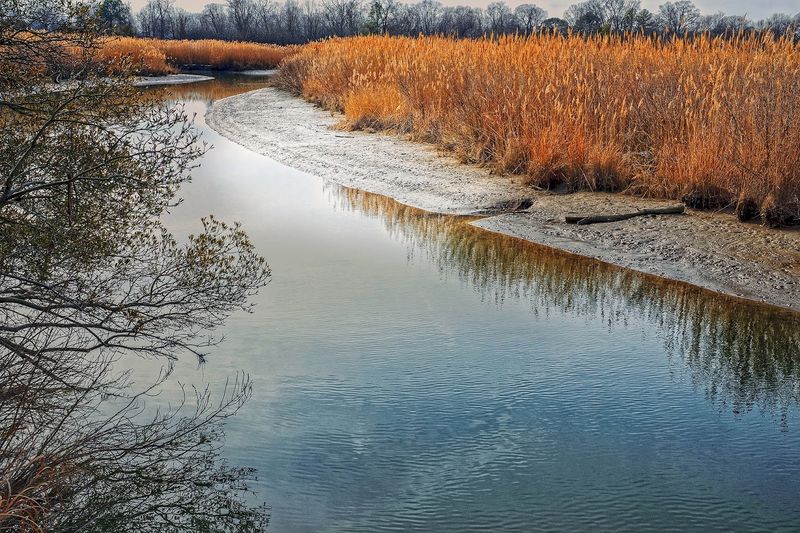
Franklin Point State Park sits on a 477-acre peninsula in southern Anne Arundel County, hidden between the Chesapeake Bay, Deep Creek, and Flag Pond in a way that makes it feel genuinely removed from the mainland.
The drive in is quiet, winding through the kind of rural landscape that makes you wonder if you missed a turn, and then the water appears and everything makes sense.
Marsh, forest, and open field give way to a sand shoreline that looks directly out over the bay with nothing blocking the view.
The park’s existence is itself a small victory for preservation. The land once served as Deep Creek Airport before community efforts pushed successfully to protect it from residential development.
Recent restoration work has focused on building living shorelines, using marsh plants, sand, and rocky breakwaters to hold the land against erosion while improving habitat for coastal birds and other wildlife.
Non-motorized vessels are the only watercraft permitted here, which keeps the experience calm and intentional. Kayakers and canoeists find quiet paddling routes along the creek edges, and the forest trails are uncrowded enough that you can genuinely lose yourself in the sound of wind through the trees.
Wildlife viewing rewards patience here, particularly for birders who know that coastal peninsulas concentrate species during migration. Franklin Point does not advertise itself loudly, and that restraint is part of its appeal.
The bay stretches wide and unhurried in front of you, and for a few hours, the rest of the world genuinely recedes.
8. Cumberland, Allegany County
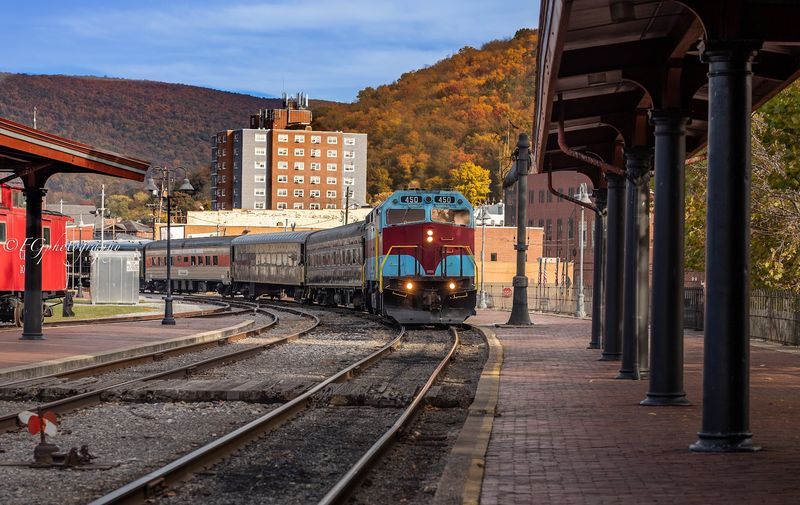
Cumberland sits in a natural mountain gap that geography essentially forced explorers, traders, and settlers to use for centuries, and that unavoidable position at the confluence of the Potomac River and Wills Creek made it one of the most consequential cities in early American westward expansion.
The nickname Queen City and the title Gateway to the West were earned honestly here, not assigned by a tourism board looking for a slogan.
The National Road, the first federally funded public works project in the country, began right here in Cumberland. The Chesapeake and Ohio Canal also terminated here, making the city a meeting point of two of the most ambitious infrastructure projects of the 19th century.
That layered history is visible in the architecture, particularly along the Washington Street Historic District, where Greek Revival, Victorian, and Second Empire Revival buildings stand in impressive preservation.
The Western Maryland Railroad Station, built in 1913, anchors the downtown with a grandeur that reflects the city’s industrial prime. Today, Cumberland connects two of the most celebrated long-distance trails in the eastern United States.
The C&O Canal National Historical Park and the Great Allegheny Passage meet here, forming a continuous trail stretching all the way from Pittsburgh to Washington, D.C.
The Western Maryland Scenic Railway adds another dimension for those who prefer their history moving through mountain scenery at a comfortable pace.
Cumberland rewards slow exploration, and the small-town feel of its streets makes the depth of its history feel almost surprising.
9. Hampton National Historic Site, Towson
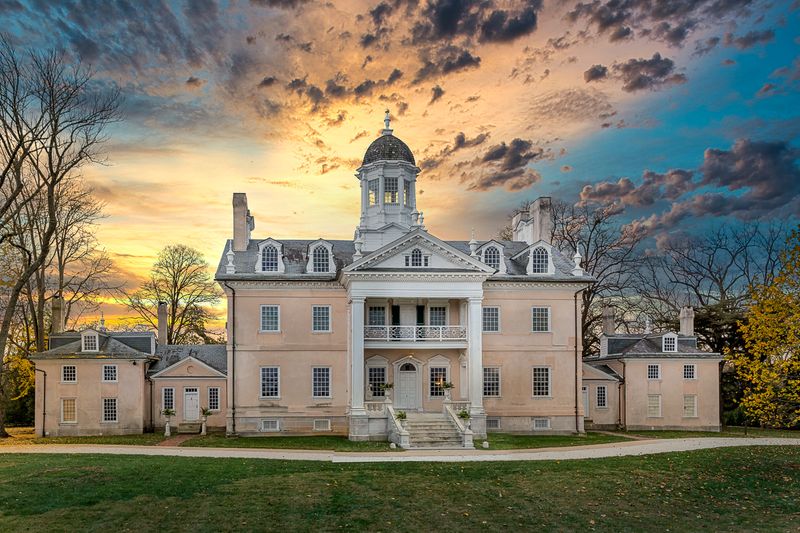
Hampton Mansion does not ease into modesty. The Georgian-style manor house, built between 1783 and 1790, was the largest private home in America at the time of its completion, and even now it carries that scale with a kind of quiet authority that makes you stop on the gravel path and simply look.
The National Park Service acquired the estate in 1948, making it the first National Historic Site selected purely for its architectural significance.
The formal gardens surrounding the mansion are among the most carefully restored in Maryland, designed to reflect their appearance during the 1820s with geometric parterres that give the grounds a structured elegance.
Ancient trees, some over 200 years old, stand throughout the property like living witnesses to everything that has happened here across seven generations of the Ridgely family.
The full story of Hampton is not a comfortable one, and the site does not shy away from that.
The original stone slave quarters, the overseer’s house, the dairy, stables, ice house, and orangery are all preserved and interpreted alongside the mansion itself, ensuring that the lives of enslaved and free laborers who built and maintained this estate are part of the narrative.
Guided mansion tours move through restored rooms that offer a genuinely layered portrait of wealth, labor, and time. Hampton sits just off a busy Towson road, easy to reach but somehow feeling entirely removed from the present.
It is the kind of place that stays with you long after you leave the grounds.
Address: 535 Hampton Ln, Towson, MD 21286
10. Cromwell Valley Park, Towson
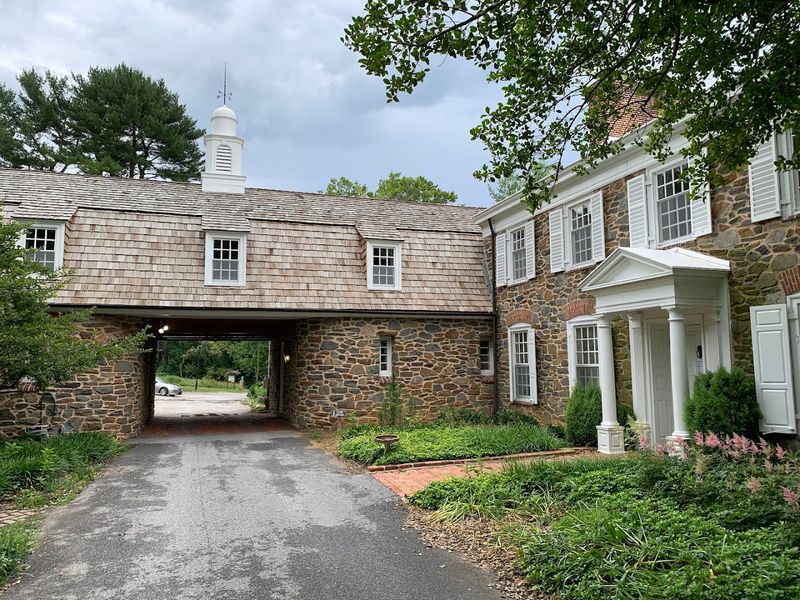
A few minutes from downtown Towson, Cromwell Valley Park opens into 460 acres of stream valley and upland habitat that feels far more rural than its address suggests. The park came together in 1993 on what was originally farmland, and that agricultural identity has never been fully shed.
Open fields, old orchards, cultivated gardens, and thick woodland sit side by side in a landscape that rewards slow walking and genuine attention.
The trails here wind through forest, along stream banks, and up across ridges that offer surprisingly open views for a park this close to suburban development. Migration season turns Cromwell Valley into a hawk watch destination, where thousands of raptors funnel through on their seasonal routes overhead.
White-tailed deer move through the meadows in the early morning, and red foxes have a habit of appearing at the edges of fields just as the light softens in the evening.
History runs through the soil here too. In the 1700s, this valley was known as Lime Kiln Bottom, a regional center for producing agricultural lime, and remnants of the old stone kilns are still visible along certain trails.
The Willow Grove Nature Education Center, housed in a remodeled historic farmhouse, connects visitors to both the agricultural and natural history of the valley through programs and exhibits.
Organic farm fields and honey bee hives add a living dimension to that heritage, making the park feel genuinely active rather than simply preserved.
Cromwell Valley is the kind of place that surprises you with how much it holds.
Address: 2002 Cromwell Bridge Rd, Parkville, MD 21234
