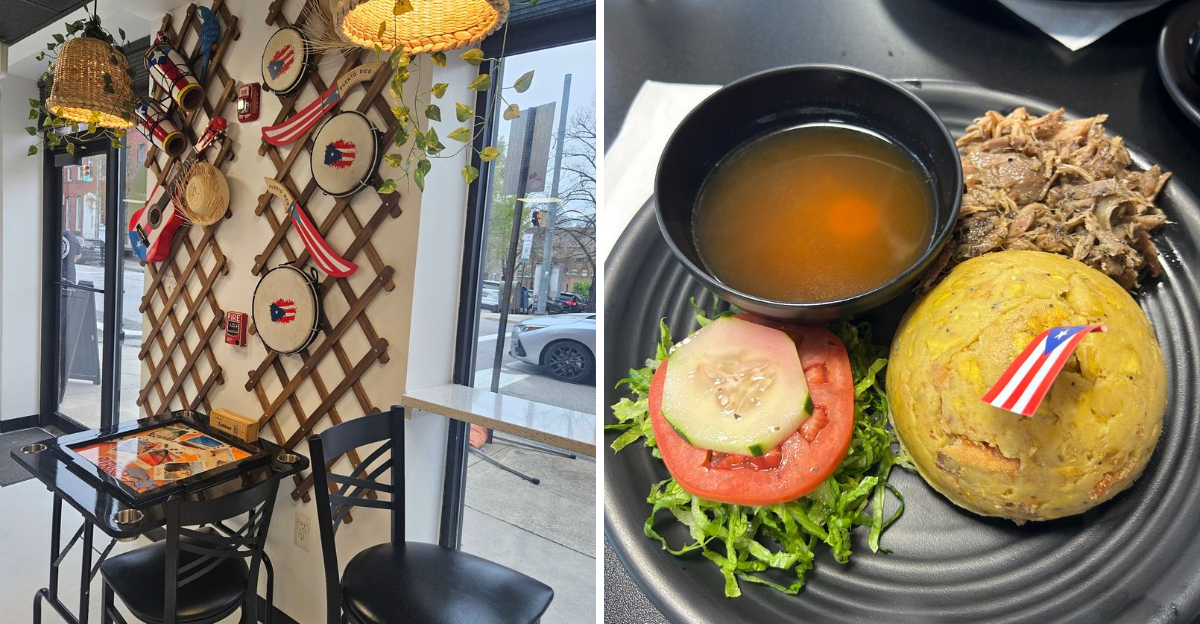
Puerto Rican comfort food has a way of making a lunch order become considerably more ambitious once empanadas, mofongo, sandwiches, coffee, and homestyle dishes enter the conversation.
This family-owned Maryland cafe describes its cooking as Puerto Rican, with Creole influences also appearing in how the business presents itself, giving the menu a distinct identity without needing a huge dining room or flashy concept.
It is the kind of neighborhood spot where the food does the explaining, especially for diners who would rather discover a small independent kitchen than order the same familiar thing again.
Calling any restaurant the single “most authentic” option is subjective, but there is nothing vague about the cafe’s commitment to Puerto Rican flavors.
Maryland diners looking to shake up the usual lunch routine have a compact little restaurant worth paying attention to.
The Umbrella Ceiling That Borrows a Little of Old San Juan
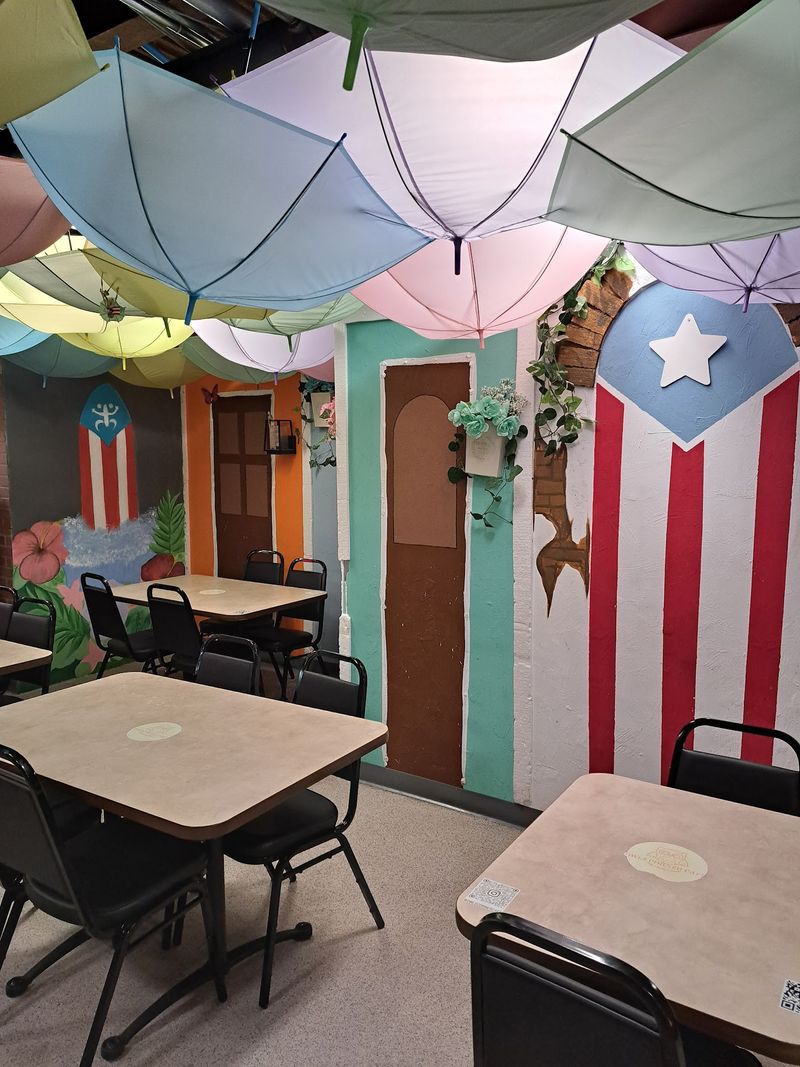
Those umbrellas overhead are the reason half the people who walk past stop and look twice. They are arranged to echo Calle de la Fortaleza in Old San Juan, where a canopy of colorful parasols floats above the street and every visitor stops for a photo.
Recreating that inside a Mount Vernon storefront could have felt gimmicky. It does not.
The colors bounce light around a fairly compact room and soften all the hard edges a city building usually has.
Look past the ceiling and there is more to notice. A hand-painted coqui, the tiny tree frog that Puerto Ricans treat as an unofficial national mascot, sits on one wall like a quiet greeting from the island.
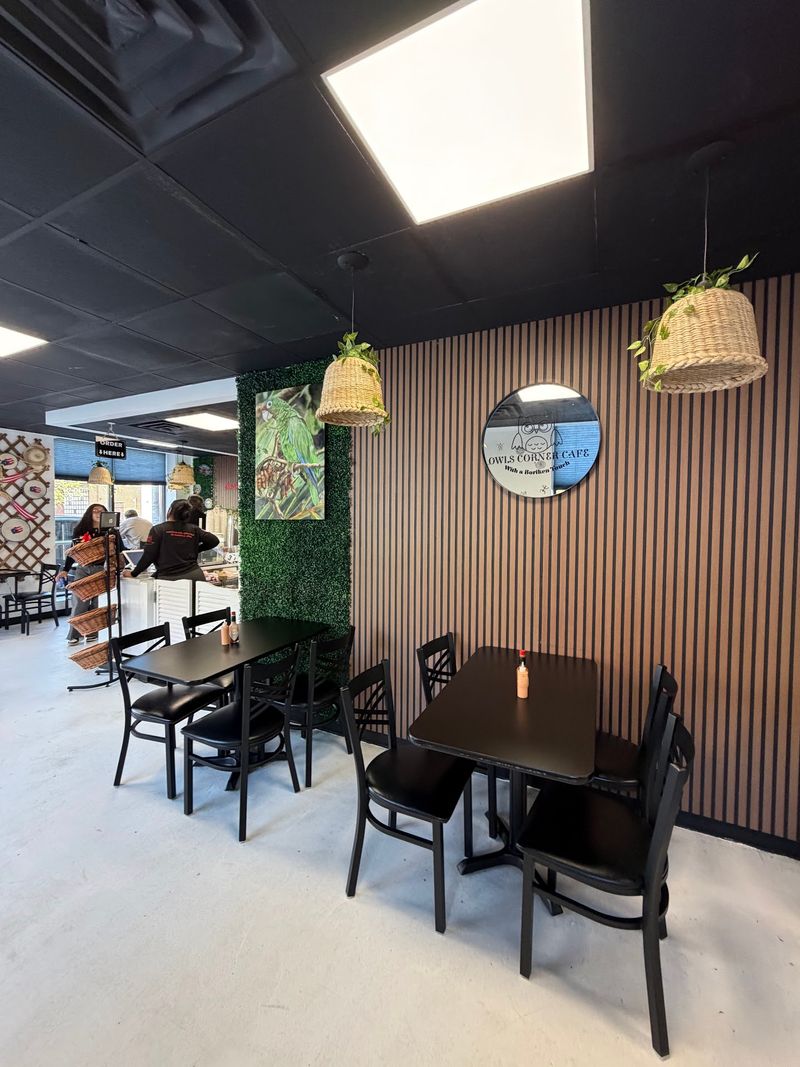
The paint colors lean tropical without tipping into theme-restaurant territory, and the whole room reads as personal rather than corporate. Someone clearly made choices here, not a design firm.
Baltimore weather makes the contrast even better. Arriving on a damp, cold afternoon and sitting under all that brightness genuinely lifts a mood, which is probably the point.
A practical tip for anyone bringing a camera: the seating closest to the front windows catches the best natural light, and the umbrellas photograph beautifully from directly underneath. Aim upward and the shot works nearly every time.
Small spaces can feel cramped, yet this one manages to feel snug in a good way, like a kitchen where people linger. The decor sets expectations, and the food delivers on them.
From a Dundalk Flea Market to Mount Vernon
Not many restaurants can say they began between vendor stalls, but this one did. Owl’s Corner Cafe opened in 2021 inside the North Point Plaza Flea Market in Dundalk, serving Puerto Rican plates to shoppers who probably came in looking for something else entirely.
Word spread the old-fashioned way. Regulars kept coming back, then brought people with them.
The collapse of the Key Bridge changed commuter patterns around Dundalk, and that shift affected traffic at the original spot.
Customers had been asking for two things: a bigger space and longer hours. Both arrived with the move, which is a rare case of feedback actually turning into square footage.
What impresses me is how little got lost in translation. Plenty of places polish away their personality when they upgrade addresses, yet the flea-market warmth came along for the ride.
Mount Vernon suits it, too. The neighborhood mixes students, museum visitors, apartment dwellers, and people passing through on their way to the Washington Monument square just a few blocks away.
Knowing the backstory changes how a meal here tastes, at least a little. Every plate carries the fact that this business built its following from a folding-table setup before it ever had a proper dining room, and that history is honestly the most Baltimore thing about it.
A Family Kitchen With the Door Left Open
Family-run gets said about a lot of restaurants. Here it is literal, and you feel it before anyone brings a menu.
Lilly Ordonez runs the kitchen as chef and co-owner, and Joel Latorre co-owns the cafe alongside her. Their stated goal is simple enough: make people feel like they stepped onto the island for an hour.
Many guests describe eating here as being in a titi’s kitchen, using the Puerto Rican word for aunt. That comparison says plenty about the tone of the place.
Recipes come from the family, not from a corporate playbook, and the difference shows up in the seasoning and the portions. Food made from memory tends to taste less standardized, in the best way.
Service moves at a human pace. Questions about dishes get real answers, and nobody rushes a table that is clearly enjoying itself.
The staff keeps things friendly without hovering, which is a skill. First-timers who have never ordered mofongo before get walked through the options rather than left guessing.
My honest read is that the hospitality is the hook, and the cooking is what makes people return. Both matter equally.
Anyone traveling with picky eaters or curious kids will find this an easy room to sit in. It is casual, unfussy, and loud enough that a chatty table blends right in with the salsa playing overhead.
Mofongo, Pernil, and the Heart of Cocina Criolla
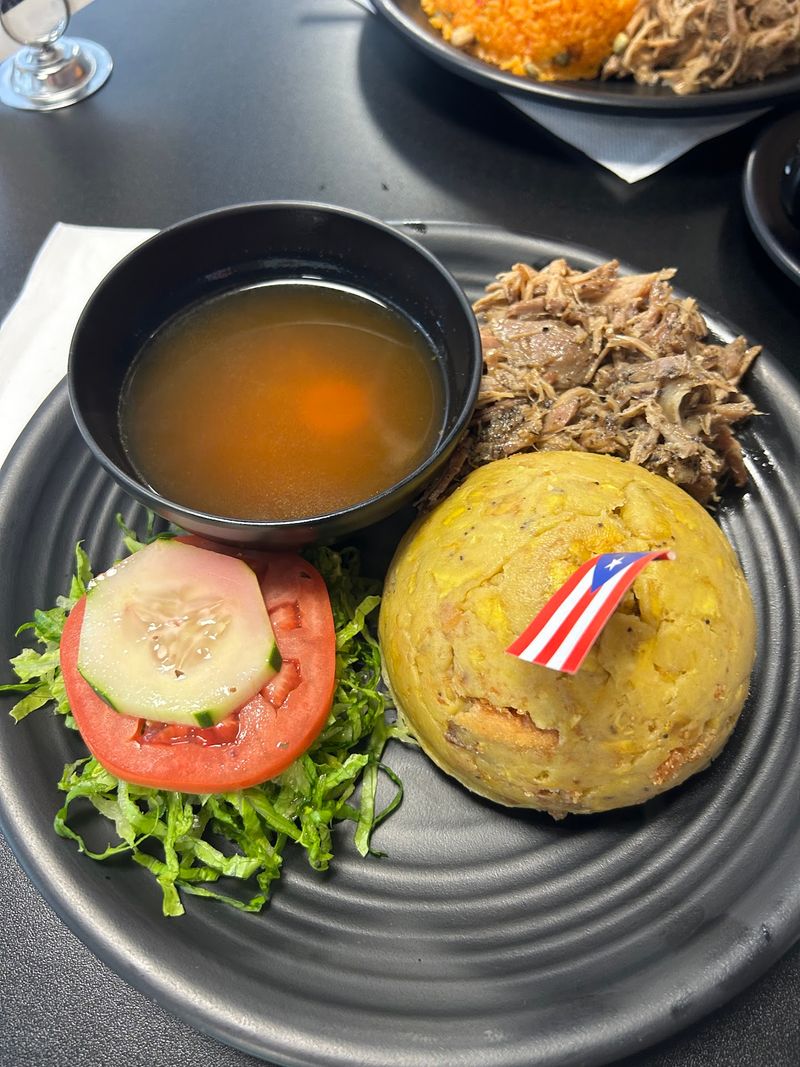
Mofongo is the dish most people order first, and for good reason. Green plantains get fried, then mashed with garlic into a savory mound that soaks up whatever it is served with, whether that is shrimp or churrasco.
Pernil is the other heavy hitter. Slow-roasted pork, pulled apart, rich and tender enough that it barely needs a knife.
Carne frita brings crispy fried pork bites, and arroz con gandules, rice cooked with pigeon peas, shows up as the side that quietly steals attention. That rice is the kind of thing people finish before realizing it is gone.
Cocina criolla is the name for this style of cooking, and it reflects centuries of Spanish, African, and Taino influence layered together. Knowing that makes the flavors easier to appreciate.
Nothing here tastes toned down for unfamiliar palates. The garlic is assertive, the seasoning is confident, and the plates arrive looking generous.
One practical note: the menu shifts from day to day, so a favorite might rotate out and something new might appear. Treat it as part of the fun rather than a problem.
Portions run hearty, which means splitting a main between two people is a legitimate strategy if there are pastries in the plan. Otherwise, plan on leftovers.
For a first visit, mofongo plus a scoop of that rice covers the essentials nicely.
Coffee Done the Puerto Rican Way
Coffee is not an afterthought on this island’s table, and the cafe treats it accordingly. A cortadito, strong espresso softened with a splash of warm milk, is the order that tells you whether a place is serious.
Theirs is serious. Rich, full, and closer to what gets poured in a Puerto Rican kitchen than what comes out of a drive-through window.
Regulars talk about the coffee sending them straight back to the island, which is a big claim for a small cup. The consistency is what earns that.
Beyond the espresso drinks, there are mango and passion fruit smoothies that make more sense in July than a hot cup would. A non-alcoholic pina colada keeps the tropical theme going for anyone who wants dessert in a glass.
Owl’s Corner leans into the independent coffee shop feeling rather than chain efficiency. That means slightly slower, considerably warmer, and more likely to result in conversation.
Timing tip for anyone working remotely or waiting on a train: a morning coffee here beats a station kiosk by a wide margin, and the room is pleasant enough to sit in for a while.
Pairing a cortadito with a sweet pastry is the move locals seem to have figured out already. Sugar and strong coffee have always gotten along.
Skip the to-go cup if there is time. Some drinks deserve a table.
Pastelillos, Quesitos, and Other Handheld Reasons to Return
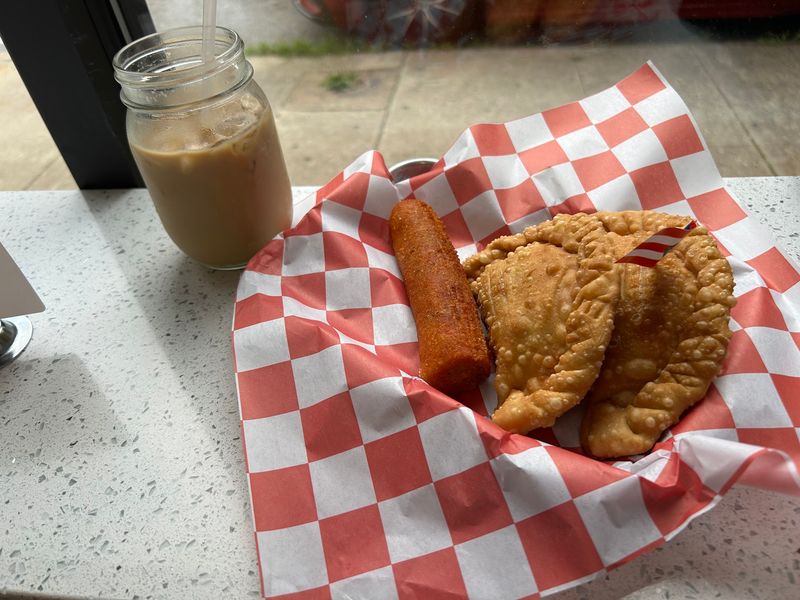
Small bites are where this menu gets sneaky. Pastelillos, the crisp savory turnovers, come with fillings like crab, cheese, chicken, or seasoned meat, and they are dangerously easy to eat standing up.
Bacalaitos deserve a mention too. Codfish fritters, thin and crackly, salty in exactly the right way.
On the sweet side, quesitos are the pastry to know. Flaky dough wrapped around sweetened cheese, baked until the edges go golden, and gone in about four bites.
Pastelillo de guava plays the same trick with fruit instead of cheese, and the tropical sweetness pairs beautifully with strong coffee. Ordering one of each is not overdoing it.
Because the offerings change daily, the pastry case rewards curiosity. Asking what came out of the oven most recently is usually good advice.
These items also solve a common travel problem. A full plate of mofongo is a commitment, while two pastelillos work fine when there is a museum or a walk to Mount Vernon Place still on the schedule.
Grabbing a few to go is worth considering. They travel well and reheat better than most fried food has any right to.
My favorite approach is a savory turnover first, then something sweet with coffee, which turns a quick stop into a proper little meal without wrecking the rest of the day.
Why Mount Vernon Locals Keep It on Repeat
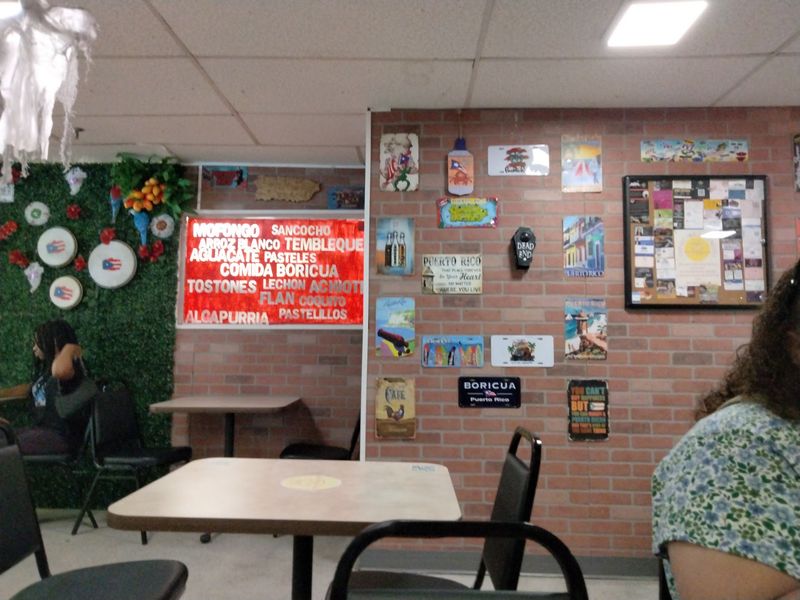
Mount Vernon already had plenty of places to eat, which makes the loyalty this cafe attracts more interesting. It fills a gap Baltimore did not fully have covered, and locals figured that out quickly.
Hidden gem gets thrown around too easily. In this case it fits, since the storefront is modest and easy to walk past.
The neighborhood setting helps make a visit into a small outing. The Washington Monument, the Peabody Library, and the Walters Art Museum all sit within a short walk, so lunch here slots naturally into a day of wandering.
Parking in this part of the city takes some patience, so street parking or a nearby garage is worth planning for. Public transit and rideshare both work fine.
What keeps people returning is the combination rather than any single dish. Bright room, generous plates, genuinely kind service, coffee that means something.
Visitors chasing an authentic taste of Puerto Rico in Maryland will not find many options this committed. That scarcity is part of the appeal.
Going once tends to turn into going again, usually with someone else in tow. Places like this survive on exactly that kind of word of mouth.
For a city known best for crab cakes, having a corner that tastes like San Juan feels like a genuine win.
Address: 824 N Calvert St, Baltimore, Maryland
