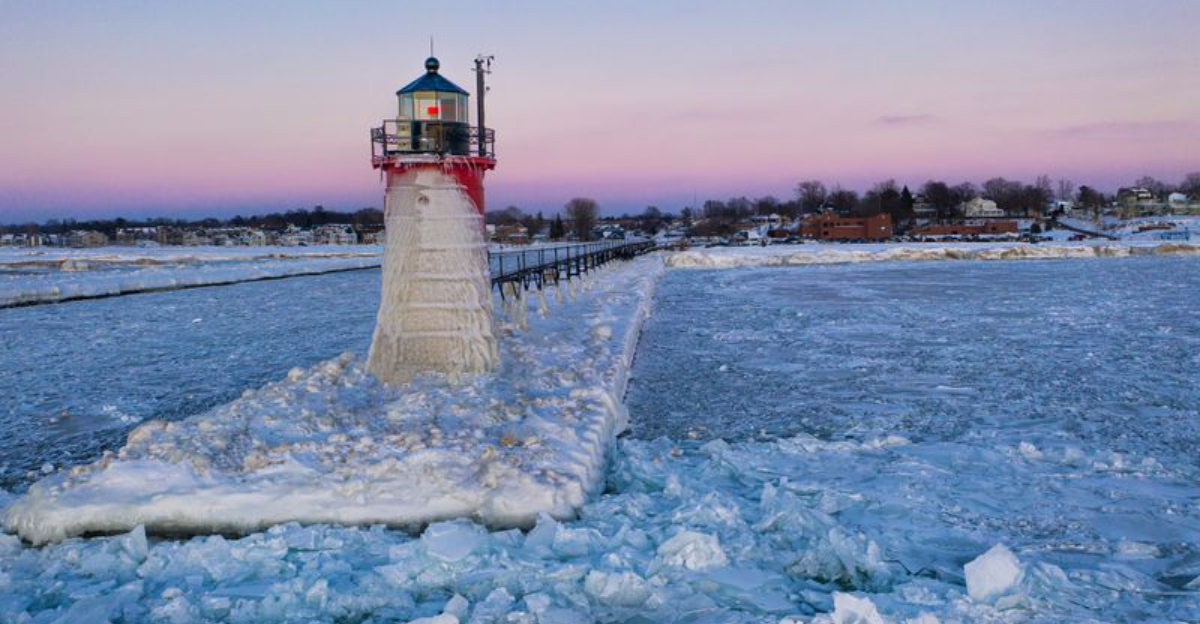
Michigan transforms into a wonderland when winter arrives, and its lakeside villages become peaceful havens wrapped in snow and silence.
While tourists flock to popular ski resorts and crowded winter destinations, locals quietly retreat to charming lake villages that remain blissfully unknown to most visitors.
These hidden communities offer frozen shorelines, cozy small-town atmospheres, and winter activities that feel like stepping into a postcard.
From ice fishing on pristine waters to warming up in historic inns, these secret spots provide authentic Michigan experiences without the crowds.
1. Beaver Island
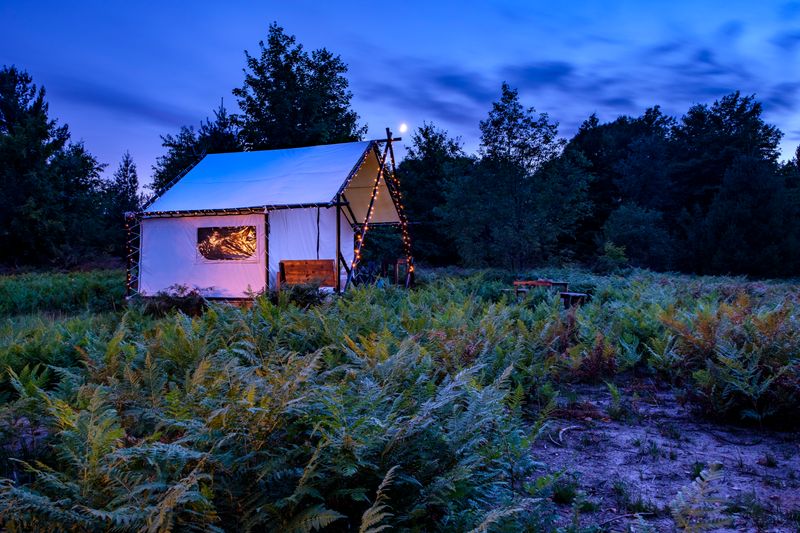
Reaching this remote island requires either a ferry ride or a small plane, which keeps visitor numbers refreshingly low even during peak seasons.
Beaver Island sits in northern Lake Michigan as the largest island in the state, stretching across nearly 56 square miles of untouched wilderness and quiet beaches.
Winter here feels like traveling back in time, when life moved slower and communities relied on each other for survival and entertainment.
The island’s history includes a unique chapter as the only kingdom in the United States, ruled by James Strang in the 1850s before his assassination ended the Mormon colony.
Today, fewer than 600 year-round residents call this place home, and that number barely increases during winter months.
Snow blankets the island’s forests and beaches, creating perfect conditions for cross-country skiing along trails that wind through cedar swamps and along frozen shorelines.
Ice fishing becomes a daily ritual for many locals, who drill through thick lake ice hoping to catch perch, pike, and whitefish.
The village center features weathered buildings housing a grocery store, a few restaurants, and the Shamrock Bar, where islanders gather to share stories over locally brewed beer.
Harbor lights reflect off snow-covered docks where fishing boats rest until spring, their hulls protected by tarps and ice.
Winter visitors discover a community that welcomes them warmly while maintaining the peaceful isolation that makes island life so appealing.
Snowmobiling across frozen inland lakes provides access to areas impossible to reach during warmer months.
Evening skies explode with stars undiminished by light pollution, offering views that city dwellers rarely experience.
The Beaver Island Historical Society maintains museums that stay open by appointment, sharing tales of shipwrecks, lumber barons, and resilient islanders.
2. Walloon Lake Village
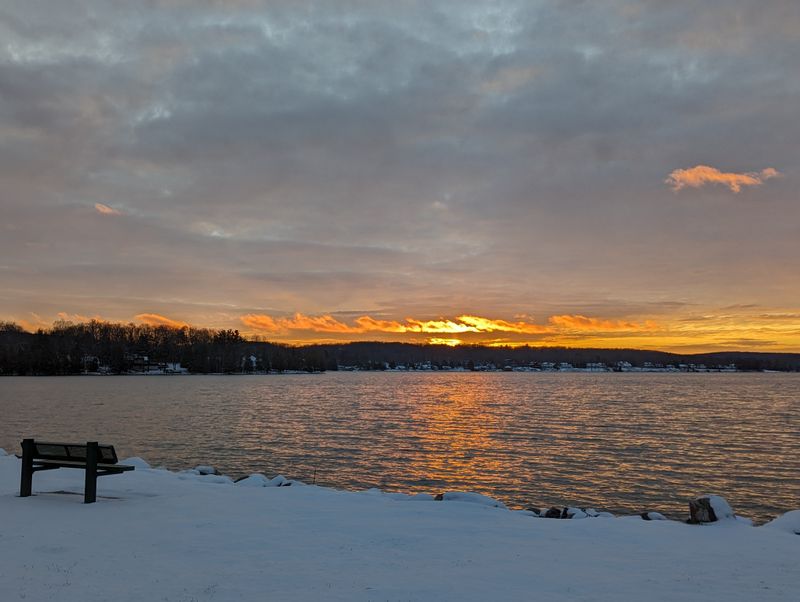
Ernest Hemingway spent childhood summers on these shores, and the landscape that inspired his early writing remains remarkably unchanged despite the passage of more than a century.
Walloon Lake stretches for four miles with water so clear you can see the sandy bottom even through winter ice in shallow areas.
The village itself consists of a small cluster of buildings near the lake’s south end, where a historic general store still serves the community as it has since 1900.
Winter transforms the area into a quiet retreat where locals reclaim their lake from summer visitors who crowd the beaches during warm months.
Ice shanties dot the frozen surface as fishermen try their luck for walleye and perch beneath several feet of solid ice.
Cross-country ski trails loop through Walloon Lake Association lands, offering routes through hardwood forests where deer tracks crisscross the snow.
The village’s proximity to Petoskey means residents can access larger town amenities while maintaining their peaceful lakeside existence.
Historic cottages line the shore, their windows dark during winter except for a few hardy souls who brave the cold for the solitude it brings.
Locals know the best spot for watching sunsets over the frozen lake, where orange and pink light reflects off snow and ice creating an otherworldly glow.
Small roads wind around the lake, plowed just enough for residents to navigate between their homes and the village center.
The Hemingway connection draws a few literary pilgrims even in winter, but most visitors never venture beyond Petoskey to discover this quieter treasure.
Winter nights bring temperatures that plunge well below freezing, ensuring thick ice perfect for skating parties organized by longtime residents.
Spring arrives late here, with ice often lingering into April, extending the winter season locals cherish.
3. Lake Leelanau
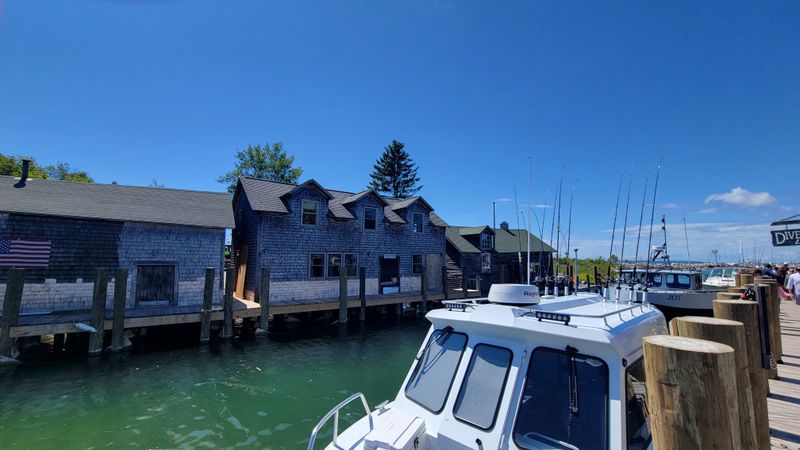
Two connected bodies of water make up Lake Leelanau, with a narrow channel separating North Lake Leelanau from its southern counterpart.
The village of Lake Leelanau sits right at this narrows, where a small bridge connects the two sides of this tight-knit community.
Vineyards and cherry orchards blanket the hillsides surrounding the lake, their bare vines and dormant trees creating striking patterns against winter snow.
Several wineries remain open year-round, offering tastings in cozy tasting rooms warmed by fireplaces and the company of locals who treat wine as a year-round passion.
Ice fishing enthusiasts claim Lake Leelanau produces some of the best perch in northern Michigan, with fish averaging larger sizes than neighboring waters.
The village itself features a handful of businesses including a grocery store, a beloved bakery, and a tavern where residents gather for Friday fish fries.
Snowshoeing trails wind through the Leelanau Conservancy properties that protect forests and wetlands around the lake from development.
Winter transforms the tourist-heavy Leelanau Peninsula into a locals-only paradise where you can drive for miles without encountering another vehicle.
Historic St. Mary’s Church stands as a landmark visible from many points around the lake, its white steeple rising above bare trees.
Frozen lake conditions vary from year to year, with some winters producing glass-smooth ice perfect for skating and others creating rough, wind-sculpted surfaces.
Local knowledge proves essential for safe ice travel, as springs feeding the lake create thin spots that persist even during the coldest winters.
Bald eagles winter along the shoreline, perching in tall pines while scanning for fish in areas where moving water prevents complete freezing.
The pace of life slows dramatically after New Year’s, with residents enjoying the quiet months before tourists return in spring.
4. Harrisville
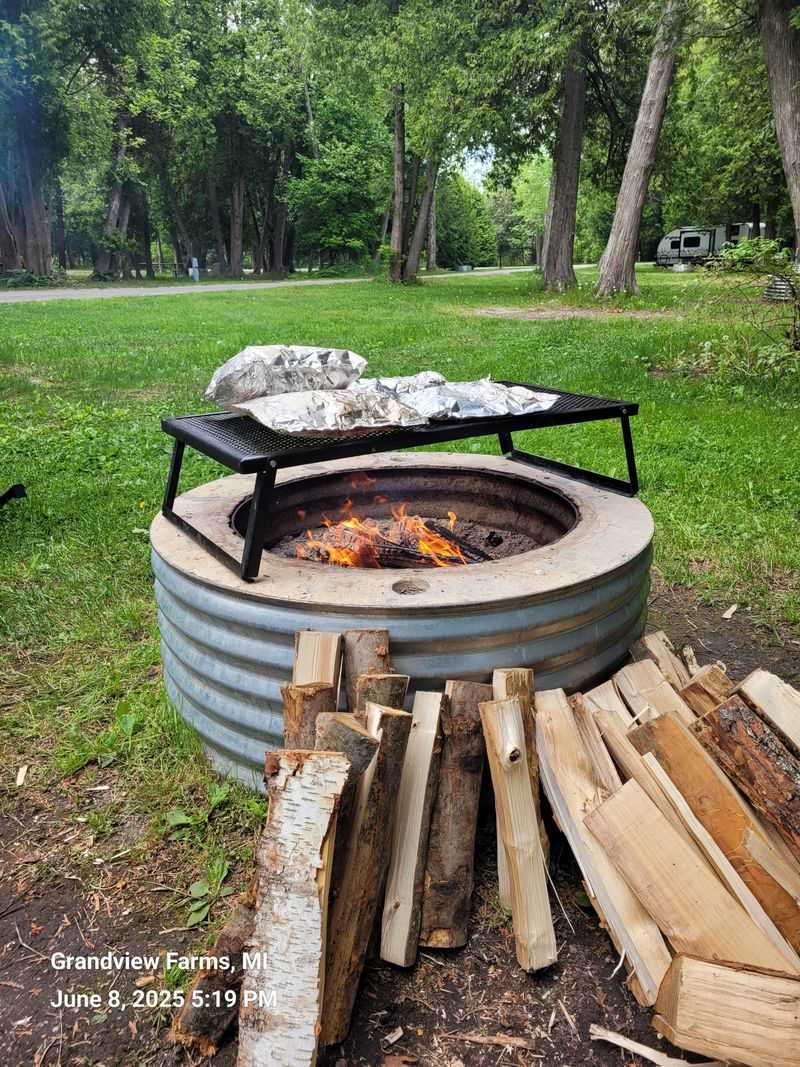
Alcona County’s seat feels more like a sleepy village than a government center, with its historic courthouse overlooking Lake Huron’s endless horizon.
Harrisville’s harbor provides one of the few protected anchorages along this stretch of Michigan’s sunrise coast, though winter ice keeps it empty of boats.
The village was founded in the 1850s when lumber barons recognized the excellent harbor and vast forests waiting to be harvested.
After the timber boom ended, Harrisville settled into a quieter existence as a fishing village and summer resort that most people have never heard of.
Winter storms off Lake Huron pile ice along the shore in fantastic formations that locals call ice volcanoes, created when waves push water through cracks in shelf ice.
The Sturgeon Point Lighthouse stands just north of town, accessible via a snow-covered beach walk that rewards visitors with stunning frozen lake views.
Downtown consists of a few blocks of historic buildings housing essential businesses and a surprising number of antique shops that stay open sporadically during winter.
Harrisville State Park borders the village, offering camping for the truly hardy and miles of trails through pine forests where silence is broken only by wind and chickadees.
Lake Huron freezes solid in harsh winters, extending the shoreline miles offshore with pressure ridges creating miniature mountain ranges of ice.
Locals bundle up for daily walks along the beach, checking on ice formations and breathing air so cold it crystallizes in your lungs.
The village’s permanent population hovers around 500, and everyone seems to know everyone else’s business, creating the tight community bonds that define small-town Michigan.
Spring comes late to Harrisville, with ice sometimes lingering offshore into May, keeping temperatures cool while inland areas warm.
Visitors who discover Harrisville in winter often return year after year, drawn by the authentic coastal experience and welcoming locals.
5. Colon
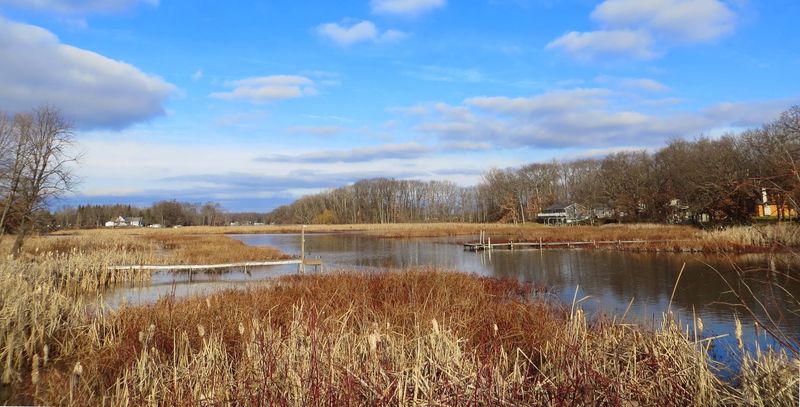
Most people drive right through Colon without realizing they’ve passed through the Magic Capital of the World, a title earned through decades of hosting magicians and illusion manufacturers.
The village sits between Palmer Lake and Colon Lake in southwest Michigan, where St. Joseph County’s rolling farmland meets small glacial lakes.
Harry Blackstone Sr. made Colon his summer home in the 1920s, attracting other magicians who appreciated the village’s peaceful setting and welcoming residents.
Abbott’s Magic Company still operates here, manufacturing illusions and tricks for professional magicians worldwide from a nondescript building on Main Street.
Winter strips away the summer tourists who come for the annual magic festival, returning Colon to the 1,100 residents who call it home year-round.
Both lakes freeze solid, providing natural ice rinks where locals skate and play hockey on cleared sections maintained by volunteers.
Ice fishing shanties appear as soon as the ice reaches safe thickness, with perch and bluegill providing the main catches.
The village’s compact downtown features businesses that have served the community for generations, including a hardware store where locals gather to discuss weather and lake conditions.
Snow-covered streets see little traffic during winter weekdays, creating a peaceful atmosphere that feels increasingly rare in modern Michigan.
Palmer Lake’s western shore features summer cottages that sit empty and dark during cold months, their docks pulled from the water and stored until spring.
Cross-country skiing on frozen lakes provides miles of flat terrain perfect for beginners and those seeking easy winter exercise.
The magic connection adds quirky charm to Colon, with shop windows featuring vintage magic posters and mysterious advertisements for illusions.
Locals take pride in their unusual claim to fame while maintaining the down-to-earth friendliness that characterizes small Michigan towns.
6. Leland
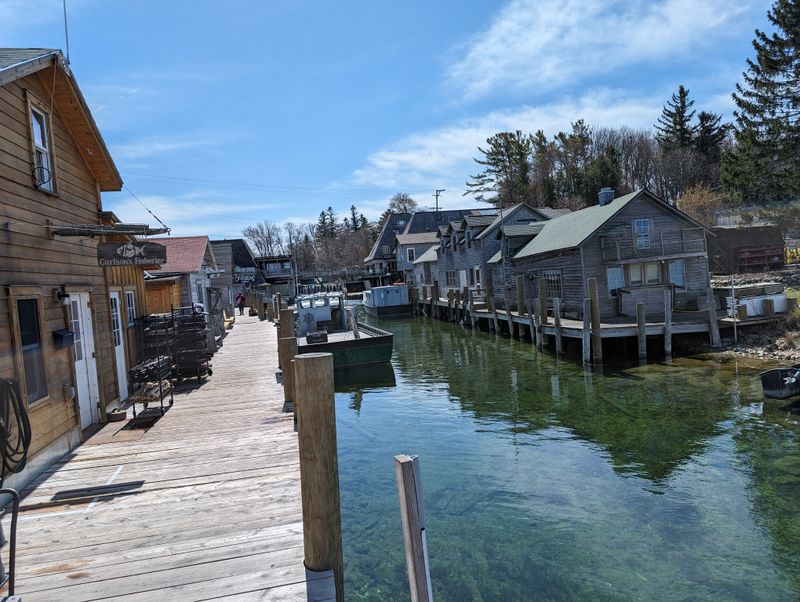
Fishtown stands as one of the last working fishing villages on the Great Lakes, its weathered shanties clinging to the Leland River where it meets Lake Michigan.
Summer crowds discover Leland’s charm in overwhelming numbers, but winter returns this village to locals who appreciate its authentic maritime character.
The historic fishing shanties date to the late 1800s, their gray wood and rusty roofs somehow growing more photogenic as they age.
Commercial fishing continues here despite challenges from invasive species and changing lake ecology, with a few families carrying on traditions spanning generations.
Winter ice closes the harbor, and boats rest in storage while fishermen repair nets and equipment in heated workshops.
The Leland River freezes in sections, creating interesting patterns where current prevents complete icing and where still water turns solid.
Lake Michigan’s winter moods range from mirror-calm to violently stormy, with ice forming along the breakwall in fantastic shapes.
Downtown Leland features galleries, shops, and restaurants that mostly close during winter, though a few hardy establishments stay open for locals and occasional visitors.
The Manitou Island ferry sits idle at the dock, its season finished until spring when tourists return for island trips.
Cross-country ski trails through nearby forests provide recreation for residents seeking outdoor activity during long winter months.
Sunset watching becomes a local ritual, with the best views from the breakwall where ice and snow create foreground interest for the sun dropping into Lake Michigan.
The village’s permanent population barely exceeds 350, and winter reduces visible activity to a handful of regulars at the coffee shop and post office.
Historic homes line quiet streets, many built by lumber barons and ship captains during Leland’s prosperous 19th-century heyday.
Winter reveals the village’s true character, stripped of tourist veneer and returned to the working waterfront community it has always been.
7. Onekama
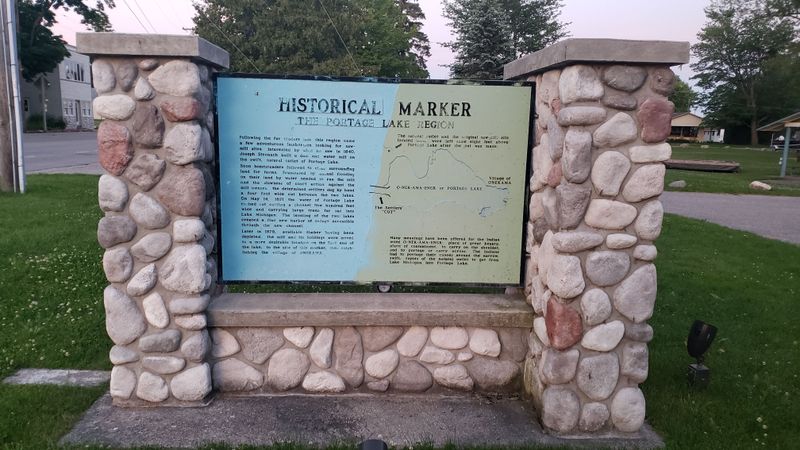
Two lakes for the price of one makes Onekama unique, with Portage Lake connected to Lake Michigan by a short channel that creates a natural harbor.
The village’s name comes from an Ojibwe word meaning portage, referencing the short distance Native Americans carried canoes between the two bodies of water.
Portage Lake stretches inland for miles, its sheltered waters offering calmer conditions than Lake Michigan’s sometimes fierce winter waves.
Winter transforms Onekama into a quiet refuge where the 400 year-round residents reclaim their village from summer people who swell the population tenfold.
Ice fishing on Portage Lake produces perch, pike, and bass, with local knowledge essential for finding productive spots and safe ice.
The channel between lakes rarely freezes completely due to current, creating open water that attracts ducks and other waterfowl throughout winter.
Downtown features a handful of businesses including a grocery store, a bank, and a restaurant that serves as the social hub during cold months.
Historic buildings reflect Onekama’s past as a lumber town and resort destination, with Victorian homes and commercial buildings dating to the late 1800s.
Lake Michigan’s shoreline north and south of the channel offers winter beach walking, with ice formations and driftwood creating constantly changing scenery.
Snowmobile trails connect Onekama to neighboring communities, providing winter transportation and recreation through forests and along frozen lake edges.
The village’s compact size means you can walk everywhere, and locals do exactly that, bundled against cold while running errands and visiting neighbors.
Portage Point Inn, a historic resort, reduces operations dramatically in winter but maintains a presence that connects present-day Onekama to its tourism heritage.
Winter sunsets over Lake Michigan draw locals to the channel breakwall, where they watch colors reflect off ice and water while discussing the day’s events.
Spring arrives slowly here, with Portage Lake ice lingering weeks after inland lakes thaw completely.
8. Lexington
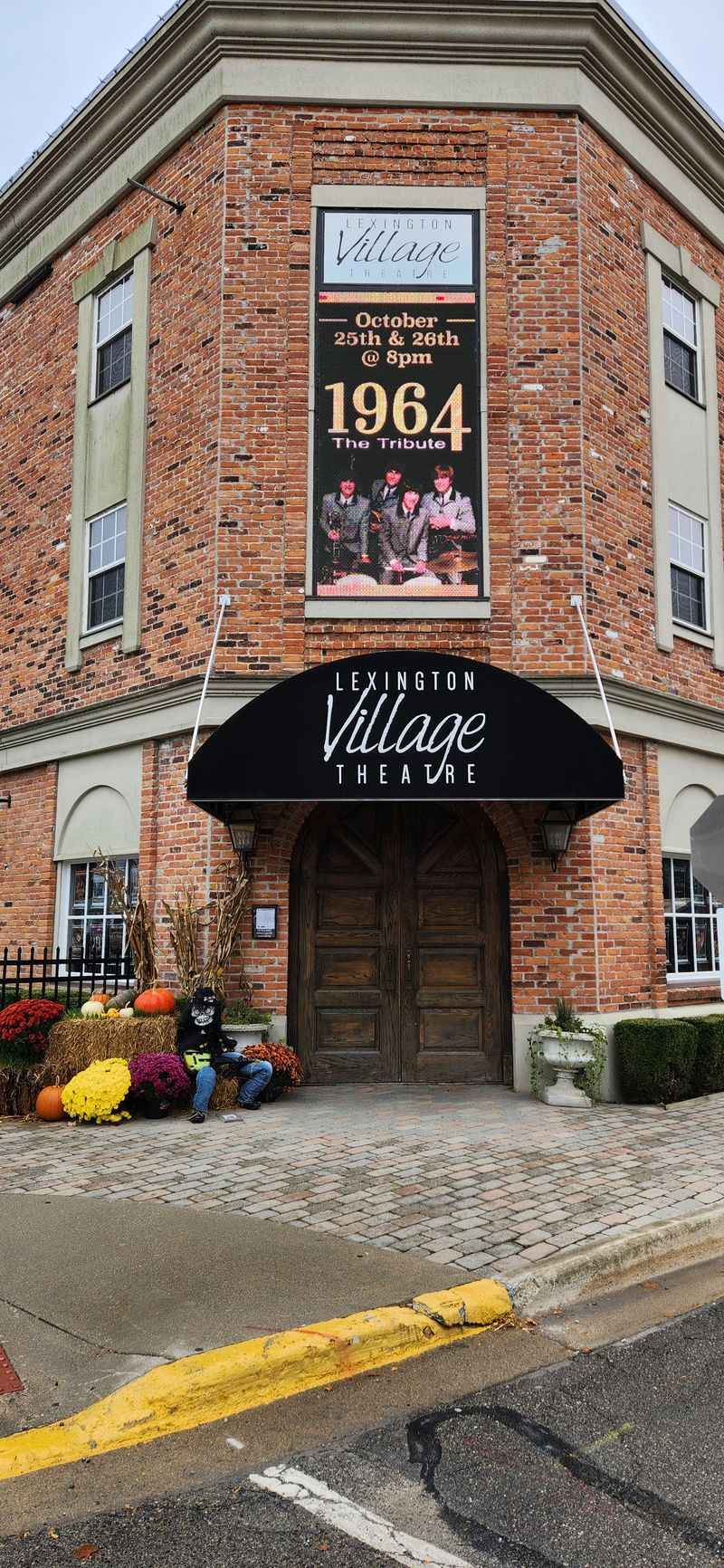
Lake Huron’s thumb region remains one of Michigan’s least-visited areas, and Lexington exemplifies the quiet coastal villages that locals prefer to keep secret.
The village’s harbor provides one of few protected anchorages along the thumb’s eastern shore, though winter ice keeps it empty except for a few boats stored on land.
Victorian-era buildings line Main Street, their ornate details and historic character reflecting Lexington’s 19th-century prosperity as a lumber port and fishing center.
Summer brings tourists from Detroit and other cities, but winter returns Lexington to the 1,200 residents who appreciate the slower pace and tight community.
Lake Huron stretches to the horizon, its winter moods ranging from frozen solid to open water depending on temperatures and wind patterns.
Ice formations along the shore create otherworldly landscapes, with waves freezing mid-splash and shelf ice extending hundreds of feet offshore during harsh winters.
The village’s compact downtown includes restaurants, shops, and services that reduce hours dramatically after New Year’s but maintain enough activity for locals.
Croswell-Lexington Community Schools serve as the social center during winter, with basketball games and school events drawing residents together.
Historic homes occupy tree-lined streets where everyone knows their neighbors and watches out for each other during difficult winter weather.
Beach walking continues year-round for hardy souls who bundle up against wind and cold to breathe fresh air and watch waves or ice.
The harbor breakwall extends into Lake Huron, offering views up and down the coast and providing a favorite spot for watching storms roll in.
Local restaurants serve comfort food perfect for cold days, with regulars occupying the same seats and discussing local news over coffee.
Winter storms can close roads and knock out power, but Lexington residents take such events in stride, prepared with generators and supplies.
Spring comes late to this part of Michigan, with lake ice and cold water keeping temperatures cool well into May.
9. Charlevoix
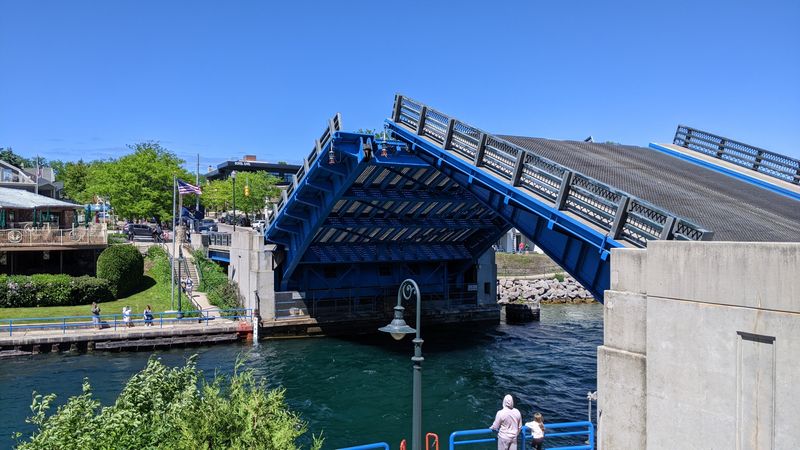
Three lakes surround Charlevoix, creating a water-focused community where maritime traditions run deep despite modern development.
Round Lake sits at the heart of town, connected to Lake Michigan by a channel and to Lake Charlevoix by a wider passage under a drawbridge.
Summer transforms Charlevoix into a bustling resort town, but locals know winter offers the true Charlevoix experience without crowds and traffic.
The unique Earl Young mushroom houses add quirky character to the village, their stone construction and curved rooflines looking like something from a fairy tale.
Winter ice fishing on Lake Charlevoix attracts serious anglers seeking lake trout, perch, and whitefish in water exceeding 100 feet deep in places.
Downtown shops and restaurants maintain winter hours, serving locals who appreciate having their village back after tourist season ends.
The channel between Round Lake and Lake Michigan rarely freezes completely, with current and boat traffic keeping at least a narrow passage open.
Lake Michigan’s winter shore offers dramatic scenery with ice formations, pressure ridges, and sometimes open water extending to the horizon.
Historic buildings downtown date to the late 1800s, with many surviving a devastating 1879 fire that destroyed much of the original village.
The Charlevoix South Pier Light stands at the end of the breakwall, accessible via a snow-covered walkway that locals traverse carefully during winter.
Cross-country skiing and snowshoeing trails wind through nearby parks and forests, providing recreation for residents seeking outdoor winter activity.
The permanent population of about 2,500 swells to over 10,000 during summer, making winter’s quiet atmosphere especially precious to year-round residents.
Local coffee shops serve as gathering spots where residents discuss everything from lake conditions to village politics over morning beverages.
Winter sunsets paint the sky in brilliant colors that reflect off snow, ice, and water, creating scenes that never grow old despite daily repetition.
10. South Haven
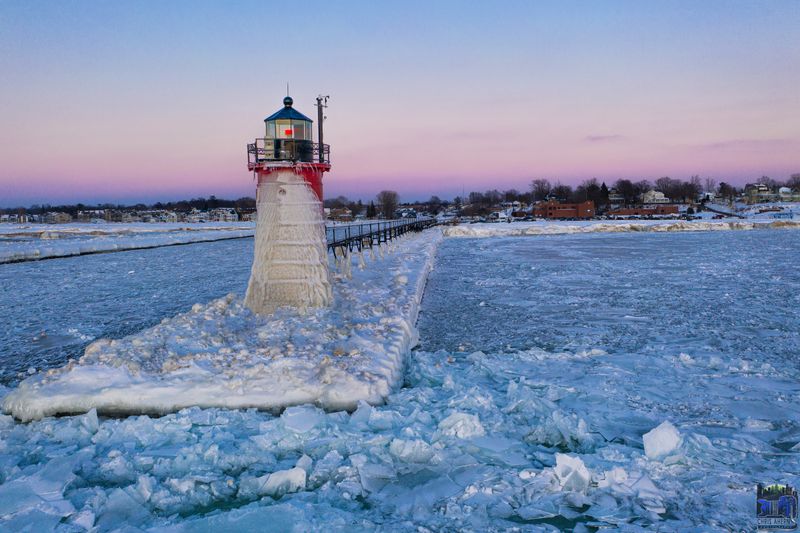
Southwest Michigan’s premier summer resort becomes a peaceful winter village when tourists depart and locals reclaim the beaches and downtown.
The iconic red lighthouse stands at the end of the south pier, accessible via a catwalk that becomes treacherous with ice but rewards brave visitors with stunning views.
Black River flows through town before emptying into Lake Michigan, its mouth forming a harbor that once supported commercial fishing and fruit shipping.
Winter storms off Lake Michigan pile ice along the shore and piers, creating formations that attract photographers and sightseers from across the region.
Downtown’s historic buildings house shops and restaurants that reduce hours during winter but maintain enough activity to serve the 4,000 year-round residents.
The beach extends for miles north and south of the harbor, offering winter walking where footprints are the only marks in fresh snow.
Lake Michigan’s winter moods vary dramatically, with calm days producing mirror-smooth water and storm days generating waves that crash over the breakwalls.
Historic homes in residential neighborhoods reflect South Haven’s past prosperity from fruit farming and tourism, with Victorian and Craftsman styles predominating.
The Michigan Maritime Museum stays open year-round by appointment, sharing stories of Great Lakes shipping, fishing, and the area’s maritime heritage.
Local residents know the best spots for watching sunsets, which paint the sky and lake in colors that change daily with weather and atmospheric conditions.
Winter festivals and events bring the community together, with ice sculpture contests and holiday celebrations maintaining social connections during quiet months.
Cross-country skiing in nearby parks and along the beach provides exercise and recreation when snow conditions cooperate.
Spring arrives earlier here than in northern Michigan, but winter maintains its grip through March with occasional snow and cold temperatures.
Locals appreciate the dramatic seasonal changes that define life in a lakeside community, where winter’s quiet balances summer’s bustle.
Dear Reader: This page may contain affiliate links which may earn a commission if you click through and make a purchase. Our independent journalism is not influenced by any advertiser or commercial initiative unless it is clearly marked as sponsored content. As travel products change, please be sure to reconfirm all details and stay up to date with current events to ensure a safe and successful trip.
