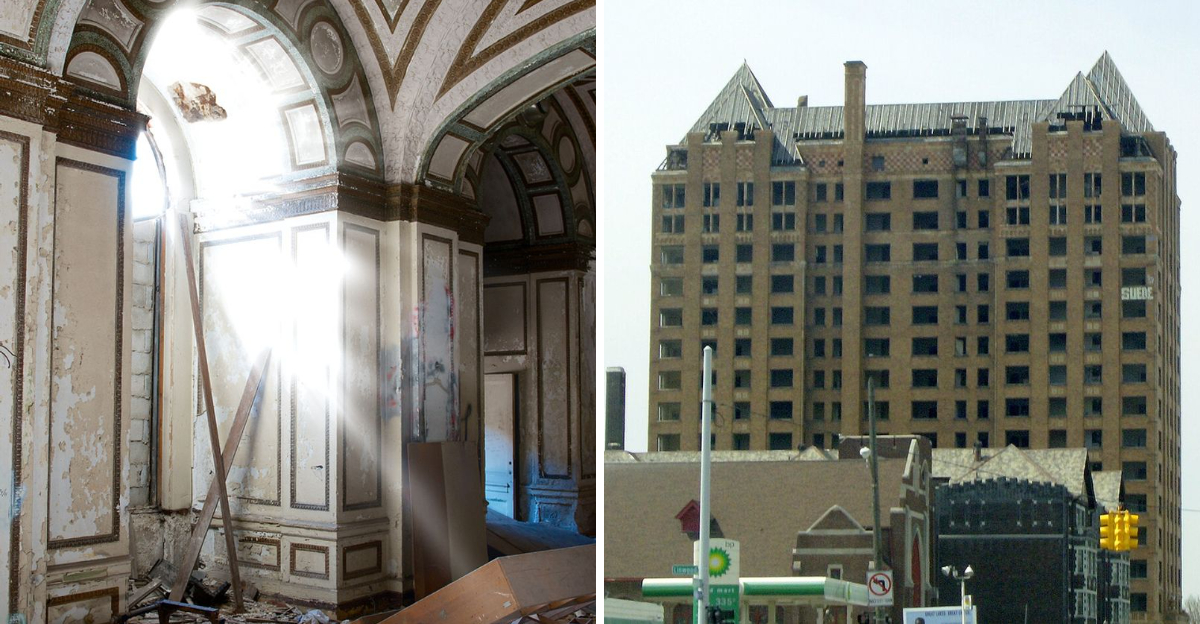
Detroit keeps secrets that reward curious travelers who love architecture and stories etched in stone and tile.
The Lee Plaza Hotel rises above West Grand Boulevard with a copper crown and terra cotta flourishes that whisper of jazz era brilliance.
You feel the pull of a place that shaped a skyline and still shapes imaginations across Michigan.
Each visit reveals new details in the brickwork, the lobby lines, and the city views that change with the light.
Stay with this guide and you will plan your return before you even leave.
A landmark on West Grand Boulevard

Lee Plaza Hotel stands at 2240 W Grand Blvd, Detroit, MI 48208, and the address alone has anchored countless Detroit stories since 1929.
The high rise silhouette carries orange brickwork and white terra cotta bands that catch sun and shadows with a confident rhythm.
From the sidewalk you sense how the tower holds its corner with old world poise that still feels cinematic and cool.
I like starting on the east side of the block where trees frame the vertical lines and help you feel the scale without losing the human touch.
Detroit history buffs point out the boulevard plan that connects neighborhoods and culture in a way that turns a simple walk into a gentle timeline.
Michigan travelers appreciate how the site places you near the heart of the city while staying outside the densest downtown rush.
The copper roof glints differently by hour, and early afternoon gives warm tones that make photos look balanced and honest.
You will notice how the fenestration patterns repeat in measured stacks that lead your eye upward with a steady pace.
Look closely at the terra cotta shields because they mix classical motifs with modern edges that feel uniquely Detroit.
There is a listed Google Maps place entry for The Lee Plaza that helps you confirm the exact pin for planning and timing.
I suggest mapping nearby bus routes and rideshare spots since parking options vary by day and event schedules.
The facade has seen seasons of change, yet the bones hold strong and readable for anyone who loves urban design.
Expect quiet moments rather than crowds, and let the boulevard breeze guide your loop around the footprint.
This corner rewards patience, good light, and a willingness to look twice at details that most pass without noticing.
By the time you circle back, the tower feels less distant and more like a neighbor you want to visit again.
Art deco character in living color
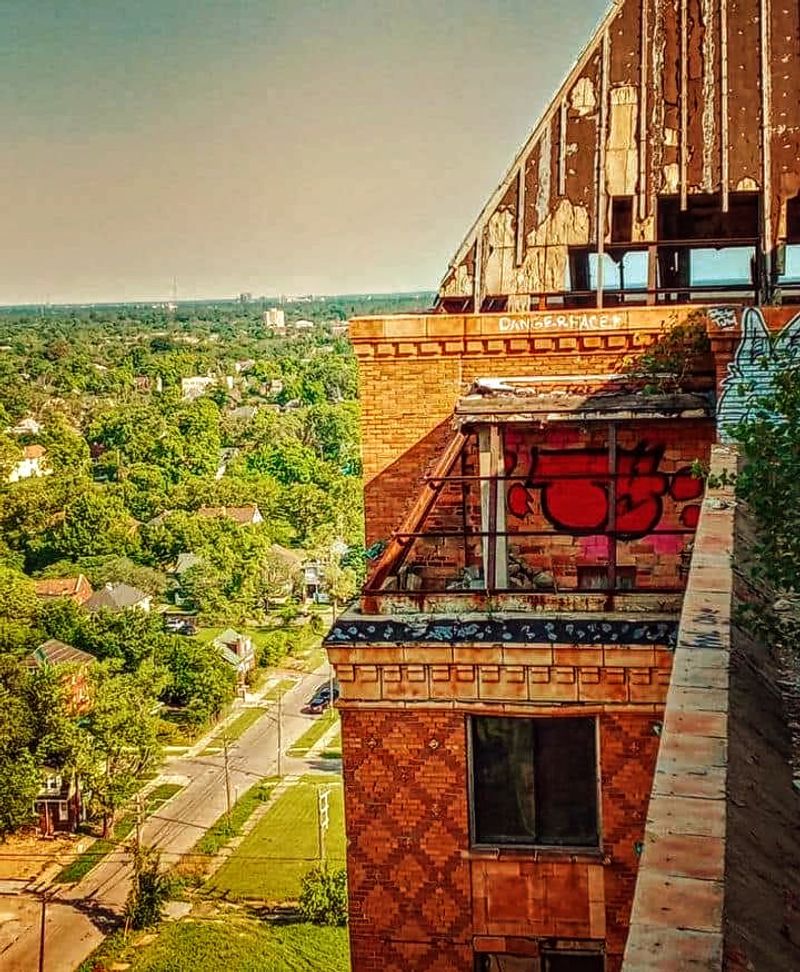
Art deco at Lee Plaza Hotel works in color, proportion, and relief, and you see it best by studying the terra cotta frames around windows.
The glazed pieces shift between cream and pale gray which sets a calm contrast against the warm brick grid.
Geometric bands form a visual cadence that carries your eye in steps as if you are hearing quiet music through stone.
I like to scan for chevrons and zigzags that soften into floral hints without losing their crisp modern stance.
These motifs fit Detroit because the city thrives on craft, machinery, and artistry living together in practical harmony.
Michigan architecture often balances industry and ornament, and this facade captures that balance with effortless confidence.
Weather adds patina that reads like chapters rather than damage when light falls evenly across the surfaces.
On cloudy days the colors calm down and reveal subtle glazing that bright sun can hide behind hard reflections.
You can frame tight photographs that highlight individual tiles and then widen to show how bands connect across floors.
Details at spandrels reward slow looking, which helps you understand how repetition builds a unified personality.
The copper crown at the top gives a final accent that anchors the vertical run like a closing note.
Stand near the boulevard trees to line up branches with ornament for a natural border in your shot.
The building does not shout, it converses, and every measured line feels considered and kind to the eye.
You will walk away with a deeper respect for the way decoration can serve structure without stealing attention.
Return at different hours to see how color tone shifts, because art deco here truly lives through changing light.
From grand opening to present day

The Lee Plaza Hotel opened in 1929 with apartments and hotel services that matched the energy of a growing Detroit.
Original amenities promoted convenience and style, placing residents within a gracious vertical community near major boulevards.
Economic shifts and population changes over decades altered the building’s fortunes and left visible marks on the property.
Researchers cite city records and preservation files that document ownership changes and periods of vacancy with sober clarity.
Through these cycles the exterior core retained enough integrity to keep the landmark identity intact for future work.
Community advocates and historians kept the story alive by leading tours, talks, and digital archives that invite participation.
Michigan preservation movements focus on reuse rather than replacement, and Lee Plaza often appears as a case study.
When you visit today you stand at a threshold between memory and renewal that feels both fragile and hopeful.
Documentation helps visitors separate confirmed facts from rumor, which is essential in respected urban exploration culture.
Local stories say musicians once filled upper floors with rehearsals, but those accounts remain unverified and should be treated as legend.
Public sources confirm the listing on maps and the address, while project timelines evolve with financing and approvals.
Photographers return over years because time itself becomes a subject that writes across brick and glass.
Every revisit shows what changed and what waited, which makes this site an ongoing narrative rather than a static relic.
I like to read city planning updates before walking over, since context explains why some steps take longer.
You leave appreciating how a building can mirror the fortunes of a city and still hold space for tomorrow.
Planning your visit with respect
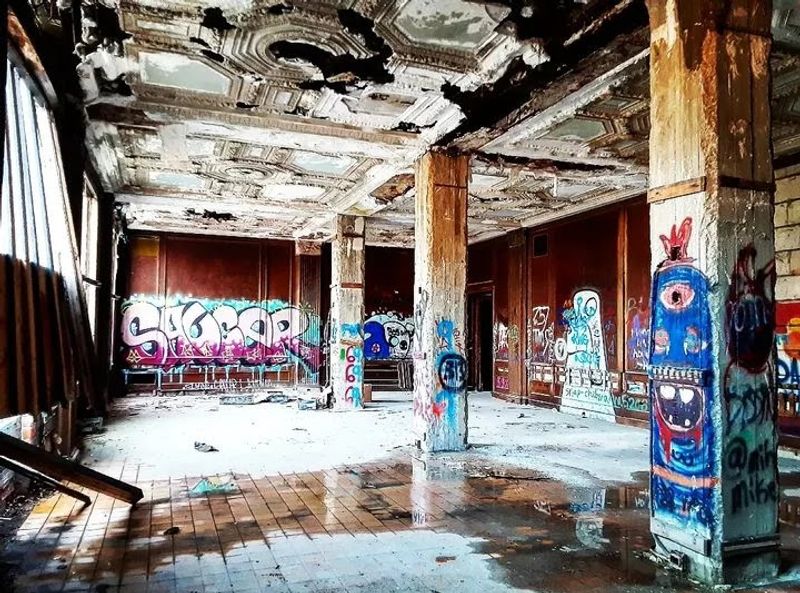
Before visiting Lee Plaza Hotel you should review current city guidelines, property notices, and any posted restrictions around the site.
Respectful distance matters because safety and private property rules protect both the building and curious visitors like you.
Sidewalk viewing and exterior photography from public rights of way typically offer ample angles without crossing boundaries.
I like to bring a simple lens and stand back so the composition includes trees, sky, and the full crown of the tower.
You can plan a daytime walk that pairs with nearby cultural sites to create a balanced Detroit itinerary.
Checking transit schedules makes the visit smoother and reduces stress around driving and parking on busy days.
Michigan weather shifts quickly, so carry layers and consider how wind channels along broad boulevards.
Morning light gives softer shadows on the east facade, while late day highlights texture on the west run.
Tripods may draw attention and are not always advisable, so handheld shots keep the visit simple and discreet.
Bring a small notebook and jot thoughts since real time impressions often capture better detail than memory alone.
Travel companions will enjoy a short loop around the block that reveals changing perspectives and skyline slices.
Keep conversations low and mindful if neighbors are present, because this is part of a living community.
Pack out any trash and leave the area cleaner than you found it to set a good tone.
Share images thoughtfully online and credit the location so others can learn and plan accordingly.
When you walk away you will feel connected to Detroit’s past while supporting a respectful future for the site.
Reading the skyline from the roofline
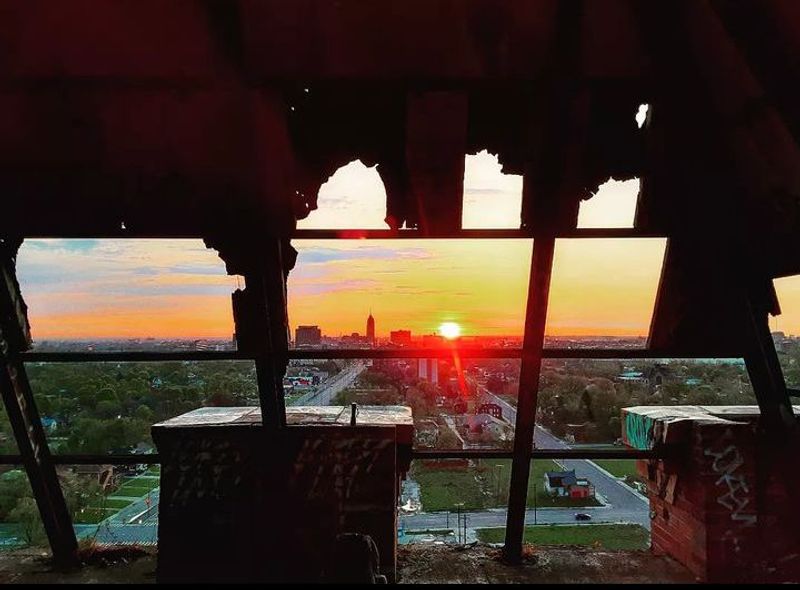
The copper roofline at Lee Plaza Hotel shapes the building’s identity by giving a strong cap that stands out across midtown views.
Oxidation has shifted tones toward warm browns and hints of green that photograph beautifully under even light.
The crown’s stepped profile echoes classic deco motifs and resolves the vertical push with a satisfying finish.
From West Grand Boulevard you can align the tower with distant landmarks to create layered compositions that feel cinematic.
I like to frame utility lines and trees as foreground texture because they add scale without cluttering the scene.
Telephoto lenses compress distance and make the roof read larger, while wider lenses help tell a street level story.
Michigan sunsets often paint soft pink bands that glide across the copper and make edges glow with quiet drama.
Cloudy days deliver gentle gradients that flatten harsh contrast and preserve detail in the metal seams.
You can test different heights by stepping up curbs or down drive slopes to adjust the crown against the sky.
Look for repeating finials that mark corners and tie visual rhythm to the grid of windows below.
The roofline sits like a signature and reminds you that architecture communicates even from long distances.
Street noise drops at certain hours, and that calm helps you concentrate on composing thoughtful images.
Photographers who return in multiple seasons collect a color diary that reveals how time writes across metal.
Consider long exposure at dusk from a safe public spot to capture motion blur in passing cars.
These small experiments turn a simple visit into a creative practice that builds confidence and joy.
Neighborhood context and calm walks
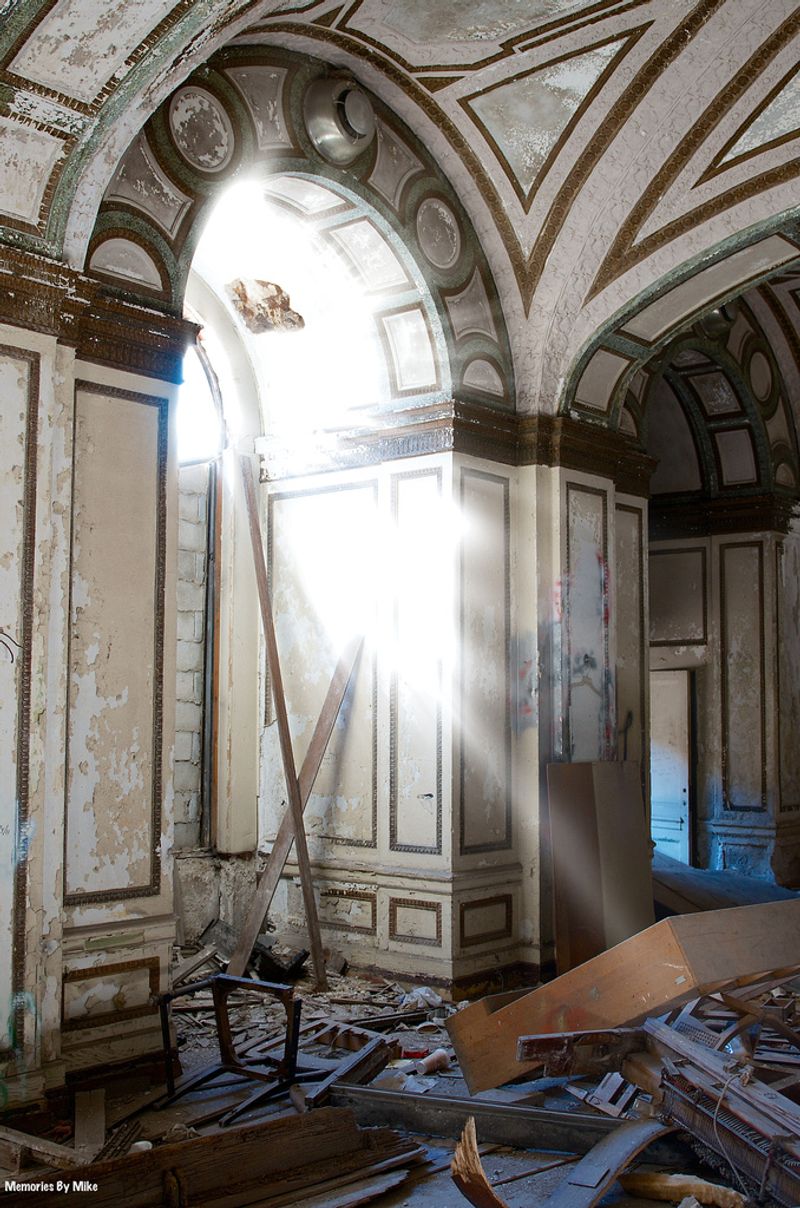
The area around Lee Plaza Hotel offers wide sidewalks and mature trees that make an easy loop for a short urban walk.
You notice how the boulevard design gives space between traffic and buildings so views breathe and feel relaxed.
Historic structures dot nearby blocks and help you imagine how the corridor once functioned as a vibrant address.
I like to pace slowly and watch the tower appear and disappear between branches like a scene change in a film.
Neighbors pass by with a calm rhythm that sets a friendly tone for an architectural stroll.
Michigan visitors who favor slower travel will appreciate how this walk invites observation rather than hurry.
Public benches are limited, so plan short rests at curb edges where sightlines remain open and safe.
Bring comfortable shoes since pavement shifts and curb cuts can surprise you without warning.
Listen for birds near landscaped strips because the mix of green and masonry creates gentle urban habitat.
The boulevard’s gentle curve gives a fresh angle on the tower every hundred feet, which keeps the loop engaging.
You can chart a path that returns you to the start without repeating views if you cross at safe corners.
Street lighting varies at night, so daytime visits usually provide better clarity for studying ornament.
Carry a small city map on your phone as service can fade near taller walls and mature trees.
Stay mindful of driveways and delivery zones since vehicles may turn quickly along longer blocks.
This neighborhood walk pairs well with a second visit, because each pass reveals different textures and moods.
Photography tips for respectful explorers
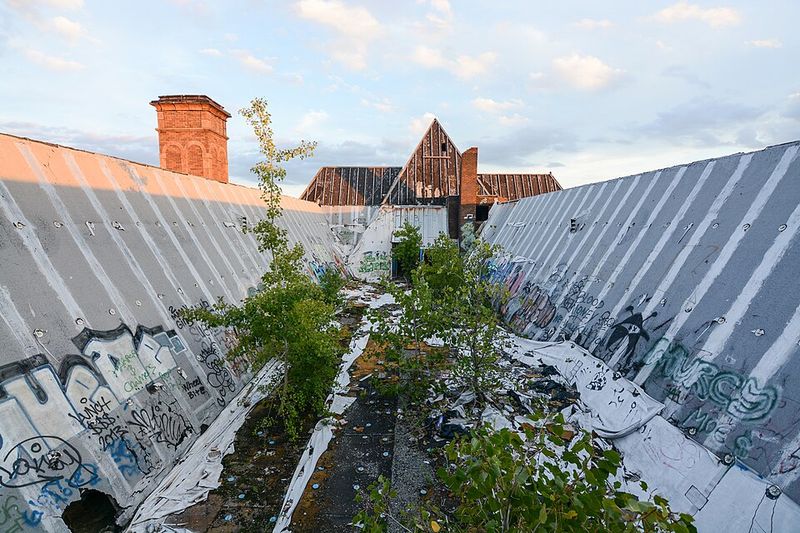
Good photos of Lee Plaza Hotel begin with patience and a steady stance on public sidewalks that respect property boundaries.
Scout corner positions first because intersections deliver cleaner angles and fewer obstructions from parked cars.
Overcast skies act like a giant softbox that lifts detail in brick, terra cotta, and copper highlights.
I keep ISO low and shutter moderate to balance sharpness with natural light while avoiding motion blur.
Polarizers can deepen sky tones, but be gentle since strong filtration may darken windows unevenly.
Michigan skies change quickly, so bracket exposures if clouds move fast and shadows swing across the facade.
Short focal lengths help capture height without heavy distortion when you keep the camera level and crop later.
Step back to include street trees for framing that feels grounded and invites the viewer into the scene.
Reflections in nearby glass can offer creative layers if you align the crown with a subtle mirror effect.
Work in short bursts to avoid drawing attention and to maintain a respectful footprint on busy days.
Consider a minimalist approach by isolating ornament bands that tell the story without wide context.
Handheld panorama stitches can map the whole facade while keeping lines straight with careful overlap.
Golden hour adds warmth, yet midday clarity can be perfect for documentary details and clean records.
Share locations responsibly and avoid encouraging risky behavior by emphasizing safe and legal vantage points.
These habits help you make images you love while honoring the community that lives around the landmark.
What is confirmed and what is legend
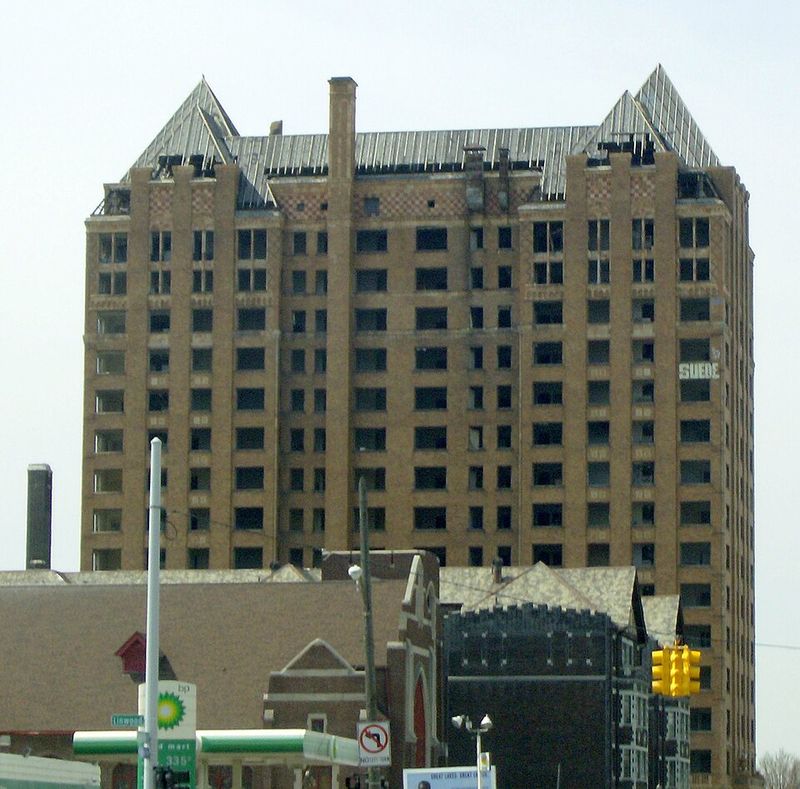
Public records confirm the building name, the address at 2240 W Grand Blvd, Detroit, MI 48208, and its historic significance in the city.
Historic photos and newspaper clippings document opening era elegance and a mix of apartment hotel services.
Preservation listings describe architectural materials, general timelines, and community interest in future reuse.
Claims about celebrity residents or secret performances appear online, but many remain unverified and should be labeled as legend.
Responsible storytelling separates well sourced facts from fun tales that add color without pretending to be proof.
I enjoy hearing local lore and still prefer to cross check anything that sounds too perfect or cinematic.
Michigan history circles often publish careful notes that help readers evaluate sources and track changes over time.
When you share photos or impressions, include the word legend for any anecdote that lacks clear documentation.
This simple habit protects the site’s story from drift and keeps the focus on what can be confirmed.
Look for municipal archives, preservation nonprofits, and library collections that provide PDFs or scanned records.
Peer reviewed sources are rare for local history, so triangulating multiple credible references is your best bet.
Tour guides sometimes use disclaimers that flag folklore politely while keeping the mood enjoyable and curious.
Visitors will appreciate a truthful tone that celebrates mystery without overstating claims or inventing drama.
The line between myth and memory can be thin, and gentle clarity builds trust within the community.
Treat this place like a shared archive where honesty preserves wonder for those who come next.
Access, safety, and current status
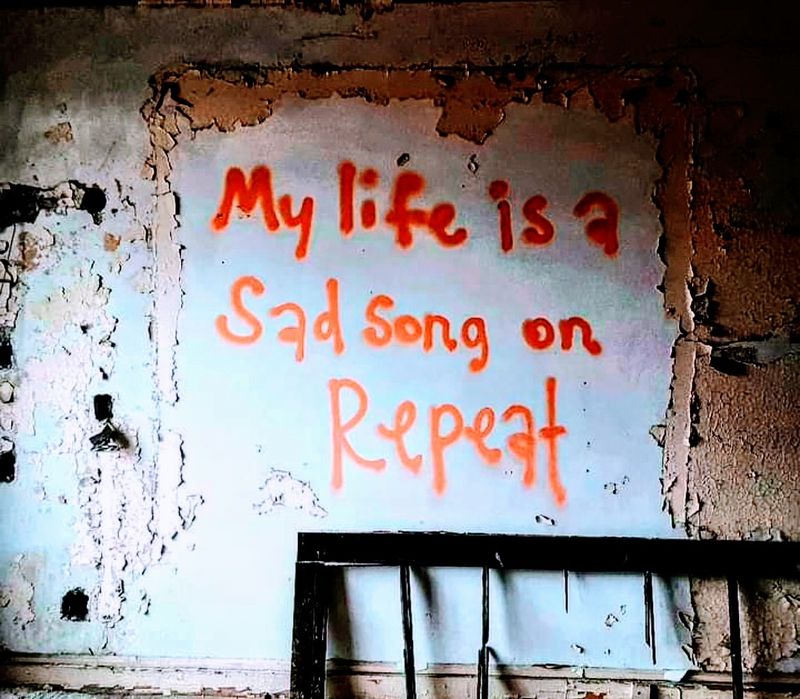
Current conditions can change, so always check local information before you plan time at the Lee Plaza Hotel site.
Exterior viewing from public areas is the safe and respectful approach for most casual visitors and photographers.
Any posted signage should be followed closely because rules protect both people and the property from harm.
I do not enter closed buildings and recommend that you keep your experience strictly on sidewalks and legal spaces.
Neighbors and passersby deserve courtesy and calm behavior, which sets a helpful tone for everyone in the area.
Michigan seasons bring ice, rain, and heat, so footwear with grip helps you move with confidence around curbs.
If construction activity begins, expect changes to routes, barriers, and vantage points that alter familiar views.
Public sources sometimes announce milestones that signal preservation and adaptation steps along a longer timeline.
Carry a charged phone and let someone know your route if you plan a solo photo walk.
Light during midday can feel stark, but it improves visibility for navigating uneven surfaces near corners.
Bring only what you need to reduce distractions and keep hands free for quick adjustments to camera or map.
Simple kindness goes far, and a friendly wave can ease potential misunderstandings during short stops.
You can leave quietly when you are done, knowing you honored the building and the community that surrounds it.
Small rituals like this create a culture of care that supports long term stewardship of beloved places.
Return visits will likely reveal progress, and that unfolding story is worth witnessing with patience and hope.
Dear Reader: This page may contain affiliate links which may earn a commission if you click through and make a purchase. Our independent journalism is not influenced by any advertiser or commercial initiative unless it is clearly marked as sponsored content. As travel products change, please be sure to reconfirm all details and stay up to date with current events to ensure a safe and successful trip.
