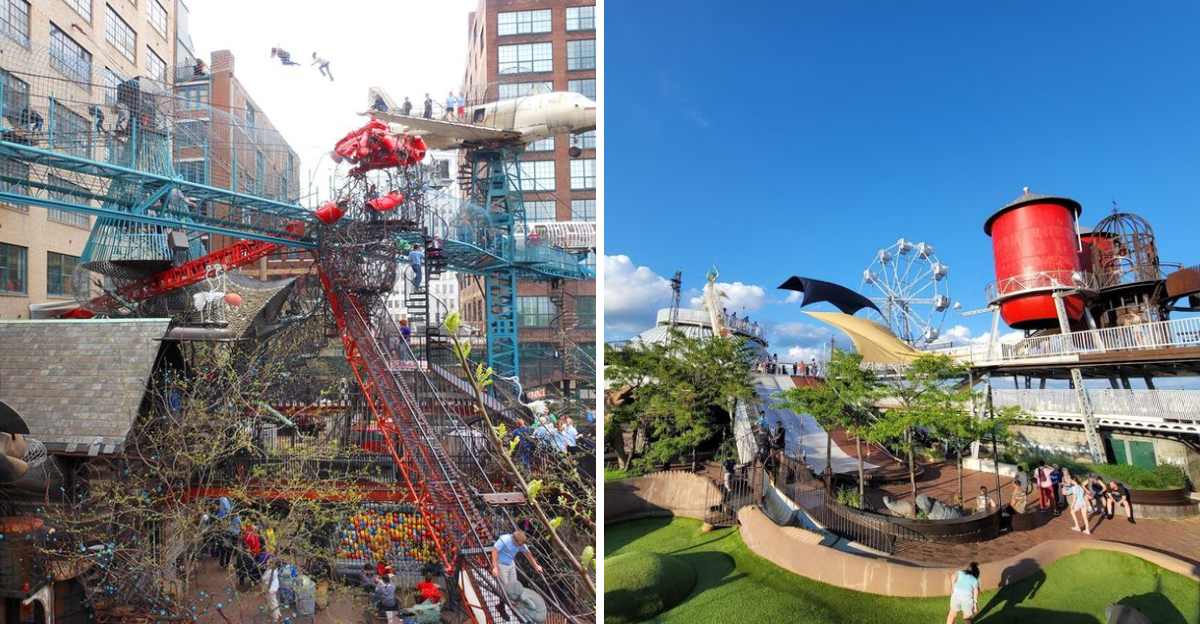
What even is this place? That question will pop into your head about twelve times during your first visit. Missouri has a museum that refuses to behave like a museum.
Quiet galleries? None here. Roped off exhibits? Not a chance. Security guards shushing you for breathing too loud? Absolutely not. Instead, caves made of rebar wait to be explored.
Tunnels twist into unexpected darkness. Slides drop you into places you didn’t know existed. Then comes the Labyrinth. This sprawling, disorienting, low light puzzle of a space feels like Tim Burton designed it after a very strange dream.
During fright events, things get even weirder. Creatures lurk around corners. The maze turns haunted. Adults giggle like kids while children shriek with pure delight.
St. Louis did something completely unhinged with this place, yet somehow it works perfectly. Missouri’s strangest attraction is also its most brilliant.
The Labyrinth: A Maze Built to Disorient You in the Best Way
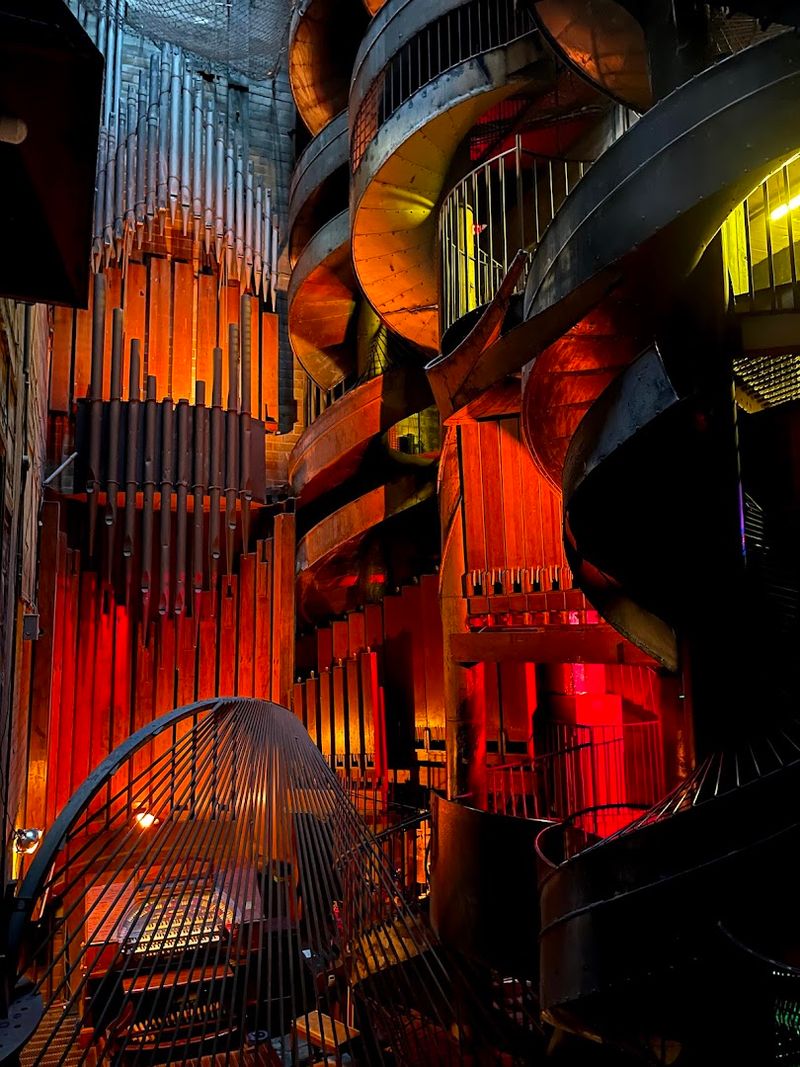
Most mazes you walk through in five minutes and feel mildly entertained. The Labyrinth at City Museum in St. Louis, Missouri is a completely different beast.
Built from reclaimed materials and industrial salvage, this section of the museum feels like wandering inside someone’s fever dream made physical. Narrow passages twist into unexpected chambers.
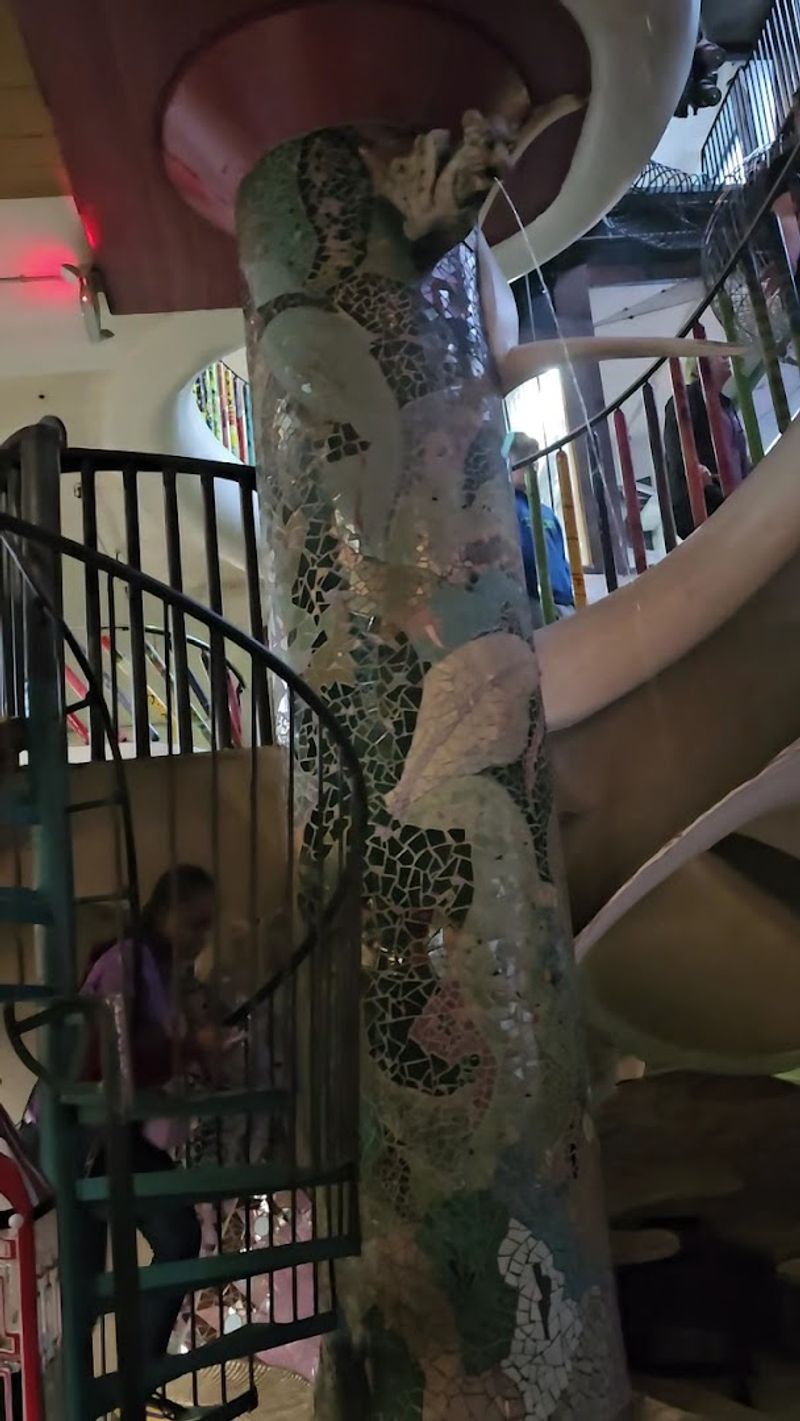
Walls covered in mosaic tile and welded metal close in just enough to keep your pulse elevated.
What makes it genuinely special is how organic the layout feels. Nothing seems planned in a straight line, and that is entirely the point.
You might enter thinking you have a sense of direction, and exit three floors away from where you started.
Missouri is full of surprising attractions, but few demand this kind of full-body engagement. The Labyrinth requires crawling, climbing, and squeezing through gaps that make you question your life choices in the most entertaining way possible.
Knee pads are genuinely recommended here, not as a joke but as practical gear. The experience rewards the bold and the curious in equal measure, and it keeps evolving as new sections are added over time.
The Origin Story Behind This Gloriously Weird Attraction
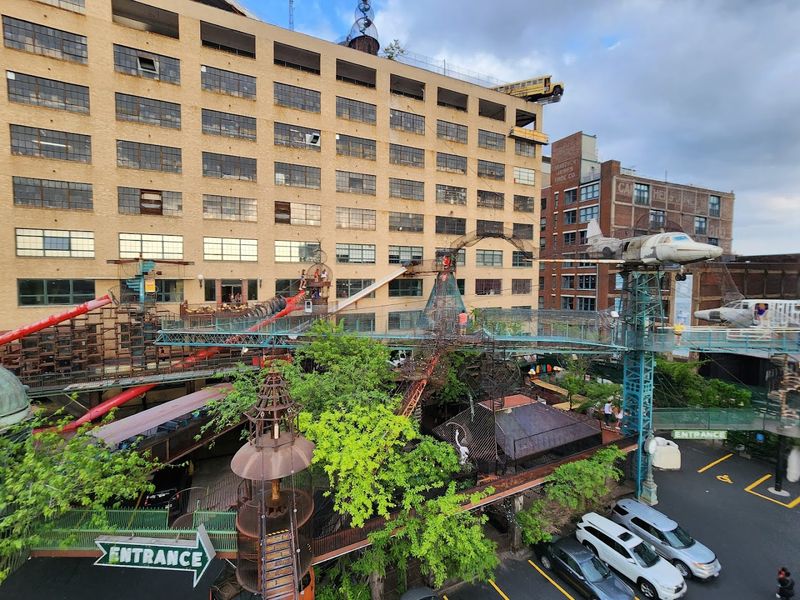
City Museum was created by the late artist Bob Cassily, whose vision was to turn an enormous former shoe factory into a living, breathing work of art. The building itself became the canvas.
Every surface, corner, and corridor was reimagined using salvaged architectural pieces, reclaimed tile, surplus materials, and industrial scraps sourced from across the region. Missouri has no shortage of creative institutions, but nothing quite matches the ambition of what was built here.
The Labyrinth grew out of that same philosophy. Rather than designing a clean, predictable attraction, the creators leaned into confusion and wonder as design principles.
The result is a space that feels handcrafted rather than manufactured, strange rather than sterile.
Knowing the history makes the experience richer. You are not just crawling through tunnels for fun, though that is absolutely part of it.
You are moving through layers of intentional artistic decision-making that span decades of construction and creative evolution.
The Fright Events layer seasonal programming on top of this foundation, transforming familiar corridors into something darker and more theatrical. St. Louis has embraced this place as a true cultural landmark, and it earns that status every single day.
Fright Events Transform the Space Into Something Genuinely Unsettling
When the Fright Events take over City Museum, the already atmospheric Labyrinth shifts into something that feels genuinely theatrical and unsettling in the most exciting way.
Seasonal programming, particularly around Halloween, layers dramatic lighting, eerie sound design, and themed installations over the existing architecture. The industrial bones of the old shoe factory suddenly look less like art history and more like the set of a dark fantasy film.
Missouri does not lack for Halloween events, but few have a built-in environment this naturally suited to the mood.
What separates the Fright Events from typical haunted attractions is the setting itself. You are not walking through a temporary pop-up built from plywood and fog machines.
You are navigating a permanent labyrinth that was already disorienting before anyone added atmospheric lighting and shadowy corners.
The combination is surprisingly effective. Familiar tunnels feel longer.
Familiar chambers feel smaller. The whole experience clicks into a different gear that keeps adults as engaged as younger visitors.
Planning ahead is smart here since these events draw larger crowds and specific time slots can fill quickly. Arriving early gives you the best chance to move through at your own pace without feeling rushed by the crowd behind you.
The Architecture of the Space Does Half the Work for You
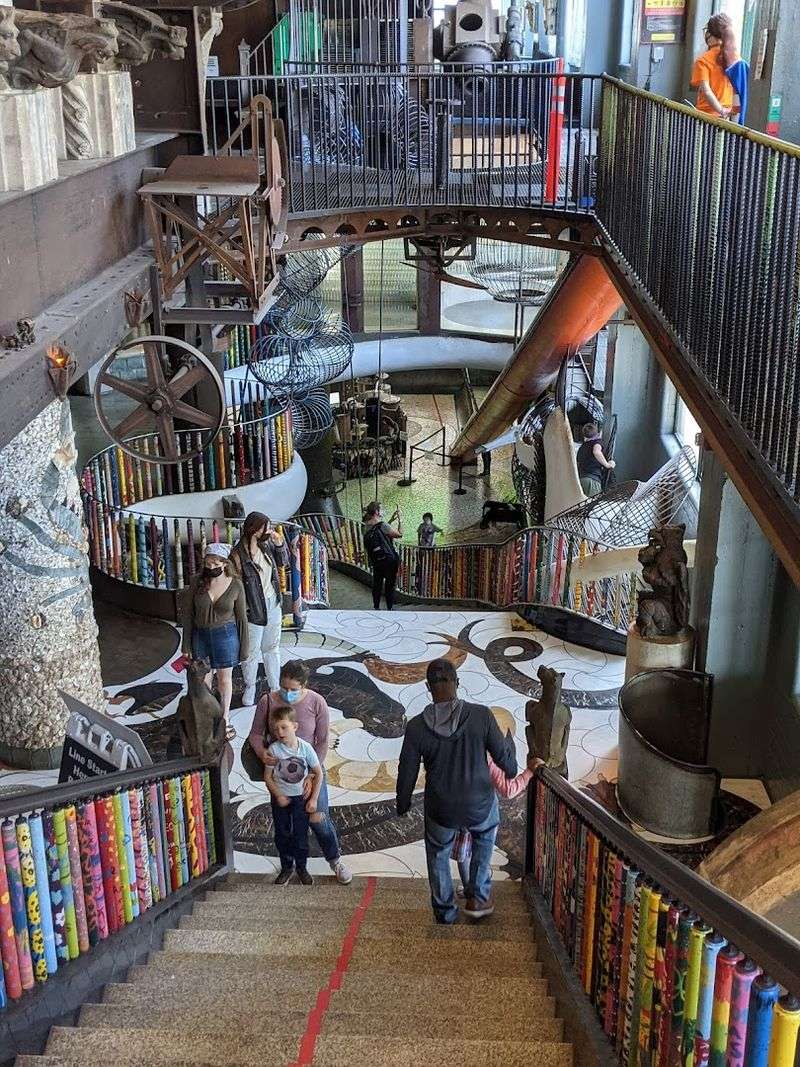
One thing that hits you almost immediately is how intentional the chaos feels. Every surface inside City Museum tells a story made from salvaged architectural fragments pulled from buildings across the Midwest and beyond.
Glass bottles pressed into walls catch light in unexpected ways. Reclaimed tile forms patterns that seem random until you step back and see the larger design.
Structural beams and industrial hardware become sculptural elements rather than hidden infrastructure.
The Labyrinth section amplifies all of this. Because the passages are narrow and the lighting is deliberately low in certain areas, your eyes are forced to slow down and actually look at what surrounds you.
Missouri architecture has a rich industrial history, and City Museum channels that history into something tactile and immersive.
Even the floor beneath you becomes part of the experience. Different sections use different materials, and the transition from one surface to another signals a shift in the environment around you.
This level of environmental storytelling is rare in any attraction, let alone one that also functions as a physical playground. The architecture does not just frame the experience; it is the experience, and that distinction makes every visit feel genuinely different from the last.
What to Wear and Bring Before You Enter the Labyrinth
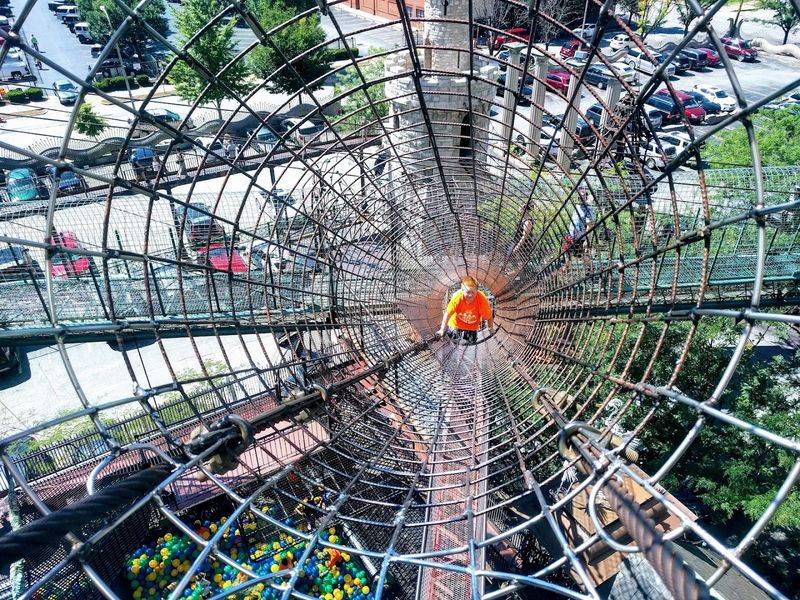
Showing up unprepared at the Labyrinth is a fast way to have a less enjoyable time. The dress code here is entirely practical, and ignoring it will make itself known within the first ten minutes.
Closed-toe shoes with solid grip are non-negotiable. The surfaces inside range from smooth tile to textured metal grating, and anything less than a proper athletic shoe will leave you sliding in places where you absolutely do not want to slide.
Dress clothes are a firmly bad idea.
Knee pads have become something of a legendary recommendation among people who have explored City Museum in St. Louis, Missouri. The crawling sections in the Labyrinth are real, they are frequent, and bare knees on metal and concrete get uncomfortable faster than you expect.
A small headlamp or clip-on light is also worth packing. Certain tunnels are dark enough that having your own light source changes the experience from mildly anxious to genuinely fun.
Missouri summers also mean the interior can get warm, so lightweight, breathable clothing keeps you comfortable throughout a long visit.
Lockers are available inside, which makes it easy to store anything you do not want to carry through tight passages. Traveling light through the Labyrinth is always the smarter strategy.
The Rooftop Adds a Whole New Dimension to the Experience
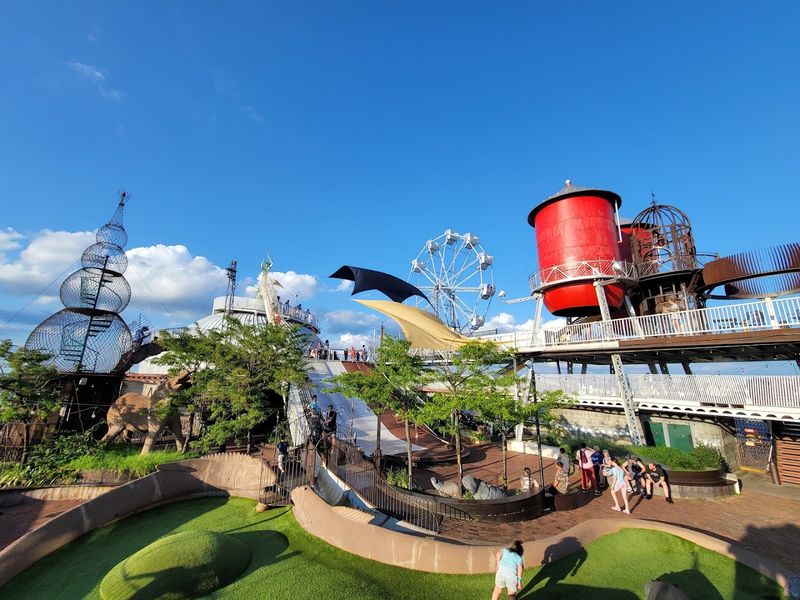
After navigating the Labyrinth, stepping out onto the rooftop of City Museum feels like breaking the surface after a long swim. The contrast is immediate and genuinely refreshing.
Up here, a full-size school bus hangs dramatically over the roof’s edge, which is exactly as attention-grabbing as it sounds. A Ferris wheel turns slowly against the St. Louis skyline.
Additional climbing structures extend upward, offering views that reward anyone willing to keep going higher.
The rooftop access comes with an additional cost beyond the standard admission, but for the view alone it is worth serious consideration. Missouri does not have many vantage points quite like this one, where industrial art and urban landscape merge into something genuinely striking.
On a clear day, the perspective from the top of the structure is memorable enough to make the extra effort worthwhile. The outdoor air also provides a welcome break from the enclosed, atmospheric intensity of the Labyrinth below.
Timing matters up here. Visiting the rooftop earlier in the day before crowds build means more room to move and better light for taking in the surroundings.
The transition from underground tunnels to open sky above the city is one of the more unexpected pleasures this whole attraction delivers.
The Slides Hidden Inside the Labyrinth Are a Serious Highlight
Somewhere inside the Labyrinth, if you navigate far enough and pay attention to the right details, you will find slides that reward the effort of getting there with genuine speed and surprise.
One particular slide tucked inside the maze section is notably fast, which catches most people off guard given how much effort it took to locate it in the first place. The payoff is satisfying in a way that feels earned rather than handed to you.
City Museum in St. Louis, Missouri takes a deliberate approach to hiding its best moments. The philosophy seems to be that discovery should require some investment, and the slides buried inside the Labyrinth are a perfect expression of that idea.
You cannot stumble onto them accidentally; you have to commit to the exploration.
Multi-story slides exist elsewhere in the building as well, with some reaching impressive heights before depositing you on a completely different floor from where you expected to land. The disorientation is part of the charm.
Missouri has plenty of water parks and conventional slide attractions, but nothing replicates the specific satisfaction of finding a fast slide at the end of a dark maze you were not entirely sure you could navigate. That combination is genuinely hard to manufacture anywhere else.
MonstroCity Looms Outside and Demands Your Attention
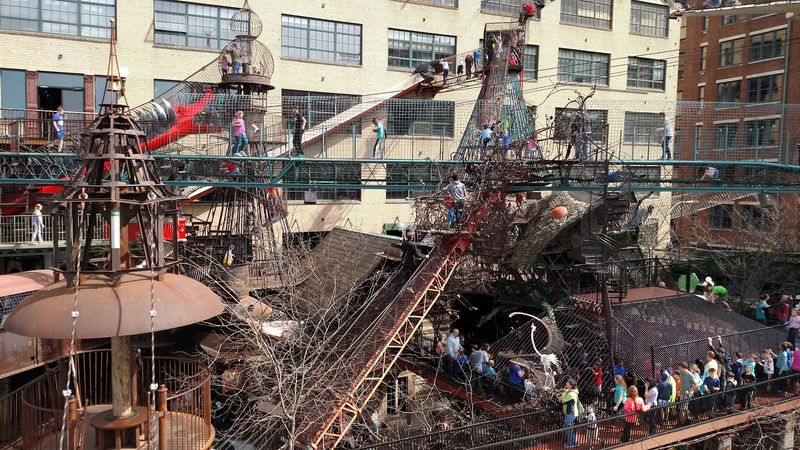
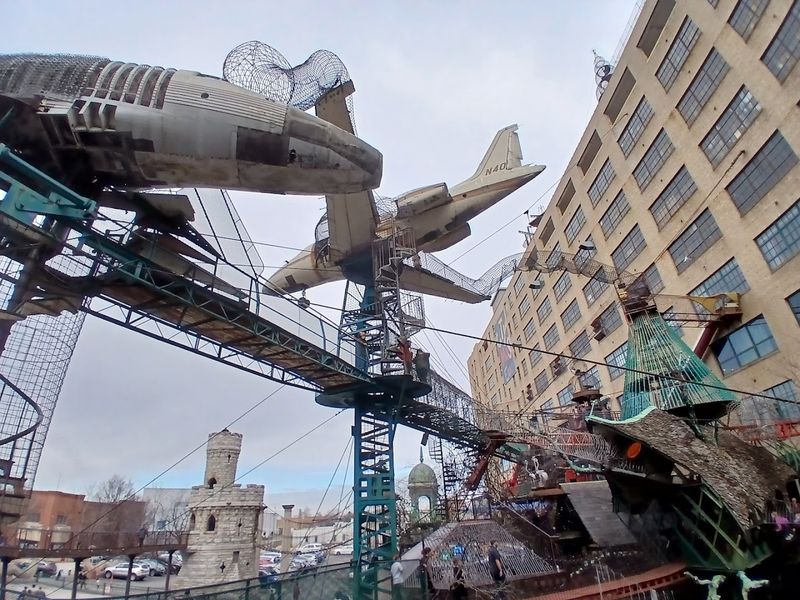
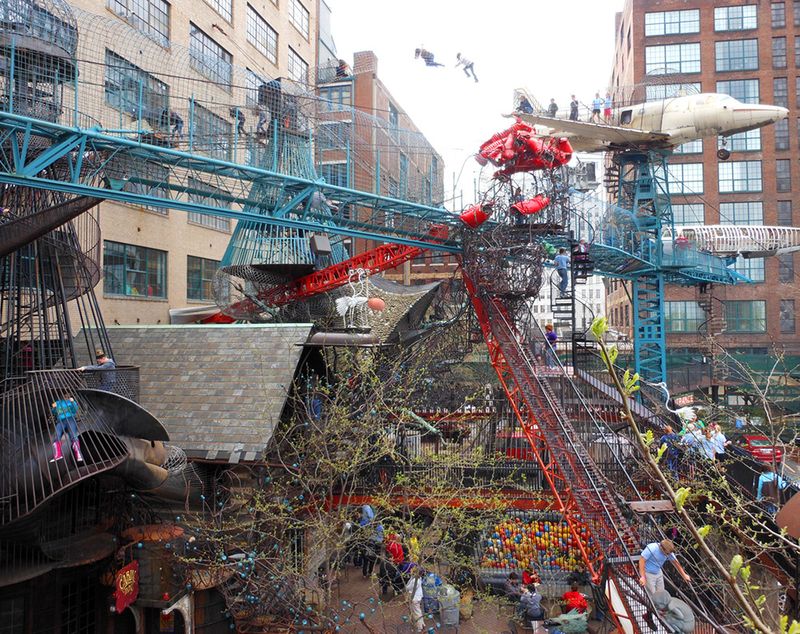
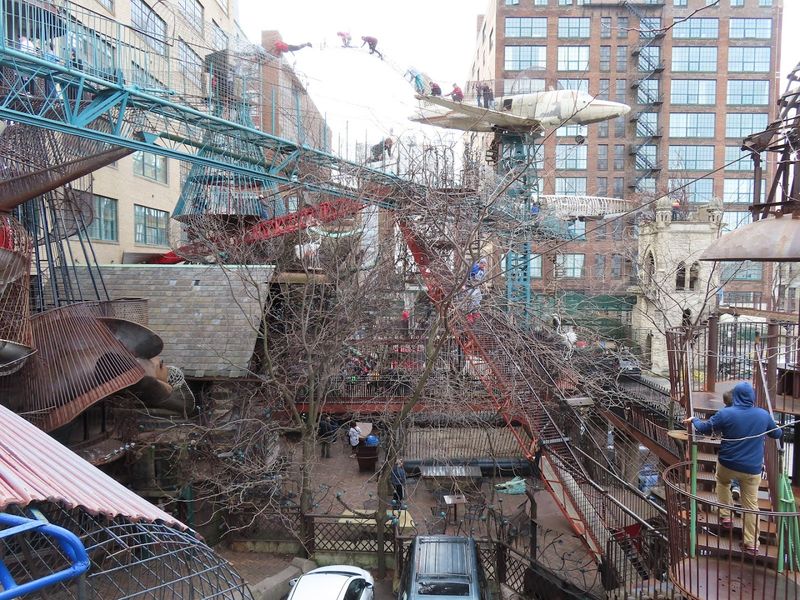
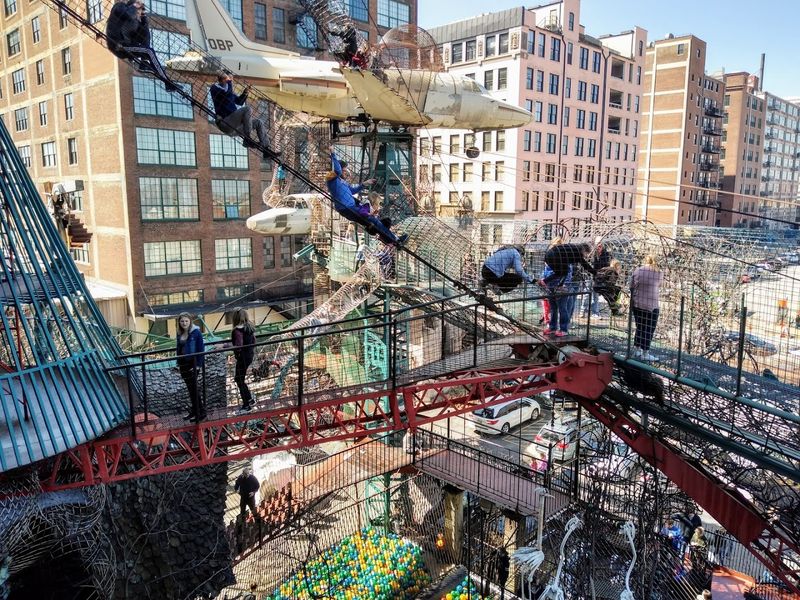
Before or after the Labyrinth, the outdoor structure known as MonstroCity commands attention from the moment you see it rising several stories above the surrounding area.
Airplane fuselages, repurposed construction cranes, and networks of interconnected tunnels form a climbing structure that looks like it was assembled by someone with unlimited creativity and an enormous salvage yard.
It towers above the street level in a way that makes you stop and genuinely reconsider your physical confidence.
The Missouri sky framed through the gaps in MonstroCity’s structure creates a visual effect that photographs cannot quite capture. You have to be inside it, gripping a metal rung while the wind moves through an old fuselage above you, to understand why people describe this place the way they do.
Height is a real factor here. The upper sections of MonstroCity are not for anyone with a serious aversion to elevation, and the structures move slightly underfoot in ways that remind you this is not a conventional playground.
That slight unpredictability is exactly what makes it compelling.
Coming back inside after MonstroCity and descending into the Labyrinth creates a dramatic shift in atmosphere that feels almost theatrical. Going from open sky to underground tunnels in the span of a few minutes is one of City Museum’s most effective contrasts.
The Circus Performances Add Unexpected Theater to the Visit
Somewhere between navigating the Labyrinth and recovering your sense of direction, City Museum occasionally offers live circus performances that are far more substantial than the name might suggest.
These are not brief five-minute demonstrations. Full two-act shows performed by young artists trained in aerial and acrobatic disciplines run considerably longer than most visitors expect, and the quality reflects genuine dedication to the craft.
The industrial interior of the building serves as an atmospheric performance space that no conventional theater could replicate.
Missouri has a strong tradition of arts programming, and the circus element at City Museum fits naturally into that broader cultural context. Watching performers work in a space made from reclaimed materials and architectural salvage adds a layer of visual interest that a traditional stage simply cannot provide.
The performances are live, which means imperfections happen and the audience responds with genuine warmth rather than disappointment. There is something refreshing about watching skill develop in real time rather than observing a polished product designed to look effortless.
Checking the schedule before your visit is worthwhile if the circus is something you want to include. The timing does not always align with every visit, but when it does, it adds a completely different dimension to an already layered experience that most people do not anticipate finding here.
Planning Your Visit to Make the Most of Every Section
City Museum in St. Louis, Missouri rewards planning more than most attractions. Arriving without a loose strategy means you will almost certainly miss significant sections, including the Labyrinth, which is easy to overlook if you get absorbed in the main floor.
The building spans multiple floors, and the layout is deliberately non-linear. A map is available on the third floor, which is useful context but does not fully prepare you for how the space actually flows.
Budget at least four to five hours for a thorough visit, and more if the Fright Events are running during your trip.
Weekday mornings tend to be less crowded than weekend afternoons, which matters inside the Labyrinth specifically. Narrower passages become significantly less enjoyable when traffic builds up in both directions.
Missouri weekends draw larger family groups, so arriving when the doors open gives you the best experience in the tighter sections.
The museum offers staggered ticket tiers, with rooftop access priced separately from standard admission. Deciding in advance which areas you want to prioritize helps you make the right choice at the door rather than second-guessing yourself mid-visit.
Grabbing food inside is convenient and practical. The pizza available on-site is solid enough to keep energy levels up for another round of climbing without needing to leave the building.
The Aquarium and Animal Exhibits Offer a Calmer Counterpoint
After the intensity of the Labyrinth, the aquarium and animal exhibit areas inside City Museum provide a genuinely welcome change of pace that most people do not anticipate when they first walk in.
Touch pools where fish interact directly with visitors are a particular highlight.
The experience of placing your hand in the water and feeling small fish respond is memorable in a completely different way from crawling through dark tunnels, and the contrast between the two experiences within the same building is part of what makes City Museum so hard to categorize.
Missouri has strong natural history programming across the state, but the way City Museum integrates living exhibits into an art environment creates something that feels genuinely unusual. The aquariums sit alongside mosaic walls and welded metal sculptures, and somehow the combination works.
These areas are also more accessible for visitors who find the physical demands of the Labyrinth challenging.
Not every part of this building requires crawling on hands and knees, and the animal exhibits remind you that the museum has always been designed to offer something for different kinds of curiosity.
Spending time here before heading back into the maze sections also serves as a useful reset. The quieter atmosphere and natural light in some of these areas help recalibrate your senses before the next round of deliberate disorientation.
Why the Labyrinth Keeps Drawing People Back to St. Louis
The most telling sign that the Labyrinth at City Museum works as an attraction is how consistently people return to it. A single visit is genuinely not enough to see everything, and most people who spend a full day here leave with a specific list of things they want to try next time.
Part of that pull comes from the fact that the space continues to evolve. New sections are added, existing passages are modified, and the Fright Events layer seasonal changes over the permanent architecture.
Missouri residents who visit multiple times across different seasons describe meaningfully different experiences each time, which is unusual for a fixed physical location.
The Labyrinth specifically benefits from this ongoing development. What began as a maze-like section of the building is growing into something more deliberately constructed, with new elements added as the creative vision expands.
Returning visitors get to see that evolution in real time.
There is also something about the physical nature of the experience that stays with you longer than a conventional museum visit. Your body remembers crawling through a tight passage and emerging somewhere unexpected in a way that a display case never quite replicates.
St. Louis has built a genuine cultural identity around City Museum, and the Labyrinth sits at the heart of what makes this Missouri institution unlike anything else in the country.
