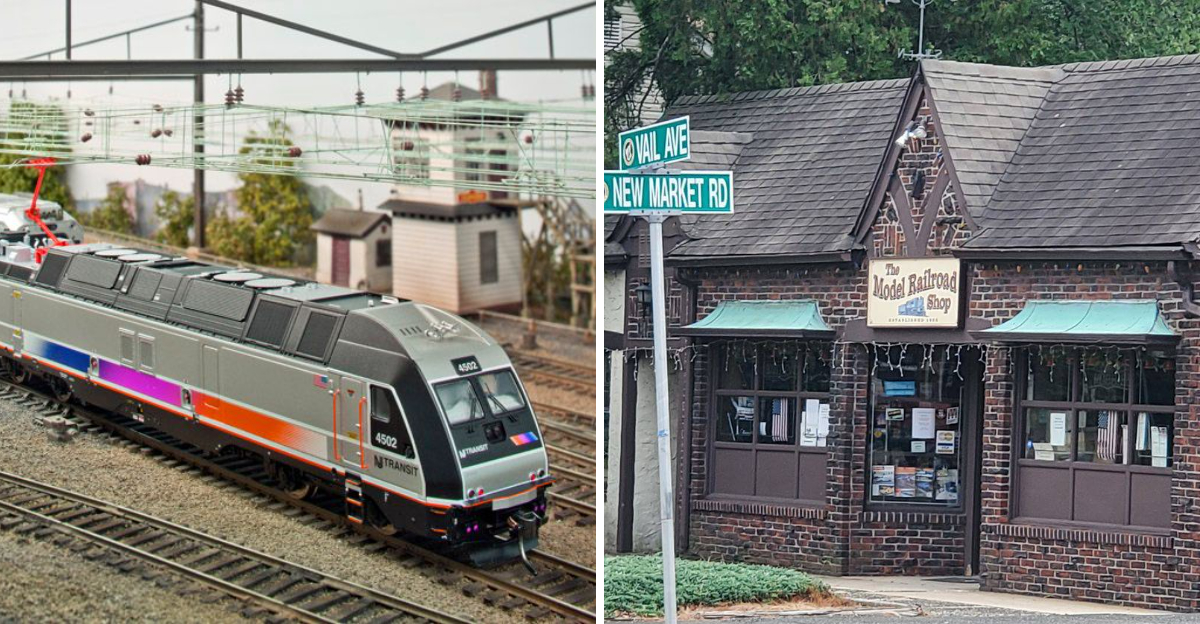
You walk in for one little train car and walk out two hours later with a starter set, a book, and a sudden urge to build an entire miniature world in your basement.
That is the power of this New Jersey hobby shop.
It has been running since 1933, making it one of the oldest model train shops in the country.
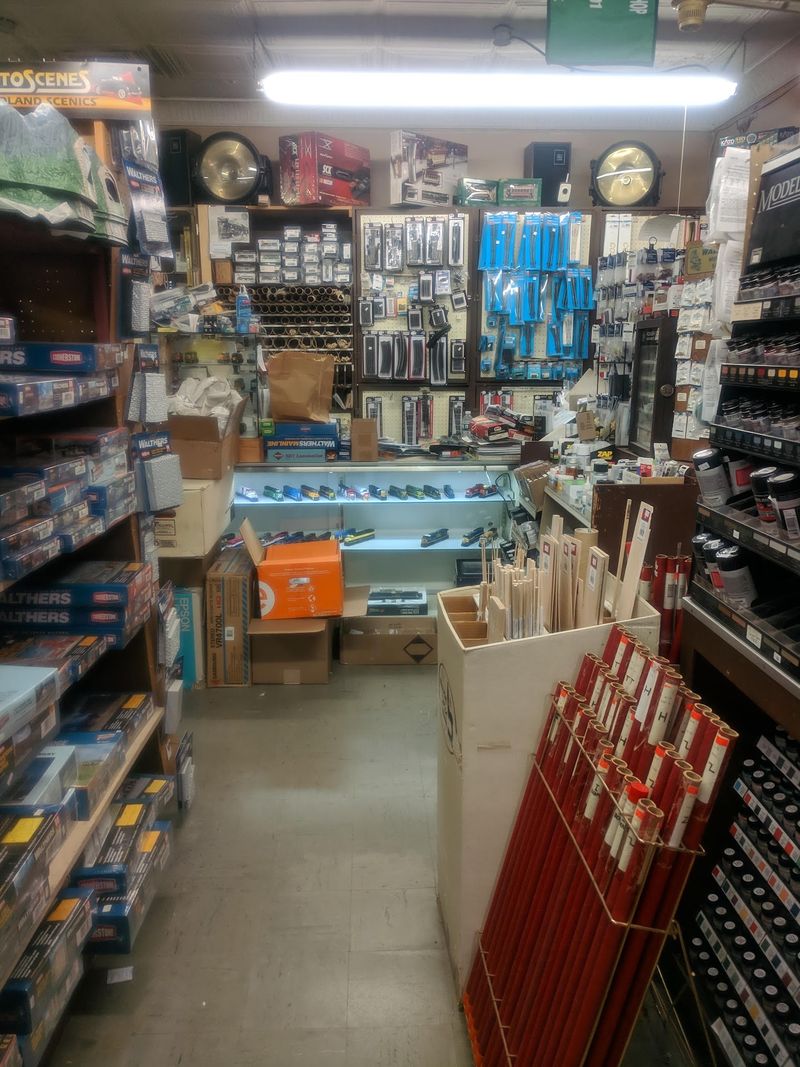
The shelves are packed with N, HO, S, and O scale trains, plus accessories, tools, and an entire section of new and used books.
They even offer repair services and custom painting. The staff knows their stuff, and the regulars have been coming back for decades.
It is the kind of place where time disappears and train dreams are born. You will lose an entire afternoon without even noticing.
And you will love every second.
Nearly A Century Of Keeping The Tracks Rolling
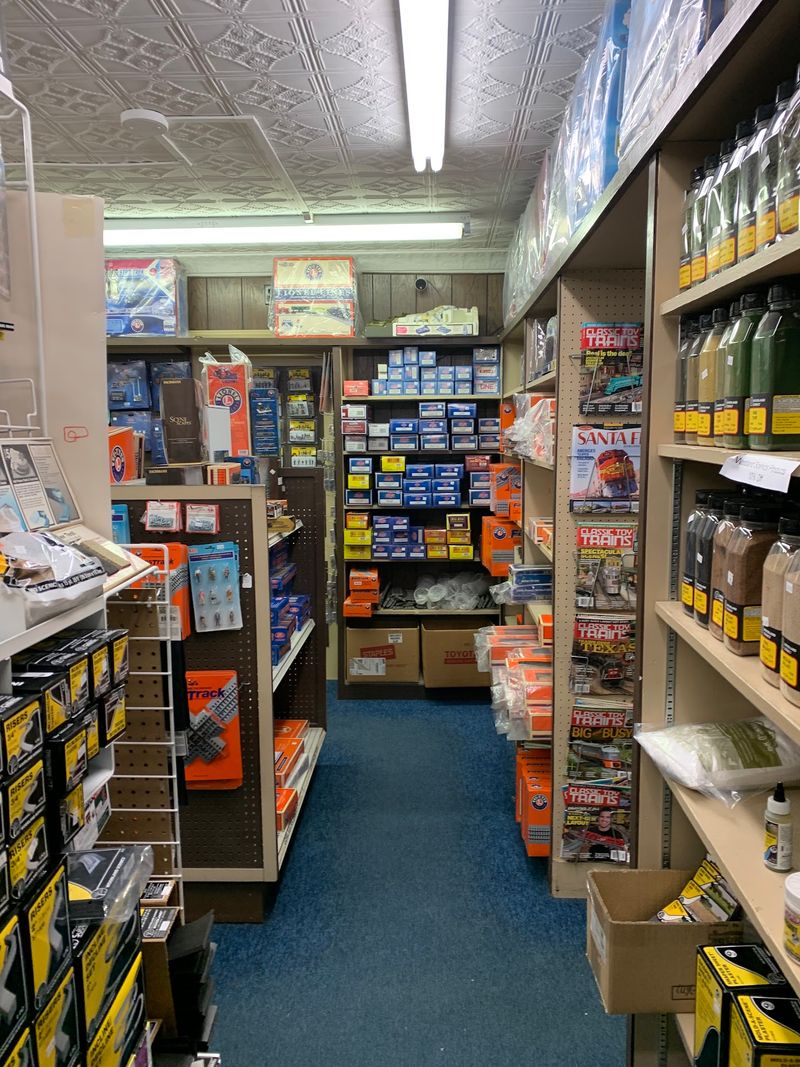
Longevity is rare in retail, and this shop has it in unusual amounts. Records point to its beginnings back in 1933, which means generations of families have walked through the same doors chasing the same small obsession.
That history shows in the little things. The building feels lived-in rather than styled, with display cases that have clearly been rearranged a thousand times and shelving packed with the kind of inventory only decades of collecting can build.
The Model Railroad Shop has stayed family run for its entire life, which explains why nothing here feels corporate or rehearsed. There are no glossy signs telling you where to look, just handwritten organization and a layout you learn by wandering.
What strikes me most is how the place seems unbothered by trends. It sells what hobbyists actually need, keeps older systems supported, and lets the merchandise do the talking.
For anyone who grew up with a train under the tree, the atmosphere lands somewhere between a shop and a time capsule.
Every Scale You Can Think Of, Under One Roof
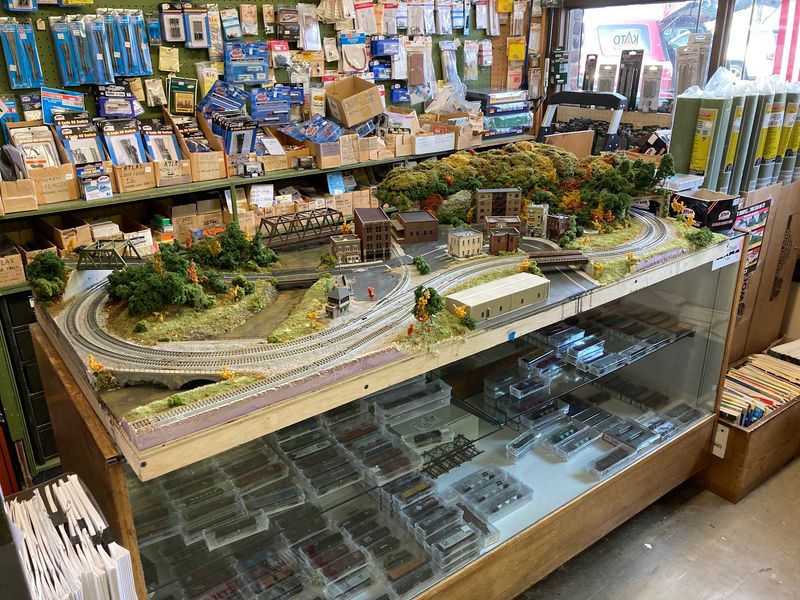
Ask three model railroaders what scale they run, and you’ll get three different answers plus a debate. This shop sidesteps the argument by stocking nearly all of them.
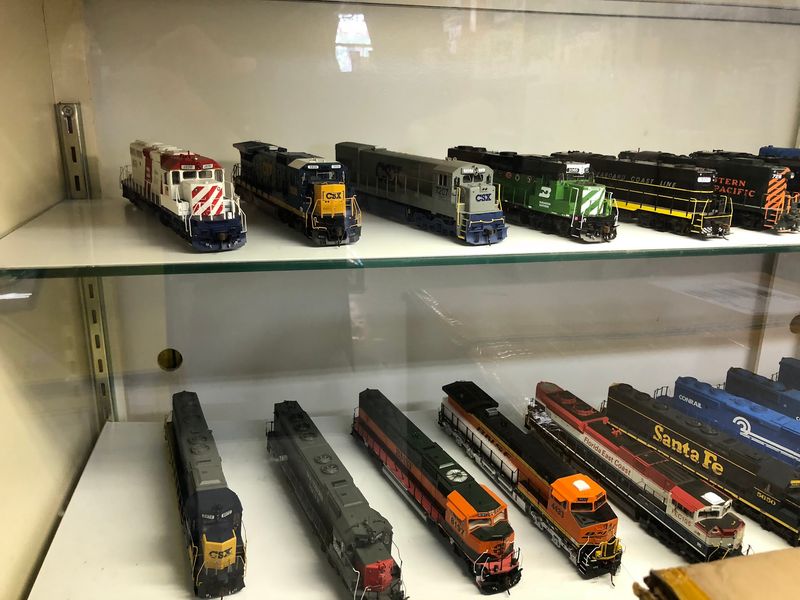
N scale gets serious attention here, with well-known makers like Kato and Micro-Trains represented on the shelves. HO scale takes up plenty of room too, since it remains the most popular size for home layouts across the country.
O scale has its own dedicated space, filled with larger locomotives, track, and accessories that feel satisfyingly hefty in your hands. Big-name brands including Lionel, MTH, Atlas, Bachmann, and LGB all turn up somewhere in the mix.
Newcomers benefit from seeing the sizes side by side rather than guessing from a website photo. A locomotive that looks impressive on a screen can feel surprisingly tiny in person, and the reverse happens just as often.
Browsing the scales in one visit saves beginners from an expensive mistake, and it gives veterans a chance to compare details up close.
The Room Where Landscapes Get Built
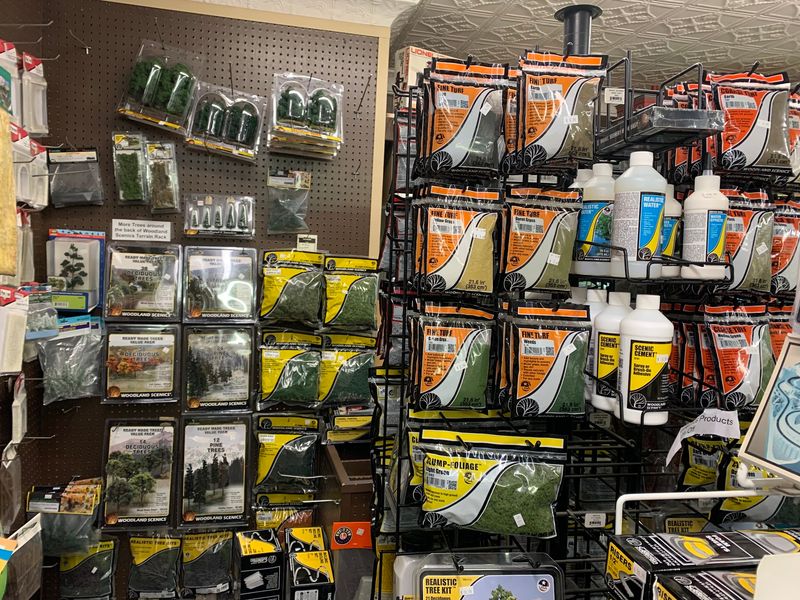
Trains are only half the story. The scenery is what turns a loop of track into a believable little world, and there’s a whole area here devoted to exactly that.
Bags of ground foam, static grass, rock molds, tunnel portals, and miniature trees line the shelves in a rainbow of greens and browns. Woodland Scenics products are well stocked, which is not something every shop in the state can claim.
Building kits sit nearby, ready to become depots, factories, farmhouses, or corner storefronts. Tiny figures, vehicles, signs, and streetlights fill out the smaller bins.
What I like about shopping for scenery in person is the texture test. You can hold two shades of foliage next to each other and instantly see which one matches the season you’re trying to build.
Beginners often underestimate how much scenery changes a layout. Even a simple hillside with a few trees makes a train feel like it’s traveling somewhere rather than circling a plywood board.
Advice That Actually Comes From Experience
Plenty of stores sell trains. Far fewer can explain why yours keeps stalling on the same curve.
Helpful staff comes up constantly when people talk about this place, and it shows in how conversations happen at the counter. Questions get answered with patience rather than a quick upsell, and nobody seems bothered by a beginner asking something basic.
Guidance covers the practical stuff: which scale fits your available space, how track systems differ, what a transformer actually does, and how DCC control compares to older wiring. The shop has moved with the technology over the years while still supporting legacy systems.
Experienced modelers get something out of it too, since troubleshooting a stubborn locomotive is easier with someone who has seen the same problem before.
If an item isn’t in stock, special ordering is part of the routine. That willingness to hunt something down is a big reason people keep driving back instead of clicking a button at home.
Working Layouts That Pull You In From The Sidewalk
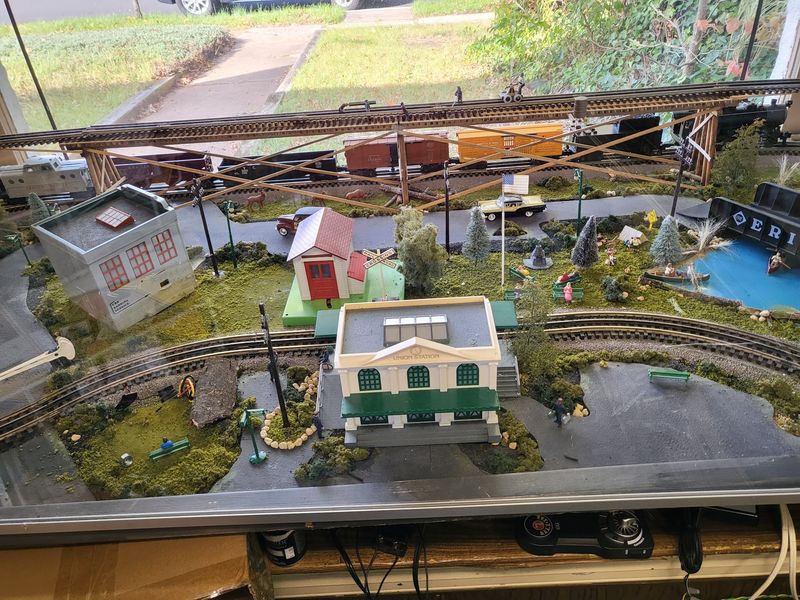
The front window does most of the marketing here. Operating layouts sit where passersby can see them, and it’s genuinely hard to walk past a moving train without stopping.
Inside, several displays show what a finished project can look like when track, wiring, and scenery all come together. Watching a locomotive crawl through a scene at scale speed teaches you more about realism than any diagram could.
Some of the current owners have said they were drawn to the store as kids by those very window layouts, which is a nice bit of continuity for a place this old.
Displays also serve a practical purpose. You can see how a particular coupler works, how a grade looks in three dimensions, or how lighting changes the mood of a small town scene.
Kids press right up to the glass. Adults pretend they’re being more casual about it, though I noticed most of us stood there just as long.
A Hobby That Bridges Grandparents And Grandkids
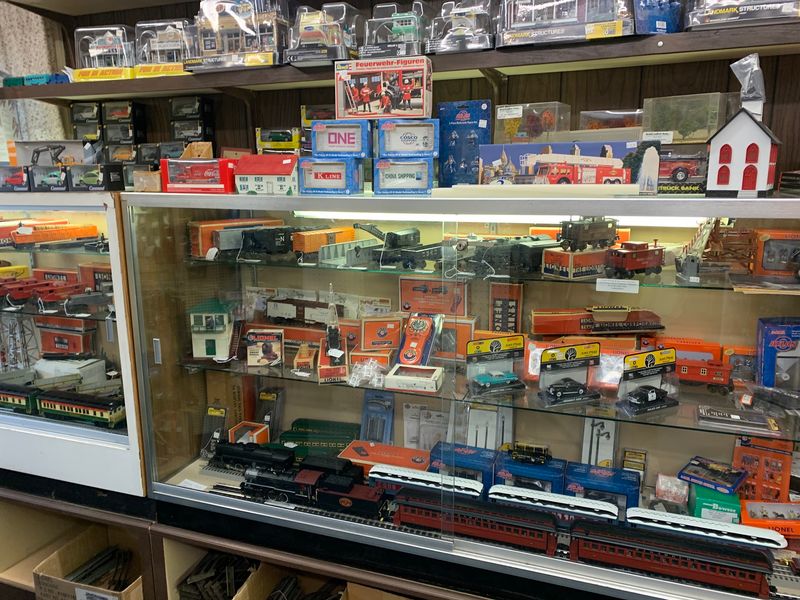
One of the nicest things to observe here is who shows up. Grandparents arrive with grandchildren.
Parents arrive with teenagers. Solo collectors arrive with a very specific list.
Starter sets and children’s train sets, including simple wooden options, give younger visitors an easy entry point that doesn’t require soldering or wiring diagrams.
Model railroading works well across ages because everyone can contribute something. A kid can glue trees onto a hillside while an adult handles the track alignment, and both feel ownership over the result.
It’s also refreshingly analog. Building a layout means measuring, cutting, painting, and problem solving with your hands, which is a nice counterweight to screen time.
Families tend to linger longer than they planned, pointing at boxes and negotiating over which locomotive comes home. The staff seems used to it and gives people room to browse.
Plenty of lifelong hobbyists trace their interest back to a single afternoon in a shop just like this one.
Repair Parts, Transformers And The Small Stuff Nobody Else Stocks
Here’s the unglamorous truth about this hobby: things break. Wheels go out of gauge, couplers snap, and old transformers stop cooperating.
Repair parts are a genuine strength of the shop, with bins and drawers holding replacement wheelsets, couplers, motors, and the tiny detail pieces that finish a project. Finding these online means guessing at compatibility, which rarely ends well.
Transformers and power supplies get attention too, covering both older DC setups and newer DCC systems. Someone hunting a specific power unit for months has a real chance of ending that search here.
Bringing the broken piece with you is smart. Matching a part in person takes minutes, while ordering blind can take weeks and still arrive wrong.
The Model Railroad Shop has built much of its reputation on this kind of practical inventory. It’s not flashy, but it’s the reason a layout stays running instead of sitting half-finished under a dust sheet in the basement.
Books, Magazines And Reading Material For Railfans
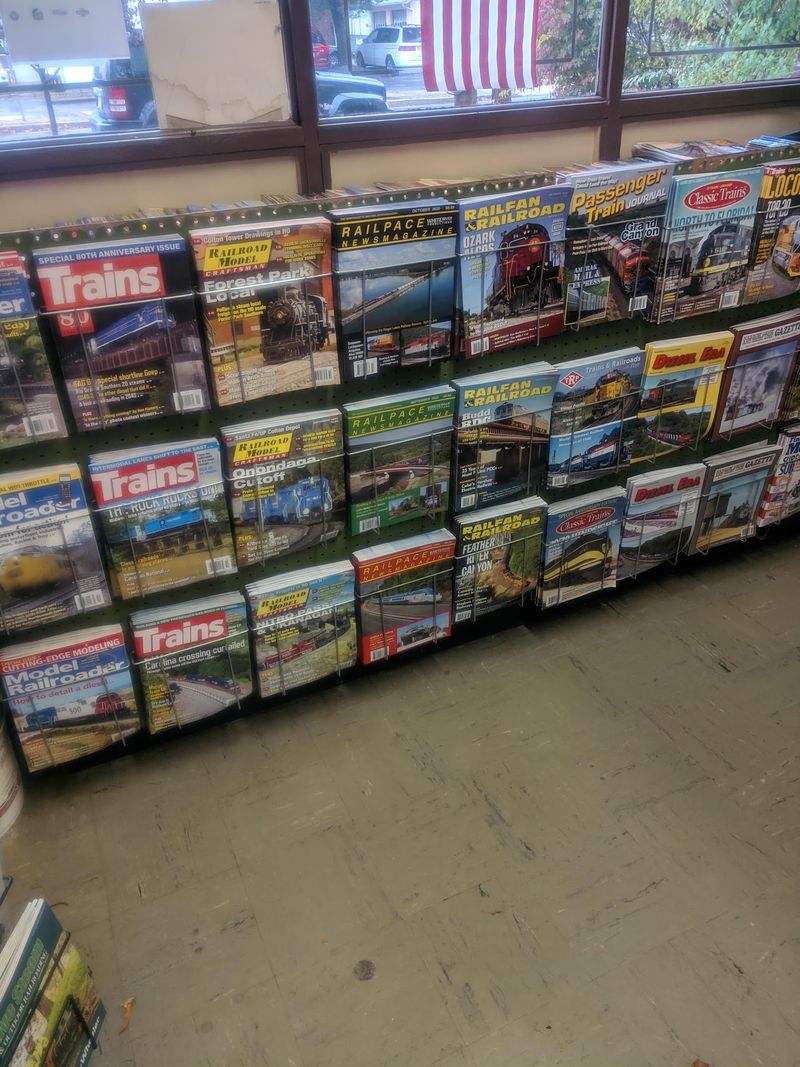
Tucked among the train boxes sits a surprisingly deep selection of reading material. Magazines, layout planning guides, and books on real-world railroading fill a sizable section.
Titles cover both sides of the interest: how to build better models, and the history of the actual railroads those models represent. Regional material shows up as well, including books tied to New Jersey lines and the anthracite roads that once hauled coal through the Northeast.
Flipping through a track plan book beats scrolling forum posts, mostly because you can spread the pages out and picture the space in your own basement or spare room.
Rainy-day browsing here is dangerous in the best way. I picked up one magazine, then a second, then wondered how long I’d been standing in the same spot.
For anyone stuck on a design problem, a good reference book often unlocks the answer faster than trial and error with expensive track.
Saturdays When The Shop Turns Into A Gathering Spot
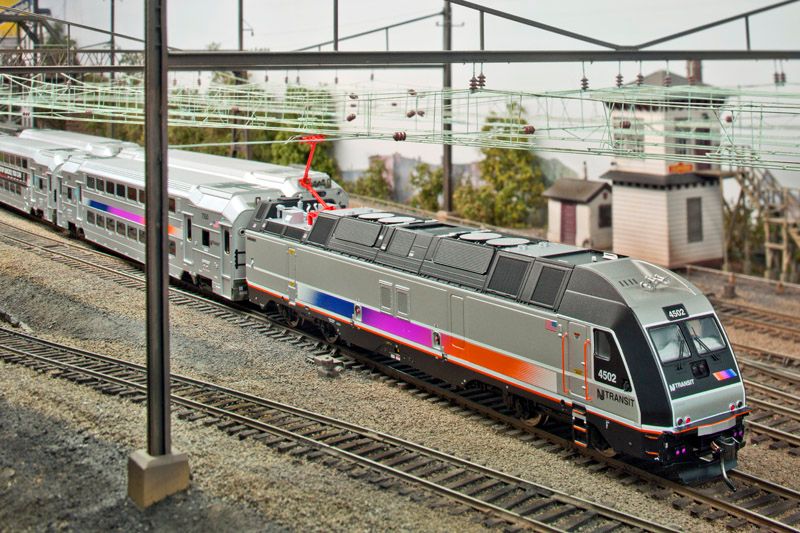
Retail spaces rarely double as clubhouses, but this one manages it. A model railroad club from Union has been known to gather here on Saturdays, turning the aisles into an informal exchange of tips and project updates.
Conversations drift from wiring problems to weathering techniques to which locomotive runs smoothest at low speed. Nobody’s in a rush.
That social layer matters more than it sounds. Model railroading can be a solitary hobby, and having a physical place to compare notes keeps people motivated when a project stalls.
Visitors who aren’t club members still benefit, since useful advice tends to travel across the room.
Hours are worth checking before you go. The shop is closed Sundays and Mondays, opens at 10:30 AM the rest of the week, closes at 6 PM most days, stays open until 8 PM on Wednesdays, and wraps up at 5 PM on Saturdays.
Plan accordingly, especially if you’re driving a distance.
Why An Afternoon Here Beats An Online Cart
Clicking through a website takes five minutes and teaches you almost nothing. Spending an afternoon surrounded by actual products teaches you plenty.
You notice weight, finish, and detail that photos flatten out. You spot an accessory you never knew existed and suddenly rethink an entire corner of your layout.
There’s also the simple pleasure of browsing without a search bar. Discovery happens sideways here, one shelf leading to another until you’ve mapped the whole store in your head.
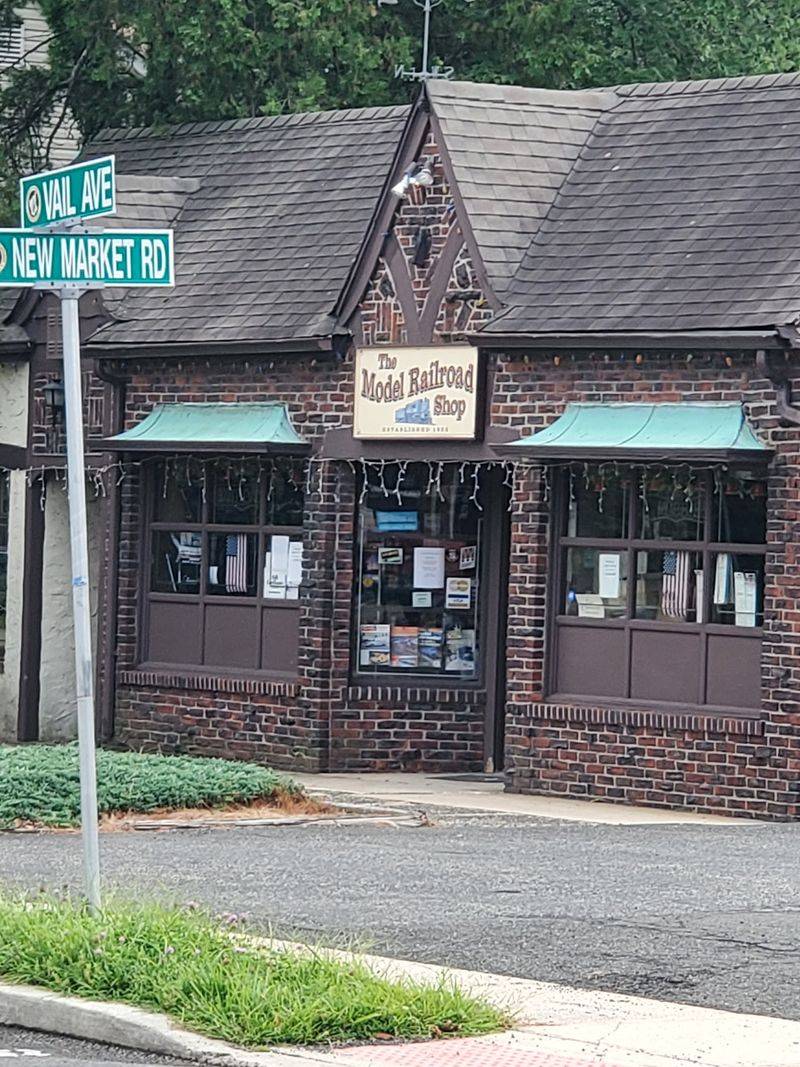
Brick-and-mortar train stores have thinned out considerably, which makes a well-stocked one worth the drive. At 290 Vail Ave in Piscataway, New Jersey, Model Railroad Shop holds onto something a lot of hobbyists thought had disappeared.
Bring a list if you like, but leave room to wander off it. The best finds tend to be the ones you weren’t looking for, and losing track of time here is basically part of the experience.
