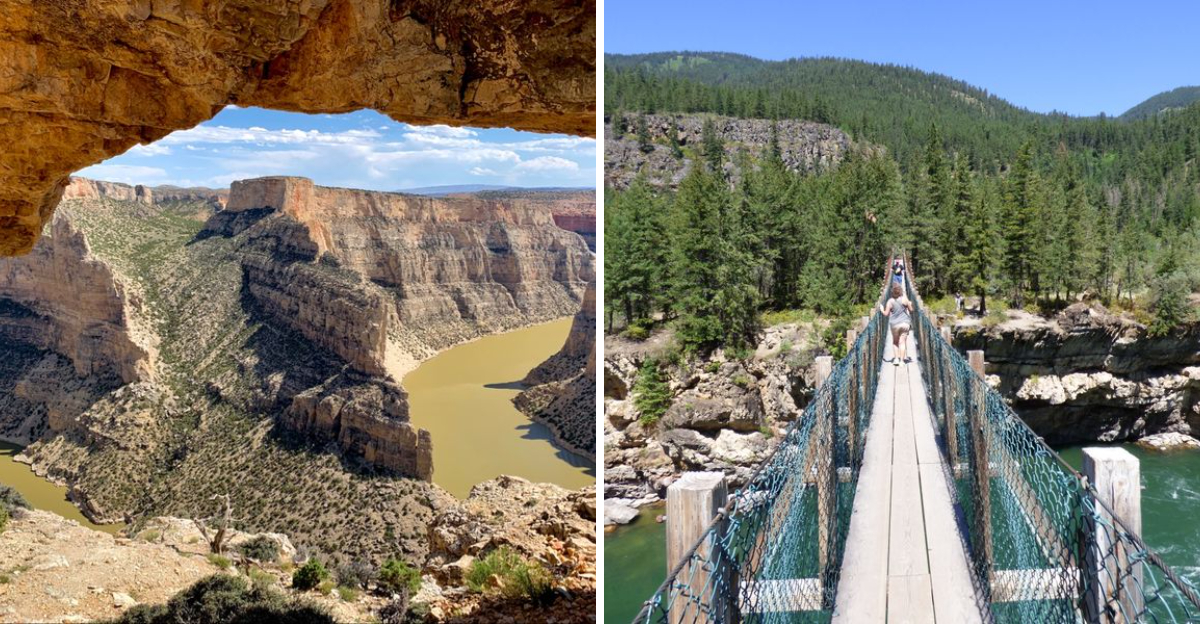
Montana stretches across the northern United States like a patchwork quilt of mountains, rivers, and wide open skies that seem to go on forever.
When you rush through this state on a highway, you might catch glimpses of beautiful scenery, but you miss the real magic that lives in the quiet corners and forgotten trails.
The best parts of Montana reveal themselves only to travelers who take their time, pull off the main roads, and let curiosity guide them to places where nature and history whisper their secrets.
These nine destinations reward the patient explorer with experiences that stay in your memory long after you return home.
1. Ringing Rocks Near Whitehall
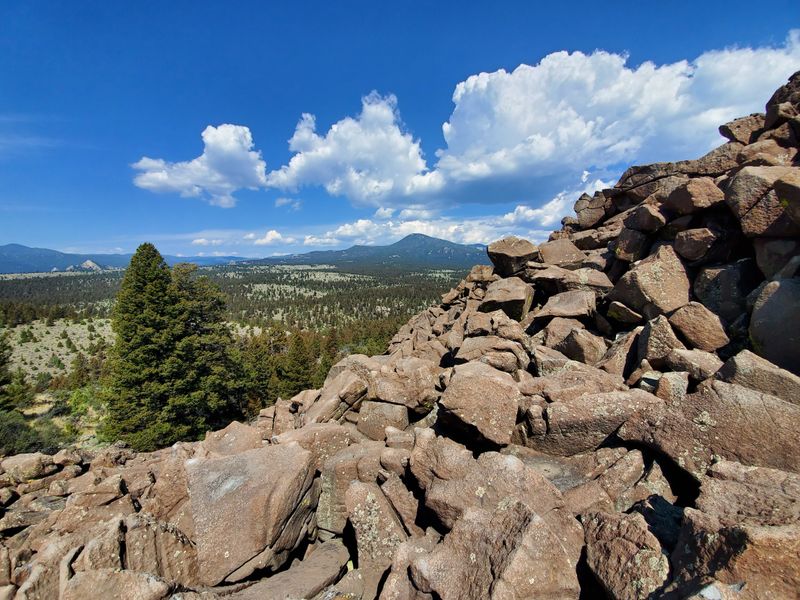
Imagine walking through a field where the stones sing back to you when you tap them with a hammer.
Ringing Rocks sits in the quiet countryside near Whitehall, where a mysterious collection of boulders covers the hillside like giant marbles dropped by nature itself.
Each rock produces a different musical note when struck, creating sounds that range from deep bells to high chimes that echo across the valley.
Scientists believe the unique mineral composition and internal structure of these rocks allow them to vibrate at specific frequencies, though the exact reason remains partly mysterious.
Visitors bring hammers or stones to gently tap the boulders, discovering which ones produce the clearest tones and creating impromptu outdoor concerts.
The experience feels almost magical, especially during quiet mornings when mist still clings to the surrounding hills and your musical experiments are the only sounds breaking the silence.
Children especially love this place because it turns a simple hike into an interactive adventure where rocks become instruments.
The site requires no special equipment beyond something to tap with and a sense of playful curiosity.
Local stories suggest Native Americans knew about these singing stones long before European settlers arrived, possibly using them in ceremonies or as gathering places.
Photography enthusiasts find the location captivating during golden hour when warm light paints the rocks in amber and copper tones.
Bring a picnic and spend an afternoon experimenting with different rocks, creating your own melodies in this natural concert hall that most travelers speed right past on their way to more famous destinations.
2. Medicine Rocks State Park in Ekalaka
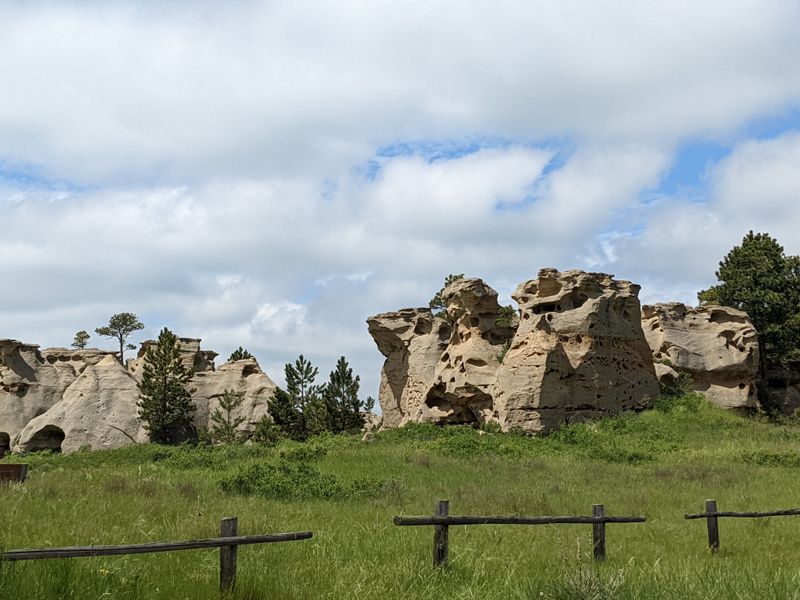
Far out in the southeastern corner of Montana, where the prairie stretches endlessly toward the horizon, strange pillars of sandstone rise from the earth like ancient sentinels guarding forgotten secrets.
Medicine Rocks State Park near Ekalaka feels like stepping onto another planet, where wind and water have carved the soft rock into towers, arches, and caves over millions of years.
The formations earned their name from Native American tribes who considered this landscape sacred, a place where the rocks possessed spiritual power and healing energy.
Carved into some surfaces are ancient inscriptions and pictographs that connect modern visitors to people who walked here centuries ago.
Theodore Roosevelt camped here during his ranching days in the Dakota Territory, and you can still sense why this isolated spot captured his imagination.
The park remains remarkably undeveloped, with just basic camping facilities that preserve the wild, remote feeling of the landscape.
Walking among these formations at dawn or dusk transforms the experience, as changing light creates dramatic shadows that shift the shapes and moods of the rocks.
Birds nest in the crevices and holes that pepper the sandstone, filling the air with songs that echo off the stone walls.
Photographers treasure this location for its otherworldly quality and the way storms rolling across the plains create spectacular backdrops.
The isolation means you might have the entire park to yourself on weekdays, allowing for meditation and reflection without modern distractions.
Getting here requires commitment since Ekalaka sits far from major highways, but that remoteness is exactly what keeps Medicine Rocks feeling timeless and untouched.
3. Makoshika State Park Near Glendive
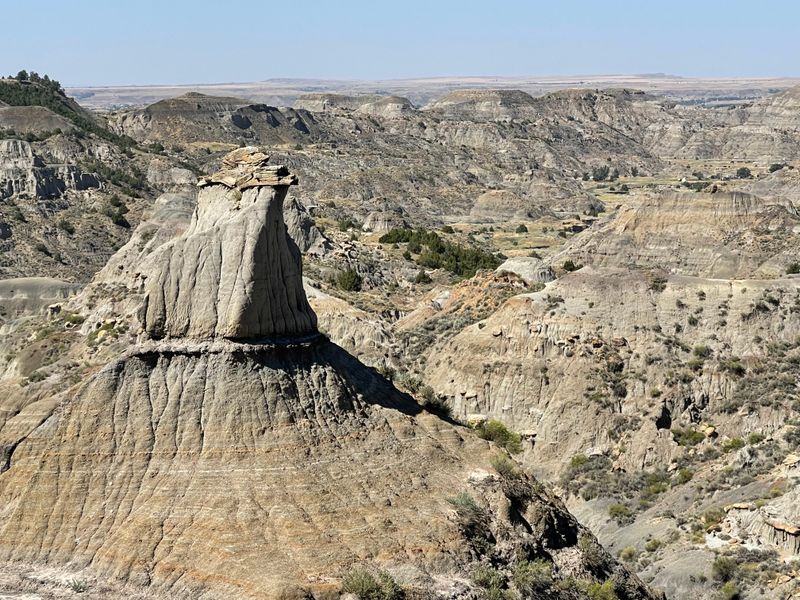
Montana’s largest state park hides in plain sight near Glendive, where most travelers zoom past on Interstate 94 without realizing a prehistoric wonderland waits just minutes away.
Makoshika, a Lakota word meaning bad earth or bad land, perfectly describes this rugged terrain of eroded hills, steep canyons, and exposed rock layers that tell stories spanning millions of years.
Dinosaurs once roamed these lands when the climate was tropical and swampy, and their fossilized bones still emerge from the crumbling hillsides after heavy rains.
The park has yielded remains of Triceratops and Tyrannosaurus rex, making it a genuine outdoor museum of paleontology.
Hiking trails wind through the badlands, leading to overlooks where you can see layers of rock stacked like pages in a history book, each one representing a different era.
The landscape changes dramatically with the seasons, from snow-dusted formations in winter to golden grasslands in autumn that contrast beautifully with the gray and rust-colored rocks.
Juniper trees cling to impossible angles on the slopes, their twisted trunks showing decades of survival in this harsh environment.
Wildlife includes mule deer, pronghorn antelope, and various raptors that ride thermal currents above the canyons.
Sunrise and sunset paint the badlands in colors that seem too vivid to be real, with shadows that emphasize every ridge and gully.
The visitor center offers displays about the geology and paleontology, helping you understand what you’re seeing in the landscape.
Camping in the park puts you under some of the darkest skies in Montana, where the Milky Way stretches overhead like a river of light through the darkness.
4. Ross Creek Cedars Scenic Area Near Troy
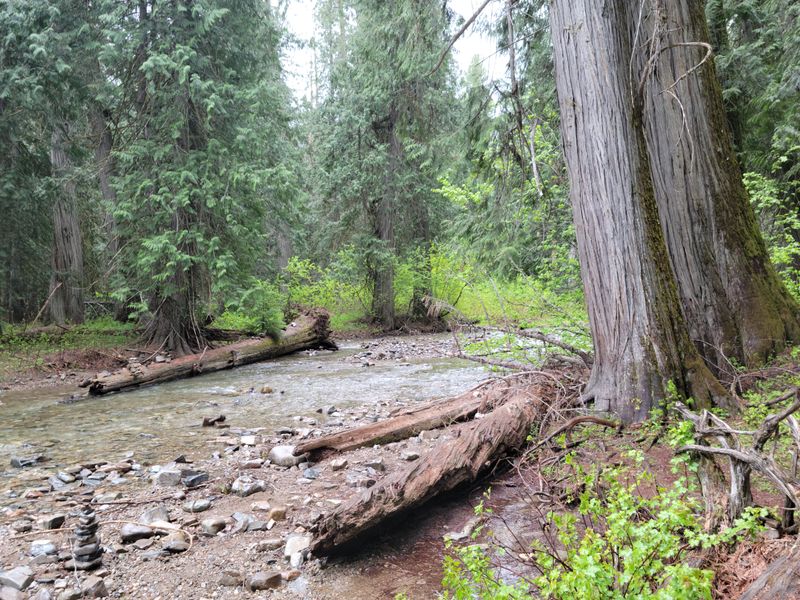
Step into a cathedral built not by human hands but by centuries of growth, where massive cedar trees reach toward the sky and create a canopy that filters sunlight into soft green beams.
Ross Creek Cedars near Troy preserves a rare stand of old-growth western red cedars, some more than 500 years old and eight feet thick at the base.
The one-mile interpretive trail loops through this ancient forest on a wooden boardwalk that protects the fragile ecosystem while letting visitors walk among these giants.
Cool air hangs in the forest even on hot summer days, and the scent of cedar perfumes every breath you take.
Moss drapes the lower branches and coats fallen logs in thick green blankets, creating a fairy tale atmosphere that feels far removed from the modern world.
Ross Creek tumbles through the preserve, its clear water adding a constant soundtrack of splashing and gurgling that enhances the peaceful mood.
The forest floor supports ferns, wildflowers, and shade-loving plants that thrive in the filtered light beneath the cedar canopy.
Interpretive signs along the trail explain the ecology of old-growth forests and why these cedars survived when logging claimed most similar stands.
Photographers struggle with the low light but are rewarded with images that capture the mystical quality of light rays piercing through the canopy.
The grove feels especially magical during light rain when droplets bead on the cedar needles and the forest takes on an even deeper green hue.
Families enjoy this trail because it’s accessible and short enough for young children while still offering a genuine wilderness experience.
Visiting in autumn adds golden larch trees to the mix, their bright yellow needles contrasting beautifully with the dark green cedars.
5. Gates of the Mountains Near Helena
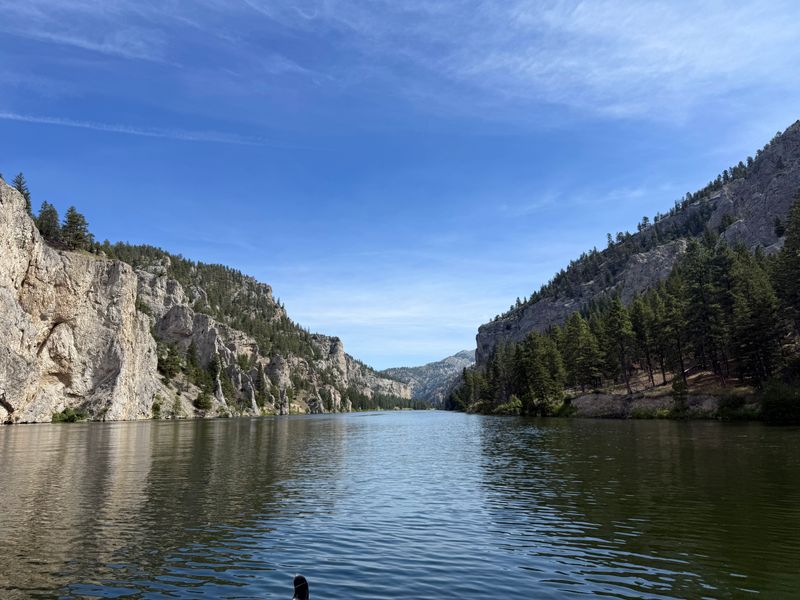
Meriwether Lewis named this spectacular canyon in 1805 when his expedition paddled up the Missouri River and found themselves suddenly surrounded by towering limestone cliffs that seemed to open like gates before them.
Today, boat tours carry visitors through the same dramatic landscape that amazed the Corps of Discovery more than two centuries ago.
The canyon walls rise up to 1,200 feet above the river, their pale stone faces striped with darker layers and pocked with caves that swallows use for nesting.
As your boat glides through the calm water, the cliffs create a sense of enclosure and grandeur that photographs simply cannot capture adequately.
Wildlife spotting is part of the experience, with bighorn sheep occasionally visible on the rocky slopes and eagles soaring overhead or perched in dead trees along the shore.
The tour guides share stories about Lewis and Clark, the geology that created these formations, and the history of steamboats that once navigated these waters.
Several hiking trails are accessible from the boat landing, allowing more adventurous visitors to explore the canyon on foot and gain different perspectives from higher elevations.
The canyon remains remarkably wild despite being close to Helena, with no development visible along the shores to break the illusion of traveling back in time.
Evening tours offer special magic as the setting sun paints the cliff faces in warm gold and orange while shadows deepen in the canyon.
The stillness of the water creates perfect reflections of the cliffs, doubling the visual impact and making the river feel like a mirror into another dimension.
This experience teaches you why slowing down matters because rushing through would mean missing the subtle details and the overwhelming sense of peace that settles over you in this natural cathedral.
6. Natural Bridge Falls Near Big Timber
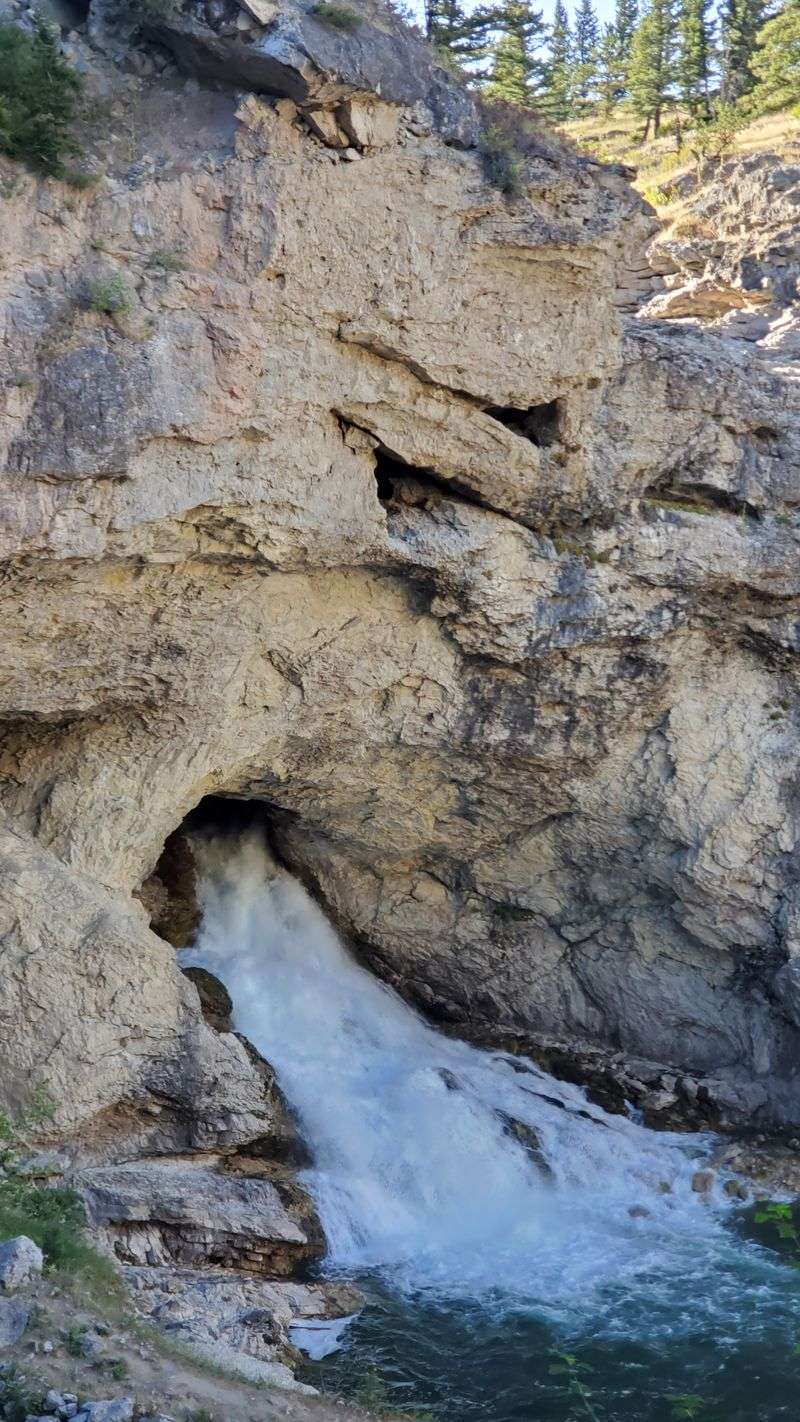
Nature spent thousands of years creating a stone arch over a waterfall, then knocked it down in 1988 as if to remind us that even the most permanent-seeming features are temporary.
Natural Bridge Falls near Big Timber tells a geological story you can read in the carved channels, the fallen arch pieces, and the water still working to reshape the landscape.
The waterfall itself drops about 100 feet in a series of cascades, with spray creating rainbows on sunny afternoons and coating nearby rocks in a constant mist.
Before the collapse, water flowed through a natural tunnel in the rock, but now it tumbles over the ledges where the bridge once stood.
The trail to the falls is relatively short but steep enough to require some effort, which means fewer crowds and a more peaceful experience.
Interpretive signs explain the geology and the dramatic collapse that changed this landscape within human memory.
Remnants of the old bridge lie scattered below, massive chunks of limestone that show how substantial the formation was before it fell.
The surrounding forest of pine and fir creates a cool, shaded environment even in summer, and wildflowers bloom along the trail in spring and early summer.
Photographers love this spot for its combination of moving water, interesting rock formations, and lush vegetation that provides multiple compositional elements.
The sound of falling water fills the air, creating natural white noise that drowns out all other concerns and centers your attention on the present moment.
Visiting in different seasons reveals different characters, from ice formations in winter to the full roar of spring runoff to the gentler flows of late summer.
This destination rewards those who take time to explore the area around the falls, where smaller cascades and pools offer their own quiet beauty.
7. Devil Canyon Overlook at Bighorn Canyon
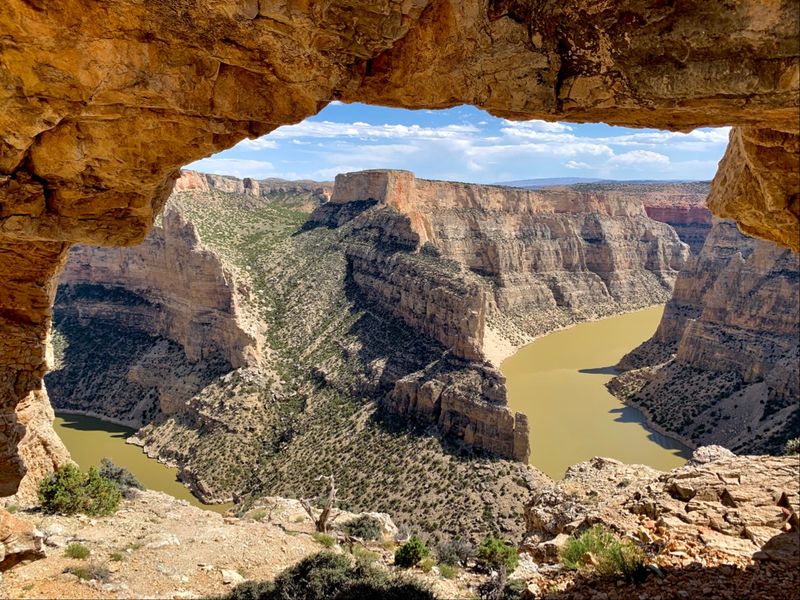
Standing at Devil Canyon Overlook feels like standing at the edge of the world, where the earth simply drops away and the Bighorn River flows through a chasm so deep it seems impossible.
This viewpoint in Bighorn Canyon National Recreation Area offers one of the most dramatic panoramas in Montana, yet it sees a fraction of the visitors that flock to more famous overlooks in other states.
The canyon walls plunge nearly 1,000 feet to the river below, their layers telling stories of ancient seas, deserts, and mountains that once covered this region.
Colors shift throughout the day as the sun moves across the sky, painting the rocks in shades that range from pale cream to deep rust red.
The isolation and scale create a sense of insignificance that is somehow comforting rather than frightening, reminding you that your problems are small compared to the vast sweep of geological time.
Hawks and eagles ride updrafts along the canyon walls, occasionally passing at eye level as they hunt or simply soar for the joy of flight.
The overlook sits at the end of a dirt road that discourages casual tourists but is easily passable in regular vehicles during dry weather.
Wildflowers dot the high desert landscape around the viewpoint, adding splashes of color to the otherwise muted tones of sagebrush and grass.
Sunset transforms this place into something almost spiritual, as the low angle light emphasizes every crack and fold in the canyon walls.
The silence is profound, broken only by wind and the occasional call of a bird, creating a meditative atmosphere perfect for reflection.
Bring binoculars to spot details in the canyon and on the far rim, and allow yourself at least an hour to simply sit and absorb the view.
8. Garden of One Thousand Buddhas Near Arlee
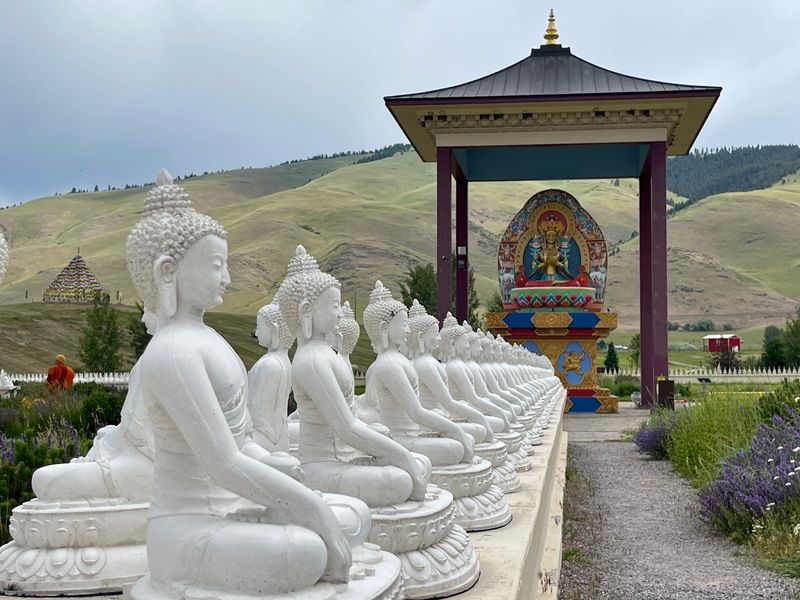
In a broad valley with the Mission Mountains rising dramatically to the east, a circular garden holds exactly 1,000 Buddha statues arranged in a mandala pattern that represents the wheel of life and enlightenment.
The Garden of One Thousand Buddhas near Arlee offers a completely unexpected experience in rural Montana, where Tibetan Buddhist philosophy meets Big Sky Country.
Each statue sits on an individual pedestal, creating a visual rhythm as you walk the paths that wind through the garden.
Prayer flags flutter in the constant breeze, their colors fading naturally as the prayers inscribed on them are believed to be carried to heaven.
The garden welcomes visitors of all faiths or no faith, emphasizing peace, contemplation, and respect for the natural setting.
Mountains form a stunning backdrop, especially when snow-capped peaks catch the morning or evening light and seem to glow against the sky.
The design encourages slow walking meditation, with the circular paths leading you around the mandala while allowing your mind to quiet and your breathing to deepen.
Locals and travelers alike use this space for yoga, meditation, or simply sitting quietly on benches placed throughout the grounds.
The project began in 2000 and took years to complete, representing the dedication of the Tibetan Buddhist community that calls this valley home.
Seasonal changes bring different moods to the garden, from spring wildflowers to autumn gold to winter snow that transforms the Buddha statues into white mounds.
No admission fee is charged, though donations are accepted to help maintain this peaceful sanctuary.
The garden represents a bridge between cultures and traditions, showing how different spiritual paths can coexist and even enhance each other in the American West.
Address: 91 Threemile Ln, Arlee, Montana
9. Kootenai Falls and Swinging Bridge Near Libby
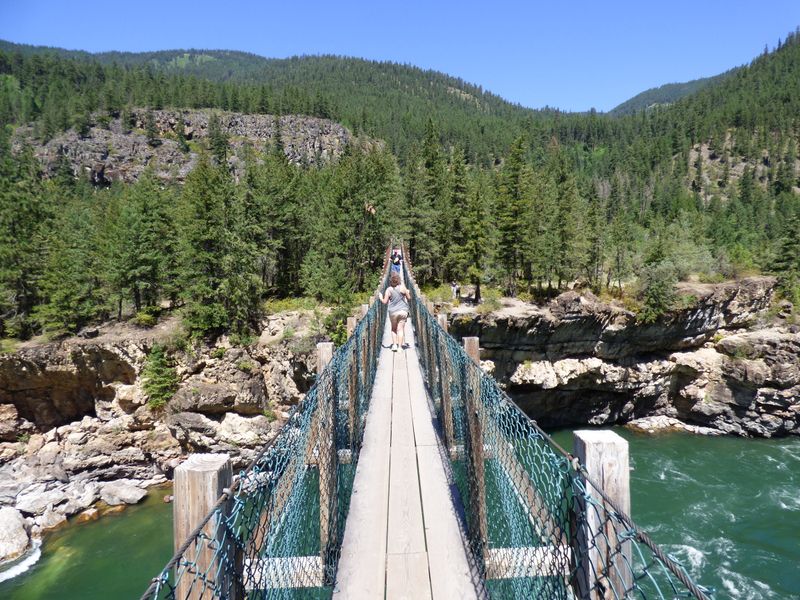
The Kootenai River has carved a spectacular gorge through the mountains near Libby, creating Montana’s largest undammed waterfall and a suspension bridge that tests your courage while rewarding you with incredible views.
Kootenai Falls drops about 90 feet through a narrow canyon, sending up constant spray and filling the air with the thunderous roar of thousands of gallons crashing over rocks.
The power of the water is mesmerizing, especially during spring runoff when snowmelt swells the river to its highest and most dramatic flows.
Two trails lead to the falls, with the shorter path accessible to most visitors and the longer route offering more solitude and different perspectives.
The swinging bridge spans the gorge downstream from the falls, its narrow wooden deck and cable construction creating a thrilling crossing experience.
As you walk across, the bridge sways and bounces slightly, and looking down reveals the turquoise water rushing through the rocky channel far below.
This location holds deep significance for the Kootenai Tribe, who have lived in this region for thousands of years and consider the falls a sacred site.
Interpretive signs share some of the cultural history and ask visitors to treat the area with appropriate respect.
The surrounding forest of cedar, hemlock, and fir creates a lush environment where moss covers every surface and ferns grow in thick clusters.
Wildlife sightings are common, with deer, bears, and numerous bird species making their homes in this rich ecosystem.
The mist from the falls creates microclimates that support unique plant communities found nowhere else in the immediate area.
Photography opportunities abound, though capturing the scale and power of the falls requires patience and experimentation with different angles and exposures.
Dear Reader: This page may contain affiliate links which may earn a commission if you click through and make a purchase. Our independent journalism is not influenced by any advertiser or commercial initiative unless it is clearly marked as sponsored content. As travel products change, please be sure to reconfirm all details and stay up to date with current events to ensure a safe and successful trip.
