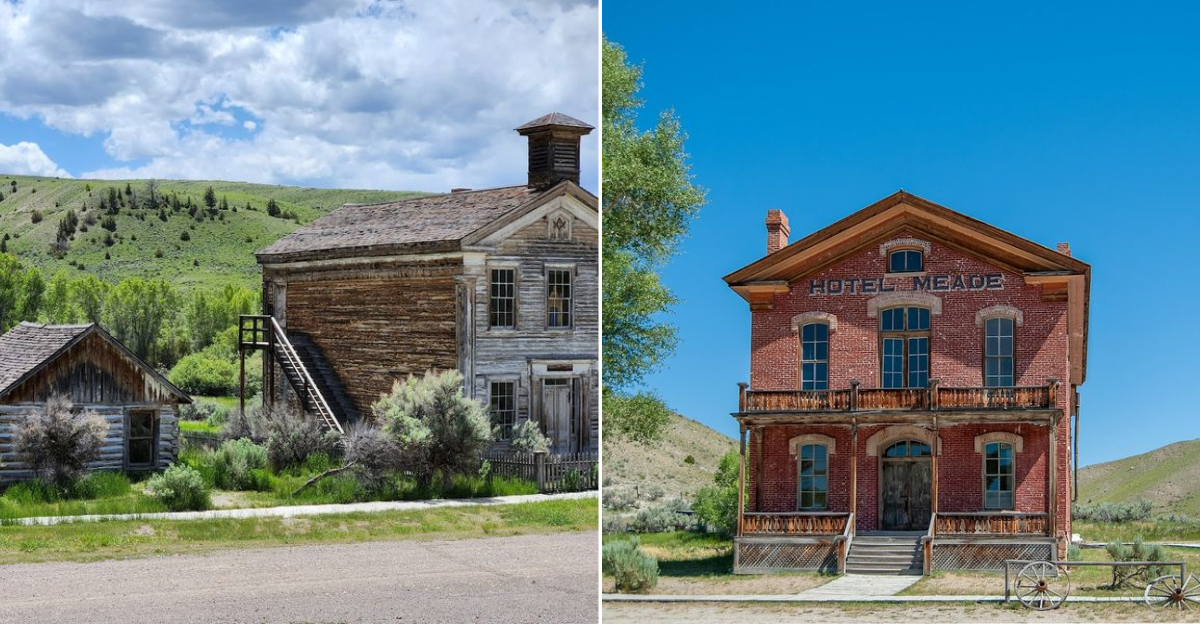
Want a ghost town that still looks like it could reopen for business if someone flipped the lights on? Montana has main street ghost towns where dozens of buildings are still standing, and that is what makes the whole thing feel so eerie and so fun.
You are not just looking at a single cabin and a sad sign. You are walking past storefronts, weathered facades, and empty windows that hold onto the shape of an actual community.
The layout is the giveaway. One central stretch reads like a real town plan, with structures lined up along the road, doors facing the street, and the sense that people once had routines here.
Now it is quiet, the wind does the talking, and every creak or rattle sounds like a reminder that the buildings are still here even if the people are not. It is the kind of stop that makes you slow down without realizing it.
You start imagining who lived where, what the shops sold, and how fast a busy place can fade into silence.
The Dirt-Road Arrival That Feels Like Time Travel
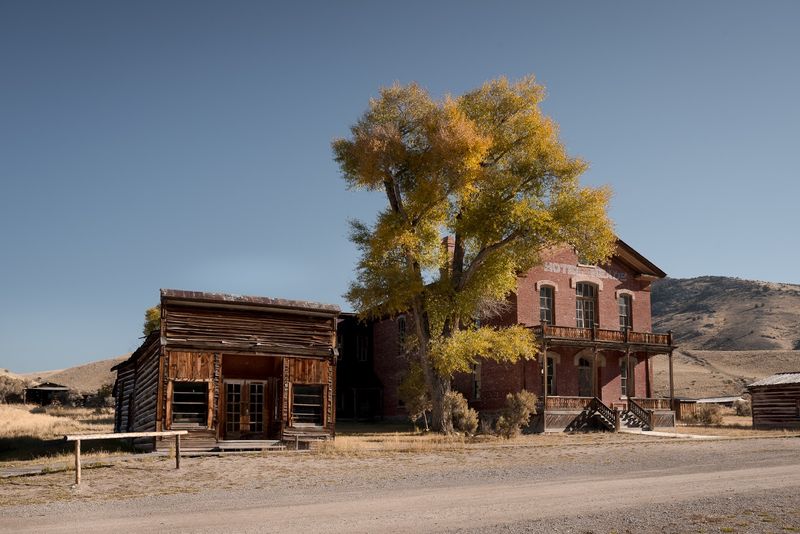
You think you are just taking a back road into the hills, and then Bannack flips the switch on you. The first clue is the way the pavement quietly gives up and turns to dust like it has done this a thousand times.
Your tires start crunching, the air dries out, and the car picks up that faint, powdery smell that only dirt roads can pull off. I always slow down here, not because I am cautious, but because the horizon suddenly feels honest and bossy at the same time.
The road narrows, the weeds get taller, and the landscape stops trying to impress you and starts daring you to pay attention. When you crest the rise and the town appears, it does not pop like a theme park reveal.
It sits there in one careful row, rooflines stacked like notes on a bar, quiet enough to make your engine sound rude. You park without hurry because the place trains you to move slower.
Dust settles around your shoes like a welcome mat, and the wind threads through fence wire with that dry, whispery sound that makes you glance over your shoulder. Before the engine even finishes ticking cool, the present feels a little looser, like you can set it down for a while.
You step out, take one look down Main Street, and start walking because not walking would feel like ignoring an invitation.
Main Street Boardwalks And A Town Layout That Still Makes Sense
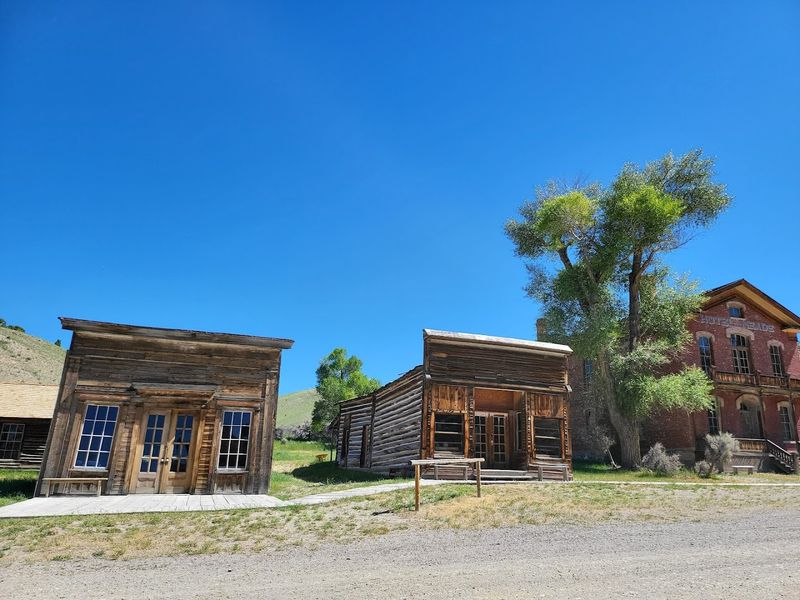
Want the weirdest compliment a ghost town can give you? It is when you stand on the boardwalk and think, “This would still work.” Bannack’s Main Street has a layout that feels practical in a way that makes the town feel less like ruins and more like a paused routine.
Everything lines up in a straight shot, close enough that neighbors could talk across the street without raising their voices. The boardwalks guide your pace, and the buildings face the road like they are still waiting for customers to show up on schedule.
The false fronts are not pretending anymore, but they still square their shoulders and hold the line. You can trace errands with your eyes, from store to office to shop, and the spacing makes real sense instead of “tourist stop” sense.
Side doors show up where you would need them, and windows sit where daylight would actually be useful. When you walk it, your stride starts matching the town rhythm.
Short steps at doorways, longer ones between stories, and little pauses when something small catches your attention, like a hinge, a sign bracket, or a warped plank. It is also a sneaky reminder that this was not built for photos.
It was built for living, which is exactly why it still feels readable today.
Dozens Of Original Buildings Still Standing In One Walk
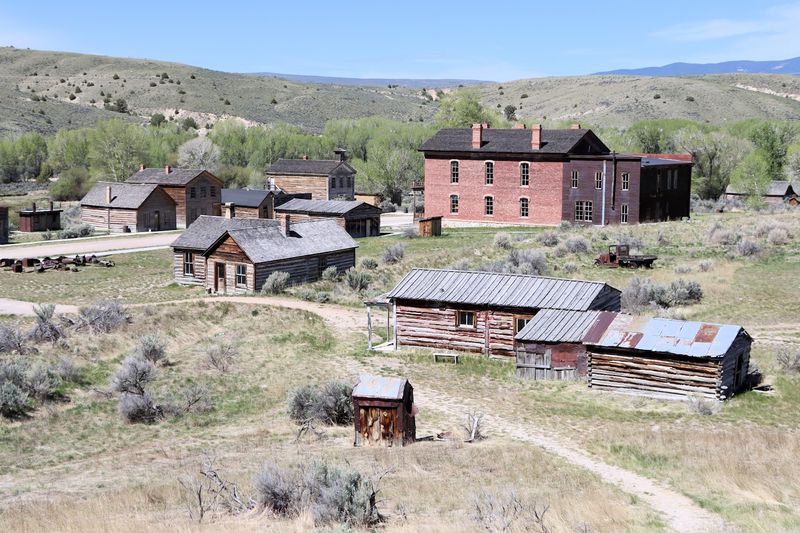
How many buildings do you expect in a ghost town before it starts feeling like an actual town again? Bannack answers that question by casually giving you dozens, all within a walk that keeps surprising you.
At first you do not even count them, because your brain is too busy going, “There is another one,” and then, “Wait, another.” The wild part is how the buildings still talk to each other through the gaps. Sight lines hold steady, distances feel intentional, and you can tell the town was arranged with real daily movement in mind.
Some structures look tough and squared off, like they were built to last through arguments and winters. Others look lighter and more worn, the kind of places that probably heard gossip through thin walls and never complained.
As you move along, you start noticing small details that make the place feel freshly left. Doorways line up with paths, windows frame the hills like someone planned the view, and scattered bits of hardware still cling on like they did not get the memo.
It also hits you that this is not one lonely building and a sad plaque. This is a whole street of choices, priorities, and habits, frozen in place.
By the time you reach the far end, you have walked through the bones of a community, not just a photo stop.
Hotel Meade: The Brick Landmark That Runs The Block
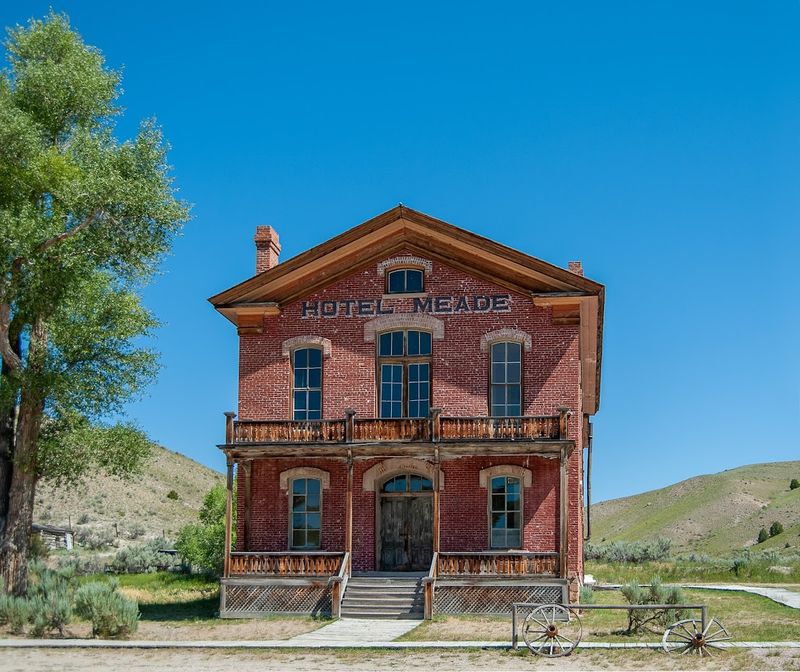
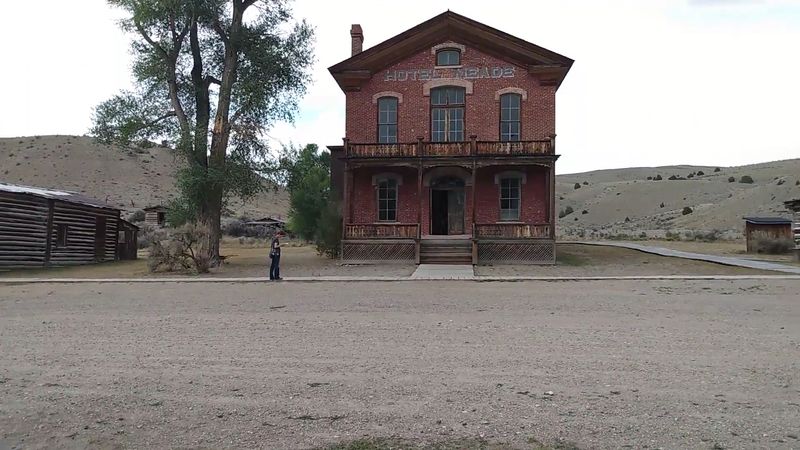
You know a building is important when it stops you like a red light even if you are pretending to stroll casually. Hotel Meade does that the second it comes into view, because brick hits different in a town of weathered wood.
It runs the block with a steady, grounded presence, like it decided long ago it would not be pushed around by wind or time. The exterior alone changes the town’s heartbeat.
Brick holds shadows longer, throws shade with intention, and makes the whole street feel a little more formal. You can walk the outside and watch how corners bend the light, turning the sun into something edited and controlled. Then you step inside, and the vibe shifts again.
Rooms stack their silence carefully, and the air feels cooler, thicker, and strangely organized. Stair rails still shine where hands kept the habit, and the angles of doorways make you picture guests moving through with luggage, boots, and busy opinions.
It is easy to imagine the hotel as the town’s social battery. People would have gathered here to trade news, brag, complain, and make plans that sounded smarter indoors than they did outside.
Now it is quiet, but it is not empty-feeling. It feels like it is still holding the weight of all that activity, which is exactly why it is so hard to look away.
The Methodist Church That Feels Extra Quiet After Dark
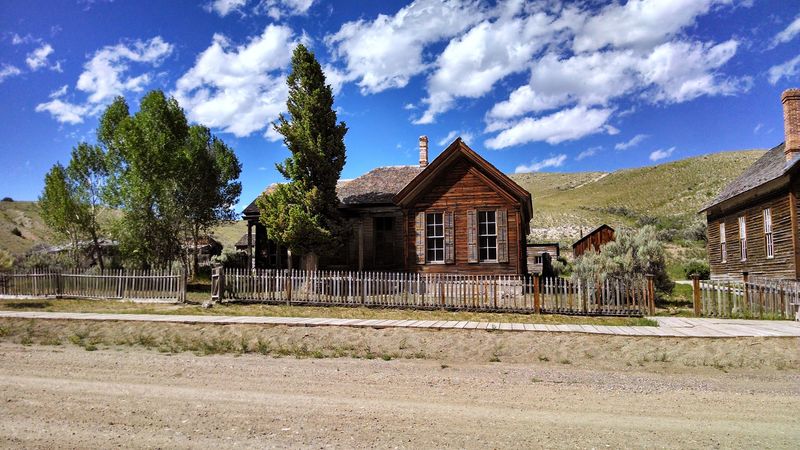
Want to feel your voice instantly drop a few notches without anyone asking. Step near the church in Bannack and notice how the quiet seems to get manners.
Even in daylight it carries its own hush, like the building is politely requesting you do not bring chaos in with you. The shape is simple, but the mood is not.
When light comes through the windows it feels soft and careful, and the interior air has that cool, dry stillness that makes every creak sound deliberate. If you push the door gently, the room listens back.
Floorboards answer like a low choir that forgot the words, and the smallest shuffle echoes longer than you expect. After dark, the feeling gets stronger.
The quiet does not just sit there, it seems to breathe in the pews and stretch into the corners. The windows frame a sky that does not care about your nerves, and that contrast makes you feel small in a good way.
Outside, stars post up above the steeple like they are standing watch, and the gravel on your way out suddenly sounds brighter, sharper, more alive. If you are here with a friend, you naturally talk softer.
Not because you are scared, but because the walls make whispers feel respectful, like the building earned them.
The Jail And Gallows That Stop You In Your Tracks
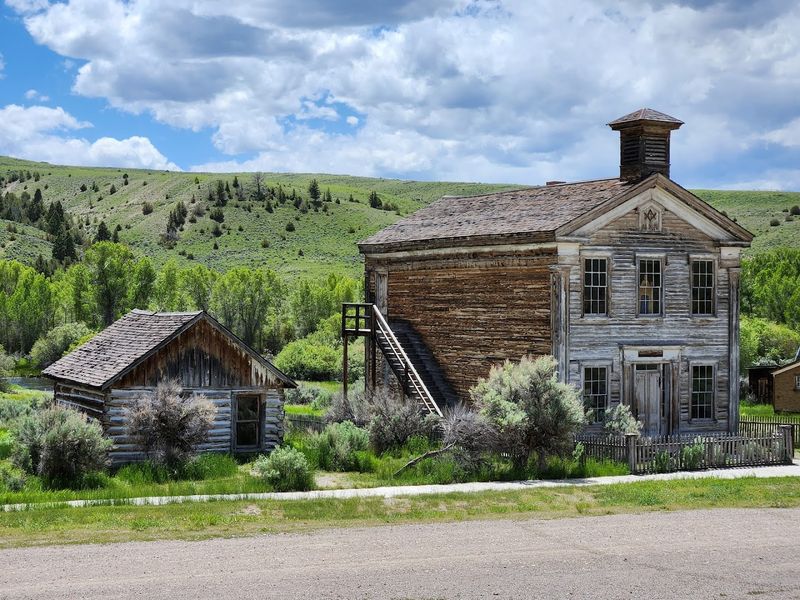
Some places change the mood so fast you can feel your face stop smiling. The jail and gallows area in Bannack is that kind of stop.
You can be wandering along thinking about architecture and sunlight, and then you turn a corner and the air feels heavier. The jail sits low and stubborn, and the gallows cut the sky with a shape that is too simple for what it meant.
The timbers look ordinary until you remember purpose, and then every knot in the wood feels like a sentence you cannot unread. This is where Bannack refuses to be cute.
Montana does not hide the hard parts here, and the town puts them up on the hill where no one can pretend they missed it. It is also a reminder that old towns were not just saloons and gossip.
They were rules, punishment, fear, and the kind of power that does not ask permission. Silence does a lot of talking in this spot.
You hear wind, maybe a raven, and the rest is yours to sit with. It is worth taking your time, because rushing through feels like dodging the truth.
When you finally walk back toward Main Street, the return feels longer in a way that matters. The town looks the same, but you do not.
Saloons And Stores Where Everyday Life Still Feels “Paused”
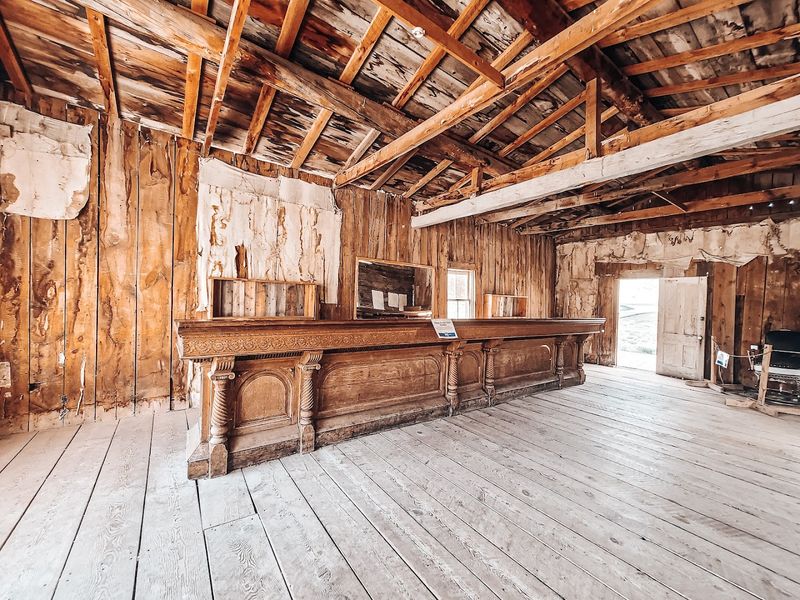
Picture walking past a window and getting the strange urge to say, “Sorry, I did not mean to interrupt.” That is the feeling the saloons and stores can give you in Bannack, because everyday life still feels paused inside them. Peer through the glass and it looks like someone stepped out mid-errand and simply never circled back.
A counter waits, shelves wait, and the light keeps doing its job like the building refuses to accept the shift to “museum.” Chairs angle like they remember names. Floorboards hold a record of boots you will never meet, and the room layout still makes sense in that practical, lived-in way.
You can stand there longer than you expect without getting bored. Details keep volunteering themselves, small and steady, like a hinge, a bottle shape, a worn threshold, or a nail pattern that shows where something used to hang.
Nothing begs for attention, which is exactly why it works. These rooms do not perform.
They sit where they always sat and look right doing it, like patience is part of the structure. Montana calm shows up even indoors, and the spaces breathe slow and refuse to hurry you along.
Every storefront teaches the same lesson in a slightly different accent. Life paused, not erased, and that difference is what makes your stomach do that little drop when you realize how real it once was.
Bannack Days And Ghost Walks That Turn History Loud
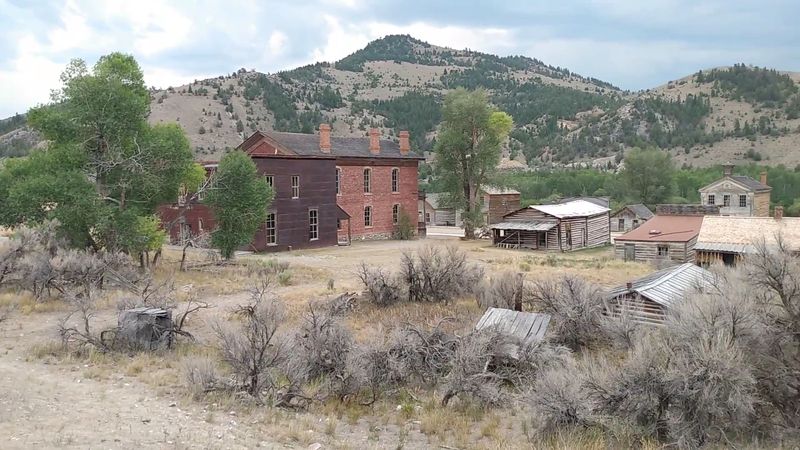
Want to see a ghost town stop whispering and start clearing its throat? That is what happens during Bannack Days and guided ghost walks, when the place gets a little louder without losing its edge.
Most days, Bannack keeps its volume low. You hear wind, your own steps, and the occasional creak that makes you turn your head like you are in on a secret.
During events, that quiet gets filled in with people, stories, and the kind of shared curiosity that makes history feel present instead of distant. You will see the street wake up in a subtle way.
Not like a modern festival with noise everywhere, but like a timeline briefly overlapping itself. Costumes, demonstrations, and storytelling make the buildings feel used again, and you start noticing how well the town still functions as a stage.
That is the best part. The setting does all the heavy lifting, because you do not need extras when the originals still stand.
Ghost walks add a fun edge, too, because nighttime makes the shadows longer and your imagination more cooperative. Even skeptics start listening harder when a guide pauses and lets the silence hang.
If you are on the fence, show up with a curious mood and let the town do its thing. You leave with names that stick, corners you will not forget, and the odd feeling that your memory will keep walking those routes later on its own.
Visitor Center Tips, Tours, And The Best Time To Go
Want the easiest way to make Bannack hit harder and run smoother? Start at the visitor center and let the map redraw your day before you wander off on vibes alone.
A quick chat can save you from missing the best open buildings, the best viewpoints, and the spots that are easy to skip when you do not know what you are looking at yet. Ask about tours first, because a good tour turns silent structures into a connected story.
The staff usually know which doors are open, what areas are best right now, and how the weather is affecting paths. Trail conditions matter here more than you think, because dust, mud, and splinters can turn “cute stroll” into “why did I wear these shoes.” Timing is your secret weapon.
Aim for steady light and mild temperatures, because harsh midday sun can flatten the buildings, and extreme heat or cold makes you rush. Early and late in the day treat the town kindly, with softer shadows and fewer people in your frame.
Bring water and shoes that respect dirt, boards, and uneven ground. Give yourself more time than you think you need, because Bannack rewards the unhurried eye.
Before you roll out, double-check road updates and closures, because nothing ruins a ghost-town mood faster than turning around for a gate you did not expect.
Dear Reader: This page may contain affiliate links which may earn a commission if you click through and make a purchase. Our independent journalism is not influenced by any advertiser or commercial initiative unless it is clearly marked as sponsored content. As travel products change, please be sure to reconfirm all details and stay up to date with current events to ensure a safe and successful trip.
