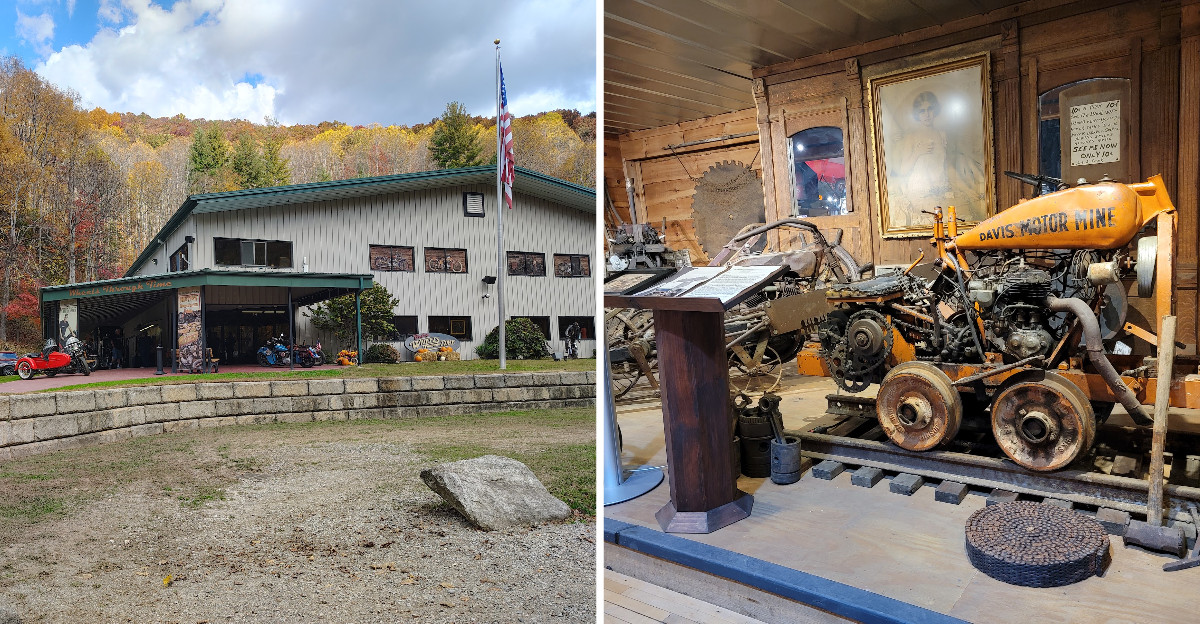
Rumbling enough to rattle my chest, a machine older than my grandparents coughed, caught, and settled into a steady roar. I had not expected to hear that sound inside a museum, but there it was.
The building stretches across 38,000 square feet in North Carolina, holding more than 300 rare motorcycles, and nearly all of them still run. I walked in thinking I would see a few old bikes behind glass and ended up staying for hours.
A staff member reached down, gave a kick, and the whole room shook. Laughter burst out of me before I could stop it.
The collection spans every era of American motorcycling, and the staff clearly love sharing the stories behind each machine. The mountains outside make the drive worthwhile, but the noise inside is what keeps you planted.
Anyone who loves machines, stories, or watching people light up will find plenty to love here. I stayed until closing and still think about that rumble.
The Museum That Actually Starts Its Engines
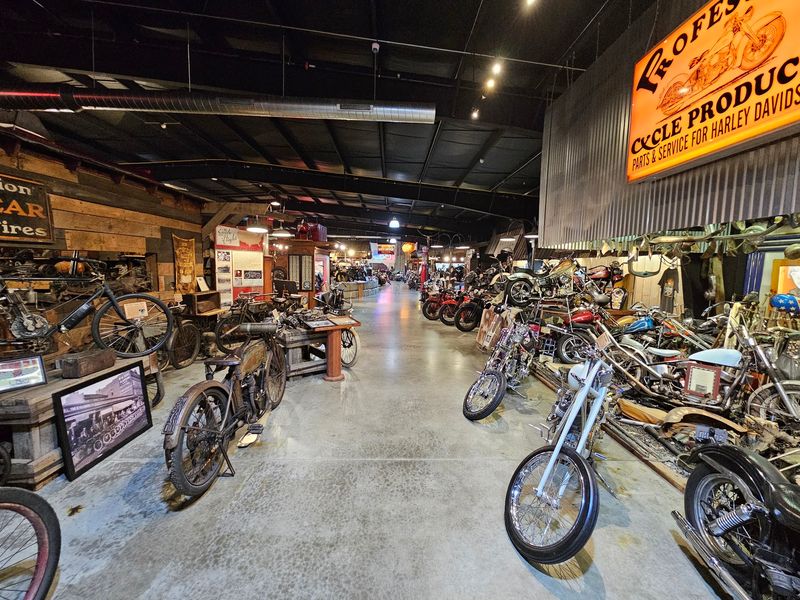
The nickname here is North Carolina’s Museum That Runs, and it is not marketing fluff. Roughly nine out of ten machines on the floor can be fired up on request, and the crew seems genuinely happy to do it.
I watched a small crowd gather around a century-old bike while a guide primed it, worked the pedals, and set it running. The sound filled the whole building in a way no photo or video could ever capture.
What surprised me most was the smell. Warm oil, old metal, and a faint whiff of fuel drifting through the air made the history feel physical instead of frozen.
Most museums ask you to look and move on. Here you lean in, you listen, and you feel the vibration through the concrete floor under your shoes.
If you want that experience, just ask politely and point at something interesting. The staff will usually oblige, and they will explain what they are doing while they do it.
That single detail, keeping the machines alive rather than embalmed, changes everything about how the collection lands.
Over Two Dozen American Brands Under One Roof
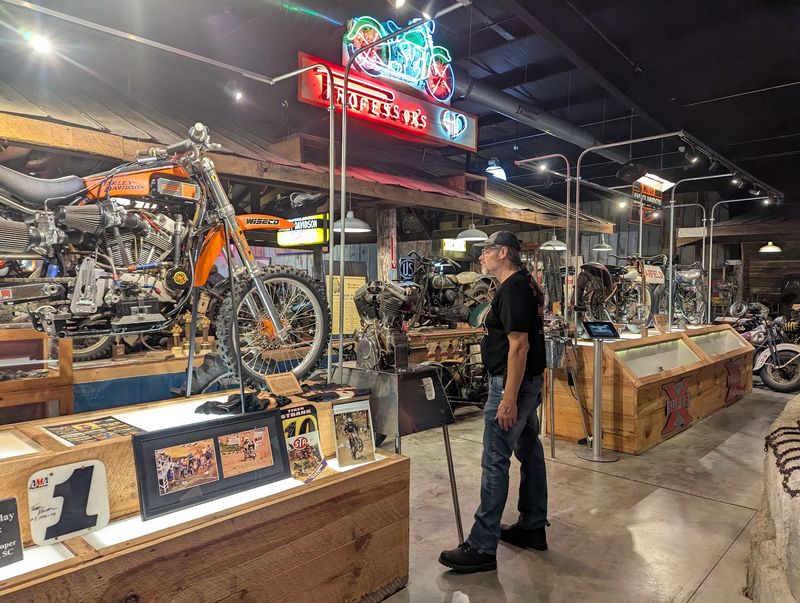
Harley-Davidson and Indian get the headlines, and they are here in depth, but the names I had never heard before kept me wandering longer than planned. Excelsior, Henderson, Crocker, Pope, Yale, Flying Merkel, and more sit shoulder to shoulder.
Somewhere past two dozen marques are represented, which turns the floor into a timeline of American ambition. Each badge belonged to a company that believed it could build the future on two wheels.
A few of those companies lasted decades. Others vanished after a handful of years, leaving behind machines so scarce that this building holds one of the last survivors.
I liked reading the little differences in engineering. One brand chose belt drive, another chose chain, and a third tried something so odd it never caught on anywhere else.
Fun detail worth knowing: some bikes here are believed to be the only known example still in existence.
Instead of feeling like a roll call of logos, the whole display reads like a family album of inventors who were all racing toward the same idea from different directions.
Hillclimbers, Dirt Trackers, and Racing Grit
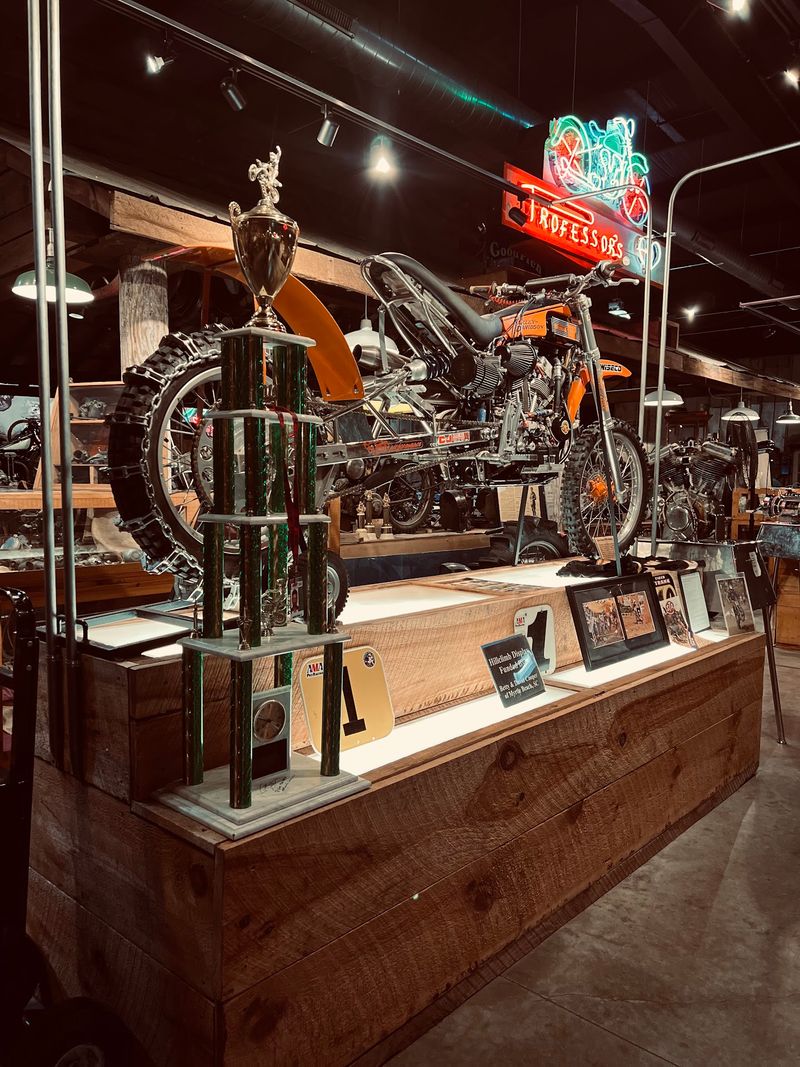
Chains wrapped around rear tires, frames stretched long for traction, and engines tuned to claw up slopes that look unridable. Hillclimb machines have a brutal, purposeful look that I found instantly likable.
Nearby, the dirt track section shifts the mood. Those bikes were built for sliding sideways through corners on clay ovals at county fairgrounds across the country.
Both sports drew huge crowds in their day, and both demanded riders who accepted crashing as part of the job description.
What struck me was how homemade some solutions looked. Somebody welded, bent, or bolted on whatever worked, then went out and won with it.
The guides here explain the differences well. Ask what makes a hillclimber different from a road bike and you will get a clear, hands-on answer rather than a rehearsed speech.
Photographs and trophies displayed alongside the machines tie the metal back to real competition. Numbers painted on tanks stop being decoration once you know what they were chasing.
Racing built the American motorcycle industry, and these two exhibits make that connection easy to see.
Women Who Rode, Raced, and Refused to Wait
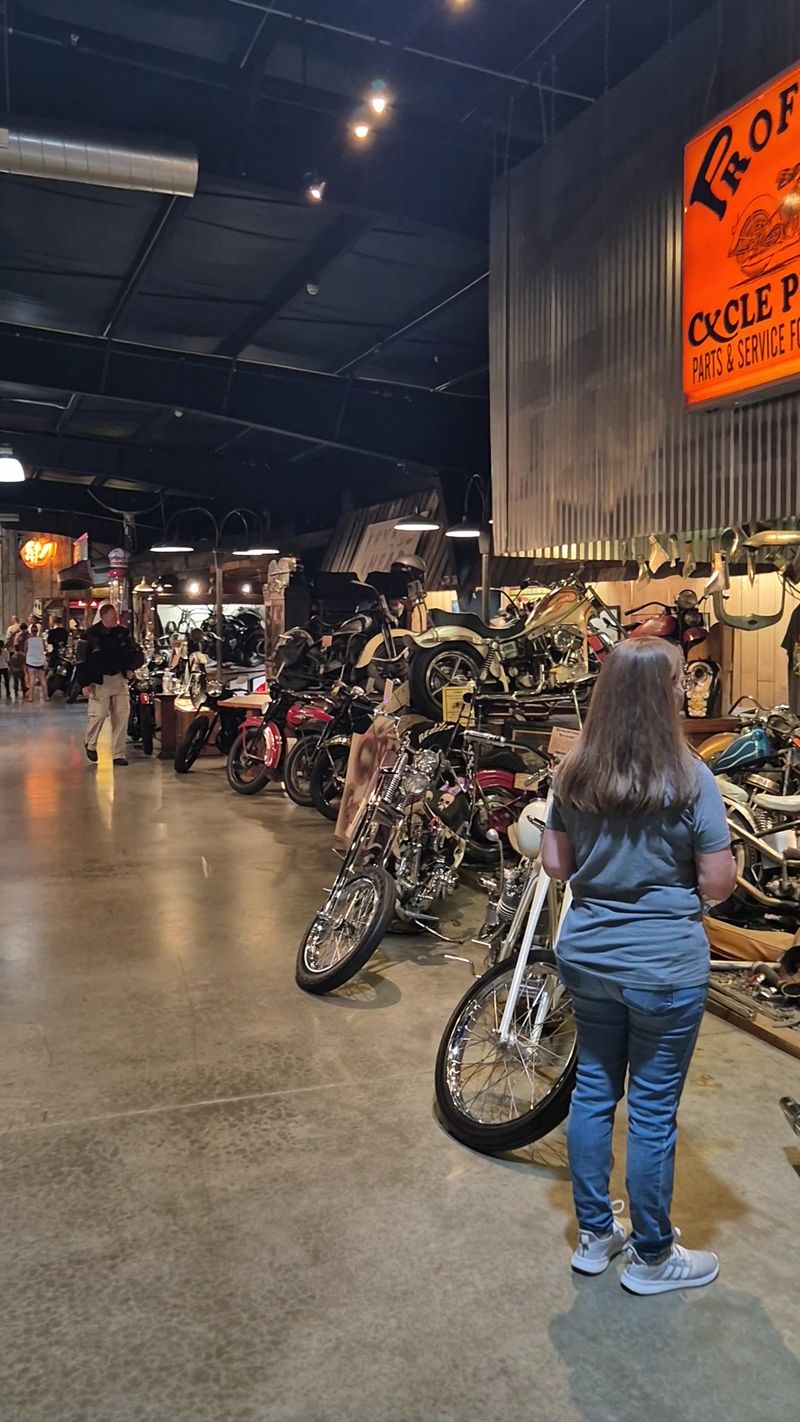
Tucked into the collection is a section devoted to women in motorcycling, and it changed the way I looked at the rest of the building. Photographs, riding gear, and machines tell stories that rarely make it into the usual histories.
Women were riding long-distance routes, competing, and running businesses around motorcycles when doing so was considered scandalous by plenty of people.
Period clothing on display makes the challenge obvious. Riding gear for women barely existed, so many simply adapted what they had and went anyway.
Several reviewers have mentioned appreciating this corner, and I understand why. Representation in a museum matters, especially in a hobby often labeled as one thing only.
I lingered over the photos the longest. Faces, poses, dusty roads, and a confidence that reads clearly across a century.
Ask the staff about it and you may get details that are not printed on the placards.
For families visiting with daughters, this section is a small, quiet win. It shows plainly that this history belongs to everyone who ever wanted to twist a throttle.
Odd Machines Harley and Indian Also Built
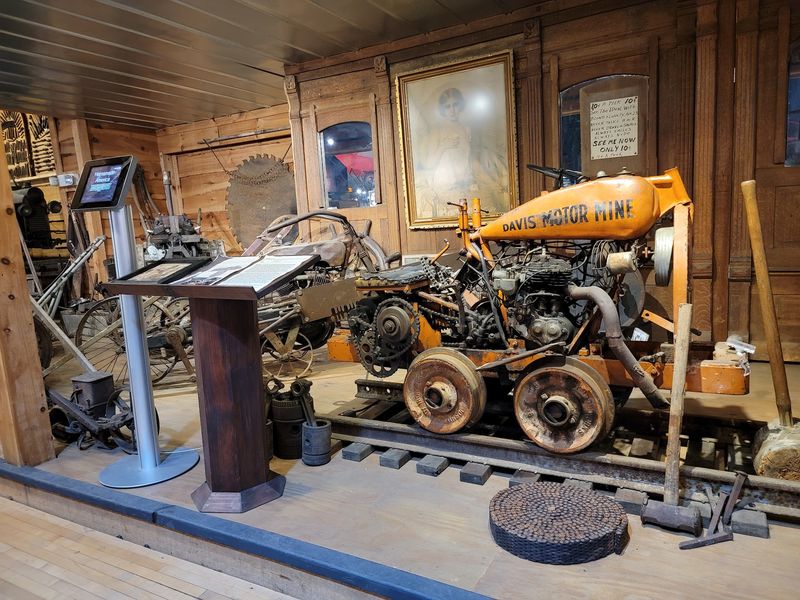
Toward the back, the collection takes a delightfully strange turn. Snowmobiles, outboard boat motors, chainsaws, tillers, and tractors all wearing badges I associated strictly with motorcycles.
Turns out the big American brands experimented far beyond two wheels, chasing whatever market might keep the factory busy.
Some of these products sold reasonably well. Others flopped so completely that surviving examples are now rarer than the motorcycles beside them.
I stood grinning at a logging saw for a good minute. The idea of a famous motorcycle company selling one felt like discovering a secret.
Visitors often mention this area as an unexpected highlight, and it is easy to see why. Nobody walks in expecting a snowmobile.
There are also scooters and small-engine oddities that show just how creative, or desperate, companies could get during lean years.
My advice is simple. Do not rush the back wall just because the famous bikes are up front.
The weird stuff explains how these companies actually survived, and it is genuinely funny to look at.
Cars, a Biplane, and the Road Dawg Surprise
Look up and you will spot a red biplane hanging from the ceiling, which was not on my mental checklist for a motorcycle museum. It fits better than you would think.
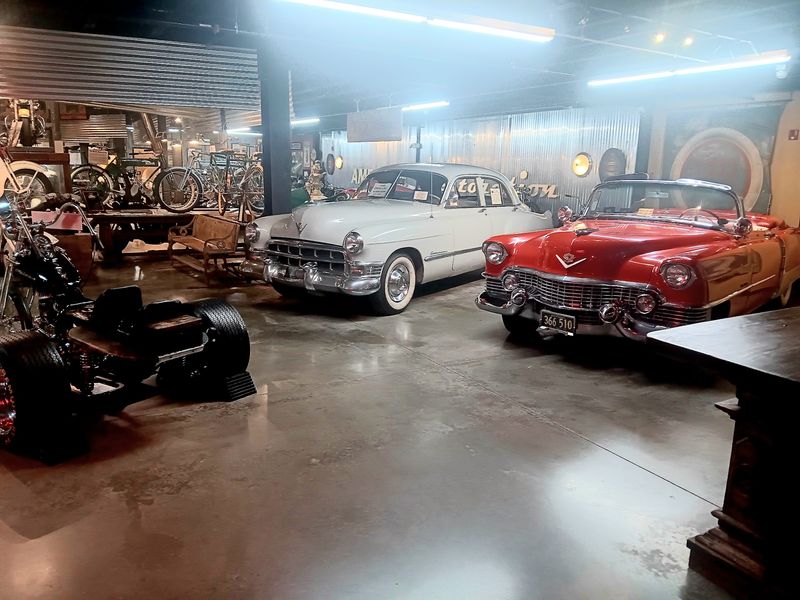
Down at floor level, the four-wheeled additions are just as eye-catching. A Packard, a Lincoln, a 1954 Eldorado convertible, and a 1962 Corvette roadster all share the space.
These are not filler. They extend the story into the broader history of American transportation and design.
Then there is the Road Dawg, a custom machine that draws a crowd all on its own. One visitor called it a feat of engineering, and photos really do undersell the scale of it.
Vintage bicycles appear too, including an early 1904 Marsh and a Schwinn display, along with pedal cars and homemade contraptions.
I kept discovering things on my second pass that I had completely missed on the first.
If you bring kids, this variety helps enormously. Even someone with zero interest in motorcycles will find a car, plane, or oddity that hooks them.
Staff Who Trade Stories Like Currency
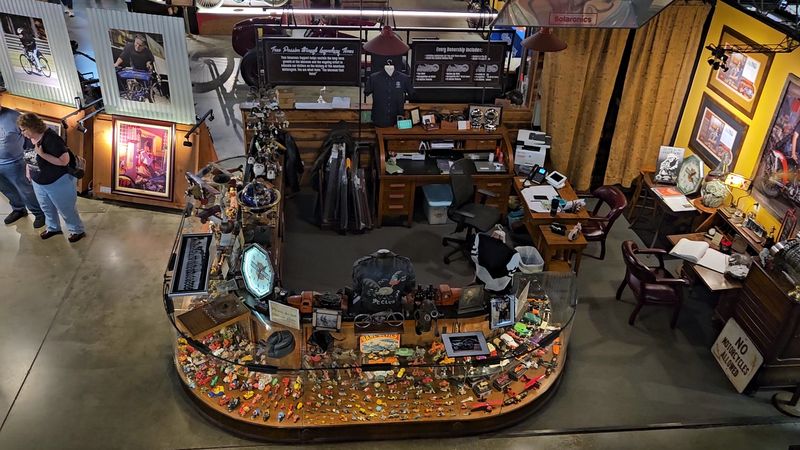
The people working here are the reason a two-hour visit turns into four. Ask one question and you get a story, a bit of mechanical explanation, and often an offer to start something up.
Guides are frequently praised by name in reviews, and after spending time on the floor I understand the loyalty. Their enthusiasm is completely unforced.
The collection began as the passion project of founder Dale Walksler, who spent decades finding and reviving these machines before the museum opened its doors on July 4, 2002.
His son, Matt Walksler, has carried that mission forward, keeping the running-bike philosophy intact.
You can feel that continuity in how the place is run. Nothing is roped off in a way that makes you feel unwelcome.
My suggestion is to be curious and say so out loud. Point at a bike, ask what it is, and see where the conversation goes.
That willingness to share knowledge is what separates this building from a warehouse full of expensive metal. It feels like a workshop that happens to be open to the public.
Planning the Drive Into Maggie Valley
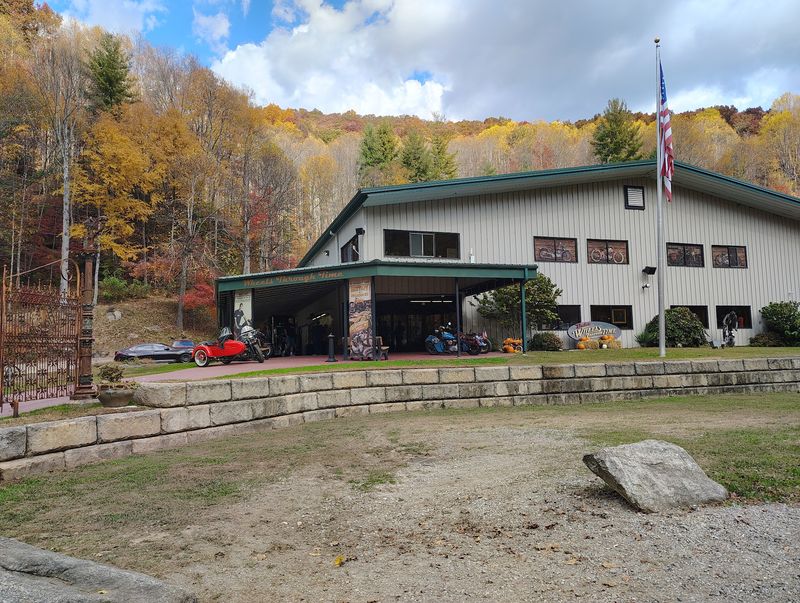
Give yourself more time than you think you need. Two hours is the bare minimum, and plenty of visitors report happily burning half a day inside.
The museum sits in Maggie Valley, roughly 34 miles west of Asheville and about five miles from the Blue Ridge Parkway, which makes it an easy addition to a mountain road trip.
Parking is out front, and you cross a small bridge on the walk toward the entrance. The mountain backdrop starts the visit off well.
Hours run Thursday through Monday, 10 AM to 5 PM, with Tuesday and Wednesday closed.
Inside you will find a gift shop near the entrance, restrooms on the first floor, and picnic tables outside for a breather.
Comfortable shoes help, since the floor is large and you will circle back more than once.
I left with ringing ears, a phone full of photos, and a real urge to return.
Address: 62 Vintage Ln, Maggie Valley, North Carolina 28751
