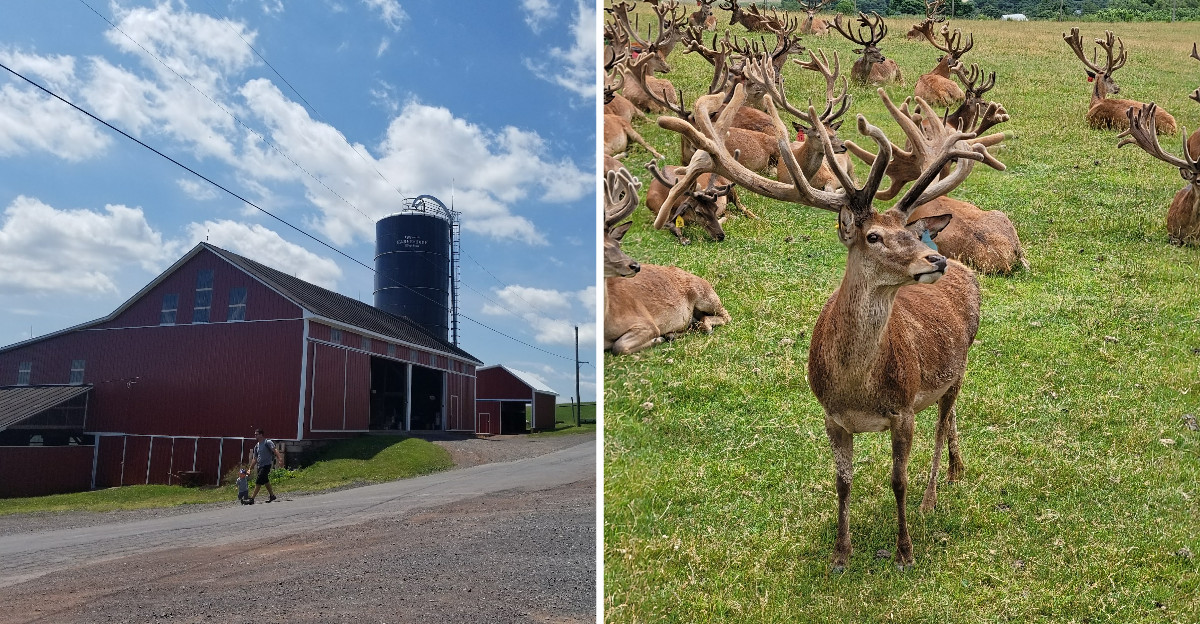
Hundreds of enormous red deer wander across a Pennsylvania farm where visitors can climb aboard a tractor-pulled wagon and feed the animals directly from their hands.
The family-run property is home to more than 400 deer spread across over 200 acres of rolling countryside. Guided tours take guests through the pastures, bringing them close to impressive stags, curious females, and younger animals that gather near the wagon.
I love how the experience combines a simple countryside outing with the excitement of seeing such large animals just inches away. Their antlers, seasonal behavior, and eagerness to approach the wagon make every visit a little different.
The tours operate mainly during warmer months and early fall, with advance reservations required. For families who enjoy wildlife encounters, it’s an unusual opportunity to learn about these animals while watching them interact up close.
Your Hands Are About To Become Very Popular
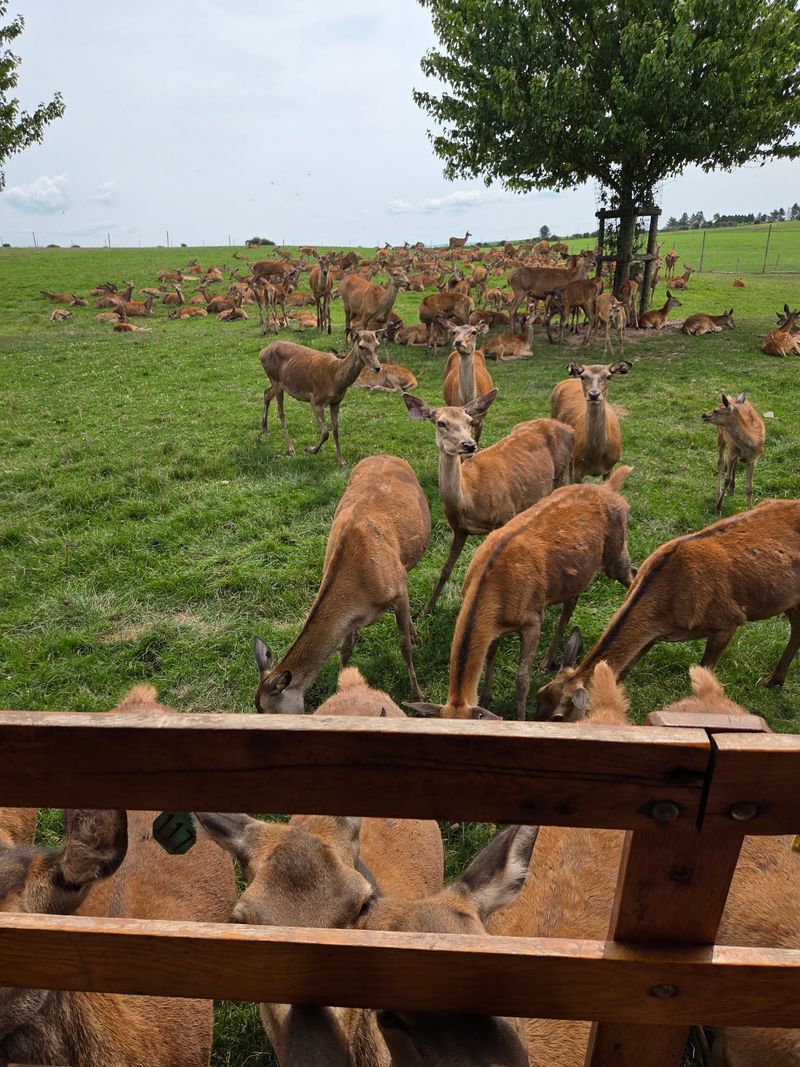
Red deer are big, curious, and very motivated by snacks. At Rolling Hills Red Deer Farm, that combination creates one of the most memorable wagon rides in the state.
The main event is a guided tour on a wagon pulled by a tractor. As it rolls through the pastures, deer walk right up to the sides looking for treats.
You buy feed at the farm before the ride starts. Then you simply hold out your hand and wait, though you won’t wait long.
The deer follow the wagon as it moves. Some are calm enough that guests can gently pet them while they munch.
Red deer are not the small whitetails you see along Pennsylvania roads. They’re a larger species from Europe and Asia, and they’re close cousins of elk.
That size makes the close-up moments feel even bigger. Seeing a stag’s face just inches away is something most people only get in nature documentaries.
Kids especially love this part, and toddlers have joined tours too. Still, adults tend to grin just as wide when a soft nose bumps their palm.
A tip for your camera: keep one hand free. Feeding and filming at the same time takes some practice, and the deer won’t pause politely for your photo.
Buy More Feed Than You Think You Need
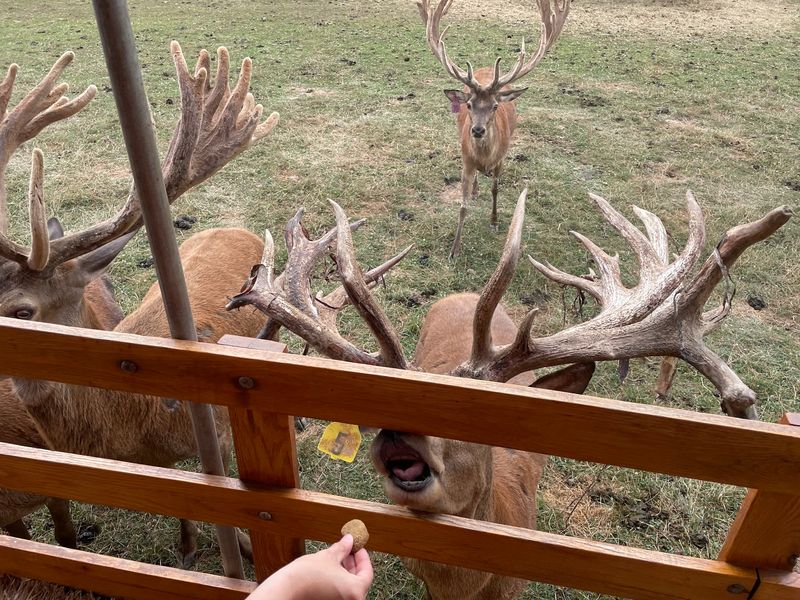
One bucket of feed sounds like plenty. Then the first group of deer arrives, and suddenly it’s empty.
The tour stops at different groups of animals. You’ll typically feed the females in one area and the males in another.
That means one bucket has to stretch across several eager crowds. Many families find it disappears in minutes.
Feed pellets are available at the farm for $2 per portion. Visitors can ask the staff how much to purchase for their group and follow the guide’s instructions during the tour.
Try pacing yourself, too. Offer small handfuls instead of dumping it all at once.
This helps more deer get a turn, and your bucket lasts longer. It also keeps kids from blowing through their supply at the very first stop.
Open palms work best when feeding. Keep your fingers flat so the deer can scoop up the food easily.
The animals here are used to people, which makes feeding feel relaxed instead of scary. Their soft lips tickle more than anything else.
Save a little feed for the end of the ride. The stags often come last, and they’re the ones everyone wants to see up close.
Running out before the antlered giants show up would be a tough lesson. Plan ahead, and your hands will stay busy the whole way.
Those Antlers Deserve Their Own Fan Club
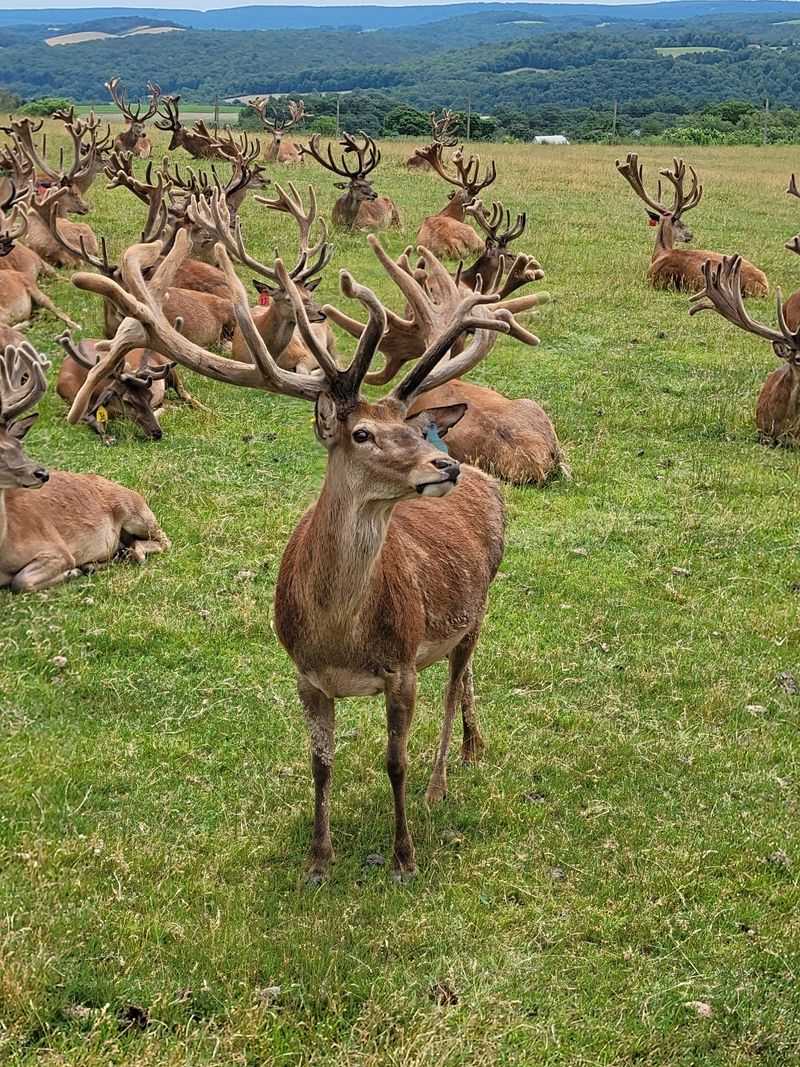
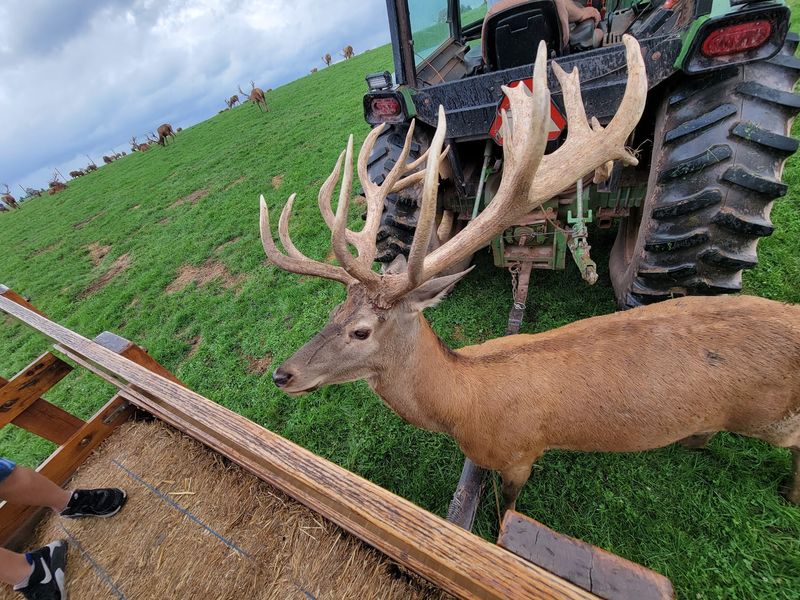
Stags here carry racks so large they look like they borrowed furniture. When a big male walks up to the wagon, conversations tend to stop mid-sentence.
Red deer stags grow new antlers every year. They shed the old set and start fresh, which is a wild bit of animal biology.
While growing, antlers are covered in a soft, fuzzy skin called velvet. Later in the year, that velvet comes off and leaves hard, polished bone.
Because of this cycle, the stags look different depending on when you visit. Spring and summer show off growing velvet racks, while fall brings the full hardened display.
The stags’ antlers change dramatically throughout the year, giving visitors different sights depending on the season. Guests should observe the animals from the wagon and follow their guide’s instructions about safe interactions.
Your guide can explain what stage the stags are in during your tour. It’s a great chance to ask questions you never knew you had.
Kids usually want to count the points on each rack. Good luck, because the bigger ones make that a real math challenge.
Bring a camera with a decent zoom if you can. Even from the wagon, the size of these animals is hard to capture without a little help.
Your Guide Knows A Ridiculous Amount About Deer
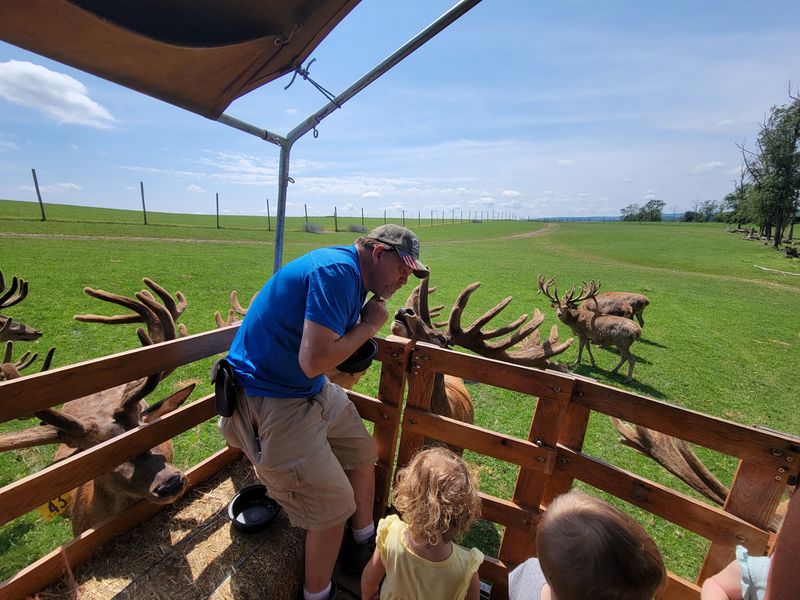
Feeding deer is fun, but learning about them makes the ride even better. Every tour at Rolling Hills Red Deer Farm comes with a guide who shares facts along the way.
The farm is family owned and run. The people driving the tractor are the same people caring for the herd.
That means you’re getting information straight from the source. Questions about diets, antlers, or baby deer are all fair game.
The guides point out details about the current animals, too. You might hear about yearlings, older stags, or how the herd behaves in different seasons.
This makes the trip feel like a moving classroom. Only this classroom has hay bales for seats and deer walking beside the desks.
Families with young kids will find the talks easy to follow. Older kids and adults usually pick up something surprising as well.
A typical tour lasts approximately 50 minutes, giving visitors time to feed the deer, observe the herd, and learn about the animals from their guide.
Here’s a fun idea for parents. Have kids come up with one question before the ride, then see if the guide can answer it.
Spoiler: they probably can. These folks clearly know their deer inside and out.
Call Ahead, Because The Wagon Has Limited Seats
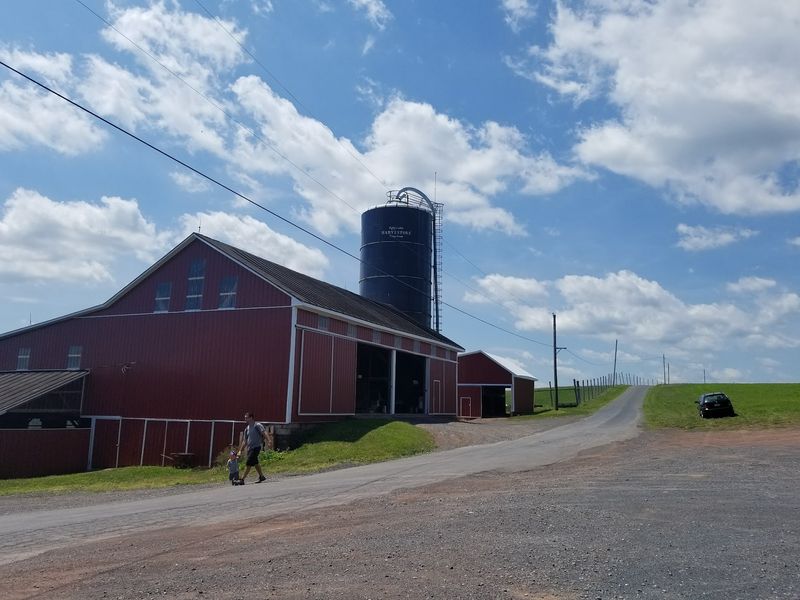
Showing up and hopping on sounds nice, but that’s not how this farm works best. The tours run by reservation, so a quick phone call should be step one.
The wagon only holds so many people. Weekends can fill up, especially during busy travel months.
Calling ahead helps the family plan each tour and keeps groups a comfortable size. It also saves you from a disappointing drive.
Rolling Hills Red Deer Farm operates its wagon tours on a seasonal schedule. Tours generally run on Saturdays from May through mid-June, Tuesday through Saturday during the summer, and Fridays and Saturdays in September and October.
The farm currently requires advance reservations, and visits outside the regular season must be arranged directly. Check availability before traveling, especially during the colder months.
Dress for the farm, too. Comfortable shoes and weather-ready clothes make sense since you’ll be riding outdoors.
Sunscreen helps on bright days, and a light jacket helps on breezy ones. Pennsylvania weather loves to change its mind.
Parking is located across the road from the gift shop and tour area. Restroom facilities are basic, so plan accordingly before the ride begins.
A little planning goes a long way. Then all that’s left is enjoying the deer.
Every Season Brings A Different Herd Mood
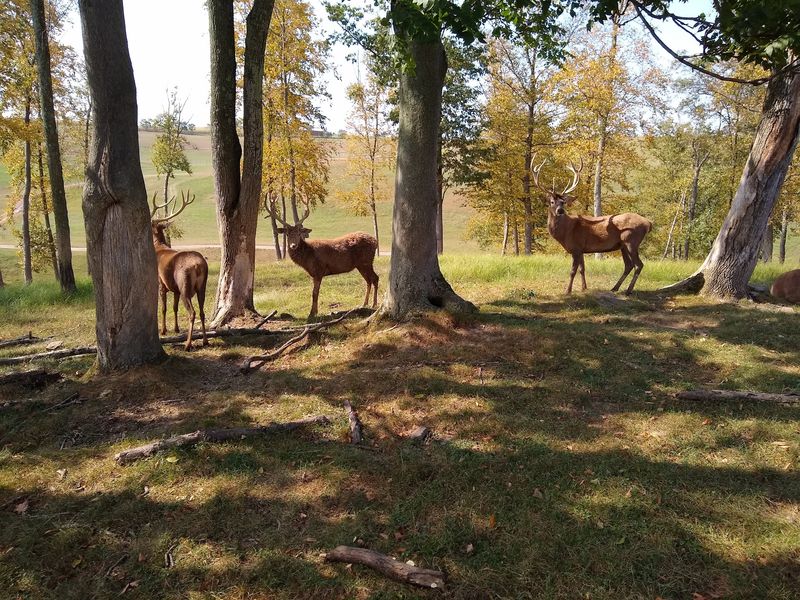
Baby deer, velvet antlers, or polished racks? What you see depends on the calendar.
Return visitors to Rolling Hills Red Deer Farm often notice that each tour feels a little different. The herd changes as the year moves along.
In warmer months, young deer may be part of the scene. Seeing the little ones near their mothers is a sweet highlight.
Yearlings are another fun group to spot. They’re past the baby stage but still not fully grown, kind of like deer teenagers.
The stags change the most over time. Their antlers grow, harden, and eventually drop off before starting again.
Fall is when red deer stags are most dramatic. This is their breeding season, and they’re known for loud, deep roars.
Your guide can tell you what’s happening with the herd during your visit. Asking about the season makes the experience feel more personal.
If you enjoy your first trip, consider coming back at a different time of year. It’s practically a new show with the same cast.
The hills of central Pennsylvania change colors too. Green summer fields and golden autumn views make the ride pretty in more ways than one.
Knoebels Fans, This Morning Plan Is For You
Early risers have a secret weapon in this part of the state. The farm sits close to Knoebels, the famous amusement park in Elysburg.
During the regular tour season, departures generally begin at 10 a.m. Families hoping to combine the deer farm with a visit to Knoebels should check both attractions’ operating calendars and reserve their wagon tour in advance.
Families with kids who wake up at dawn will appreciate this. Burning energy with deer beats bouncing around a hotel room.
You’ll find the farm at 63 Pinnacle Dr, Catawissa, PA 17820. The drive winds through Columbia County farmland, so the scenery starts before you even arrive.
The approximately 50-minute tour can fit into a larger family outing, provided you reserve a suitable departure time and account for travel between attractions.
This combo works well for a full family outing. Animals in the morning and roller coasters later is a tough lineup to beat.
Remember to reserve your tour ahead of time. A missed slot could throw off your whole schedule.
Catawissa itself is a quiet small town along the Susquehanna River region. It’s a pleasant change of pace from busier vacation spots.
So when planning your Pennsylvania road trip, give this farm a spot on the list. Your morning will thank you.
