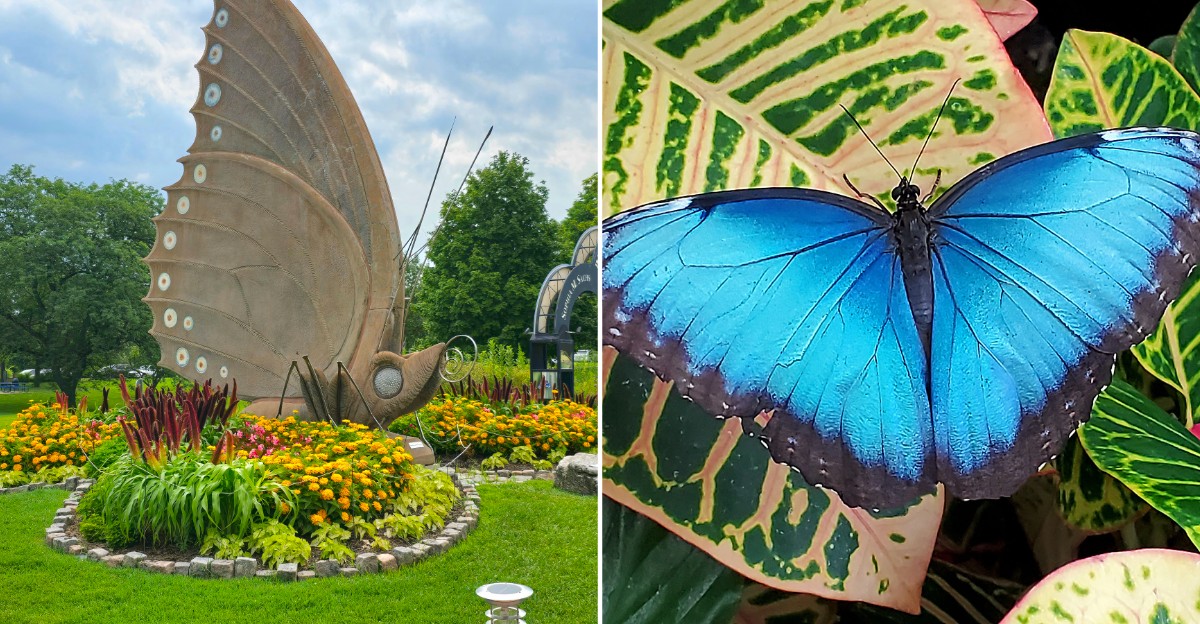
Butterflies do not exactly respect personal space here. One might zip past your shoulder while another lands nearby and stays put long enough for a photo.
This Missouri conservatory holds more than sixty tropical species inside a huge greenhouse filled with flowers, leafy plants, and warm humid air.
The paths twist through the space, so every turn gives you a different view.
Bright blue wings flash overhead, tiny species hide among the leaves, and larger butterflies drift through the room like they own it. The best part is that nothing feels staged.
You just walk, watch, and wait for the next one to show up somewhere unexpected.
Stepping Into Warm Jungle Air
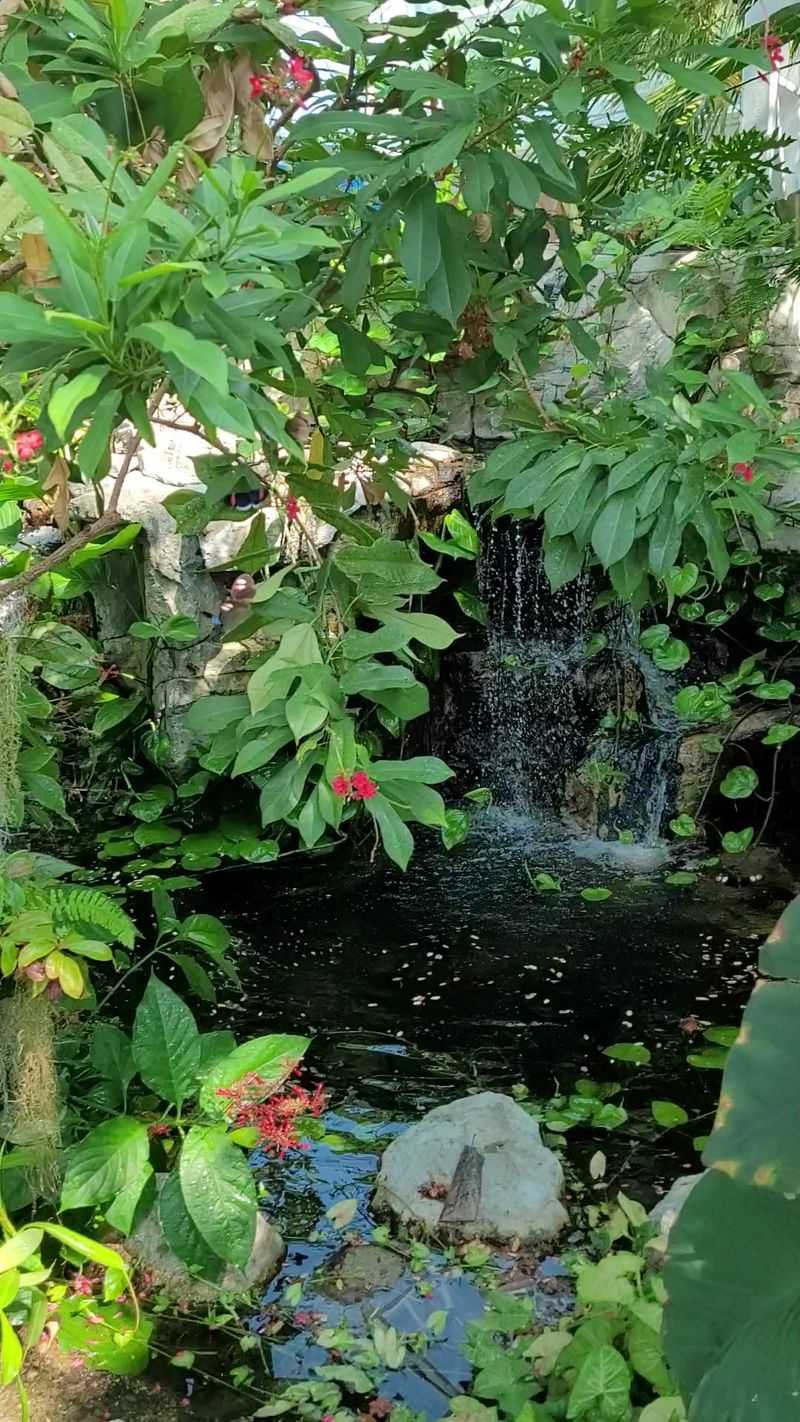
The very first thing you will probably notice when you walk through those doors is the warm, damp air wrapping around you like a soft blanket. The conservatory is kept like a tropical rainforest, so the humidity and heat are part of the whole experience rather than a side detail.
Honestly, if you wear glasses, you might want to give them a moment to stop fogging up before you start looking around. Light layers are a smart move too, because you will feel the difference between the outside weather and that steamy jungle feel almost right away.
What makes the moment fun is how quickly your brain forgets you are standing in the middle of the Midwest. Big leafy plants spill over the paths, the light filters softly through the glass, and butterflies start drifting past your shoulders while you are still getting your bearings.
So take a breath and slow down for a minute once you are inside, because rushing through would really waste the magic. Let your eyes adjust to all the green and watch how the butterflies move between the flowers and leaves around you.
You will find that standing still for a bit actually helps you spot way more wings than if you just keep walking, and that little pause sets the tone for everything else you are about to see.
Finding Your Way To Faust Park
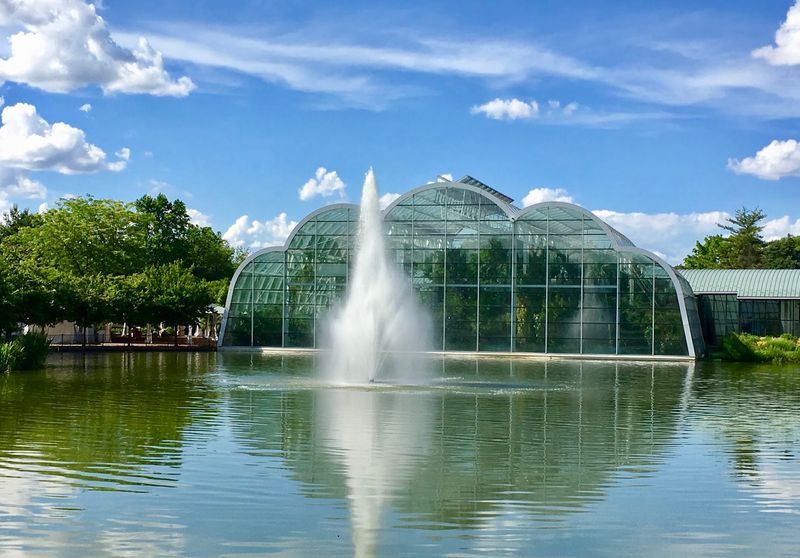
Getting there is easier than you might think, since the butterfly house sits inside Faust Park, a roomy public park out in Chesterfield. The full address is 15050 Faust Park, Chesterfield, MO 63017, so you can plug that straight into your map app and head on over.
Because the building lives inside a bigger park, you can easily turn your visit into a longer outing if the weather is nice. Plenty of folks like to stretch their legs on the park grounds before or after they go inside to see the butterflies.
Here is a fun little detail you might enjoy knowing before you arrive. The butterfly house is actually a division of the Missouri Botanical Garden, which is one of the most respected plant institutions around, so the care behind every leaf and wing is serious business.
That connection really shows in how thoughtfully everything is planted and arranged inside the conservatory. You are not just walking into a room full of bugs, you are stepping into a carefully planned living exhibit built by people who know plants inside and out.
My best advice is to check the official website for current hours before you go, so you can plan your drive and arrive feeling relaxed instead of rushed.
A Rainbow Of Wings From Around The World
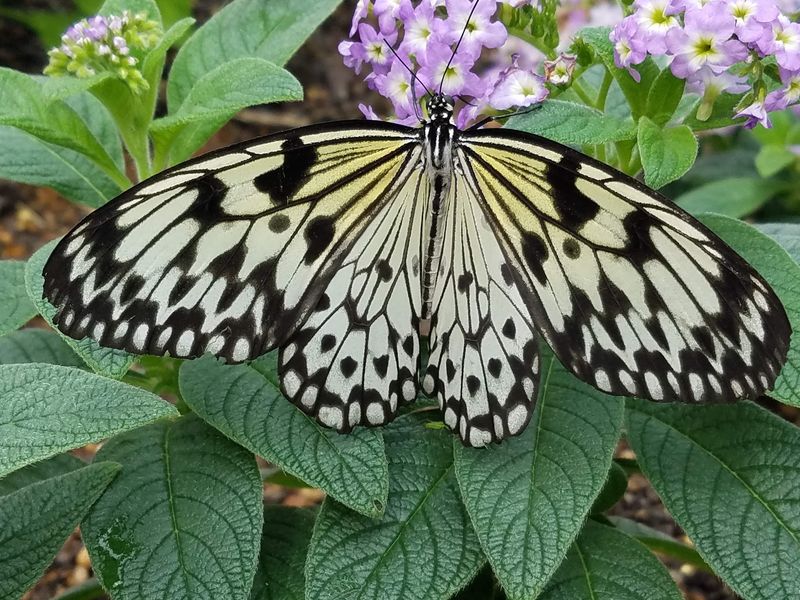
Picture dozens upon dozens of different kinds of butterflies all sharing one big glass room, and you will start to get the idea of what waits for you here. More than sixty tropical species flutter around the conservatory, and on a typical day there can be well over a thousand individual butterflies in the air.
They come from tropical places all over the globe, so you are basically getting a world tour without packing a suitcase. Some are bold and bright, some are soft and pale, and some look almost plain until they open their wings and surprise you.
Want a little tip that makes the whole visit better? Try picking one color at a time and searching only for that, because it turns the walk into a gentle treasure hunt that keeps you looking closer.
Kids especially tend to love that game, but grownups get hooked on it too once they start noticing the patterns and shapes. You might spot stripes, spots, eye shapes, and wing edges that look almost painted by hand.
The butterflies are free to fly wherever they please, which means every visit feels a little different from the last. You might see a cluster feeding on fruit one time and a whole bunch resting on leaves the next.
Those Dazzling Blue Morphos
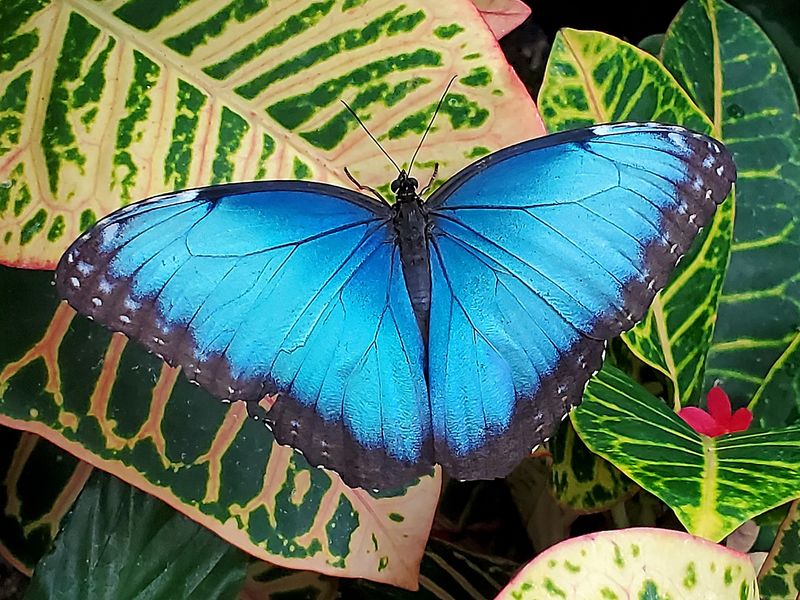
If there is one butterfly people tend to hunt for the moment they walk in, it is the blue morpho, and once you see one you will totally understand why. Those big wings flash a bright, shiny blue that almost looks like it is glowing when the light hits just right.
Here is the funny part that surprises a lot of visitors the first time. When a morpho lands and folds its wings, the underside is mostly brown with little eye-shaped spots, so it can almost disappear against a branch or leaf.
That brown side actually helps protect it from hungry predators back in the rainforests of places like Costa Rica, where these butterflies are found in the wild. The blue flashes while it flies, then it seems to vanish the instant it settles down.
So if you are hoping to catch that famous blue, keep your eyes on the air instead of only scanning the plants. Morphos have a bouncy, floating way of flying that makes them pretty easy to pick out once you know what to look for.
And honestly, do not stress if one never sits still long enough for a photo, because just watching that blue drift by over your head is more than enough of a treat.
Delicate Little Ruby Lacewings
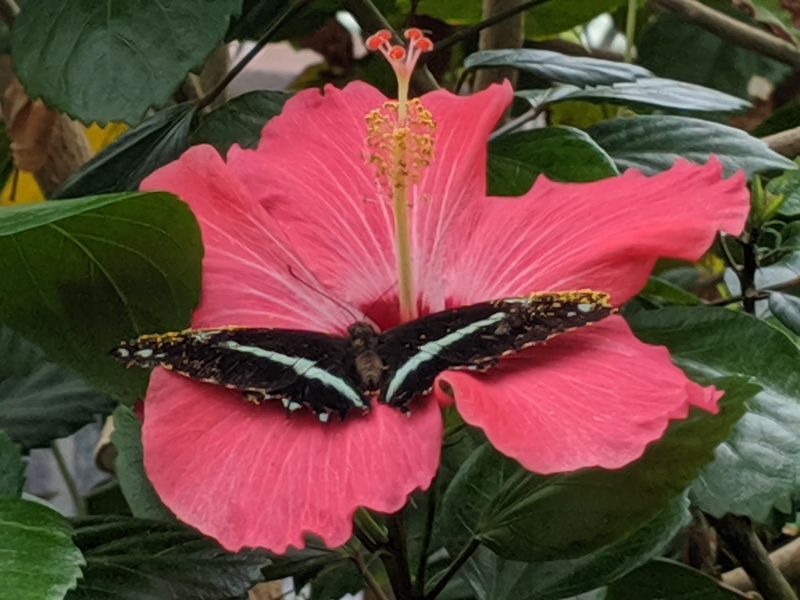
While the bigger butterflies grab most of the attention, I really think you should save some time to look for the ruby lacewing. It comes from places like Malaysia, and its wings have this warm reddish color with fancy, lace-like edges that look almost stitched together.
You will probably need to move a little slower to catch one, since smaller butterflies can blend in better among the busy leaves and blooms. Scan the flowers at about eye level and down near the plants, because that is often where they like to sip nectar.
Isn’t it amazing how something so small can carry so much detail on its wings? When you get a good look, you can see fine lines and patterns that you would totally miss if you only glanced at it from across the room.
This is a good moment to remind yourself to keep your hands to yourself, even if one lands close by. Butterfly wings are covered in tiny scales, and touching them can really harm these fragile little travelers.
If you bring a camera or phone, try leaning in slowly and keeping your movements smooth, which gives you a much better chance of getting a clear shot without startling the lacewing into flying off.
Watching A Butterfly Come To Life
Have you ever actually watched a butterfly climb out of its chrysalis with your own eyes? At the Miracle of Metamorphosis display, you get a real chance to see that process happening right in front of you.
The chrysalises hang in neat rows, and each one is a little package of change that will eventually open up. Some look green, some look gold, and some look like dried leaves, which is a clever trick nature uses to keep them safe.
When a butterfly does emerge, its wings start out crumpled and soft, and it needs some quiet time to pump them up and let them dry. Watching that slow unfolding is surprisingly calming, kind of like seeing a flower open in fast motion.
There is no guarantee you will catch one at the exact moment it pops out, so patience really helps here. If you hang around the display for a while, though, your odds go up quite a bit.
It is also a great spot to talk with younger visitors about how a caterpillar becomes a butterfly, since they can see the stages up close instead of just hearing about them. That kind of hands-on learning tends to stick in a way a textbook rarely does.
Creepy Crawly Neighbors In The Insect Zoo
Okay, so not everything here has pretty wings, and that is honestly part of the fun. The butterfly house also has an indoor insect exhibit, sometimes called an insect zoo, filled with all sorts of fascinating invertebrates from around the world.
You might find creatures that look like sticks, critters with tough shiny shells, and others with way more legs than you would expect. Each one sits in its own carefully set up home, so you can lean in and study them without any worry.
Even if bugs usually make you a little squeamish, I bet you will be surprised by how interesting they become once you start reading about them. Many of these animals play big jobs in nature, like breaking down dead plants, cleaning up the ground, or feeding other wildlife.
The signs nearby help explain what makes each creature special, so it is worth slowing down to read a few. You will walk away knowing a lot more about how these small animals keep their habitats running.
Kids who love anything wiggly will probably want to stay here for ages, so plan a little extra time if you have a curious young explorer with you. It makes a nice contrast after the bright, airy feel of the conservatory.
A Backyard Garden For Local Fliers
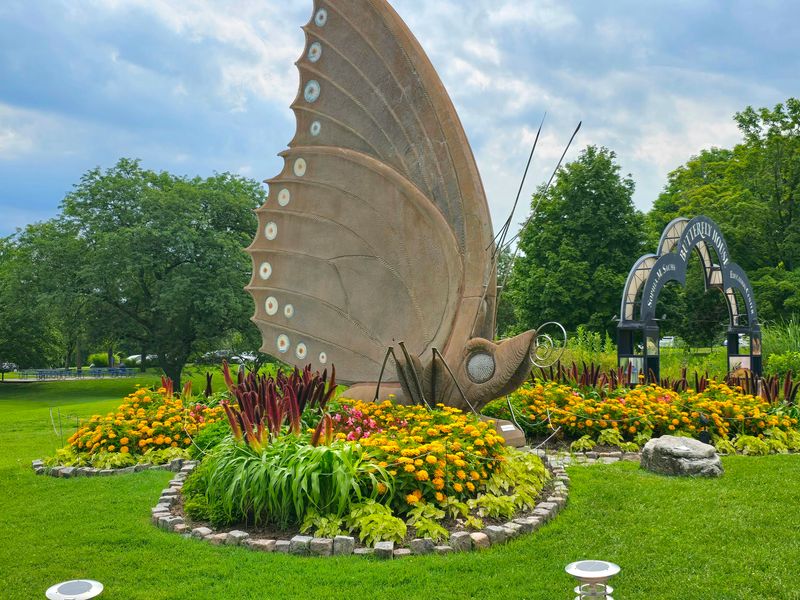
After all that tropical heat, stepping outside into the Native Butterfly Garden feels like a breath of fresh air in the best way. Instead of faraway species, this garden is planted to welcome butterflies that live right here in Missouri.
The garden is filled with two kinds of helpful plants that work as a team. Host plants give caterpillars something to munch on, while nectar plants feed the grown-up butterflies looking for a sweet drink.
What I love about this part is how practical it feels for anyone with a yard or even a few flower pots. You can pick up ideas for what to plant at home if you want to invite more butterflies to your own outdoor space.
Bring your patience and a sunny day if you can, since local butterflies tend to be most active when it is warm and bright. You might spot familiar faces drifting between the blooms, especially when the flowers are at their fullest.
It is a quieter, more relaxed corner than the busy conservatory, so it is a nice spot to slow down before heading home. You get to see that protecting butterflies is not only about rainforests far away, but also about the plants growing right in our own neighborhoods.
