Museums get an unfair reputation for being places where everybody whispers, reads tiny labels, and slowly starts looking for the exit.
Maryland has plenty that completely ruin that stereotype, with collections devoted to strange history, transportation, art, science, unusual objects, local stories, and exhibits that can make even the person who “doesn’t really do museums” change their mind.
Some are interactive, some are wonderfully specific, and others are memorable simply because you cannot believe an entire museum exists for that particular subject. The best ones give you something to talk about afterward instead of making the visit feel like homework with better lighting.
These 12 Maryland museums are for curious people, reluctant museum companions, and anyone who would rather leave saying “that was weird” than “at least we learned something.”
1. American Visionary Art Museum

There is really nothing else quite like the American Visionary Art Museum, and that is not an exaggeration. The whole building practically pulses with creative energy, from the mosaic-covered facade to the kinetic sculptures spinning lazily in the courtyard.
Before even getting through the front door, visitors are already stopping to take photos.
Inside, the collection celebrates self-taught artists, people who never attended formal art school but created work so powerful it demands attention.
Sculptures built from bottle caps, quilts stitched together from personal memory, and towering installations made from salvaged materials fill the galleries.
Each piece carries a story that feels deeply human and completely unfiltered.
The atmosphere is playful but never trivial. Light humor and genuine emotion exist side by side throughout the exhibits, which keeps the experience from ever feeling heavy or exhausting.
Families, solo travelers, and art lovers of all backgrounds tend to leave with something unexpected stuck in their minds.
Baltimore’s Inner Harbor sits just outside, so combining a museum visit with a waterfront walk makes for a full and satisfying afternoon. The museum rotates its themed exhibitions regularly, meaning repeat visitors always find something new to discover.
It is the kind of place that rewards curiosity without requiring any prior knowledge of art history.
Address: 800 Key Hwy, Baltimore, MD 21230
2. National Museum of Health and Medicine
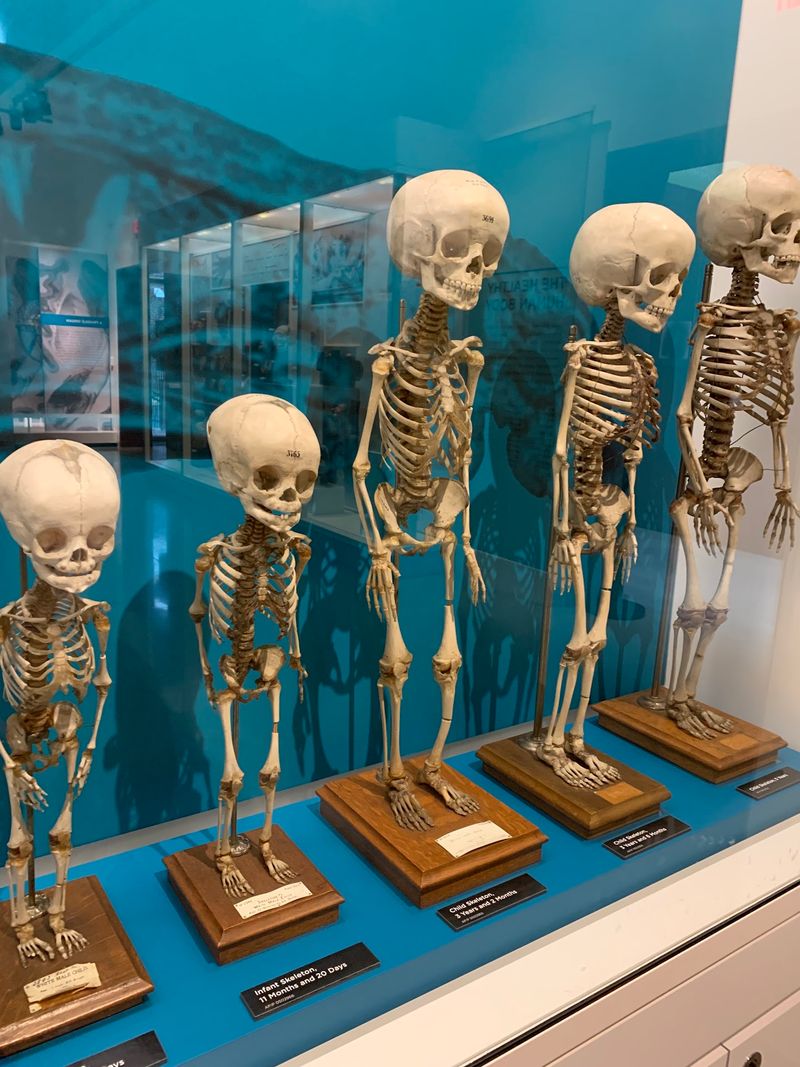
Few museums manage to be simultaneously unsettling and completely fascinating, but the National Museum of Health and Medicine pulls it off with remarkable confidence.
Originally founded as the Army Medical Museum during the Civil War, this collection has been quietly growing for over 150 years.
The depth of what is preserved here is genuinely staggering.
Visitors can examine bone fragments and artifacts connected to Abraham Lincoln’s assassination, offering a surprisingly tangible link to one of American history’s most defining moments.
Military medicine, forensic identification, and the evolution of surgical techniques are all covered with careful attention to detail.
The exhibits never sensationalize the difficult material, which actually makes everything feel more impactful.
Rows of anatomical specimens illustrate how the human body develops and changes over time. Antique medical instruments that look almost medieval sit beside modern tools, showing just how dramatically healthcare has transformed.
The contrast is both humbling and inspiring.
Children and adults with an interest in science will find plenty to engage with, though some exhibits are graphic by nature and worth previewing for younger visitors. The museum keeps its approach educational rather than shocking, which helps maintain a respectful tone throughout.
For anyone curious about how medicine shaped history and saved lives, this museum offers a perspective that textbooks simply cannot replicate.
Address: 2500 Linden Ln, Silver Spring, MD 20910
3. National Capital Trolley Museum
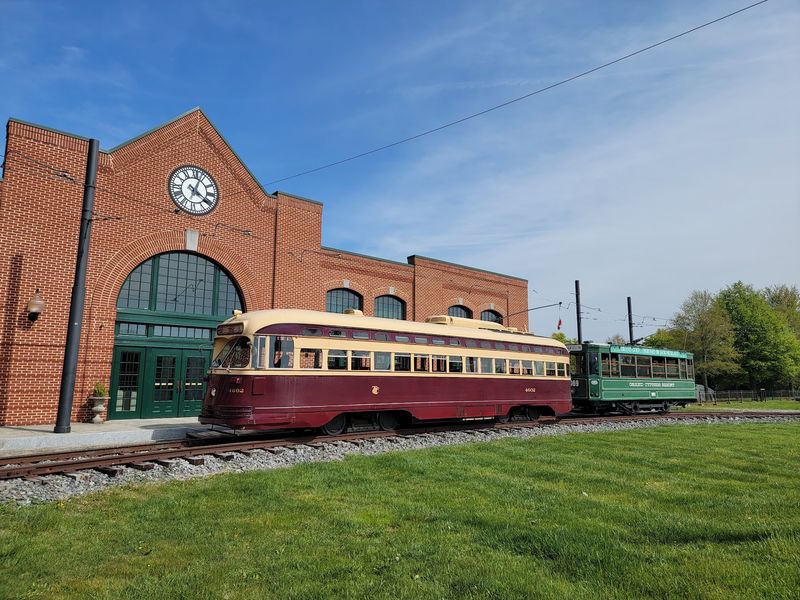
Electric streetcars once defined the rhythm of daily life in cities across America, and the National Capital Trolley Museum keeps that memory very much alive.
The collection includes historic trolleys from Washington D.C. and several international cities, many of them beautifully restored to their original condition.
Just seeing them lined up is enough to spark a real sense of wonder.
The best part of a visit here is actually riding one. Guests can board a restored streetcar and travel along a scenic track, feeling the gentle sway and listening to the mechanical sounds that once filled busy urban streets.
It is a sensory experience that no photograph can fully capture.
Beyond the rides, the museum offers exhibits that explain how electric streetcar networks shaped city planning and community life throughout the late 19th and early 20th centuries.
The engineering behind these machines was genuinely impressive for its time, and the museum does a good job of making that clear without overwhelming visitors with technical jargon.
Families with young children tend to love the trolley rides especially. There is something universally appealing about climbing aboard a vintage vehicle and rolling through a quiet stretch of Maryland woodland.
The museum grounds are relaxed and unhurried, making it a pleasant contrast to louder, busier attractions. It is a small museum with a big personality.
Address: 1313 Bonifant Rd, Colesville, MD 20905
4. Chesapeake Children’s Museum
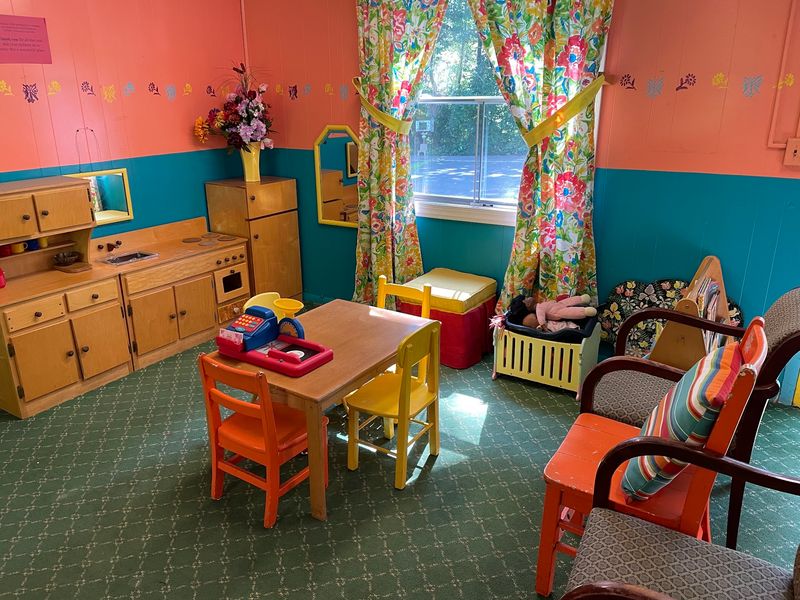
Hidden along Spa Creek in Annapolis, the Chesapeake Children’s Museum is one of those places that somehow manages to be both educational and genuinely fun without making either quality feel forced.
The museum was designed with young minds at the center of every decision, and that thoughtfulness shows in every corner of the space.
Kids arrive curious and leave exhausted in the best possible way.
Indoor exhibits blend science, art, history, and culture in ways that feel natural rather than academic.
Children can climb aboard a log boat to imagine the life of a Chesapeake waterman, explore exhibits on Black maritime culture, and learn about the Latin American communities that have shaped the region’s identity.
The range of stories covered here is broader than most expect.
Outside, a nature trail winds toward ponds and shoreline habitats where seasonal wildlife appears throughout the year. Turtles, birds, and aquatic plants make the outdoor areas feel like a living classroom.
Live animals add an extra layer of excitement for younger visitors who are still building their connection to the natural world.
An art studio and a music room round out the indoor offerings, giving creative children space to express themselves beyond the structured exhibits. Parents appreciate how the museum balances structured learning with open-ended play.
For families visiting Annapolis, this museum makes a perfect addition to any itinerary.
Address: 25 Silopanna Rd, Annapolis, MD 21403
5. Jefferson Patterson Park and Museum
Spread across a generous stretch of land along the Patuxent River, Jefferson Patterson Park and Museum is the kind of place that quietly rewires how visitors think about time.
Over 70 recorded archaeological sites exist within its boundaries, covering roughly 10,000 years of human presence in this part of Maryland.
That number alone is enough to stop most people mid-step.
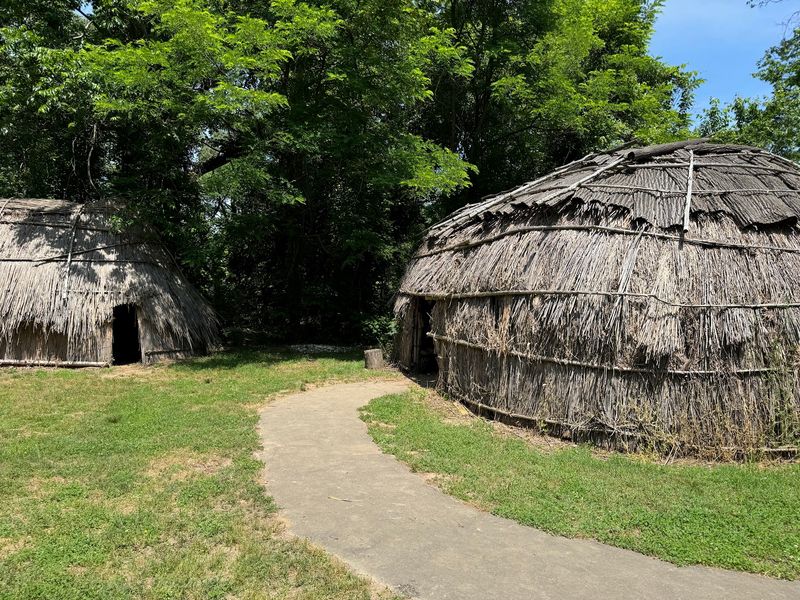
A reconstructed Woodland Indian village, complete with wigwams and a working garden, brings Indigenous life along the Patuxent River into vivid focus. The setting echoes the world that Captain John Smith would have encountered during his early explorations of the Chesapeake region.
Interpretive trails connect the different historical periods, allowing visitors to move through time at their own pace.
The Patterson House offers a glimpse into Federal-period domestic life, while the Maryland Archaeological Conservation Laboratory houses millions of artifacts collected from sites across the state. Researchers and curious visitors alike are welcome to engage with this remarkable resource.
The lab makes the science of archaeology feel accessible rather than distant.
Programs and seasonal events bring additional depth to the experience, often focusing on the relationship between human communities and the changing Chesapeake Bay watershed. The park’s natural beauty adds a layer of calm to every visit.
Herons fish along the riverbanks, wildflowers bloom along the trails, and the whole landscape carries a quiet, unhurried energy that feels increasingly rare.
Address: 10515 Mackall Rd, St. Leonard, MD 20685
6. Port Discovery Children’s Museum
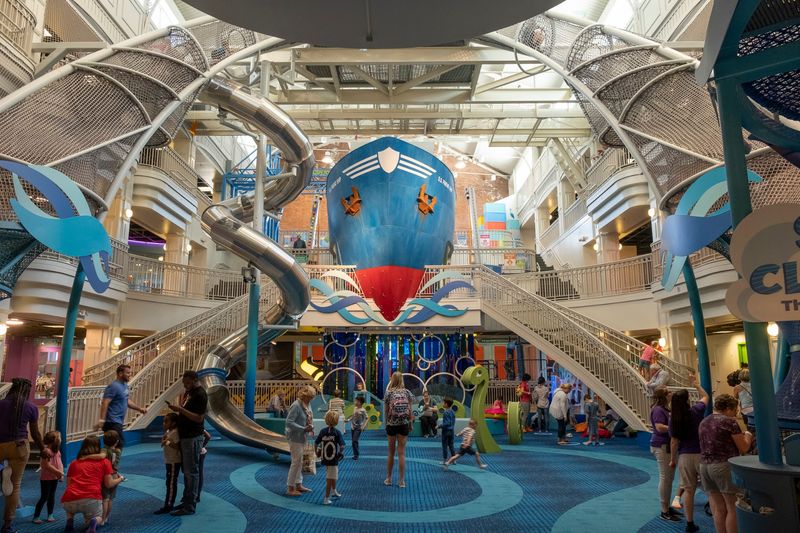
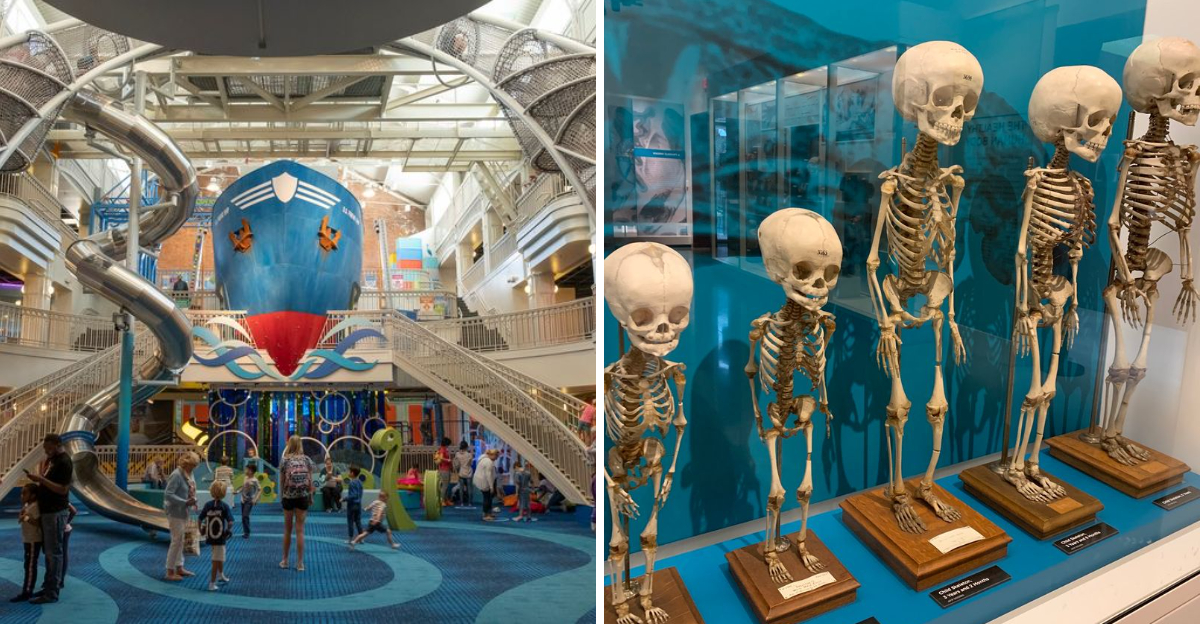
Port Discovery Children’s Museum occupies a historic Wholesale Fish Market building in the heart of Baltimore, and the contrast between the building’s industrial bones and the colorful chaos inside is immediately charming.
Three floors of interactive exhibits stretch in every direction, and the energy level from the moment of arrival is infectious.
Young visitors tend to make a beeline for the SkyClimber before anything else.
The SkyClimber is a four-story climbing structure that sends children scrambling through nets, tunnels, and slides high above the museum floor. It is the kind of attraction that exhausts kids in the most satisfying way.
Parents usually find a comfortable spot nearby and watch with a mix of pride and mild anxiety.
Beyond the climbing structure, the Port exhibit allows children to explore how a working ship operates. Steering, cargo loading, and navigation activities give the experience a realistic edge that goes beyond pretend play.
The connection to Baltimore’s maritime identity gives the exhibit a local flavor that feels genuine.
Younger visitors have their own dedicated area called Tot Trails, designed specifically for infants and toddlers with soft play features, gentle climbing structures, and a sand digging activity.
The museum thoughtfully separates the high-energy zones from the calmer spaces, making it easier for families with children of different ages to enjoy the visit together.
Baltimore families return here often, and it is easy to understand why.
Address: 35 Market Pl, Baltimore, MD 21202
7. Historic Ships in Baltimore
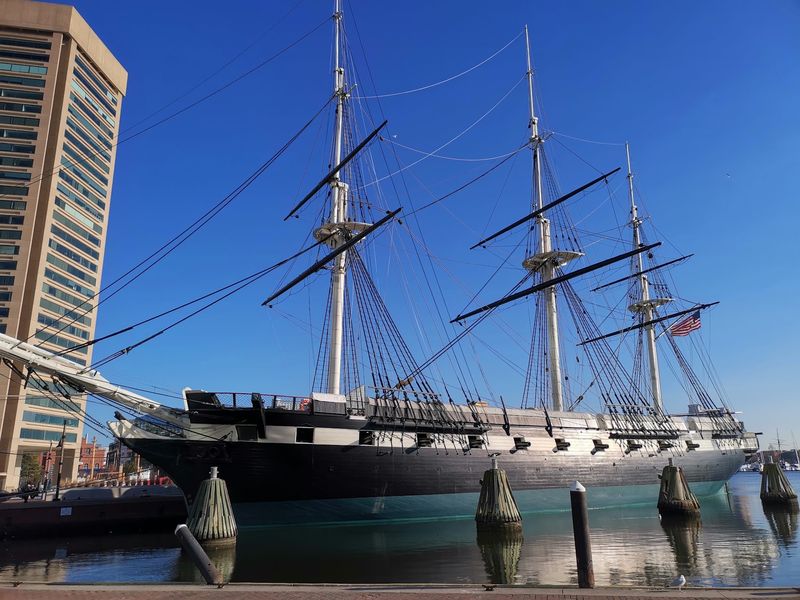
There is something about standing on the deck of a ship that has actually sailed through history that no exhibit can replicate. Historic Ships in Baltimore offers exactly that, with a collection of vessels that served across different eras of American naval and maritime life.
The scale of these ships in person is genuinely humbling.
The USS Constellation is the centerpiece for many visitors, a sloop-of-war and the last sail-only warship built by the U.S. Navy.
Its decks and below-deck spaces give a vivid picture of what life at sea looked like during the Civil War era. Daily cannon firings and talks by crew members add a dynamic quality to the experience that keeps energy levels high.
The USS Torsk, a World War II submarine, offers a completely different atmosphere. Its cramped corridors and torpedo room make the realities of submarine warfare feel immediate and sobering.
Moving through those tight quarters, even as a tourist, gives a new appreciation for the people who served aboard vessels like this one.
The US Coast Guard Cutter Taney, which served for over 50 years, and the Lightship Chesapeake round out the collection beautifully. Each vessel carries its own character and history, making the full tour feel varied rather than repetitive.
The Seven Foot Knoll Lighthouse, one of the oldest surviving screw-pile lighthouses, adds one final layer of maritime heritage to an already impressive lineup.
Address: 301 E Pratt St, Baltimore, MD 21202
8. Havre de Grace Decoy Museum
Havre de Grace has a quiet pride about it, and the Decoy Museum captures that spirit better than almost anything else in town.
What started as a purely practical craft, carving wooden lures to attract waterfowl during hunting season, evolved over generations into one of the most distinctive American folk art traditions.
The collection here makes that evolution impossible to dismiss.
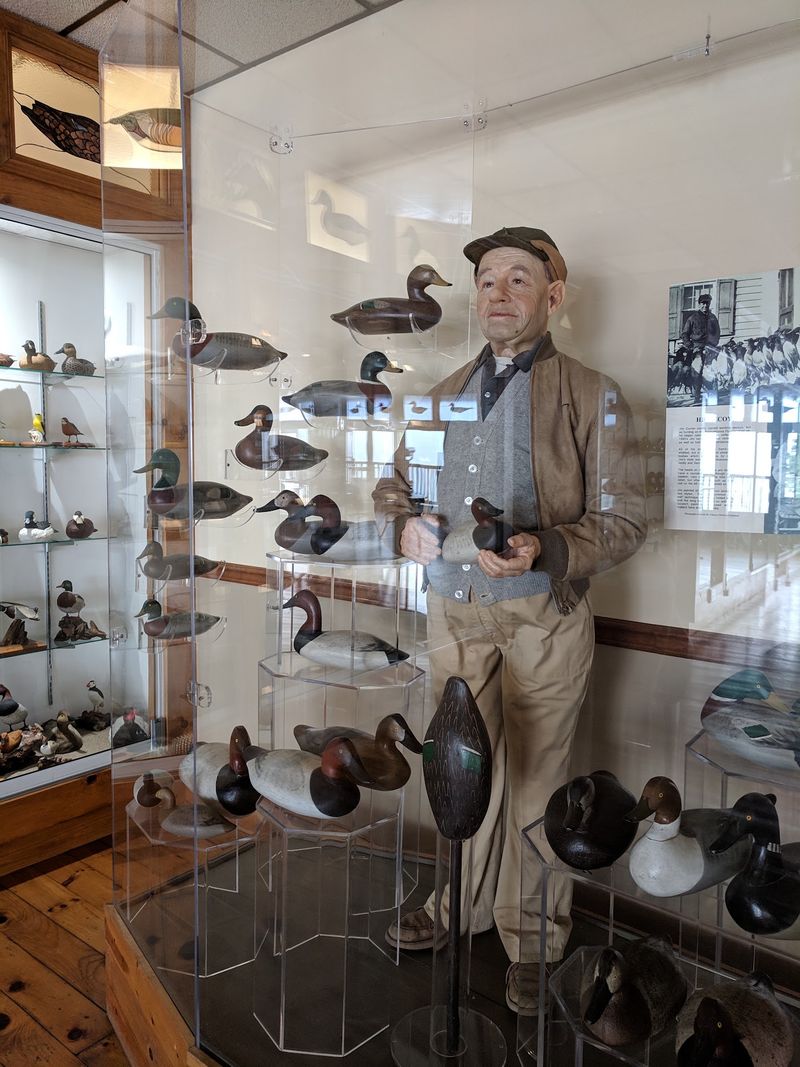
Situated on the banks of the historic Susquehanna Flats, the museum houses an extensive collection of working decoys from the Chesapeake Bay region and beyond. Some are rough and utilitarian, built to be tossed into cold water before dawn.
Others are so finely detailed and painted that calling them functional tools feels almost insulting.
Exhibits like “Gunning the Flats” place the decoys within the broader context of waterfowl hunting culture along the Bay. The influence of African American carvers on the tradition is also highlighted, adding important depth to the story.
The R. Madison Mitchell Decoy Shop, preserved within the museum, gives visitors a chance to see the workspace of one of the craft’s most celebrated practitioners.
The museum connects ecology, community, and artistry in a way that feels completely natural. Migration patterns, local wildlife, and the seasonal rhythms of the Chesapeake all play supporting roles in the larger narrative.
For anyone who appreciates craft made with genuine purpose, this is a deeply satisfying stop.
Address: 215 Giles St, Havre de Grace, MD 21078
9. National Electronics Museum
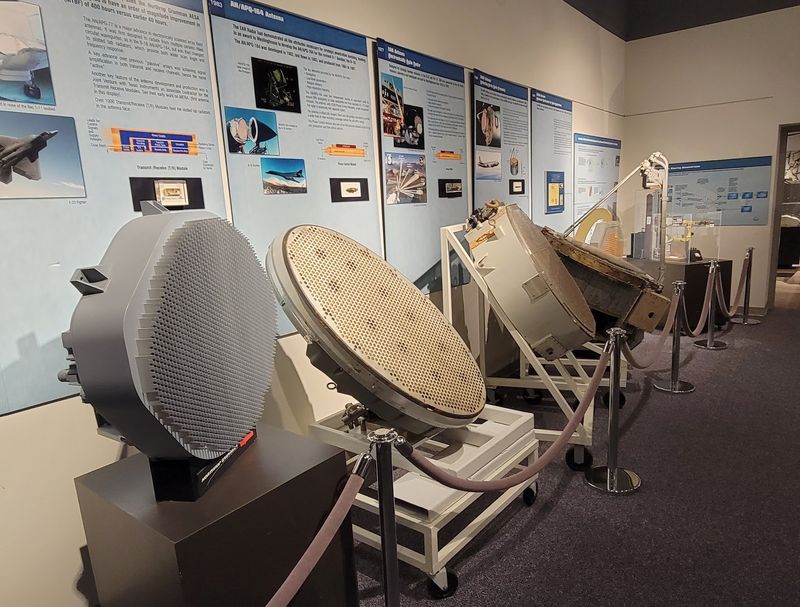
The National Electronics Museum does not get nearly enough credit for how genuinely interesting it is. Focused primarily on U.S. defense electronics, the collection traces a technological arc that stretches from the earliest telegraph systems to satellite communications and modern radar.
The pace of change documented here is almost dizzying.
Permanent galleries cover electricity fundamentals, early radar development, Cold War radar systems, and underwater sound transmission. Interactive displays make complex scientific concepts approachable without oversimplifying them, which is a harder balance to strike than it sounds.
Visitors who arrive knowing nothing about electronics tend to leave with a solid foundation and a lot of new questions.
Outside the main building, a yard full of historic radar antennas spans several decades of development. Seeing them arranged together in open air gives a physical sense of how dramatically the technology evolved in a relatively short time.
The antennas are massive, and their presence adds an almost cinematic quality to the grounds.
An amateur radio station operates live within the museum, connecting the historical collection to present-day radio communication in a way that feels surprisingly moving.
Someone is always on the air, exchanging signals with operators around the world using principles that have not fundamentally changed in over a century.
That continuity between past and present is what makes this museum feel alive rather than archival.
Address: 2323 Eastern Blvd, Middle River, MD 21220
10. National Capital Radio and Television Museum
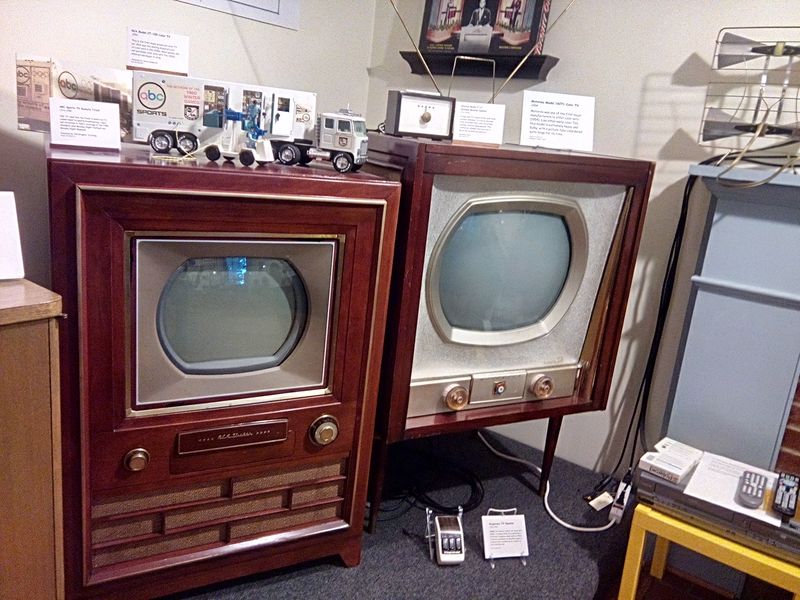
Housed inside a charming 1906 storekeeper’s house in Bowie, the National Capital Radio and Television Museum is one of those places that feels like a genuine discovery rather than a planned stop.
The building itself sets the tone immediately, small and unhurried in a way that invites visitors to slow down and actually look at things.
That slower pace turns out to be exactly right for what is inside.
The collection moves chronologically through the history of broadcast media, beginning with the earliest days of wireless telegraphy and building toward the arrival of television in American homes.
Depression-era cathedral radios with their ornate wooden cases are among the most visually striking pieces.
Early television sets, bulky and fascinating, sit alongside sound effects equipment once used to create the audio landscapes of vintage radio dramas.
Rare artifacts give the museum an edge that surprises most first-time visitors. A chunk of the original 1858 Atlantic Telegraph cable sits in one exhibit, and a 1931 “See-All” brand television, one of only two known to exist anywhere in the world, occupies another.
Finding objects like these in a small community museum is genuinely unexpected.
Interactive elements explain radio theory and the gradual transition from telegraph to wireless broadcasting in plain, accessible language. The museum’s modest size actually works in its favor, making it easy to absorb everything without feeling rushed or overwhelmed.
It rewards patience and genuine curiosity in equal measure.
Address: 2608 Mitchellville Rd, Bowie, MD 20716
11. Annmarie Sculpture Garden and Arts Center
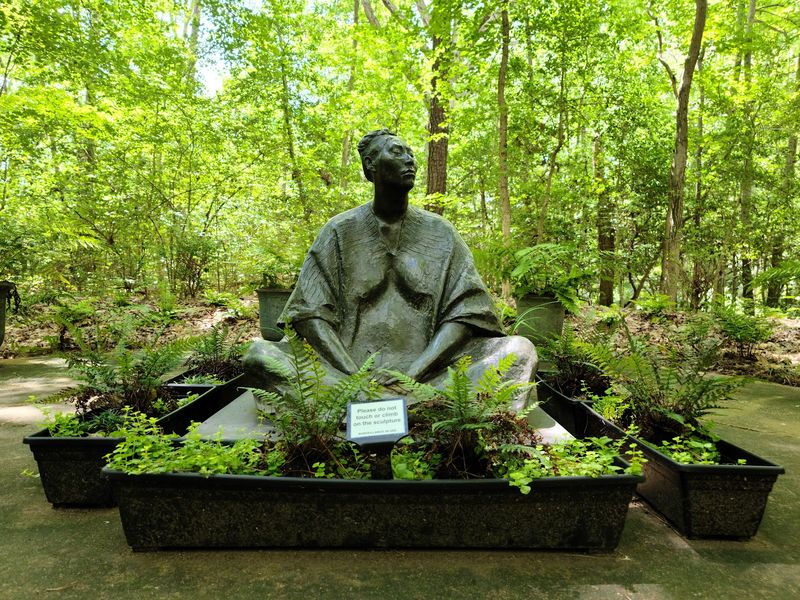
Art and nature do not always coexist gracefully, but at Annmarie Sculpture Garden and Arts Center, the relationship between the two feels completely effortless.
Situated where the Patuxent River meets the Chesapeake Bay, the grounds carry a natural beauty that would be worth visiting even without the sculptures.
The art just makes it better.
A shaded walking path winds through the wooded landscape, passing permanent and loaned sculptures from institutions including the Smithsonian and the National Gallery of Art.
Works by Barbara Hepworth and Jean Arp appear along the trail, their forms responding to the light and shadow of the surrounding trees in ways that shift throughout the day.
Each piece feels considered rather than placed.
The “Thirteen Talking Benches” exhibit adds a local dimension that I found genuinely touching.
Each bench is dedicated to a native Southern Maryland plant and many were created by students from Calvert County schools, giving the garden a community rooted quality that larger institutions often lack.
Sitting on one of those benches and reading the accompanying text is a small pleasure worth seeking out.
Inside the Arts Building, rotating exhibitions and an artLAB Creative Reuse Studio keep the indoor experience fresh across multiple visits. Younger visitors gravitate toward the Fairy Lolly Creative Play Space, a whimsical outdoor area designed to spark imaginative play.
The overall effect of the place is restorative, the kind of afternoon that leaves visitors feeling genuinely refreshed.
Address: 13470 Dowell Rd, Solomons, MD 20688
12. Glenstone Museum
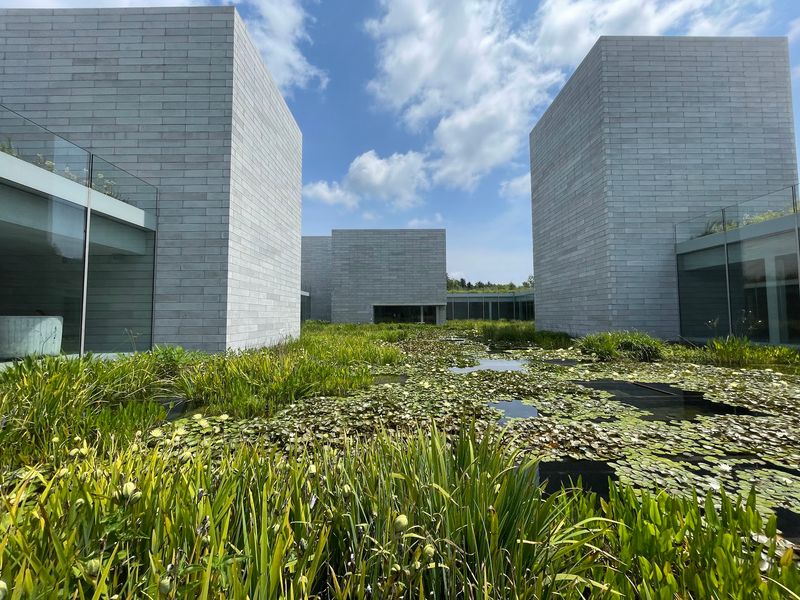
Glenstone Museum operates on a different frequency than most cultural institutions. Spread across 230 acres of meadows, woodlands, and stream valleys in Potomac, the museum asks visitors to slow down before they have even reached the first artwork.
The approach is deliberate, and it works beautifully.
Founded by Emily and Mitch Rales, Glenstone focuses on post-World War II art displayed across a series of indoor pavilions and open outdoor spaces.
The Pavilions themselves are architectural achievements, built from cast concrete and glass with 13 individual galleries designed to hold specific works.
Natural light enters through high windows and circular ceiling openings, connecting the interior spaces to the sky outside in a way that feels almost meditative.
At the center of the Pavilions sits an 18,000-square-foot Water Court, filled with seasonally changing aquatic plants. It is one of those spaces that visitors tend to linger in longer than expected.
The combination of water, open air, and surrounding art creates a mood that is hard to name but easy to feel.
Outdoor sculptures by artists including Jeff Koons dot the landscape, appearing gradually as visitors walk the trails through meadows and along stream banks.
The museum’s design philosophy emphasizes gradual discovery rather than immediate spectacle, which makes each new encounter feel earned.
Reservations are typically required, and that controlled pace is part of what makes the experience feel so different from a typical museum visit.
Address: 12100 Glen Rd, Potomac, MD 20854
