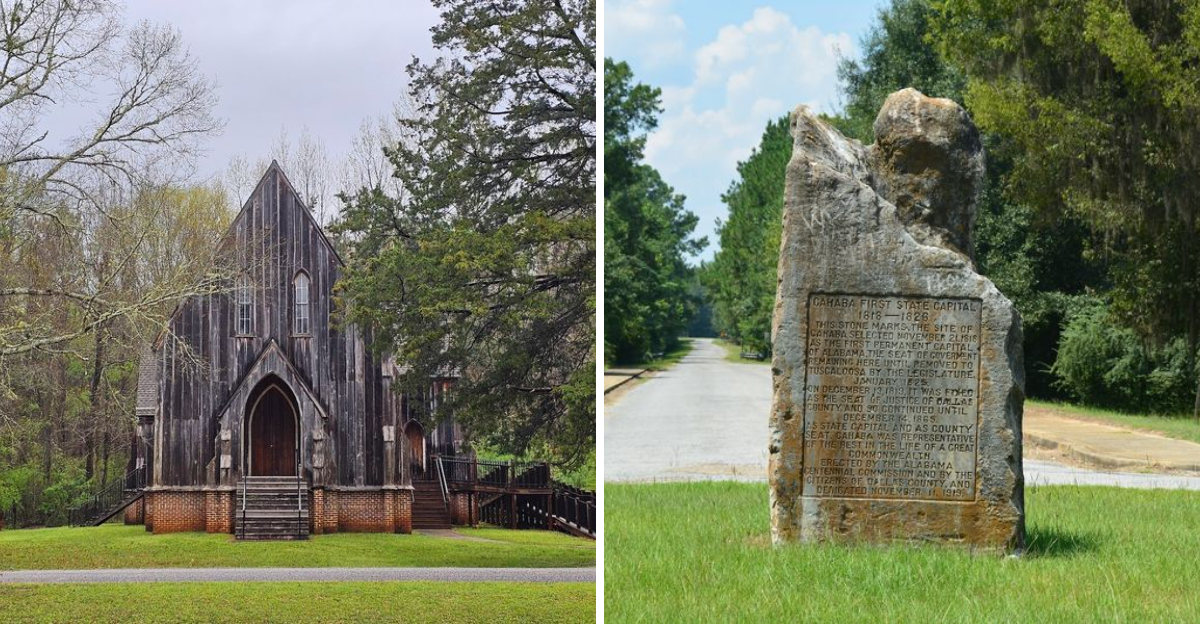
Most people drive right past Orrville, Alabama without a second thought. What they miss is one of the most quietly fascinating corners of the Deep South, where layers of history still linger across the landscape in surprising ways.
Just outside town sits Alabama’s first permanent state capital, now preserved as an archaeological park and widely known as one of the state’s most famous ghost towns. Crumbling foundations, historic cemeteries, and traces of long-abandoned streets create an atmosphere that feels both haunting and deeply reflective, like time simply paused and never fully restarted.
For anyone drawn to Southern history, forgotten places, or destinations with a strong sense of atmosphere, this part of Alabama offers an experience that feels far more immersive than a typical historic site.
Experience the Haunted History Tours After Dark
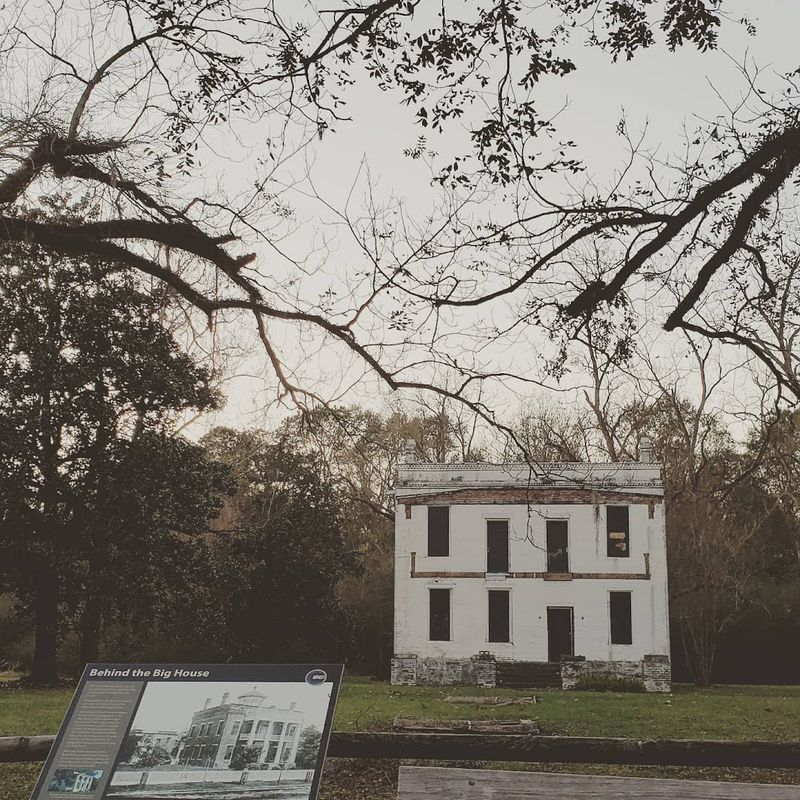
Old Cahawba has a reputation that goes well beyond its political history. For years, locals and visitors alike have reported strange sightings, unexplained lights, and an unsettling stillness that settles over the ruins after sundown.
The site leans into that reputation with rare nighttime Haunted History Tours that draw curious visitors from across the state and beyond.
These tours are not your average hayride with jump scares. Participants are shuttled to historically documented locations within the park, where guides share verified accounts of paranormal sightings tied to specific events and places in Cahawba’s past.
Paranormal investigation demonstrations add another layer to the experience, giving attendees a chance to engage with the history in a way that feels genuinely immersive rather than theatrical.
The setting does a lot of the work on its own. At night, the ruins of the old capital take on a completely different character.
The river sounds carry through the dark, and the absence of modern light pollution makes the sky above the site feel enormous and a little overwhelming. Whether you believe in the paranormal or not, the combination of real history, genuine darkness, and a location that has literally been abandoned for over a century creates an atmosphere that is hard to replicate anywhere else in Alabama.
It is the kind of experience that stays with you long after you drive back through Orrville toward home.
River Views at the Confluence of Two Alabama Waterways
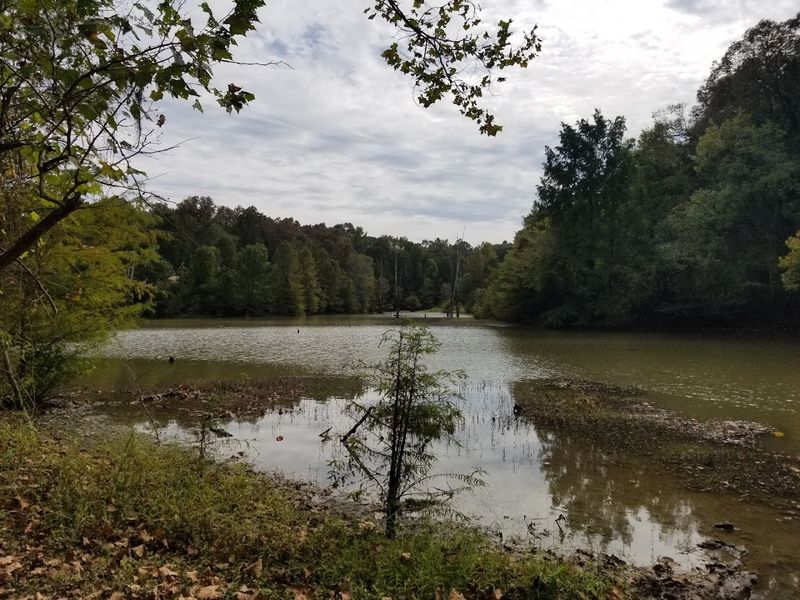
There is something quietly powerful about standing where two rivers meet. Old Cahawba sits at the convergence of the Alabama River and the Cahaba River, and that geographic fact shaped almost every chapter of its history.
It made the site appealing to Native American communities long before European settlement. It made it attractive to early state planners looking for a capital location.
And it ultimately contributed to the town’s downfall when seasonal floods proved too disruptive to ignore.
Today, those same rivers are a draw for nature lovers rather than a liability. The park offers open views of both waterways, and the surrounding landscape reflects the kind of unspoiled river environment that has become increasingly rare in the Southeast.
River otters have been spotted in the area, and native plant species bloom throughout the warmer months, giving the site a seasonal rhythm that rewards repeat visits.
Prairie areas within the park open up the sky in a way that feels unexpected given the dense forests nearby. Birdwatchers find the location productive across multiple seasons, and the combination of river habitat and open grassland creates a layered ecosystem that supports a wide range of wildlife.
For visitors who come primarily for the history, the natural beauty of the site ends up being a genuine surprise. It is the kind of place where you plan to spend an hour and find yourself still there two hours later, simply watching the water move.
Uncover the Civil War Stories Hidden in Cahawba’s Past
Most people associate Civil War history in Alabama with Selma or Mobile, but Old Cahawba holds a chapter that deserves far more attention than it typically receives. During the war, the abandoned former capital was repurposed as a Confederate prison for Union soldiers, known as Castle Morgan.
At its peak, the facility held far more prisoners than it was ever designed to accommodate, and conditions there became a subject of historical debate and documentation that continues to this day.
The site also connects directly to the Battle of Selma, which took place just a short distance away. After that battle, the columns of the old Crocheron mansion served as the meeting point where Confederate General Nathan Bedford Forrest and Union General James Wilson negotiated the terms of prisoner exchange.
Standing near those columns while knowing what they witnessed gives the ruins a weight that photographs simply cannot convey.
Interpretive signs throughout the park help visitors connect these Civil War events to the broader arc of Cahawba’s history. The town’s transformation from state capital to Civil War prison to freedman’s village after the war is one of the more remarkable sequences of reinvention you will find at any single site in the state.
History enthusiasts who visit expecting a quiet ruin often leave with a much fuller picture of how dramatically this one location shaped and was shaped by the events of nineteenth century America.
Walk the Grounds of Old Cahawba Archaeological Park
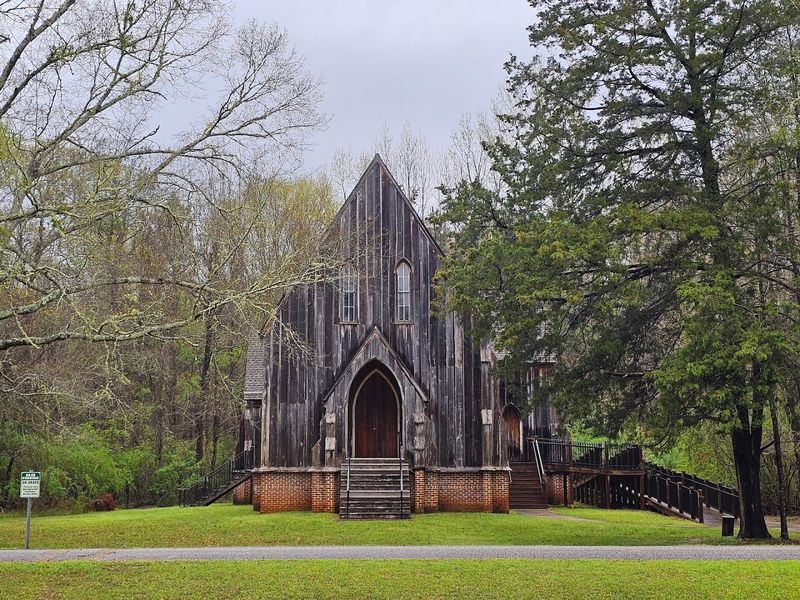
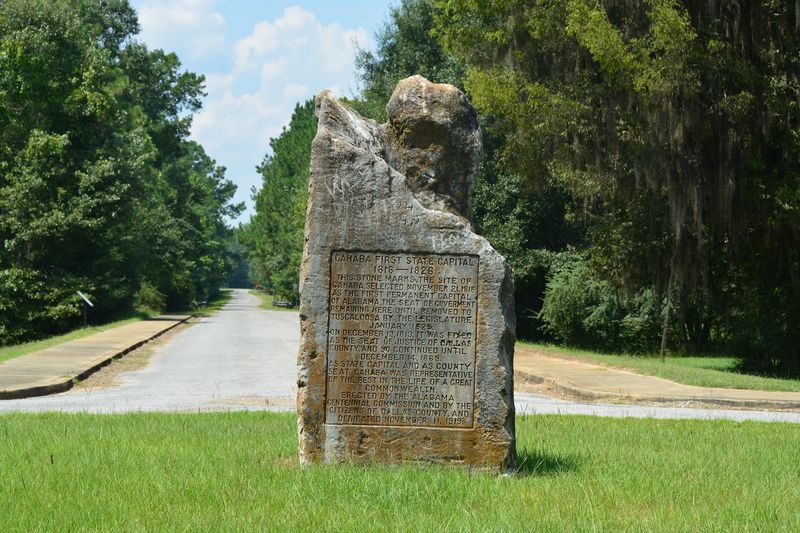
Old Cahawba is not just a historical footnote. It was Alabama’s first permanent state capital, serving from 1820 until 1825, when repeated flooding pushed lawmakers to relocate the seat of government to Tuscaloosa.
What remains today is an archaeological park managed by the Alabama Historical Commission, and walking its grounds feels like stepping into a story that most textbooks barely mention. The visitor center at 9518 Cahaba Road, Orrville, AL 36767 is a good starting point for understanding the site’s layered past.
From there, interpretive signs guide you through land that was once a Native American village, a thriving state capital, a Civil War boomtown, and finally a ghost town by 1900. Each era left something behind, whether ruins, cemeteries, or the haunting outline of old streets.
The park grounds are open daily from 9 AM to 5 PM, while the visitor center itself welcomes guests Thursday through Monday. Picnic areas and hiking trails make this a comfortable visit for families and history lovers alike.
The standing columns of the Crocheron mansion are among the most photographed remnants on the property, marking a place where Confederate General Forrest and Union General Wilson once met to discuss prisoner exchange after the Battle of Selma. Seeing those columns in person gives you a quiet, grounded sense of how much history this small patch of Alabama soil actually holds.
Attend the Annual Hymn Fest in Orrville
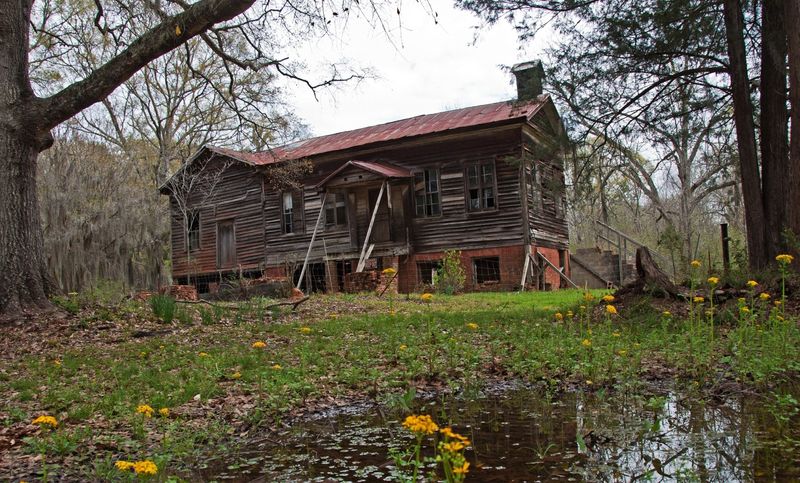
Orrville is a small town, but it holds onto its traditions with real conviction. The annual Hymn Fest is one of the most genuine expressions of community spirit you will find in Dallas County, and it reflects something authentic about the way music and faith have always been woven into life in rural Alabama.
This is not a polished production designed for tourism. It is a local gathering built around shared heritage and the kind of singing that carries genuine feeling.
Hymn singing has deep roots in the Alabama Black Belt region, where churches have historically served as community anchors in ways that go far beyond Sunday morning services. The Hymn Fest taps into that tradition, bringing together voices and melodies that connect the present community to generations of people who built their lives in this part of the state.
For visitors, it offers a rare chance to experience something that feels genuinely local rather than packaged for an outside audience.
The event draws participants of different ages and backgrounds, which gives it an energy that feels less like a performance and more like a reunion. If you are visiting the Orrville area and your timing lines up with the Hymn Fest, clearing your schedule to attend is an easy decision.
It is the kind of afternoon that reminds you why small towns with strong traditions are worth seeking out, especially in a region as historically rich as Dallas County, Alabama.
Shop Local at the Orrville Farmer’s Market
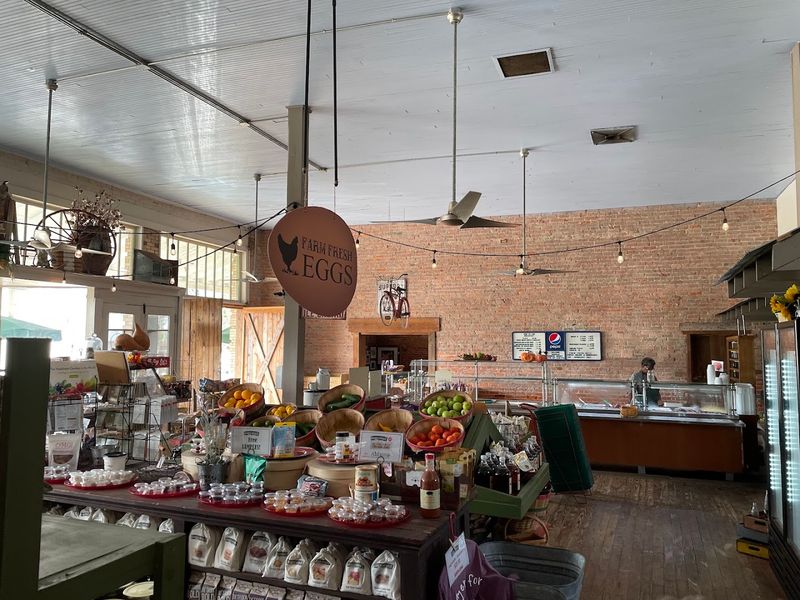
Local farmer’s markets have a way of telling you more about a community than any guidebook ever could. The Orrville Farmer’s Market is exactly that kind of place.
It reflects the agricultural character of Dallas County, where the land has been worked for generations and where the relationship between growers and their neighbors remains genuinely close. Visiting the market gives you direct access to produce and goods that carry a real sense of place.
The Black Belt region of Alabama has some of the richest soil in the country, and that quality shows up in what local growers bring to market. Seasonal vegetables, locally sourced goods, and artisanal products fill the stalls, and the atmosphere is relaxed in the way that only small community markets can manage.
There is no rush, no crowds pushing past each other, and no sense that you are being sold to rather than welcomed.
For food enthusiasts who want to bring a piece of the region home, the market is a practical and enjoyable stop. It also supports the local economy in a direct and meaningful way, which matters a great deal in a small town working to sustain itself.
Pairing a morning at the Orrville Farmer’s Market with an afternoon at Old Cahawba makes for a well-rounded visit that balances history, community connection, and the simple pleasure of buying something fresh from the person who grew it.
Discover the Historic Architecture Still Standing in Orrville
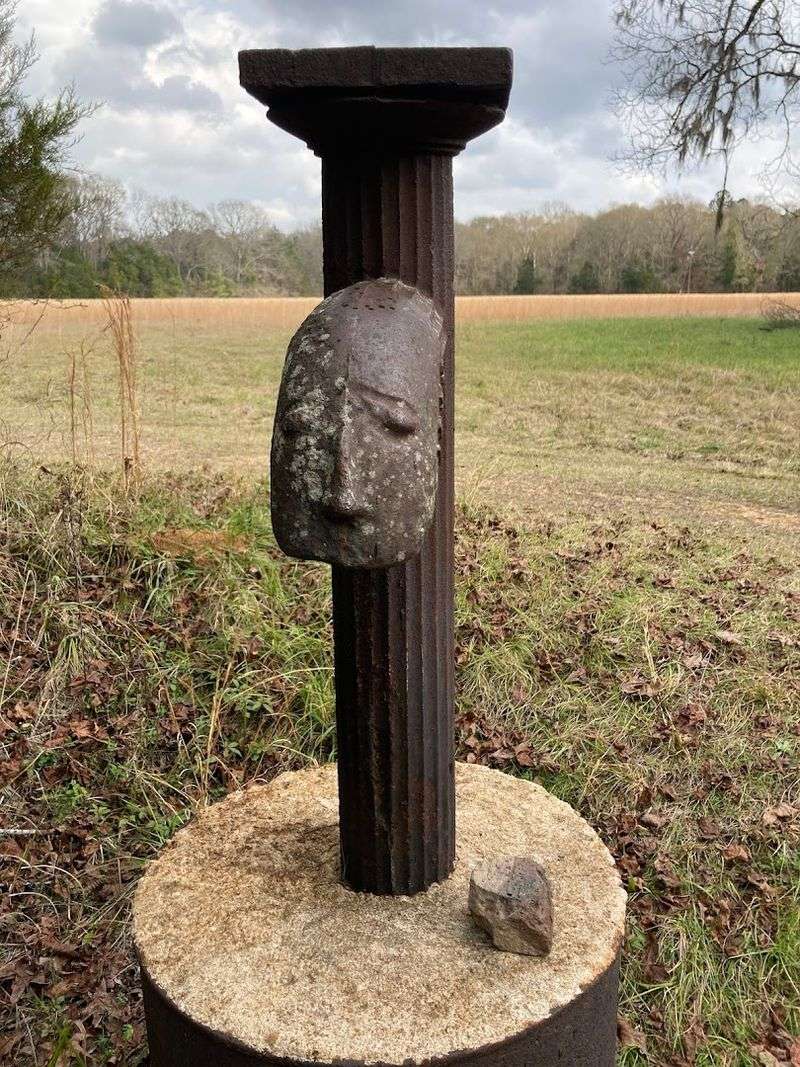
Orrville may have a population of around 150 people, but its architectural history tells a much larger story. Several historic structures from the mid-to-late 1800s remain standing in and around the town, offering a tangible connection to the era when this part of Dallas County was a more active and prosperous community.
For anyone interested in Southern architecture or regional history, these buildings are worth seeking out.
The Ben Ellis-Dunaway House, built around 1850, represents the antebellum period that shaped so much of the Alabama Black Belt’s character. The Dunaway Home from 1895 and the Mill-Albritton House from around 1860 add to the timeline, showing how building styles and community needs evolved across several decades.
The Moseley-Seale House, dating to approximately 1857, rounds out a collection of surviving structures that most visitors to the area never know to look for.
The Orrville United Methodist Church is another landmark worth noting, as churches in small Southern towns often serve as the most durable record of community life across generations. Walking or driving through Orrville with an eye toward its historic buildings reframes the town completely.
What might first appear to be a sleepy, overlooked community reveals itself as a place that has simply been living quietly alongside a very long history. That combination of modesty and depth is something you genuinely have to come here to understand.
