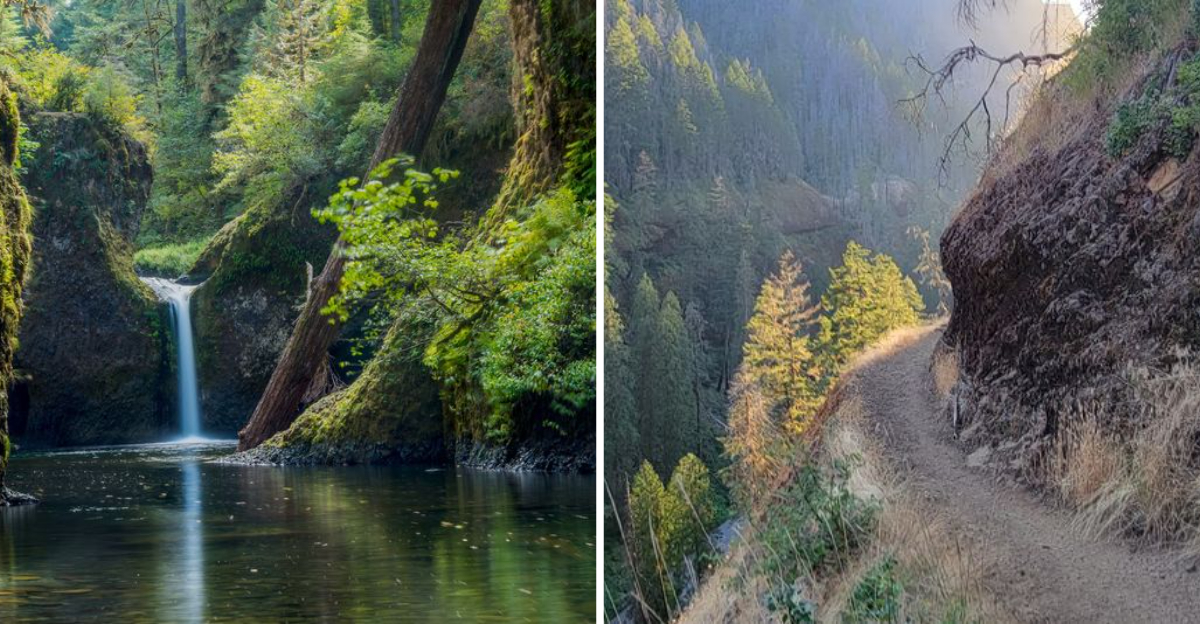
The trail is a narrow corridor carved into the basalt cliffs, a place where the roar of the river is your only company. Just about two miles in, the path offers a view that feels like a discovery, a thirty-five-foot waterfall plunging into a perfectly circular pool.
This is not the kind of waterfall you see from a roadside viewpoint. It demands a four-mile round-trip hike, and the journey is as dramatic as the destination.
You will cross wooden bridges and navigate sections blasted into sheer rock. You will hold onto cable handrails bolted into the cliffside.
In Oregon, the most stunning views are often the ones you have to work a little harder to find, and this waterfall is a perfect example. The path is not for the faint of heart, but the reward is a memory that will stay with you long after you have left.
How to Actually Find the Hidden Turnoff
Here is the thing nobody tells you before you go: missing the turnoff is incredibly easy, and plenty of people have hiked right past it without realizing. The spur trail that leads down to the falls is not the most obvious fork, and if you are moving at a good pace with your eyes on the scenery, you will blow right past it.
The turnoff comes roughly two miles in from the Eagle Creek Trailhead. Watch for a path that drops down toward the creek on your right as you head upstream.
Some hikers mark it with small rock cairns, though those are not always reliable.
Once you take the spur, the sound of the falls gets noticeably louder and the vegetation gets denser and wetter. That is a good sign you are heading in the right direction.
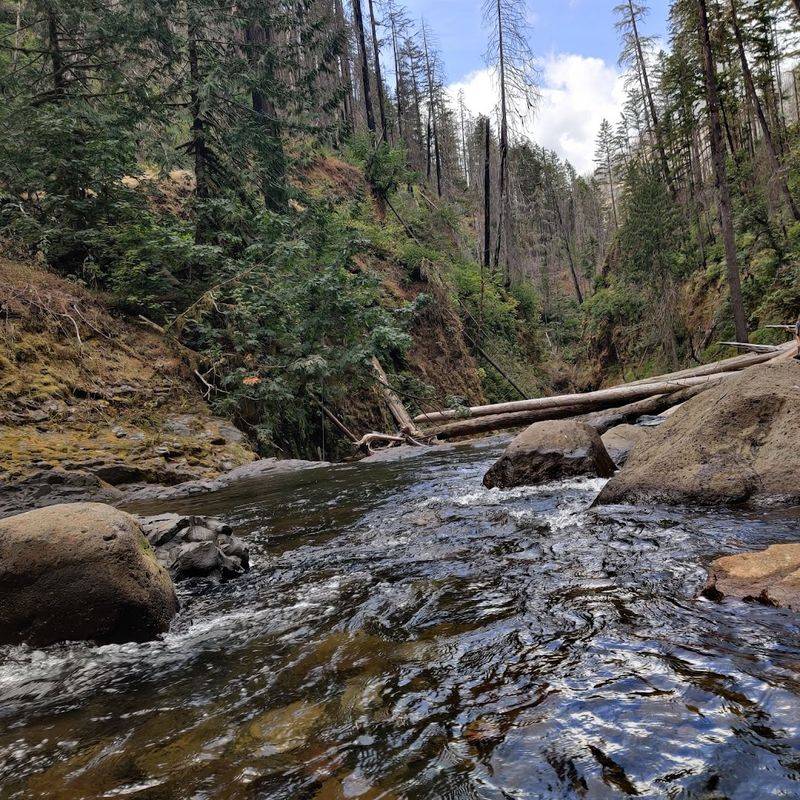
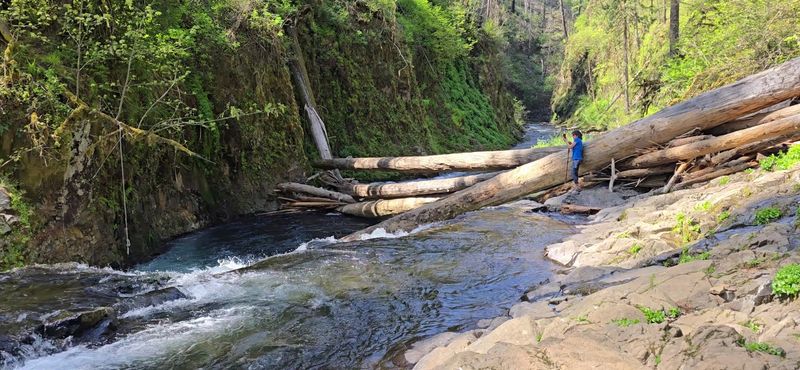
From there, the scramble over boulders and river-swept logs begins. It is not technical climbing, but it does require both hands at times.
Take your time on the rocks. Rushing is how ankles get twisted.
The Lower Falls Area Most Hikers Overlook
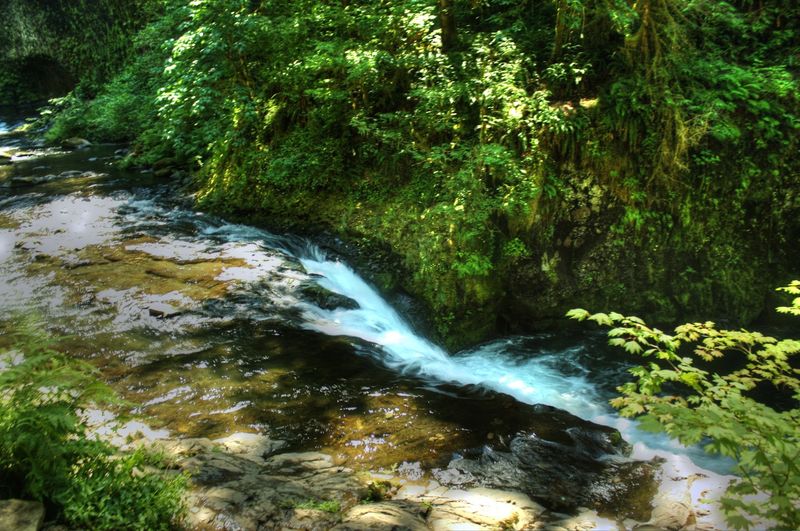
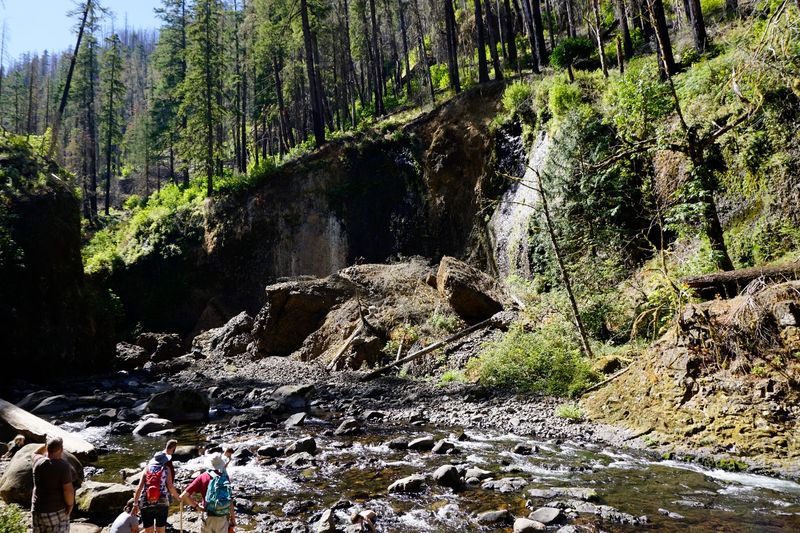
Before you even reach the main punch bowl, there is a lower falls section that deserves far more attention than it gets. Most people blow past it in their rush to reach the upper falls, but the lower creek area has its own quiet charm that feels completely separate from the drama above.
The stream here moves at a gentler pace, spreading out over flat rocks and forming shallow pools that catch the light beautifully. On warm days it is an ideal spot to cool your feet and catch your breath before the rocky scramble ahead.
I spent almost twenty minutes just sitting on a boulder near the lower creek, watching the water move and listening to the birds. It felt like a secret within a secret, a peaceful rest stop that most visitors skip entirely.
If you have kids or anyone in your group who is not up for the boulder scramble to the upper falls, this lower section is genuinely worth the hike on its own. Do not underestimate it.
What Punch Bowl Falls Actually Looks Like Up Close
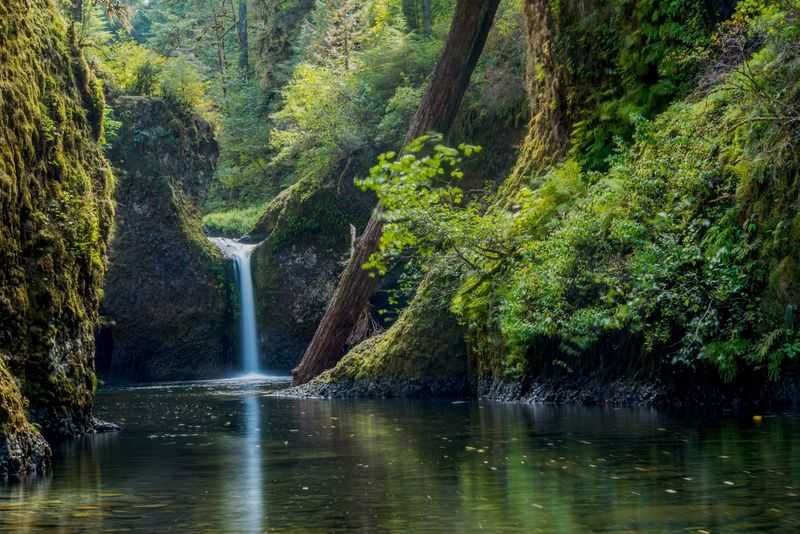
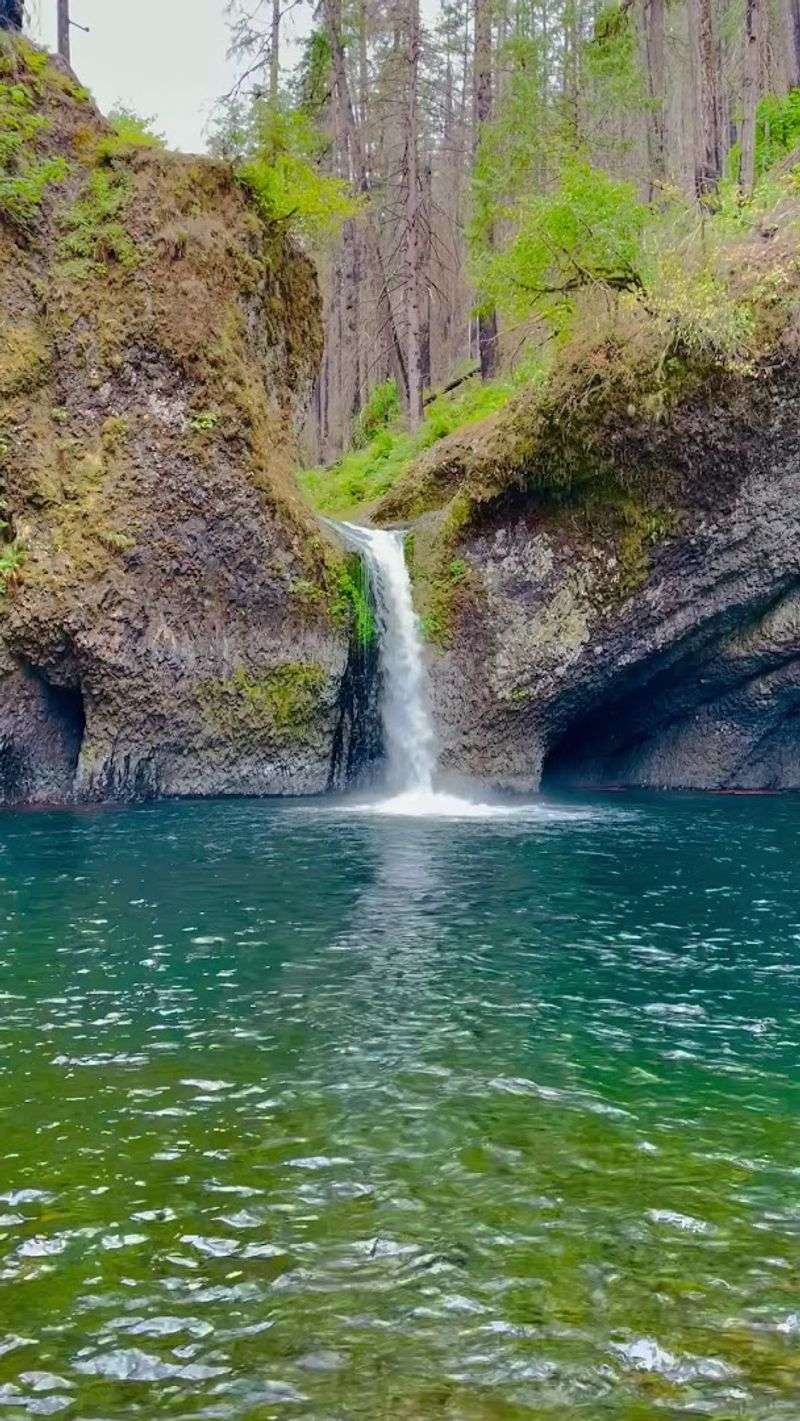
Nothing really prepares you for the first time you see that pool. The water pours over a curved basalt lip and drops straight down into a near-perfect circular basin, which is exactly where the name comes from.
The green is almost unreal, like someone turned up the saturation on the whole scene.
The walls surrounding the bowl are draped in dark moss and slick rock, and the mist that floats off the falls keeps everything around it glistening. On sunny days, the light catches the spray in a way that makes it look almost luminous.
Getting the full view requires a bit of a scramble over logs and boulders, but the payoff is undeniable. From the base, the waterfall feels much larger than 35 feet because the canyon walls frame it so tightly.
It is one of those places that photographs well but feels even more powerful in person. The sound alone, that deep roaring echo bouncing off wet stone, is something you carry home with you.
Trail Conditions, Closures, and What to Expect
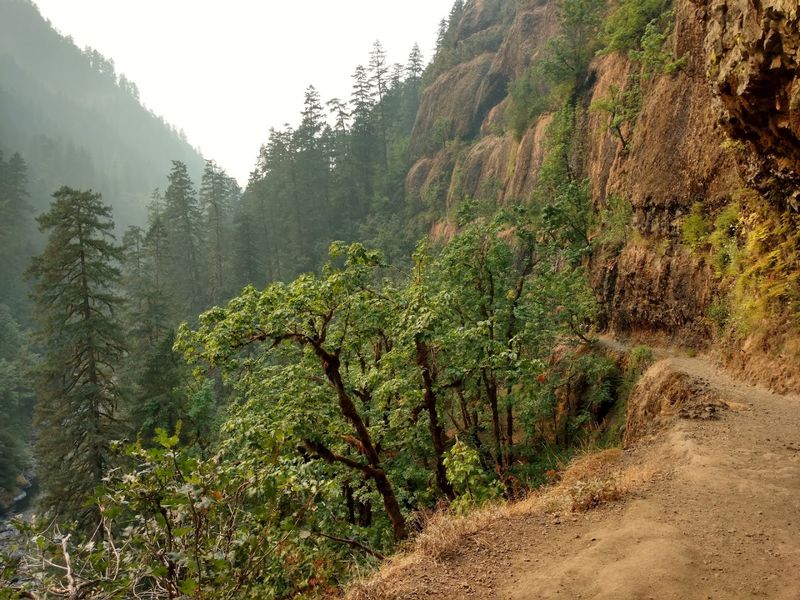
Eagle Creek Trail has a complicated recent history. The 2017 Eagle Creek Fire burned through a significant portion of the gorge, and the trail was closed for years while the area recovered and crews cleared hazards.
Even after reopening, conditions can shift quickly.
Falling trees, unstable rock faces, and erosion are real concerns on this trail, and the trailhead posts warning signs that should be taken seriously. Checking current trail conditions before you go is not optional here, it is genuinely necessary.
The Oregon Department of Recreation and the Columbia River Gorge National Scenic Area website are your best sources for up-to-date closure information. Conditions after heavy rain or windstorms can change overnight.
The trail surface itself runs from gravelly to dusty to rocky, and wet conditions make everything significantly more slippery. Waterproof boots are a smart choice regardless of the forecast.
One hiker I crossed paths with had worn trail runners in light rain and was struggling on the slick rock sections near the falls. Good footwear changes the whole experience.
Parking, Permits, and Getting to the Trailhead
Getting to Punch Bowl Falls starts well before you set foot on the trail. The Eagle Creek Trailhead sits off Historic Columbia River Highway near Cascade Locks, and parking here requires a fee paid at a card-only kiosk at the trailhead.
You can also purchase and print a pass in advance online, which is a smart move on weekends when the lot fills up fast. Arriving early, ideally before 9 in the morning on a Saturday, gives you a real advantage.
One visitor mentioned arriving just after 9 on a weekend and already being pushed to the overflow lot.
Weekday visits are noticeably quieter, and the whole experience feels more personal when the trail is not packed. The overflow parking area is a short walk from the main trailhead, so it is not a disaster if you end up there.
Just factor in that extra distance. Plan your drive, check your gas, and give yourself plenty of time.
This is not a quick stop on the way somewhere else.
Swimming in the Punch Bowl, Cold Water and Real Risks
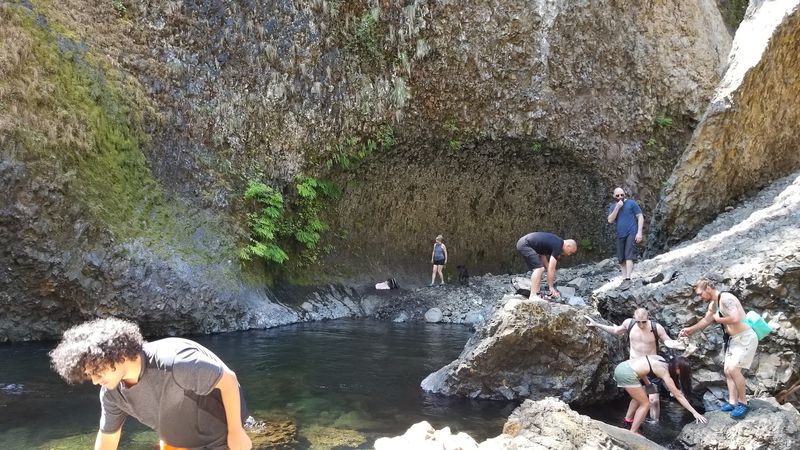
The water in that bowl is absolutely stunning and absolutely freezing. Snowmelt feeds the creek well into summer, keeping temperatures icy even when the air around you feels warm.
People do swim here, and the experience is genuinely memorable, but it demands respect.
Getting into the bowl itself requires scrambling over a log jam and navigating slick boulders at the water’s edge. It is not a casual wade-in situation.
The pool is deep, the current near the falls is strong, and the cold hits you hard the moment you go under.
Bringing a buddy is strongly recommended, not just for the fun of it but for basic safety. A towel and a dry change of clothes stashed in your pack will make the hike back infinitely more comfortable.
The reward for braving the cold is a swim in one of the most visually spectacular natural pools in the Pacific Northwest. That said, knowing your own limits matters here more than anywhere else on the trail.
The falls are beautiful from the bank too.
The Eagle Creek Trail and Why It Earns Its Reputation
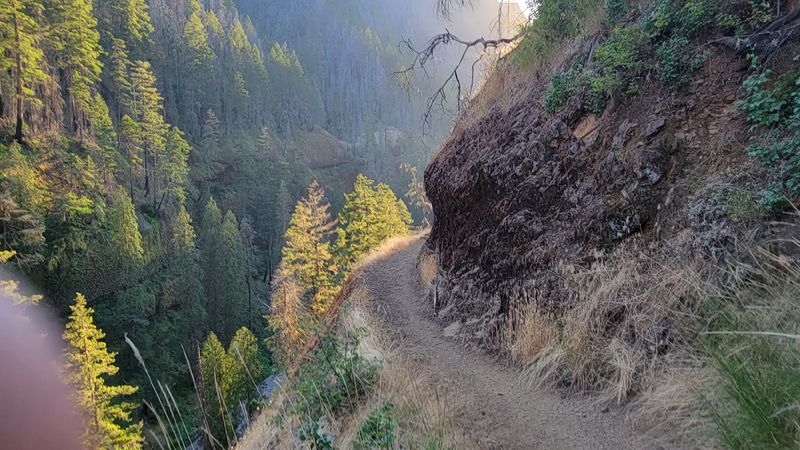
Eagle Creek Trail is not your average Sunday stroll, and that is a big part of why it filters out the casual crowd. The path hugs the canyon wall in several sections, with wire cables bolted into the rock face to help you keep your footing on the narrow ledges.
The footing shifts throughout the hike from gravel to packed dirt to exposed rock, so paying attention to where you step matters. I noticed the trail feels completely different on the way back, especially with tired legs and damp shoes.
There are sections where the canyon drops sharply to your left and the trail narrows to just a couple of feet wide. It is genuinely thrilling without being reckless, as long as you move carefully and let others pass safely.
The trail is roughly four to five miles round trip depending on your route, and the elevation gain is gradual enough to stay manageable. Trekking poles make a real difference on the rocky descent.
What to Wear and Pack for This Hike
Packing right for this hike makes a bigger difference than you might expect. The trail has wet sections year-round, and the scramble to the falls involves damp rocks and slippery logs regardless of the season.
Waterproof boots are the single most impactful gear choice you can make.
Layers are important even in summer because the canyon stays cool and shaded for much of the hike. A light rain jacket stuffed in your pack takes up almost no space but saves the day if the sky opens up.
Trekking poles are optional but genuinely helpful on the descent.
Bring more water than you think you need, a snack or two, and a basic first aid kit. The trail is not extremely remote, but you are far enough from the trailhead that a minor injury becomes a real inconvenience without supplies.
One thing often overlooked: poison oak grows right along the trail edges in several sections, so long pants and staying on the path are both wise choices. Sunscreen matters too, especially near the open areas closer to the falls.
Wildlife, Wildflowers, and the Forest Recovery Story
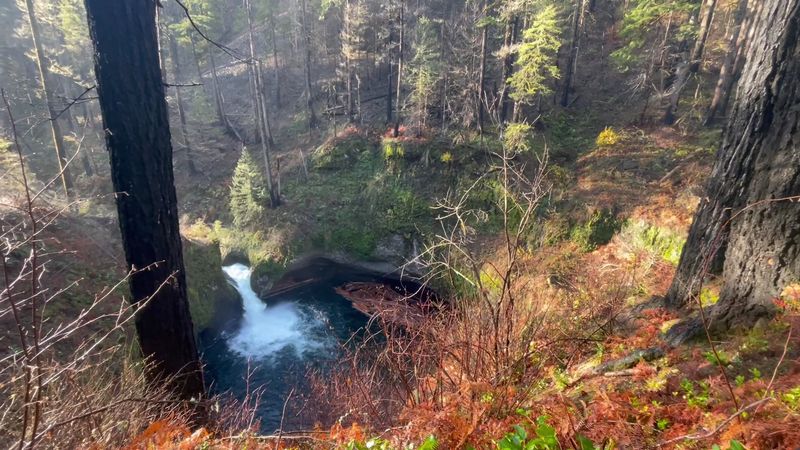
One of the most unexpected parts of this hike is watching how the forest heals. Large sections of the Eagle Creek corridor burned in the 2017 fire, and what you see now is a landscape in active recovery.
Charred trunks stand alongside bright new growth, and the contrast is genuinely striking.
Wildflowers push up through gravelly soil in spring and early summer, adding color to stretches of trail that might otherwise feel stark. The plant community rebuilding itself here is fascinating if you slow down enough to notice it.
In the creek itself, fall brings salmon moving upstream to spawn, and you can sometimes spot them from the open areas near the water. Birds are active throughout the year, and the canyon acoustics make their calls sound louder and more layered than usual.
Best Times to Visit Punch Bowl Falls
Spring is widely considered the best time to visit, and after seeing it myself in late April, I understand why. Snowmelt pushes the water flow to its peak, and the falls roar with a force that is hard to describe.
The whole canyon feels alive with sound and movement.
Summer brings warmer air temperatures, which makes the swim in the bowl more tempting, though the water stays cold regardless of the season. Crowds are heavier in July and August, and weekends especially can feel congested on the narrow trail sections.
Fall is a genuinely underrated time to visit. The leaves shift color, the crowds thin out considerably, and the extra water flow from autumn rain keeps the falls looking dramatic.
Winter visits are possible but require more caution due to ice on the trail and the risk of falling debris in wet weather. Mornings are always better than afternoons for parking and trail traffic.
Arriving at first light on a weekday in late spring might just give you the whole place to yourself, which is a rare gift.
