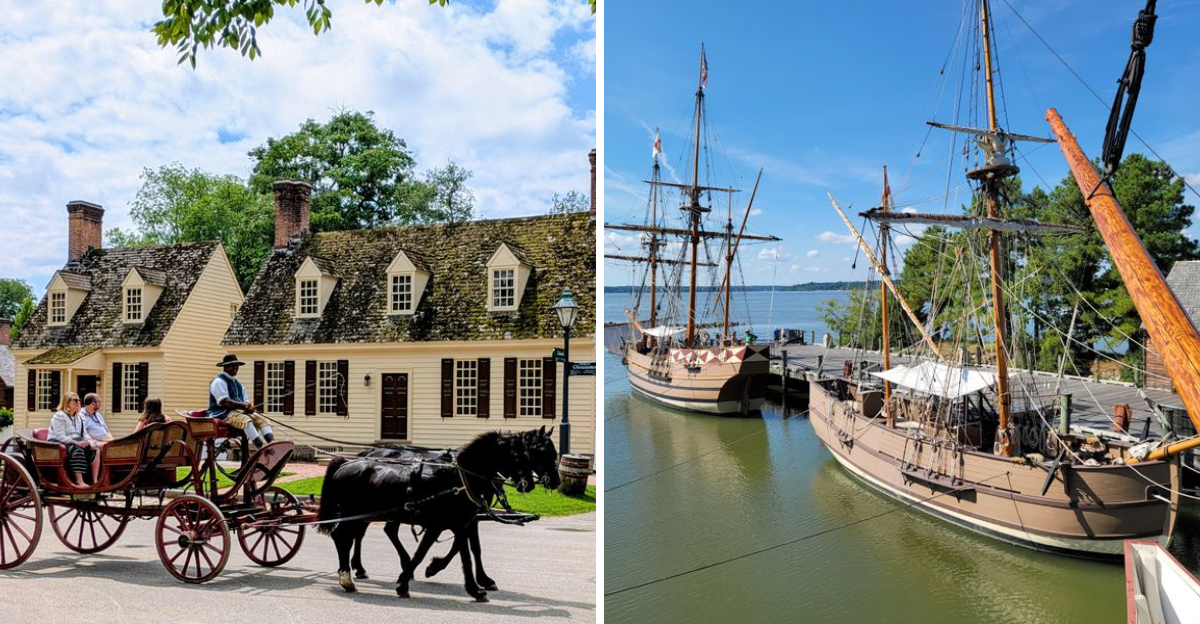
Virginia holds centuries of American stories within its borders, from colonial settlements to pivotal battlefields.
History textbooks can feel dry and distant, but the museums scattered across this state take a different approach.
Interactive exhibits, living history demonstrations, and hands-on activities transform dusty facts into memorable adventures.
Whether you’re watching blacksmiths forge iron tools, stepping aboard historic ships, or exploring aircraft that touched the edge of space, these institutions prove that learning about the past can be genuinely thrilling.
Families, students, and curious travelers will find something remarkable at each location.
Virginia’s museums don’t just display artifacts behind glass.
They invite you to experience history through all your senses, making connections between past and present that stick with you long after your visit ends.
1. Colonial Williamsburg
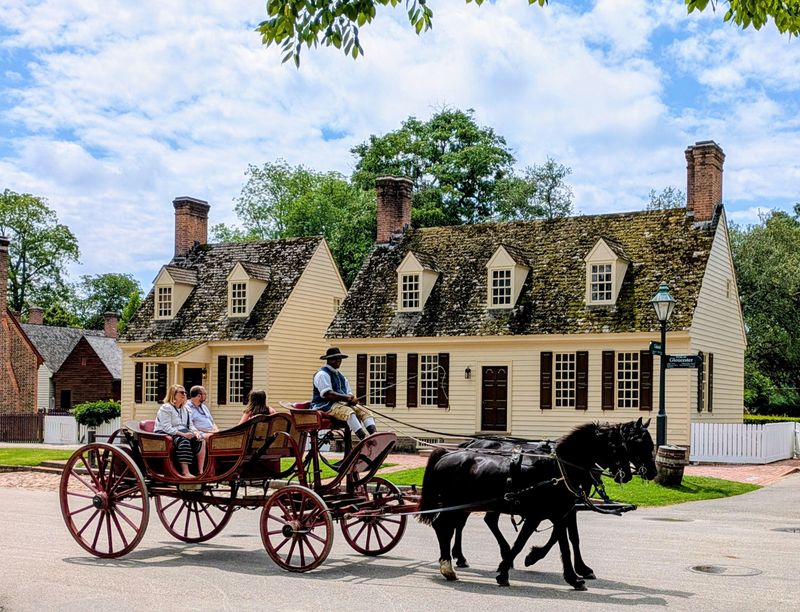
Walking through Colonial Williamsburg feels like stepping through a time portal into the 1700s.
This living history museum sprawls across an entire restored colonial town, where costumed interpreters don’t just recite facts but actually live and work as people did before the American Revolution.
You’ll encounter blacksmiths hammering away at glowing metal, wigmakers crafting elaborate hairpieces, and printers setting type by hand.
The interpreters stay in character, answering questions about their trades and daily lives with period-appropriate language and perspectives.
Kids especially love the hands-on workshops where they can try colonial games, help with chores like gardening, or learn old-fashioned crafts.
The historic buildings aren’t roped-off museum pieces.
Many allow you to walk inside, sit on furniture, and get a genuine feel for colonial domestic life.
Taverns serve period-inspired meals, and shops sell handcrafted goods made using authentic techniques.
The Governor’s Palace showcases how the wealthy lived, while smaller homes reveal the reality for ordinary colonists.
Revolutionary War reenactments bring dramatic moments to life with musket fire and military drills.
Evening programs often include ghost tours and theatrical performances that explore darker aspects of colonial society.
The museum doesn’t shy away from difficult topics like slavery, presenting multiple perspectives on life in this crucial period.
Interpreters portraying enslaved people share powerful stories that add necessary depth to the colonial narrative.
Special seasonal events transform the experience throughout the year, from harvest celebrations to Christmas decorations that show how colonists marked holidays.
The sheer scale means you could spend multiple days exploring without seeing everything.
Located at 101 Visitor Center Dr, this attraction remains Virginia’s most ambitious historical recreation.
It succeeds brilliantly at making the 18th century accessible and engaging for modern visitors of all ages.
History becomes something you experience rather than just read about.
2. Steven F. Udvar-Hazy Center
Aviation enthusiasts prepare to have your minds blown.
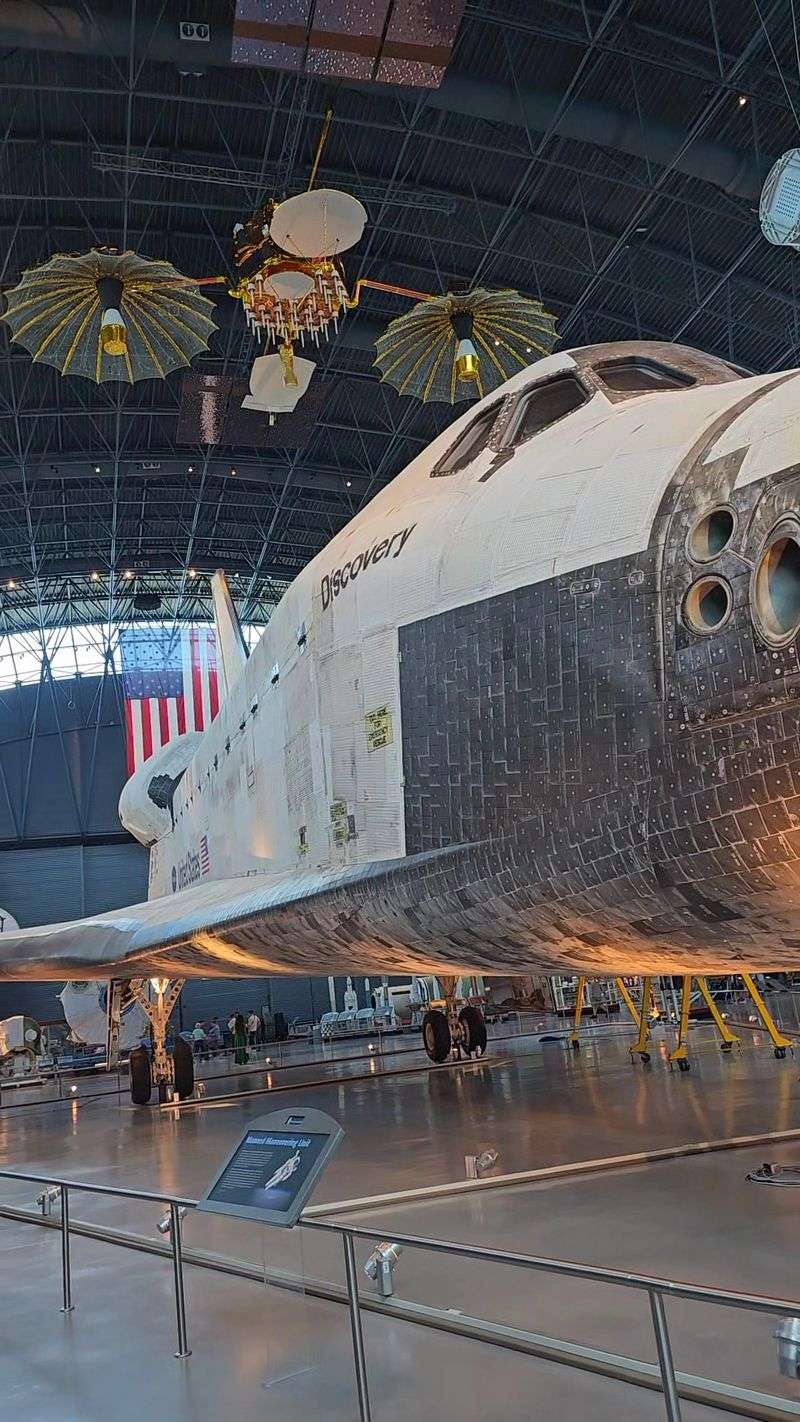
The Udvar-Hazy Center near Dulles Airport houses aircraft and spacecraft that couldn’t possibly fit in the downtown Washington museum.
The moment you enter the massive hangar, you’re confronted with the Space Shuttle Discovery hanging overhead, its heat-scarred tiles telling stories of multiple journeys beyond Earth’s atmosphere.
Nearby sits the Enola Gay, the B-29 bomber that changed world history, displayed without glorification but with appropriate historical context.
Thousands of artifacts fill the enormous hangars, from tiny experimental planes to massive military transports.
A SR-71 Blackbird spy plane demonstrates the cutting edge of Cold War technology.
Concorde represents the brief era when supersonic passenger flight seemed like the future.
Fighter jets from various conflicts show the evolution of aerial combat.
The museum doesn’t just park planes in rows.
Careful arrangement lets you walk beneath and around many aircraft, appreciating their engineering from multiple angles.
Elevated walkways provide bird’s-eye views of the collection.
Information panels explain not just technical specifications but the human stories behind each machine.
An observation tower lets visitors watch actual planes taking off and landing at Dulles, connecting historical aviation to its modern reality.
The space artifacts include satellites, rockets, and equipment that actually flew missions.
Restoration hangars visible through windows show conservators working to preserve these treasures for future generations.
Simulators and interactive displays help younger visitors understand flight principles.
The scale of everything creates an almost overwhelming sense of human achievement and innovation.
Located at 14390 Air and Space Museum Pkwy in Chantilly, this Smithsonian facility offers free admission.
That makes it an incredible value for families wanting to spend hours exploring.
Virginia residents and tourists alike rank this among the state’s most impressive attractions.
The collection represents decades of technological advancement compressed into one spectacular space.
3. Jamestown Settlement
America’s origin story gets properly complex at Jamestown Settlement.
This museum tackles the messy reality of early colonial encounters between English settlers, Native Powhatan people, and enslaved Africans.
Rather than presenting simplified narratives, the exhibits acknowledge different perspectives and the often-tragic consequences of colonization.
Outdoor living history areas recreate a Powhatan village where interpreters demonstrate traditional crafts, cooking methods, and daily activities.
The recreated James Fort shows how precarious English survival was during those early years.
Costumed historians explain the diseases, starvation, and conflicts that nearly destroyed the settlement.
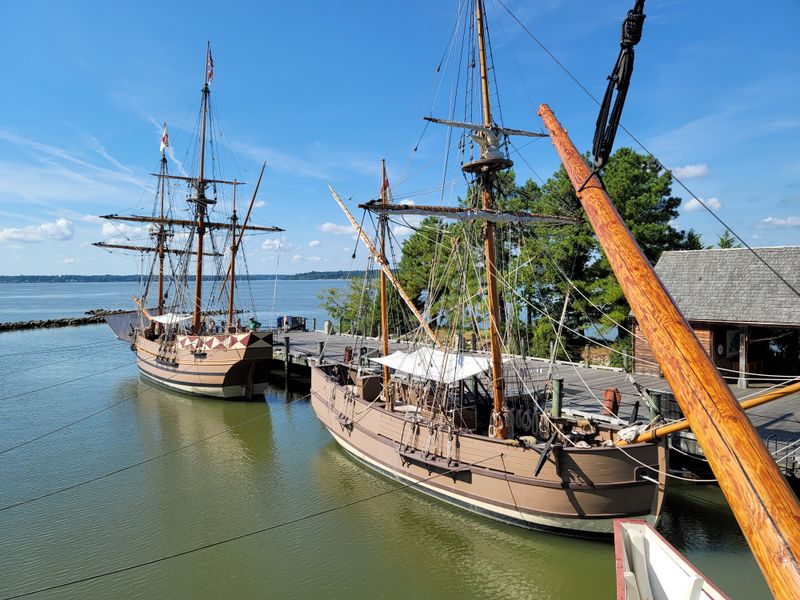
Full-scale replicas of the three ships that brought colonists across the Atlantic bob in the river.
You can board them and imagine the claustrophobic, dangerous journey that lasted months.
The cramped quarters make it viscerally clear what desperation or ambition drove people to risk everything for an uncertain future.
Indoor galleries feature artifacts recovered from archaeological digs at the actual Jamestown site.
Armor, tools, pottery fragments, and personal items connect you directly to people who lived four centuries ago.
Films with special effects dramatize key moments in early colonial history.
The museum doesn’t romanticize this period but presents it as the complicated, often brutal beginning it was.
Native perspectives receive substantial attention, showing sophisticated societies that existed long before European arrival.
The impact of colonization on indigenous populations gets honest treatment.
Programs change seasonally, with interpreters demonstrating everything from 17th-century cooking to military drills.
Kids can try on armor, help with chores, or participate in scavenger hunts that teach while entertaining.
The location at 2110 Jamestown Rd places you near where American history truly began.
Combined tickets with the nearby American Revolution Museum at Yorktown let you trace the arc from colonial beginnings to independence.
Virginia’s story starts here, with all its promise and tragedy.
4. National Museum of the Marine Corps
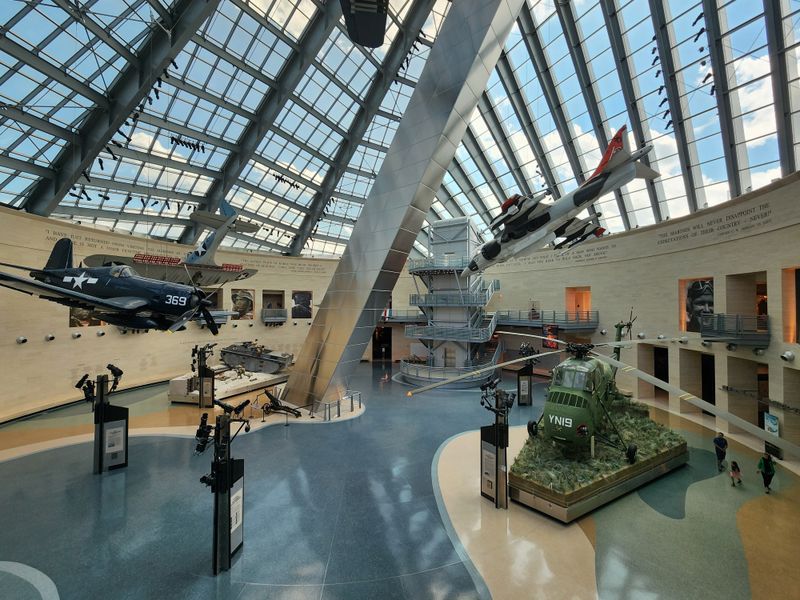
The building itself announces its purpose with a dramatic tilted glass atrium resembling the flag-raising at Iwo Jima.
Inside, the National Museum of the Marine Corps delivers an immersive journey through American military history focused on one legendary branch.
Chronological galleries walk you through every major conflict involving Marines, from Revolutionary War naval battles to modern counterterrorism operations.
What sets this museum apart is its commitment to putting visitors into experiential environments.
One exhibit recreates the humid, jungle atmosphere of Vietnam with appropriate sounds and even scents.
Another places you on the deck of a World War I battleship during combat.
The Iwo Jima gallery surrounds you with the chaos of that brutal Pacific battle.
These aren’t just visual displays but multisensory experiences that convey something of what Marines faced.
Actual equipment, uniforms, weapons, and personal items from various eras fill the galleries.
Reading letters home or looking at photographs of young Marines adds human dimension to military history.
The museum honors sacrifice without glorifying war, presenting both heroism and harsh realities.
Interactive elements let visitors test their knowledge or try simplified versions of Marine training challenges.
Flight simulators and other hands-on activities particularly engage younger guests.
Docents, many of them veterans, share personal insights that textbooks can’t capture.
Their stories add depth and authenticity to the exhibits.
The museum continues to expand, with plans to cover more recent conflicts as time allows proper historical perspective.
Temporary exhibits rotate regularly, ensuring repeat visitors always find something new.
Memorial spaces provide quiet areas for reflection on the costs of military service.
Located at 1775 Semper Fidelis Wy in Triangle, the museum welcomes visitors free of charge.
That accessibility reflects the Marine Corps’ connection to all Americans.
Whether you have military ties or simply want to understand this aspect of history better, the museum succeeds at education and commemoration.
Virginia’s military heritage runs deep, and this institution preserves it powerfully.
5. Frontier Culture Museum
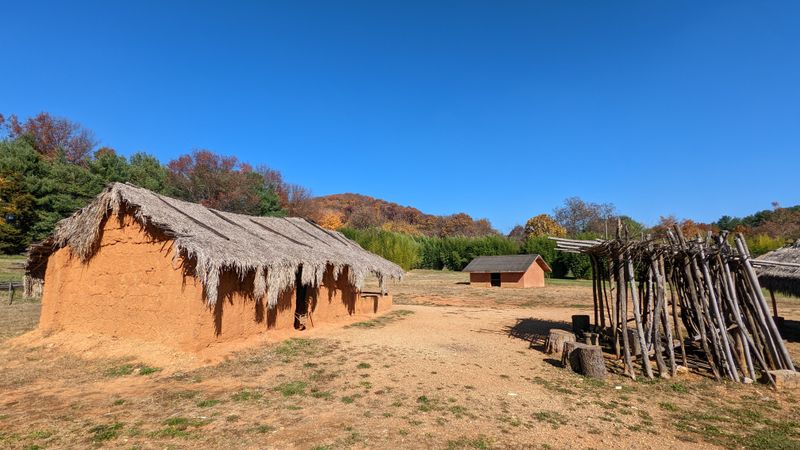
Open-air museums offer something conventional indoor spaces can’t quite match.
At the Frontier Culture Museum in Staunton, you literally walk through time and across continents.
Authentic farmsteads from England, Germany, Ireland, and West Africa were carefully dismantled, shipped to Virginia, and reconstructed on this site.
Each represents the homelands of different immigrant groups who settled the American frontier.
Costumed interpreters at each farmstead demonstrate daily tasks as they would have been done centuries ago.
Watch bread baking in outdoor ovens, sheep being sheared, gardens tended with period-appropriate tools, and crafts practiced using traditional techniques.
The interpreters explain not just how things were done but why people left their homelands for uncertain futures in America.
Economic hardship, religious persecution, and simple hope for better opportunities drove these migrations.
American farmsteads show how these diverse traditions blended and adapted to frontier conditions.
You can trace how building styles, farming methods, and daily life evolved as immigrants became Americans.
The West African farm provides crucial context often missing from frontier narratives.
It acknowledges that not all settlers came voluntarily and shows the agricultural knowledge enslaved Africans brought with them.
Animals typical of historical farms wander the grounds, from chickens and pigs to cattle and horses.
Kids love interacting with livestock and seeing farm life up close.
The museum spreads across enough acreage that walking between farmsteads feels like genuine travel.
Different seasons bring different activities, from planting and harvest work to winter preparations and holiday traditions.
Special events throughout the year feature music, cooking demonstrations, and craft workshops.
The museum at 1290 Richmond Ave makes frontier history tangible in ways textbooks never could.
You’re not just learning about how people lived but experiencing reconstructed environments that engage all your senses.
Virginia’s cultural diversity has deep roots, and this museum celebrates the many streams that flowed together to create American identity.
It’s immigration history told through buildings, tools, and daily practices rather than abstract concepts.
6. Nauticus
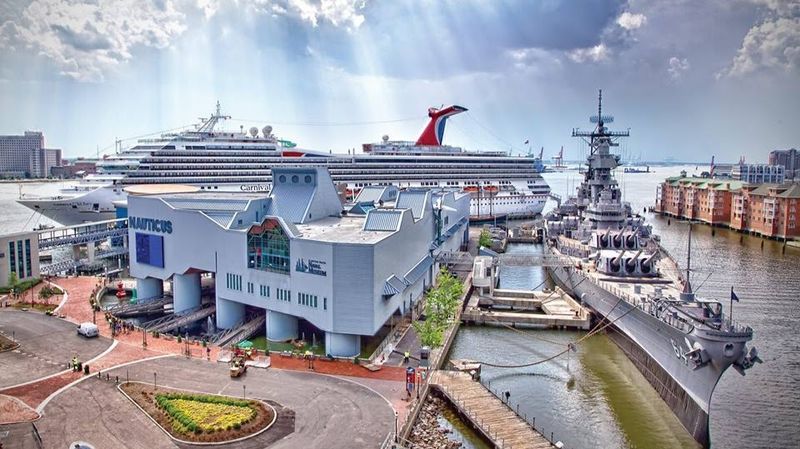
Norfolk’s waterfront location makes perfect sense for a maritime discovery center.
Nauticus celebrates Virginia’s deep connections to the sea through interactive exhibits that appeal to visitors of all ages.
Over 150 hands-on displays let you explore everything from marine biology to naval technology.
Touch tanks bring you face-to-face with sea creatures like horseshoe crabs, rays, and various fish species.
Aquariums showcase the diverse ecosystems found in Virginia’s coastal waters.
Learning about marine life becomes engaging when you can actually interact with living animals under expert supervision.
Naval history exhibits explain Norfolk’s crucial role as a major military port.
Ship models, navigation equipment, and multimedia presentations trace the evolution of naval warfare and commerce.
Simulators let you try steering ships or operating naval equipment, giving you appreciation for the skills these tasks require.
The real showstopper waits outside.
Your admission includes access to the USS Wisconsin, a massive battleship that served from World War II through the Gulf War.
Walking the decks of this floating fortress drives home the scale of naval power.
Guided tours take you through various sections, from crew quarters to the bridge.
The massive gun turrets and armor plating demonstrate why battleships dominated naval thinking for decades.
Personal stories from sailors who served aboard the Wisconsin add human context to the hardware.
The museum building itself offers spectacular harbor views, perfect for watching modern naval vessels and commercial ships pass by.
Educational programs target different age groups, from preschool discovery sessions to in-depth presentations for serious maritime enthusiasts.
Temporary exhibits rotate regularly, covering topics from ocean conservation to submarine technology.
The location at 1 Waterside Dr Suite 248 places you in the heart of Norfolk’s revitalized waterfront district.
You can easily combine a museum visit with exploring nearby restaurants and shops.
Virginia’s maritime heritage extends far beyond the coast, but Nauticus grounds it in the actual environment where sea meets shore.
It’s history you can see, touch, and even smell in the salt air.
7. American Civil War Museum
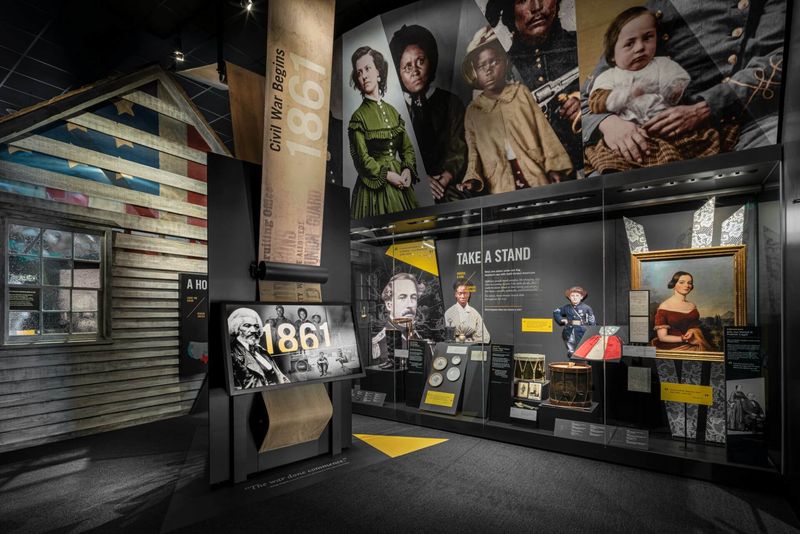
Few conflicts shaped America more profoundly than the Civil War, and Virginia stood at its epicenter.
The American Civil War Museum approaches this painful chapter by presenting multiple perspectives rather than a single narrative.
Located at the historic Tredegar site in Richmond, where Confederate munitions were manufactured, the museum occupies ground that witnessed history firsthand.
Exhibits follow the war chronologically while exploring how different groups experienced and understood the conflict.
You’ll encounter viewpoints from Union and Confederate soldiers, enslaved people seeking freedom, women managing home fronts, and politicians making fateful decisions.
Artifacts range from uniforms and weapons to personal letters and photographs.
These objects connect you directly to individuals caught up in national catastrophe.
Reading a soldier’s last letter home or seeing a child’s toy from a war-torn household makes abstract history devastatingly personal.
The museum doesn’t shy away from the central role slavery played in causing the war.
Exhibits examine how the institution shaped Southern society and why its preservation mattered enough to some people to tear the nation apart.
Stories of self-emancipated people who fled to Union lines and those who served in the United States Colored Troops receive prominent attention.
Richmond’s role as the Confederate capital gets thorough exploration.
The city endured siege, evacuation, and fires that destroyed much of its core.
Walking through exhibits knowing this history unfolded right outside adds powerful resonance.
The museum also maintains a site at Appomattox, where the war effectively ended with Lee’s surrender.
That location offers different perspectives on the conflict’s conclusion and its aftermath.
Interactive displays let you explore battle strategies, economic impacts, and the long process of Reconstruction.
Films and audio recordings bring historical figures to life through their own words.
Located at 480 Tredegar St, the museum occupies a complex that includes outdoor spaces along the James River.
Virginia’s Civil War history remains visible across the landscape, and this institution helps visitors understand what they’re seeing.
It’s necessary, sometimes uncomfortable history presented with scholarly rigor and human sensitivity.
8. George Washington’s Mount Vernon
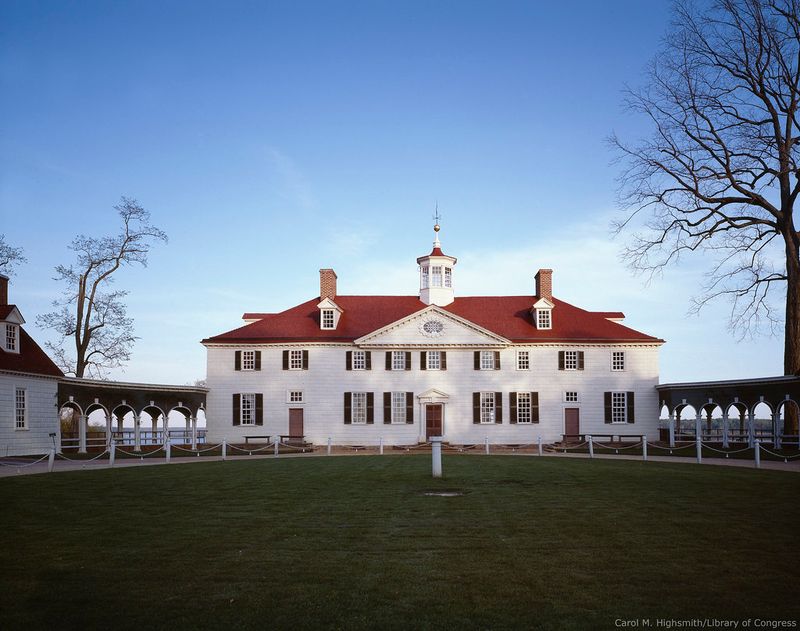
Everyone recognizes George Washington’s name, but how many people know him as an actual person?
Mount Vernon transforms America’s most famous founder from marble statue back into flesh and blood.
The mansion perched above the Potomac River showcases Washington’s taste and the lifestyle of Virginia’s planter elite.
Period furnishings, many original to the Washington family, fill rooms arranged as they were during his lifetime.
Guides share stories that reveal Washington’s personality, his relationships, his business dealings, and his evolution on questions like slavery.
The estate extends far beyond the mansion.
Outbuildings include kitchens, workshops, slave quarters, and storage facilities that kept the plantation functioning.
The working farm demonstrates 18th-century agricultural techniques Washington himself experimented with.
He was an innovative farmer who tried new crops and methods, viewing agriculture as both livelihood and scientific pursuit.
Gardens surrounding the mansion follow Washington’s original plans, showcasing period plants and landscaping styles.
Walking these grounds, you can imagine Washington himself strolling here after a long day.
The education center features interactive exhibits that appeal especially to younger visitors.
A dramatic theater presentation uses special effects to tell Washington’s story.
Artifacts from his military and presidential careers connect personal items to world-changing events.
The museum doesn’t avoid difficult topics.
Exhibits about the enslaved community at Mount Vernon acknowledge that Washington’s wealth and leisure depended on their forced labor.
Individual stories of enslaved people who lived and worked here receive thoughtful presentation.
Washington’s gradual change of heart regarding slavery, culminating in his will that freed his enslaved workers upon his wife’s death, gets examined in its complex context.
Seasonal programs bring different aspects of plantation life into focus, from sheep shearing to holiday celebrations.
The location at 3200 Mount Vernon Memorial Hwy offers stunning river views that haven’t changed much since Washington’s time.
Virginia’s most famous resident becomes more than a face on currency here.
You leave understanding him as a real person navigating the contradictions of his era.
9. Virginia Museum of History & Culture
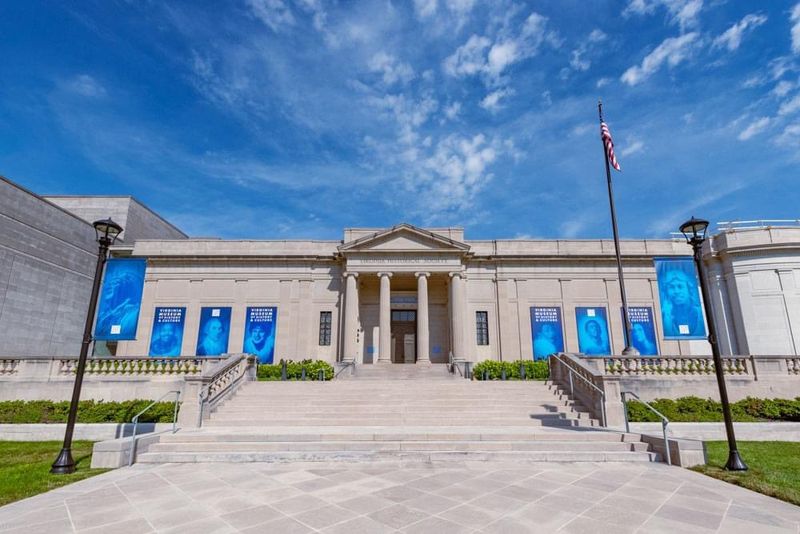
Some museums focus narrowly on single topics or brief periods.
The Virginia Museum of History & Culture takes the opposite approach, attempting to tell the entire story of the Commonwealth from prehistoric times to the present.
That’s an ambitious undertaking, but the museum’s extensive collections make it possible.
Permanent exhibits trace Virginia’s development chronologically while exploring themes like immigration, industry, civil rights, and cultural traditions.
You’ll encounter artifacts as diverse as Native American tools, colonial furniture, Civil War uniforms, and objects from 20th-century daily life.
Each item represents someone’s lived experience and helps build a comprehensive picture of Virginia’s past.
The museum excels at showing how state history connects to larger American and global stories.
Virginia’s role in founding the nation, its position during the Civil War, and its participation in subsequent conflicts and social movements all receive attention.
Rotating exhibits dive deep into specific topics, from particular historical figures to cultural movements or economic developments.
These temporary displays ensure regular visitors always find fresh perspectives.
Interactive elements scattered throughout engage different learning styles.
Touchscreens let you explore topics in depth.
Hands-on activities help kids connect with history through play and experimentation.
The museum’s research library serves scholars and genealogists investigating Virginia history.
Even casual visitors can access resources to learn more about topics that catch their interest.
Educational programs bring experts in to discuss everything from archaeology to contemporary issues with historical roots.
The museum doesn’t present history as settled and complete but as an ongoing conversation.
Different perspectives and interpretations get acknowledged, encouraging visitors to think critically.
Located at 428 N Arthur Ashe Blvd in Richmond, the museum sits in the state capital where much Virginia history unfolded.
The building itself has architectural interest, blending historic and modern elements.
Virginia’s complexity and diversity come through in exhibits that refuse to simplify or sanitize the past.
You leave with deeper appreciation for how history shapes the present and continues to influence the future.
Dear Reader: This page may contain affiliate links which may earn a commission if you click through and make a purchase. Our independent journalism is not influenced by any advertiser or commercial initiative unless it is clearly marked as sponsored content. As travel products change, please be sure to reconfirm all details and stay up to date with current events to ensure a safe and successful trip.
