Road trips are better when they feel real.
That’s why New Mexico is such a great pick, it’s full of places that still carry everyday life, not staged backdrops.
The plan is simple: you can move through living Pueblos where traditions are part of daily routines, then stop at visitor centers run by the community.
These aren’t quick photo stops; they’re places that ask you to slow down, listen, and notice what’s around you.
I’ll be honest, you’ll need patience, curiosity, and a good pair of shoes.
Some of the best moments happen when you’re willing to stay, whether it’s talking with locals, or just walking through centuries-old paths.
This isn’t about checking boxes on a map.
It’s about connecting with a New Mexico that feels alive.
Ready to hit the road? Let’s go.
1. Taos Pueblo
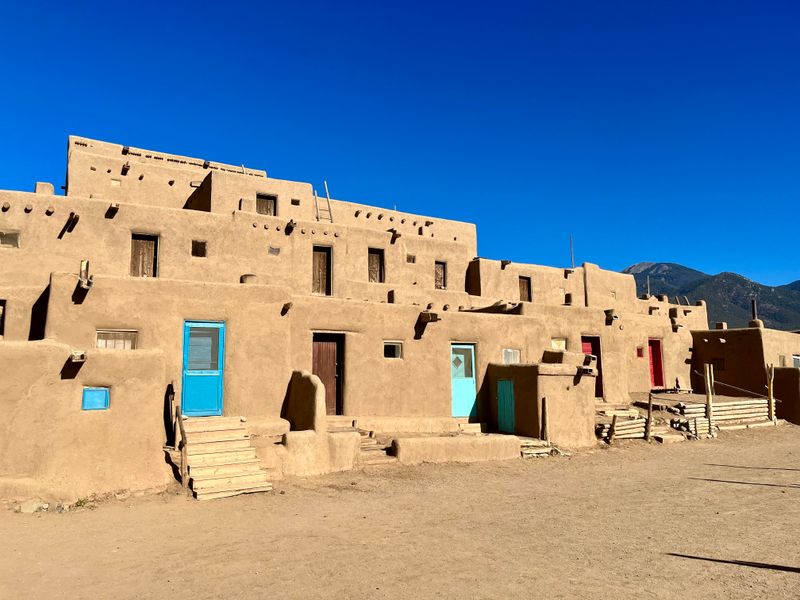
Start here if you want a place that changes how you see New Mexico, because Taos Pueblo at 120 Veterans Highway, Taos, NM 87571 is very much alive.
I like how the adobe blocks glow in soft light while ladders lean like quiet spines and dogs wander by,
The steady sound of water reminds you of routines that existed long before your map.
This is a living Pueblo community and one of the most iconic Indigenous heritage sites in the U.S., where you are looking at meeting continuity, traditions, and everyday life.
The size of the multi?story structures stays with you, framed naturally by the mountains.
It matters because it centers Pueblo history as something still present, standing without drama and asking you to respect its pace.
Walk gently, notice doorframes, tracks, and ask yourself what you are learning rather than just what you are seeing.
Make sure to give yourself time to be quiet, let your eyes adjust to earth tones and sky, and leave with more questions than you arrived with.
You’ll talk about this stop for a long time, because it stays with you in ways that are hard to explain, and that’s the point in my opinion.
2. Acoma Sky City Cultural Center And Haak’U Museum
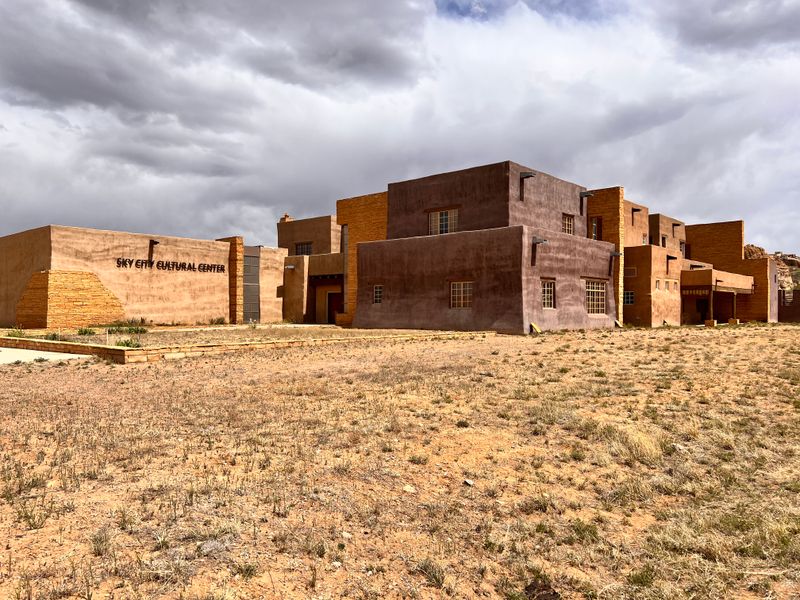
Okay, picture a village lifted onto a mesa and shaped by time.
The Acoma Sky City Cultural Center and Haak’u Museum at 1232 E. Haak’u Rd, Acoma Pueblo, NM 87034, is your way in.
It is the gateway to a place that asks for context first.
Acoma is one of the oldest continuously inhabited communities in North America, and you feel that longevity right away.
Inside the Sky City Cultural Center and Haaku Museum, the story opens slowly, with exhibits that steady your expectations.
I like how they remind you to put the camera down until you understand why you are here.
The museum context helps you see beyond the photos, shaping how you notice spaces, pottery, and sky, so you listen more and talk less.
What makes this place stand out for me is that the story is rooted in a living nation, with no themed attraction energy, just presence and boundaries set with care.
You’re asked to consider what is appropriate to visit and to follow guidance without shortcuts, which makes the experience better for everyone.
Step back from the edge and breathe, because the mesa answers simply by being itself, and that is more than enough.
When you leave, the road unspools slow and wide, and you carry a clearer map in your head, with a landscape you won’t forget.
3. Zuni Visitor And Arts Center
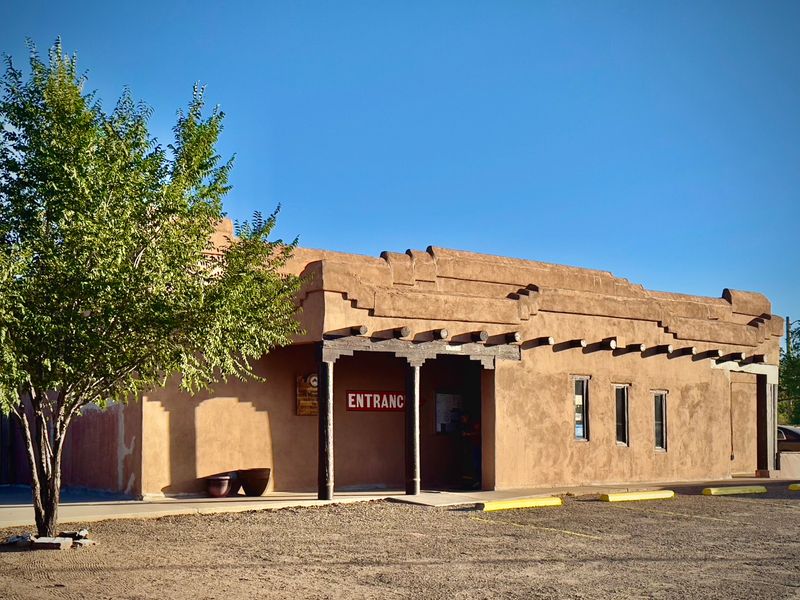
Before you wander, stop where the knowledge lives.
The Zuni Visitor and Arts Center at 1239 Hwy 53, Zuni Pueblo, NM 87327 sets you up right and it is the smart first move.
This is where you learn what is open, what is private, and how to move with respect, gaining clarity on cultural protocols while also finding real art made here.
It’s a clever first stop for Zuni culture, arts, and local guidance on what is appropriate to visit, keeping you from guessing and grounding your visit in the right way.
New Mexico roads can lull you into rushing, but this place slows you down in the best way, with staff who help you see what truly matters.
It’s important because it supports cultural tourism led by the community, with priorities that remain clear and steady, so you leave with context instead of just souvenirs.
I like how you’re encouraged to ask questions and listen to the answers, mark your map, and erase a few assumptions, which feels surprisingly good.
Step back and look at the building again, because even the signage carries a tone of care, reminding you that you are a guest.
When you continue from here, your route feels different, and details stand out that you might have missed.
4. Walatowa Visitor Center At Jemez Pueblo
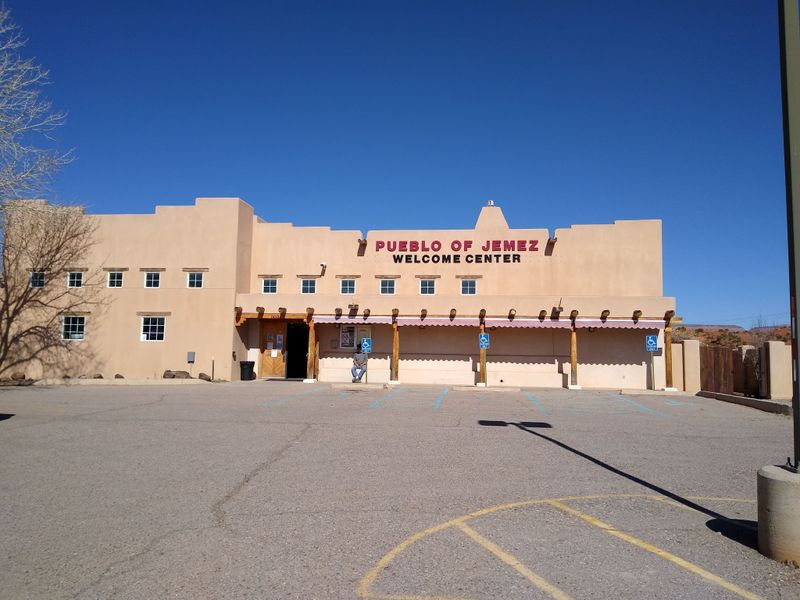
Some places teach you how to visit while you are visiting.
The Walatowa Visitor Center at 7413 Highway 4, Jemez Pueblo, NM 87024 does exactly that.
It is a helpful reset before you explore.
The Jemez, or Walatowa, Visitor Center helps you experience the community with the right background and respect.
It’s teaching you what is open, what is private, and sharing the story of the place.
New Mexico has many layers, and this center helps you sort them without rushing, while the red rock outside fills in the rest.
Pueblo communities set their own rules for what visitors can do and see, and those rules come from continuity, so following them makes the day smoother.
The result feels more meaningful and far less like guessing, because you move with intent and make fewer wrong turns.
Walking through the small exhibits slowly lets you notice language, names, and maps, giving the details time to settle.
If you’re heading out on trails, ask for advice, since the guidance keeps you safe and considerate while also protecting the land.
You learn how to move with respect and see New Mexico with fresh eyes.
And that shift stays with you long after the road carries you on.
5. Poeh Cultural Center
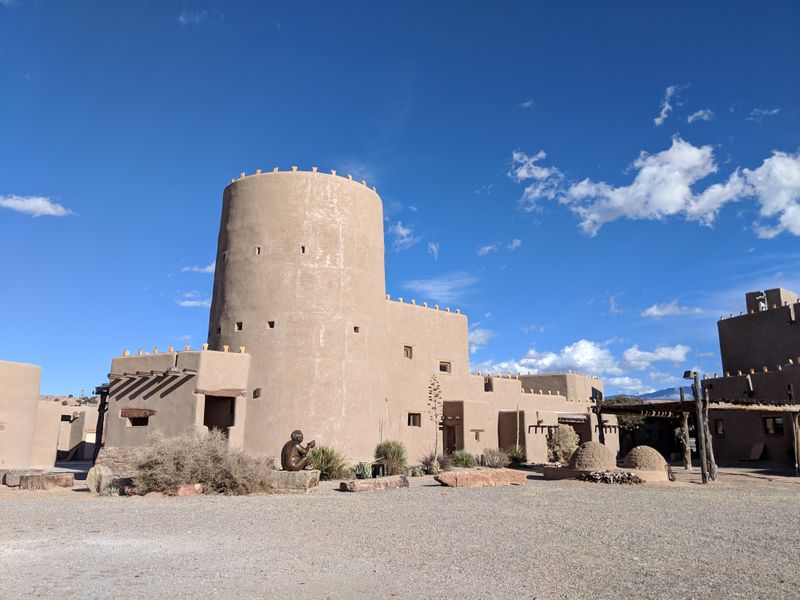
If you want Tewa stories told by Tewa people, come here.
The Poeh Cultural Center sits at 78 Cities of Gold Rd, Santa Fe, NM 87506, and it holds space for voice and craft.
This center focuses on Tewa Pueblo culture and storytelling through exhibits and community programming. You see art that speaks in its own rhythm and you feel welcomed.
The building carries a warmth that settles you, with rooms that hold a quiet focus so you naturally slow down and pay attention.
The best thing here is that the place is tribally rooted, and the voice comes directly from the people, making interpretation land differently when it comes from within.
You walk out with a clearer sense of living Pueblo identity today, and that clarity shifts how you approach other places, making your trip feel richer and more connected.
New Mexico road days can blur together, but this stop gives definition, naming feelings you had but couldn’t quite describe.
Make sure to take time with the exhibits and any community events, because the smaller details are the ones that definitely stay with you.
6. Indian Pueblo Cultural Center
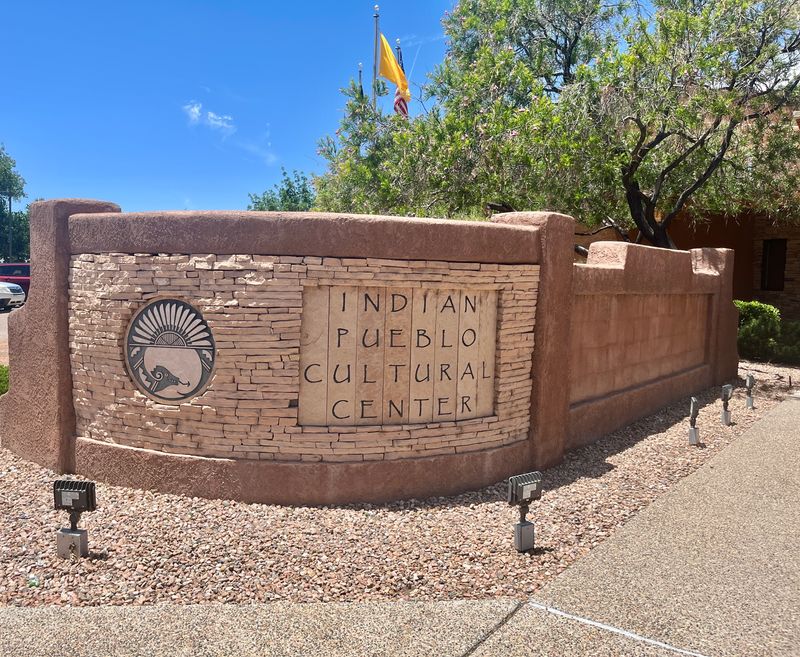
If you want one place to ground the whole trip, this is it.
The Indian Pueblo Cultural Center at 2401 12th St NW, Albuquerque, NM 87104, gathers stories without flattening them.
This is a powerful overview of New Mexico’s nineteen Pueblos, with exhibits, education, and cultural framing.
You get orientation that actually sticks, and it helps every other stop land deeper.
The galleries feel active and current, while the outdoor spaces give you a breath between ideas so your pace settles into something steady.
If you’re new to New Mexico Native history, this is the best starting point, since you’ll pick up references that keep coming back like a friendly glossary for the road.
Look for community?led programs, ask questions, and listen closely, because letting the place shape your itinerary makes the experience stronger.
Save your notes, even the small ones, because they’ll help later stops make sense quickly.
My impression that stayed is really simple but powerful: this center doesn’t just inform you, it changes how you see the journey.
7. Museum Of Indian Arts And Culture
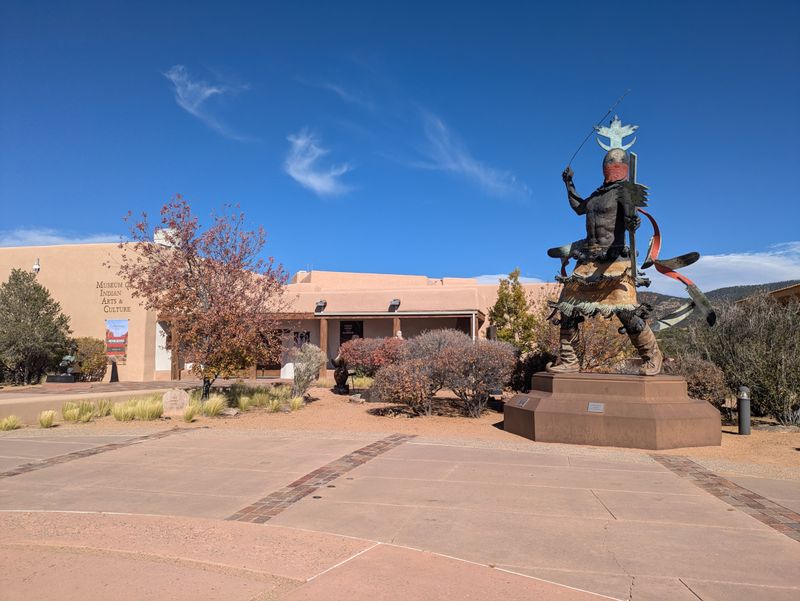
Are you ready for a deeper dive?
The Museum of Indian Arts and Culture sits at 710 Camino Lejo, Santa Fe, NM 87505, and it holds a long arc of the region in careful hands.
This museum is a deep look at Indigenous art, history, and material culture across the Southwest.
I love how you move from ancient works to living voices, and the through line stays steady.
The galleries are paced for thinking, with labels that respect your time and rooms that open like steps in a story.
It matters because the collections preserve and interpret long timelines of Native presence.
It’s giving you context that makes every other site you visit feel sharper and anchoring your understanding in new ways.
New Mexico is full of references, but this place pulls them into focus so the road map suddenly has texture.
Using the benches to rest between cases helps you slow down, and that slower attention makes the details stick.
Checking what’s on rotation ensures you don’t miss something meaningful, because I think that one new idea can shift the tone of an entire day.
It’s a reminder that surprise is part of learning.
8. Wheelwright Museum Of The American Indian
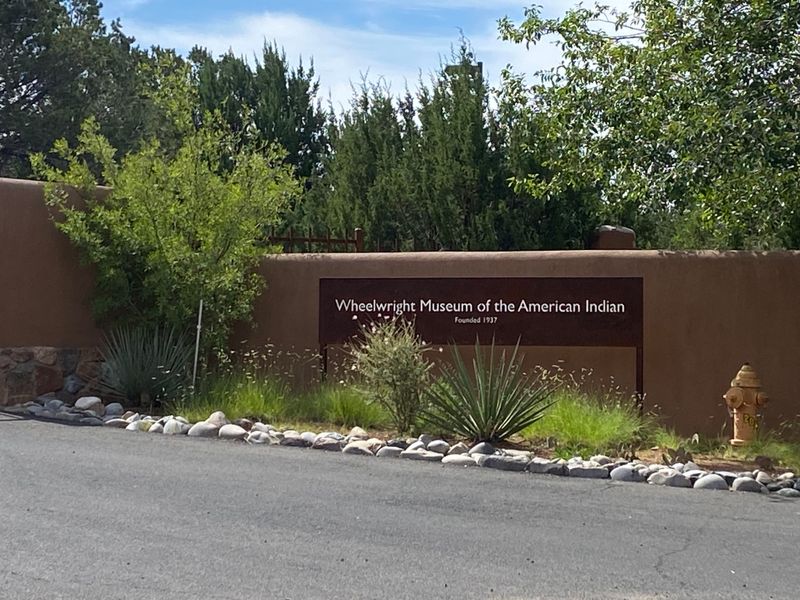
Sometimes you want a museum that feels personal, and I got just the right one!.
The Wheelwright Museum is located on 704 Camino Lejo, Santa Fe, NM 87505, and brings you close to living traditions without noise.
This museum highlights Native art with a strong emphasis on ongoing creativity and community connections, keeping the scale human so you can look slowly without losing the thread.
I loved how the galleries unfold like conversations, with objects given space to breathe.
That’s allowing you to notice the craft and care behind them.
I noticed that Native creativity is treated as present rather than only historic, and that shift changes how you see everything else.
It’s helping you spot continuities that might otherwise slip by.
It’s also a calmer, more intimate stop that rewards slow looking, where taking one lap and then another reveals new details each time.
New Mexico days can get crowded with plans, but this place works like a reset button, trust me.
Ask about current exhibits when you arrive, because a little guidance can lead you to exactly what you didn’t know you wanted.
9. Bandelier National Monument
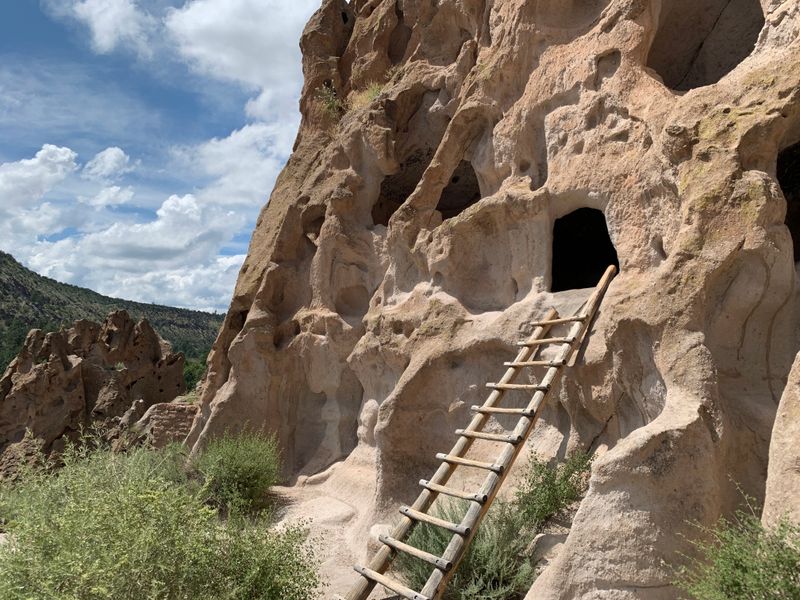
Ready to put your hands on a ladder and feel the day change?
The Bandelier National Monument at 15 Entrance Road, Los Alamos, NM 87544, should be your next stop.
Bandelier protects ancestral Pueblo sites including cliff dwellings and village remains in Frijoles Canyon.
Trails thread through trees and rock until your stride finds a rhythm that feels really natural.
Ladders lead to carved rooms, and the view back across the canyon settles your thoughts, it reminded me there’s no need to hurry.
The site preserves both archaeology and the land setting that shaped daily life, showing how architecture and landscape fit together in a way that feels simple.
The trails make history physical instead of abstract, where each step becomes context and even your breathing turns into part of the lesson.
Give yourself time on the main loop, then sit for a minute near the creek and let the water finish the story.
When you head back to the car, carry that steady pace with you, because the road out feels calmer and the day holds together.
The thought that stays is clear: history isn’t just something you study, it’s something you walk through.
10. Aztec Ruins National Monument
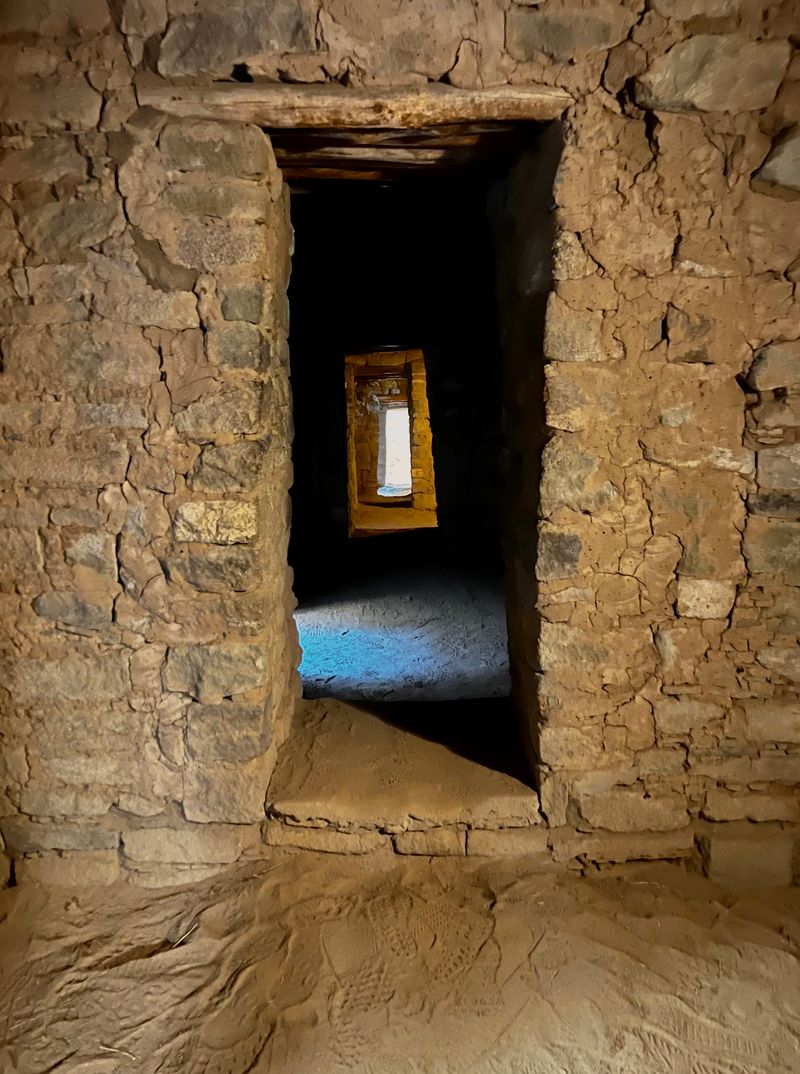
If you’re short on time, but want something big, the Aztec Ruins National Monument at 725 Ruins Road, Aztec, NM 87410 is waiting for you!
Despite the name, this is an ancestral Puebloan site with impressive masonry and a restored great kiva.
I got the impression that passing through doorways feels like moving through frames in a film and the stonework holds its line.
Inside the kiva, the mood shifts as sound drops and your steps feel softer, reminding you that space itself can change how you move.
It’s important to know that the site helps tell the broader Chaco era story in the region, bringing connections into view and letting you see scale in a new way.
It’s approachable if you want a heritage stop that delivers big impact without being difficult to visit, with a friendly route and information that lands quickly.
New Mexico road days often need a clear anchor, and this one makes the map click instantly.
Dear Reader: This page may contain affiliate links which may earn a commission if you click through and make a purchase. Our independent journalism is not influenced by any advertiser or commercial initiative unless it is clearly marked as sponsored content. As travel products change, please be sure to reconfirm all details and stay up to date with current events to ensure a safe and successful trip.
