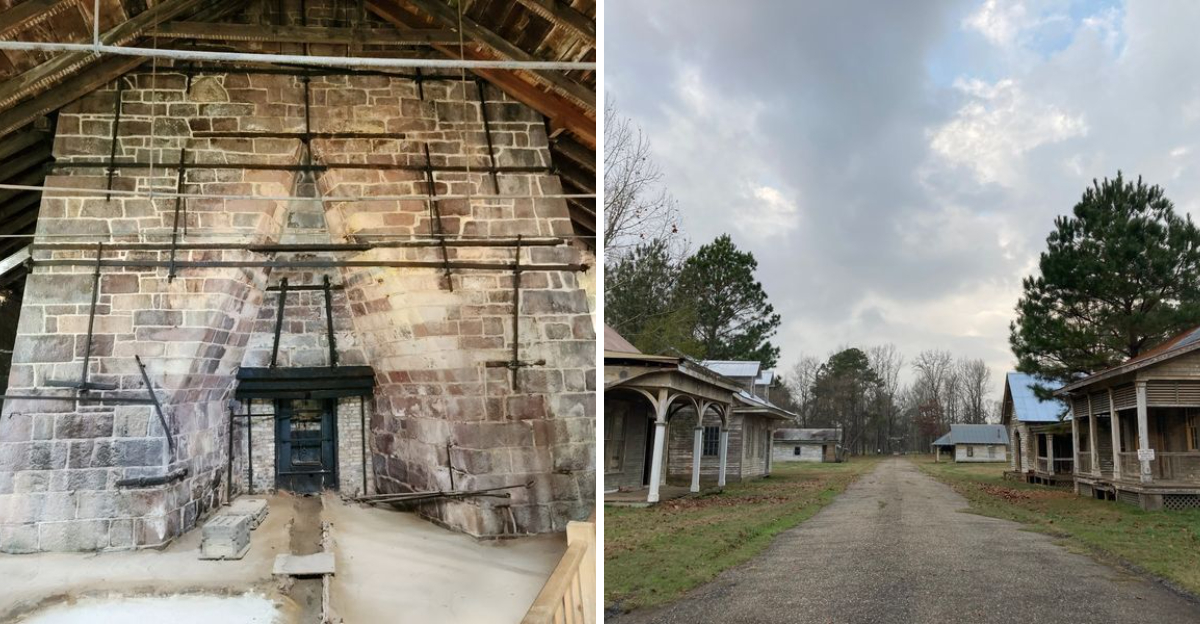
The ruins do not look ruined at first. A stone wall looks like a stone wall.
A grassy field looks like a grassy field. A pile of enormous rocks looks like exactly that.
Then you learn what you are looking at, and the whole Alabama landscape changes. A furnace once turned ore into iron here.
A vanished settlement once occupied that field. An ancient structure once meant something very different from what it means now.
That is the appeal of exploring the forgotten corners of the state. The clues are often hiding in plain sight, waiting for someone curious enough to stop the car and investigate.
1. Old Cahawba, The Capital That Slipped Away
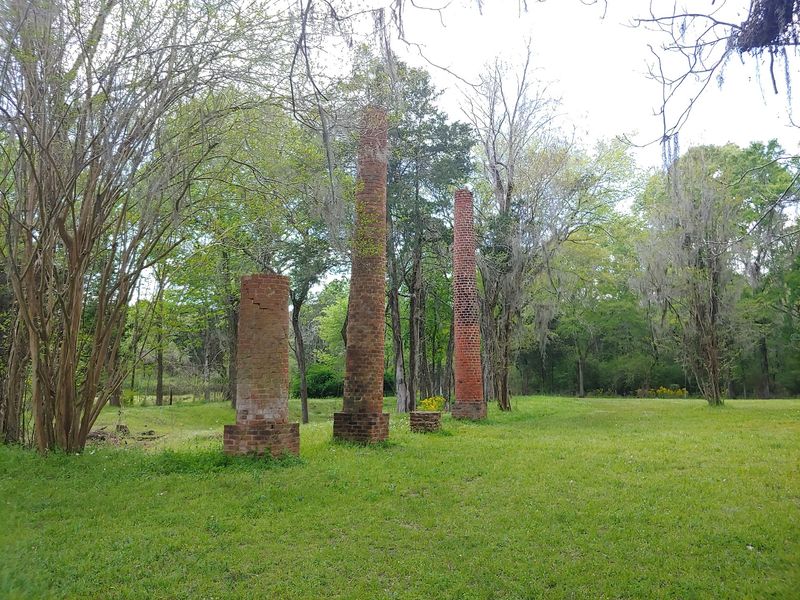
Grass grows where the streets of Alabama’s first state capital once ran, and that alone makes Old Cahawba worth the drive. Located at 9518 Cahaba Road in Orrville, this archaeological park held the seat of government from 1819 to 1826.
Floods, political shifts, and hard economic luck wore the town down until it faded into a ghost town after the Civil War.
Live oaks heavy with Spanish moss lean over brick foundations and old cemeteries, and the effect is quietly beautiful rather than gloomy. The Crocheron Columns rise from open ground like the bones of a mansion that refused to disappear completely.
Traces of Castle Morgan, where hundreds of soldiers were held prisoner, still mark the earth. The Perine artesian well bubbles nearby, a small detail that surprises first-time visitors.
St. Luke’s Church has been returned to its original site and restored, giving the landscape one intact building among all the outlines and rubble. Walk the old street grid slowly and the layout of a real town starts to make sense.
Archaeologists keep working here, which means the story is not finished yet. Morning light works best for photographs, and the shade under those oaks is a genuine relief in warmer months.
Cahawba rewards patience more than speed, so allow a couple of unhurried hours.
2. Moundville, Earthworks From A Vanished City
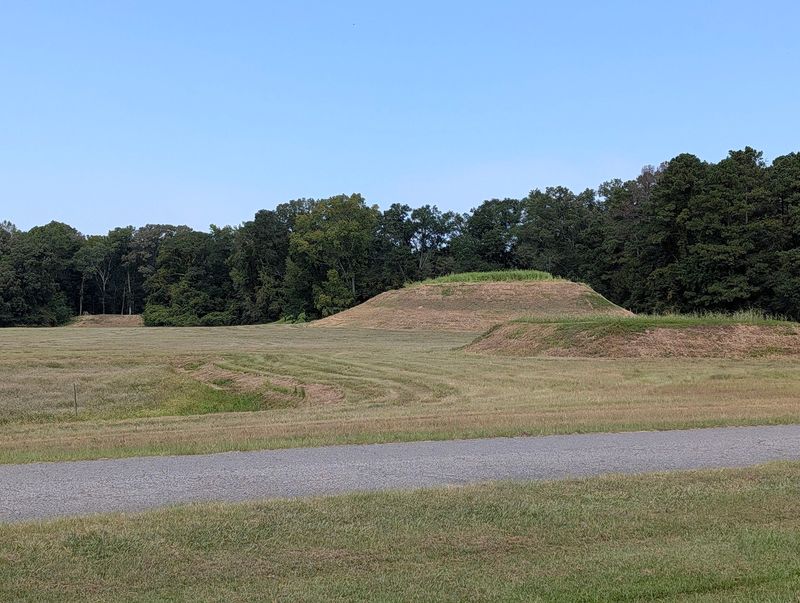
Twenty-nine flat-topped earthen mounds arranged around a giant plaza is not something most travelers expect to find in west Alabama. Moundville Archaeological Park sits near Tuscaloosa in Hale County, spreading across 326 acres on a bluff above the Black Warrior River.
Between roughly A.D. 1000 and A.D. 1450, this was the largest city in North America north of Mexico.
The Mississippian people who built it shaped the land with startling precision, raising platforms that once held ceremonial buildings and the homes of leaders. Climbing the largest mound gives a clear view of how deliberately the whole site was planned.
Scholars still debate why such a powerful center rose here, and why it emptied out. That unanswered question hangs over the place in a way that keeps visitors quiet.
Trails loop between the mounds, and the riverside stretch is shady and calm. Interpretive exhibits fill in details about tools, pottery, and daily life, which helps the grassy shapes outside feel like a real neighborhood rather than abstract hills.
Spring and fall bring the best walking weather, since shade is limited out on the plaza. Give it half a day at minimum.
Few sites in the South stretch the timeline of Alabama history quite this far back.
3. Cornwall Furnace, Iron Stack In The Woods
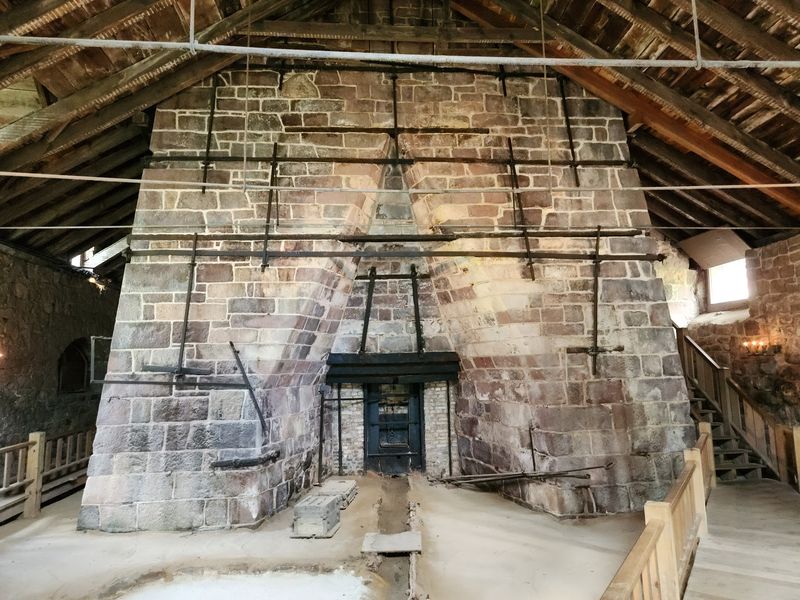
Few things stop a road trip faster than a 50-foot wall of stacked stone appearing out of the trees. Cornwall Furnace Memorial Park sits at 1200 County Road 251 in Cedar Bluff, tucked into the green quiet of Cherokee County near the Coosa River backwaters.
Built in 1862, the furnace produced iron that traveled to foundries in Rome, Georgia.
The stack survives in remarkable shape, and visitors can walk right up and put a hand on the blocks. Cool stone, warm air, birdsong overhead.
The contrast between heavy industry and peaceful shoreline is the whole appeal here.
Interpretive signs explain how the furnace worked and why such an isolated spot mattered during the war years. Picnic tables sit nearby, making this an easy lunch stop between longer drives.
Water levels change the look of the surroundings through the year, so the setting never feels identical twice. Fishing boats drift past in the distance, adding a lazy rhythm to the visit.
Parking is simple and the walk from the lot is short, which makes the payoff feel almost unfairly generous. Photographers should aim for late afternoon when light rakes across the stonework.
Small park, big impression, and one of the most photogenic industrial relics in northeast Alabama.
4. Spectre On Jackson Lake Island, A Town Built For Film
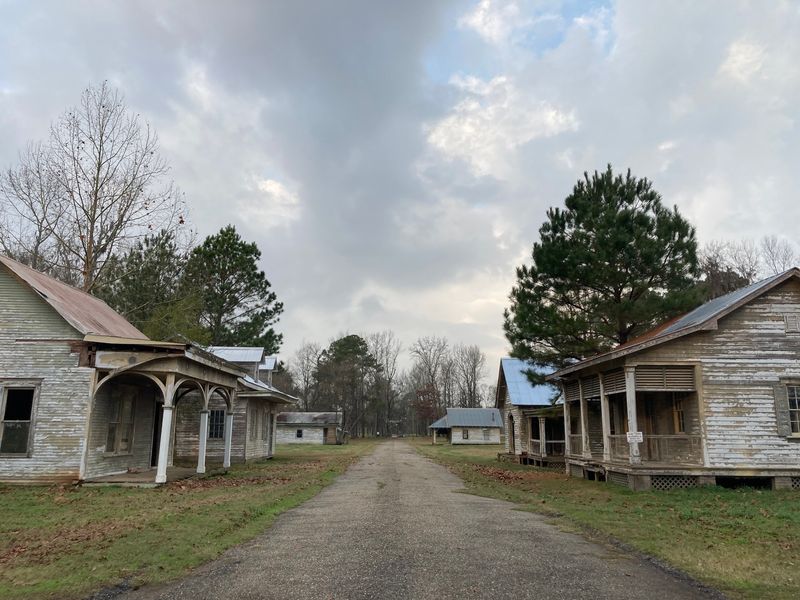
A crooked row of storefronts leaning into the grass, and not one of them was ever a real store. Spectre sits on Jackson Lake Island near Millbrook, built as a fictional town for Tim Burton’s 2003 film Big Fish and then simply left behind when filming wrapped.
Weather has been working on it ever since.
Paint peels, boards sag, and the Styrofoam trees have gone soft at the edges. Somehow the decay suits the place better than fresh paint ever would.
Wandering the main street feels like poking around inside somebody else’s daydream. Goats roam the island freely and will absolutely investigate visitors, which adds an unplanned comedy element to the whole experience.
Shoes matter here, since the ground turns soft near the water and the island floods after heavy rain. Check conditions before making the drive.
The Alabama River sets the backdrop, and the light through the trees gives the abandoned buildings a soft, faded quality that photographers love. Campers sometimes stay overnight on the island.
Spectre is not ancient, not historic in the usual sense, and yet it belongs on this route completely. Ruins do not always need centuries behind them to feel haunted.
Bring a camera and a sense of humor.
5. St. Stephens, Where Alabama Began
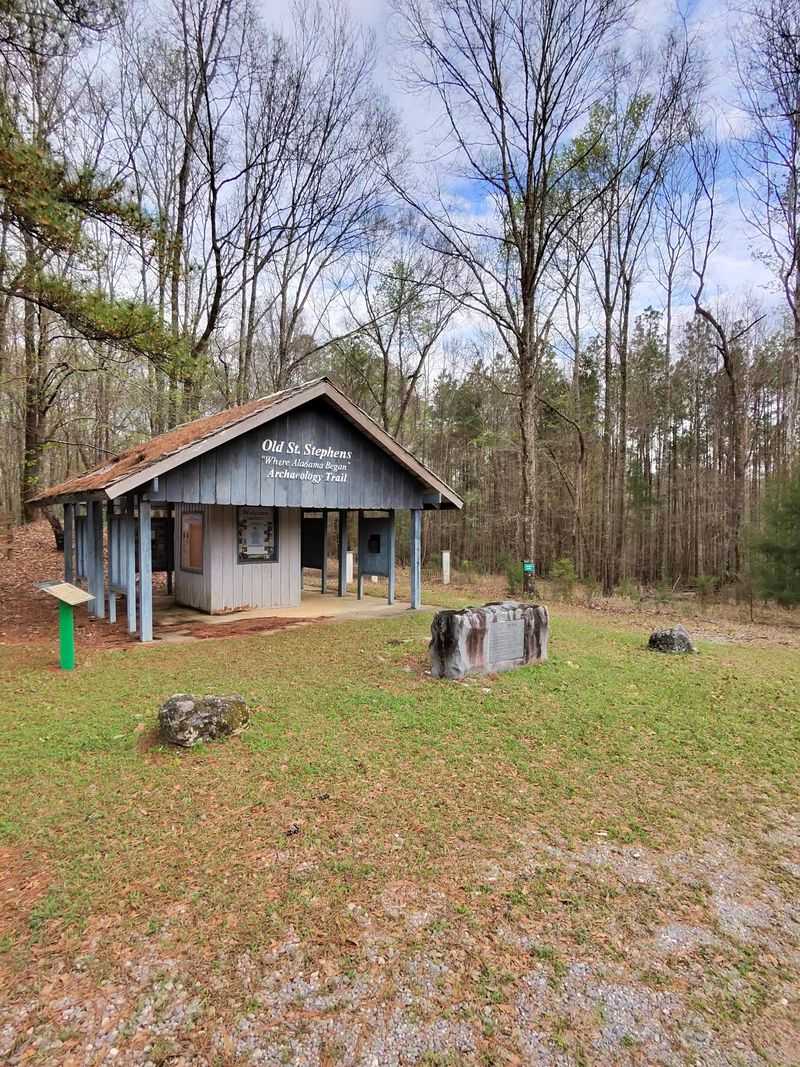
Alabama’s story starts here, in a quiet park where the buildings exist mostly as outlines in the soil. Old St. Stephens Historical Park at 2056 Jim Long Road in St. Stephens preserves the site of the Territorial Capital, which held that role between 1817 and 1819.
From 1799 to 1829 a busy riverfront town filled these bluffs.
Choctaw, Cherokee, and Creek peoples traded here alongside French, Spanish, English, and American settlers, and that mix shaped everything about the settlement. By the Civil War the town had emptied out, leaving the ground undisturbed for more than a century.
Archaeologists still dig here every season. Marked building sites let visitors trace where homes, shops, and government offices once stood, which turns an open field into a readable map.
The so-called Indian Bathtubs draw plenty of curiosity, two basins carved into rock and fed by underground springs, with debate continuing over who cut them and why. Cool water, cool shade, and an unsolved question.
Fishing, camping, and swimming in the old limestone quarry lake round out the visit for anyone traveling with restless kids.
Trails wind through hardwood forest and along the water, and the whole park feels unhurried. Bring insect repellent in warm months and plan on lingering.
6. Forgotten Country Churches Along The Backroads
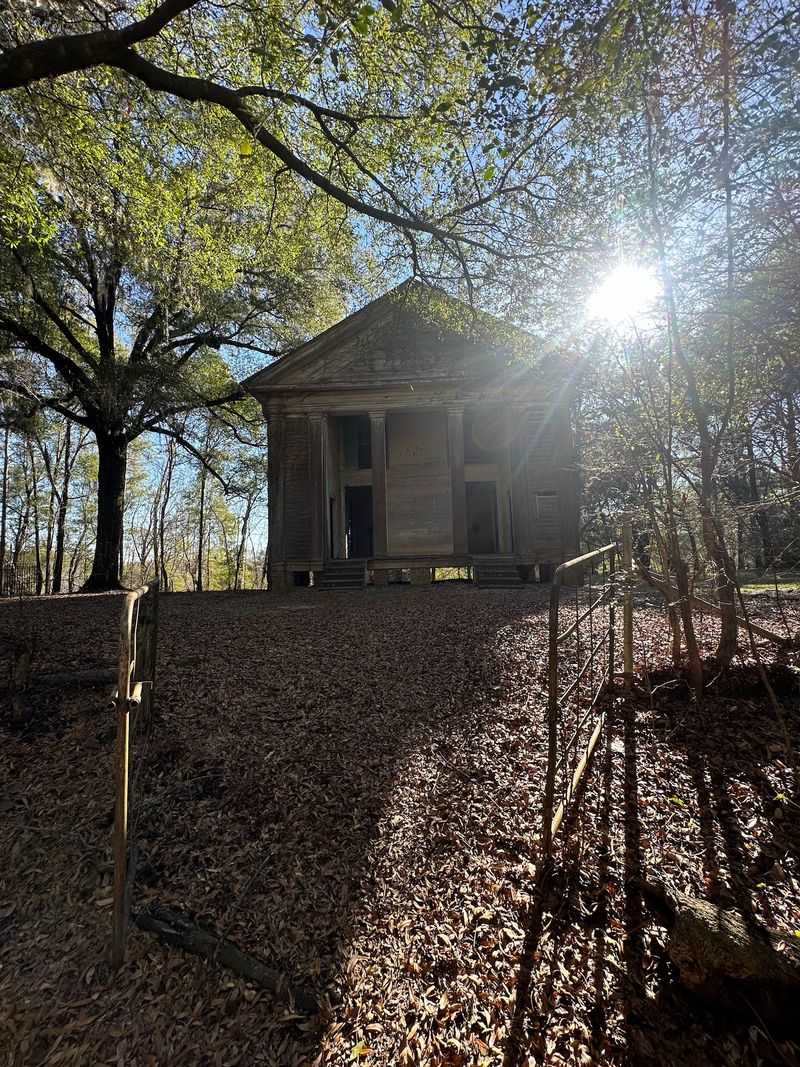
Turn down almost any unnamed county road in rural Alabama and eventually a little white church appears through the vines. Congregations shrank when mills closed and young families moved toward the cities, and the buildings were left to fend for themselves.
Oak branches now lean against rooflines that once heard hymns every Sunday.
Some still hold their original pews, coated in dust and undisturbed for decades. Others have collapsed into skeletal frames, with only a doorway and a few clapboards holding the shape.
Nearby family cemeteries usually survive better than the buildings, mowed by relatives who still drive out once or twice a year. Those small acts of care say a lot about how memory works in the rural South.
Photographers love the peeling paint and the way light falls through empty window frames. Just remember that most of these structures sit on private land, so photograph from the roadside unless permission is clearly posted.
Floorboards inside abandoned buildings are rarely safe, and wasps tend to claim the porches.
Counties across the Black Belt and the northern hill country hold dozens of examples, none of them marked on maps. Finding one is mostly luck and slow driving.
That unpredictability is what makes these discoveries feel earned rather than scheduled.
7. Bamahenge, Giant Stones In A Pine Forest
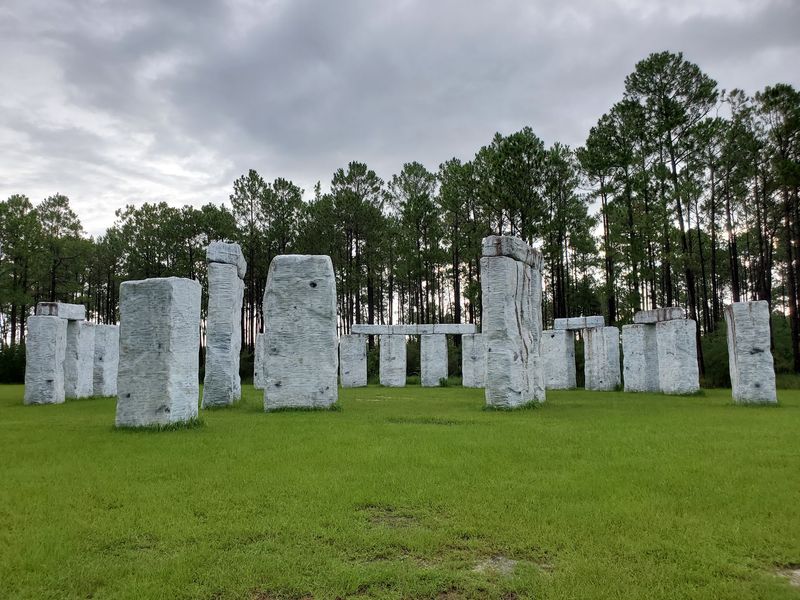
Pine trees, sandy soil, and then, without warning, Stonehenge. Bamahenge rises near Elberta along Barber Parkway, and the first glimpse tends to produce a laugh followed by genuine amazement.
Artist Mark Cline built it from fiberglass around 2012, commissioned by local collector George Barber.
The stones reach nearly 21 feet tall and the circle spans about 104 feet, which is close enough to full scale that photographs fool plenty of people online. Knock on one and the hollow sound gives away the trick immediately.
Cline aligned the circle with the summer solstice, copying that detail faithfully from the English original. Nice touch for a roadside sculpture in south Baldwin County.
Fiberglass dinosaurs lurk in the surrounding woods, part of the same collection, so keep eyes open while walking the paths. A giant Alice in Wonderland sculpture turns up too.
Access is free and casual, with a small pull-off near the site and no gates to pass through. Early evening light through the pines makes the stones glow in a way that feels almost convincing.
Nobody would call Bamahenge a genuine ruin, yet it earns its spot on this route by being every bit as strange as the real ones.
Roadside Alabama at its most cheerful.
8. Tolstoy Park, The Round Hut A Dying Man Built
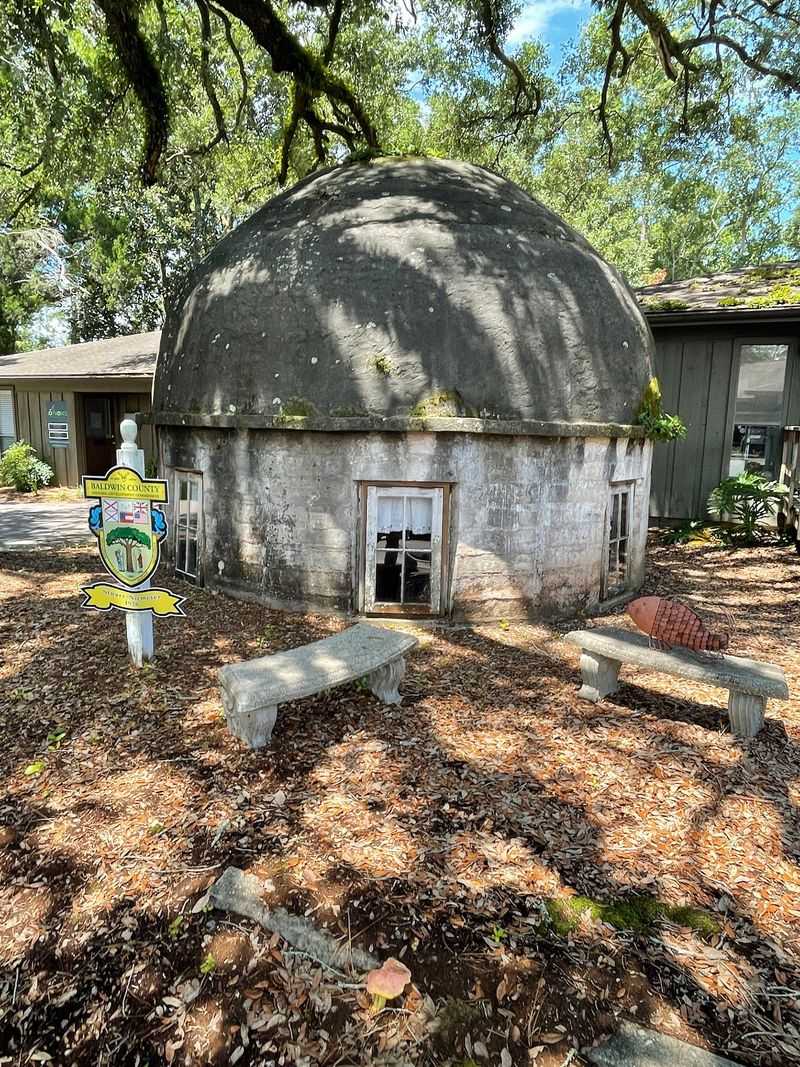
Doctors gave Henry Stuart a year to live. He got twenty-two more, and spent them in a round brick and concrete hut he built with his own hands in 1925.
Stuart, an English immigrant diagnosed with tuberculosis, came to Alabama in 1923 hoping the warm coastal climate might ease his lungs.
His hut measures roughly 14 feet across, sits two feet into the ground for natural cooling, and was designed to shrug off hurricanes. It has done exactly that for a century.
He named the place Tolstoy Park after the Russian writer whose ideas about simple living he admired. Ten wooded acres once surrounded it.
Today the little dome stands in Montrose near Fairhope at 22787 US-98, hemmed in by offices and a parking lot, which honestly makes it stranger and more moving than it would be in the woods. Traffic hums past a structure built for solitude.
Listed on the National Register of Historic Places, the hut is small enough to take in within minutes, though most visitors stand there longer than planned.
Peek at the handmade blocks and the low doorway to appreciate how much labor one determined person managed alone.
Combine the stop with a stroll through Fairhope, since the town sits just down the road.
9. Fairhope Storybook Castles, Handmade Fantasy Houses
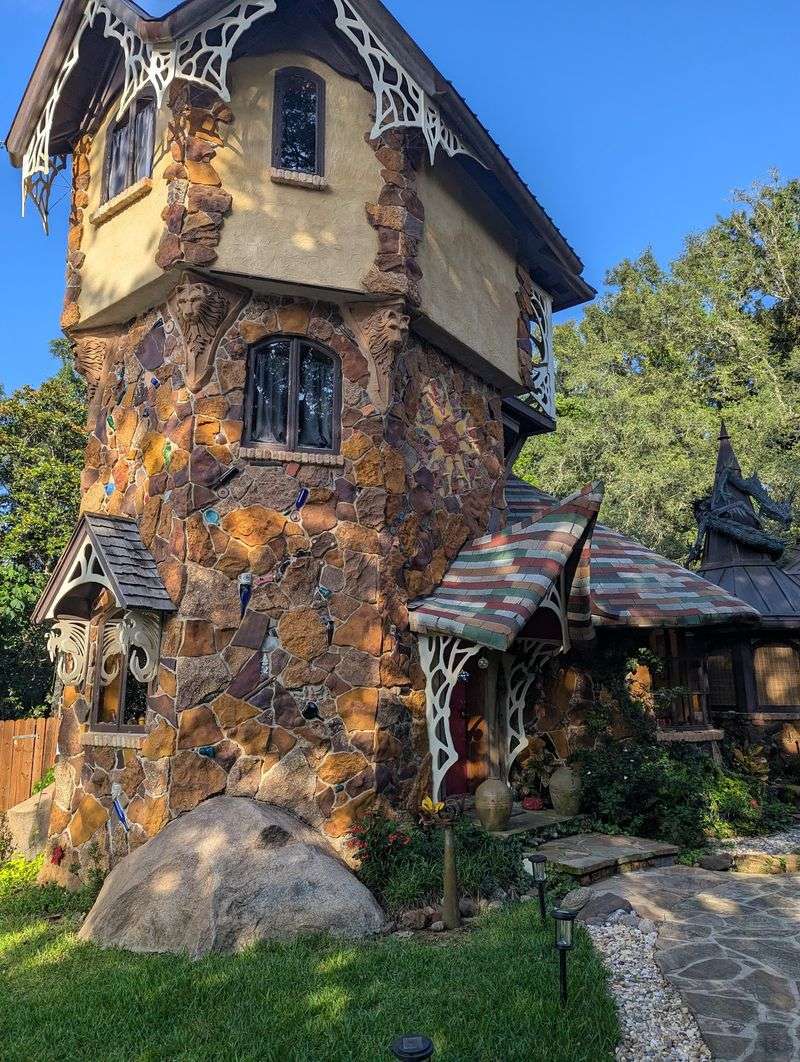
Rounded turrets, mosaic tiles, and rooflines that seem to have been drawn by a child with a very good imagination. The Fairhope Storybook Castles cluster around 456 Oak Avenue in Fairhope, hiding in a leafy residential neighborhood where nobody expects them.
Artist Craig Turner Sheldon designed and built them by hand.
Stone, salvaged shingles, colored tile, and all sorts of recycled odds and ends went into the walls, giving each house its own personality. The Sheldon, Mosher, and Boom castles form the heart of the group.
Dean Mosher, Sheldon’s son-in-law and an artist himself, added to the construction over the years, keeping the creative streak in the family. The results look playful rather than polished, which is exactly the charm.
These are private homes, so viewing happens from the sidewalk and street. Keep voices down, stay off the lawns, and photograph from public ground out of respect for the people living inside.
Fairhope itself makes the detour easy, with oak-lined streets, flower baskets on the lampposts, and a bay-front park a few blocks away. Morning walks work best before the sun climbs.
Plenty of longtime residents only learned about the castles recently, which says something about how quietly they blend in.
Look up, look closely, and the fairytale details start appearing everywhere.
