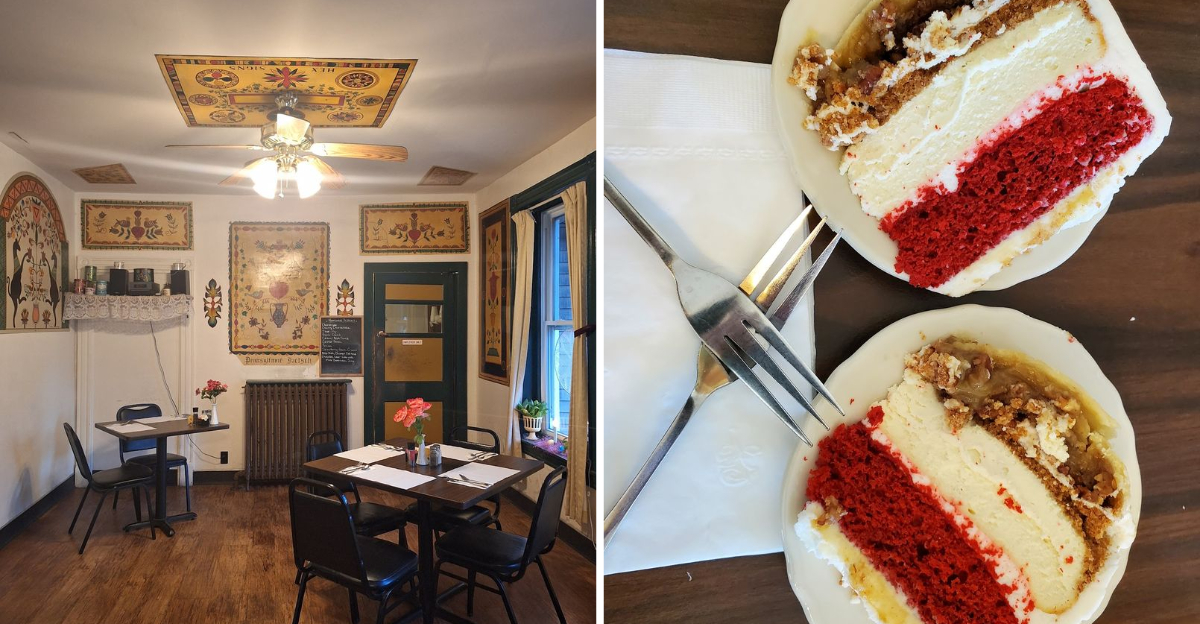
Candles glowed in every window of that brick building with the blue awning, and I had taken the exit off a Pennsylvania highway on a hunch, following a road sign into a hamlet so small you could miss it while adjusting the radio.
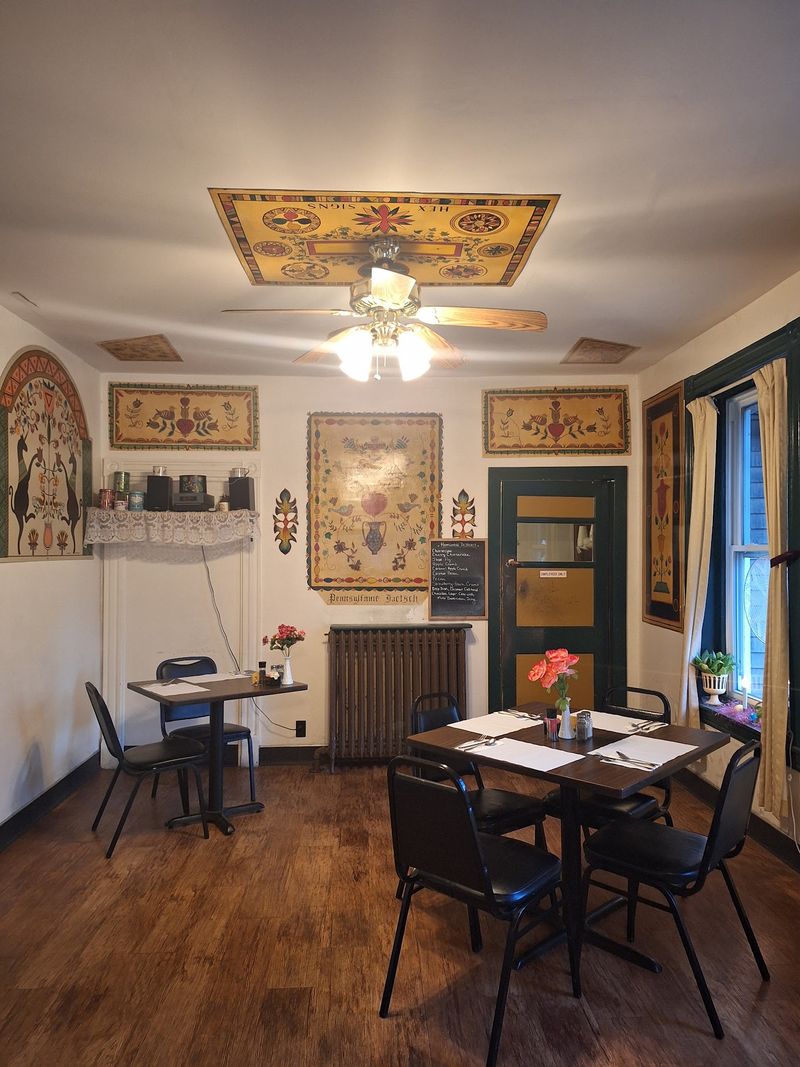
Inside, the floors creaked in that friendly old-house way, hex signs brightened the walls, and the smell of onions and gravy hung in the air like a promise.
I ordered things I had only read about in cookbooks, and every plate came out looking like somebody’s grandmother had signed off on it.
The town itself has fewer than two hundred residents, yet the parking lot filled up while I ate, a level of loyalty that tells you more than any guidebook could.
I lingered over the last bites, listening to the conversation at the next table, and realized I had stumbled into exactly the kind of place that keeps me taking detours.
The Little Hamlet That Barely Registers on a Map
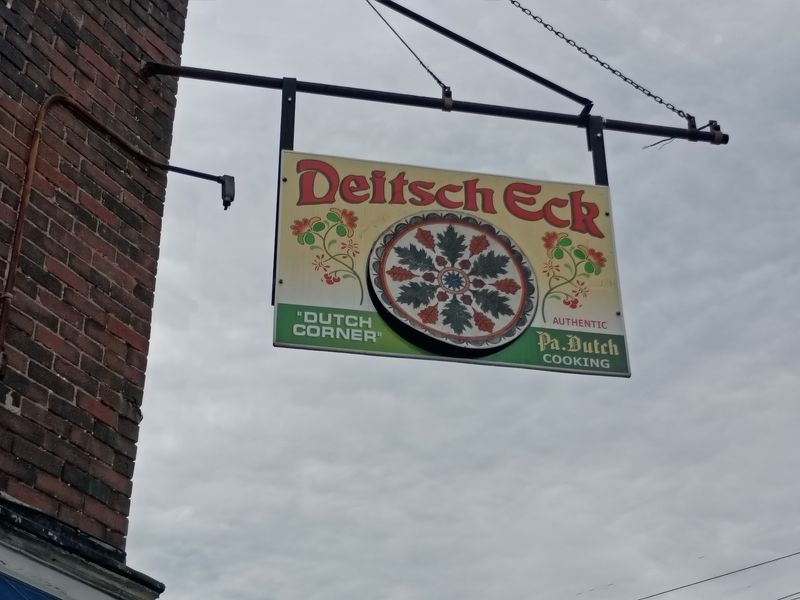
Lenhartsville sits in the northern corner of Berks County, tucked where Old Route 22 meets Route 143. Blink and you have driven through it.
Most food travelers point their cars toward Lancaster or Reading and never think to look up here, which is exactly why this stretch of Berks stays so peaceful. Interstate 78 hums along just south of town, carrying thousands of people who have no idea what they are missing at Exit 35.
I found the drive genuinely pretty, with barns, fields, and low ridges filling the windows. Reading is about 25 minutes south, and Allentown sits roughly 25 minutes east, so the restaurant is an easy detour from either direction rather than a full expedition.
The scale of the place is part of the charm. There is no strip of competing eateries, no crowded sidewalk, no valet stand.
You park, you walk a few steps, and you are there. For anyone tired of hunting for a table in a busy food district, a town this quiet feels like a small gift, and the payoff waiting inside is bigger than the address suggests.
Candles in Every Window Mean the Kitchen Is Open
Pulling up at dusk, the first thing that caught my eye was light. Not neon, not floodlights, just a small candle glowing in each window.
Each one sits on a circle of lace, and together they act as the restaurant’s open sign. It is a simple signal that has been repeated window after window across the front of the building, and honestly it works better than any glowing tube of plastic ever could.
The brick exterior with its blue awning looks like something from an old postcard, which makes sense given the history packed into these walls. From the sidewalk you get a sense of an old country inn rather than a business.
Practical tip: because those candles are the tell, it helps to know the hours before you go. The kitchen runs Wednesday through Sunday with an afternoon and evening schedule, and a quick phone call clears up any confusion.
Arriving while there is still a bit of daylight gives you the best of both views, the brickwork outside and the candlelight beginning to glow. I lingered a minute longer than planned just taking it in.
A Building With Roots in the 1700s
Long before anyone ordered dinner here, the site was known as the Washington Hotel, established back in the late 1700s. Fire destroyed the original structure around 1914.
What stands today carries that layered past forward, and you feel it in the creak of the wood floors and the low, comfortable ceilings. Buildings like this collect stories the way attics collect boxes.
In the late 1930s, the property was bought by Johnny Ott, a well known hex sign painter who ran it as a country restaurant and hotel. Ott worked on his hex signs in an enclosed studio on the side porch, which means folk art was literally being made on the premises.
After Ott passed away in 1964, the Peters brothers of Lenhartsville looked after the hotel. Hex sign artist Donald Greth bought it in 1966 and ran it with his wife until 1971.
Knowing that timeline changed how I looked at the room. Every doorway and floorboard felt connected to a chain of people who cared about keeping the place going, which is rarer than it should be in the restaurant world.
Hex Signs, Folk Art, and a Portrait Watching Over the Room
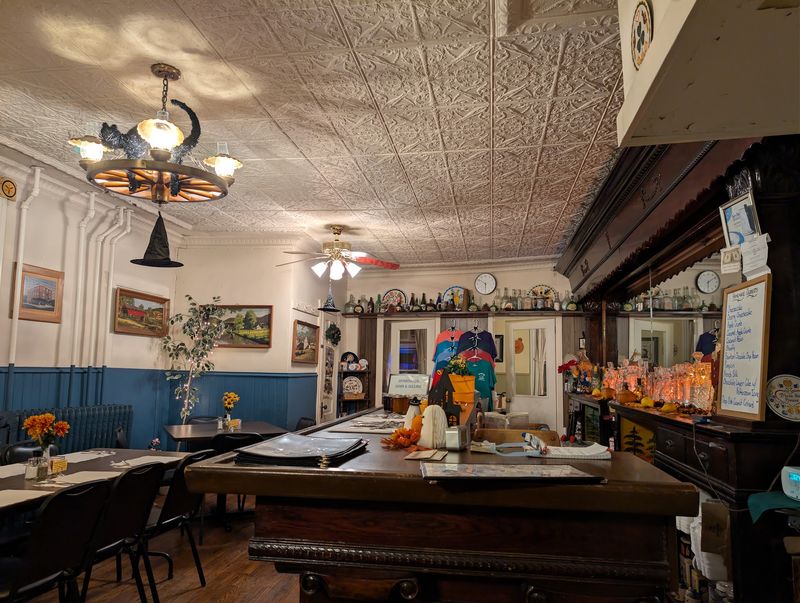
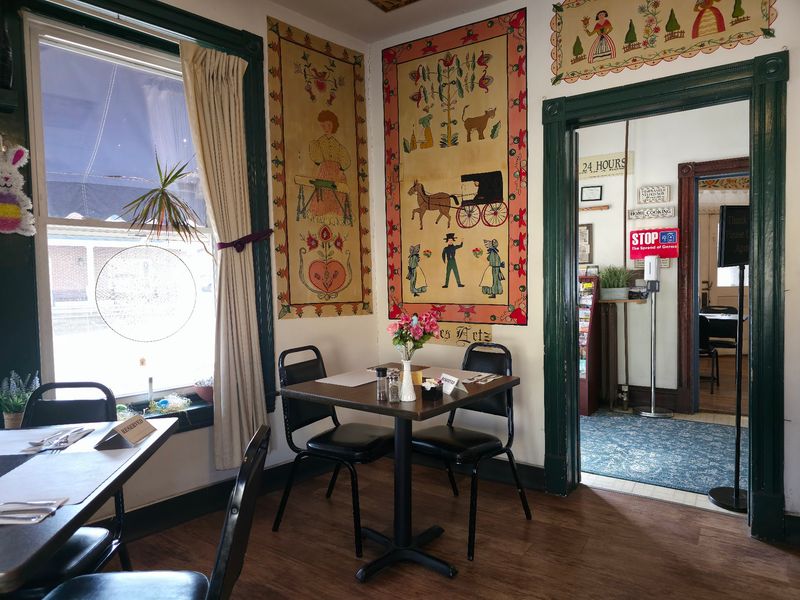
My eyes went straight to the walls. Bright circles of red, blue, and gold, painted with birds, stars, and tulips.
Hex signs are a Pennsylvania Dutch tradition, and having them here is not decorating for effect. Johnny Ott, one of the most recognized hex sign painters, once owned this very building and painted in a studio attached to it.
A portrait of Ott hangs in a spot of honor, so the man who shaped the place still keeps an eye on the dining rooms. Folk art fills the space around it, giving the walls a cheerful, almost storybook feel rather than a museum hush.
What I appreciated most is how unforced it all looks. Nothing has been arranged for a photo shoot or aged on purpose.
If you enjoy regional art, give yourself a few extra minutes before or after eating to actually study the signs. Each design carries meaning, from good fortune to protection for the home, and the servers here are used to curious visitors asking questions.
It turned a dinner stop into a small lesson in local culture, and I left knowing more than when I arrived.
Run by One Family, Cooked by the Owner Himself
Here is a detail I did not expect. The chef and owner, Steve Stetzler, first worked in this building when he was 15 years old.
He grew up a few miles from Lenhartsville, went on to Penn State for a degree in Hotel, Restaurant, and Institutional Management, and was then asked to come back and manage the very restaurant where he had started out. In 1997, at just 24, he purchased the business and the apartments from the Pennsylvania Dutch Folk Culture Society.
He still cooks. That is not a marketing line, it is simply how the kitchen operates most nights.
The operation stays close to home in other ways too, with his mother, sister, and aunt all part of the crew. When a family has that much invested, shortcuts tend to disappear from the menu.
I think that continuity explains why the food tastes consistent from visit to visit. Recipes are not being reinvented by a rotating cast of cooks, they are being protected by people who grew up eating them.
You can taste the difference, and it is the kind of thing money cannot manufacture.
Old Recipes, No Modern Makeovers
So many kitchens today want to reinvent grandma’s cooking. Not this one.
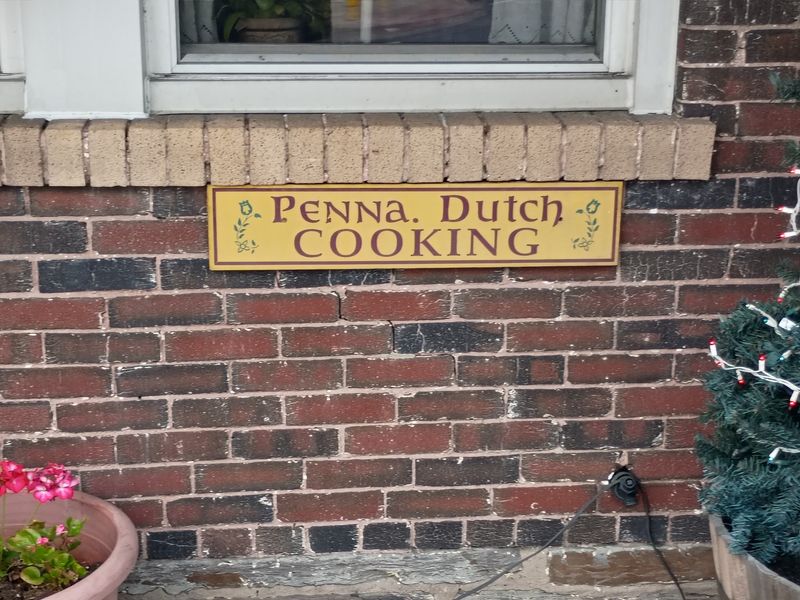
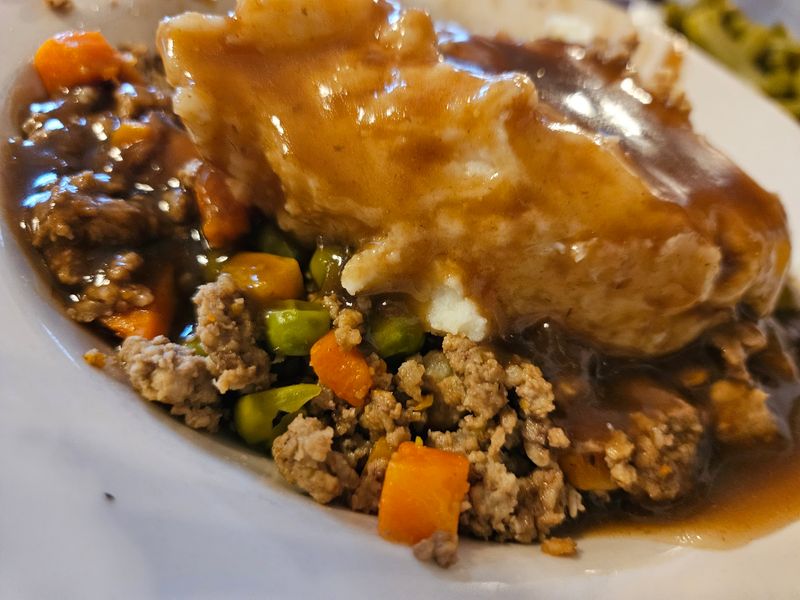
The whole point at this restaurant is preservation, cooking Pennsylvania Dutch dishes the way they were actually made rather than dressing them up with trendy twists. No deconstructed pot pie, no fusion experiments, no tiny plates with sauce swooshes.
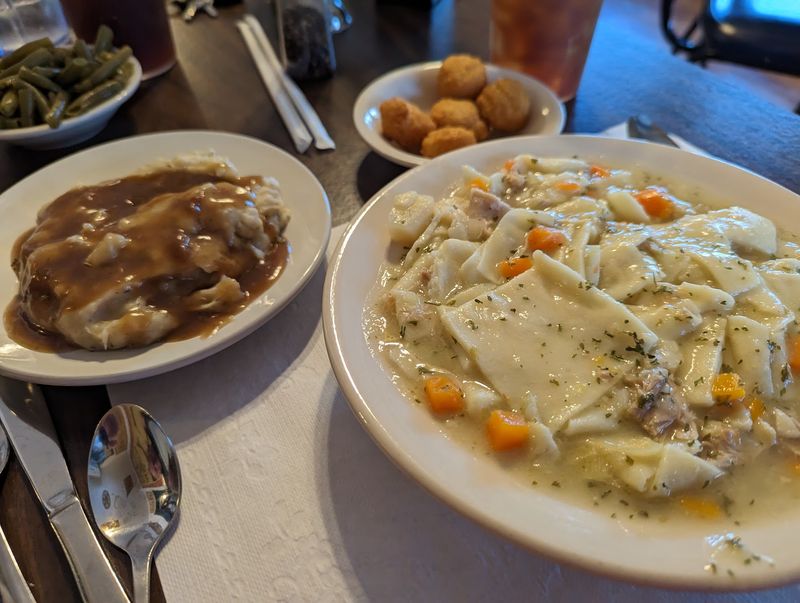
Chicken pot pie here means the traditional version with thick homemade noodles rather than a pastry crust, which surprises plenty of first timers. Corn pie, pork and sauerkraut, chicken and waffles, meatloaf, and Schnitz un Knepp with dried apples, ham, and dumplings all hold their spots.
Portions land on the generous side, which is its own kind of tradition. Pennsylvania Dutch hospitality has never been shy about sending people home full.
What struck me is how confident the whole approach feels. There is no need to chase anything when the recipes already work and the customers already love them.
If you want a taste of what farm kitchens in this region have been turning out for generations, this menu is close to a living archive. Come hungry, and maybe plan on a container for leftovers, because you will likely need one.
Scrapple Bites and the Sides That Steal the Show
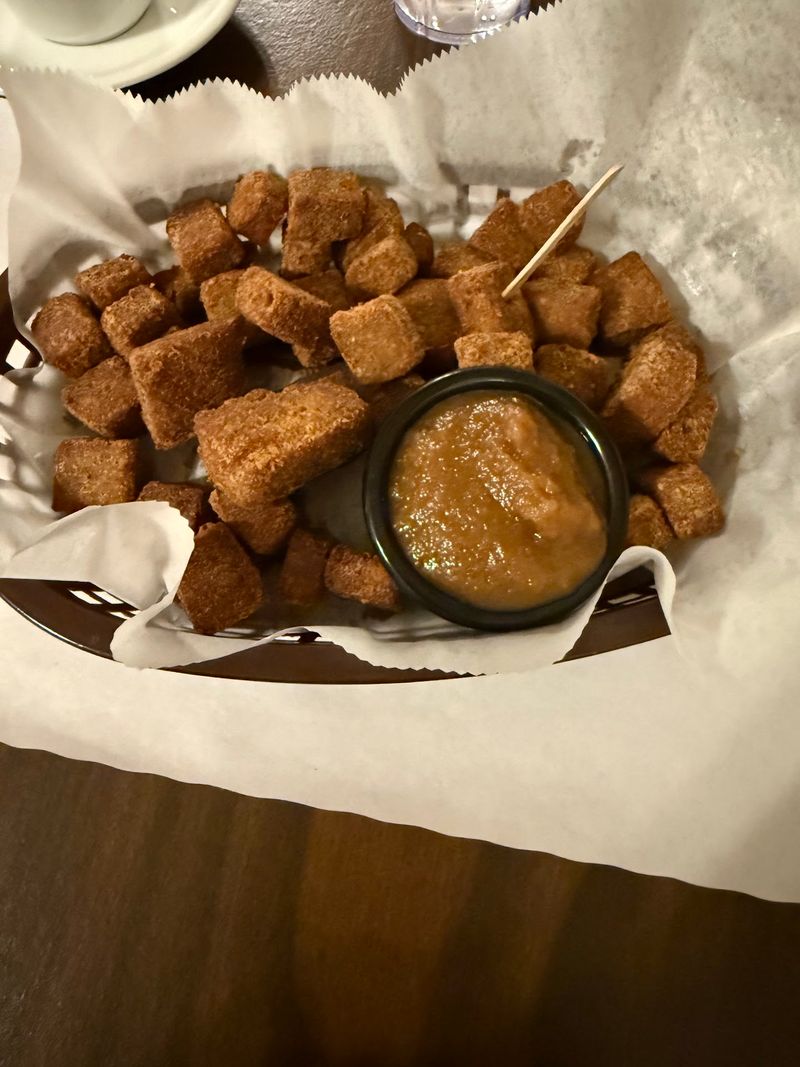
If one dish gets talked about here more than any other, it is the scrapple. Crispy outside, tender in the middle, and served with chow chow or apple butter on the side.
Scrapple has a reputation for scaring off newcomers, but I would argue this is the ideal place to try it. Fried properly, it tastes savory and comforting rather than intimidating, and the sweet tang of chow chow balances every bite.
Then there are the sides, which honestly could carry the meal on their own. Potato filling made with mashed potatoes, sautéed onions, celery, milk, and bread is the local specialty you should not skip.
Corn fritters arrive as sweet golden nuggets, and apple fritters come dusted with powdered sugar. Dutch fries, pepper cabbage, pickled beets, and lettuce with hot bacon dressing round out the lineup.
My advice is to order at least two sides you have never had before. Sausage from Peters Bros.
Meat Market right in Lenhartsville also shows up on plates, which keeps things about as local as food gets.
Save room, because the pies deserve attention too.
Shoofly Pie and the Dessert Case Worth Planning For
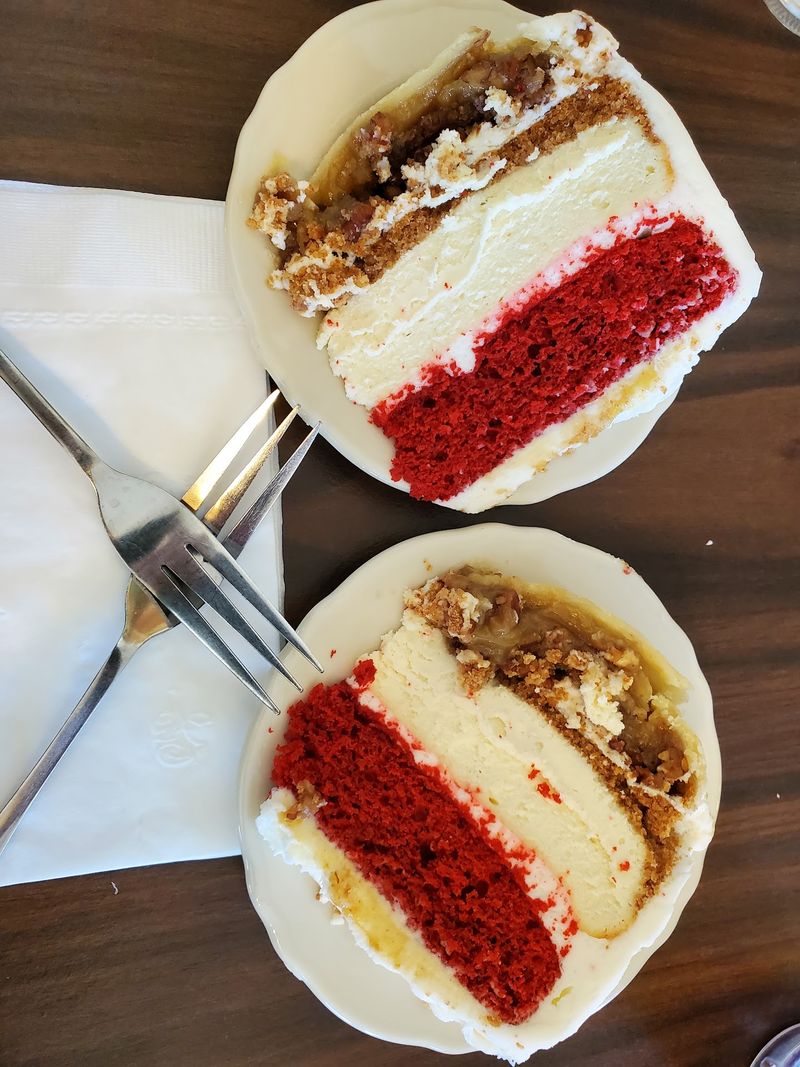
Dessert here is not an afterthought tacked onto the end of the menu. It is one of the main reasons regulars keep the drive on their calendar.
Shoofly pie is the classic, sweet and molasses rich with a crumb top, and it is the dessert most closely tied to Pennsylvania Dutch baking. Trying it in a place like this feels different from buying a slice at a highway rest stop.
Homemade pies rotate through the case, with apple crumb, caramel apple crumb, and deep dish blueberry custard all earning steady praise. There is chocolate layer cake with buttercream icing for anyone who wants something taller and richer.
Rice pudding with raisins and cinnamon is the quieter option, and it is exactly as comforting as it sounds. Every so often a limited dessert called Piecaken makes an appearance, which is worth asking about.
My practical suggestion: decide on dessert early, because the popular slices can sell out. Ordering it to go is completely normal here, and plenty of people leave with a box balanced on the passenger seat.
I understood the impulse before I reached the parking lot.
Plan Your Visit Before You Point the Car This Way
A little planning goes a long way with a restaurant this small. Hours are limited, and showing up unannounced on a weekend can mean a wait.
The kitchen runs Wednesday through Sunday and is closed Mondays and Tuesdays. Weekday and Saturday service centers on the late afternoon and evening, while Sunday adds a midday stretch that fills up fast with after church crowds and families.
Reservations are recommended, especially on weekends and around holidays. Calling ahead at 610-562-8520 is the surest way to confirm current hours, since online listings do not always match.
Getting here is simple. Take Exit 35 off Interstate 78, head north a short distance, and you will reach the intersection of Old Route 22 and Route 143.
Parking is easy and free, which is not something you can say about most food destinations. For road trippers crossing Pennsylvania, this is one of the more rewarding detours you can make in under ten minutes off the highway.
Bring an appetite, bring cash or card, and leave a little room in your schedule for pie and a browse through the shop.
Address: 87 Penn Street, Lenhartsville, PA 19534
