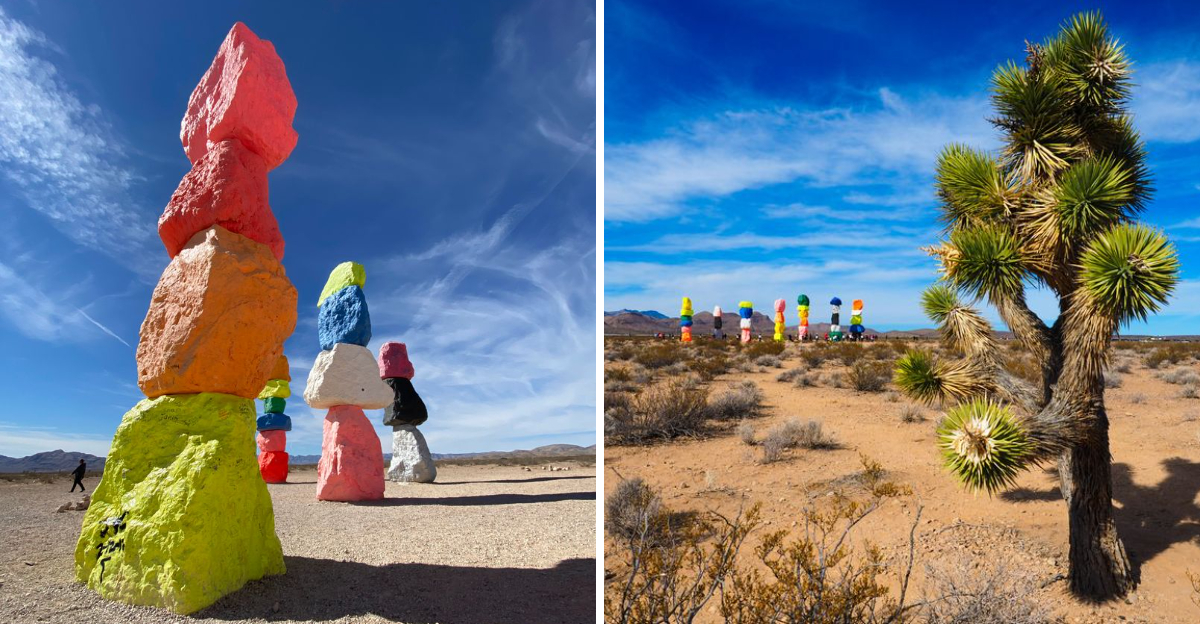
You roll south of Las Vegas and suddenly the Mojave horizon pops with towering neon boulders that look like a dream you forgot to finish.
Curiosity kicks in as the colors shift with every step and every passing cloud, inviting you to play with perspective and light.
Cameras come out, but the real surprise is how calm and expansive the desert feels around this bold artwork.
The closer you stand, the more the scale and silence team up to spark wonder.
Keep going and you will find smart ways to visit, shoot, and experience this Nevada icon like a pro.
What the artwork actually is and why it matters
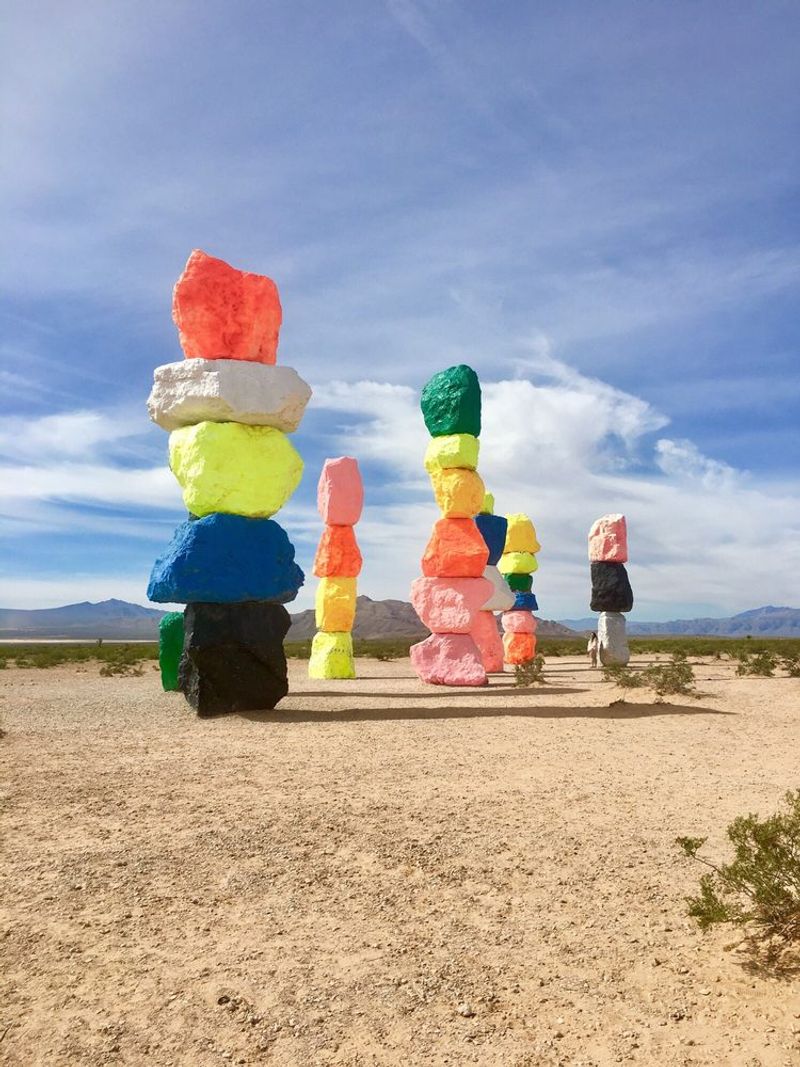
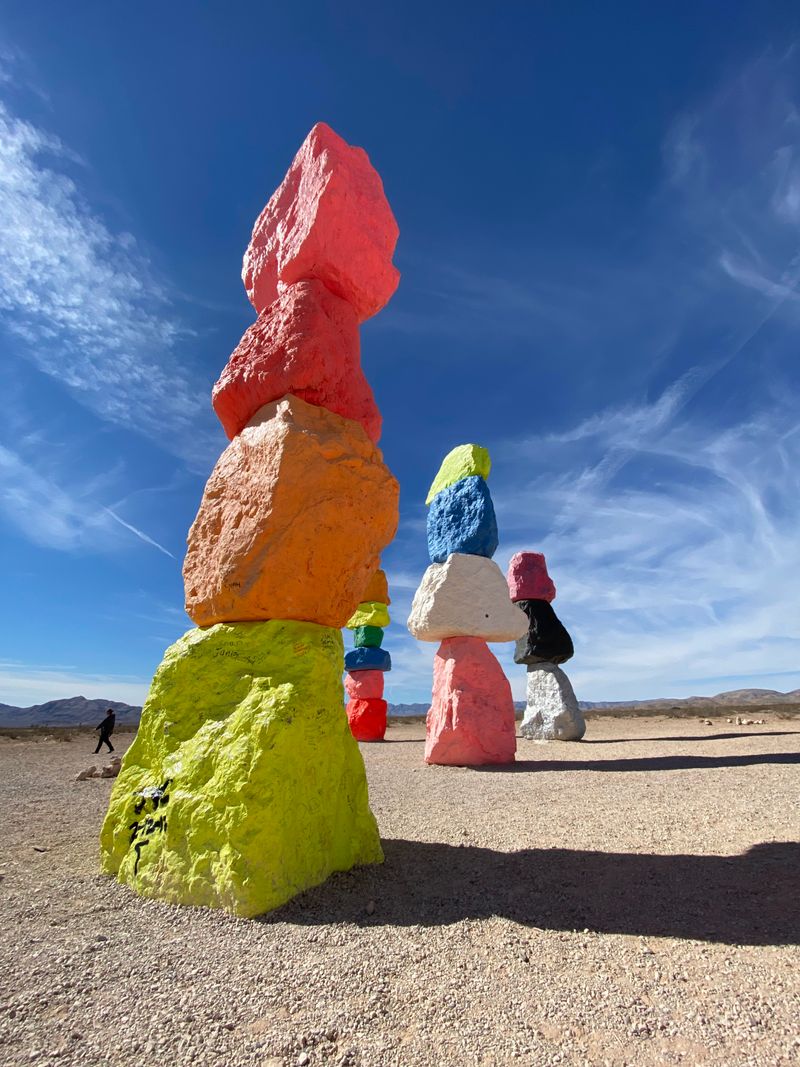
Seven Magic Mountains is a site specific land art installation by Swiss artist Ugo Rondinone that stacks locally sourced limestone boulders into seven vertical totems painted in saturated colors.
The work rises to about 35 feet and sits along S Las Vegas Blvd, Las Vegas, NV 89054, framing the Mojave with a visual jolt that invites you to pause and look again.
It debuted in 2016 as a public artwork produced by Art Production Fund and Nevada Museum of Art, and it continues to draw visitors year round for free.
There is meaning in the contrast between raw desert geology and synthetic color, with the artist often exploring nature, romance, and the everyday through simple forms.
You do not need to know the theory to enjoy it, because the playful palette quickly turns into an immersive mood as light and weather shift.
Stand near a base and textures jump out, from chisel marks to drips and sun faded edges, telling a story of human touch meeting time.
Step back and the totems line up like a skyline that never repeats the same silhouette twice, and the highway hum melts into open space.
Kids count colors while photographers chase symmetry and leading lines, yet both walk away with a deeper sense of Nevada land.
Nothing here feels fenced off, and the informal layout lets you weave around the stacks and find angles that balance desert floor and sky.
You will likely leave with dusty shoes, a full camera roll, and a refreshed feeling that art can be simple, generous, and powerful in the open.
Exactly where to find it and when to go
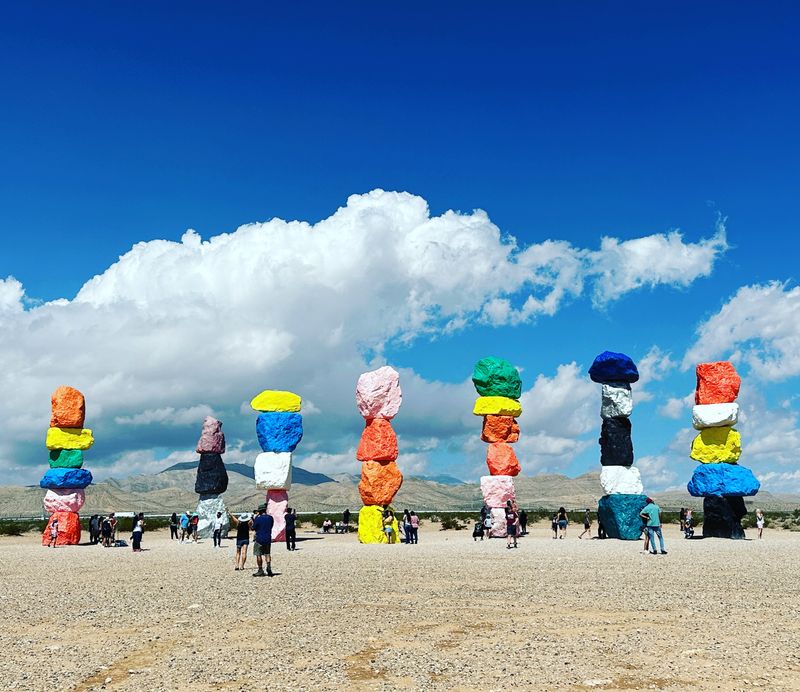
You will find Seven Magic Mountains along S Las Vegas Blvd, Las Vegas, NV 89054, about 10 miles south of the M Resort and just off I 15 near Sloan.
The official listing notes open 24 hours daily, which is accurate and helpful for planning around heat and crowds in southern Nevada.
Sunrise rewards you with empty frames, soft light, and cooler temperatures, while sunset puts warm glow on the neon paint for dramatic contrast.
Midday can be harsh with strong sun and washout glare, so bring a hat and plan breaks in your car if you visit in summer.
Nights are quiet, and stars appear on clear moonless evenings, though you should bring a flashlight and mind your footing on uneven ground.
Wind can lift dust and tug at loose clothing, and winter mornings sometimes feel surprisingly cold despite the desert stereotype.
There are no gates at the installation, but you should stay on established paths where possible to protect desert plants and soils.
Parking is free in a gravel lot, and a short flat walk leads to the totems, which you can explore at a relaxed pace.
Cell service generally works, though coverage may fluctuate, and it helps to download a map pin before you lose urban signals.
If you want the most color pop, aim for bright overcast or golden hour, then adjust position to keep mountains, sky, and stacks balanced.
Getting there from the Strip without hassle
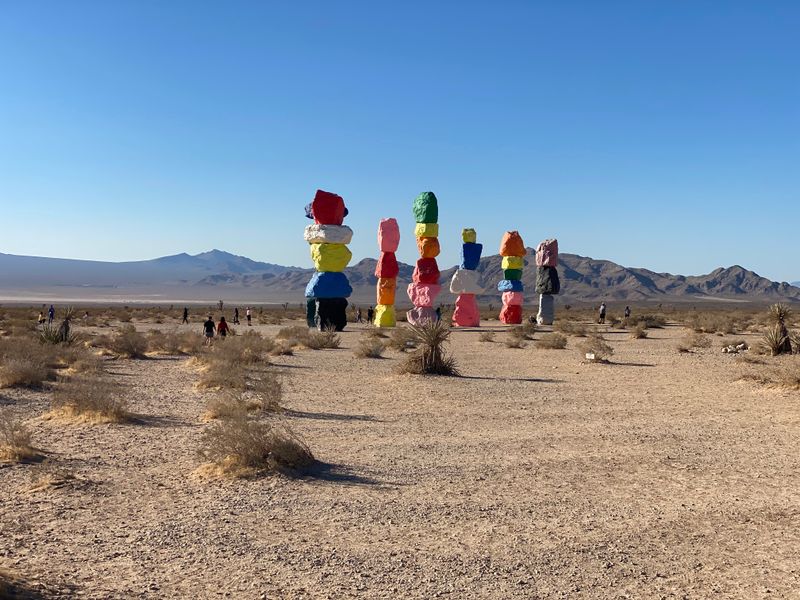
From the Las Vegas Strip, take I 15 South, exit at Sloan, then follow S Las Vegas Blvd until you see the colorful totems appear on your left.
Navigation apps recognize Seven Magic Mountains, and the pin for S Las Vegas Blvd, Las Vegas, NV 89054 will guide you to the free gravel lot.
Traffic is usually light outside commute hours, but weekends can slow near construction or events, so give yourself extra time if you have sunset goals.
Rideshare is possible, though drivers sometimes struggle to accept pickup returns, so confirm in app connectivity before they leave the area.
If you want a budget option, consider renting a car for half a day, which gives flexibility to catch blue hour and avoid midday heat.
There is no public transit to the site, and tour shuttles operate seasonally, so independent travel remains the most reliable choice.
Road surfaces are paved except the short gravel parking lot, which is passable for standard sedans in normal weather.
The walking path is flat and short, though sand and small rocks can make strollers and wheelchairs a bit bumpy outside compacted sections.
Bring water, sun protection, and closed toe shoes, because shade is minimal and the desert floor can heat quickly in Nevada summers.
Set your return route before dark if you are not comfortable with unlit two lane stretches, and keep your phone charged for navigation confidence.
Photography tips that deliver bold, clean frames
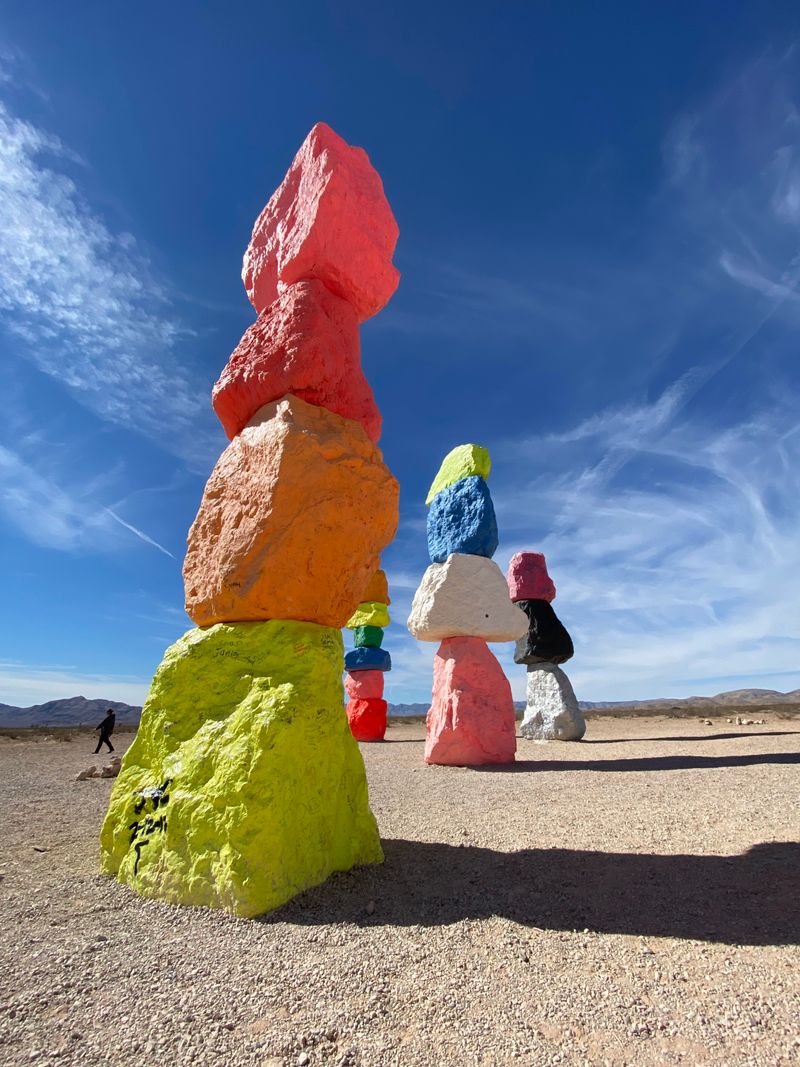
Arrive early and walk the perimeter to scout frames, using the desert track as a leading line toward a single totem or the full lineup.
At sunrise or sunset, expose for the highlights to keep the color rich, then lift shadows in post to protect the neon feel without halos.
A 24 to 70 lens covers most scenes, while a wider focal length lets you stack multiple towers and sky bands for graphic compositions.
Back up and kneel slightly to emphasize height, then step forward for texture shots that show brush strokes, chips, and layered paint.
Look for cloud gaps and let negative space do the work, which gives the colors room to breathe and simplifies cluttered backgrounds.
When wind kicks sand, shield your gear and clean lenses often, because fine dust sticks to glass and turns contrast muddy fast.
Blue hour adds a cool cast that makes warm paint sing, and fog or haze after rain can soften edges for a painterly vibe.
Try a long exposure with a small tripod and neutral density filter to mute passing visitors, which clears frames without awkward cropping.
Polarizers help tame glare on bright days, but rotate gently to avoid uneven sky darkening across the wide desert view.
Most important, move your feet often, stay patient with light swings, and keep an eye on footprints that can add scale when used thoughtfully.
Accessibility, comfort, and on site etiquette
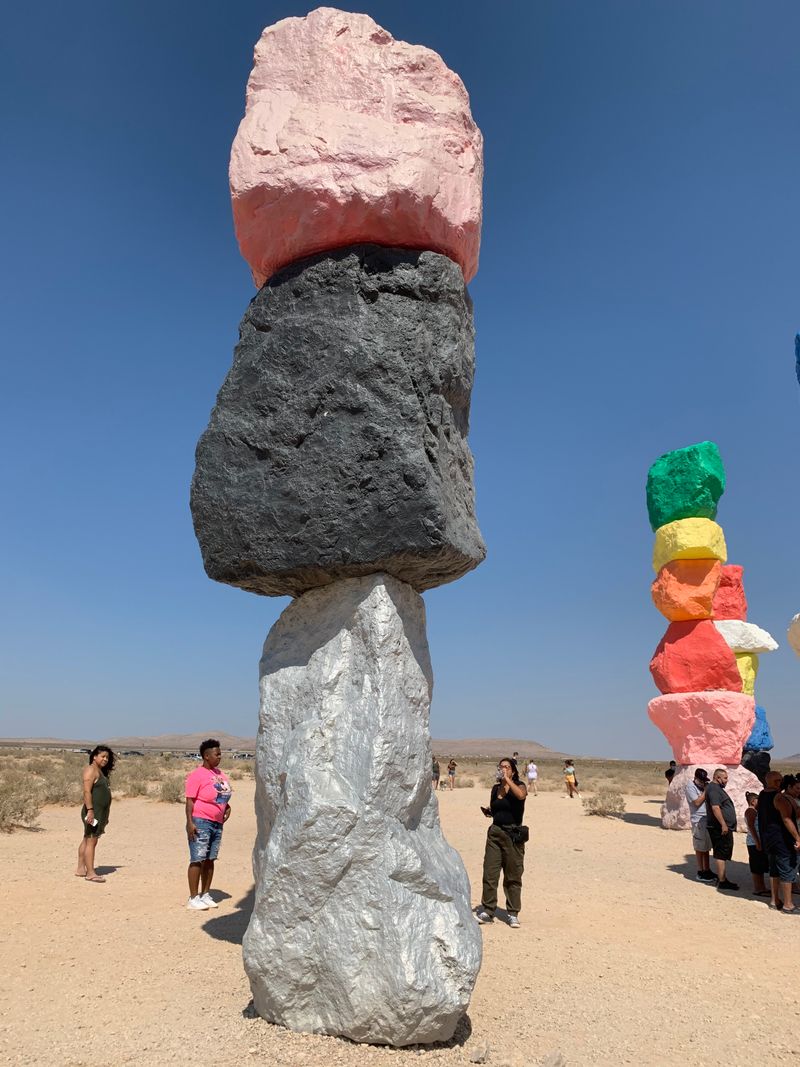
The walk from the parking area to the totems is short and mostly flat, with compacted surfaces in places that improve accessibility.
There is no shade structure at the site, so bring water, sunscreen, and a hat, especially during Nevada summer afternoons.
Restrooms are not available on site, and the nearest services are back toward the city, so plan stops before you head south.
Pets are often seen on leash, and you should pack out waste and keep paws off painted surfaces to preserve the artwork.
Do not climb the boulders or push on them, because the stacks are engineered artworks and not play structures or gym equipment.
Stay mindful of other visitors framing photos, and avoid walking through shots when you can see a camera set on a tripod.
Respect desert plants and cryptobiotic soils by keeping to obvious paths, which helps the land recover between busy weekends.
Sound carries in open air, so keep music low and let conversation sit at a normal level while others enjoy the quiet.
Leave no trace by packing out snacks, wrappers, and props, and consider bringing a small bag to help remove stray litter.
Kind choices keep the site welcoming for future trips and help this Nevada landmark stay open, free, and inspiring year after year.
History, timeline, and stewardship to know
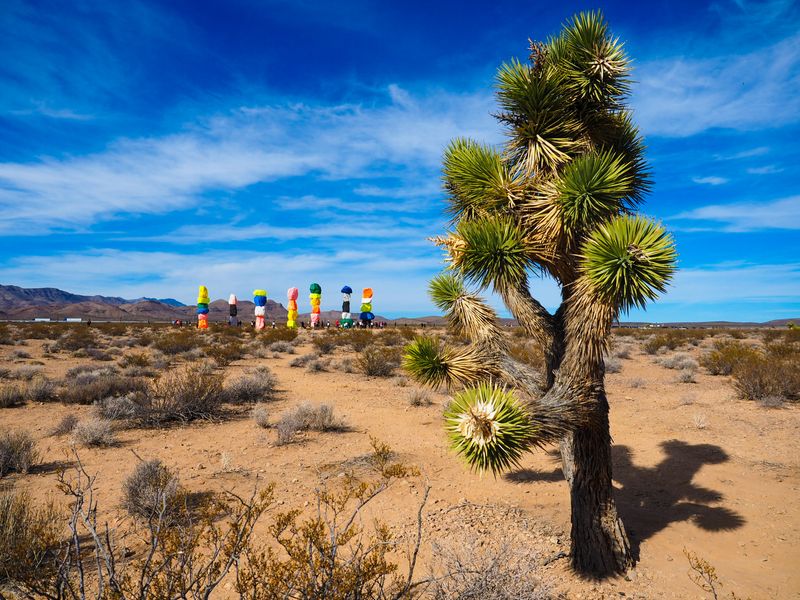
Seven Magic Mountains opened in May 2016 as a temporary installation created by Ugo Rondinone and produced by Art Production Fund and Nevada Museum of Art.
Public interest soared and extensions followed, with continued stewardship managed in partnership to maintain safety, access, and paint quality.
The boulders were sourced from the region, then stacked and anchored with invisible engineering methods that secure stability in desert conditions.
Each totem wears industrial paint in high chroma hues, and periodic refresh work keeps surfaces bright despite sun and dust.
The piece fits within a land art tradition that includes desert scale projects, yet it stays friendly to casual visitors passing from Las Vegas.
Funding and logistics evolved over time, and the installation remains free to visit, reflecting a public art mission focused on openness.
When weather damages surfaces, crews schedule touch ups and inspections, often during low visitation windows to reduce disruptions.
Official information lives at the project website, which posts updates, background, and contact details for media and educational use.
Local schools sometimes incorporate field trips that examine color theory, geology, and public art responsibilities in a shared landscape.
Knowing the backstory deepens your visit, because you can see how a simple idea became a Nevada cultural touchstone through care and community.
Safety, weather, and seasonal planning
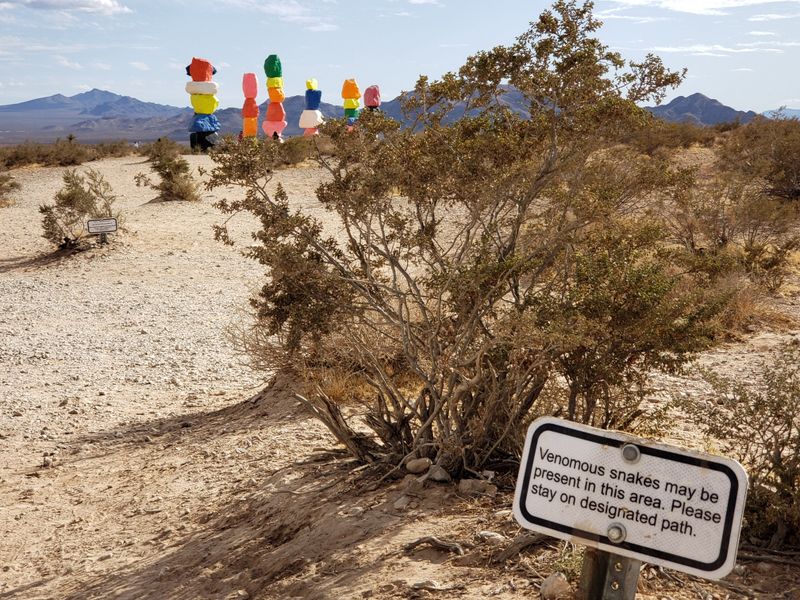
Desert weather changes quickly, so check a forecast for wind advisories, dust, and summer heat before driving to the installation.
Spring and fall bring the most comfortable temperatures, while winter mornings can be cold enough for gloves and a warm layer.
Summer afternoons in Nevada often exceed triple digits, so early or late visits reduce sun exposure and keep walks pleasant.
Monsoon patterns sometimes push storms north, and lightning risk means you should wait in your vehicle until cells pass.
Footing is mostly firm, yet scattered rocks and soft sand patches can trip shoes, so step carefully when moving around the stacks.
Rattlesnakes prefer calmer zones, but rare sightings in the wider desert remind you to watch where you place hands and gear.
Secure tripods against gusts and keep lens caps handy, since dust rides the wind and can scratch glass if wiped dry.
Bring extra water beyond what you think you need, and add electrolyte tablets on hotter days to stay steady and clear.
Leave valuables out of sight in the car, lock doors, and park in view of others, which is common sense for most roadside stops.
Plan exit timing to beat glare on southbound lanes, and let taillights stretch ahead like markers guiding you toward Las Vegas comfort.
Nearby stops and practical services
There are no facilities at the artwork, so many visitors plan quick stops at resorts and stations closer to the city for restrooms and supplies.
M Resort Spa Casino at 12300 Las Vegas Blvd S, Henderson, NV 89044 sits north along the route and offers parking and amenities if you need a break.
For last minute snacks and ice, you will find multiple convenience stores near the St Rose Parkway corridor and along major intersections.
If you plan sunrise, fuel the car the evening before, because gas options thin out quickly once you leave the main suburban zones.
Photography gear shops cluster in urban Las Vegas, so pack batteries and memory cards ahead, and test everything before you drive.
Consider pairing the visit with a short detour to Sloan Canyon National Conservation Area, which has trailheads and protected geology.
Always verify hours and any temporary closures online, because operations change seasonally and events can affect access routes.
Clean your shoes before returning to hotel carpets, since fine dust clings to soles and travels fast through luggage and rooms.
Families appreciate the quick in and out rhythm, with the artwork offering room to roam without ticket lines or indoor queues.
These practical touches keep the experience simple and help you focus on color, space, and the unique Nevada landscape around you.
Dear Reader: This page may contain affiliate links which may earn a commission if you click through and make a purchase. Our independent journalism is not influenced by any advertiser or commercial initiative unless it is clearly marked as sponsored content. As travel products change, please be sure to reconfirm all details and stay up to date with current events to ensure a safe and successful trip.
