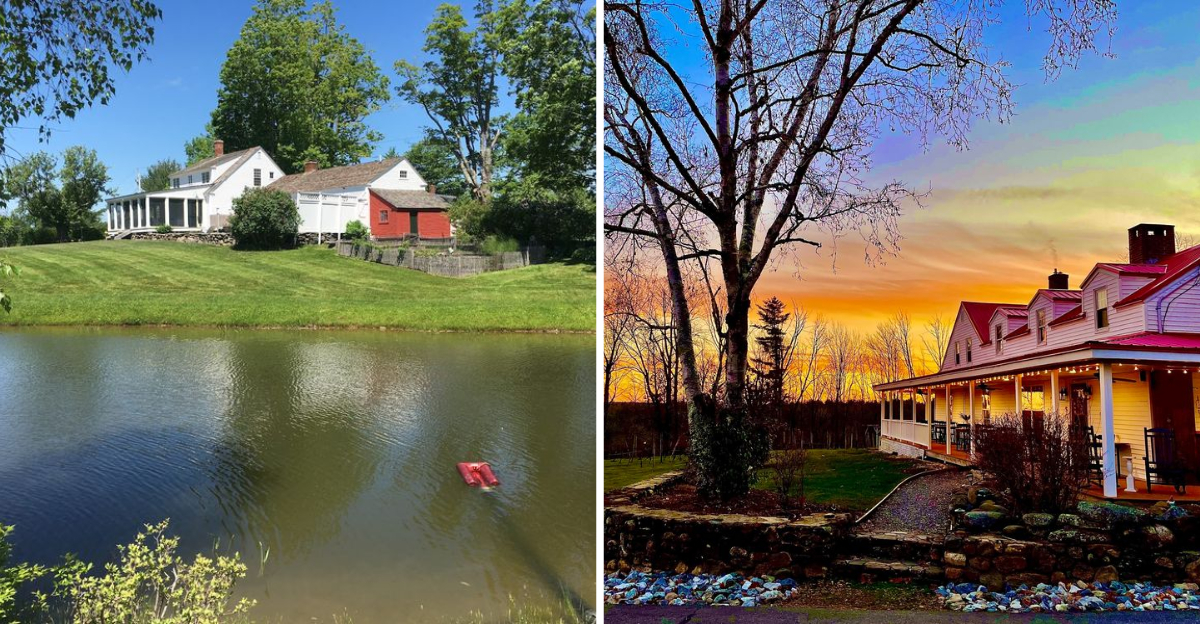
White clapboard farmhouses, birch-lined roads, and stubborn granite underfoot. That is the landscape that has pulled writers to New Hampshire for generations.
I have always believed that the places where great books are born carry a kind of invisible energy, something you feel the moment you arrive. The long winters seem to sharpen a person’s sense of language, and the quiet hills seem to hold space for deep thought.
I stood in the room where Robert Frost drafted poems, the floorboards creaking beneath my feet, and felt the weight of all the words that had been written there. These homes are not just old buildings.
They are the rooms where novels were imagined and entire worlds were quietly constructed. White clapboard farmhouses in Derry, misty ridges in Franconia, this state holds some of the most meaningful literary addresses in America.
This journey through New Hampshire’s literary landscape is one of the most unexpectedly moving road trips you can take in New England.
1. Robert Frost Farm, Derry, NH
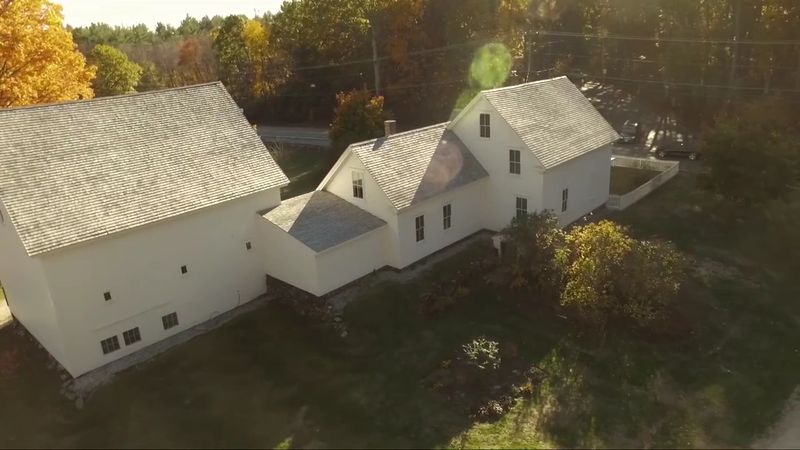
There is a particular stillness at the Robert Frost Farm in Derry that feels almost deliberate, as though the land itself is holding its breath. Frost and his family lived here from 1900 to 1911, and during those eleven years, he found the poetic voice that would eventually make him one of America’s most celebrated writers.
The fields, the orchard, and the gentle spring on the property all seeped into his earliest collections, including A Boy’s WillNorth of Boston and .
His grandfather purchased the farm on the condition that Frost actually work the land. That bargain turned a city-leaning young man into a farmer-poet, and the tension between those two identities never really left his writing.
Today the farm is a New Hampshire state park and a National Historic Landmark. Guided tours take you through the preserved house, and a self-guided poetry trail winds through the surrounding landscape, with lines from his poems tucked along the path.
The grounds are accessible year-round, even when the house is closed for the season. It is a place that rewards slow walking and unhurried attention.
Address: 122 Rockingham Rd, Derry, NH 03038
2. The Frost Place, Franconia, NH
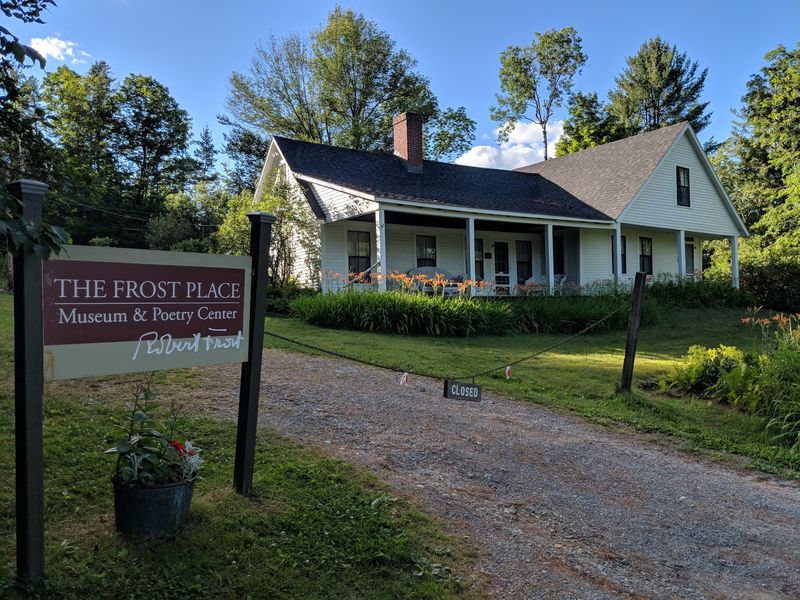
Frost’s relationship with New Hampshire did not end in Derry. Up in Franconia, on a quiet ridge with sweeping views of the mountains, he found a second home that would shape him just as deeply.
He and his family lived here full-time from 1915 to 1920 and returned for nineteen more summers after that. The porch of this 1860s farmhouse frames Mount Lafayette like a painting, and on a clear day the view is genuinely breathtaking.
Frost originally came to this part of the state seeking relief from hay fever. He stayed because the landscape gave him something he could not find anywhere else.
The town of Franconia purchased the property in 1976, and it opened as a museum and poetry education center the following year. One of its most meaningful traditions is a summer fellowship awarded to an emerging American poet, giving them a stipend and the rare chance to live and write in Frost’s actual home.
Visitors can tour the house, sit on that famous porch, and walk a quarter-mile trail lined with plaques bearing poems Frost wrote during his time here. It feels less like a museum and more like an ongoing conversation.
Address: 158 Ridge Rd, Franconia, NH 03580
3. Joy Farm, E. E. Cummings House, Madison, NH
E. E.
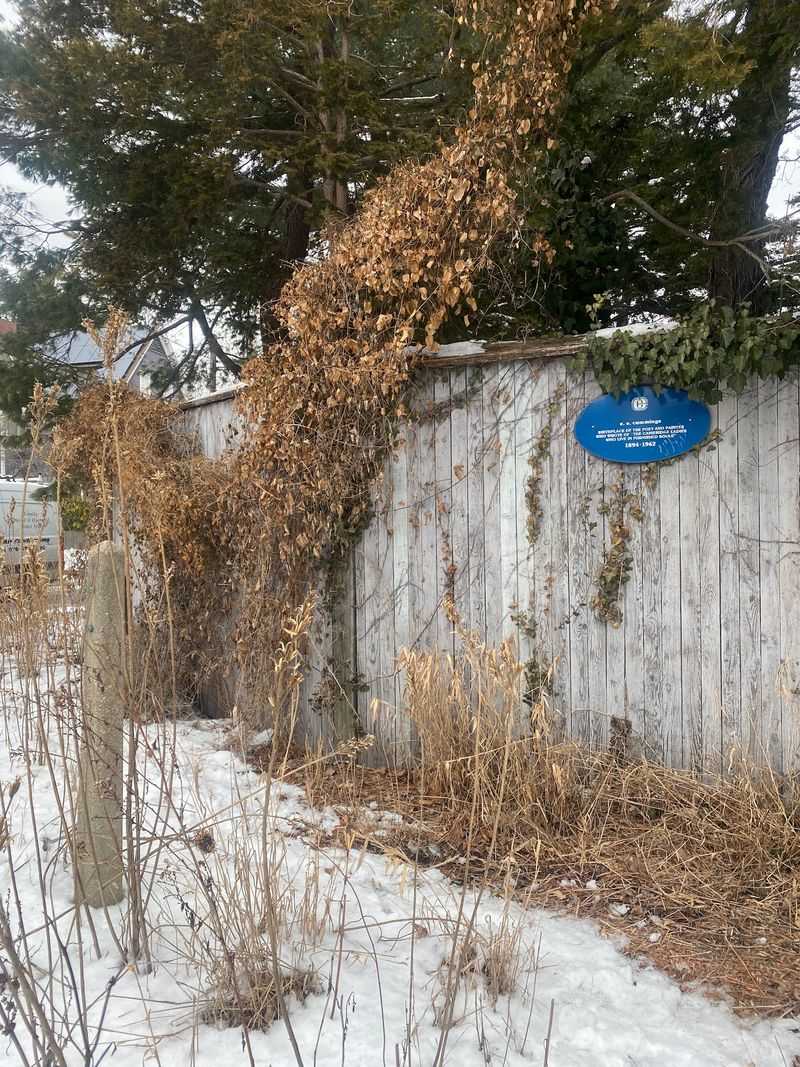
Cummings was not an easy poet to pin down, and his summer home in Madison reflects that perfectly. Joy Farm, tucked into the Silver Lake area and surrounded by forests, beaver ponds, and streams, served as his creative sanctuary from as early as 1898 all the way until his death in 1962.
His parents first acquired the property from Ephraim Joy in 1899, and his mother later deeded it to him in 1929.
The farm has a modest main house, a barn, and a two-story octagonal tower that feels just unconventional enough to suit the man who threw punctuation out the window. His father added windows to frame views of Mount Chocorua, and Cummings often painted oil landscapes from the flat-roofed extension at sunset.
Joy Farm was designated a National Historic Landmark in 1971, recognizing how profoundly the solitude of this place influenced Cummings’s celebrated body of work. Today it operates as a private residence and writers’ retreat, so it is not open for casual drop-ins.
Still, the 300-acre setting within the White Mountains carries an almost palpable creative energy. Respectful visitors who appreciate the private nature of the property can still feel the quietude that shaped one of poetry’s most original voices.
Address: Joy Farm Rd, Madison, NH 03849
4. J.D. Salinger’s House, Cornish, NH
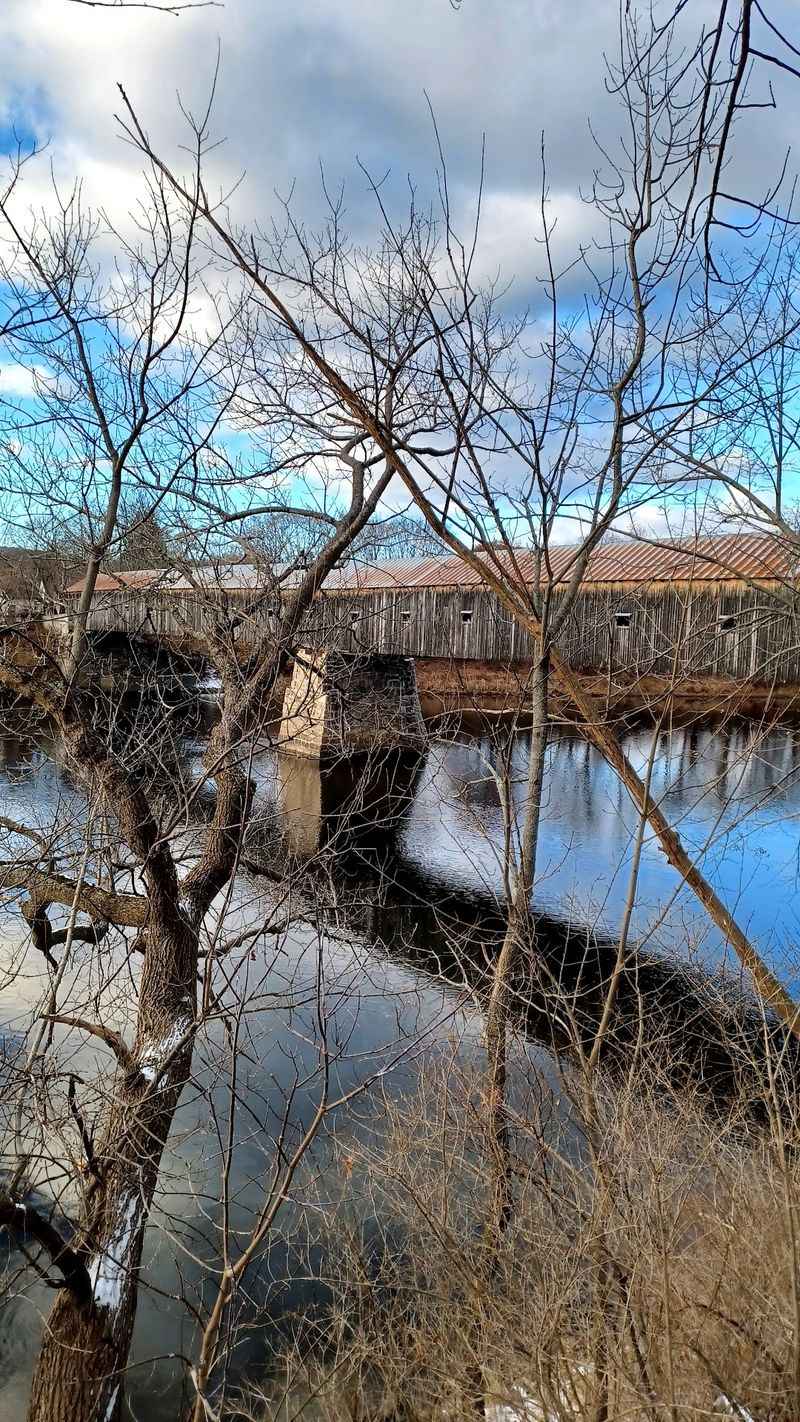
After The Catcher in the Rye turned J.D. Salinger into one of the most talked-about writers in America, he did the last thing most people expected: he disappeared.
In 1953, he settled in Cornish, New Hampshire, in a Gambrel-style house built in 1939 on land that once belonged to the sculptor Augustus Saint-Gaudens. The property spans 12 acres and offers views of Mount Ascutney across the Vermont border.
Salinger’s commitment to privacy was almost architectural. He built a large solid fence along the road and reportedly constructed hidden passages between his main house and outbuildings.
Later, he built another structure even deeper in the woods on an adjoining property.
The locals in Cornish became quietly protective of him over the decades, known to give deliberately wrong directions to curious tourists who came searching. That loyalty says something meaningful about the relationship between a reclusive writer and a small community that simply let him be.
The house is no longer in Salinger’s family, but the spirit of studied solitude still clings to the Cornish landscape. Driving slowly down Lang Road, it is easy to understand why a man desperate for quiet would choose exactly this kind of place.
Address: 342 Lang Rd, Cornish, NH 03745
5. Eagle Pond Farm, Donald Hall House, Wilmot, NH
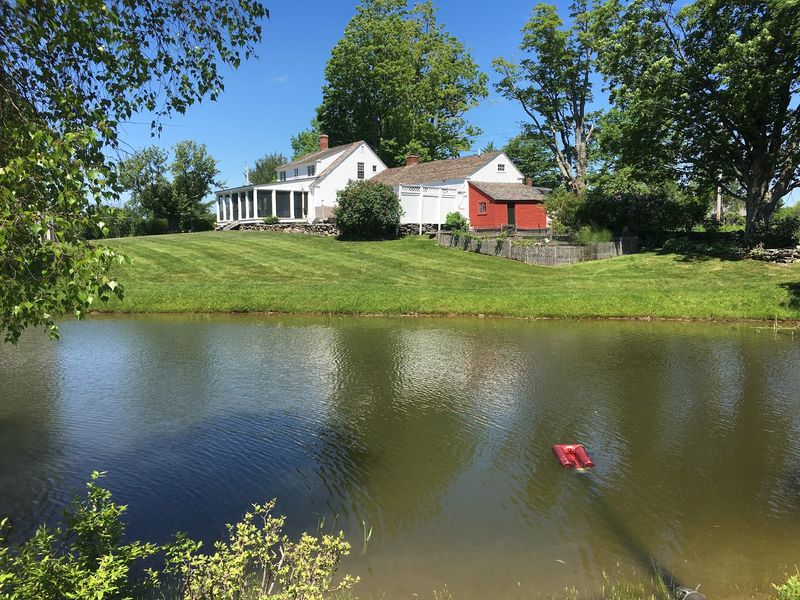
Eagle Pond Farm in Wilmot is the kind of place that makes you understand why a poet would trade a university office for a life of rural quiet. Donald Hall and his wife, poet Jane Kenyon, moved here permanently in 1975, leaving academic life behind to farm and write.
The property had been in Hall’s family since 1868, and he had spent childhood summers here long before he made it his permanent home.
The farmhouse is a New England cape with a barn pressed against it, and Ragged Mountain rises steeply behind the whole property. Eagle Pond lies just across the road, its stillness feeding directly into Hall’s poetry for decades.
Both Hall and Kenyon were named New Hampshire poet laureates, and Hall later served as the U.S. Poet Laureate.
The farm became so central to his writing that he once described it as “the place of language.” Eagle Pond itself earned national recognition simply through the frequency and tenderness of Hall’s poetic references to it. The bookshelves inside the farmhouse were said to run from floor to ceiling in nearly every room.
It is the kind of home that was clearly lived in fully, not just occupied.
Address: 24 Route 4, Wilmot, NH 03287
6. Sarah Josepha Hale House – Newport, NH
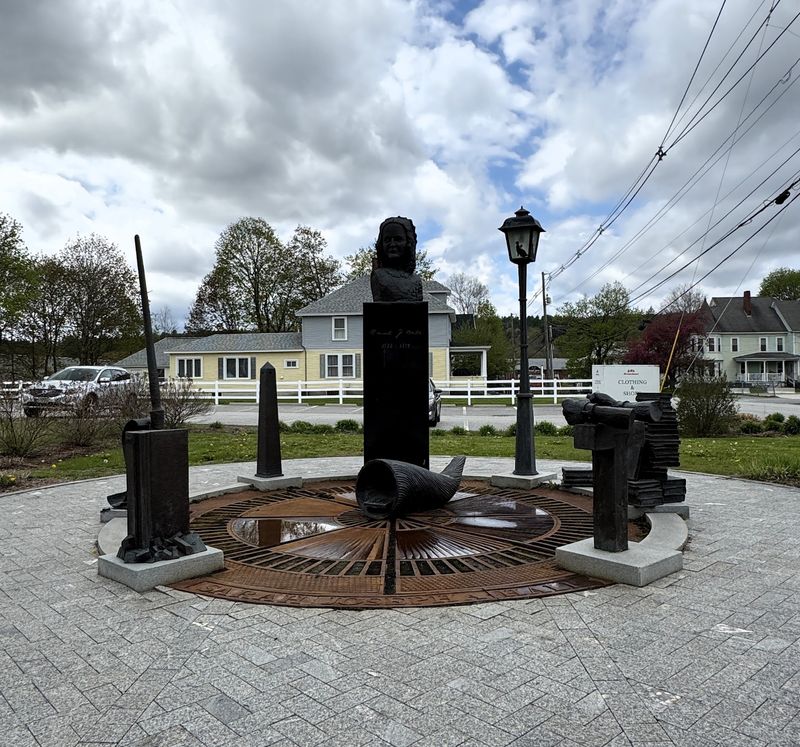
Most people know “Mary Had a Little Lamb” without knowing the name of the woman who wrote it. Sarah Josepha Hale was born in Newport in 1788, and the town shaped her in ways that would eventually ripple across American culture.
She spent the first three to four decades of her life here, marrying David Hale in 1813 at her father’s tavern on what is now known as Main Street.
Hale went on to edit Godey’s Lady’s Book for nearly four decades, becoming one of the most influential voices in 19th-century American publishing. She also campaigned successfully for Thanksgiving to become a national holiday and pushed for the completion of the Bunker Hill Monument.
Newport honors her legacy with New Hampshire Historic Marker number six, and the Richards Free Library grounds are home to a Sarah Josepha Hale Memorial Park, unveiled in 2013, featuring a bronze bust and commemorative elements. The house on Myrtle Street associated with her memory is a private residence and not open to visitors.
Even so, walking through Newport with this history in mind changes the feel of the town entirely. It becomes the birthplace of someone who quietly shaped how Americans eat, read, and remember their history.
Address: Myrtle St, Newport, NH 03773
7. Grace Metalious House, Gilmanton, NH
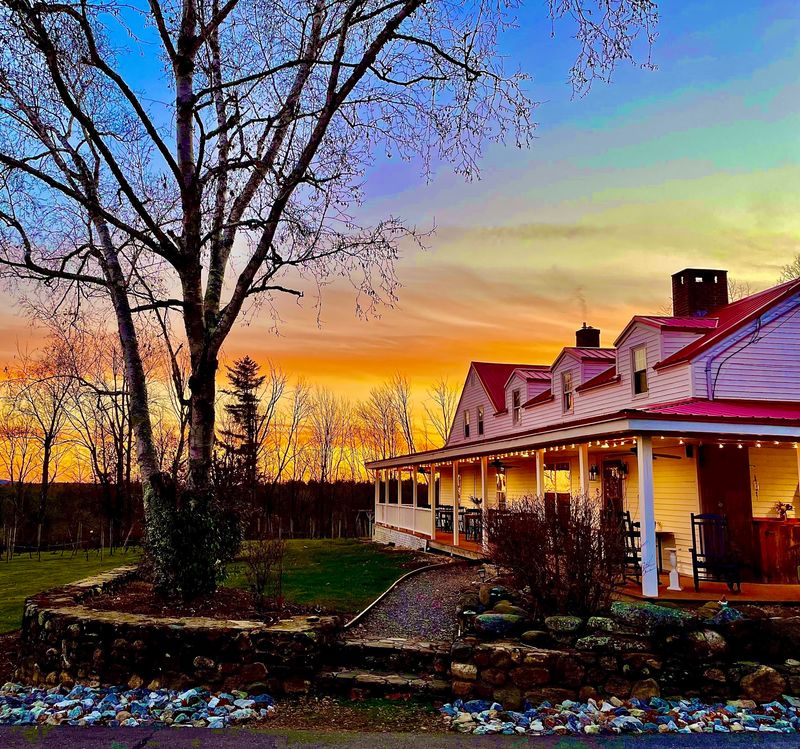
Grace Metalious named her home “It’ll Do” with a kind of dry humor that matched the way she wrote. The Cape-style farmhouse in Gilmanton had no running water when she and her husband George moved in during the mid-1950s, and it was built back in 1756.
None of that stopped her from producing one of the most controversial novels of the 20th century inside its walls.
She wrote Peyton Place in a tiny study tucked behind the chimney, finishing the manuscript in the spring of 1955. The book tore the lid off small-town New England life and made Metalious instantly famous and locally infamous at the same time.
Gilmanton reportedly resented the notoriety, but the book sold millions of copies and was later adapted into a film and a long-running television series. Metalious later expanded the house significantly, reportedly growing it to four times its original size.
She died in 1964 at only 39 years old. Today the property has been transformed into the Gilmanton Winery and Vineyard, which gives it a new life while the old farmhouse bones remain.
It is a genuinely surprising place to visit, equal parts literary history and unexpected New Hampshire charm.
Address: 528 Meadow Pond Road, Gilmanton, NH 03287
8. Pleasant View – Mary Baker Eddy Home, Concord, NH
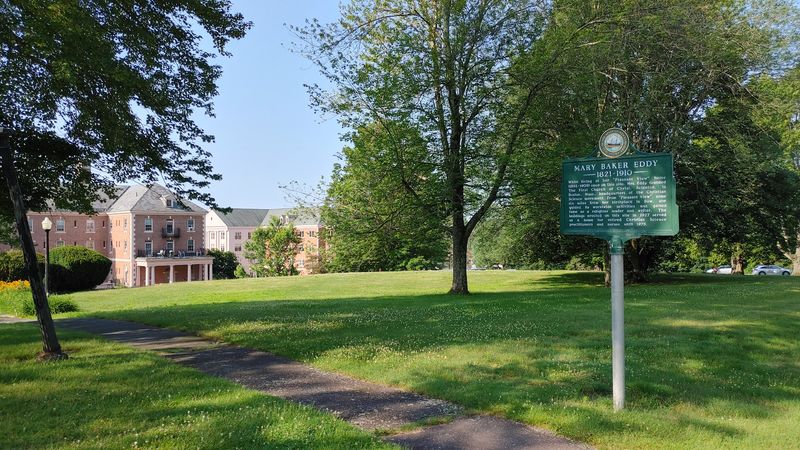
Mary Baker Eddy chose her home in Concord carefully, and the name she gave it, Pleasant View, was not accidental. She moved to 227 Pleasant Street in 1892, drawn by the tranquility of the rural setting and the familiar hills she had known since childhood in nearby Bow.
It was here that she undertook a significant revision of Science and Health with Key to the Scriptures, the foundational text of Christian Science.
She lived at Pleasant View for fifteen and a half years, overseeing major developments in the Christian Science movement, including the reorganization of her church and the establishment of its central edifice in Boston. She was also known for generous contributions to the city of Concord itself.
Eddy’s original home was torn down in 1917, and a new building was constructed on the site in 1927, eventually serving as an assisted living facility that still carries the Pleasant View name. The physical structure has changed, but the site retains its historical weight.
The Longyear Museum offers detailed exhibits about her years in Concord and the significance of what was accomplished here. For anyone curious about the intersection of American religious history and literary output, this quiet corner of Concord is genuinely worth the detour.
Address: 227 Pleasant St, Concord, NH 03301
9. Thomas Bailey Aldrich House, Portsmouth, NH
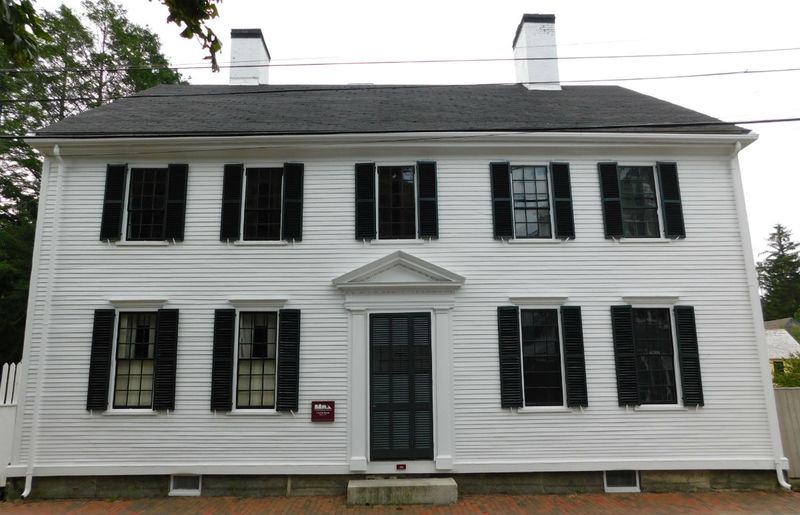
Portsmouth has always carried itself with the quiet confidence of a city that knows its own history, and the Thomas Bailey Aldrich House is a perfect example of why. Built in the 1790s and located within the Strawbery Banke Museum, this house was Aldrich’s home from 1849 to 1852, when he lived with his grandfather between the ages of twelve and sixteen.
Those four years left a permanent mark on his imagination.
He later fictionalized Portsmouth as “Rivermouth” in his beloved semi-autobiographical novel The Story of a Bad Boy, a book that influenced a generation of American writers, including Mark Twain. Aldrich eventually became editor of The Atlantic Monthly, cementing his place in the literary establishment.
After his death in 1907, his widow and a group of friends transformed the house into a memorial museum, carefully restoring each room to reflect the period of his boyhood using imagery drawn directly from the novel. Strawbery Banke incorporated the property into its collection in 1979 and reopened it in the 1990s to portray its 1908 appearance.
Wandering through this house is less like visiting a museum and more like reading a book with your whole body. Portsmouth rewards that kind of attention.
Address: 14 Hancock St, Portsmouth, NH 03801
10. John Greenleaf Whittier’s Summer Home, Center Harbor, NH
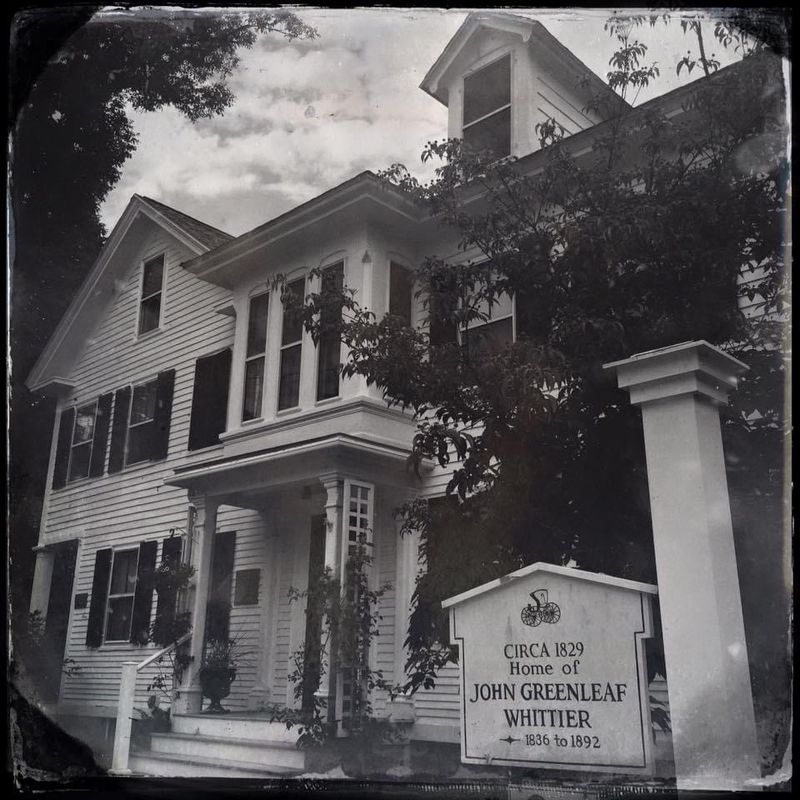
John Greenleaf Whittier spent most of his life in Massachusetts, but New Hampshire had a hold on him that never loosened. His mother was from Rollinsford, and he died in Hampton Falls in 1892.
His most sustained New Hampshire connection was “Pinelands,” his summer home in Center Harbor, where he spent what he described as “a score of summers” overlooking Lake Winnipesaukee.
The views from Center Harbor clearly fed his writing. Poems like “The Pines” and “The Wood Giant” were directly inspired by his time here, particularly by a towering pine he affectionately called the Wood Giant, which stood on land near the Sturtevant Farm off Route 25B.
That beloved tree was struck by lightning in 1950 and is no longer standing, but the landscape Whittier loved has not changed so dramatically that you cannot feel what drew him back year after year. Center Harbor sits at the northern edge of Lake Winnipesaukee, and on a clear day the water reflects the surrounding hills in a way that is almost too picturesque to be real.
Even from his Massachusetts home, Whittier reportedly gazed toward the blue outline of New Hampshire’s Deerfield mountains. The state was, for him, a permanent presence on the horizon.
11. Willa Cather’s Jaffrey Retreat, Jaffrey, NH
Willa Cather once said that all her best books were written in Jaffrey, New Hampshire, and that claim is hard to argue with. She first arrived in 1917, staying at the Shattuck Inn, and was immediately captivated by the combination of mountain air, quiet meadows, and the looming presence of Mount Monadnock.
She returned for years afterward, particularly in autumn, when the light in Jaffrey turns amber and unhurried.
Her preferred writing spots ranged from a top-floor room at the inn, where Monadnock filled the window, to a large canvas tent pitched in a meadow at a nearby summer home called High Mowing. Both settings gave her the focused solitude she needed.
Substantial portions of My Antonia were written during her time in Jaffrey, and the town clearly gave her something that her busy New York life could not. The original Shattuck Inn no longer stands, but its annex has been converted into condominiums.
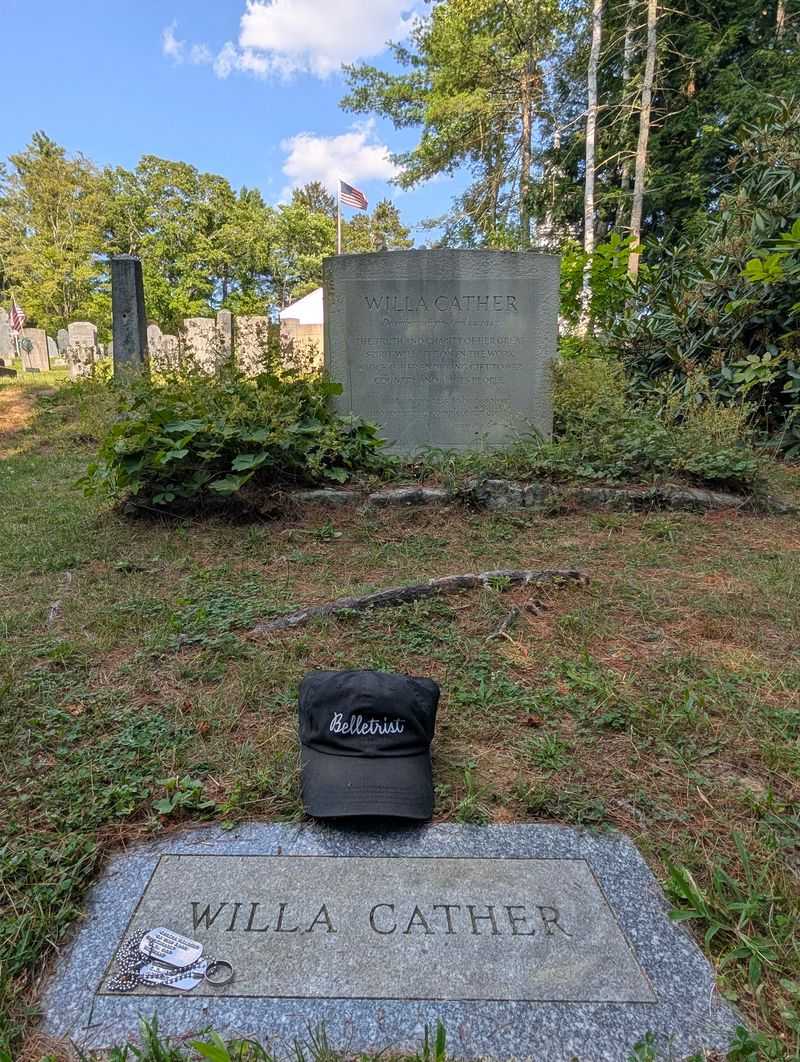
Cather’s connection to Jaffrey runs deeper than any building, though. She chose to be buried here, in the historic Old Burying Ground behind the Jaffrey Meetinghouse.
Her grave is simple and easy to find, and standing near it on a quiet morning, with Monadnock in the distance, feels like a genuinely moving way to end a literary road trip through New Hampshire.
