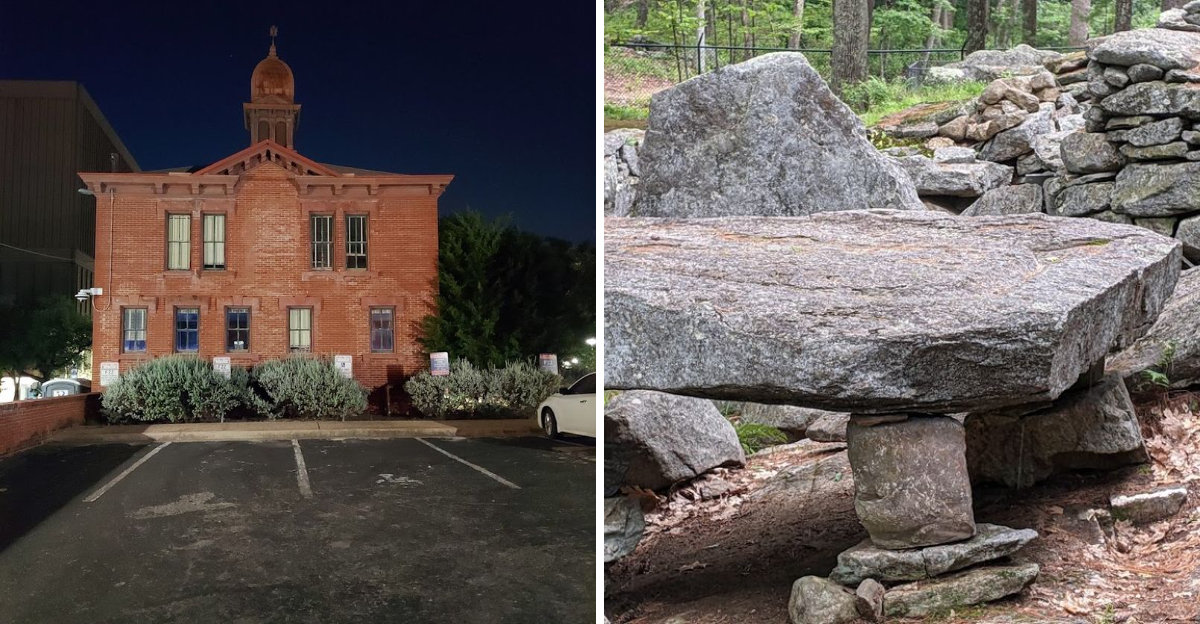
I have always been drawn to mysteries. The things that cannot be explained.
The stories that get passed down through generations. New Hampshire is full of unexplained phenomena and local folklore, and I have found a collection of them that will make you question what you think you know.
There are strange lights that appear in the sky over certain valleys. There are ghostly figures that walk the old roads at night.
There are stone structures that predate European settlement, built by unknown hands for unknown reasons. I visited one spot where locals say the air feels heavy and the compass spins in circles.
Another place has a legend about a creature that lives in the deep woods, seen by only a few over the centuries. I do not know if any of these stories are true.
But I know that people believe them. And there is something powerful about a belief that has survived for generations.
That is the thing about unexplained phenomena in New Hampshire. They remind us that not everything has an easy answer.
1. The Betty and Barney Hill Abduction in Lincoln
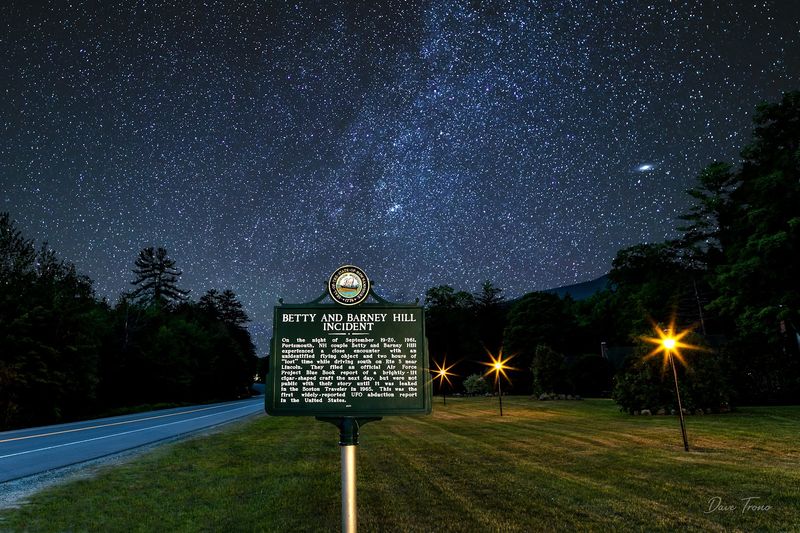
One September night in 1961, Betty and Barney Hill were driving south along Route 3 near Lincoln when their lives changed forever. The Portsmouth couple noticed a strange craft hovering in the sky, moving in ways no aircraft should.
What followed was a chilling two-hour gap in their memories, now famously called “lost time” in UFO research circles.
Under hypnosis conducted later, both Betty and Barney separately described being taken aboard the craft and examined by beings unlike anything on Earth. Their detailed accounts were eerily consistent with each other, adding a layer of credibility that rattled even skeptical investigators.
This became the first widely publicized alien abduction story in American history, forever reshaping how the world thought about extraterrestrial encounters.
Their story inspired the bestselling 1966 book “The Interrupted Journey” and a 1975 television film that reached millions of households. Researchers and enthusiasts can explore their personal journals, letters, and documents at the Betty and Barney Hill Archive, housed at the University of New Hampshire’s Dimond Library at 18 Library Way, Durham, NH 03824.
A historical marker near Indian Head Resort at 300 US-3, Lincoln, NH 03251 commemorates the exact stretch of road where it all began. Standing there on a quiet night, staring up at a sky full of stars, it is surprisingly easy to understand why this couple believed so completely in what they experienced.
2. The Wood Devils of Coös County
Coös County sits at the wild, remote top of New Hampshire, where the forests grow thick and the winters bite hard. Up here, hunters and trappers have whispered about the Wood Devils for well over a century, and the stories have never quite faded away.
These cryptids are not your typical lumbering Bigfoot types. They are described as tall, slender, and impossibly fast, covered in gray matted fur and moving like ghosts through the trees.
The most unsettling detail in nearly every account is how they vanish. The moment a witness spots one, it darts behind a tree and simply disappears, as if the forest swallowed it whole.
Some descriptions mention a long, almost horse-like face, giving the Wood Devils a distinctly alien quality compared to other cryptid legends. The creatures reportedly make no sound at all, which somehow makes the stories even creepier than if they howled or growled.
Coös County provides the perfect breeding ground for legends like this one. With thousands of acres of untamed wilderness, minimal population density, and long stretches of total darkness on winter nights, the region feels genuinely untamed.
No specific address exists for the Wood Devils, because their territory is the entire remote forest itself. Seasoned hikers exploring the backcountry near the Connecticut Lakes or the Nash Stream Forest have reported uneasy feelings of being watched.
Whether the Wood Devils are real creatures, misidentified wildlife, or pure folklore, they remain one of New Hampshire’s most enduring and atmospheric mysteries.
3. America’s Stonehenge in Salem
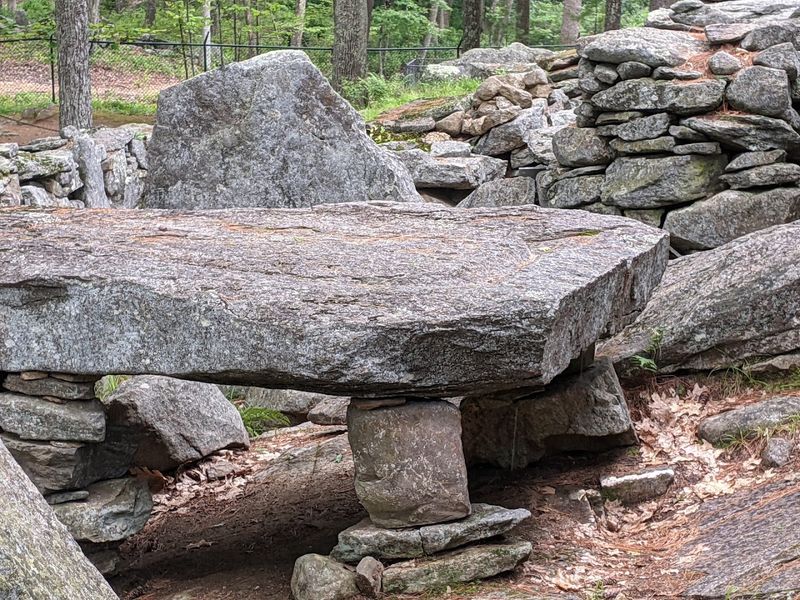
Tucked into the quiet woods of Salem, New Hampshire, this extraordinary site stops visitors dead in their tracks the moment they step inside. America’s Stonehenge sprawls across roughly 30 acres and features massive stone chambers, thick walls, and towering standing stones arranged with startling precision.
The sheer scale of the place demands respect, and the silence that settles over it feels ancient and loaded with meaning.
Archaeological evidence points to human activity on this hill stretching back as far as 7,000 years, with the stone structures themselves potentially dating to around 4,000 years ago. Artifacts including tools, pottery fragments, and evidence of Native American presence have been uncovered across the site.
A replica wigwam stands today as a nod to that indigenous history, grounding the site in a real human past rather than pure speculation.
Originally called Mystery Hill, the site was rebranded America’s Stonehenge in 1982, partly because of its fascinating astronomical alignments. Certain standing stones are positioned to mark solar and lunar events with remarkable accuracy.
One large grooved stone slab often called a “sacrificial table” has sparked wild theories, though historians suggest it more likely served practical colonial purposes like extracting lye for soap or pressing cider. Debate about the site’s true origins continues among archaeologists, with some dismissing European pre-Columbian theories as pseudoscience.
Regardless of which theory you favor, standing among these ancient stones feels genuinely otherworldly. The site is located at 105 Haverhill Road, Salem, NH 03079, and is open to the public year-round.
4. The Curse of Chief Chocorua in the White Mountains
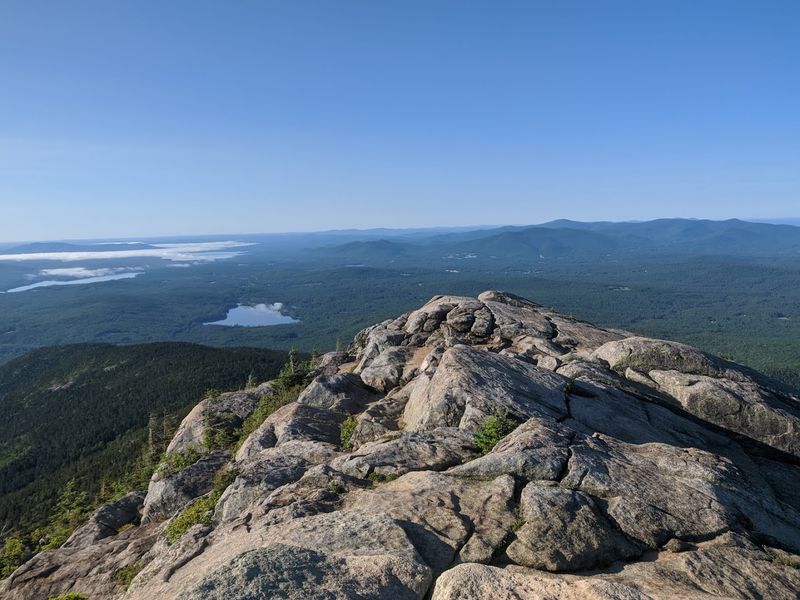
Mount Chocorua is one of the most photographed peaks in all of New Hampshire, and its jagged silhouette against a sunset sky is genuinely breathtaking. But beyond the scenery, this mountain carries one of the most emotionally charged legends in all of New England.
The story centers on a fictional Native American chief named Chocorua and a settler named Cornelius Campbell, set in the turbulent early 1700s.
According to the legend, Chocorua’s young son accidentally consumed poison set out by Campbell for foxes while left in the settler’s care. Devastated and furious, Chocorua retaliated by killing Campbell’s family.
Campbell pursued him up the mountain’s steep rocky slopes, cornering him on the highest boulder. In his final moments, Chocorua reportedly unleashed a dying curse upon the white settlers and their livestock before either leaping or being shot.
What followed was strange enough to keep the legend alive for generations. A mysterious illness began killing livestock throughout the region, an epidemic locals called the “Burton Ail.” Farmers could not explain it, and many quietly blamed Chocorua’s curse.
Scientists eventually traced the deaths to a naturally occurring mineral in the local water supply, but that rational explanation never fully extinguished the legend’s fire. Historians note there is no evidence of a real Chief Chocorua in authentic indigenous oral traditions, suggesting the tale was largely constructed by early settlers.
A historical marker stands along New Hampshire Route 16, Chocorua, NH 03817, where the mountain looms large and the legend feels very much alive.
5. The Deerfield Exploded Phenomena in Deerfield
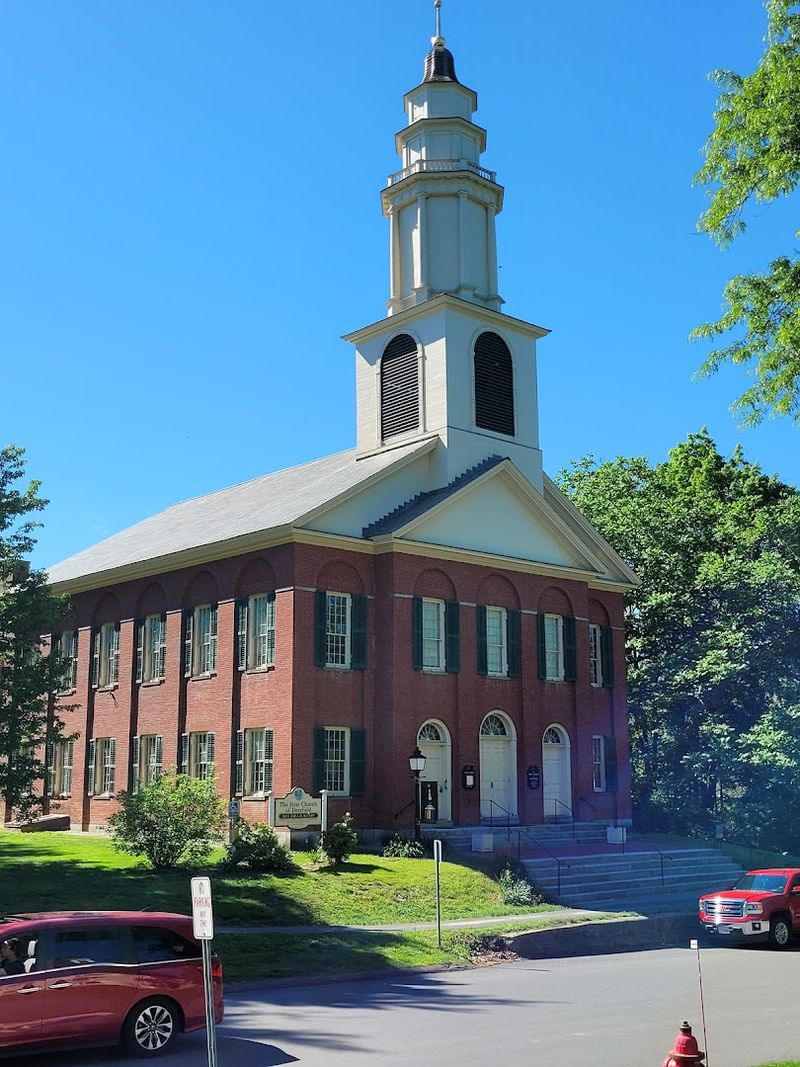
Imagine living in a small New Hampshire farming community in the 1830s and suddenly hearing massive, ground-shaking explosions with absolutely no visible cause. That was the daily reality for the residents of Deerfield between 1834 and 1846.
These mysterious blasts, collectively known as the Deerfield Booms, rattled windows, shook the earth, and sent the community into a prolonged state of bafflement and fear.
Josiah Butler, a man of considerable standing as a former congressman, postmaster, and judge, took it upon himself to document every occurrence. He recorded the booms happening more than ten times on certain days, at all hours, and across every season.
Descriptions of the sounds often referenced a volcanic or gaseous quality, though no geological explanation was ever confirmed. Butler hoped that careful documentation would eventually lead to answers, but the mystery stubbornly refused to yield.
Then, just as inexplicably as they started, the booms stopped in 1846. No explosion, no dramatic finale, just silence.
The cause has never been definitively identified, and the Deerfield Booms remain one of New Hampshire’s most genuinely puzzling historical events. Some modern researchers have speculated about underground gas pockets, seismic micro-activity, or even atmospheric phenomena, but none of these theories has been proven.
The town of Deerfield, New Hampshire does not have a single landmark tied to the booms. The mystery belongs to the town itself, woven into the landscape and the community’s collective memory like a sound that never fully faded away.
6. The Lake Winnipesaukee Mystery Stone in Meredith
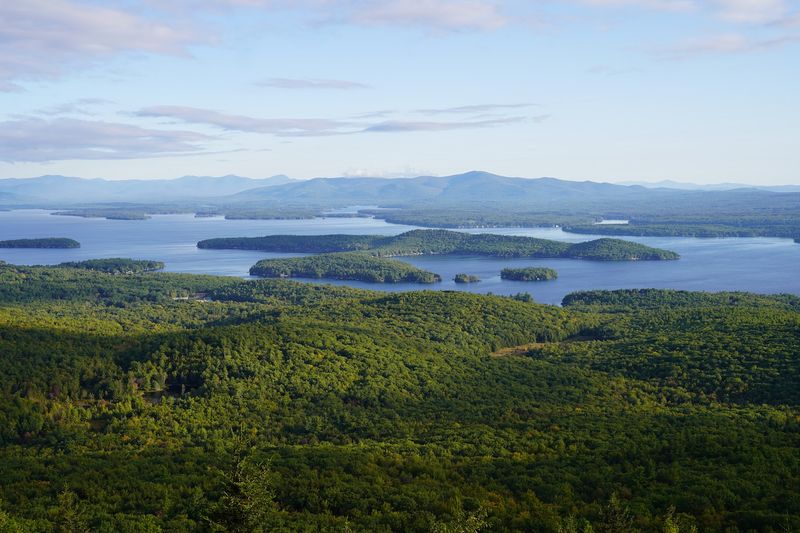
In 1872, workers digging fence posts near the shores of Lake Winnipesaukee in Meredith, New Hampshire, hit something unexpected in the soil. What they pulled out was a smooth, egg-shaped stone covered in intricate carvings that matched no known local tradition.
Roughly four inches tall and two and a half inches wide, the object is composed of quartzite or mylonite, neither of which occurs naturally in New Hampshire. That detail alone raised immediate questions about where it came from and how it got there.
The carvings etched across its surface are fascinatingly varied. A human face stares outward from one side, accompanied by an ear of corn, a tepee, arrows, a spiral, and a circle.
Most intriguingly, a precisely drilled hole runs through the entire length of the stone, made using drill bits of different sizes. That level of craftsmanship goes well beyond what simple ancient tools could typically produce, fueling endless speculation about its maker.
Theories have ranged from a genuine Native American artifact of unknown origin to a meteorite fragment believed to have fallen from the sky, to an elaborate 19th-century hoax. The stone’s original discoverer, businessman Seneca A.
Ladd, kept it for decades before his daughter donated it to the New Hampshire Historical Society in 1927. Today it sits as one of the most talked-about exhibits at the New Hampshire Historical Society, located at 30 Park Street, Concord, NH 03301.
Every person who stands before it leaves with the same unanswered question: what exactly is this thing?
7. The Cavern Monster of Dublin Lake
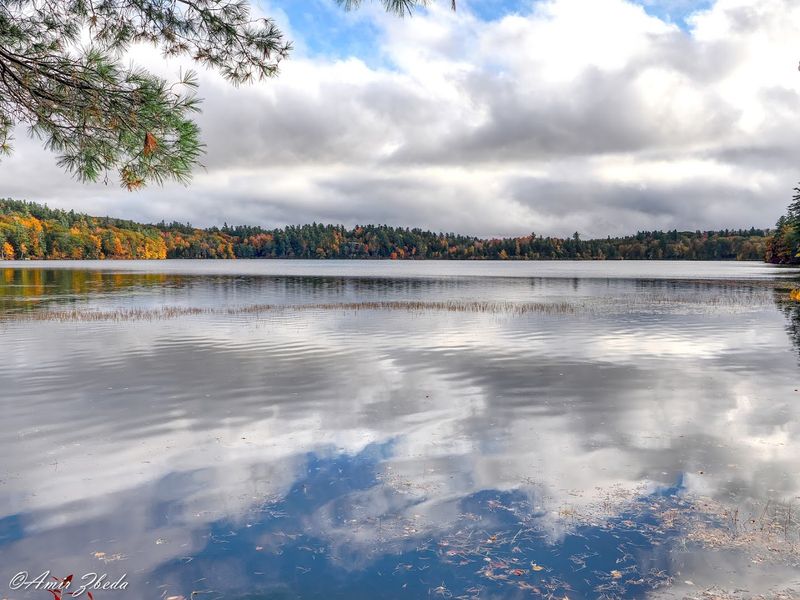
Dublin Lake looks perfectly peaceful on the surface. Nestled in the small town of Dublin, New Hampshire, it reflects the surrounding trees like a mirror on calm mornings, and nothing about its scenery hints at the disturbing legend lurking beneath.
According to local folklore that has circulated since the early 1980s, something monstrous lives in the underwater caverns found at the lake’s deepest points, where depths reach around 110 feet.
The stories describe divers who ventured into these submerged grottoes and came face to face with hideous, unclassified creatures. The encounters were reportedly so terrifying that the divers were driven to complete psychological collapse.
Accounts describe them being found later in states of incoherent madness, unable to articulate what they had witnessed. One version of the tale involves a skin diver who vanished beneath the surface and reappeared in the nearby woods in a state of profound shock.
Another variation describes a scuba diver sent down from a diving bell to explore a deep cavern, who returned equally undone by whatever he encountered. Some tellings add an almost surreal detail: the suggestion that air-filled pockets exist within the submerged caverns, creating bizarre habitats for these cryptids.
The unexplained detail of why witnesses were reportedly found without clothing adds an extra layer of creepiness that locals have never quite been able to shake. Dublin Lake itself is the address for this legend, a natural landmark in Dublin, NH, that wears its mystery as quietly as it wears its morning fog.
8. Ocean-Born Mary in Henniker
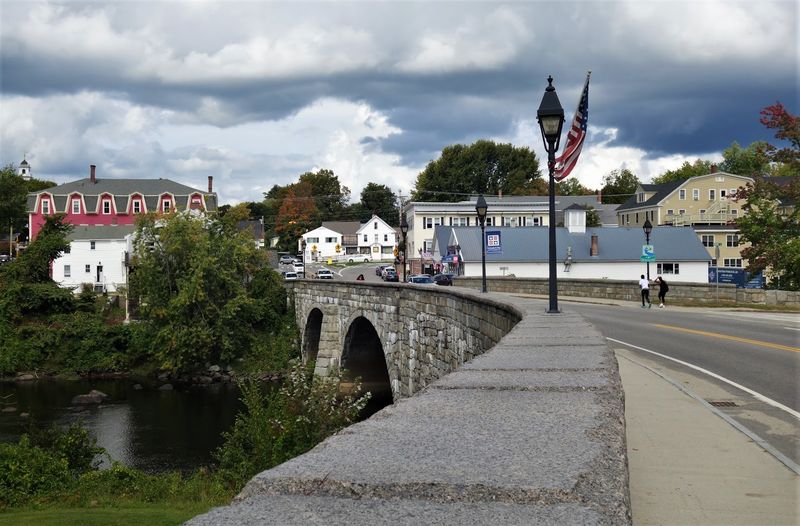
The story of Ocean-Born Mary starts with one of the most dramatic birth settings imaginable: the middle of the Atlantic Ocean in 1720, aboard a ship carrying Irish immigrants to America. According to the legend, pirates attacked the vessel, and the captain agreed to spare all lives on one condition.
The newborn girl had to be named Mary, after his own mother. He even gifted the baby’s mother a length of beautiful green silk, instructing that it be saved for the child’s wedding dress.
Mary Wilson Wallace grew up in Londonderry, New Hampshire, and married James Wallace in 1742. The story goes that she wore a gown made from that very silk on her wedding day.
She eventually settled in Henniker, living with her son William until her death in 1814 at the remarkable age of 93. Her grave rests today at the Center Burying Ground in Henniker, NH, a quiet and genuinely moving place to visit.
The ghost story dimension of the legend was largely invented by a man named Louis Roy, who purchased a house on Bear Road in Henniker in 1917. The home had previously belonged to Mary’s son Robert, not Mary herself.
Roy marketed it as the “Ocean-Born Mary House,” spinning tales of her ghost haunting the rooms and burying pirate gold on the property. He even rented out shovels to treasure hunters.
Mary never actually lived in that house, but Roy’s showmanship cemented her legacy in New Hampshire folklore permanently. The Ocean-Born Mary House remains on Bear Road, Henniker, NH, a private residence wrapped in a very public legend.
9. The Glencoor Ghost and Nashua’s Haunted Lore
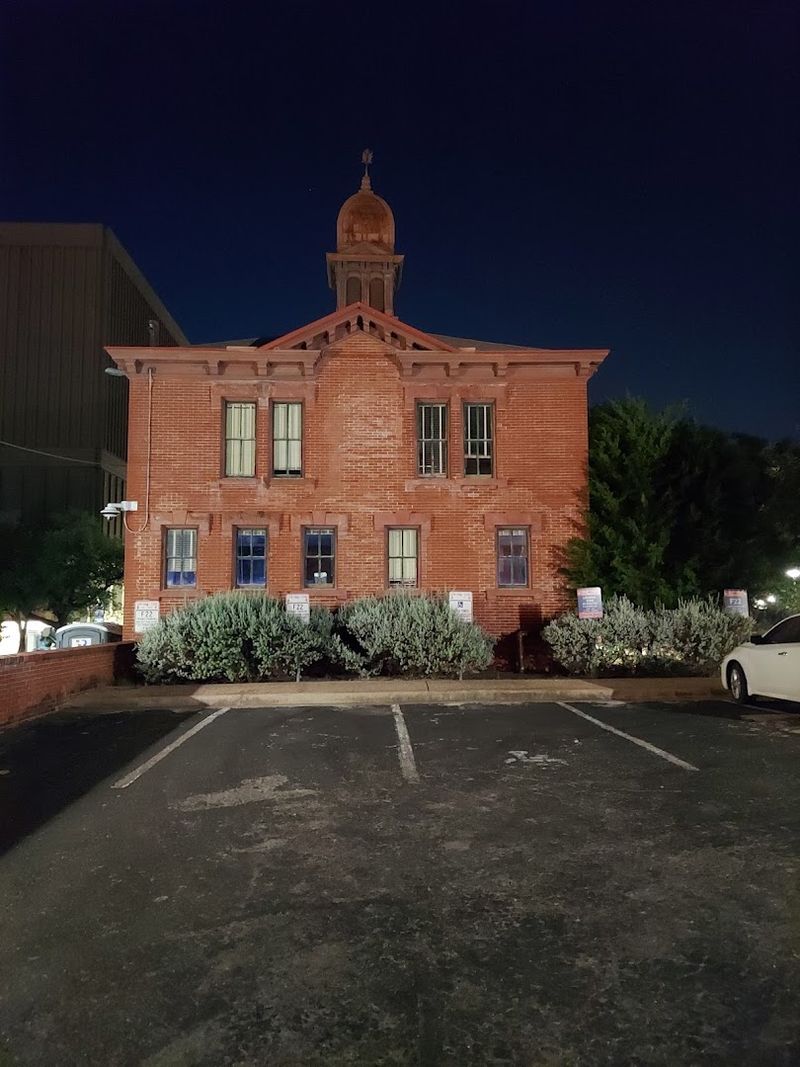
Nashua does not need a single famous ghost to earn its reputation for the supernatural. New Hampshire’s second-largest city is layered with eerie folklore, and once you start pulling at the threads, the stories come tumbling out fast.
The most notorious haunted location in the area is Gilson Road Cemetery, a place so steeped in legend that even seasoned ghost hunters approach it with a certain cautious respect.
Local lore describes a banished Native American medicine man who allegedly performed dark rituals on the land, sacrificing young warriors to malevolent forces. Visitors report hearing whispered warnings to leave before something terrible happens.
Among the cemetery’s other reported phenomena are a “Lady in White,” a colonial-era apparition spotted drifting along the road or half-hidden among the trees, and a dark, silent figure on a motorcycle known as “the Watcher,” whose presence is said to signal incoming paranormal activity.
Floating orbs and the ghostly forms of small children have also been reported here with enough frequency to make the cemetery a regular stop on local ghost tours. Beyond Gilson Road, Nashua’s haunted geography extends further.
Clocktower Place at 140-142 Main St, Nashua, NH 03060 buzzes with reported supernatural activity tied to its industrial past. Mine Falls Park at 4 Merrimack St, Nashua, NH 03060 carries tales of ghostly miners wandering the trails.
Gilson Road Cemetery itself sits at approximately 608-628 Gilson Rd, Nashua, NH 03063. Whatever the Glencoor Ghost may or may not be, Nashua delivers on atmosphere, history, and a genuinely creepy collection of unexplained encounters.
