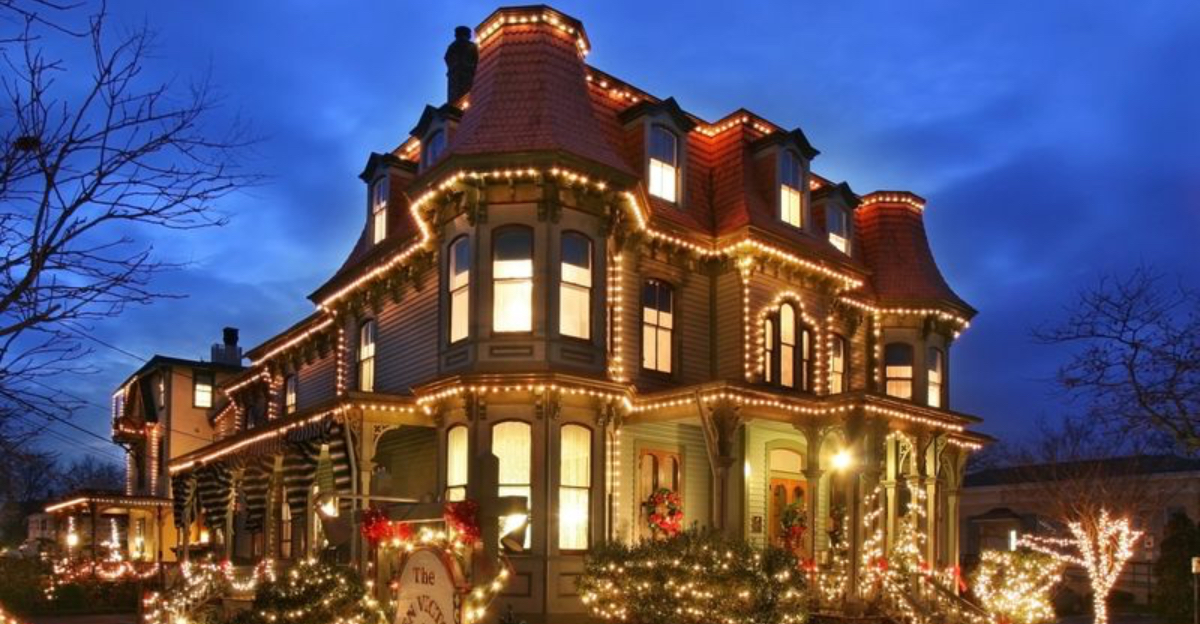
Winter in Cape May, New Jersey, changes the mood so completely that you might wonder if you stepped into a different town entirely.
Snow hushes the streets, softens the colors, and turns every Victorian detail into a quiet work of art.
You feel the shift the moment the first flurries settle on the porches and cupolas that define this beloved resort.
Stay a little longer, and the calm reveals a side of New Jersey that feels rare, intimate, and unforgettable.
A Victorian Resort Town That Looks Newly Timeless in Snow
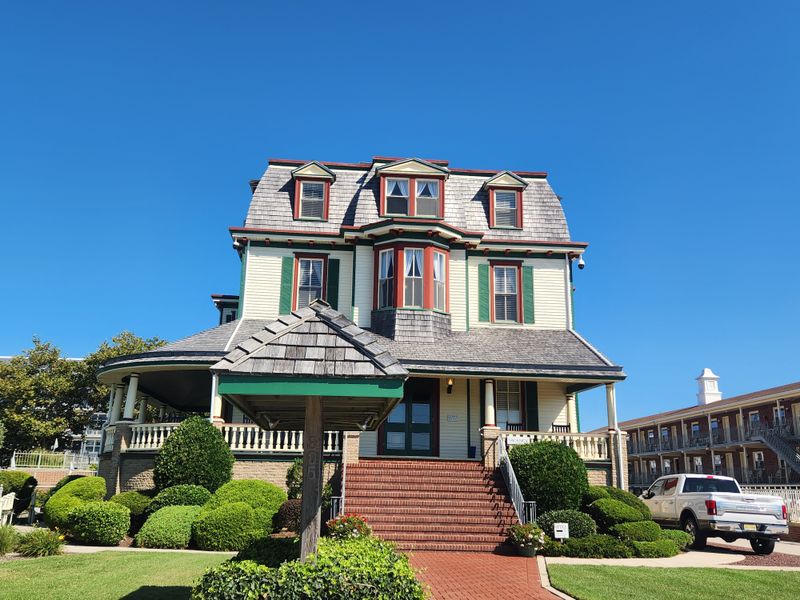
The preserved Victorian streets of Cape May, New Jersey, feel newly timeless when a clean layer of snow settles across gingerbread trim and bracketed eaves.
Pastel paints turn gentle under the winter light, so the houses look like watercolors brushed into the quiet air.
Porches appear deeper, railings crisper, and every spindle and corbel gains definition that summer glare often hides.
As you wander, the hush invites slower steps, so details you might skip in July ask for patient attention.
Color bands on shutters become more saturated against the white, and stained glass panels glow at dusk like small stage sets.
The streets around the historic district read like a set of well kept postcards, only softer and more intimate.
Even the grand hotels, lined up along the oceanfront, seem to exhale, their verandas outlined by snow caught in balusters.
In this light, Cape May trades exuberance for poise, and the effect flatters every era represented here.
Trees hold powder along their branches, framing facades in delicate arcs that move with the breeze.
When the wind quiets, you hear only distant surf, the soft thud of boots, and a gull that refuses to migrate.
It feels like the town took a breath, then decided not to return it for a while.
The architecture meets the weather halfway, and what you see is a partnership that makes winter feel like the intended season.
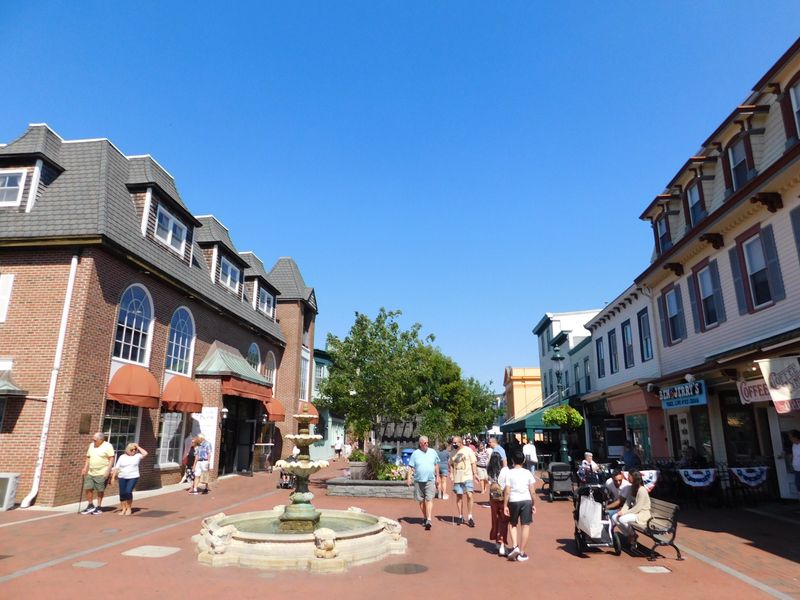
Look toward Washington Street Mall, where shopfront cornices gather thin ridges that sketch their own borders.
Turn back to Hughes Street and Jackson Street, where snow rounds the curbs and straightens the sightlines.
In this corner of New Jersey, history and weather collaborate to create a scene that looks quietly new.
A Winter Quiet That Replaces the Boardwalk Buzz
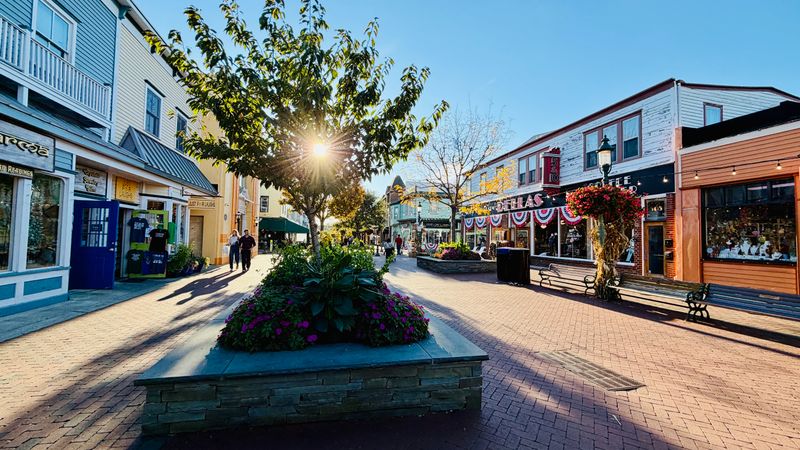
When winter arrives in Cape May, New Jersey, the seasonal hums fade until the shoreline speaks with only wind and distant surf.
Boardwalk energy gives way to simple rhythms, and the absence of crowd noise sharpens every small sound.
You notice the rustle of dune grass, the creak of a sign, and the quick tap of sleet on a railing.
Paths to the beach remain open, but they feel private, like invitations meant for you alone.
With each step, the sand stiffens under cold air and holds the imprint of your boots a little longer.
This quiet changes how you see the coastline, because you start tracing subtle edges where water meets frost.
Lamps along Beach Avenue cast pale pools that stretch across the walkways, then break on snow like glass.
Benches sit empty and composed, facing a horizon that keeps its own counsel.
Even gulls seem less brash, circling in slow arcs that match the mood.
The hush resets your pace, and you find yourself stopping more often to read the sky for color shifts.
Shops along Washington Street Mall hum at a lower volume, their windows turning into little theaters of light.
Every doorway offers a pause from the breeze, and every pause feels earned.
The town has not closed, it has recalibrated, and the result is more generous than you might expect.
Quiet makes room for attention, and attention rewards you with textures you miss in July.
This is the Cape May shoreline learning a softer language and inviting you to listen closely.
Historic Inns That Glow Like Lanterns at Dusk
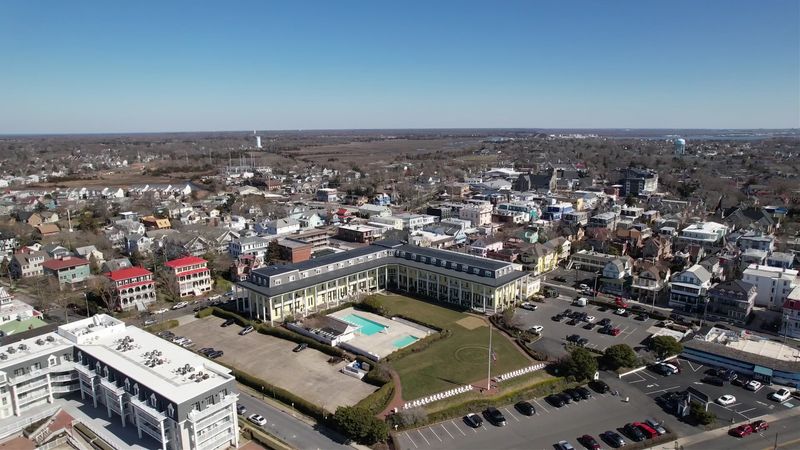
As dusk settles on Cape May, New Jersey, the porches of historic inns switch on with a mellow glow that carries down the block.
Snow on the rooflines reflects the light back onto columns and steps, so entrances feel taller and more inviting.
Windows gather warmth like hearths, and you see silhouettes move through lace curtains with unhurried rhythm.
On Jackson Street and Ocean Street, the lamps create overlapping halos that turn sidewalks into gentle runways.
You can follow the light from porch to porch, almost like a trail map drawn in amber.
That glow sharpens every ornamental bracket, making even small flourishes look generous.
The inns keep a steady presence through the season, doors opening to lobbies that balance calm with welcome.
Outside, the quiet amplifies the scene so that the soft clink of a bell or door latch feels ceremonial.
Horses of iron hitching posts catch a rim of frost, and railings take on a clean white line.
The streets remain comfortably walkable, especially near the Washington Street Mall, where light guides the path ahead.
Stand back a bit and the buildings resemble lanterns arranged in a row, sending a patient signal into the cold.
The effect is not flashy, it is tender, and tender fits this town in winter.
Each inn becomes a chapter in a longer story about hospitality that endures across seasons.
This glow makes the neighborhood feel like a promise kept, even on the sharpest night.
Follow it, and you find a version of Cape May that feels custom made for the quieter months.
Beachfront Streets That Feel Wrapped in Stillness
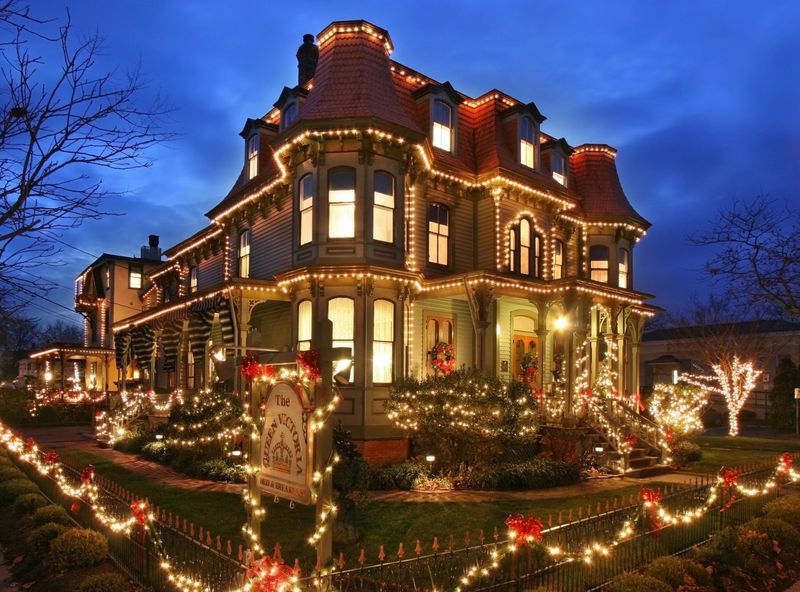
Beach Avenue and Ocean Avenue in Cape May, New Jersey, stay open through winter, yet the atmosphere turns contemplative.
Traffic thins to a gentle rhythm, and the sound of waves steps forward to lead the scene.
Sidewalks gather light snow in clean lines that frame the curbs like careful borders.
Porches along the avenue sit poised, their rockers still, their railings traced with pale edges.
When wind rises, the ocean answers with a deeper voice that seems to slow every passerby.
Streetlamps cast tidy circles across the pavement, then let them drift into the dark toward the dunes.
You find yourself pausing at crosswalks just to look east and measure the horizon.
The stillness is not empty, it is orderly, and that makes each detail stand out.
Shingled roofs take on a sift of white, while cupolas hold it like crowns.
Even the signage feels quieter, as if color has learned to speak in a lower register.
On storm days, foam crawls up the beach and stops short at the snow with a neat seam.
On clear nights, stars hang above the water like low lanterns, steady and bright.
The avenues guide you past grand hotels and side streets that return to the historic district.
Every turn reveals another facet of a town that prizes both display and restraint.
This is where Cape May shows how stillness can be a style choice and not just a season.
Snow Covered Dunes That Frame a Different Shoreline
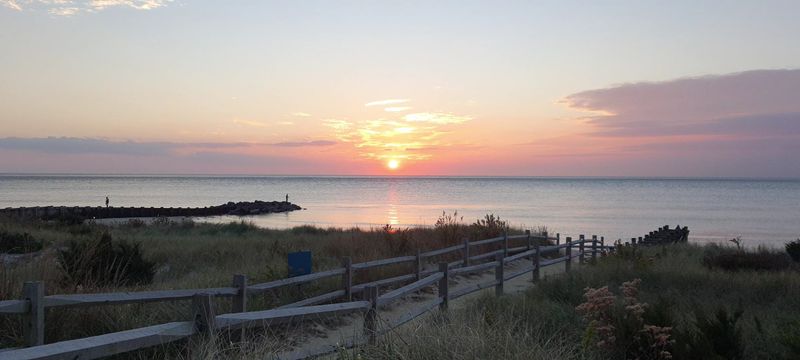
The dunes in Cape May, New Jersey, change character when snow traces their curves and settles between beach grass.
Light sand blends with white drifts until the forms look sculpted by a careful hand.
Fence lines draw gentle stripes that help the eye read the wind.
Where the Atlantic meets the shore, the color gradient fades from steel to milk, then softly back again.
Footpaths narrow under frost, which makes each step feel deliberate and respectful.
Sea oats hold crystals that sparkle when the sun pushes through clouds.
You can stand at the overlook near Beach Avenue and watch the coastline redraw itself in real time.
Sometimes the breeze erases a boot print as quickly as it formed, tidy and complete.
The contrast is striking, yet the mood remains calm, as if the beach has adopted a library voice.
Gulls glide over the pattern, their shadows sliding across white and beige like ink.
In places where the dunes dip, you get a better look at the way snow settles into folds.
It is easy to understand why painters return here in colder months for softer palettes.
Stand long enough and you can pick out the precise line where wind shifts direction.
The view does not rush you, it invites you to calibrate your senses against something steady.
This shoreline feels familiar and new at once, a neat trick that Cape May performs with grace.
A Lighthouse That Feels Even More Dramatic in Winter

At Cape May Point State Park in New Jersey, the lighthouse commands the landscape with extra clarity once snow settles on the trails.
The tower rises clean and calm, its pale surface sharpening against a winter sky.
Paths curve through frosted scrub, making a natural leading line to the landmark.
From the parking area at 215 Lighthouse Avenue, Cape May Point, the approach feels ceremonial without being formal.
Snow brightens every fence post and boardwalk plank, so the scene reads like a careful drawing.
Glimpses of the Atlantic appear between trees, and the cold air carries salt more distinctly.
Birders gather near the ponds in quieter numbers, scanning for winter species with patient focus.
When clouds lower, the lighthouse appears even taller, as if it leaned into its role as a guide.
The park’s trails invite an unhurried loop that lets you watch light shift on the structure.
Footsteps compress in the snow and leave a dotted line that points back to the base.
The setting encourages silence, and silence suits the history of a place built to watch and warn.
Stand near the keeper’s quarters and you hear the wind fold around the tower with a soft rush.
The geometry is satisfying, simple and strong against the muted colors of winter.
In this season, the lighthouse feels less like a tourist stop and more like a presence.
It anchors Cape May in a way that is both visual and steadying, especially when the weather turns.
Victorian District Streets That Transform Into Winter Storybook Scenes

Hughes Street and Jackson Street in Cape May, New Jersey, slip into a storybook register once snow settles into the tree canopy.
Branches cradle powder, and that soft frame makes every porch and cornice feel intentional.
The narrow sidewalks tidy the walk, guiding you past doorways with polished thresholds.
House numbers gleam against painted clapboard, while lace curtains turn windows into small stages.
Light from traditional style lamps gathers around the trunks and spills across the brick.
You hear bootsteps and the light whisk of a broom as someone clears a stair.
Even in the calm, the neighborhood feels watched over, neighborly and assured.
Turn a corner and the perspective shifts, so rooflines line up like a quiet procession.
Snow finds each railing detail and gives it a fine underline.
The air smells faintly of the ocean, a reminder that the beach sits only a short walk away.
This closeness of shore and street makes winter feel layered, never bare.
Victorian shingles catch the light differently through the day, adding texture to every return visit.
At night, window wreaths and small lamps lift the mood without crowding it.
Nothing tries too hard, and that restraint reads as confidence.
It is easy to imagine staying longer, just to see how the next flurry redraws the edges.
A Harbor That Trades Summer Energy for Winter Calm
Cape May Harbor, New Jersey, lowers its voice in winter, and the marina reflects the mood with steady water and tidy lines.
Boats ride low and patient in their slips, and the docks hold a thin ribbon of snow along the edges.
Gulls loop above the piers in slow turns that mirror the calm water.
From Harbor Cove and the working waterfront, the view reads like a blueprint of masts and rigging.
Pilings wear frost bands that mark recent tides with delicate precision.
The usual hum of engines quiets, leaving soft harbor sounds to take the lead.
Walk the perimeter paths and you catch reflections of hulls bending into abstract shapes.
The geometry feels satisfying, almost meditative under a pale sky.
With fewer voices, you hear rope fibers shift, cleats tick, and flags tap in the breeze.
Snow underfoot compresses to a comfortable crunch that sets the tempo.
Looking back toward the city side, rooftops and sheds make a clean horizon of angles.
Each pier shows its structure more clearly, and that clarity is part of the appeal.
The harbor keeps working, only at a different pitch suited to the season.
This part of Cape May invites a slow circuit that ends where it began, calmer than when you started.
The waterfront proves that New Jersey can do quiet just as convincingly as it does lively.
Winter Light That Enhances Every Architectural Detail
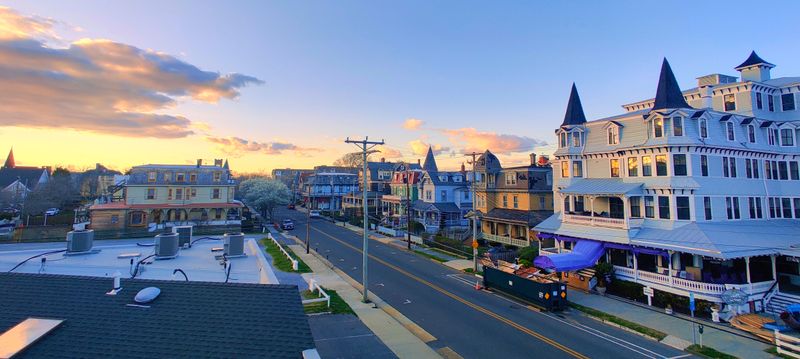
Low winter light in Cape May, New Jersey, turns architectural details into highlights that guide your eyes block by block.
Shingles show their grain, brick chimneys reveal careful bonds, and iron fences throw crisp shadows.
Even paint takes on new depth, with pastel fronts reading richer against the cool sky.
A small patch of snow on a sill can shift the whole composition of a facade.
Door surrounds pick up thin lines of brightness that draw clean rectangles at the entrance.
Cornices catch the last light and hold it a few beats longer than the walls below.
Walks through the historic district feel like an outdoor gallery designed by the season.
Turn your head and the scene changes as angles trade light back and forth.
A simple downspout can become a silver stripe when the sun finds it.
Each block offers a lesson in how materials respond when glare takes a break.
Photographers love these hours because contrast relaxes and color becomes trustworthy.
But you do not need a lens to feel how the town leans into this glow.
Windows mirror pale clouds with just enough clarity to read the shapes.
Steps and railings set up a rhythm that toes out across the sidewalk.
It is the kind of light that invites you to stay outside a little longer than the temperature suggests.
A Coastal Town With Two Distinct Identities
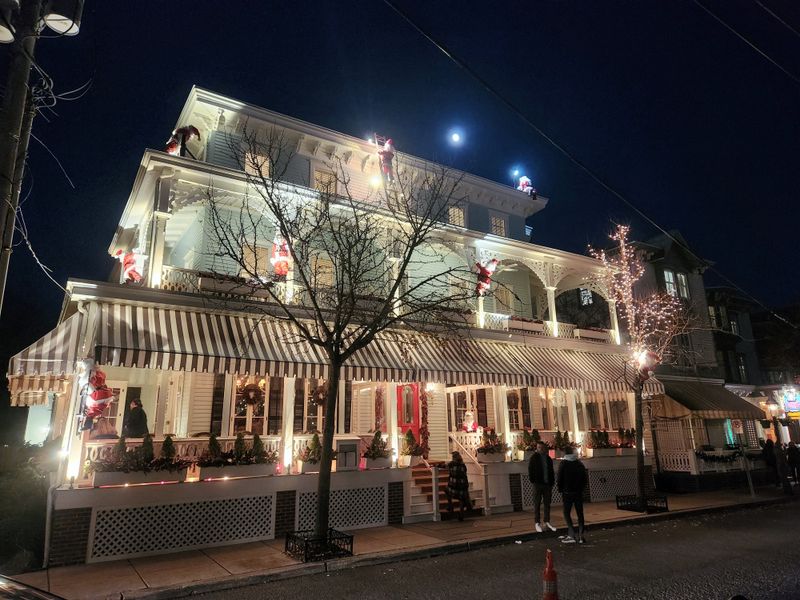
Summer in Cape May, New Jersey, brims with color and movement, a festival of porches, bicycles, and open doors facing the sea.
Winter arrives and brushes the same scenes into a calmer key, keeping the beauty and easing the volume.
Both versions feel honest, and the shift between them becomes part of the town’s identity.
On Washington Street Mall, window displays tell lively stories when the air is warm.
In cold months, those stories turn intimate, with light pooling just inside the glass.
Beach Avenue shines when the sun is high, then whispers under a pale sky when snow returns.
Victorian homes carry both seasons with ease, trading bustle for composure without losing charm.
The lighthouse stands constant, a marker that threads the two moods together neatly.
Harbor views pulse in July, then rest in January, and each phase feels complete.
Visitors come for one experience and often discover the other, surprised by how natural it feels.
Local routines reframe the landscape in ways that reward attention year round.
New Jersey’s shoreline proves flexible and assured, offering energy and stillness without conflict.
Choose your moment, and the town meets you where you are, lively or reflective.
Either way, the architecture, light, and water remain the true constants.
That dual nature is the secret that keeps Cape May returning to memory long after you leave.
Dear Reader: This page may contain affiliate links which may earn a commission if you click through and make a purchase. Our independent journalism is not influenced by any advertiser or commercial initiative unless it is clearly marked as sponsored content. As travel products change, please be sure to reconfirm all details and stay up to date with current events to ensure a safe and successful trip.
