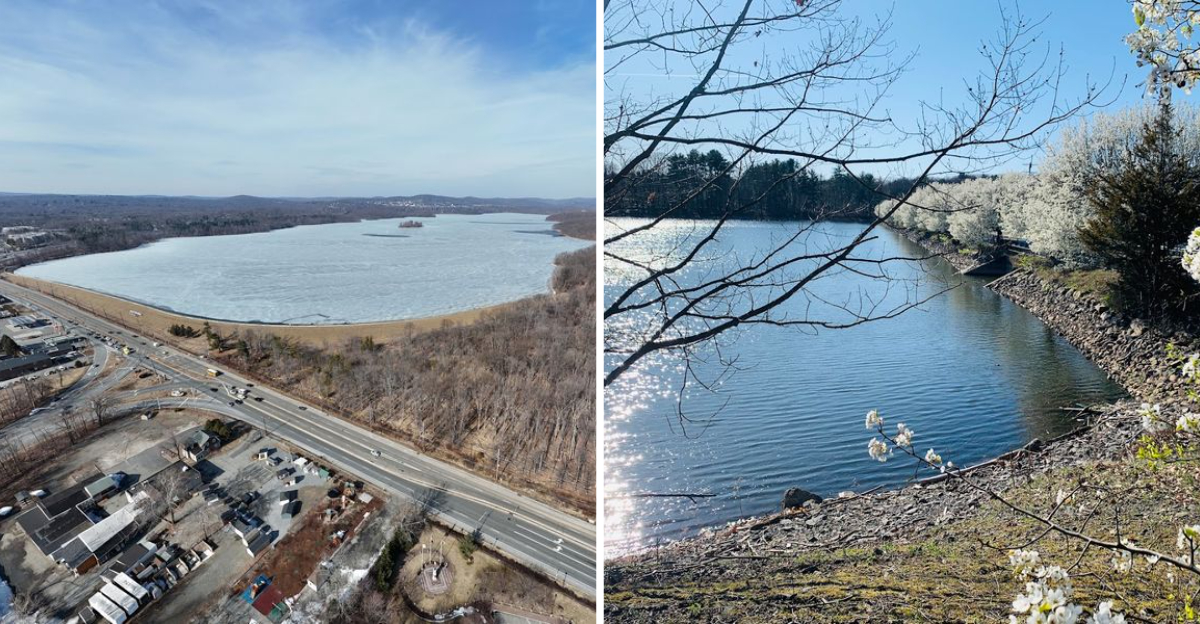
Picture showing up to your favorite lake, ready for a peaceful morning, only to find mudflats stretching out where the water used to be.
That was basically my experience driving around New Jersey this spring, jaw dropping at every reservoir I passed.
Something wild is happening out here, and honestly, it looks like a scene from a documentary about the American Southwest, not the Garden State.
The 2026 drought has hit hard and fast, pulling water levels down to numbers that make engineers nervous and locals genuinely worried.
If you thought New Jersey was immune to this kind of thing, buckle up, because these eleven water bodies tell a completely different story.
1. Oradell Reservoir (Bergen County)
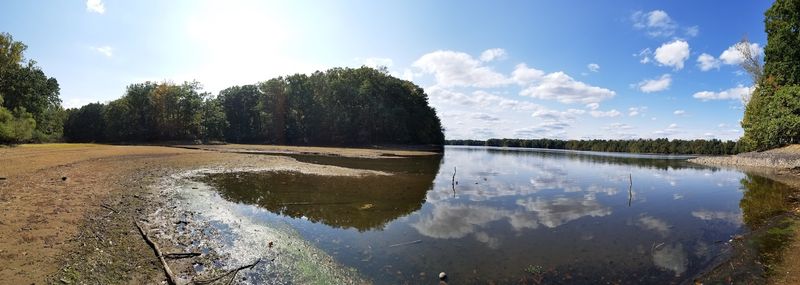
Standing at the edge of Oradell Reservoir right now feels surreal. At just 37% capacity, this Bergen County water body looks more like a moonscape than the calm, full reservoir most locals have known their whole lives.
Mudflats stretch out in every direction, and small “islands” of sediment have emerged where the water used to sit several feet deep.
Oradell has historically been one of the most reliable sources of drinking water for northern New Jersey communities. Seeing it this low is genuinely unsettling for anyone who understands how many households depend on it daily.
The photos circulating online barely capture how dramatic the retreat of the shoreline actually is in person.
What makes this situation especially pressing is the timing. Spring is typically when reservoirs begin recovering from winter, but the rainfall deficits of late 2025 and early 2026 have left the system playing catch-up with no relief in sight.
Conservation measures are now in effect for the surrounding communities. Every faucet left running a little too long suddenly feels like a much bigger deal than it used to.
Address: Oradell Reservoir, Oradell, Bergen County, NJ.
2. Wanaque Reservoir (Passaic County)
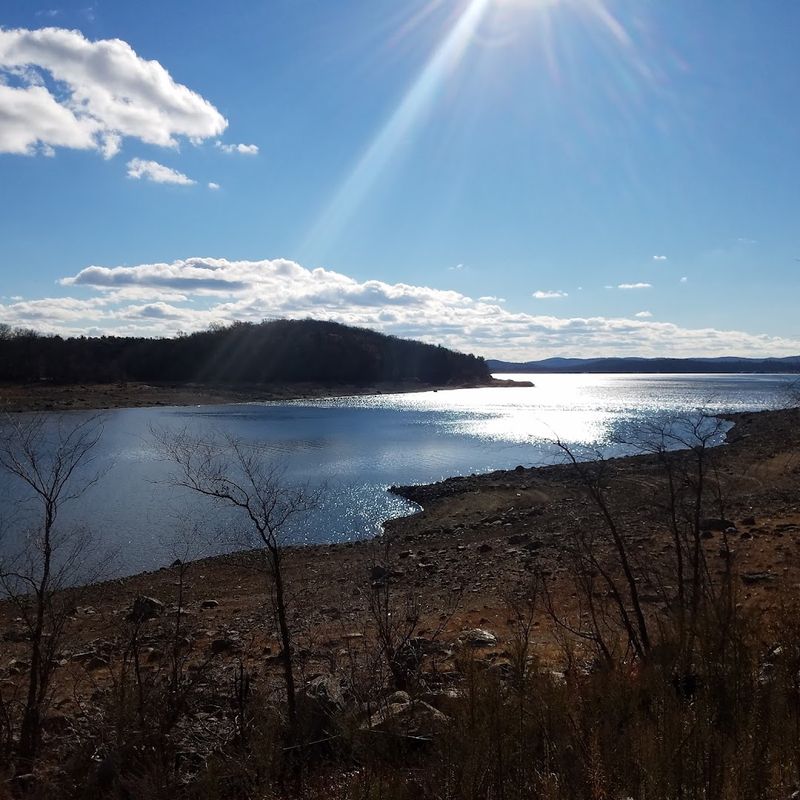
From the Raymond Dam area, the Wanaque Reservoir looks like it has been slowly exhaled rather than drained. At 45% capacity, the shoreline has pulled back so far that sections of the reservoir floor that have never seen daylight in decades are now fully exposed to the sun.
It is one of those sights that stops you mid-sentence.
Wanaque is the backbone of water supply for a significant chunk of Passaic County and beyond. The system is deeply interconnected with other reservoirs in the region, which means a drop here creates a ripple effect that water managers have to track constantly.
That interconnection is both the reservoir’s strength and its vulnerability during a drought of this scale.
The surface level drop compared to a typical March is staggering. Normally this time of year, snowmelt and spring rain would be refilling the system at a healthy pace.
Instead, the exposed banks tell the story of a precipitation deficit that has been building for months. Families who rely on this water source are being asked to cut usage significantly.
Small changes at home, like shorter showers and skipping lawn watering, genuinely add up when a reservoir is fighting this hard to hold on. Address: Wanaque Reservoir, Wanaque, Passaic County, NJ.
3. Spruce Run Reservoir (Hunterdon County)
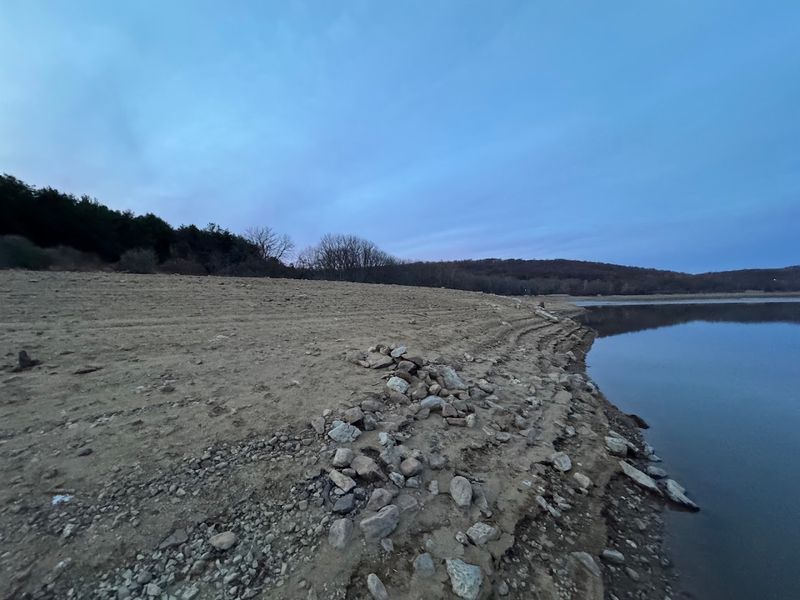
Spruce Run Reservoir has earned a nickname this drought season that nobody wanted: the place with the ghost docks. At 48% capacity, the wooden dock structures that normally float serenely above the water are now sitting awkwardly on dry, cracked ground, pointing at a waterline that has retreated far into the distance.
It is equal parts eerie and heartbreaking.
Spruce Run is the third-largest reservoir in New Jersey, so its capacity matters enormously for the Hunterdon County region. During normal years, the water level here stays relatively stable, making it a popular spot for recreation as well as a critical supply source.
This year, neither of those roles is being fulfilled the way anyone hoped.
The exposed lakebed reveals layers of sediment and old debris that tell a quiet history of the reservoir. Things that sank years ago are suddenly visible again, which would be fascinating under different circumstances.
Right now, though, the focus is squarely on recovery. Water managers are watching precipitation forecasts with the kind of intensity usually reserved for severe storm warnings.
Getting Spruce Run back to healthy levels will require sustained rainfall over several weeks at minimum. Until then, the ghost docks remain a stark, visual reminder of what a historic drought actually looks like on the ground.
Address: Spruce Run Reservoir, Clinton, Hunterdon County, NJ.
4. Round Valley Reservoir (Hunterdon County)
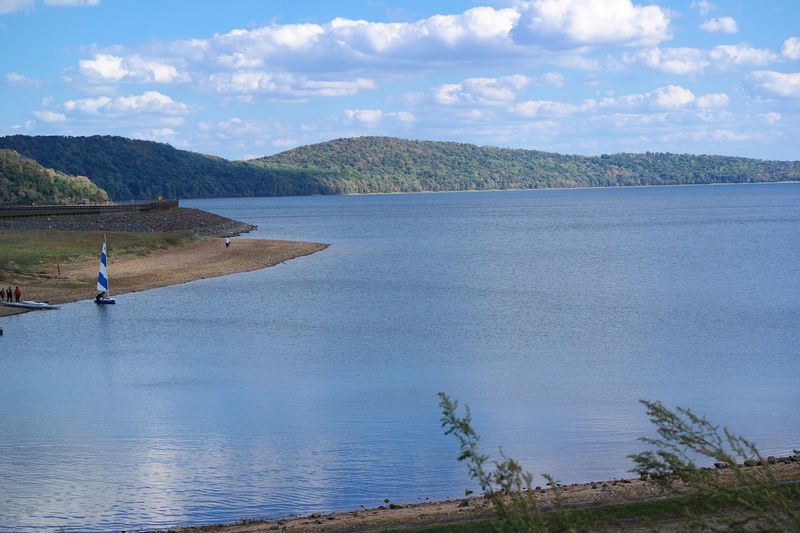
Round Valley Reservoir is wearing its drought like a badge nobody asked for. The massive white “bathtub ring” circling the surrounding rock faces is visible from a considerable distance, a calcium and mineral stain left behind as the water has dropped to a shocking 31.2% capacity.
That ring marks the history of where the water used to be, and the gap between then and now is enormous.
Round Valley is one of the deepest reservoirs in the entire northeastern United States. Its depth is usually its greatest asset, allowing it to hold enormous volumes of water that can sustain supply even through dry stretches.
But even a reservoir this deep cannot outrun a drought that has been grinding away at precipitation totals for months on end.
The visual impact of the bathtub ring is something that tends to stick with people long after they drive away. It is the kind of environmental marker that makes abstract statistics feel very real very fast.
Water conservation officials have pointed to Round Valley repeatedly as a symbol of why mandatory restrictions matter. Every gallon saved at the tap is a small vote for recovery.
The reservoir will refill eventually, but the timeline depends entirely on what the sky decides to do next. Address: Round Valley Reservoir, Lebanon, Hunterdon County, NJ.
5. Manasquan Reservoir (Monmouth County)
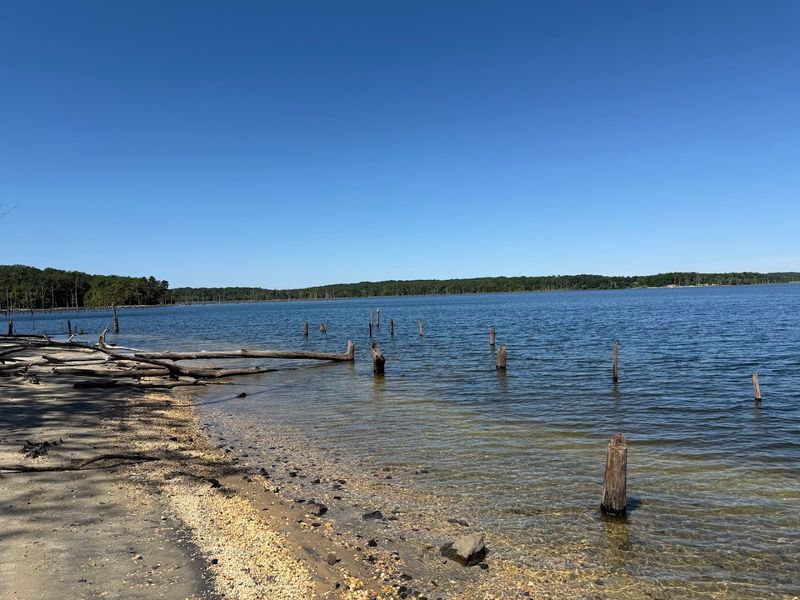
Manasquan Reservoir sits at 79% capacity right now, which might sound reassuring compared to some of the other numbers on this list. But here is the thing: for March, the average capacity is 96%, making this one of the most historically low readings ever recorded for this time of year.
Context is everything when reading drought statistics.
Located in Howell Township, Manasquan serves a quarter million customers through American Water, one of the largest utility providers in the region. Mandatory water conservation measures went into effect quickly once officials realized how far below normal the levels had dropped.
The exposed shoreline areas that are now visible have not been dry in many years.
What makes Manasquan particularly worth watching is its role as a bellwether for the broader Monmouth County water supply. When this reservoir struggles, the downstream effects touch an enormous number of households and businesses.
Spring is supposed to be the season of replenishment here, with rainfall topping off what winter left behind. That script has not played out in 2026.
Residents near the reservoir have shared photos of the newly exposed banks, and the images carry a quiet urgency that no press release could fully replicate. Address: Manasquan Reservoir, Howell Township, Monmouth County, NJ.
6. Monksville Reservoir (Passaic County)
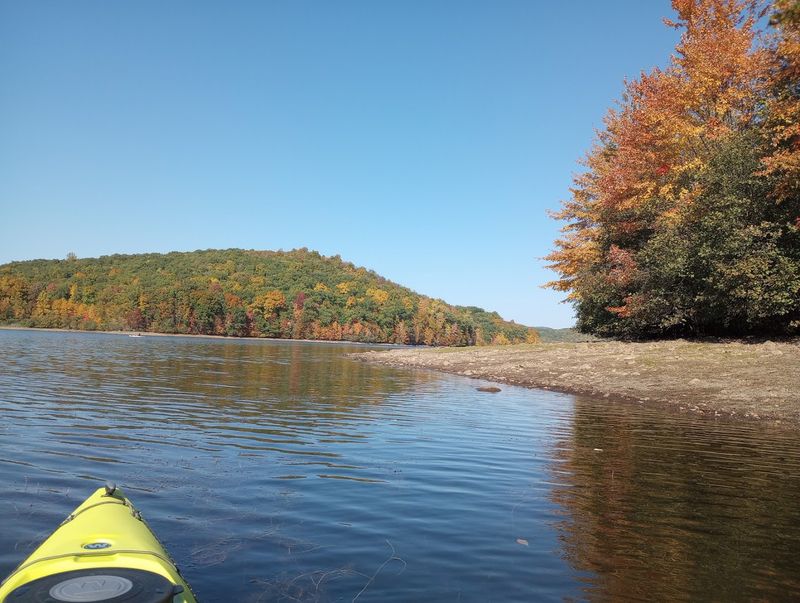
Monksville Reservoir has a specific problem that goes beyond just the drought. At 52% capacity, it is being actively drawn down to help feed the Wanaque system, essentially sacrificing its own levels to keep the larger supply network functioning.
That kind of operational decision speaks volumes about how stressed the entire North Jersey water grid has become.
Monksville sits within Ringwood State Park, which means its visual decline is happening in one of the most scenic corners of the state. The contrast between the beautiful forested hillsides and the retreating waterline is jarring in a way that a plain concrete reservoir could never quite replicate.
Nature makes the drought look both beautiful and devastating at the same time.
The reservoir was originally built in the 1980s as a supplemental supply for the Wanaque system, so its current role is actually what it was always designed for. Still, seeing it pushed this low while fulfilling that function is a reminder of how interconnected and fragile regional water infrastructure can be under sustained stress.
Anglers who frequent Monksville have noticed the changes along the shoreline dramatically. The fish habitat shifts as water levels drop, and the recreational experience changes along with it.
Recovery here is tied directly to the recovery of the broader Wanaque system. Address: Monksville Reservoir, Ringwood, Passaic County, NJ.
7. Lake Tappan (Bergen County)
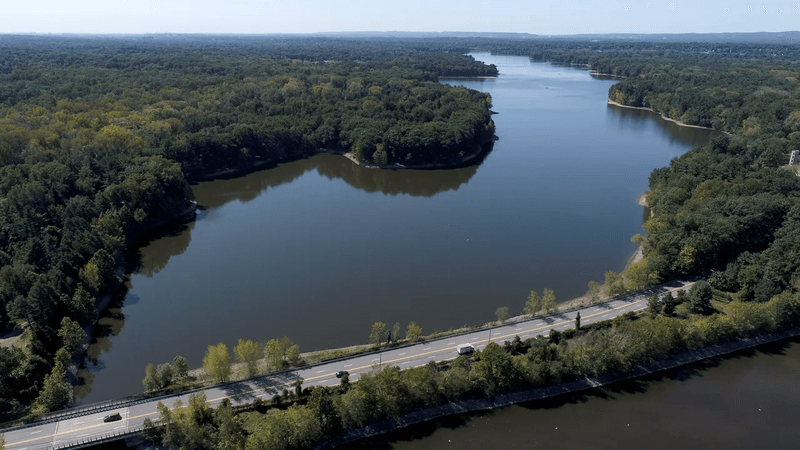
Lake Tappan’s northern shore looks completely foreign right now. Large sections have transformed into exposed silt flats, stretching out in pale grey sheets where open water used to shimmer.
At 43% capacity, the lake is struggling in a way that long-time Bergen County residents have rarely seen, and the visual change is immediate and striking.
Tappan serves as part of the regional water supply network for northern New Jersey communities, making its low levels more than just a scenic concern. The silt now exposed along the northern shore is fine and soft, the kind that has been settling at the bottom for decades and was never meant to see sunlight.
Walking along the edge of it feels oddly quiet, like visiting a place between states of being.
Bergen County has been experiencing the drought’s effects across multiple water bodies simultaneously, which compounds the pressure on water managers trying to balance supply and demand. Lake Tappan is one piece of a larger puzzle that is becoming increasingly difficult to solve without meaningful precipitation.
Residents in nearby communities have been asked to reduce outdoor water use significantly. The silt flats along the northern shore will eventually disappear back under the water, but not before the drought leaves its mark on everyone who depends on this lake.
Address: Lake Tappan, River Vale, Bergen County, NJ.
8. Woodcliff Lake (Bergen County)
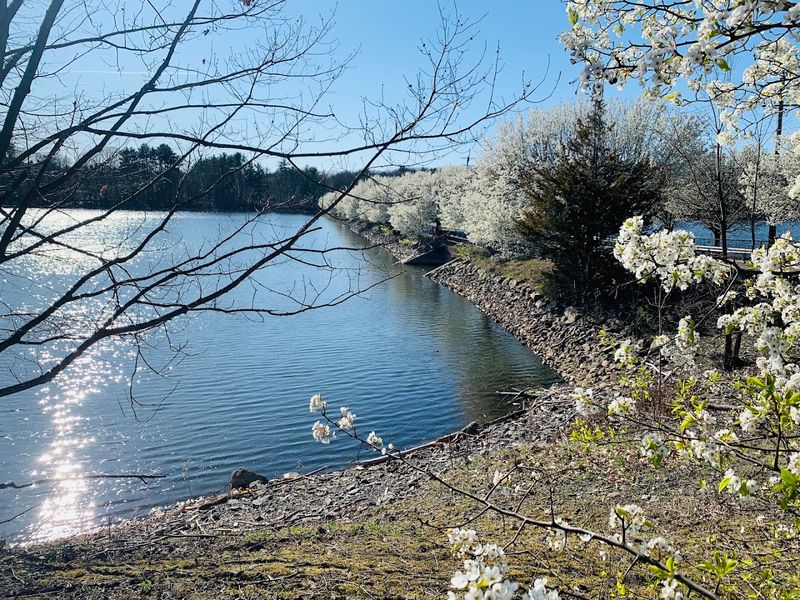
Woodcliff Lake is one of those reservoirs where the stakes feel intensely personal because it sits right in the middle of a dense residential landscape. At 44% capacity, it has reached critical levels for the North Jersey residential supply, and the people who live nearest to it can literally see the waterline dropping from their backyards.
That proximity makes the drought feel visceral in a way that charts and percentages never fully can.
The borough of Woodcliff Lake depends on this reservoir as a key part of its water supply infrastructure. When levels drop this low, conversations about long-term water security start happening at town hall meetings and kitchen tables alike.
The exposed shoreline now visible around much of the lake is a daily visual prompt for conservation that no billboard campaign could match.
What is particularly concerning about Woodcliff Lake is that it feeds into the North Jersey supply chain at a point where demand is consistently high. Suburban water use patterns, lawn irrigation, car washing, and pool filling, tend to run counter to conservation goals even during drought warnings.
This year, with the lake sitting nearly 56 percentage points below full capacity, the community has had to rethink some of those habits quickly. The situation is manageable, but only if everyone treats it seriously.
Address: Woodcliff Lake Reservoir, Woodcliff Lake, Bergen County, NJ.
9. Boonton Reservoir (Morris County)
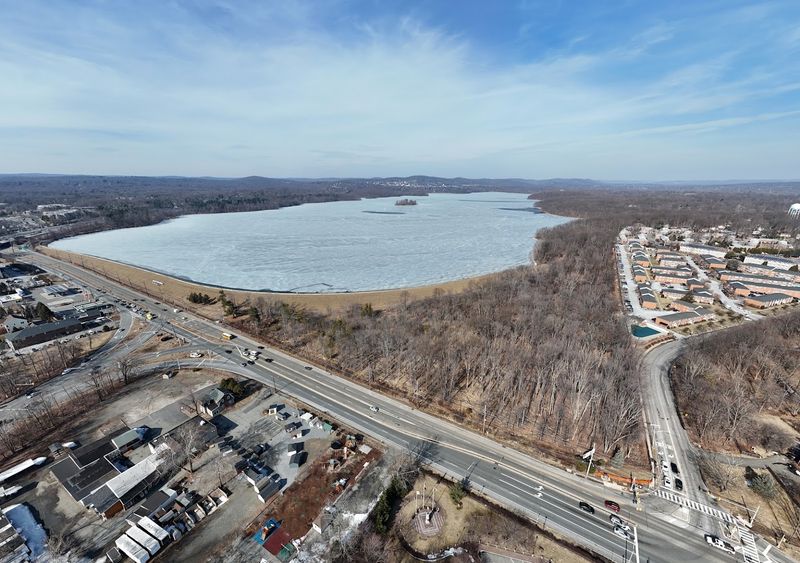
Boonton Reservoir has been quietly revealing its hidden architecture this spring. Rock faces that spend most of their existence fully submerged beneath the surface are now standing fully exposed, dry, and almost sculptural against the retreating waterline.
At 51% capacity, the reservoir is showing sides of itself that most people have simply never seen before.
Boonton has long been a critical supply source for Morris County and portions of the greater Newark metropolitan area. Its position within the water supply network means that its levels are monitored with particular intensity by regional water authorities.
Falling below 50% capacity would trigger a new tier of conservation mandates, making the current 51% reading feel uncomfortably close to the edge.
The newly exposed rock faces have attracted a different kind of visitor than usual, curious hikers and photographers who want to document what the drought has uncovered. There is something genuinely fascinating about geology that has been hidden for decades suddenly becoming accessible.
But the fascination is tempered by the reality of why it is visible at all. The reservoir needs sustained, heavy rainfall across several consecutive weeks to begin a meaningful recovery.
Until that happens, the rocks will keep standing in the open air, patient and indifferent, while water managers watch the numbers with growing concern. Address: Boonton Reservoir, Boonton Township, Morris County, NJ.
10. Point View Reservoir (Passaic County)
Point View Reservoir has a name that sounds like a scenic overlook, and right now, the view from the surrounding area is genuinely striking, though not in the way anyone would prefer. At 55% capacity, only a relatively small footprint of open water remains concentrated in the center of the reservoir bed, surrounded by a wide expanse of dry, exposed ground.
It looks more like a large puddle than a functioning reservoir.
Point View is part of the Passaic County water supply network, which has been under significant stress throughout the 2026 drought. The concentration of affected reservoirs in Passaic County, including Wanaque and Monksville, means the entire regional system is being stretched in multiple directions at once.
Point View’s situation adds another layer of complexity to an already strained picture.
The visual of a small central pool surrounded by dry land is one of the more dramatic images the drought has produced across New Jersey. It communicates the severity of the situation instantly, without needing any accompanying text or statistics.
Water managers have been working to optimize what remains, but optimization has its limits when the fundamental input, rainfall, is simply not arriving. Residents throughout Passaic County are being urged to treat every drop as genuinely precious right now.
The center of that reservoir is proof that the urgency is real. Address: Point View Reservoir, Totowa, Passaic County, NJ.
11. Merrill Creek Reservoir (Warren County)
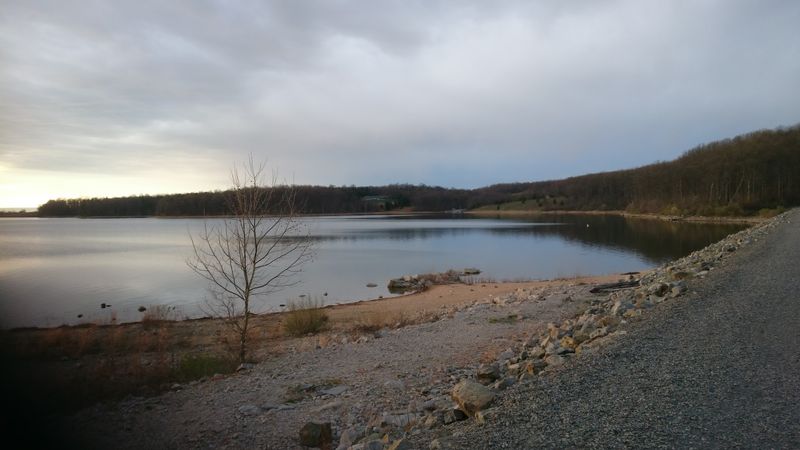
Merrill Creek Reservoir holds the distinction of being the deepest man-made lake in New Jersey, reaching depths of up to 225 feet at full capacity. Right now, at 62% capacity, the boat ramps that are built to meet the water at a gentle angle are ending several feet above the actual waterline, essentially launching into thin air.
It is a small detail that communicates a very large problem with surprising efficiency.
Located in Warren County, Merrill Creek was specifically designed with drought response in mind, built to release water into the Delaware River during low-flow periods to support downstream water users. The irony of a drought-relief reservoir now struggling with drought conditions is not lost on the engineers and water managers who oversee it.
The system is working as designed, but the inputs are not keeping pace.
Boat ramps stranded above the waterline have become one of the defining images of the 2026 drought across New Jersey, and Merrill Creek’s version of that image is particularly striking given the reservoir’s scale. The surrounding Warren County landscape is beautiful, all rolling hills and quiet farmland, which makes the drought’s impact feel both peaceful and deeply concerning at the same time.
Recovery here depends on the same thing recovery everywhere depends on right now: rain, sustained and generous, arriving sooner rather than later. Address: Merrill Creek Reservoir, Washington Township, Warren County, NJ.
Dear Reader: This page may contain affiliate links which may earn a commission if you click through and make a purchase. Our independent journalism is not influenced by any advertiser or commercial initiative unless it is clearly marked as sponsored content. As travel products change, please be sure to reconfirm all details and stay up to date with current events to ensure a safe and successful trip.
