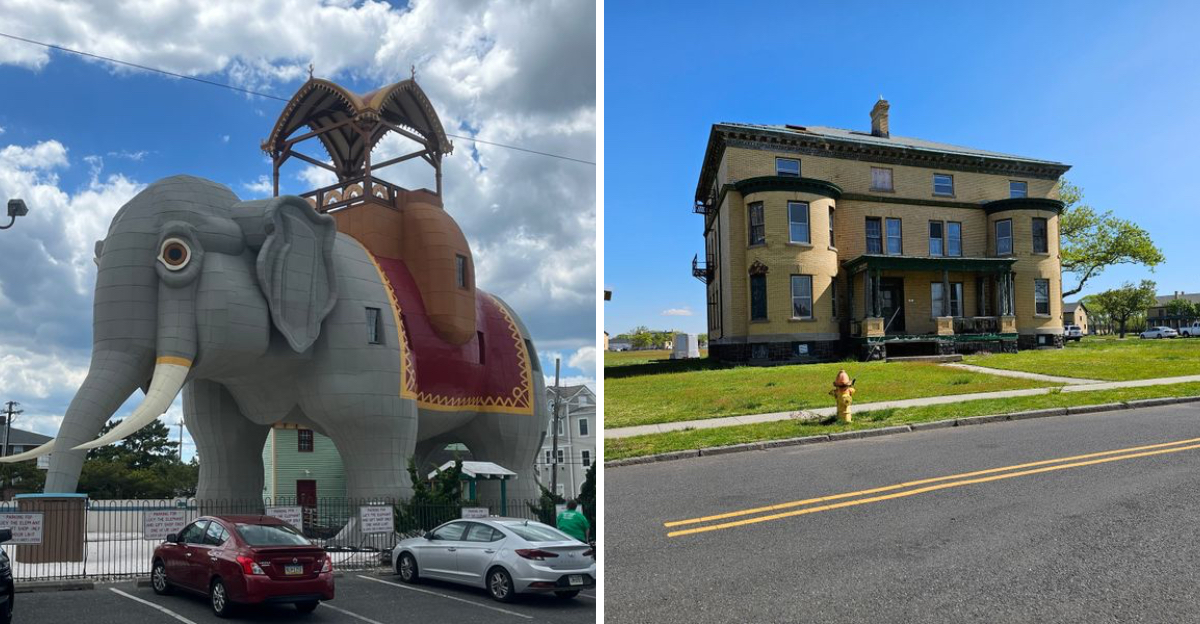
New Jersey keeps reinventing itself, and its landmarks tell the story in vivid layers.
You can stand where roaring crowds once gathered and now find quiet streets, gardens, or restored facades.
These places feel familiar yet new, reflecting how communities change while memory lingers.
Follow along for a firsthand look at sites that traded bright lights for deeper meaning.
1. Palisades Amusement Park, Cliffside Park
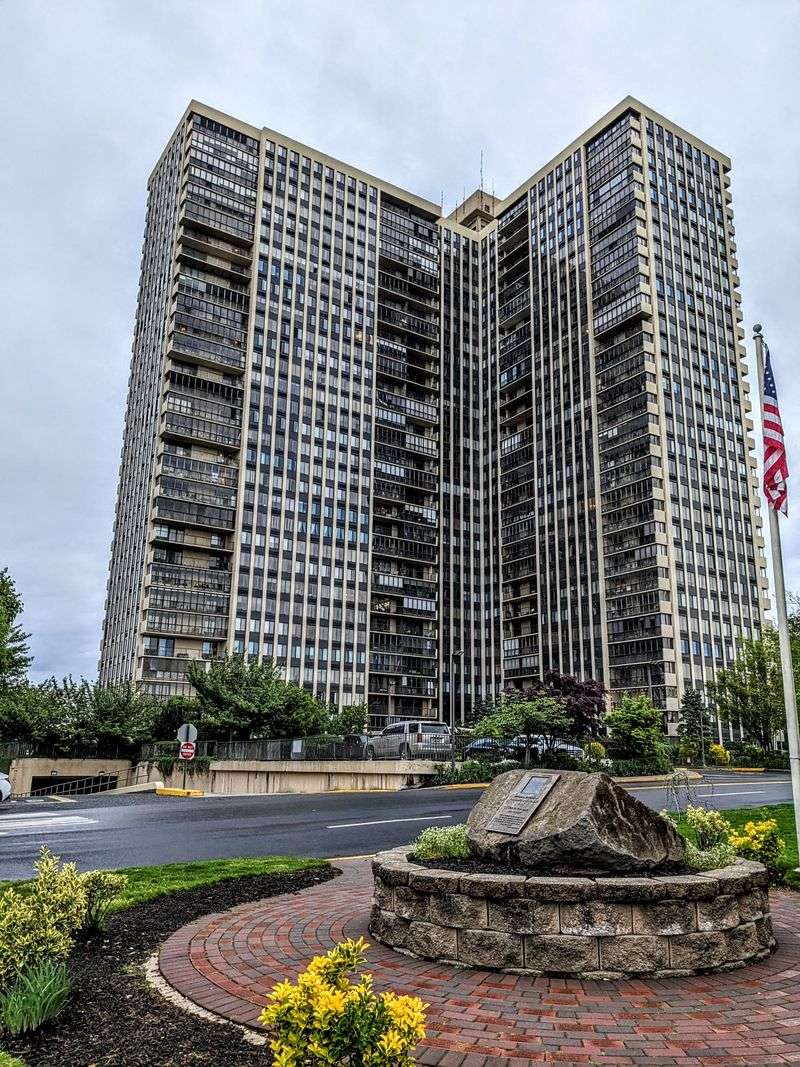
You can stand along Palisade Avenue and try to picture the shrieks, the music, and the impossible summer heat that once defined this edge of Cliffside Park.
The Hudson River still glitters below, but the coasters are gone, replaced by towers and townhomes that keep the skyline tidy and the ground quiet.
Old postcards and grainy film do the heavy lifting now, bridging a gap that pavement and lobby doors cannot cross.
The site sits near 780 Palisade Avenue, Cliffside Park, New Jersey, where residential entrances have replaced concession stands and boardwalk planks.
If you walk the ridge, the views still feel theatrical, with Manhattan across the water like a stage waiting for a cue.
Locals jog where crowds once lined up, and the breeze carries only the traffic below instead of popcorn steam.
It feels respectful rather than nostalgic, because the neighborhood has its own rhythms and routines that need space to breathe.
Interpretive markers pop up in local archives and libraries, offering names and dates that frame the park without turning it into a shrine.
The story here is transition, a reminder that land in New Jersey rarely stays singular for long.
Entertainment gave way to housing, and the cliffside traded spectacle for daily life that still looks out over the same blue river.
The neighborhood embraces the history quietly, with occasional guided tours that explain the rides and park layout.
Local historians sometimes host small gatherings that recall summer festivals without disrupting daily life.
You notice subtle plaques embedded in sidewalks that hint at the coaster locations and carnival games.
The hilltop perspective gives a sense of vertical drama that the rides once exaggerated.
Even without the music, the energy of community and shared memory lingers in the spaces where families once lined up.
2. Lucy the Elephant, Margate City
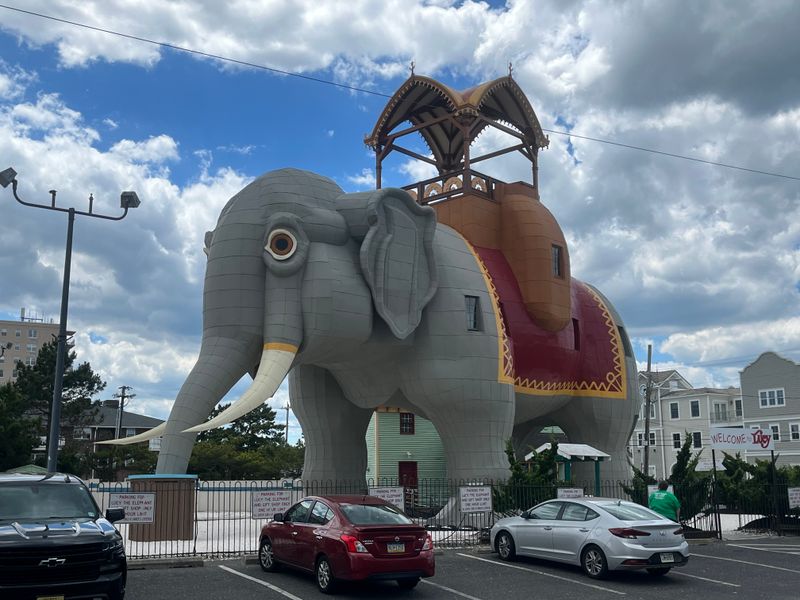
Lucy stands at 9200 Atlantic Avenue, Margate City, New Jersey, with weathered charm and a steady gaze toward the shoreline.
The giant elephant once hosted guests and campaigns, yet today the draw is preservation, storytelling, and the simple pleasure of looking up.
Guided access lets you climb inside a legend that learned how to age gracefully.
Restoration work polished the tin hide and tightened joints, converting a novelty into a landmark that speaks through tours and quiet exhibits.
The surrounding streets hum with beach traffic, but Lucy holds the center by being steadfast rather than flashy.
It feels like a shared living room for the island, a place where families pause before continuing toward the sand.
The gift shop focuses on history and architecture, keeping the narrative grounded in place and craft.
Docents point out details that would otherwise slip by, such as structural bracing and windows that frame the horizon.
New Jersey loves icons, and Lucy survives by being cared for, not by chasing trends.
You leave with a memory that is oddly calm, proof that reinvention sometimes means returning to what made a landmark special in the first place.
Visitors often pause on the street corner to photograph Lucy, capturing the humor and scale against the Atlantic backdrop.
Local festivals use her presence to anchor activities, from art walks to seasonal markets.
Inside, interpretive displays offer context on both construction and the broader history of the area.
Children often marvel at the size and climb, creating fresh memories on top of old lore.
The surrounding promenade blends sandy beaches and neighborhood charm, reinforcing Lucy’s enduring presence.
3. Convention Hall, Asbury Park
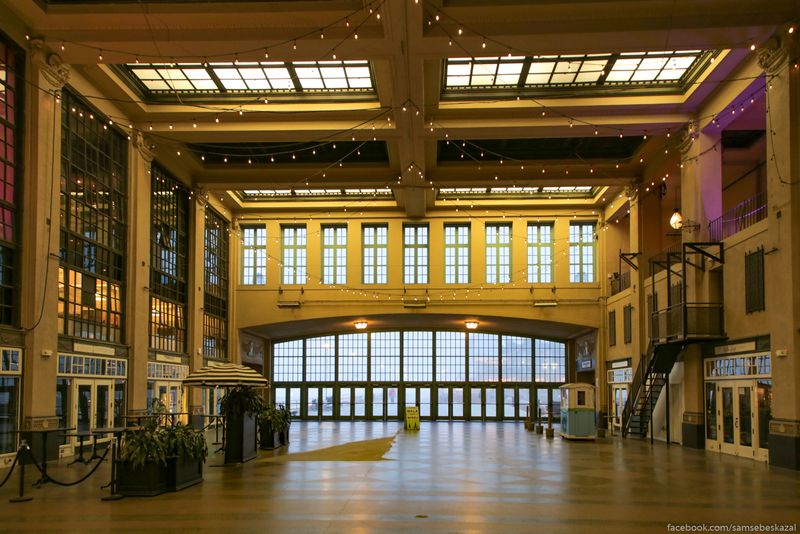
Convention Hall rises at 1300 Ocean Avenue, Asbury Park, New Jersey, where salt air meets brick, tile, and ironwork that still photographs beautifully.
The building anchors a boardwalk that has learned new rhythms, with markets, concerts, and community events folding into a restored shell.
You feel the past in the echo of the arcade, yet the present keeps the lights warm and the doors open.
Renovation has been incremental, with care taken to stabilize structure and refresh gathering spaces without blurring the original character.
It functions as a civic living room, drawing locals and visitors who want an oceanfront backdrop with history that does not feel dusty.
Windows pull in horizon light that makes every corridor look film ready.
Asbury Park reinvented itself through venues and small businesses, and this hall fits the narrative by being adaptable rather than fixed.
Seasonal programming feels curated, so the building avoids monotony even when crowds thin.
New Jersey knows how to coax energy from its shore towns, and this address proves it through steady care.
You leave with sand on your shoes and architecture in your camera roll, which is exactly the point of a resilient landmark.
The hall draws musicians, performers, and small business events that keep it lively throughout the year.
Brick and tile details reflect a craftsmanship that modern renovations respect without mimicking.
Boardwalk foot traffic flows naturally into the building, linking past and present through movement.
Seating areas and corridors allow visitors to pause and take in architectural flourishes without feeling crowded.
Even in winter, the space maintains warmth through lighting and careful climate control, encouraging extended visits.
4. The Amboy Cinemas, Perth Amboy
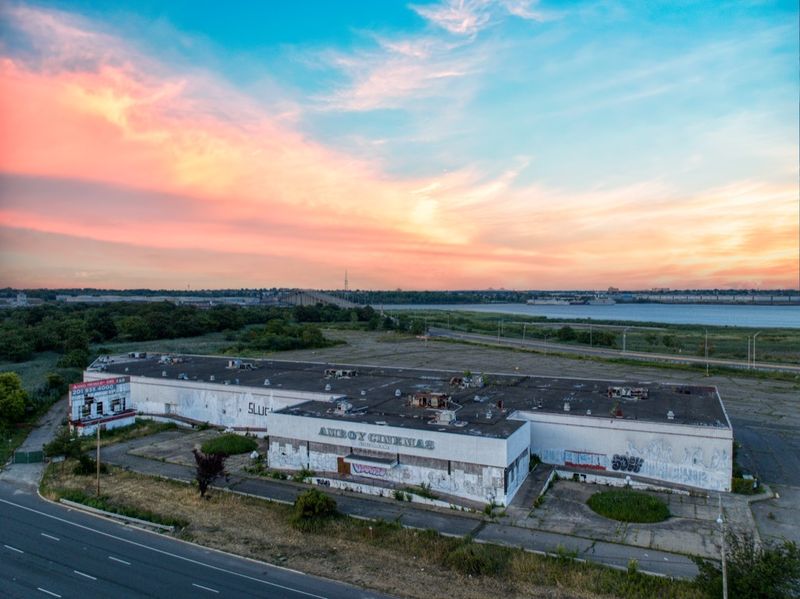
The old movie house on Smith Street, Perth Amboy, New Jersey, once pulled crowds beneath a glowing marquee that promised quiet and spectacle at the same time.
Its original function has faded, yet the structure remains a waypoint for anyone tracing the city’s cultural spine.
You see layers in the brick and plaster, the kind that invite a second look.
The address near downtown puts it within walking distance of civic buildings and storefronts that mark a community shaped by foot traffic.
What used to be a shared living room now reads like a sketchbook, open to future plans and memory at once.
Adaptation here is less theatrical, more patient, and you feel it in the way passersby glance up and keep moving.
Perth Amboy has learned to reuse space by degrees, preserving faces while rethinking interiors for new needs.
The cinema fits that approach, serving as a reminder that entertainment has shifted toward smaller screens and different rooms.
New Jersey holds on to heritage through buildings like this, even when the projectors rest.
Stand on the sidewalk and you can almost hear footsteps on tile, the soft hush before the curtains parted, and then the city returning to itself.
Film posters, marquis remnants, and interior tiling create subtle storytelling cues for observant visitors.
The façade retains small Art Deco elements that hint at its golden age without overwhelming the streetscape.
Walk past and you sense the rhythm of generations who queued and cheered inside.
Local redevelopment initiatives often highlight the cinema as a cultural touchstone, blending heritage with modern use.
Sidewalks and nearby plazas allow for pedestrian pauses, encouraging reflection on both cinema and city evolution.
5. Ellis Island Hospital Complex
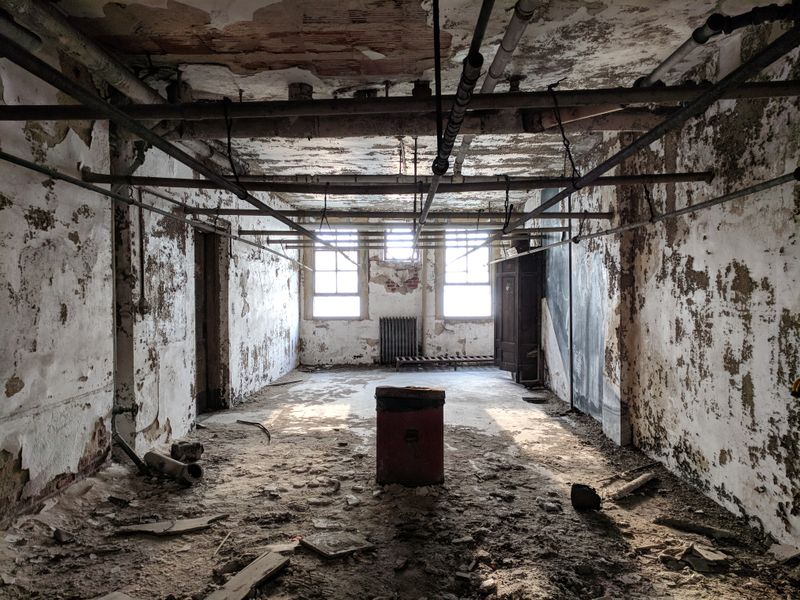
The hospital buildings stand on Ellis Island, New Jersey waterside, where red brick and glass trace the path of arrivals who waited for clearance and care.
The main museum draws the crowds, but guided access through the medical wings reframes decay as testimony.
You walk through light filled corridors that hold shadows without feeling staged.
Tours begin near the ferry landing at Ellis Island National Museum of Immigration, with staff leading small groups into stabilized structures.
Rooms carry patient stories through artifacts and photo panels that resist romantic gloss.
Peeling paint remains visible by design, so the site teaches through texture and restraint.
It feels solemn, respectful, and direct, the way a hospital should feel even in retirement.
Windows look toward Liberty State Park in New Jersey, tying the narrative to the shoreline that launched so many new chapters.
Preservation here is careful, favoring safety and context over shine.
You leave quieter than you arrived, carrying a timeline that bends from hardship to hope without losing its edge.
Guided tours lead you through hallways that balance preservation with interpretation, making the past tangible.
You notice the architecture’s scale, built to manage mass arrivals with efficiency and care.
Outdoor views tie the hospital to the Statue of Liberty and harbor, reinforcing its historical context.
Small exhibits highlight stories of patients, staff, and immigrant journeys that personalize the space.
Evening light transforms corridors and brickwork, revealing shadows that evoke quiet contemplation.
6. The Original Atlantic City Boardwalk Piers
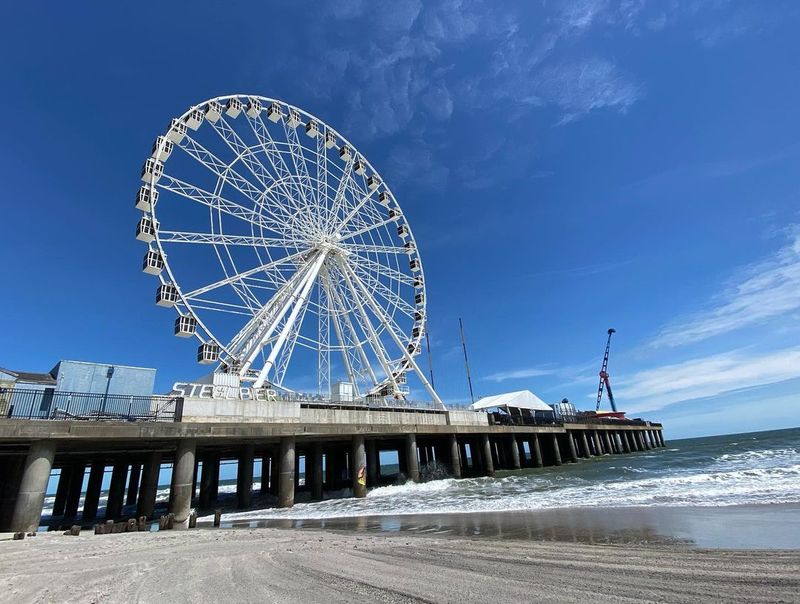
The old piers stretched from the Boardwalk in Atlantic City, New Jersey, where waves and lights staged a daily tug of war.
Some disappeared into storms, others returned with fresh outfits that serve shopping, shows, and low key strolling.
You can trace the past by the gaps and the rebuilt edges that still point to the sea.
Addresses line the Boardwalk near Arkansas Avenue and beyond, where entrances change but the rhythm of planks stays constant.
Benches and railings turn the ocean into a front row seat, which might be the most timeless attraction anyway.
Legacy piers taught the city to adapt, to pivot when crowds wanted something new.
The skyline now mixes hotel towers with reimagined structures that host events and seasonal installations.
Even when names change, the feeling remains, a crossroads between shore breeze and bright façades.
New Jersey’s coast writes and rewrites itself here, proof that reinvention can be circular without feeling stuck.
Walk a little, pause often, and let the sound of boards underfoot fill in what history books cannot.
Walkers often stop at vantage points to watch the horizon shift while listening to the surf below.
Seasonal events and pop up vendors breathe new life into sections that once hosted permanent attractions.
Street signage and historic markers highlight the evolution of each pier without interrupting pedestrian flow.
You can trace the rhythm of tourism past and present as you move from gaps to rebuilt platforms.
The mix of modern and historical details keeps the piers visually and narratively compelling for repeat visitors.
7. Fort Hancock, Sandy Hook
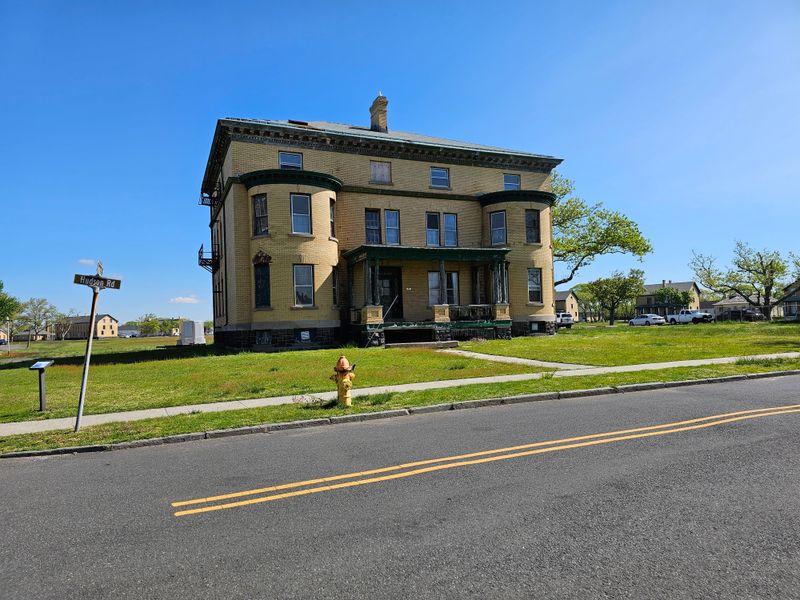
Yellow brick buildings line Hartshorne Drive, Sandy Hook, New Jersey, where Fort Hancock watches the bay with a patience learned from decommissioned duty.
Empty porches, open fields, and a lighthouse on the horizon draw a slower kind of visitor.
You walk the parade ground and hear gulls instead of drills.
The National Park Service maintains the site within Gateway, balancing preservation with careful adaptive reuse in select quarters.
Interpretive panels explain batteries and signal stations without drowning you in jargon.
The best moments happen when the light shifts and the buildings glow like a quiet neighborhood.
Access is easy along the peninsula road, with parking near clusters of officers’ row and the former barracks.
New Jersey’s maritime story feels woven into every railing and window sash, steady and unsentimental.
This is not a theme park, it is a living archive that accepts weather and time as co-curators.
You leave with wind in your jacket and a sense that defense can age into contemplation without losing relevance.
Visitors stroll through the parade ground imagining soldiers moving in formation while gulls circle overhead.
Selective restoration has preserved battlements and quarters in a way that feels authentic rather than staged.
Interpretive panels offer layered explanations, bridging military history with environmental context.
Bayside views stretch uninterrupted, creating a sense of both openness and protection that mirrors the site’s original purpose.
Photography opportunities abound, with light and shadow emphasizing architectural details and the surrounding landscape.
8. The Skylands Estate, Ringwood
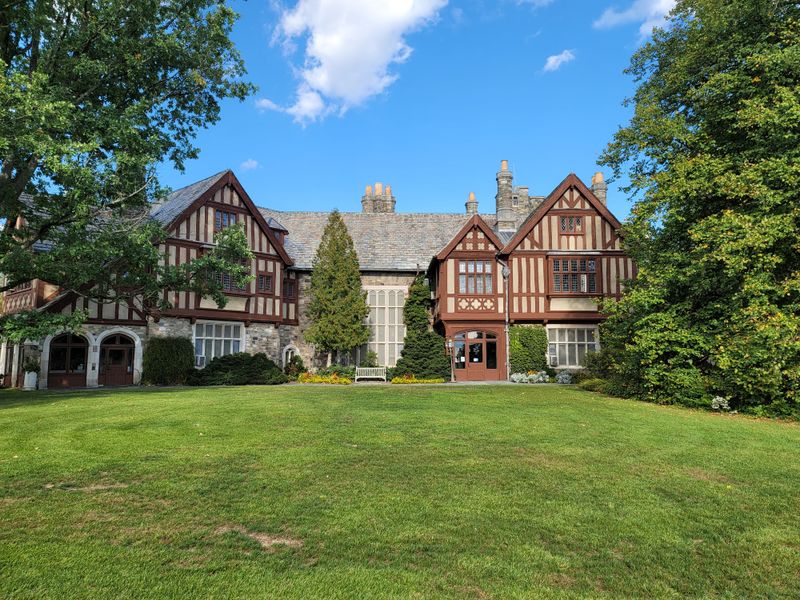
The Skylands Estate sits within the New Jersey State Botanical Garden at 2 Morris Road, Ringwood, New Jersey, where stone walls meet clipped lawns and soft hills.
The manor feels stately without stiffness, and the gardens drift from formal to woodland in a seamless walk.
You sense a retreat that opened its gates and then learned to whisper.
Seasonal blooms and evergreens share the stage, so every path offers texture without demanding attention.
The house hosts events and tours, yet the grounds steal the show with quiet corners and long sightlines.
Benches create small outdoor rooms that invite lingering.
Interpretive signs point out plantings and history, giving enough detail to feel grounded without slowing your stride.
Ringwood’s hills and reservoirs frame the experience, making the estate read as part of a larger landscape.
New Jersey’s northern forests breathe through this place, cooling the stone and softening the edges.
You finish the loop feeling unrushed, content that prominence can fade into stewardship and still feel complete.
Walking along winding paths, you notice stone walls framing seasonal displays that shift throughout the year.
Bridges over small streams create moments of pause where the landscape feels curated yet effortless.
The estate hosts occasional concerts and fairs that blend natural scenery with community engagement.
Photography captures layers of greenery, architecture, and sky, making each visit visually distinct.
Benches and shaded areas allow visitors to linger without pressure, encouraging reflection and appreciation of both garden and manor.
9. The Roosevelt Speedway Site, West Long Branch
The former speedway site near the intersection of Norwood Avenue and Cedar Avenue, West Long Branch, New Jersey, holds new shapes that bear little trace of racing lines.
You find academic buildings and everyday streets where engines once roared for crowds that filled the stands.
The land moved on, and the soundtrack changed to footsteps and campus chatter.
Redevelopment replaced grandstands with practical structures that serve study, work, and neighborhood errands.
Wayfinding signs point to classrooms and offices rather than pits and paddocks.
The curve of the roads hints at old geometry if you squint, but the present keeps its own pace.
It is a good lesson in how New Jersey repurposes space without apology.
The memory remains active through archives and local histories that document the races and route maps.
Standing here, you feel the distance between spectacle and routine as something natural.
You leave with a sense that speed gave the land momentum, and daily life carried it forward without looking back too often.
You can still trace the original curves of the track through subtle elevation changes and road alignments.
Trees and landscaping have softened former spectator areas, turning former grandstands into quiet observation points.
Local signage highlights the history of events, drivers, and the track’s impact without overwhelming modern use.
Walkways for pedestrians and cyclists now occupy areas once dominated by roaring engines, blending recreation with memory.
The site invites contemplation, showing how energy and excitement can transform into a slower, reflective urban rhythm.
Dear Reader: This page may contain affiliate links which may earn a commission if you click through and make a purchase. Our independent journalism is not influenced by any advertiser or commercial initiative unless it is clearly marked as sponsored content. As travel products change, please be sure to reconfirm all details and stay up to date with current events to ensure a safe and successful trip.
