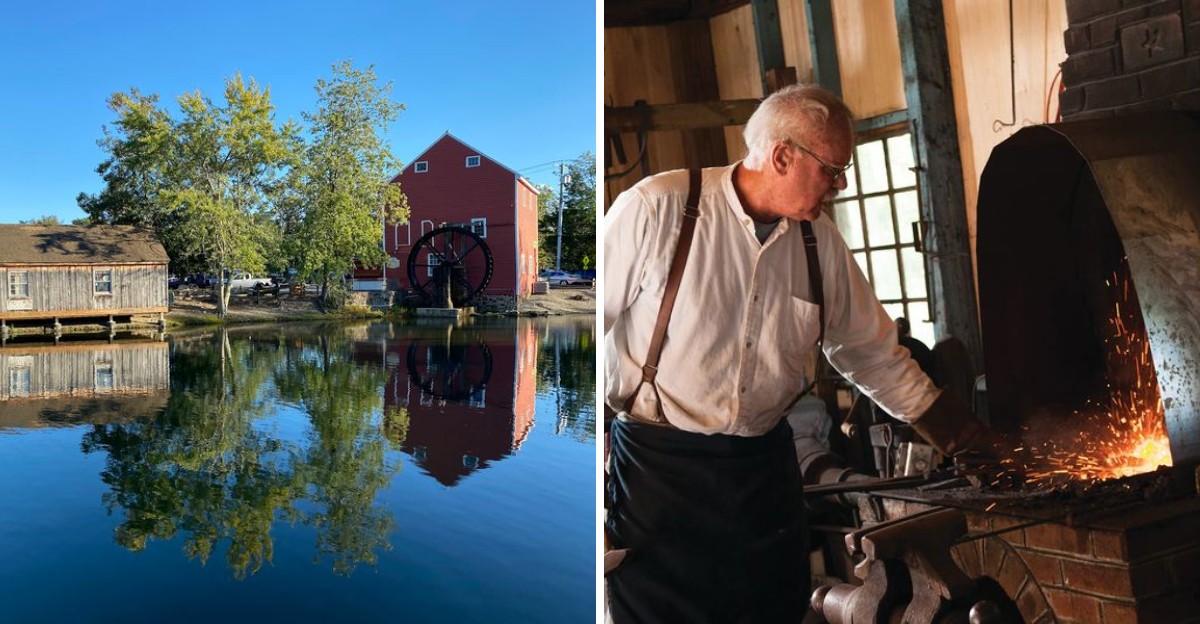
A hundred years can disappear faster than you expect in New Jersey.
One turn off a busy road can lead to a village of weathered buildings, working farms, old mills, and shops that seem untouched by the rush outside.
Some places preserve entire streetscapes, while others keep history alive through demonstrations, historic homes, or traditions that never really stopped.
The appeal is not just in seeing what survives, but in how different the pace feels once you arrive.
Wooden floors creak. Gravel paths replace parking lots.
Old tools, handmade goods, and quiet corners make modern life feel very far away.
These places offer that rare shift in atmosphere, giving visitors a chance to spend a few hours somewhere that feels convincingly removed from the present without leaving the state.
1. The Hermitage, Ho-Ho-Kus
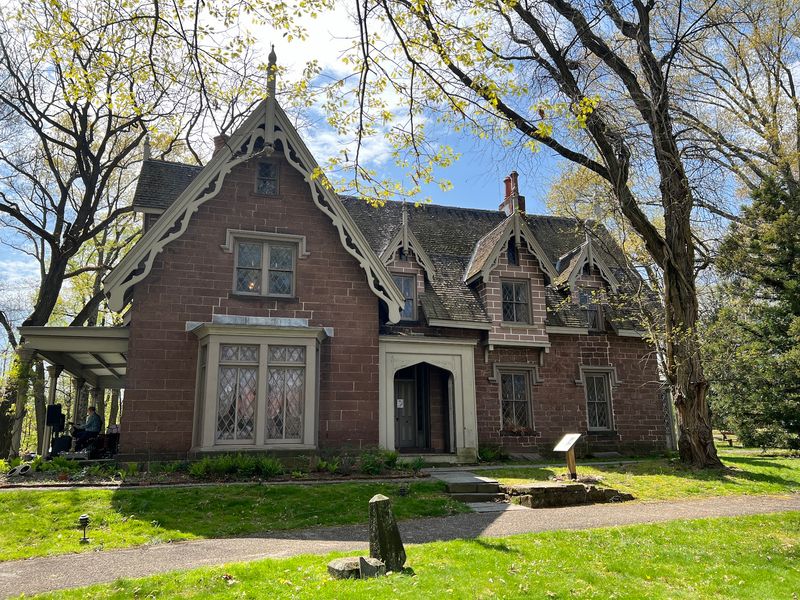
Pointed gables, lacy woodwork, and windows shaped like church arches greet you at The Hermitage, and honestly the whole house looks like something sketched out of a storybook. Underneath that dramatic exterior sits something older.
The original dwelling here went up in the 1700s, and during the Revolutionary War the property hosted figures including George Washington and Aaron Burr. Between 1847 and 1848, the Rosencrantz family reshaped the building into the striking Gothic Revival mansion visitors see now.
Inside, the restored rooms reflect how the family lived in the second half of the 19th century, right down to the furnishings. A family member remained in residence until 1970, which is part of why so much survived intact rather than being stripped and scattered.
Today it holds National Historic Landmark status and operates as a museum. Give yourself time to walk the grounds before heading indoors, since the exterior details reward a slow lap.
Photographers tend to linger near the porch trim, where the shadows do interesting things late in the day. It is a small site, easy to pair with lunch nearby.
Address: The Hermitage, 335 N Franklin Turnpike, Ho-Ho-Kus, NJ 07423
2. Ringwood Manor, Ringwood
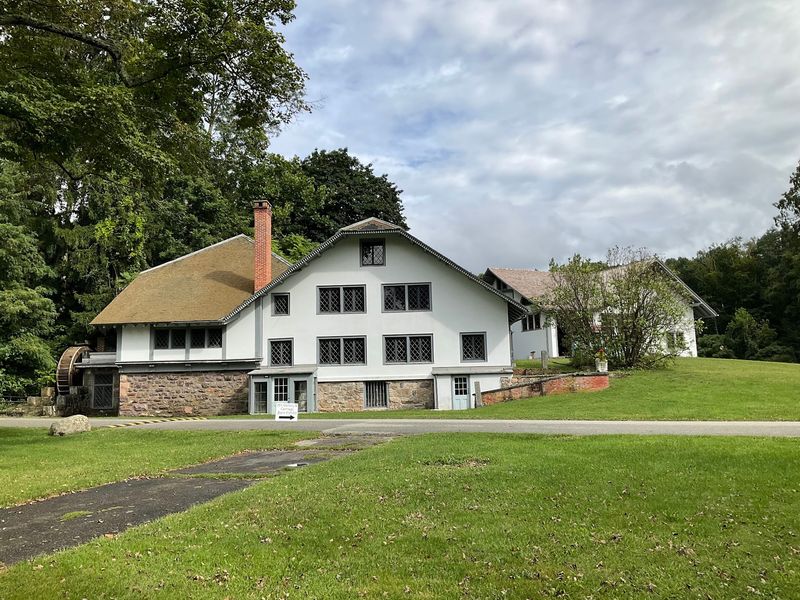
Fifty-one rooms. That number stuck with me when I first read about Ringwood Manor, because the house does not look like it is trying to show off from a distance.
Then you get closer and notice how it rambles, one addition bumping into the next. The oldest section dates to around 1810 in a restrained Federal style, with major additions arriving in 1864, 1875, 1900, and 1910, layering Victorian tastes on top of each other.
This corner of New Jersey drew ironmasters for over two centuries thanks to rich magnetite deposits, making the area a major iron supplier from the mid-18th century onward. The Cooper and Hewitt families later lived here in real Gilded Age comfort, and their eclectic furnishings and collections still fill the interior.
Outside, 582 acres hold gardens, scattered sculptures, artifacts, and old structures worth tracking down on foot. The estate was donated to the state in 1938 and now serves as both museum and state park.
Bring decent shoes, because the grounds deserve more than a quick loop.
Address: Ringwood Manor, 1304 Sloatsburg Rd, Ringwood, NJ 07456
3. Waterloo Village Historic Site, Stanhope
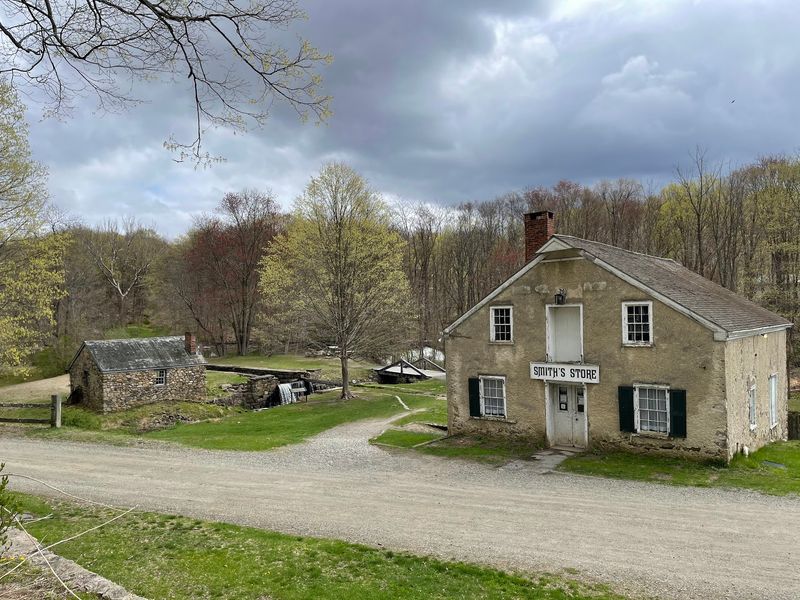
Canal towns have a particular kind of quiet, and Waterloo Village Historic Site holds onto it well. The old Morris Canal runs right through, and the lock still sits there for anyone curious about how boats once climbed hills.
Before the canal era, the settlement made its living from iron, with a forge going as early as 1761. Then the Morris Canal operated from 1831 to 1924, and that stretch of time shaped nearly everything here, bringing workers, cargo, and steady jobs to a rural pocket of the northwest.
Twenty-two restored buildings remain, including homesteads, a general store, working mills, and a church from the 1850s. The blacksmith shop is active, so on the right day you will hear hammering before you see it.
Colonial and Victorian architecture sit side by side, which sounds mismatched but somehow works. Plan a full afternoon and follow the towpath at least partway.
Kids tend to gravitate toward the lock and the water, so keep an eye on wanderers.
Address: Waterloo Village Historic Site, 526 Waterloo Rd, Stanhope, NJ 07874
4. Red Mill Museum Village, Clinton
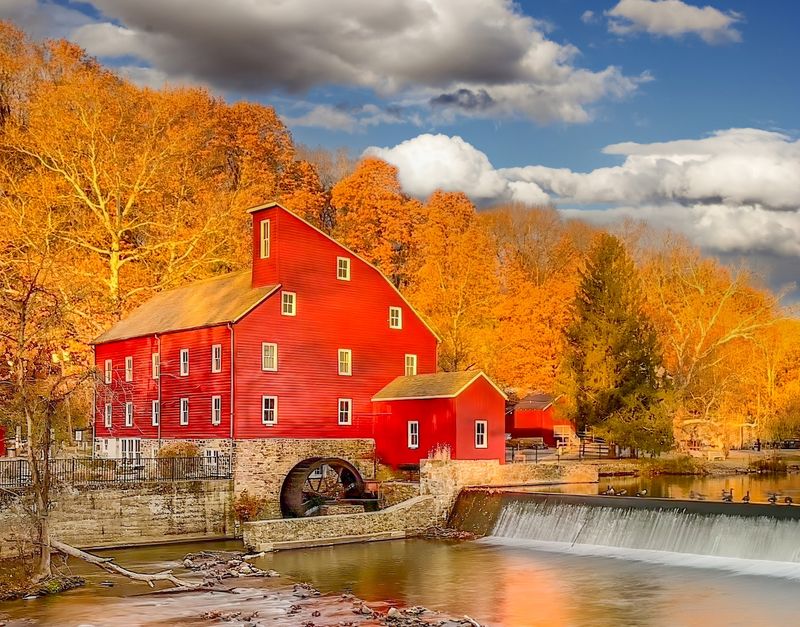
You have probably seen this building before without knowing where it was. The bright red gristmill at Red Mill Museum Village, reflected in the Raritan River with a low waterfall churning beside it, is one of the most photographed structures in the state.
Its earliest section goes back to around 1810, making it roughly two centuries old and still commanding the riverbank. Behind the mill, the complex spreads out into a small village of restored buildings that tell a broader story than milling alone.
A 19th-century schoolhouse sits among them, along with a working blacksmith shop, the Miller’s House, a log cabin, and several quarry structures from the limestone operation that once ran here. Inside, collections of artifacts, photographs, and documents trace how textiles and farming shaped the local economy.
Downtown Clinton is steps away, which makes this an easy half-day outing with somewhere to eat afterward. Cross the bridge for the classic view of the mill.
Go early if you want that shot without other visitors in frame.
Address: Red Mill Museum Village, 56 Main St, Clinton, NJ 08809
5. East Jersey Old Town Village, Piscataway
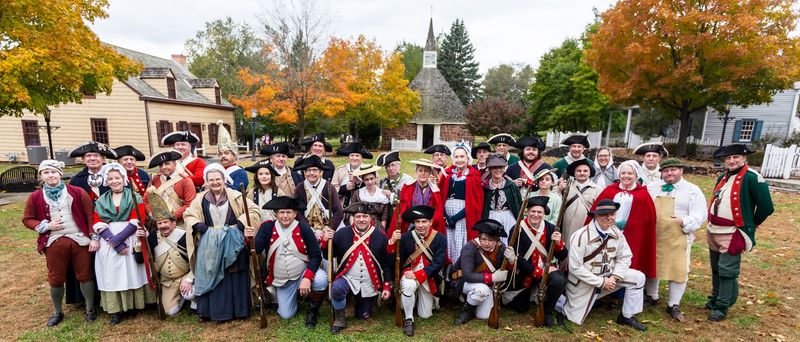
Here is something I did not expect from a spot sitting inside a busy county park. East Jersey Old Town Village gathers authentic 18th and 19th-century buildings that were carefully moved from elsewhere and rebuilt in Johnson Park, creating an open-air museum out of rescued architecture.
What you get is a snapshot of everyday Raritan Valley building styles, the kind farmers and merchants actually used rather than grand estates. The Indian Queen Tavern anchors the collection, joined by the Farley Blacksmith Shop, the Williamson Wheelwright Shop, and the Smalleytown Schoolhouse.
A replica of the Three-Mile Run Church stands nearby, along with homes once belonging to early settlers. Living historians frequently work on site, demonstrating blacksmithing, woodworking, and weaving with period methods.
Watching someone shape iron by hand does more for understanding old labor than any plaque could. The scale here feels manageable, which makes it good for families with shorter attention spans.
Check the schedule before driving over, since demonstration days vary. The surrounding park has plenty of room for a picnic afterward.
Address: East Jersey Old Town Village, 1050 River Rd, Piscataway, NJ 08854
6. Historic Walnford, Allentown
Chickens run the place. Not officially, but the free-range birds at Historic Walnford wander wherever they please, and they add a soundtrack no museum could stage.
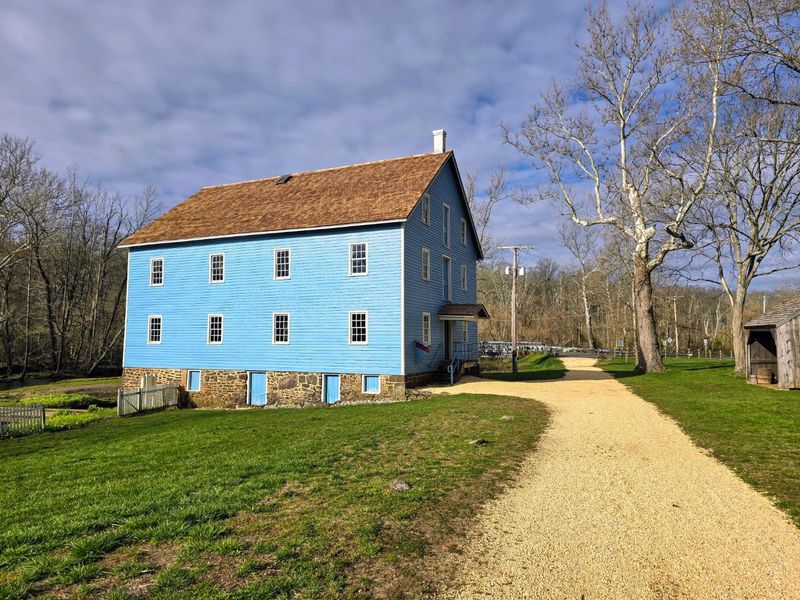
The estate preserves an 18th-century industrial village along Crosswicks Creek, centered on the Waln family house built in 1773. Just beyond it stands a 19th-century gristmill where the waterwheel still turns, and watching that heavy wheel move makes the whole idea of water power click.
Farm buildings fill out the property, including an 1879 carriage house crowned with a running stag weathervane, plus a corn crib, barn, wagon house, well house, caretaker’s cottage, tool house, smokehouse, and dam. Over two centuries of social, technological, and environmental change are written into this landscape.
Trails connect the site to the wider park, so you can stretch a short visit into a real walk. The mood leans peaceful rather than bustling.
Come on a weekday morning if you want the grounds mostly to yourself. Bring a blanket, because the lawns practically invite sitting.
Address: Historic Walnford, 62 Walnford Rd, Allentown, NJ 08501
7. The Historic Village at Allaire, Wall Township
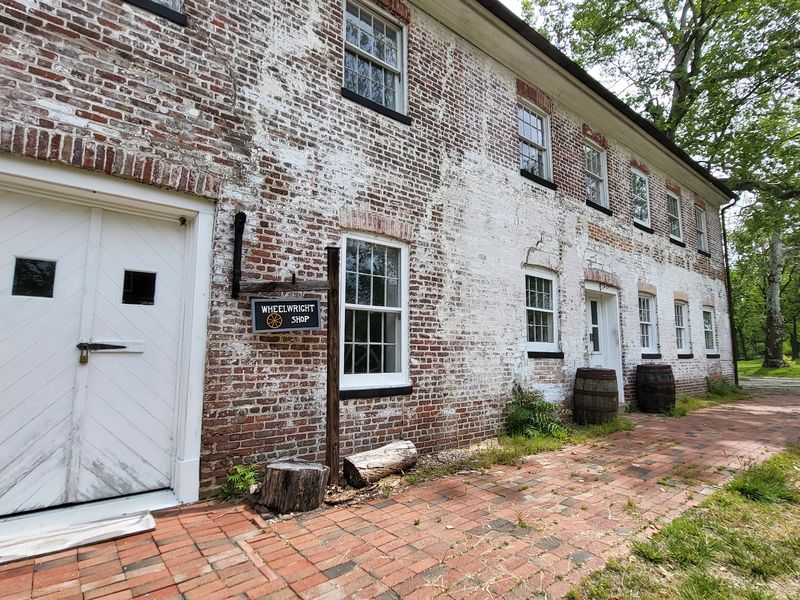
Company towns rarely survive, which makes The Historic Village at Allaire genuinely unusual. Thirteen original structures still stand on their authentic foundations inside Allaire State Park, no relocations involved.
Once known as Howell Works, the settlement was purchased and built up by James P. Allaire in 1822 into a self-sufficient iron-producing community.
Roughly 400 people lived and worked here at its height, and the surviving buildings sketch out their whole world.
A carpentry shop, blacksmith shop, bakery, boarding house, blast furnace, finishing mills, school, church, general store with post office, and workers’ homes all remain. Interpretation focuses on 1836, a prosperous year, with historical interpreters using period tools and equipment to bring that specific moment forward.
Fixing the story to one year is a smart choice, because it keeps everything consistent instead of blurring decades together. The surrounding state park adds trails and picnic space if you want to make a longer day of it.
Weekends usually bring the most activity in the shops. Wear something you do not mind getting dusty.
Address: The Historic Village at Allaire, 4263 Atlantic Ave, Wall Township, NJ 07727
8. Whitesbog Historic Village, Browns Mills
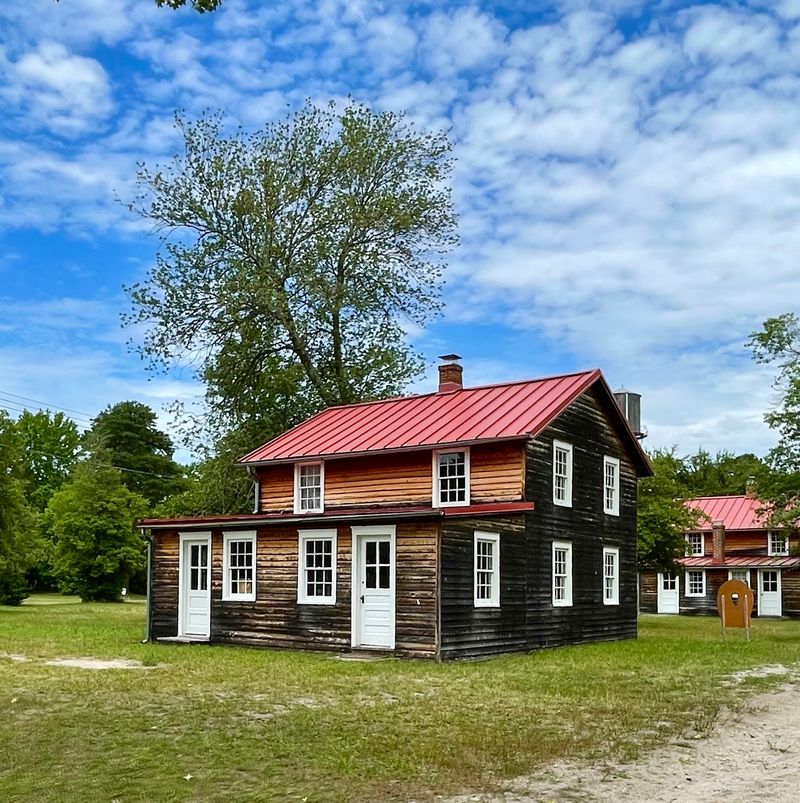
Blueberries. If you have ever eaten a cultivated one, the trail leads back to Whitesbog Historic Village, where the first cultivated blueberry was successfully developed in 1916.
Founded in 1857 deep in the Pine Barrens, the settlement grew into a company town and became the largest cranberry farm in the state during the early 1900s. Workers lived on site, and their modest buildings still line the sandy roads.
Around them stretch 3,000 acres of preserved cranberry bogs, blueberry fields, reservoirs, and pine forest, all of it flat and open in a way that feels almost coastal. The sugar sand roads crunch underfoot and lead in every direction.
Grounds stay open year round, while the village buildings open for scheduled events and pre-arranged tours. Autumn is a favorite window, when the bogs get flooded and turn deep red.
Cell service can be patchy out here, so download directions ahead. Bring water, since shade is inconsistent along the open bog edges.
Address: Whitesbog Historic Village, 120 W Whites Bogs Rd #34, Browns Mills, NJ 08015
9. Historic Smithville Mansion, Eastampton Township
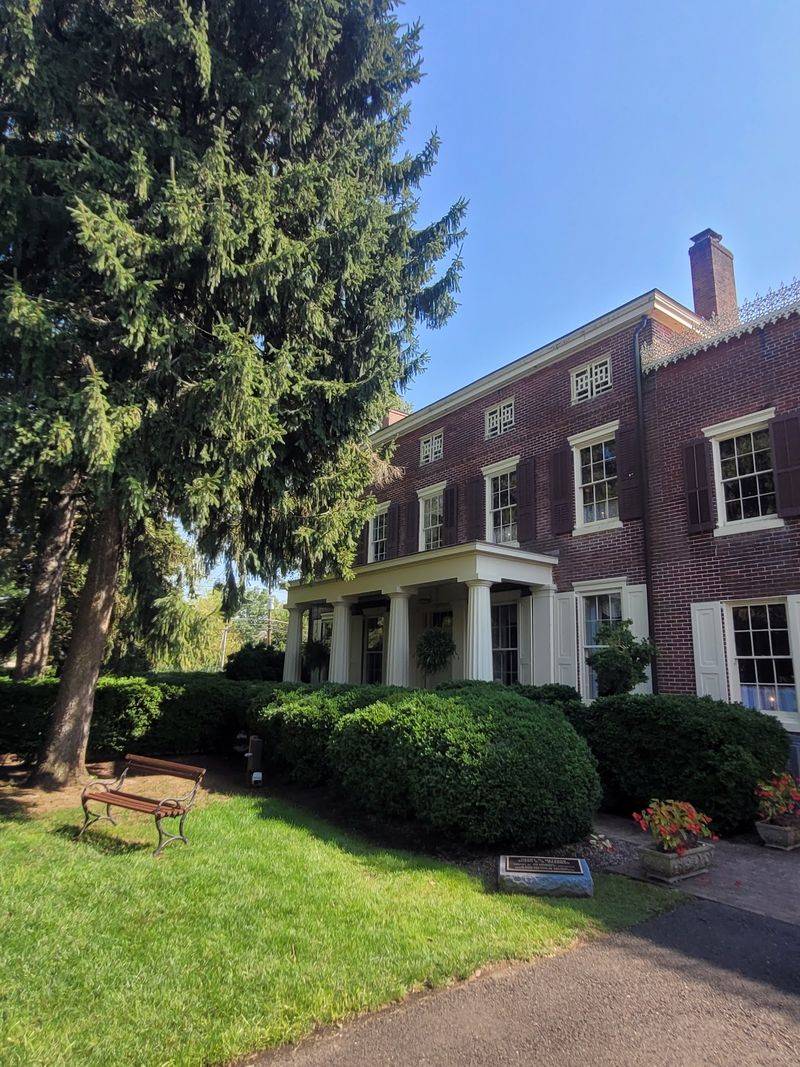
Bicycles and a mansion make an odd pairing, yet that is the story at Historic Smithville Mansion. The Greek Revival house dates to roughly 1840 and anchors an unusually intact Victorian industrial-era village inside Historic Smithville Park.
The community grew out of enterprise rather than farming. A calico printing factory opened in 1831, and worker houses went up through 1849, giving the place its distinct company-town shape.
In 1865 the property changed hands and the area was renamed Smithville, with a woodworking machine company relocated here. That firm, the H.B.
Smith Machine Company, later became known for manufacturing some of America’s first bicycles, which is a detail I still find delightfully unexpected.
Architecture across the park spans four centuries, and the site has seen continuous occupation since around 1750. Trails and boardwalks wind through the surrounding woods and along the water, making it easy to combine history with a proper walk.
The mansion looks especially striking when the columns catch low light. Check tour availability, as interior access is limited to certain times.
Address: Historic Smithville Mansion, 803 Smithville Rd, Eastampton Township, NJ 08060
10. Historic Smithville, Smithville
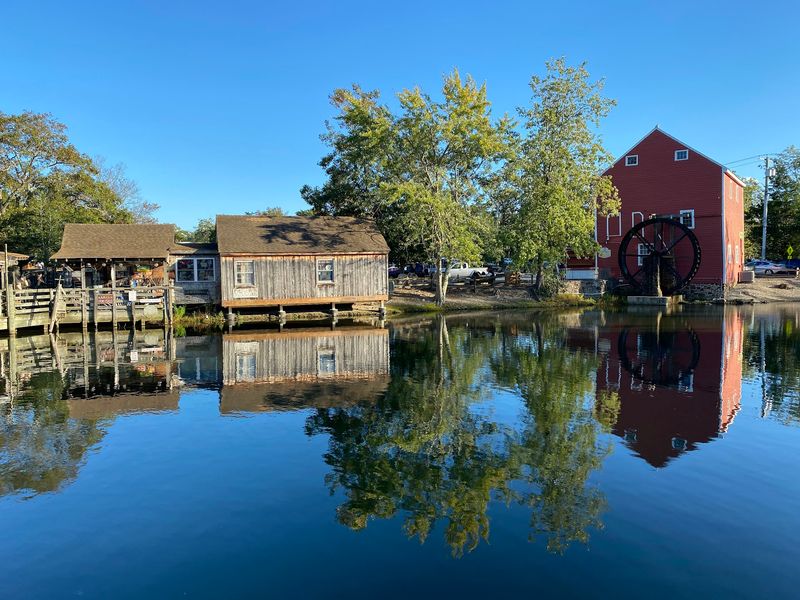
Footbridges, cobblestones, and shutters painted in colors nobody uses anymore. Historic Smithville leans fully into its old-village character, and the effect is closer to a storybook than a museum.
Things started small, with a one-room stagecoach stop in the 1780s serving travelers along the route. The Smithville Inn still stands at the village entrance as its most recognizable landmark.
More than 50 small shops now occupy restored buildings from the 1700s and 1800s, many of which were relocated here from other parts of New Jersey to build out the colonial-era atmosphere. Wandering between them takes longer than expected because the alleys twist and double back.
The lake and bridges soften everything, especially in the early evening when lamps flick on. Holiday season transforms the whole village with lights, and it gets busy, so weekday visits are gentler.
Shopping is part of the draw, but so is simply strolling with no plan at all. Parking is generous, which is not always true at historic sites.
Comfortable shoes help more than you would guess on those stones.
Address: Historic Smithville, 615 E Moss Mill Rd, Smithville, NJ 08205
11. Batsto Village, Hammonton
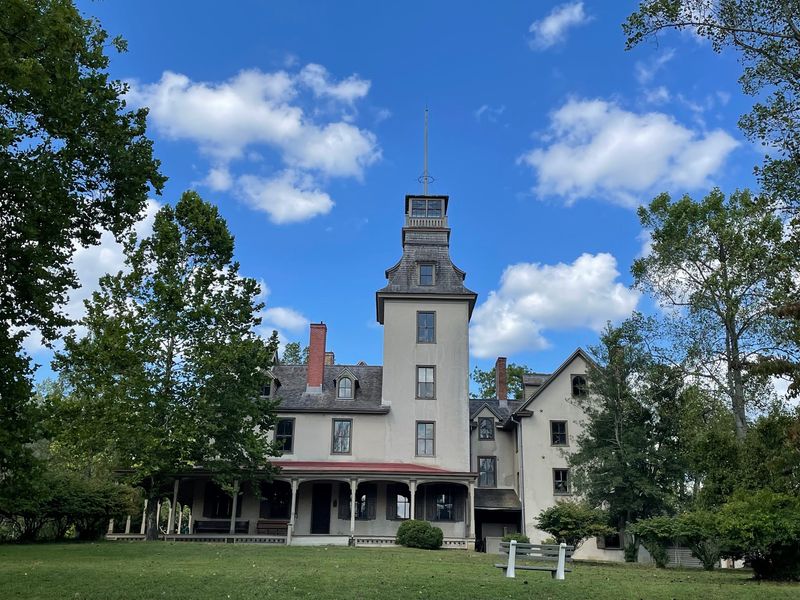
Cannonballs came from here. Batsto Village supplied the Continental Army with wartime goods including cannons and cannonballs, and that fact reframes the peaceful scene you find today.
Established in 1766, the settlement first made iron from local bog ore, then shifted into glassmaking as industries changed. The village now looks much as it did in the late 19th century, with buildings restored rather than reinvented.
More than 30 historic structures fill the site, among them a gristmill, general store, blacksmith shop, barn complex, and rows of workers’ houses. Highlights include a post office operating since 1852, a water-powered sawmill dating to 1882, and a 36-room Victorian mansion with a tower that dominates the skyline.
Set inside the Pinelands, the surroundings matter as much as the buildings, with lake, sand roads, and dense pine all around. You could easily spend three hours here without repeating a path.
The mansion tour is worth timing your arrival around. Bring bug spray in warmer months, because the woods are close.
Address: Batsto Village, 31 Batsto Rd, Hammonton, NJ 08037
12. Historic Cold Spring Village, Cape May
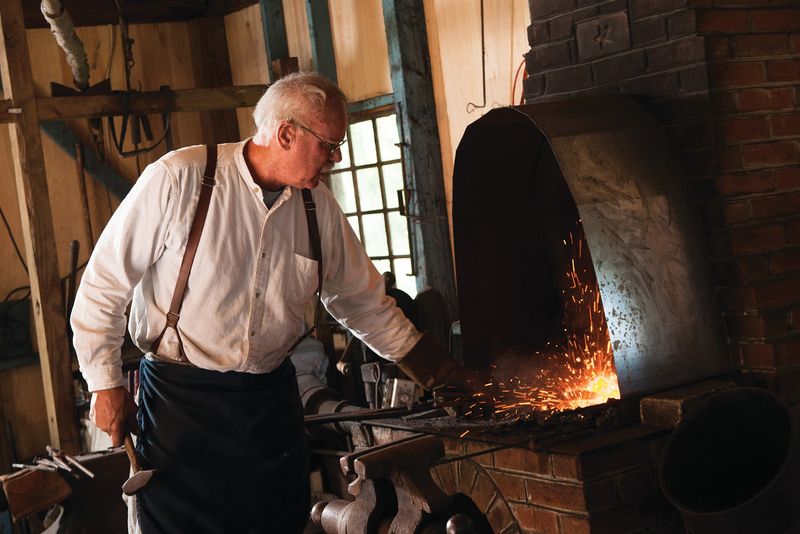
Down near the southern tip of the state sits the largest open-air living history museum around, and Historic Cold Spring Village does not do things halfway. Twenty-seven preserved and relocated buildings spread across 30 acres, joined by careful reconstructions.
The interpretation centers on the 1800s, sometimes called the age of homespun, when most household goods came from hands rather than factories. Interpreters in period clothing demonstrate blacksmithing, printing, woodworking, basket weaving, and even bookbinding.
Bookbinding might be the sleeper attraction, since watching pages get stitched into a cover is oddly mesmerizing. A historic schoolhouse sits among the buildings, along with a working farm growing heritage crops and animals grazing nearby.
Together it paints a full picture of rural life in southern New Jersey rather than isolated snapshots. Being minutes from Cape May makes this easy to slot into a shore trip, and it gives beach days a useful counterweight.
Shade is decent but hats still help in summer. Kids who resist museums usually warm up here fast, mostly because of the animals.
Address: Historic Cold Spring Village, 735 Seashore Rd, Cape May, NJ 08204
