I’ve always been drawn to places where time seems to have stopped mid-sentence, and New Jersey has more than its fair share of these haunting pauses.
From crumbling castles in the woods to abandoned theme parks where wild animals once roamed, the Garden State is scattered with ruins that make you wonder what stories these silent stones could tell.
I’ve explored many of these forgotten corners myself, and each one feels like stepping into a different chapter of history that nobody bothered to finish.
These aren’t movie sets or Halloween decorations, they’re real places you can visit right now, and they’re absolutely wild.
Van Slyke Castle Ruins
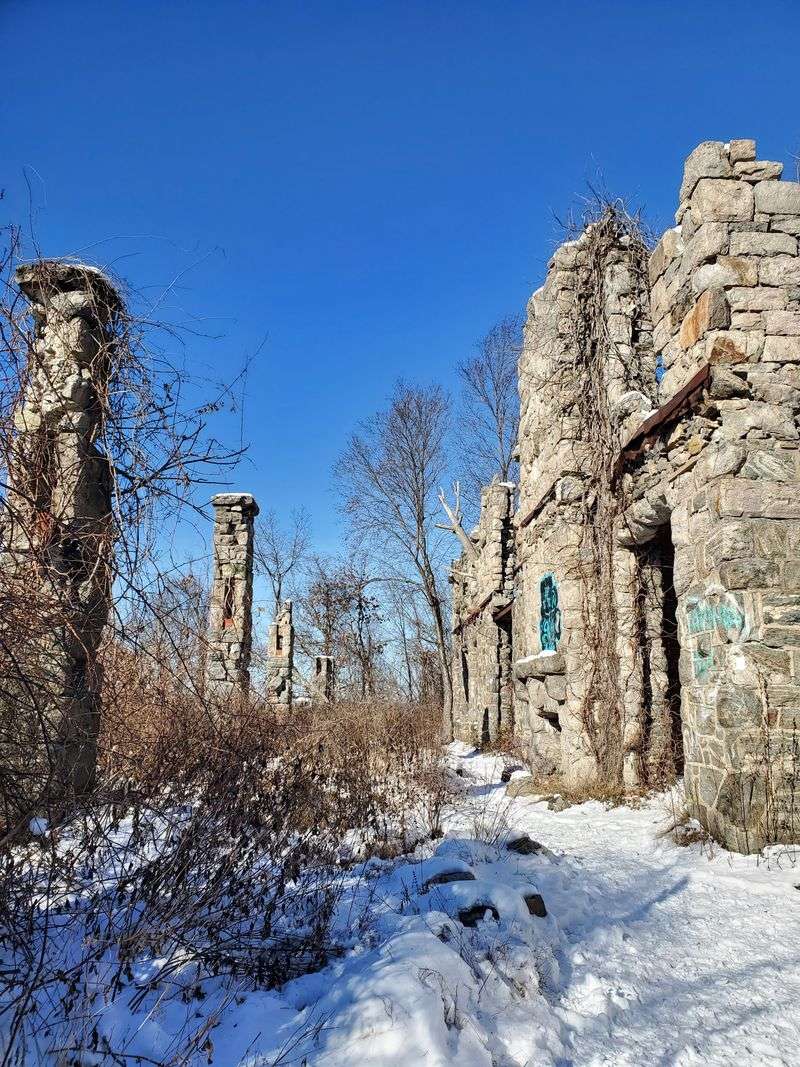
Hiking through Ramapo Mountain State Forest, I wasn’t expecting to stumble upon what looks like a transplanted European castle ruin. Van Slyke Castle was built in the early 1900s by stockbroker Warren Van Slyke, who apparently wanted his family to live like royalty in the New Jersey woods.
The 15-room mansion must have been spectacular in its day, with massive stone walls and grand architecture that rivaled anything in the city.
A devastating fire in 1959 reduced the entire structure to the skeleton you see today, leaving only the towering stone walls and chimneys standing. What’s remarkable is how the ruins have taken on a life of their own, becoming more famous as a ruin than they ever were as a functioning home.
The thick stone walls still stand impressively tall, creating rooms open to the sky where wealthy families once dined and entertained guests.
When I visited at Skyline Drive in Oakland, NJ 07436, the atmosphere felt almost enchanted, especially with sunlight filtering through the empty window frames. Local legends have attached themselves to this place over the decades, with some claiming to hear phantom footsteps or see mysterious lights.
Whether you believe in ghosts or not, there’s something undeniably eerie about walking through what was once someone’s dream home, now reclaimed by forest and time.
The hike to reach the castle isn’t too difficult, making it accessible for most visitors who want to experience this slice of forgotten grandeur. I recommend bringing a camera because the contrast between the solid stone architecture and the wild vegetation growing through it creates stunning photo opportunities.
It’s a perfect example of how nature eventually wins every battle against human construction, no matter how solid we think we’ve built.
Brooksbrae Brick Factory
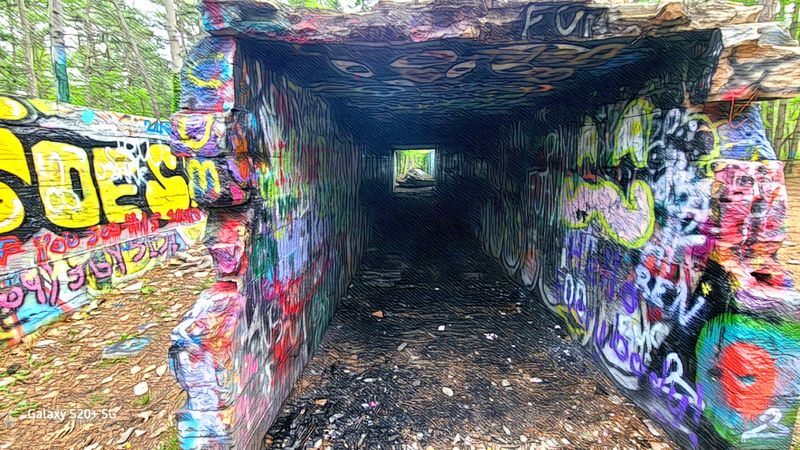
Deep in the Pine Barrens along Pasadena Road in Manchester Township, NJ 08759, stands one of the most unexpected art galleries I’ve ever visited. Brooksbrae Brick Factory operated only briefly in the early 1900s, producing terracotta products before economic realities shut it down.
What remains are these absolutely massive brick stanchions and tunnel-like structures that look like ancient Roman ruins dropped into the middle of a New Jersey forest.
The factory’s short life means it never got the chance to leave much of a historical footprint in the traditional sense. Instead, it’s become something entirely different: a constantly evolving outdoor canvas for graffiti artists.
Every time I visit, about half a mile from the road, the artwork has changed, with new pieces covering old ones in an endless cycle of creation.
Some of the graffiti is genuinely impressive, with talented artists using the curved brick surfaces to create murals that interact with the architecture itself. I’ve seen everything from elaborate portraits to abstract designs that seem to make the old brick come alive with color.
The contrast between the century-old industrial brick and the vibrant modern street art creates this fascinating tension between past and present.
Walking through the tunnels feels like entering a secret world that exists outside normal time and rules. The brick structures are surprisingly well-preserved considering their age and abandonment, testament to the quality of craftsmanship even in utilitarian industrial buildings.
It’s become a pilgrimage site for both urban explorers and artists, creating an informal community around these forgotten ruins that gives them new purpose and meaning in ways the original builders never could have imagined.
Cliffdale Manor Ruins
Perched dramatically on the Palisades cliffs in Alpine, NJ 07620, Cliffdale Manor’s ruins tell a story about wealth, power, and how even the grandest estates can disappear. This was once part of “Millionaire’s Row,” where New York’s wealthiest families built summer estates with jaw-dropping views of the Hudson River.
The location alone would be worth millions today, but the mansion itself is long gone, demolished by none other than John D. Rockefeller Jr. in the 1930s.
Rockefeller bought up many of these estates to create what would become Palisades Interstate Park, essentially saving the cliffs from industrial quarrying. Cliffdale was one of many mansions he purchased and demolished, though interestingly, he left some ruins standing.
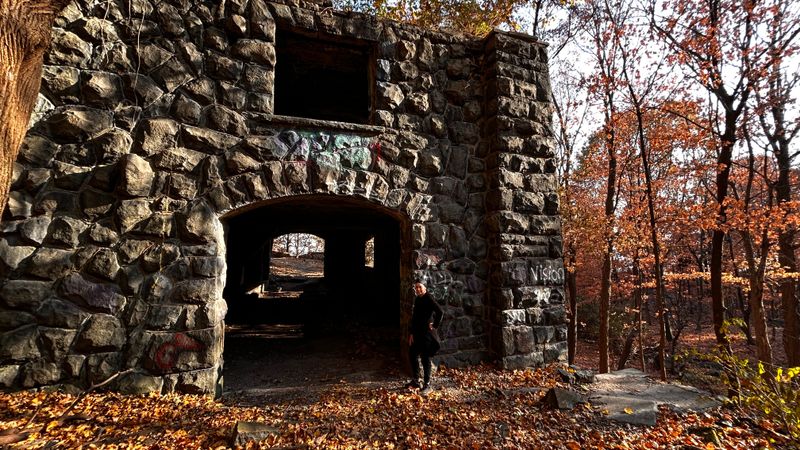
The two-story stone foundation remains remarkably intact, along with the old carriage house, creating this haunting footprint of luxury from a bygone era.
Standing among these ruins, I found myself imagining the parties and gatherings that once happened here, with guests arriving in horse-drawn carriages to enjoy spectacular sunset views. The stone foundation shows the mansion’s impressive footprint, revealing multiple rooms and what must have been grand entertaining spaces.
The craftsmanship in the remaining stonework is beautiful, with carefully fitted blocks that have withstood decades of weather and neglect.
What strikes me most is how Rockefeller’s act of destruction actually became an act of preservation in a different way. By clearing the mansions and creating parkland, he saved the Palisades themselves from being blasted away for building materials.
Now visitors can explore these romantic ruins while enjoying the natural beauty that might have been lost forever, making Cliffdale a symbol of how priorities shifted from private luxury to public conservation.
Feltville Deserted Village
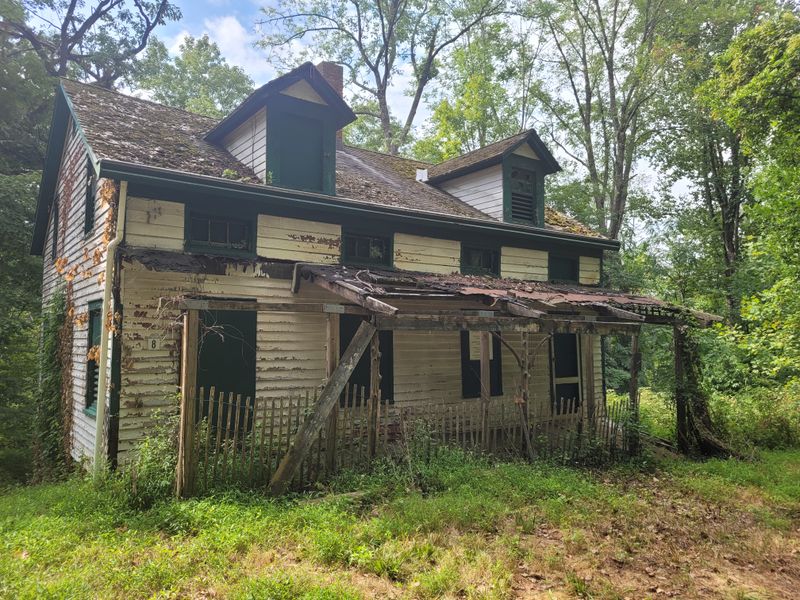
Tucked away at 13 Glenside Park in Berkeley Heights, NJ 07922, Feltville is hands-down one of the strangest places I’ve explored in New Jersey. This isn’t just a ruin, it’s an entire village frozen in time, with buildings standing in what preservation experts call “arrested decay.” The settlement has lived multiple lives, first as a printing village in the 1840s founded by David Felt, then reinvented as a summer resort called Glenside Park in the late 1800s.
Walking through the village feels genuinely eerie because the buildings aren’t completely collapsed, they’re just… waiting. Several structures still stand with walls and roofs mostly intact, though you can see nature slowly winning the battle through broken windows and vegetation creeping inside.
The old graveyard adds to the unsettling atmosphere, with weathered headstones marking residents from the village’s various incarnations.
What makes Feltville particularly fascinating is how it represents the boom-and-bust cycles that affected so many American communities. When David Felt’s printing business thrived, the village thrived with workers and their families creating a self-contained community.
When he left and the business collapsed, the entire village emptied out almost overnight, only to be briefly revived as a Victorian-era resort before being abandoned again.
The Union County Department of Parks has maintained the site in its current state, neither fully restoring nor allowing complete decay. This approach lets visitors experience the village as a genuine historical artifact rather than a sanitized recreation.
I spent hours photographing the buildings, each one telling its own story through peeling paint, sagging porches, and empty doorways that once welcomed bustling families and summer vacationers.
Jungle Habitat
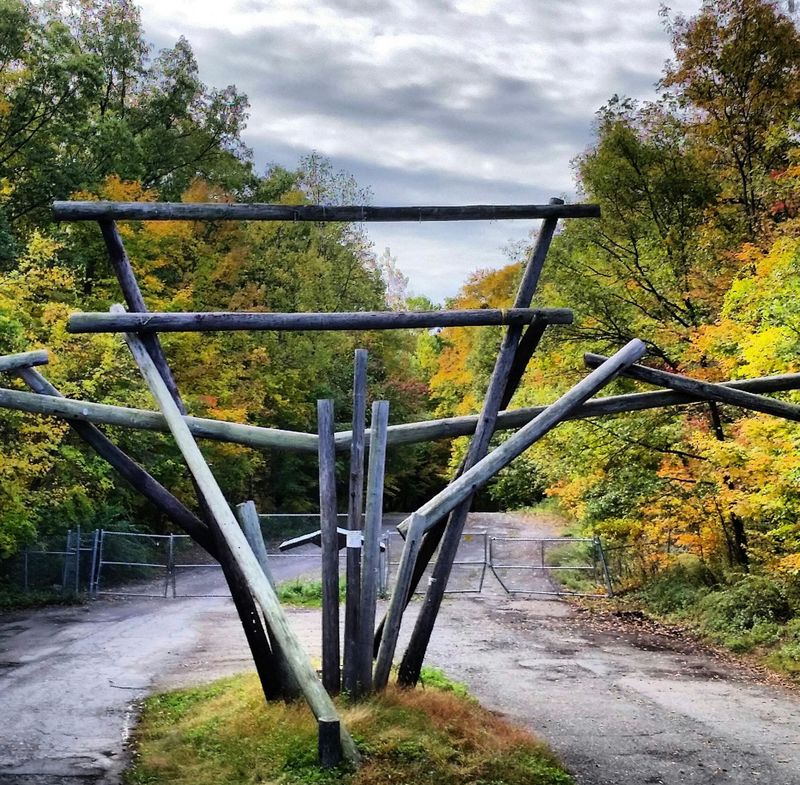
At 109 Airport Road in West Milford, NJ 07480, sits the most bizarre abandoned attraction I’ve ever encountered: a Warner Bros. safari theme park from the 1970s that closed after animals escaped and attacked visitors. Jungle Habitat opened in 1972 with grand ambitions of bringing African safari experiences to New Jersey families, allowing them to drive through exhibits with free-roaming animals.
The concept was exciting but poorly planned, leading to incidents that would eventually doom the park.
Stories from Jungle Habitat’s brief operating years read like cautionary tales about what happens when wild animals meet suburban New Jersey. Elephants wandered into nearby neighborhoods, baboons attacked cars, and visitors reported genuinely frightening encounters that made national news.
The park limped along until 1976 before closing permanently, leaving behind all the infrastructure of a theme park slowly being reclaimed by the very wilderness it tried to contain.
Today, you can still explore the crumbling ticket booths that once welcomed excited families, now covered in graffiti and missing most of their walls. The gatehouses stand like forgotten sentries, and if you know where to look, you can find the overgrown animal enclosures where lions, tigers, and other exotic creatures once lived.
It’s surreal to walk through what was designed as entertainment and see it transformed into something that feels more like a post-apocalyptic movie set.
The site has become popular with urban explorers, though technically it’s private property now used as part of a park system. I found the experience both fascinating and melancholy, imagining the optimism of opening day contrasted with the reality of dangerous animals loose in suburban New Jersey, creating a failed experiment that’s now a monument to ambitious ideas gone wrong.
Paulinskill Viaduct
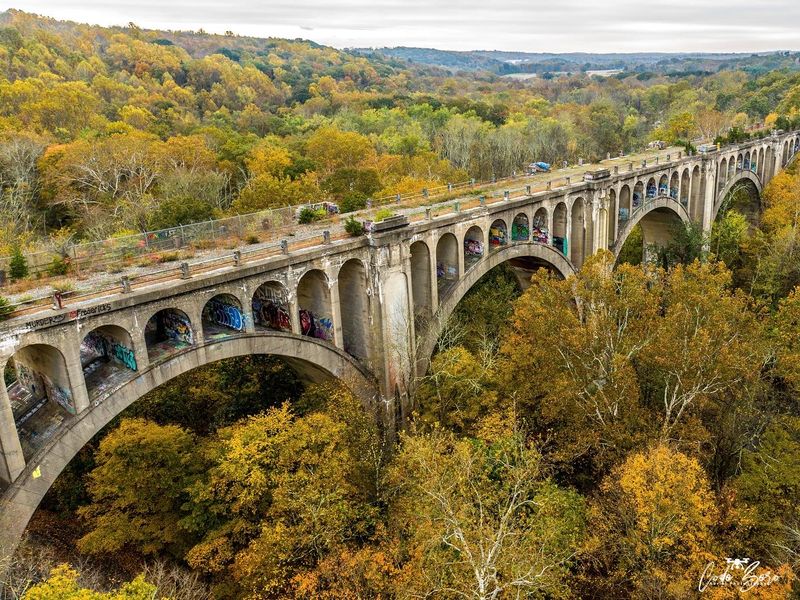
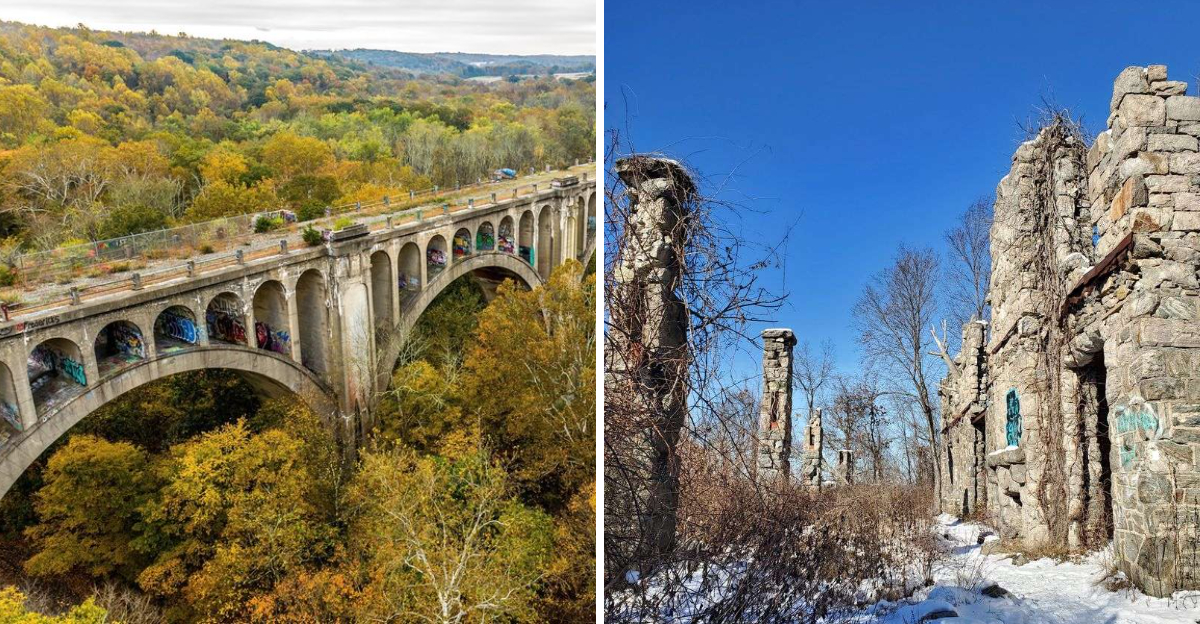
Standing beneath the Paulinskill Viaduct on Station Road in Columbia, NJ 07832, I felt dwarfed by the sheer scale of this engineering marvel. When it was completed in 1910, this was the largest reinforced concrete structure in the entire world, a title that speaks to the ambition and innovation of early 20th-century railroad engineering.
The viaduct stretches 1,100 feet long and rises 115 feet above the Paulins Kill valley, creating what locals call the “Bridge of Arches.”
The Delaware, Lackawanna and Western Railroad built this massive structure to carry trains across the valley, and it served that purpose faithfully until rail traffic declined and the line was abandoned in 1979. What’s remarkable is how well the concrete has held up over more than a century, with the seven massive arches still standing strong despite decades of weather, vandalism, and neglect.
Engineers who study it today remain impressed by the construction quality and innovative techniques used.
Walking along the viaduct has become a popular activity for hikers and urban explorers, though I should mention it can be dangerous and isn’t officially sanctioned. The views from the top are spectacular, offering panoramas of the Paulins Kill valley that few people get to experience.
The bridge has taken on a romantic, almost mythical quality in local culture, appearing in photographs and paintings that celebrate its graceful arches.
Preservation groups have worked to maintain the viaduct and incorporate it into trail systems, recognizing its historical and architectural significance. It stands as a monument to an era when railroads were expanding rapidly across America, built with an optimism about the future of rail travel that didn’t quite pan out as expected, leaving us with this beautiful, massive, and utterly useless concrete giant.
Weymouth Furnace
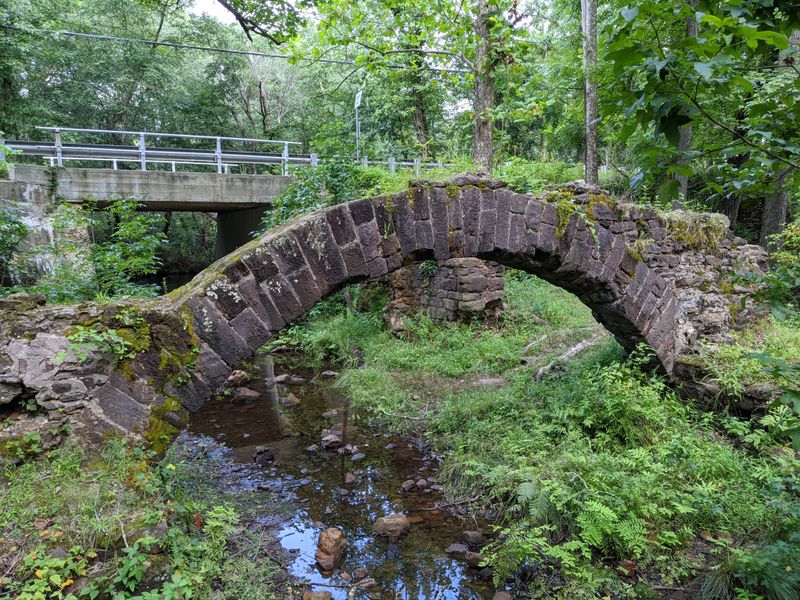
Finding Weymouth Furnace at 2050 Weymouth Road in Mays Landing, NJ 08330, feels like discovering a secret from America’s industrial infancy. This ironworks was once a booming operation that produced cannons for the War of 1812, playing a small but vital role in American military history.
The site represents the kind of early industrial enterprise that dotted the New Jersey landscape when water power and local bog iron made the state a manufacturing center.
What remains today is absolutely stunning from an architectural standpoint: grand stone arches that once supported the furnace operations and a towering chimney stack that rises dramatically from the forest floor. The forest has thoroughly reclaimed the site, with trees growing through and around the stone structures in ways that create this beautiful fusion of human construction and natural reclamation.
Moss and vines cover much of the stonework, softening the industrial edges into something almost romantic.
The craftsmanship visible in the remaining structures is impressive, with carefully fitted stones forming arches that have supported their own weight for over two centuries. I spent time examining the construction techniques, marveling at how workers with relatively simple tools created such enduring structures.
The chimney stack in particular draws your eye upward, standing like a monument to the iron industry that once drove South Jersey’s economy.
Visiting Weymouth Furnace requires a bit of exploration, as it’s not heavily marked or developed as a tourist site. This actually enhances the experience, making you feel like you’re discovering something forgotten rather than visiting a maintained attraction.
The site connects to the larger story of New Jersey’s Pine Barrens industries, where entrepreneurs exploited natural resources until they were exhausted, then moved on, leaving these beautiful ruins as their legacy.
Clinton Furnace
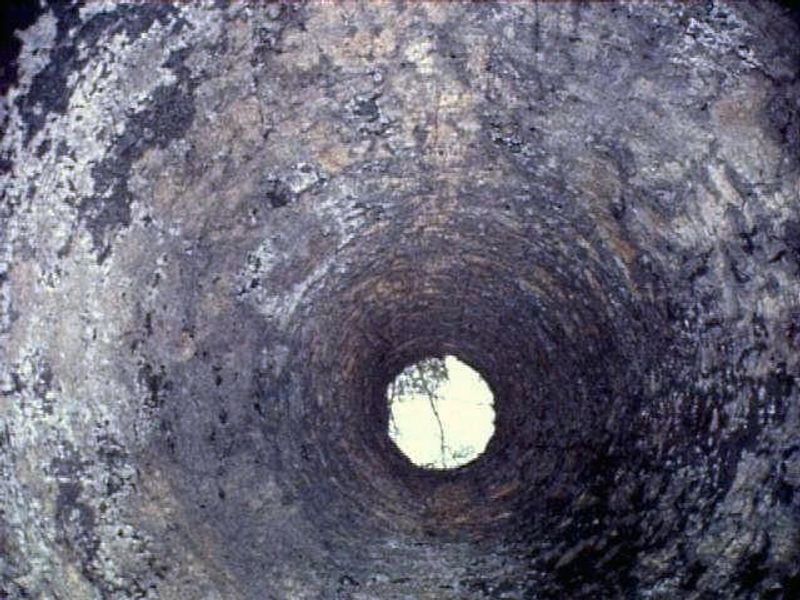
On the infamous Clinton Road in West Milford, NJ 07480, stands a structure so unusual that people have mistaken it for a Druidic temple or some kind of ancient ritual site. Clinton Furnace is actually an iron smelter built in 1826, but its distinctive conical stone shape gives it an almost mystical appearance that fits perfectly with Clinton Road’s reputation as one of New Jersey’s most haunted and mysterious locations.
The furnace provided iron for the Civil War effort, connecting this remote structure to one of America’s defining conflicts.
The conical design was actually quite practical for iron smelting, allowing heat to rise efficiently while workers fed ore, charcoal, and limestone through the top. But standing before it today, stripped of its industrial context and surrounded by dark woods, you can understand why people’s imaginations run wild.
The carefully stacked stones form a perfect cone about 30 feet tall, with an arched opening at the base where molten iron once flowed out.
Clinton Road itself has generated countless legends about ghosts, strange creatures, and paranormal activity, and the furnace often features in these stories. I visited on a foggy afternoon, and I’ll admit the atmosphere was genuinely spooky, with the ancient stone structure looming out of the mist like something from a horror movie.
The furnace’s age and mysterious appearance have made it a focal point for paranormal investigators and thrill-seekers exploring the area.
What’s historically significant is how this furnace represents the scattered iron industry that once dotted New Jersey’s northern forests. Small operations like this would smelt local bog iron into usable metal, supporting everything from local blacksmiths to major military contracts.
Now it stands alone and purposeless, a stone sentinel that has outlived its function by nearly two centuries.
Amatol Ghost Town
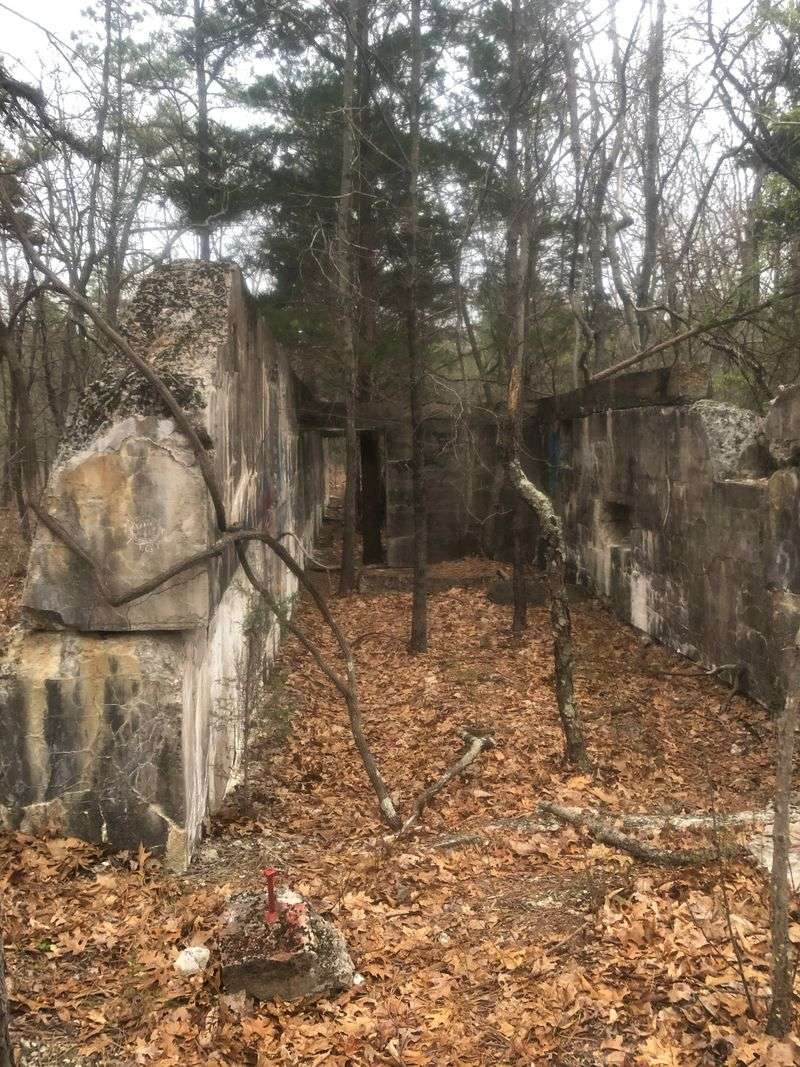
Scattered across Moss Mill Road and Weymouth Road in Hammonton, NJ 08037, Amatol Ghost Town represents one of the strangest boom-and-bust stories in New Jersey history. The entire town was constructed during World War I specifically to produce munitions, with factories, housing, and infrastructure built at breakneck speed to support the war effort.
At its peak, thousands of workers lived and worked here, creating explosives that would be shipped to European battlefields.
Then the war ended, and almost overnight, Amatol became obsolete. The munitions contracts dried up, workers left, and the town that had sprung up so quickly began its equally rapid decline into abandonment.
What makes Amatol particularly interesting is that entrepreneurs tried to repurpose it in the 1920s, even building a racetrack to attract visitors and give the area new life. That venture also failed, leaving behind layers of abandoned infrastructure from different eras.
Today, you can still find concrete foundations of the factory buildings sprawled across the landscape like archaeological remains from some lost civilization. The racetrack’s outline is visible if you know what to look for, though nature has mostly reclaimed it with vegetation.
Walking through the area, I kept finding unexpected concrete structures, pipes, and foundations emerging from the undergrowth, each one a piece of this compressed history.
The site isn’t heavily visited or well-marked, which means exploring it feels like genuine discovery rather than tourism. I found the experience thought-provoking, seeing how a town could be created and destroyed by forces completely outside local control, existing only as long as it served a specific purpose.
Amatol stands as a monument to the temporary nature of even substantial human settlements when the economic or political winds shift.
Batsto Village
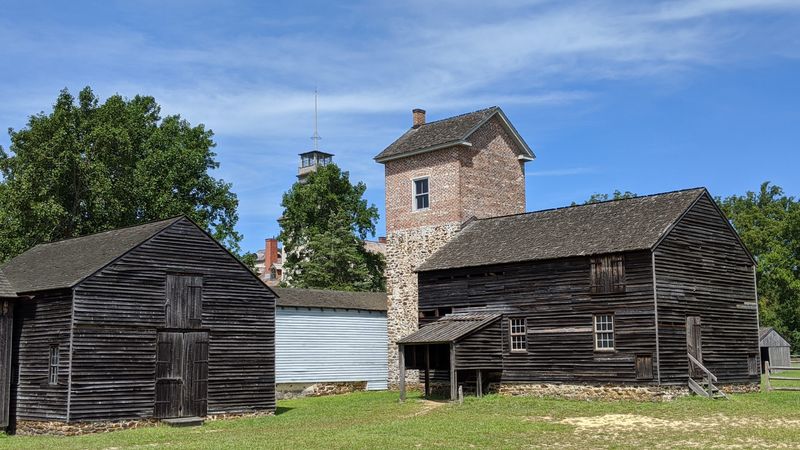
Batsto Village at 31 Batsto Road in Hammonton, NJ 08037, offers a unique perspective on ruins because it’s partially restored while other sections remain in their deteriorated state. The village was a center for bog iron production and glass-making from the 1700s through the 1800s, representing the kind of self-contained industrial community that once dotted the Pine Barrens.
While the main village buildings have been preserved as a historical site, the unrestored ruins scattered around the property offer a haunting counterpoint.
The restored sections show what life was like during Batsto’s operating years, with the mansion, general store, and worker housing giving visitors a sanitized glimpse into the past. But I found the unrestored ruins far more compelling, where you can see exactly how nature reclaims industrial sites when humans stop maintaining them.
Old furnace foundations, collapsed outbuildings, and rusting equipment slowly disappear under vegetation, showing the real process of decay and reclamation.
The bog iron industry that made Batsto prosperous depended on a renewable resource, the iron-rich deposits that formed in the acidic waters of the Pine Barrens. Workers would harvest this iron, smelt it in furnaces, and create everything from household items to military supplies.
When the industry became obsolete with the discovery of better iron sources elsewhere, Batsto declined, and only preservation efforts saved it from complete ruin.
Walking through both the restored and ruined sections creates this interesting dialogue between preservation and decay. The restored buildings show what we choose to remember and maintain, while the ruins show what happens when we don’t, or can’t, hold back time and nature.
It’s a more honest and complete picture of history than you get at fully restored sites, acknowledging that most of the past simply disappears rather than being carefully preserved for future generations to study and admire.
Dear Reader: This page may contain affiliate links which may earn a commission if you click through and make a purchase. Our independent journalism is not influenced by any advertiser or commercial initiative unless it is clearly marked as sponsored content. As travel products change, please be sure to reconfirm all details and stay up to date with current events to ensure a safe and successful trip.
