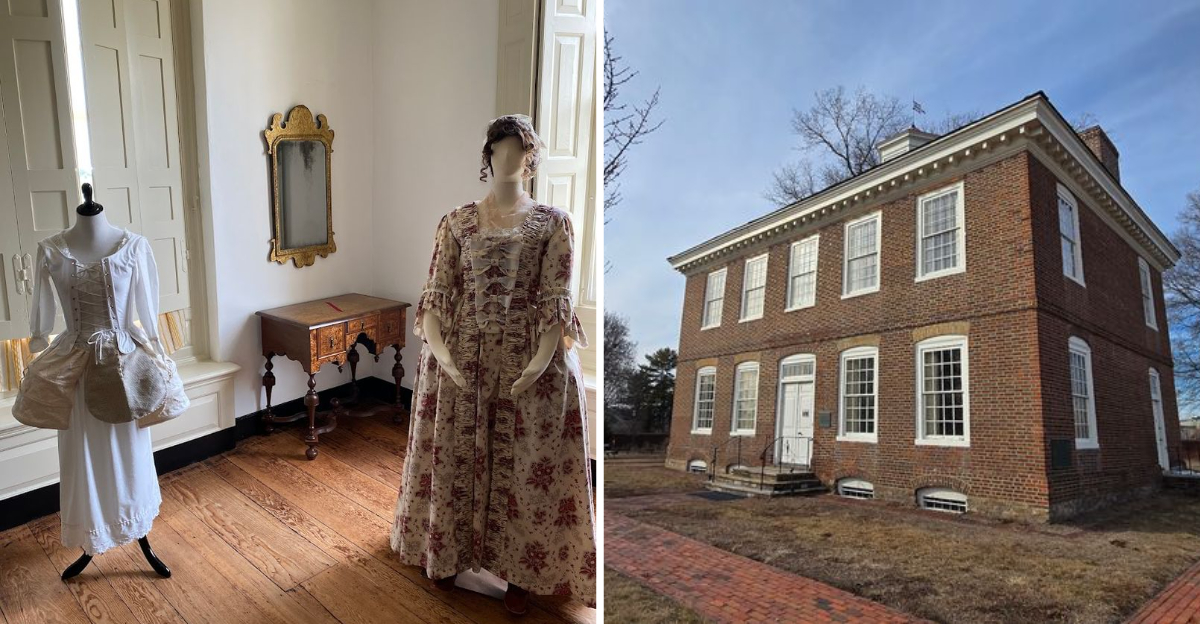
A brick house from 1719 still stands not far from a river in New Jersey’s capital, and most people zoom right past it without a second glance.
They are missing the oldest surviving home in the city, built by a wealthy Scottish merchant who founded the town.
He constructed this Georgian style manor as his country escape, complete with a cupola on top and a basement kitchen below.
The house has witnessed revolution, served three governors, and held generations of stories within its thick walls.
You can walk the same floors where enslaved individuals worked and where colonial history unfolded. A simple brick exterior hides three centuries of life, loss, and legacy.
Why rush past when you can step inside a real piece of this state’s earliest days?
A Building That Predates the Country Itself
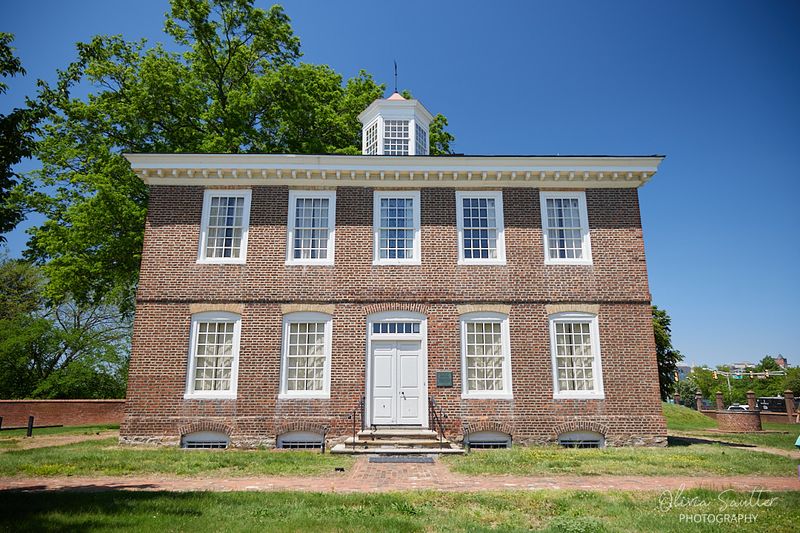
Standing in front of the William Trent House for the first time, there is a genuine moment of disbelief. This building was constructed in 1719, a full 57 years before the Declaration of Independence was signed.
That is not a typo. The house was already middle-aged by the time America became a country.
Built for William Trent, a wealthy Philadelphia shipping merchant, the structure was designed in the early Georgian architectural style.
Symmetrical, brick-built, and anchored with multi-paned sliding sash windows, it carries a kind of quiet dignity that modern buildings simply cannot replicate.
It looks like it belongs on the cover of a history textbook.
What makes it even more remarkable is how intact it remains. Restoration work carried out between 1934 and 1936 brought the house back to its colonial appearance.
It officially opened as a museum in 1939. Walking up to the front door genuinely feels like stepping backward in time, and that feeling does not wear off quickly.
The City of Trenton Literally Owes Its Name to This Place
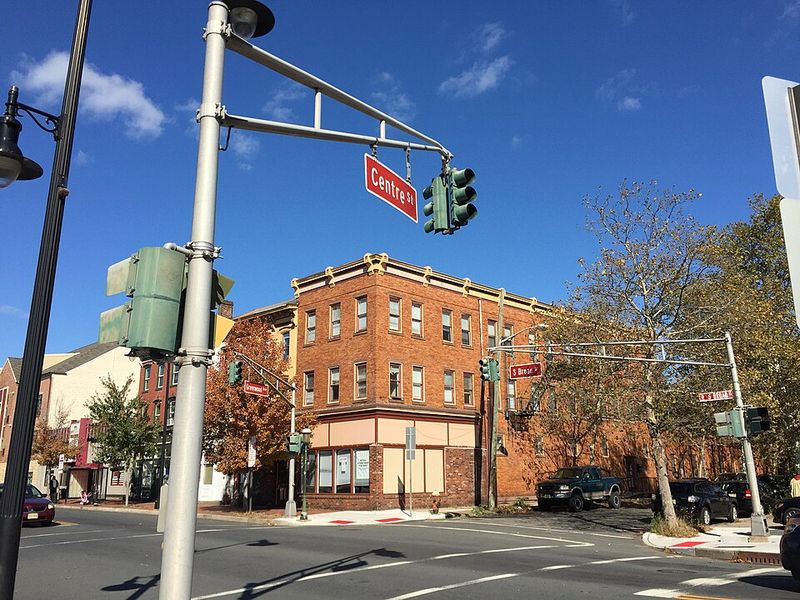
Most cities are named after geographical features or founding ideals. Trenton, New Jersey, is named after one man and the settlement he built around his house.
William Trent established “Trent’s Town” in 1720, using his estate as the anchor for what would eventually grow into the state capital of New Jersey.
That connection between one building and an entire city’s identity is genuinely rare. There is something almost surreal about knowing the house still stands in the middle of downtown Trenton, completely surrounded by the city that grew from it.
The history feels circular in the best possible way.
Visiting the museum gives that connection real weight. Learning that a single merchant’s ambition shaped the geography and culture of a region for over three centuries is the kind of story that sticks with you long after you leave.
It reframes how you look at the city around you, and honestly, that alone makes the trip worthwhile. Trenton did not just happen.
It began here.
Georgian Architecture at Its Most Elegant and Accessible
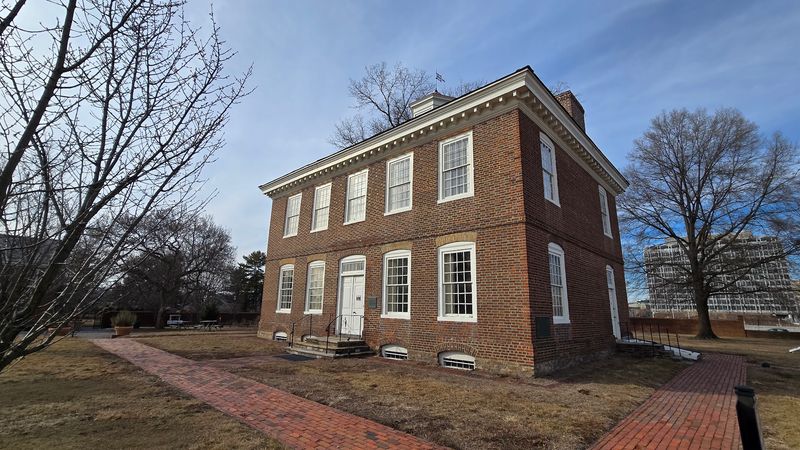
Architecture enthusiasts will find genuine joy in studying this building up close. The William Trent House is considered one of the finest early examples of Georgian architecture in America.
Its design draws from the classical forms of the Italian Renaissance, which was a bold and sophisticated choice for colonial-era construction.
The symmetry is immediately striking. Every window lines up perfectly, the proportions feel deliberate, and the brickwork has a warmth and texture that photographs simply cannot capture.
Georgian architecture was among the first architect-inspired styles built in the American colonies, and this house helped define what that looked like in practice.
What makes it accessible is how approachable the building feels despite its historical weight. There is no velvet rope keeping you at a distance from the exterior.
You can walk right up, study the details, and appreciate the craftsmanship at your own pace. For anyone curious about how early American settlers expressed prosperity and taste through design, this house is an open and remarkably well-preserved textbook.
The Layered History of the People Who Lived Here
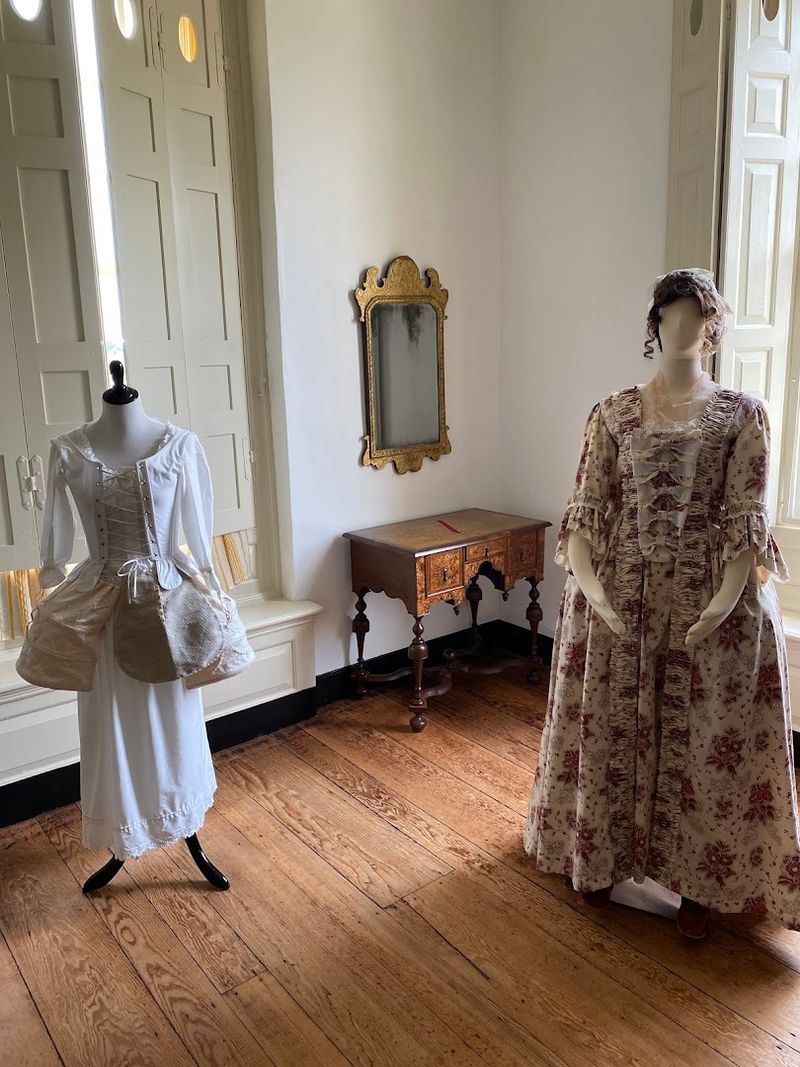
The story of the William Trent House is not a simple one, and the museum does not pretend otherwise. Long before European settlers arrived, the land was home to Lenni Lenape communities for thousands of years.
That pre-colonial history is acknowledged and honored as part of the site’s full story.
William Trent himself was involved in the slave trade, and enslaved individuals lived and worked on his 1,000-acre plantation. The museum makes a deliberate effort to tell those stories alongside the stories of the Trent family and later governors who resided in the house.
Inclusion is built into the mission.
Three New Jersey governors, Lewis Morris, Philemon Dickerson, and Rodman McCamley Price, also called this house home at various points. Each left a different mark on the property and its history.
The result is a layered, complex, and genuinely compelling narrative that stretches from Indigenous settlement through colonial life, revolution, and beyond. No single visit covers all of it, which is a very good reason to come back.
The 1726 Inventory That Brought the Rooms Back to Life
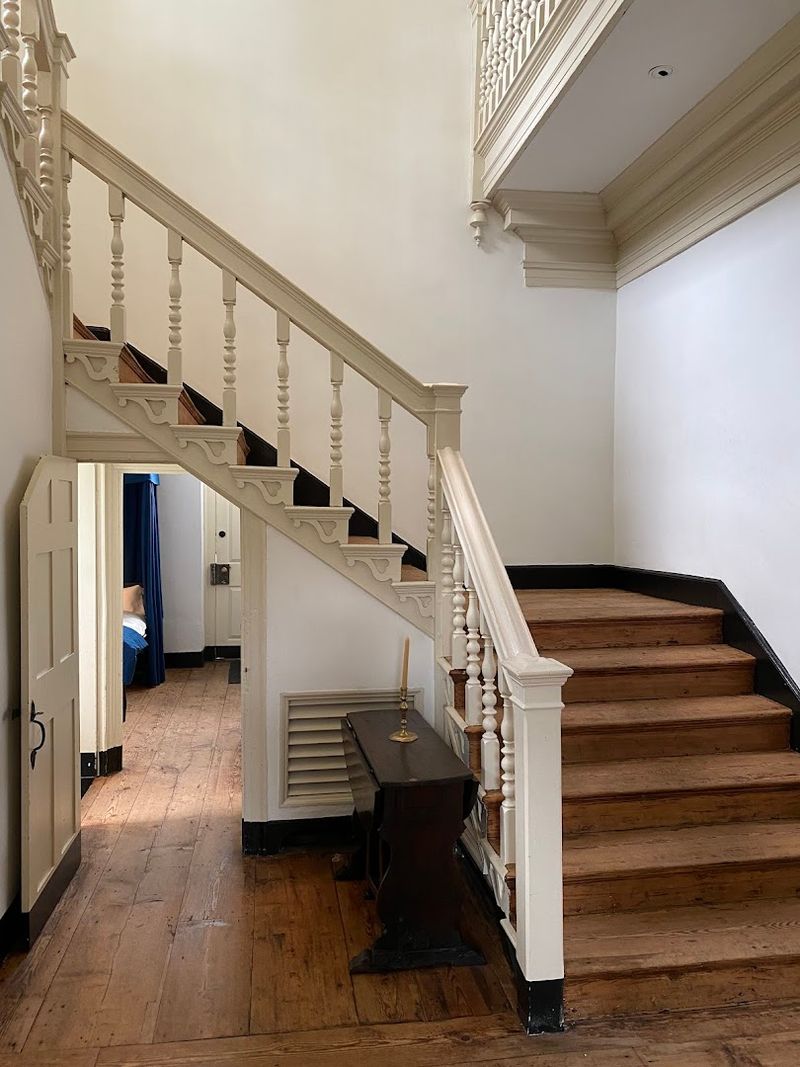
One of the most fascinating aspects of the William Trent House restoration is the historical document that guided it.
A 1726 inventory of Trent’s estate was used to furnish the museum rooms, giving curators a precise record of what objects existed in the house and where they belonged.
That kind of documentary evidence is extraordinarily rare for a building this old.
The result is a house that feels lived-in rather than curated for aesthetic effect. The furniture is heavy, functional, and authentic to the period.
The arrangement of objects reflects how colonial households actually operated, which was very different from modern assumptions about domestic life. Everything has a reason for being where it is.
Walking through these rooms is a quiet revelation. You start to understand how space was used, how light was managed, and how the rhythms of daily life shaped the layout of a home in the early 18th century.
It is the kind of detail that history books describe but rarely make tangible. Here, it is right in front of you, close enough to almost touch.
The Gardens and Grounds Worth Slowing Down For
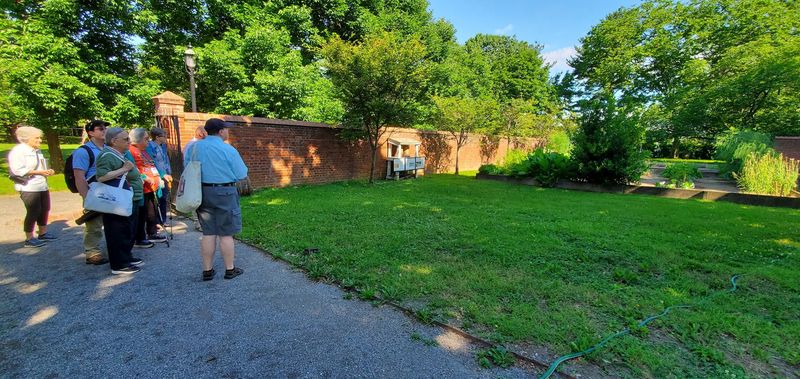
Before or after the tour, the grounds surrounding the William Trent House deserve unhurried attention. The garden is a calm and genuinely pleasant space, especially in warmer months when everything is in bloom.
It offers a welcome contrast to the busy streets of downtown Trenton just beyond the property line.
Walking the grounds gives you a chance to appreciate the building’s exterior from multiple angles.
The brick facade looks different in afternoon light than it does in the morning, and the proportions of the structure become even more impressive when viewed from a distance across the lawn.
It is a good place to simply stand and absorb where you are.
The museum has also hosted outdoor events, including an apple program with cider pressing and hearth cooking, which are the kinds of hands-on historical experiences that make a visit memorable in a completely different way.
Even on a quiet afternoon with no special programming, the grounds feel peaceful and purposeful.
Bring comfortable shoes and leave enough time to wander without rushing back to the car.
The Guided Tour That Makes History Feel Personal
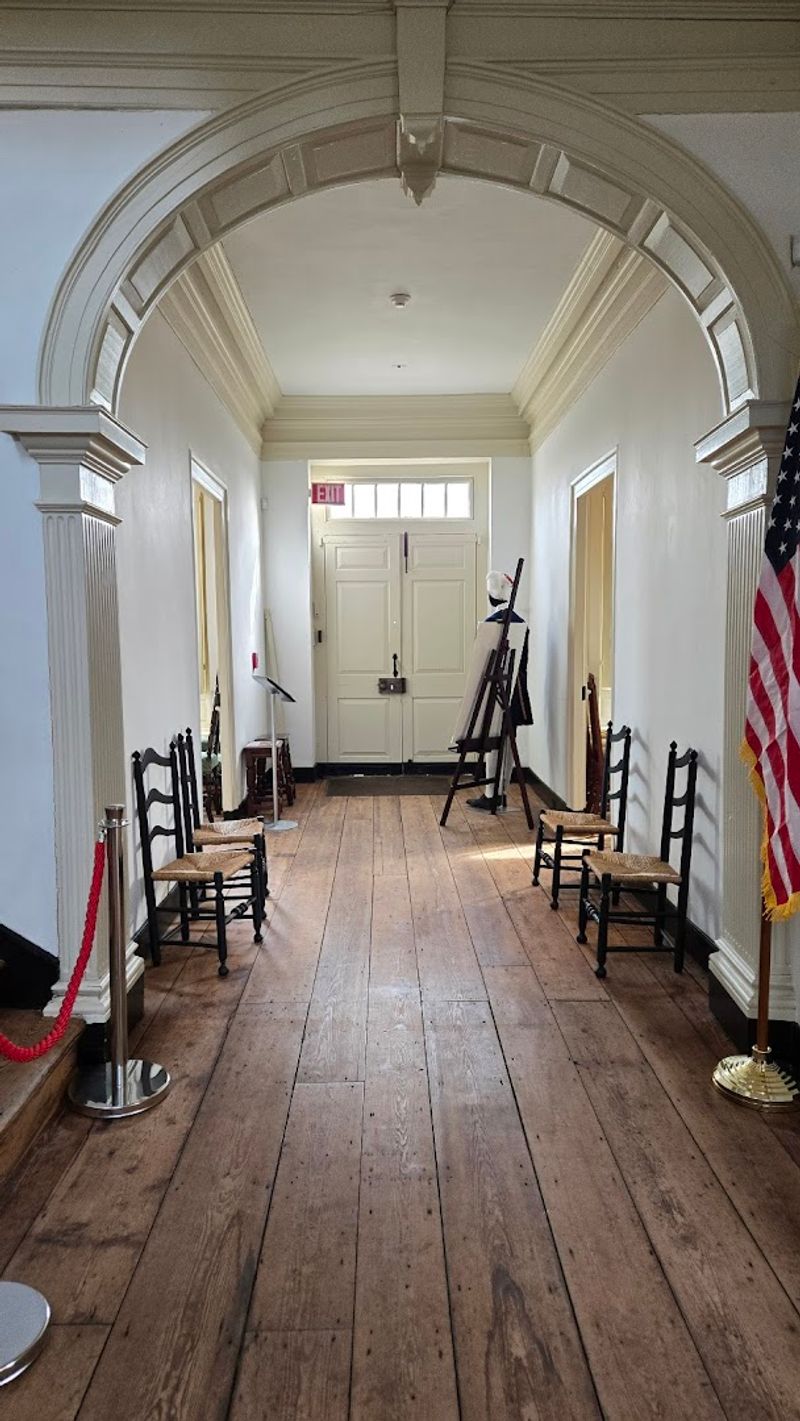
Visiting the William Trent House means taking a guided tour, and that structure turns out to be one of the best parts of the experience. No reservation is needed.
You simply walk in, and someone will walk you through the house. The tour runs about 45 minutes and moves through beautifully preserved colonial-era rooms.
The house is furnished according to a 1726 inventory of Trent’s estate, which means every piece of furniture and every decorative object has historical grounding. Nothing is a guess or a vague approximation.
That level of specificity makes the rooms feel genuinely inhabited rather than staged.
Having a knowledgeable guide walk you through each space adds an interpretive layer that a self-guided visit simply could not replicate. Context matters enormously in a place like this.
Understanding why a room was arranged a certain way, or what a particular object meant to its owner, transforms the experience from a casual look around into something that actually stays with you. Plan for the full hour, just in case.
Free Parking and Easy Access Make It a No-Excuse Visit
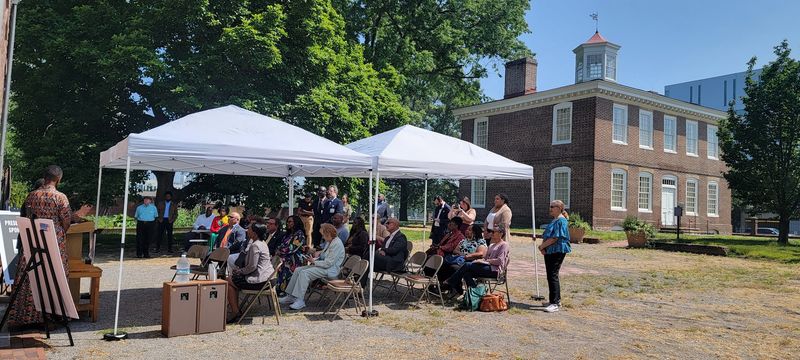
One of the quiet gifts of visiting the William Trent House is how logistically painless the whole thing is. Free parking is available nearby, which in a downtown setting is not something to take lightly.
The grounds are easy to access, and the entrance is straightforward to find once you know where to look.
The museum is open Wednesdays through Sundays from 1 to 4:30 PM. That afternoon schedule makes it a natural stop for a mid-day trip or a post-lunch excursion.
It fits neatly into a day that includes other Trenton attractions without requiring any elaborate planning.
The visitor center also features local historical maps and informational displays that keep you engaged while waiting for a tour to begin. Nothing about the experience feels rushed or overcrowded.
For a place this historically significant, the accessibility is almost surprising. There are genuinely no good excuses for not stopping.
The parking is free, the tour is short, and the building has been waiting patiently for over 300 years. It can wait a few more minutes for you to find a spot.
A Hidden Spot That Rewards Curious Travelers
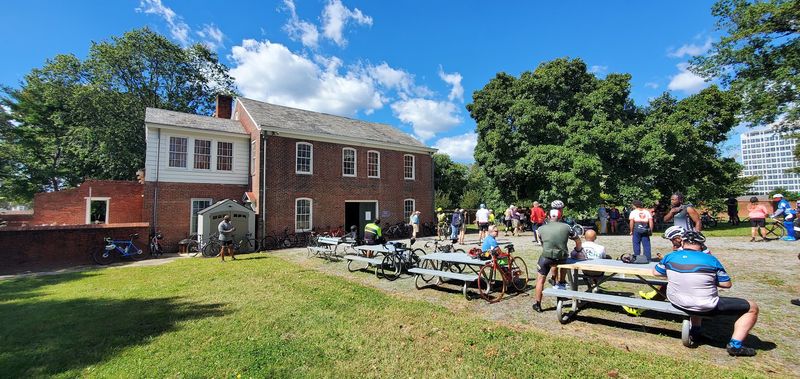
Places like the William Trent House remind you why slowing down on a road trip is almost always worth it. This is not a flashy attraction with a gift shop stacked floor to ceiling or a gift card kiosk by the door.
It is a carefully maintained, historically significant building that rewards people who are genuinely curious about the world they live in.
The museum has earned a strong reputation among visitors who do make the stop. Words like meticulously maintained and hidden gem come up again and again, and both descriptions feel accurate.
The house is in remarkable condition, and the surrounding area has a quiet, lived-in character that makes the visit feel authentic rather than packaged.
Whether you are a history enthusiast, an architecture lover, or simply someone who wants to understand New Jersey a little better, this museum delivers something real. It is the kind of place that changes how you see a city.
Trenton looks different after you learn that a 300-year-old house is the reason it exists at all.
Address: 15 Market St, Trenton, NJ
