Lawyer by day, dinosaur hunter by surprise. That is how a New Jersey man stumbled into history in 1858 and changed science forever.
He heard gossip about giant bones in a local pit and started digging.
What he unearthed was a 25 foot duck billed hadrosaurus, the first nearly complete dinosaur skeleton found anywhere in the world.
Until this moment, Americans had only seen scattered teeth and claws. This discovery sparked a nationwide fossil frenzy.
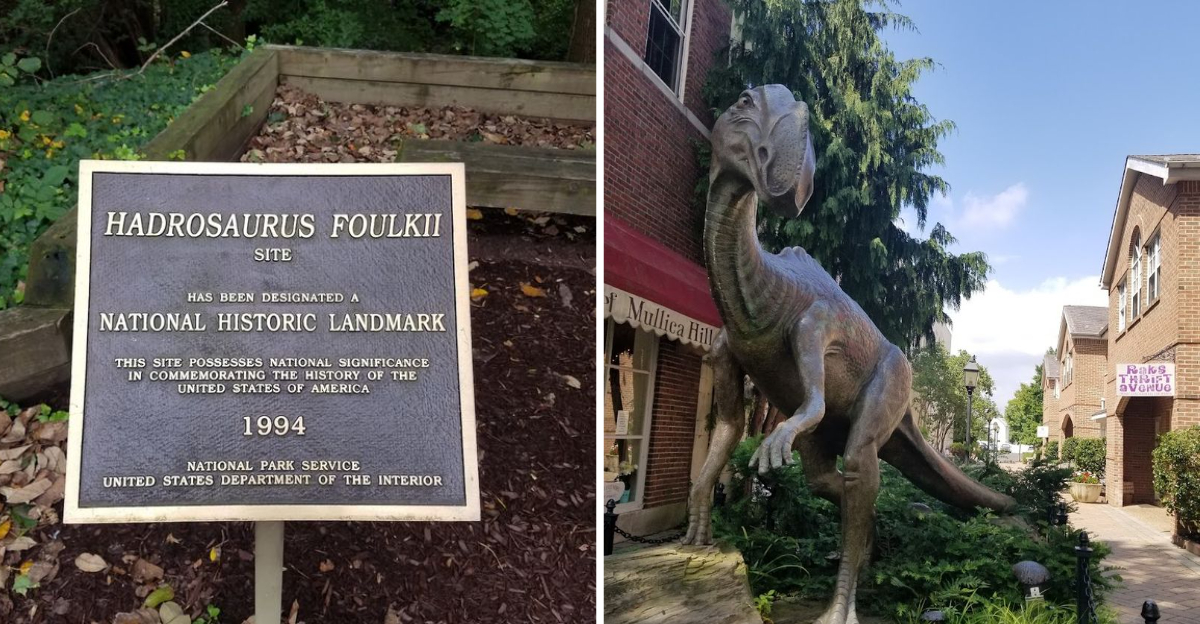
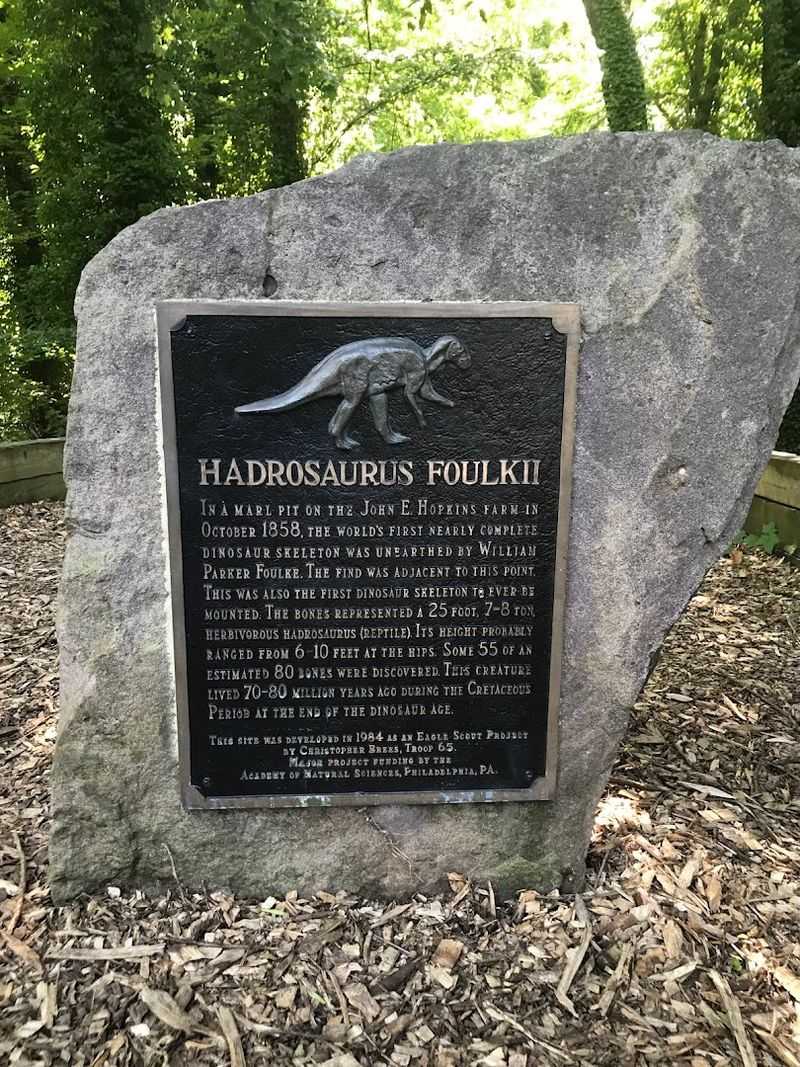
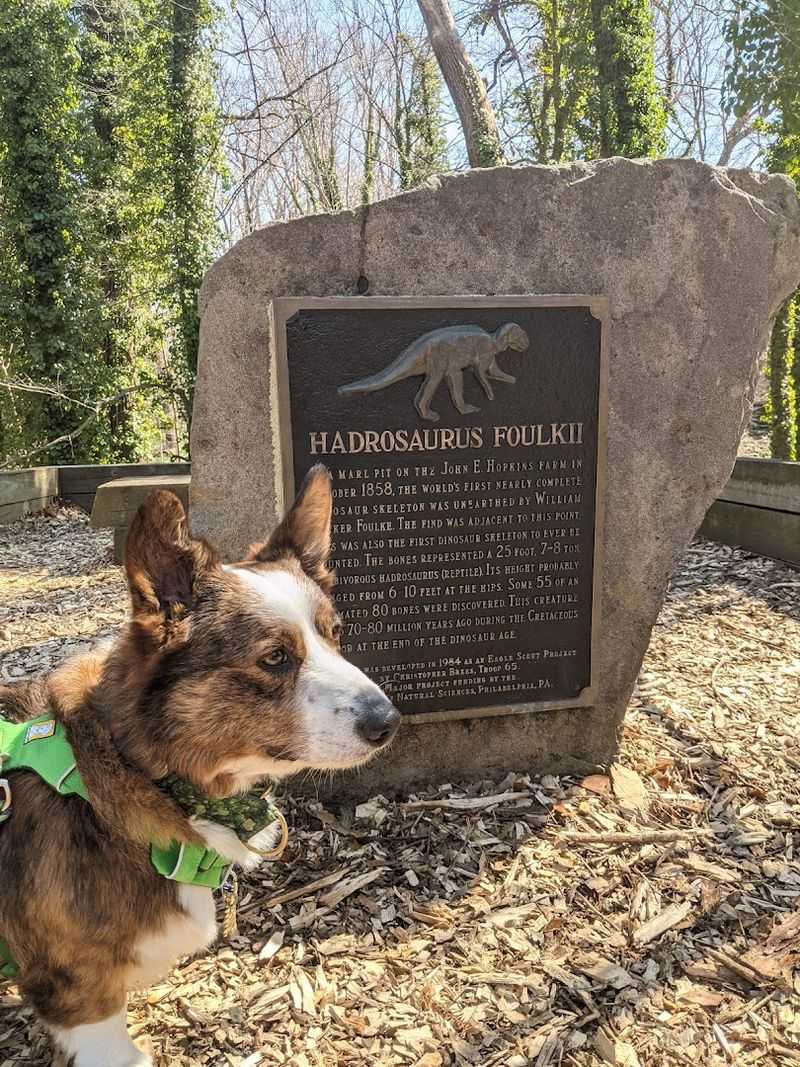
You can visit the exact spot today at a small park at the end of a quiet street. A commemorative stone marks where the creature was pried from the soil.
The actual bones now live in Philadelphia, but the legacy belongs to New Jersey.
The Discovery That Rewrote Paleontology
Back in 1838, a farmer named Joseph Hopkins stumbled across some unusually large bones buried in a marl pit on his Haddonfield property. Nobody fully understood what they were at the time.
Bones were collected, passed around, and largely forgotten for nearly two decades.
Then in 1858, amateur paleontologist William Parker Foulke heard about the find and immediately organized a proper excavation. His careful work unearthed 35 of an estimated 80 bones from a single dinosaur.
That was an extraordinary number for the era.
Dr. Joseph Leidy of the Academy of Natural Sciences in Philadelphia analyzed the collection and formally named the creature Hadrosaurus foulkii in honor of Foulke. Before this discovery, scientists had only fragmented pieces to study.
This find gave the world its first real, structured look at what a dinosaur actually looked like from head to tail, fundamentally shifting how science understood prehistoric life on Earth.
What Made Hadrosaurus So Scientifically Revolutionary
Most dinosaur finds before 1858 were frustratingly incomplete, just a tooth here, a fragment there. Scientists were essentially trying to assemble a puzzle with 90 percent of the pieces missing.
Hadrosaurus foulkii changed everything by giving researchers a nearly complete skeletal picture.
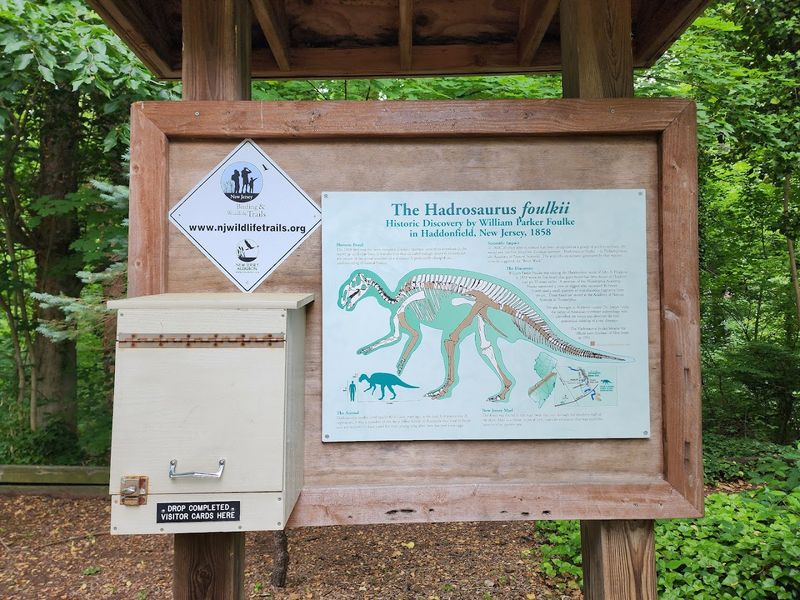
The bones revealed a bipedal, duck-billed herbivore standing roughly 10 feet tall at the hips and stretching about 25 feet in length. Weighing an estimated 7 to 8 tons, this was no small creature.
It roamed what is now southern New Jersey during the Late Cretaceous Period, approximately 73 to 80 million years ago.
What really stunned the scientific community was the evidence suggesting dinosaurs could stand upright on two legs, a concept that completely overturned earlier assumptions. Leidy’s analysis helped establish paleontology as a serious, structured scientific discipline rather than a curiosity-driven hobby.
One set of bones from one New Jersey farm essentially handed the world a new lens through which to study all of prehistoric life.
The World’s First Mounted Dinosaur Skeleton
Fast forward ten years after the excavation, and something truly historic happened in Philadelphia.
In 1868, the Academy of Natural Sciences unveiled the world’s very first mounted dinosaur skeleton, a reconstructed Hadrosaurus foulkii assembled under Dr. Leidy’s supervision.
The public reaction was electric. People lined up to see a creature that had roamed the earth millions of years before humans existed.
It was the kind of spectacle that sparked widespread curiosity about natural history across the country.
Think about that for a moment: before 1868, no one had ever seen a fully assembled dinosaur skeleton standing upright in any museum anywhere in the world.
This single exhibit lit a fire under the entire field of paleontology and inspired generations of scientists, educators, and curious kids alike.
The bones that started it all came from a quiet marl pit in southern New Jersey, which makes the Hadrosaurus Foulki Site feel less like a roadside curiosity and more like the birthplace of something genuinely enormous in the history of human knowledge.
Haddonfield’s Unassuming but Iconic Landmark
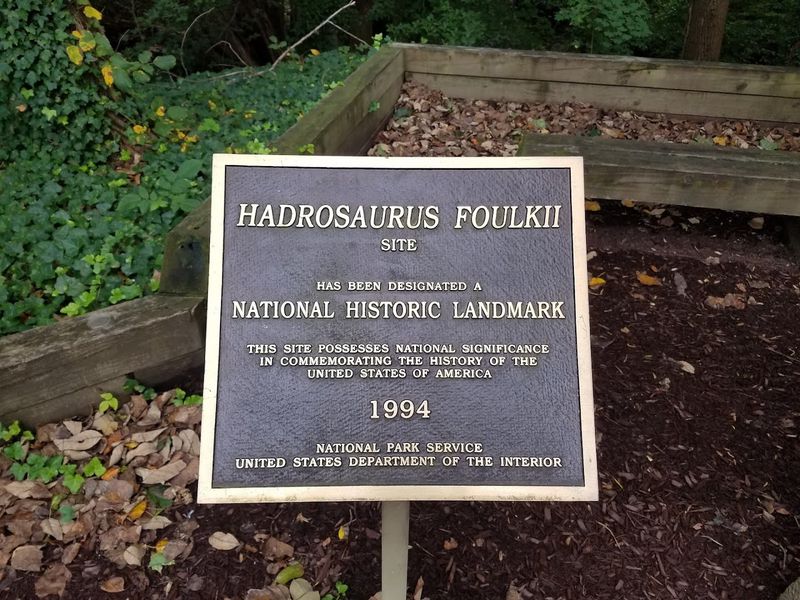
Pulling up to the end of Maple Avenue in Haddonfield, the first thing that strikes you is how quietly this landmark sits among ordinary suburban homes. There are no flashing signs or crowded parking lots.
Just a small park, some informational boards, and the kind of stillness that makes you feel like you’ve stumbled onto a secret.
The site is now designated as state-owned parkland and officially called Hadrosaurus Park. It features historic markers, a bench, a picnic table, and an overlook perched above the ravine where the bones were originally uncovered.
The whole setup is modest but genuinely moving.
Someone left a collection of small plastic dinosaur toys on the picnic table, which has apparently become an unofficial tradition among visitors. Kids can pick them up, play with them, and leave them for the next group to enjoy.
It adds a playful, communal warmth to a site that could easily feel sterile or overly solemn. This place earns its charm not through spectacle but through the sheer weight of what happened here.
The Eagle Scout Who Brought the Site Back to Life
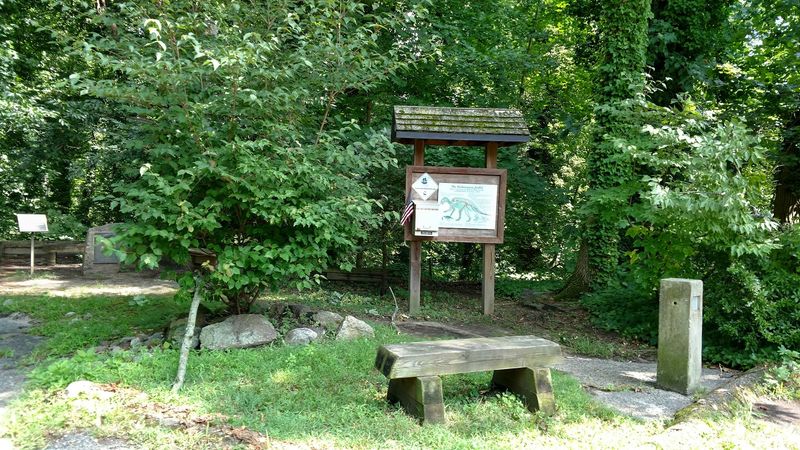
By the early 1980s, the exact location of the original dig had been largely forgotten by the general public. The site had no formal recognition, no markers, and no real way for visitors to connect with the history buried beneath their feet.
That changed thanks to a determined teenager with a mission.
In 1984, a young man named Christopher Brees took on the challenge as his Eagle Scout project, researching historical records to pinpoint the actual excavation location and then organizing the effort to restore and mark the site properly.
His work brought the story back into public consciousness in a meaningful way.
The Brees family has continued to maintain the site over the years, which gives it a personal, community-driven character that no government agency or corporate sponsor could replicate. Knowing that this landmark exists because of one dedicated kid’s determination makes it feel even more special.
It is a reminder that passion and persistence can preserve history in ways that official channels sometimes overlook entirely.
New Jersey’s Official State Dinosaur
Not every state can claim a dinosaur as its own, but New Jersey made it official in 1991 when Hadrosaurus foulkii was designated the state’s official dinosaur. It is a title that feels completely earned given the creature’s outsized role in scientific history.
The designation was partly the result of a campaign led by Haddonfield schoolchildren, which is honestly one of the most wholesome origin stories for any state symbol imaginable. Kids lobbying their government for dinosaur recognition and winning?
That is a civics lesson worth celebrating.
Having a state dinosaur is one of those quirky facts that makes New Jersey endlessly interesting to explore. Most people think of the state in terms of highways and diners, but this little designation connects New Jersey to a 80-million-year-old chapter of Earth’s story.
The next time someone underestimates the Garden State, you can casually mention that it is home to the dinosaur that taught the world what dinosaurs actually look like. That tends to end the conversation pretty decisively.
The Ravine, the Creek, and the Geology Beneath Your Feet
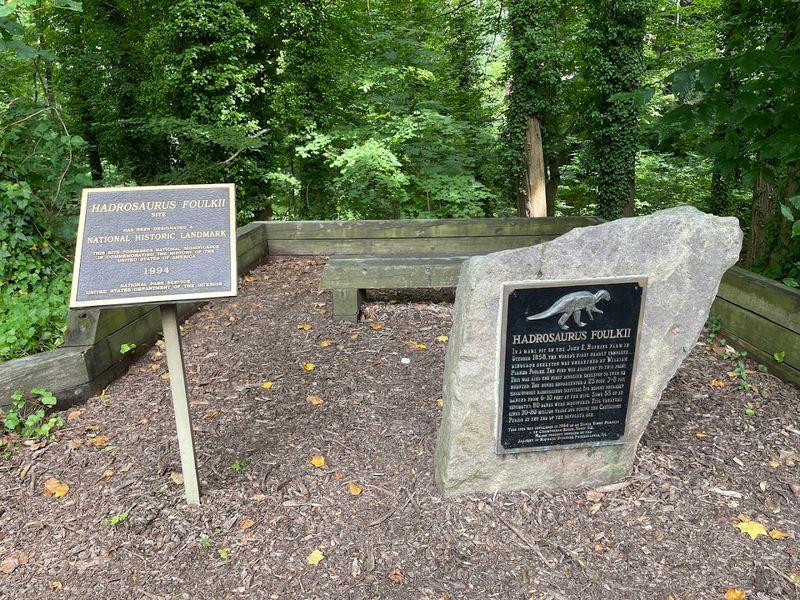
Standing at the overlook above the ravine, it is easy to forget you are in suburban New Jersey. The drop down to the creek below is steep and shaded, lined with roots and layered sediment that hints at millions of years of geological activity.
The air feels different here, cooler and quieter than the street above.
The marl deposits that once filled this area were rich in nutrients, making them valuable to 19th-century farmers as a natural fertilizer. That agricultural interest is precisely why Joseph Hopkins was digging in this spot in the first place.
Without those marl pits, the bones might have remained buried indefinitely.
For visitors who venture down the trail toward the creek bed, the reward is a genuine connection to the landscape itself. Some explorers have reportedly found small fossils and shark teeth along the stream, remnants of the ancient sea that once covered this entire region.
Wearing long pants and sturdy shoes is strongly recommended, because the trail is overgrown in spots and the terrain rewards preparation over spontaneity.
The Bronze Statue in Downtown Haddonfield
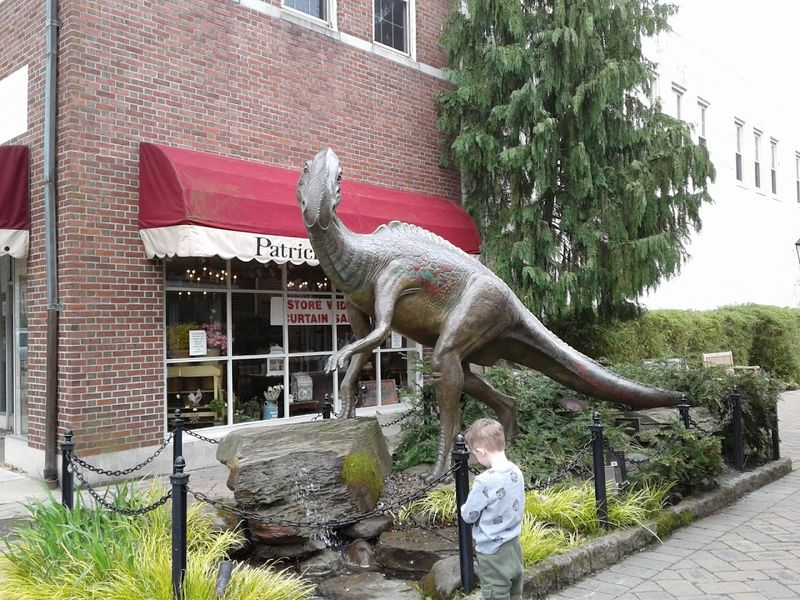
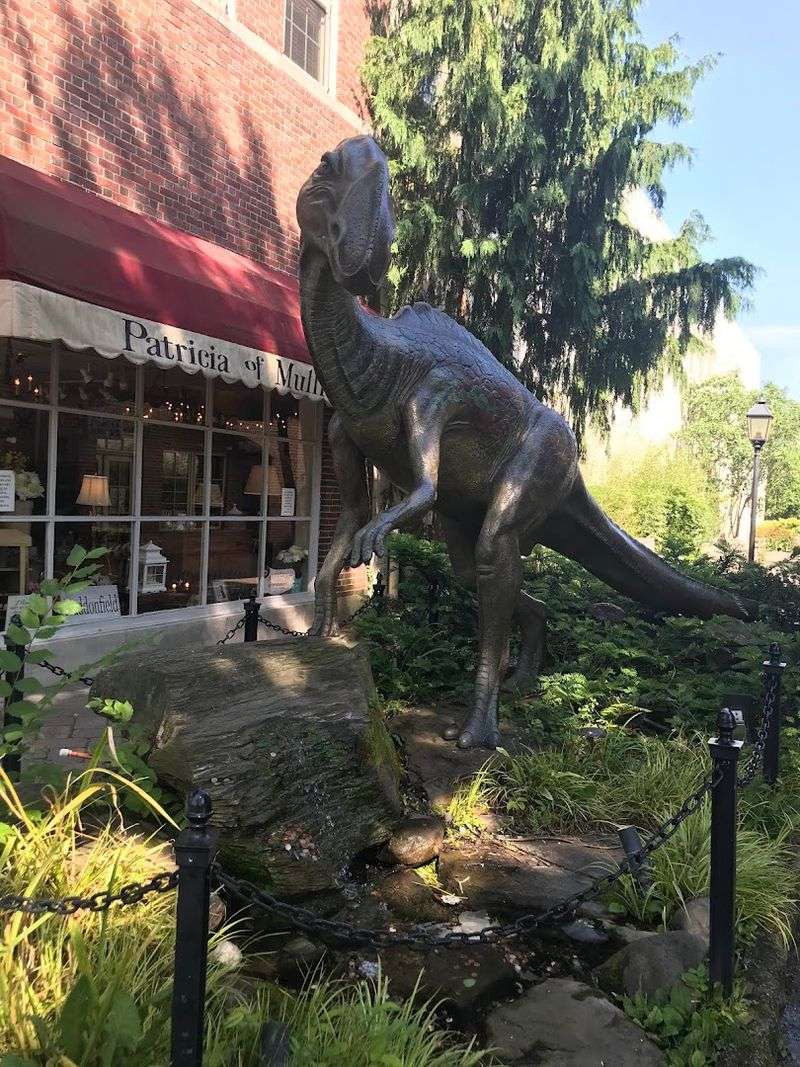
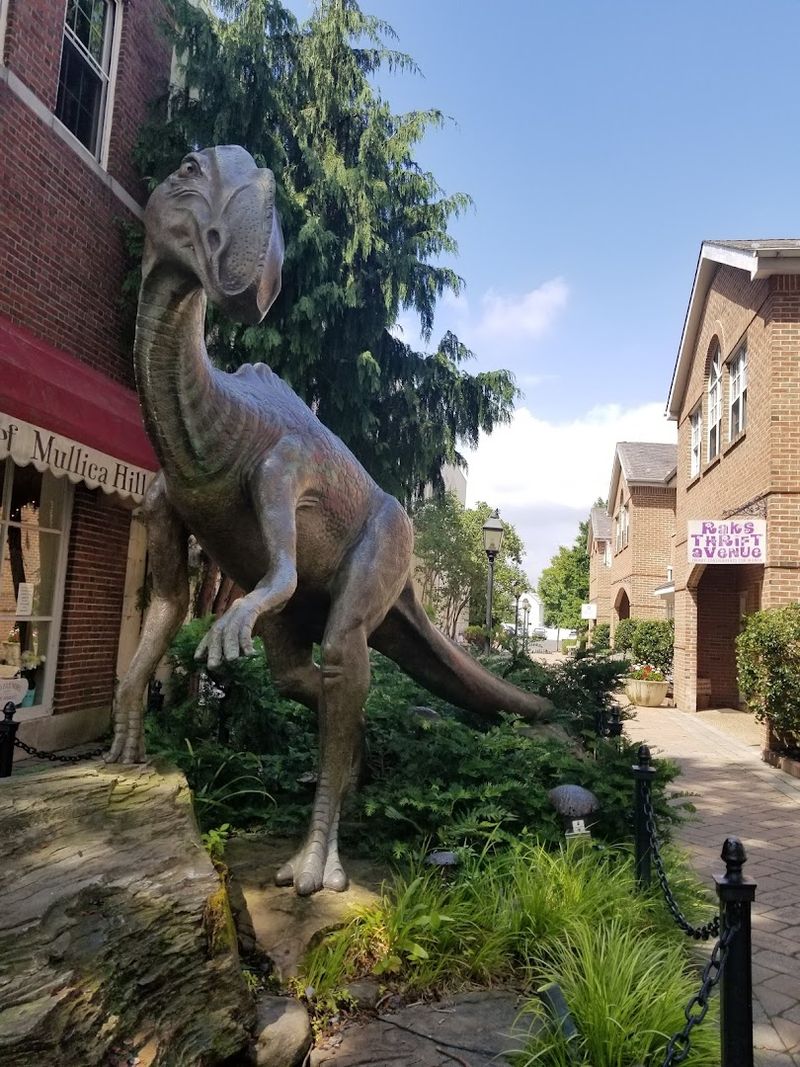
A short drive or walk from the dig site itself, downtown Haddonfield features a life-sized bronze sculpture of Hadrosaurus foulkii standing proudly at the corner of Kings Highway and Chestnut Avenue.
The statue is detailed, dramatic, and completely unexpected in the middle of a charming small-town shopping district.
Coming around a corner and suddenly finding yourself face-to-face with a full-scale bronze dinosaur is a genuinely delightful experience. The sculpture captures the upright bipedal posture that made the original discovery so scientifically significant.
It is the kind of public art that earns its place by actually meaning something to the community around it.
The statue serves as a perfect companion stop to the dig site itself, giving visitors a sense of scale that the ravine overlook alone cannot fully communicate. Seeing just how large 25 feet really is in three-dimensional bronze form makes the whole story click into place.
Pamphlets about the discovery are also available nearby, offering a deeper look at the timeline of events that put this small New Jersey town permanently on the map of world science.
Visiting the Actual Bones at the Academy of Natural Sciences
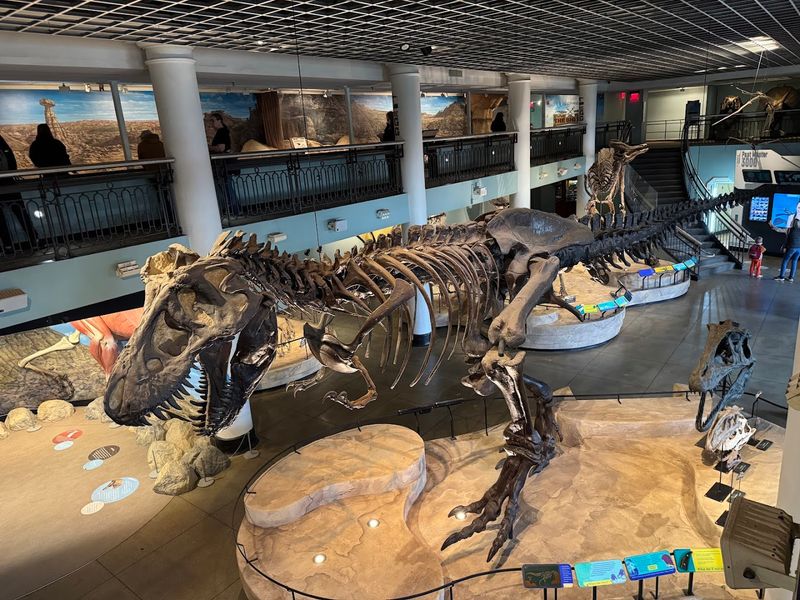
The original Hadrosaurus foulkii bones do not live in Haddonfield. After the excavation, they were transported to Philadelphia and are now housed at the Academy of Natural Sciences at Drexel University, where they remain accessible to the public today.
Pairing a visit to the Haddonfield site with a trip to the Academy creates a genuinely complete experience of the discovery story. At the site, you feel the geography and history of where it all began.
At the museum, you see the actual physical evidence that changed science forever. Together, the two stops form a loop that is hard to beat for anyone fascinated by natural history.
The Academy itself is one of the oldest natural history museums in the Western Hemisphere and worth a full afternoon of exploration on its own.
Knowing that the fossils you are looking at are the real ones, not replicas, not casts, but the actual bones pulled from that New Jersey marl pit in 1858, gives the experience a weight that no reproduction could replicate.
It is one of those rare moments where history feels completely tangible.
Planning Your Visit to Hadrosaurus Park
One of the best things about Hadrosaurus Park is that it is open 24 hours a day, every day of the week, and there is no admission fee.
Parking is available near the end of Maple Avenue, and the atmosphere is relaxed enough that even a spontaneous visit feels completely natural.
Bringing children is highly recommended. The picnic table stocked with donated dinosaur toys creates an instant activity, and the informational boards give parents and kids alike a solid foundation for understanding why this patch of New Jersey land matters so much.
The geocache hidden somewhere in the park adds an extra layer of adventure for families who enjoy that kind of treasure hunt.
Wearing appropriate footwear matters if you plan to explore the trail down to the creek. The path is not heavily maintained, so sturdy shoes and long pants will make the experience much more comfortable.
Keep an eye out for deer and the occasional prickly ground cover. The site rewards those who come prepared with a sense of curiosity and a willingness to slow down and really absorb what happened here.
Address: Maple Ave, Haddonfield, NJ
