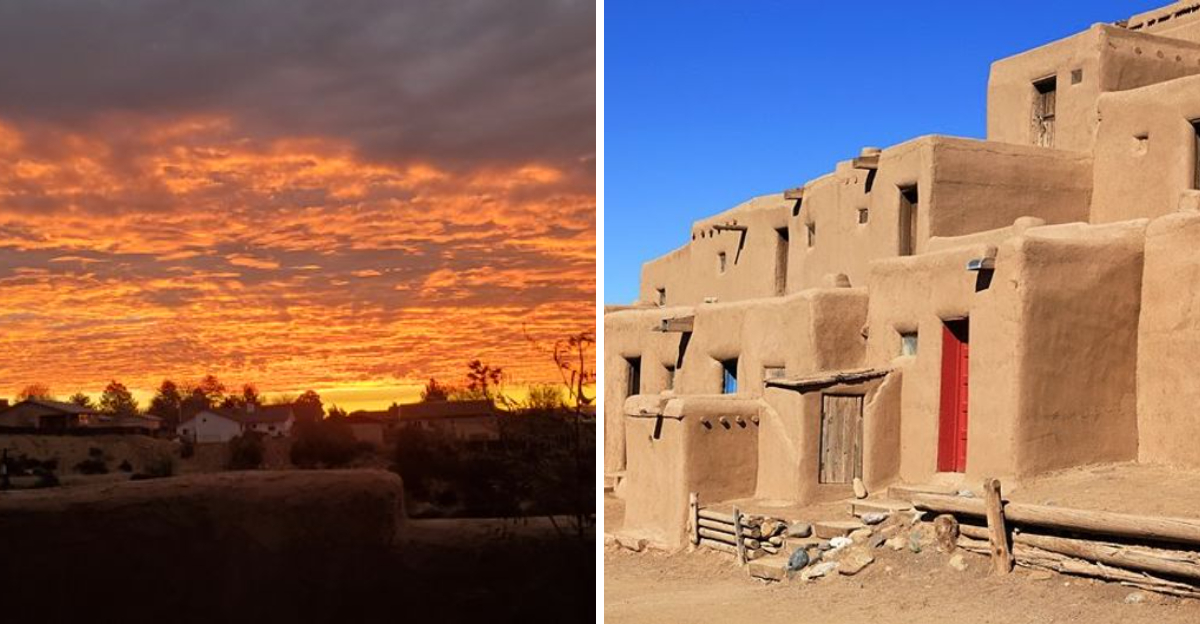
New Mexico stands apart as a place where buildings and land speak the same language.
The state’s architecture doesn’t fight against the desert, mountains, or mesas.
Instead, it grows from them, using earth, stone, and clay pulled right from the ground.
For centuries, people here have built homes that keep cool in summer and warm in winter, all while blending into the rust-colored hills and wide open skies.
From ancient Pueblo structures perched on clifftops to Spanish Colonial haciendas with shaded courtyards, every region tells its own story through the buildings that dot the horizon.
Traveling through New Mexico means seeing how architecture becomes part of the scenery rather than standing out from it.
Whether you’re wandering through Santa Fe’s adobe-lined streets or gazing up at centuries-old dwellings carved into canyon walls, you’ll notice how every structure seems to belong exactly where it sits.
This connection between place and design makes exploring the state’s regions a journey through living history and smart, beautiful building traditions.
1. Santa Fe and Its Pueblo Revival Charm
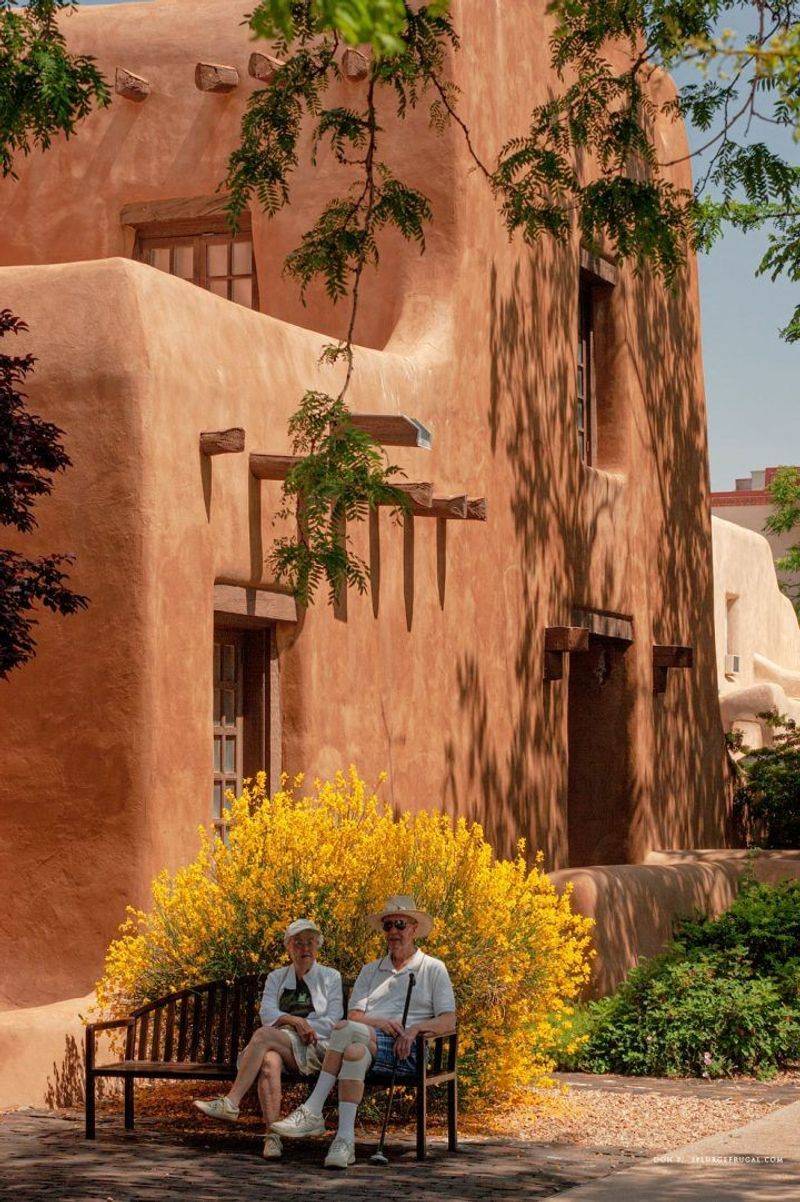
Santa Fe’s skyline tells you immediately that you’ve arrived somewhere special.
Buildings here wear earth tones that mirror the surrounding hills, with rounded edges and organic shapes that seem grown rather than built.
The Pueblo Revival style dominates the historic downtown, featuring thick adobe walls that provide natural insulation against temperature swings.
Vigas, those exposed wooden beams poking through exterior walls, aren’t just decorative touches.
They’re structural elements that have supported roofs for generations.
Flat rooftops and enclosed courtyards create private outdoor spaces shielded from wind and sun.
Walking through the Plaza area, you’ll notice how buildings sit low to the ground, respecting the scale of the high desert rather than trying to dominate it.
The architecture borrows directly from ancient Pueblo communities, honoring techniques perfected over centuries.
Even newer constructions follow strict building codes that preserve the distinctive look.
The result is a city where modern life unfolds inside structures that could have stood for hundreds of years.
Canyon Road galleries and Palace Avenue shops all share this same earthy aesthetic.
Address: Santa Fe Plaza, Santa Fe, NM 87501
Northern New Mexico’s capital shows how respecting landscape through architecture creates timeless beauty.
2. Taos and the Ancient Pueblo Influence
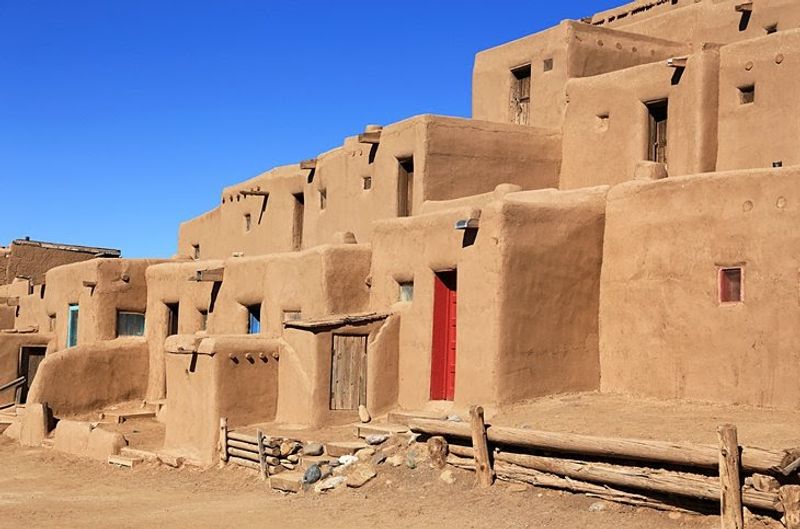
Taos Pueblo rises from the desert floor like a natural formation rather than something built by human hands.
These multi-storied dwellings have sheltered families continuously for over a thousand years, making them among the oldest occupied structures in the nation.
Thick adobe walls, sometimes several feet deep, regulate temperature naturally without modern heating or cooling systems.
The town of Taos surrounding the Pueblo adopted this same architectural vocabulary.
Organic shapes and rounded corners soften the buildings, while earth tones blend seamlessly with the high desert palette.
The Sangre de Cristo Mountains provide a dramatic backdrop, their peaks echoing the stepped profiles of traditional Pueblo construction.
Local builders still mix mud and straw by hand for authentic adobe bricks.
Wooden ladders lean against upper stories, serving as both access and visual connection to ancestral building methods.
Small window openings keep interiors cool during blazing summer days.
Massive wooden door frames anchor entrances, offering human-scaled transitions into protected spaces.
Address: 120 Veterans Highway, Taos Pueblo, NM 87571
The architecture here doesn’t just reflect the landscape.
It becomes part of it, showing how buildings can honor both place and tradition.
3. Acoma Pueblo Sky City Mesa Architecture
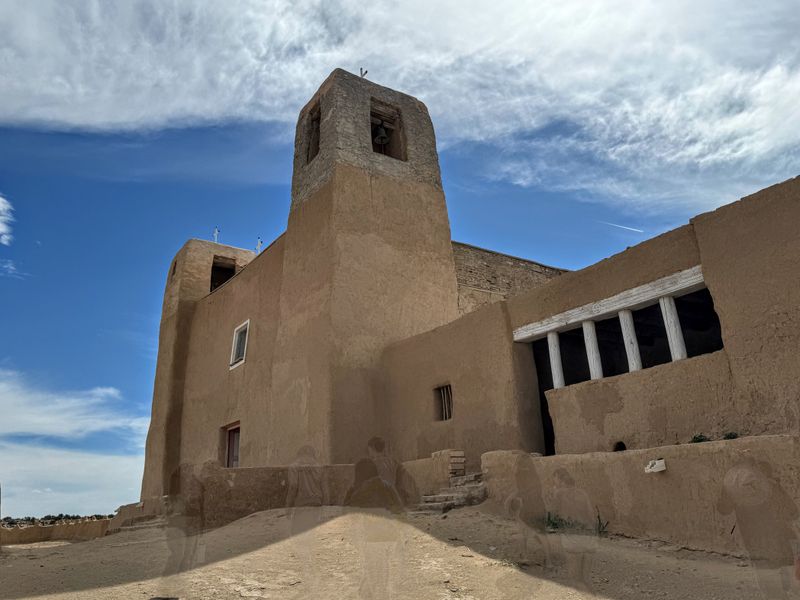
Perched atop a mesa with three hundred sixty-seven foot sheer walls, Acoma Pueblo earns its nickname Sky City honestly.
The location itself determined every architectural decision made here over centuries.
Builders hauled stone and clay up narrow trails, then constructed homes that could withstand both enemies and extreme weather.
The mesa top offers natural defense, while the adobe structures provide shelter from wind that whips across the open plateau.
Local materials weren’t just convenient but necessary at this remote height.
Clay from the mesa itself became walls, while nearby stone formed foundations strong enough to last generations.
Flat roofs shed the occasional rain and snow while providing outdoor workspace during pleasant weather.
Small windows limit heat loss during cold nights when temperatures plummet.
The entire pueblo demonstrates architecture designed for an extreme natural setting.
Every building responds directly to the challenges and gifts of its dramatic location.
Walking these ancient streets, you understand how landscape shaped not just building style but entire ways of life.
Address: Indian Route 38, Acoma Pueblo, NM 87034
Sky City proves that the most remarkable architecture often grows from the most challenging places.
4. Mesilla Valley Hacienda Style
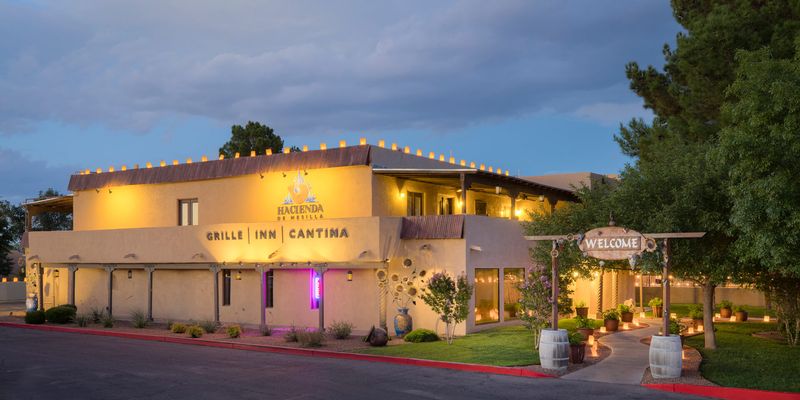
Southern New Mexico’s Mesilla Valley developed its own architectural response to the Chihuahuan Desert’s intense heat.
Haciendas here feature sturdy adobe walls that stay cool even when outside temperatures soar.
Covered portals, those deep porches wrapping around buildings, create shaded outdoor rooms perfect for escaping midday sun.
These aren’t decorative additions but essential climate control features.
Thick walls store coolness overnight, then release it slowly through the following day.
Flat roofs with slight pitches drain occasional rains while providing extra outdoor space.
Interior courtyards capture breezes and create private gardens protected from harsh winds.
The architecture speaks to Spanish Colonial influences mixed with practical desert wisdom.
Buildings sit low and spread out rather than rising tall, minimizing exposure to relentless sun.
Earth tones dominate, with occasional bright blue or turquoise trim providing the only color contrast.
Window placement maximizes cross-ventilation while limiting direct sunlight penetration.
Address: Mesilla Plaza, Mesilla, NM 88046
The Mesilla Valley shows how architecture adapts to regional climate variations even within a single state.
These haciendas prove that beautiful design and practical function can merge seamlessly.
5. Albuquerque Old Town Colonial Blend
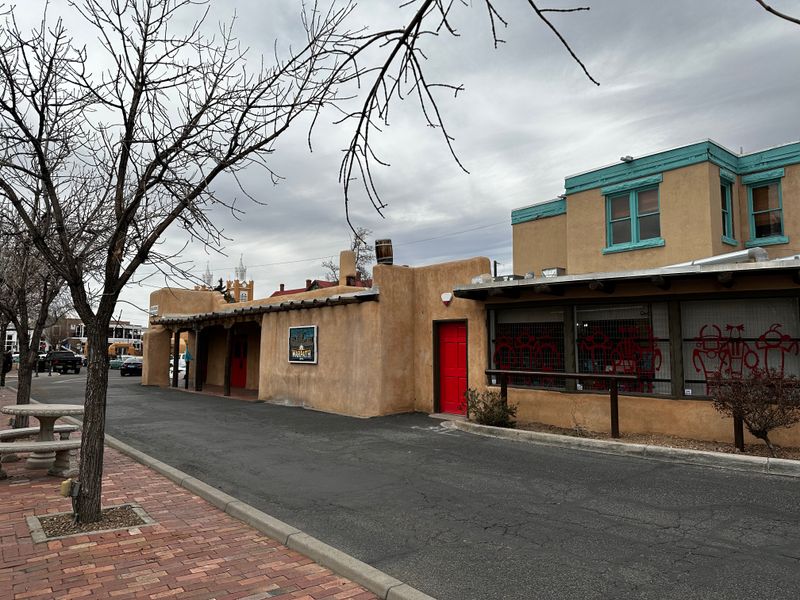
Albuquerque’s Old Town preserves a fascinating architectural conversation between Spanish Colonial and Pueblo Revival styles.
The original plaza layout follows Spanish town planning traditions, with buildings facing inward toward a central gathering space.
Adobe construction dominates here, providing natural insulation against the city’s temperature extremes.
Summer heat and winter cold both meet their match in these thick earthen walls.
The Barelas neighborhood nearby showcases similar building traditions adapted for working-class families.
Smaller homes still employ the same adobe techniques, proving these methods worked across economic levels.
Wooden vigas poke through walls, supporting roofs while adding visual texture.
Rounded corners and organic shapes soften the urban landscape.
Many buildings feature enclosed courtyards that create private outdoor spaces within the city.
The architecture demonstrates practical adaptation perfected over generations.
These aren’t museum pieces but living neighborhoods where families still inhabit century-old structures.
Modern additions respect the original building vocabulary, maintaining neighborhood character.
Address: 2107 Central Avenue NW, Albuquerque, NM 87104
Central New Mexico’s largest city shows how traditional architecture remains relevant and livable today.
Old Town proves that respecting regional building traditions creates lasting community value.
6. Silver City Gila Wilderness Frontier Style
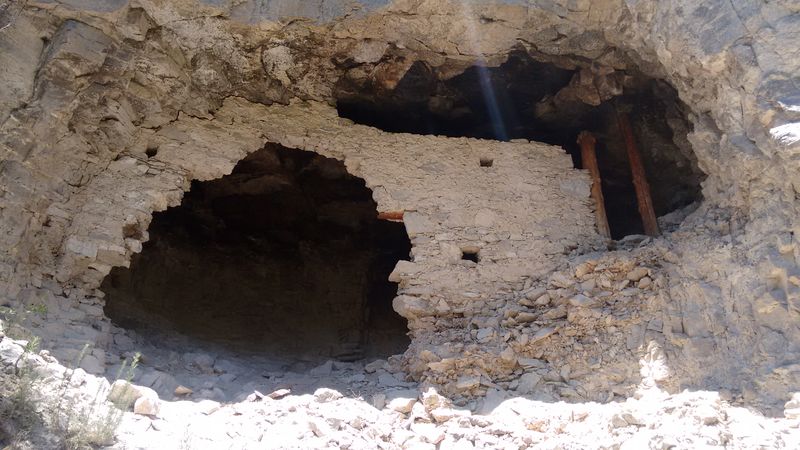
Silver City breaks from New Mexico’s adobe traditions, reflecting its mining boom heritage and mountain setting.
Victorian architecture dominates the historic downtown, with elaborate brick and stone buildings that speak to frontier prosperity.
The Gila Wilderness surrounding the town provided building materials different from the clay-rich valleys elsewhere in the state.
Locally quarried stone became walls, creating structures that echo the rugged, mineral-rich mountains nearby.
Simple frame construction appears alongside more elaborate Victorian designs.
This architectural diversity reflects the town’s history as a crossroads where miners, ranchers, and merchants built according to their backgrounds and budgets.
Some adobe buildings survive from earlier periods, showing the transition between building traditions.
Stone foundations support wooden upper stories, combining materials based on availability and purpose.
The architecture here feels more Western frontier than Spanish Colonial.
Covered sidewalks protect pedestrians from sun and rain alike.
Two-story commercial buildings with decorative cornices line the main street.
Address: 200 North Bullard Street, Silver City, NM 88061
Southwestern New Mexico demonstrates how regional geology and settlement history create distinctive architectural character.
Silver City proves that landscape influence extends beyond climate to include available building materials.
7. Chaco Canyon Ancient Stone Masonry
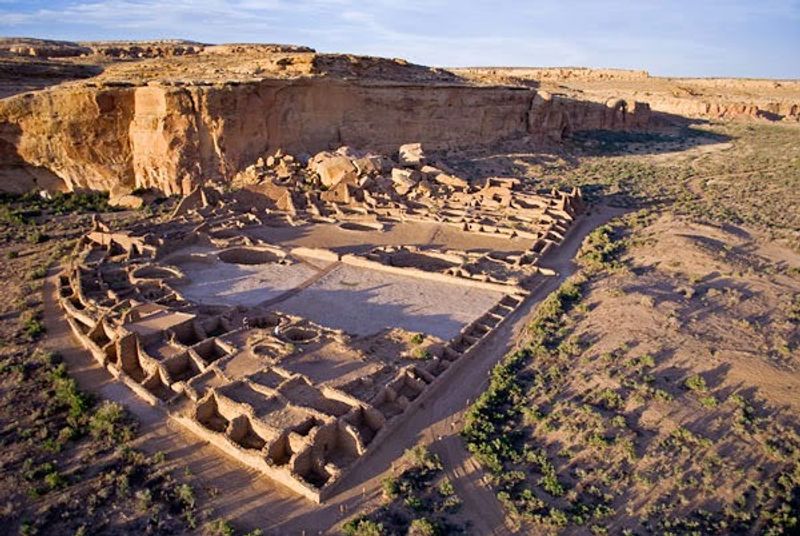
Chaco Canyon holds some of North America’s most sophisticated pre-Columbian architecture.
The massive Great Houses rising from the canyon floor represent engineering achievements that still impress modern visitors.
Builders quarried sandstone directly from canyon walls, then shaped and fitted blocks with remarkable precision.
Some walls stand several stories tall despite being constructed without mortar.
The D-shaped and rectangular structures align with solar and lunar events, showing astronomical knowledge integrated into architectural planning.
Multi-story construction in such a remote, harsh landscape demonstrates incredible organizational and technical skills.
Rooms inside stay remarkably temperature-stable thanks to thick stone walls.
The canyon setting provided both building materials and defensive advantages.
These weren’t simple shelters but complex ceremonial and administrative centers.
Wooden beams transported from mountains fifty miles away supported roofs and upper floors.
The architecture speaks to a sophisticated culture that thrived here centuries before European contact.
Address: CR 7950, Nageezi, NM 87037
Though now ruins, Chaco Canyon’s structures reveal how ancient builders created monumental architecture perfectly suited to their environment.
The Great Houses prove that sustainable, landscape-integrated building has deep roots in this region.
8. Las Vegas Northeastern Railroad Transition
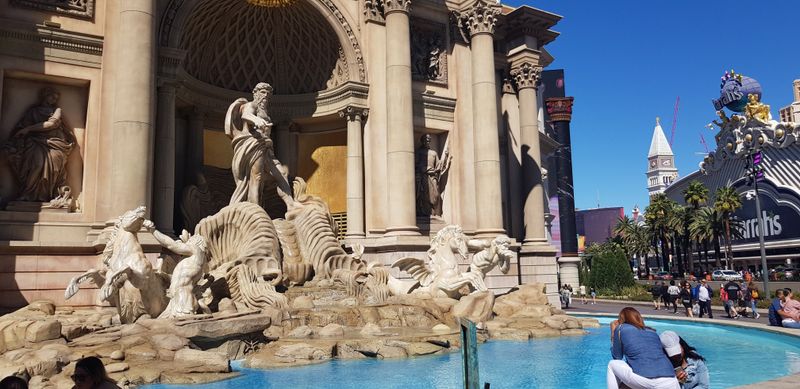
Las Vegas sits at an architectural crossroads where traditional adobe meets Victorian brick brought by railroad expansion.
The town’s historic districts showcase this fascinating transition period.
Older neighborhoods feature classic adobe construction with thick earthen walls and flat roofs.
Nearby stand elaborate Victorian homes with decorative brickwork and pitched roofs completely foreign to earlier New Mexico building traditions.
The railroad brought not just new architectural styles but also manufactured building materials previously unavailable in remote areas.
Anglo settlers arriving from eastern states built homes resembling those they left behind.
Local Hispanic families often maintained traditional building methods while incorporating some newer elements.
The result is a town where architectural history remains visible in layers.
Sturdy construction characterizes both styles, responding to the Eastern Plains climate.
Adobe provides thermal mass for temperature regulation.
Brick offers durability and fire resistance valued in a growing commercial center.
Walking through Las Vegas reveals how cultural exchange and technological change transform built environments.
Address: 500 Railroad Avenue, Las Vegas, NM 87701
Northeastern New Mexico’s architectural blend shows how regions adapt when different building traditions meet.
Las Vegas preserves this unique moment when old and new coexisted before modern standardization.
9. Farmington Four Corners Modern Utility
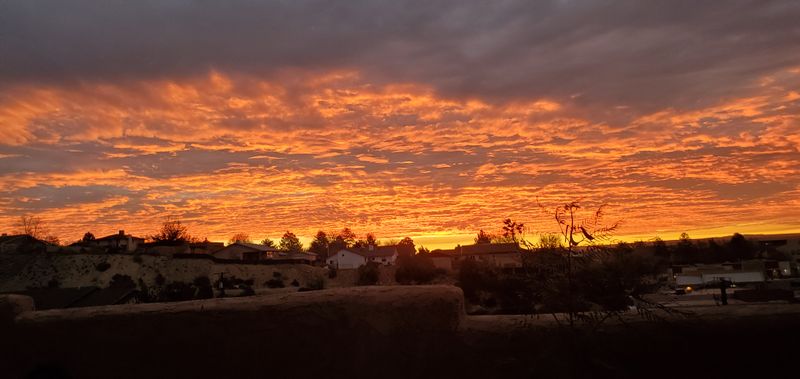
Farmington and the Four Corners region present a different architectural story focused on utility and modern development.
The area’s energy production history brought rapid growth and practical building approaches.
Modern commercial structures and suburban developments dominate much of the landscape.
Yet Navajo Nation housing throughout the region maintains connections to traditional design principles adapted for contemporary life.
Many homes incorporate lighter, more modern materials while respecting desert climate demands.
Durable, low-maintenance construction suits both the environment and economic realities.
Metal roofs replace traditional flat styles, shedding snow and rain more effectively.
Manufactured housing appears frequently, offering affordable shelter that still requires careful siting and orientation for climate control.
The architecture here reflects ongoing cultural negotiations between tradition and modernity.
Some buildings echo older forms while using completely contemporary materials and methods.
Others embrace purely functional design without reference to regional traditions.
The landscape influence appears more in practical responses to climate than aesthetic choices.
Address: 100 West Main Street, Farmington, NM 87401
Northwestern New Mexico shows how economic development and cultural diversity create complex architectural landscapes.
Farmington reminds us that regional architecture continues evolving rather than remaining frozen in historical styles.
10. Truth or Consequences Quirky Spa Town
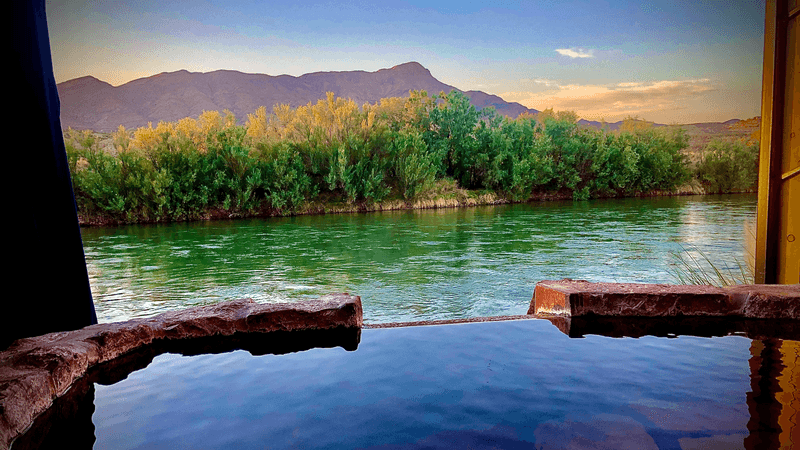
Truth or Consequences developed its own architectural personality around natural hot springs and mid-century tourism.
The town’s quirky character shows in eclectic building styles that range from vintage motor courts to simple bathhouses.
Historic spas feature straightforward concrete block and stucco construction that withstands the mild climate with minimal maintenance.
These practical materials suited small business owners building on tight budgets.
Mid-century modern influences appear in clean lines and large windows that invite the landscape inside.
Many buildings cluster around the hot springs that drew visitors seeking healing waters.
Architecture here prioritizes function over ornament, creating spaces for relaxation and recuperation.
The mild south-central climate allows for simpler construction without the extreme insulation needs of northern regions.
Outdoor spaces integrate easily with indoor areas, blurring boundaries between building and landscape.
Retro signage and vintage motel architecture give the town a time-capsule quality.
Recent revitalization efforts preserve this distinctive character while updating facilities.
The architecture reflects both the natural resource that created the town and the era of automobile tourism that shaped its growth.
Address: 301 South Foch Street, Truth or Consequences, NM 87901
This unique community shows how specific natural features and historical moments create architectural identities unlike anywhere else.
Dear Reader: This page may contain affiliate links which may earn a commission if you click through and make a purchase. Our independent journalism is not influenced by any advertiser or commercial initiative unless it is clearly marked as sponsored content. As travel products change, please be sure to reconfirm all details and stay up to date with current events to ensure a safe and successful trip.
