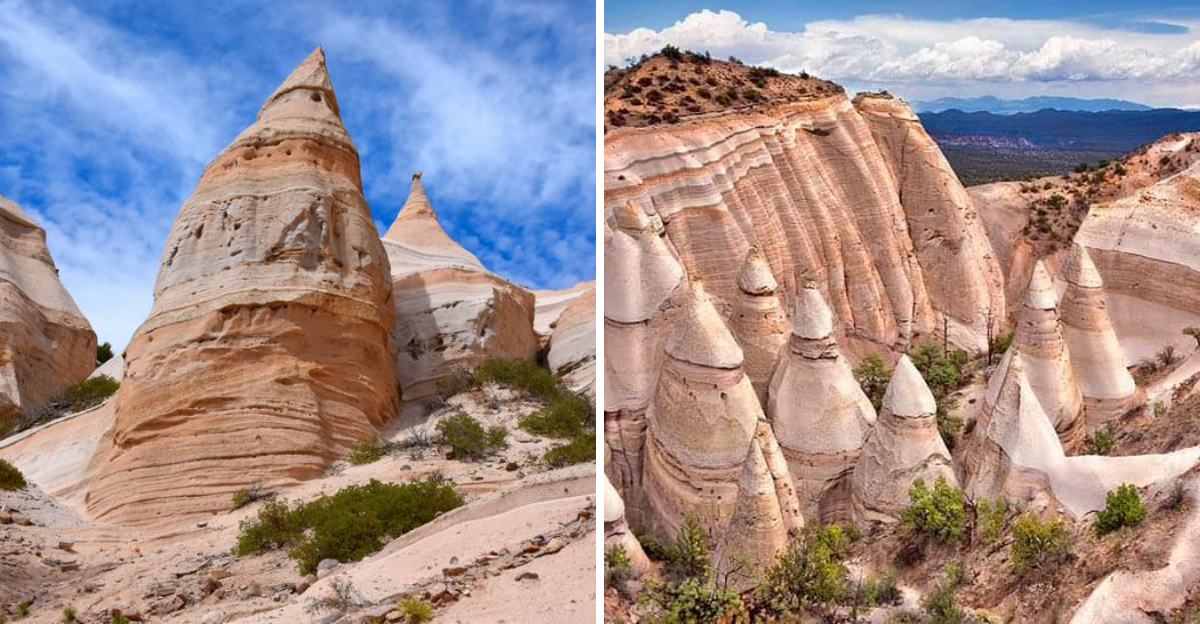
Kasha-Katuwe Tent Rocks National Monument in New Mexico feels like a playground sculpted by volcanoes and time.
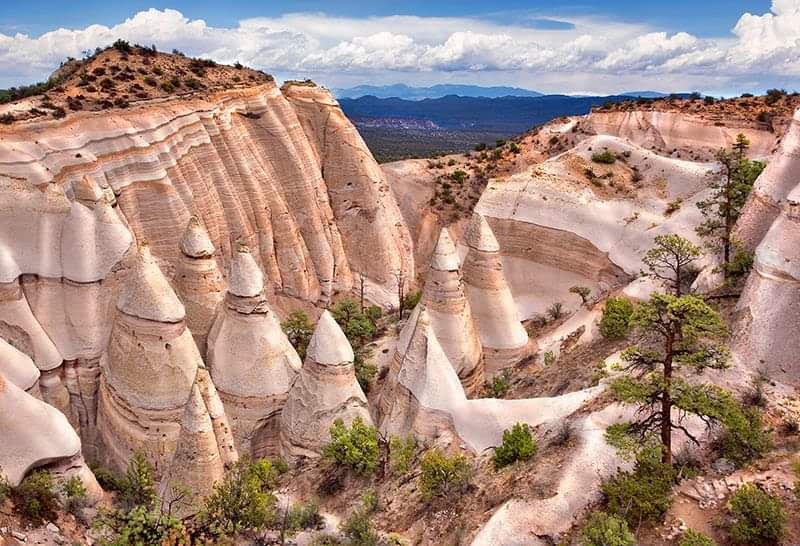
The cone-shaped formations rise like giant stone teepees, catching sunlight in whimsical patterns.
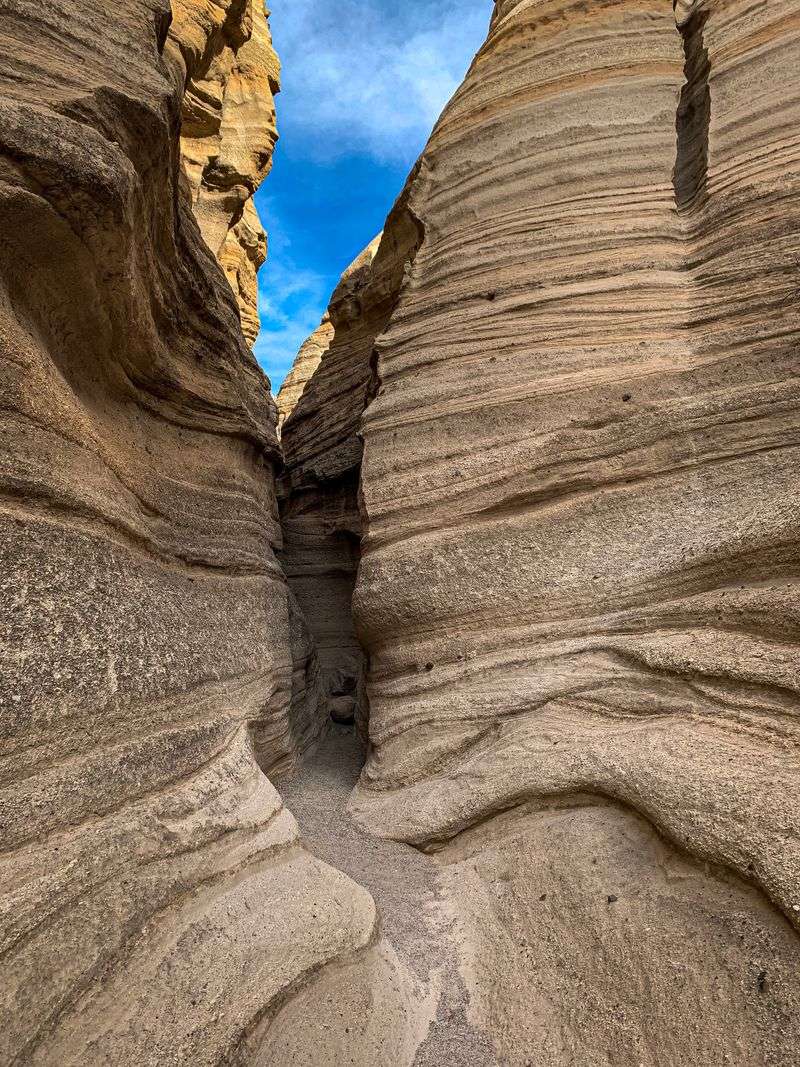
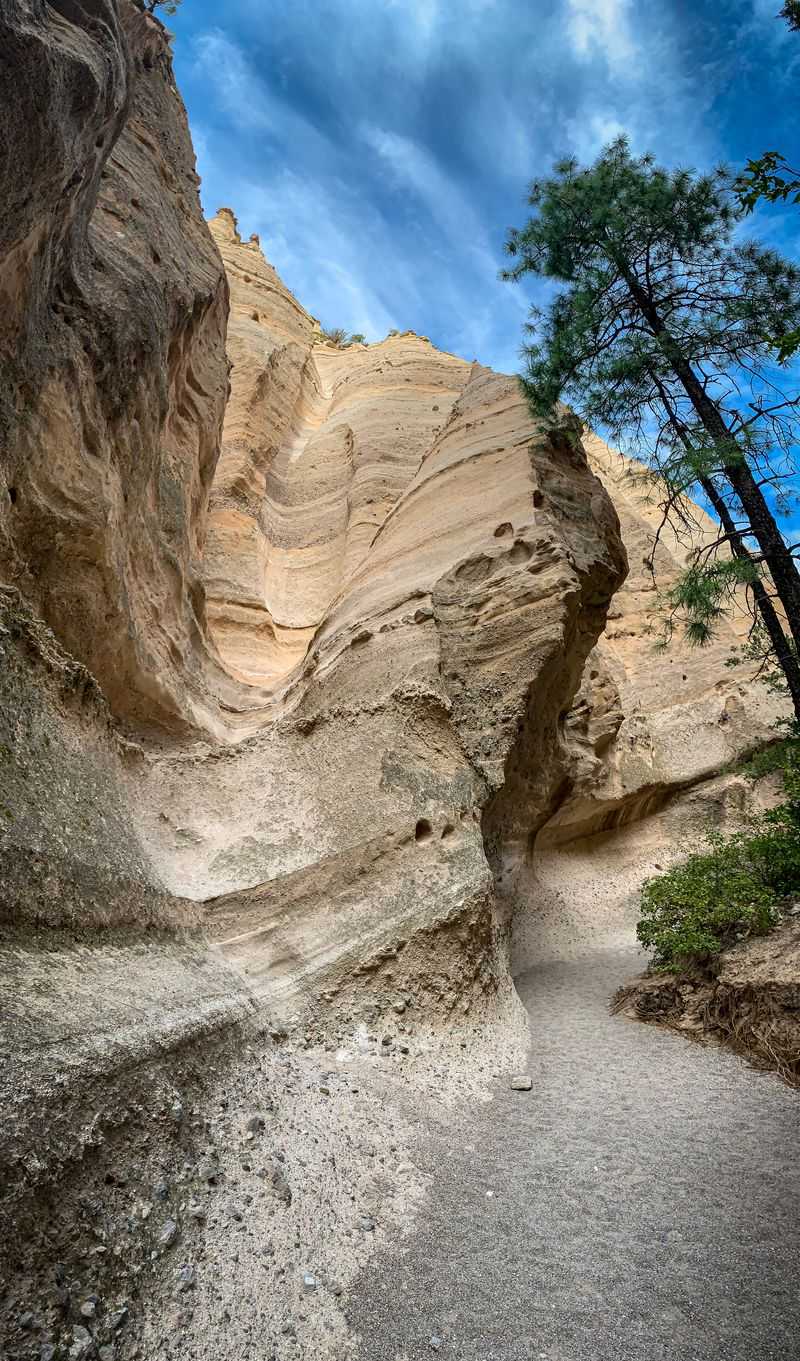
Trails wind through narrow slot canyons that feel like secret passages carved by wind and water.
Every turn reveals new colors and textures, from creamy cliffs to rose-tinted ridges.
It’s a geologic wonderland where adventure feels both magical and mischievous under the desert sky.
Trail overview and how to plan your visit
Kasha Katuwe Tent Rocks National Monument rewards early planners with a smoother day and a clearer sense of its rhythms.
The monument sits along 0 NM 22, Cochiti Pueblo, NM 87072, and its official website lists current hours, closures, and seasonal limits that often change with weather and cultural events.
Parking fills quickly on weekends in New Mexico, so arriving near opening time makes the slot section less crowded and the air cooler.
Two main trails frame most visits, with the Cave Loop offering a gentle warmup and the Slot Canyon Trail climbing toward a panoramic mesa view over striking tuff cones.
Rangers and posted boards advise visitors to carry water, wear sun protection, and watch for flash flood warnings that can alter plans without much notice.
Cell service is patchy, so downloading maps and trail info before leaving home helps you stay oriented once the canyon narrows.
Trail etiquette keeps the flow friendly, with hikers yielding in tight places and stepping aside for those descending steep sections first.
Winter days can glaze shaded rock with ice, while summer heat builds fast, so planning around New Mexico seasons pays off every mile.
Spring and fall give forgiving temperatures, cleaner skies, and fewer afternoon storms that sometimes pulse across nearby mesas.
You will want time for pauses, because each bend reveals new textures, light patterns, and volcanic layers that invite unhurried gazing.
Plan at least three hours for both trails if you like to linger, photograph, and enjoy the higher overlook in calm steps.
With that window, you can manage water breaks, short bottlenecks, and a measured climb that never feels rushed or uncertain.
Understanding the geology of the cone formations
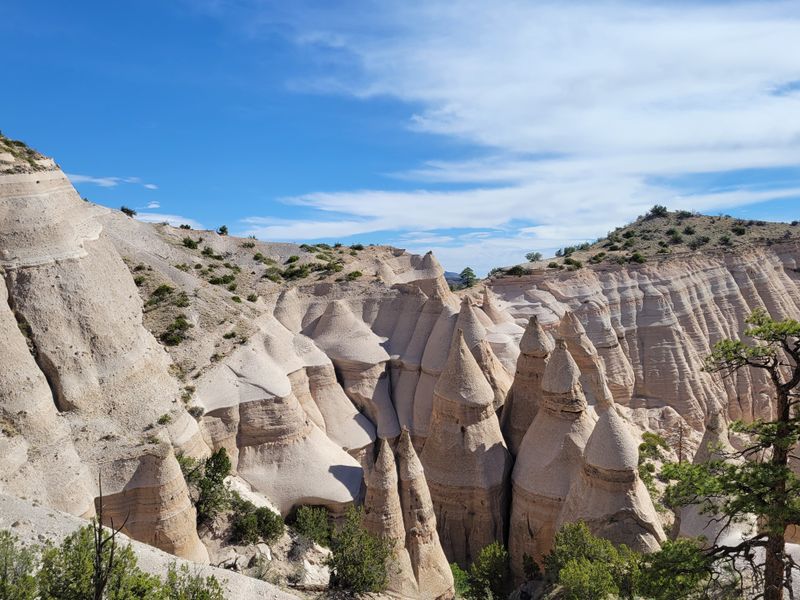
The cones at Kasha Katuwe look whimsical from afar, yet up close the story of their shapes unfolds in ash, pumice, and tuff.
Volcanic eruptions from the Jemez Mountains region laid down thick deposits that wind and water later carved into tapering spires with protective caprocks.
Those caps slow erosion beneath, so narrow necks and rounded shoulders survive while softer surrounding sediments weather away.
Color bands track changes in eruption pulses, with pale grays, creams, and subtle rust tones recording shifts in mineral mix and grain size.
When sunlight slides across an overcast sky, the layers show surprising contrast that feels like a living geology lesson in New Mexico.
You can read slopes like pages, noticing fallen caps near their old perches and aprons of sand that mark fresh seasonal changes.
The slot canyon slices through deposits and exposes internal architecture, where cross bedding and pebbly seams reveal dynamic flows.
Occasional embedded stones act as natural armor, leaving nubs and collars where softer tuff receded around harder inclusions.
Look for fragile fins that break into ribs and windows, which frame blue sky and create silhouettes that shift as you pass.
No two cones match exactly, because microdrainage and wind patterns sketch unique lifelines into each taper.
Erosion continues today at a patient pace, so scenes you photograph this year will show fresh edges in seasons ahead.
Watching these forms while you hike connects the land, the weather, and time itself, turning a simple walk into a layered discovery.
Navigating the Slot Canyon Trail safely and smoothly
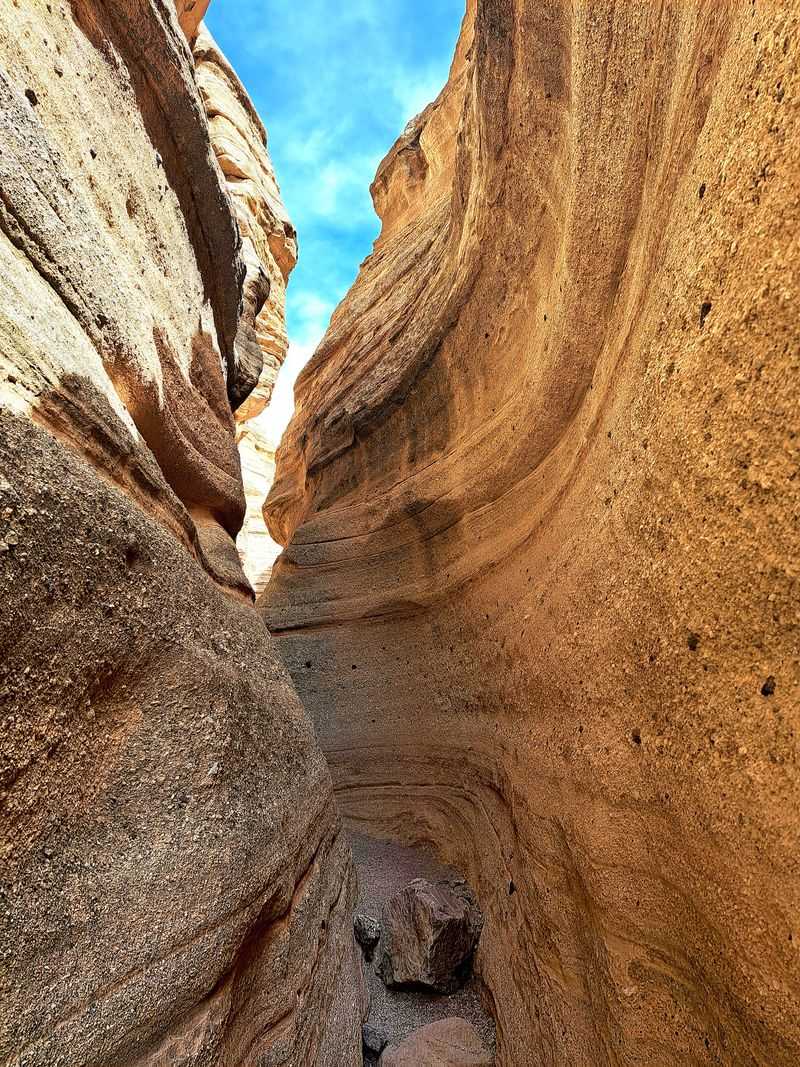
The Slot Canyon Trail tightens to shoulder width in places, so moving steadily and courteously makes the experience relaxing and fun.
Step aside at natural pullouts to let oncoming hikers pass, and keep poles tucked inward to avoid scraping delicate walls.
Sandy floor sections can hide loose pebbles, so short steps with solid foot placement reduce slips and keep your balance sure.
After the slot opens, the trail climbs through switchbacks toward the mesa, where sun exposure increases and breezes feel stronger.
Water breaks work best at wider spots, which keeps the flow moving and gives everyone space to breathe and reset.
The monument advises checking weather for storms since narrow corridors can funnel runoff after upstream rain in New Mexico.
Light layers help with changing shade and wind, while a brimmed hat and sunscreen protect during the exposed upper ascent.
Trail markers are straightforward, yet downloading the official map before arrival helps if crowds obscure junctions briefly.
You will find small steps and short scrambles, but nothing technical, though careful footing keeps the pace comfortable.
Rest near juniper shade when available, because the final push to the overlook rewards a calm heart rate and fresh eyes.
Keep voices low to appreciate echoes and birdsong, which soften the canyon mood and add to the serene acoustics.
Descending at a measured pace protects knees and reduces rock wear, leaving the path in better shape for future visitors.
Cave Loop highlights for a gentle introduction

The Cave Loop sets an easy tone with wide pathways, low grades, and steady views of clustered cones rising from pale slopes.
Interpretive signs share geology basics and cultural context, helping first time visitors connect landscape features with deeper stories.
Short spur paths lead to vantage points where layered tuff forms align like chess pieces under the big New Mexico sky.
You can move at a strolling pace and still collect plenty of photo moments without squeezing through tight passages.
Birdsong accompanies much of the loop, with occasional lizards darting across warm stones near sunny edges of the trail.
The route loops back to the main area, which simplifies timing if your group includes different energy levels or attention spans.
Benches appear at intervals, offering pauses where you can study caprock silhouettes and shifting shadows across ridgelines.
Morning light casts longer angles on the cones, while late afternoon softens contrast and warms the sandstone hues nicely.
Families often start here to learn the terrain, then decide whether the slot climb fits the day and the weather.
Clear signage makes navigation simple, and distance markers help you budget snacks and water for a relaxed circuit.
Along the loop, look for juniper berries and piñon cones, which add scent and texture to the gentle desert setting.
By the end, legs feel warmed and your senses tuned, ready for deeper exploration or an unhurried return to the trailhead.
Cultural respect and visiting etiquette on Pueblo lands
Kasha Katuwe stands within a broader cultural landscape, and respectful behavior helps maintain good relationships with neighboring communities.
Follow posted guidance at entrances and kiosks, which outline access rules, photography limits, and activity restrictions defined for this place.
Some areas may close for cultural observances or land management, and patience supports stewardship traditions that predate modern recreation.
Stay on designated trails, because wandering off can damage fragile soils and disturb plants that anchor slopes and prevent erosion.
Pack out all trash, even tiny bits of tape or wrappers, since wind can scatter light debris across wide spaces in New Mexico.
Keep voices moderate and allow others room for quiet, which honors the contemplative nature many visitors seek here.
Wildlife sightings should be enjoyed at a distance, with no feeding, and plenty of time for animals to move freely.
Commercial photography requires permits as posted by the Bureau of Land Management, so verify requirements before scheduling a shoot.
Drones are generally restricted, and complying with those limits preserves the calm soundscape that defines the slot experience.
Restrooms and parking areas concentrate impact, so using them thoughtfully helps keep surrounding terrain resilient and healthy.
Share right of way with a smile and a thank you, which models kindness for families and first time hikers.
Gratitude for access turns into care on the trail, keeping this special corner of New Mexico welcoming for years ahead.
Seasonal weather, closures, and best times to come
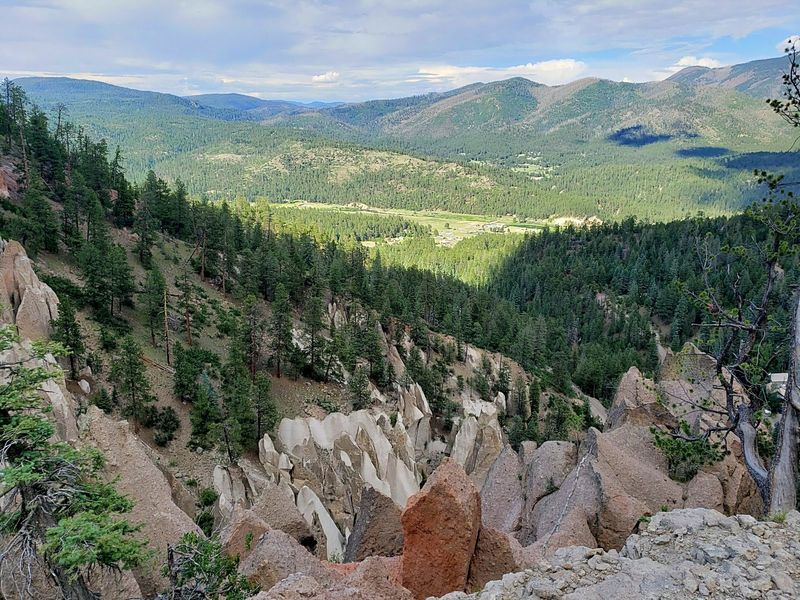
Weather shapes each visit to Kasha Katuwe, and seasonal shifts influence trail feel, parking demand, and light quality for photography.
Spring usually brings mild temperatures and breezy afternoons, which help with comfort while keeping dust moving through open spaces.
Summer heat can rise quickly by late morning, so dawn arrivals reduce stress and expand your energy for the mesa climb.
Monsoon storms often build in July and August, which can trigger temporary closures to protect visitors inside narrow slots.
Autumn offers stable days with warm sun and cool shade, making longer circuits pleasant without heavy layers in New Mexico.
Winter highlights crisp air and high clarity, though icy patches linger where the canyon holds low angled light.
Before driving, check the official BLM page for current notices, as access hours and limits can change on short notice.
Holiday weekends fill early and may require patience at the entrance, which affects timing for those aiming at the overlook.
Windy days kick up grit that finds eyes and lenses, so glasses or a simple bandana add comfort along exposed ridges.
Cloud cover softens harsh midday contrast and brings a gentle glow to pale tuff textures seen from the main trail.
Carry layers year round, because shade temperature inside the slot differs from sunlit stretches above the canyon.
Flexible plans and a weather eye ensure you leave satisfied, with memories shaped by sky drama rather than avoidable surprises.
What to pack and wear for comfort and safety
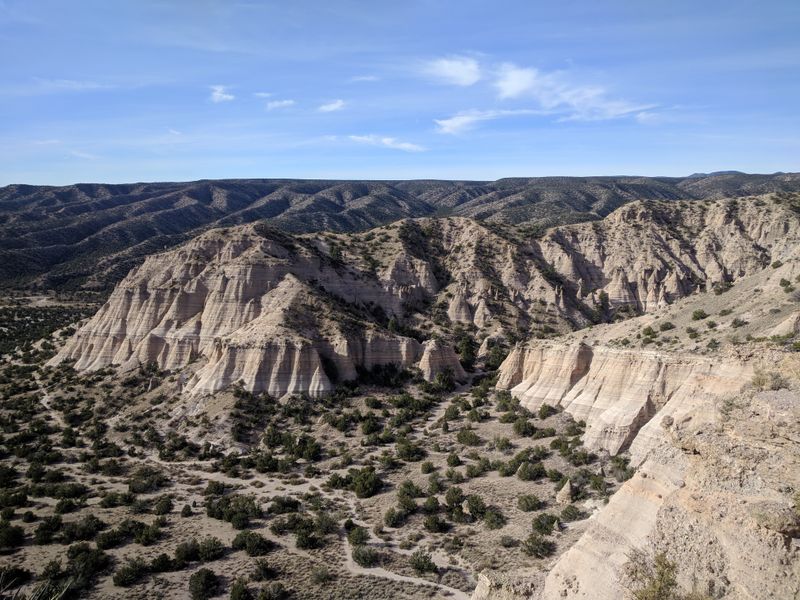
Packing light yet smart keeps the day easy and leaves more attention for the canyon textures and sweeping mesa views.
Sturdy closed toe hiking shoes grip sandy slabs and small steps, which appear frequently as the trail gains elevation.
At least two liters of water per person suits most seasons, with more for hot stretches typical of New Mexico summers.
A brimmed hat and mineral sunscreen handle long exposures, while a light cooling layer helps during breezy overlooks.
Map downloads or a paper backup fill the cell service gap, especially at junctions where crowds may block signs.
Compact first aid with blister care prevents small issues from growing into limp inducing problems on the descent.
Trekking poles fold away during the narrowest sections, then shine on switchbacks where they steady ankles and knees.
Simple gloves add comfort when scrambling short ledges, and sunglasses with good coverage reduce glare off pale tuff.
A small trash bag keeps micro litter contained, which supports the leave no trace ethic that protects the monument.
Camera bodies and lenses ride best in padded slings, with dust covers helpful on windy days above the slot.
Snacks store neatly in sealed pouches that do not shed crumbs, which avoids attracting wildlife along quiet bends.
With these basics dialed, you can lean into the moment and enjoy the flow from canyon shade to sunlit rim.
Photography tips for light, composition, and timing
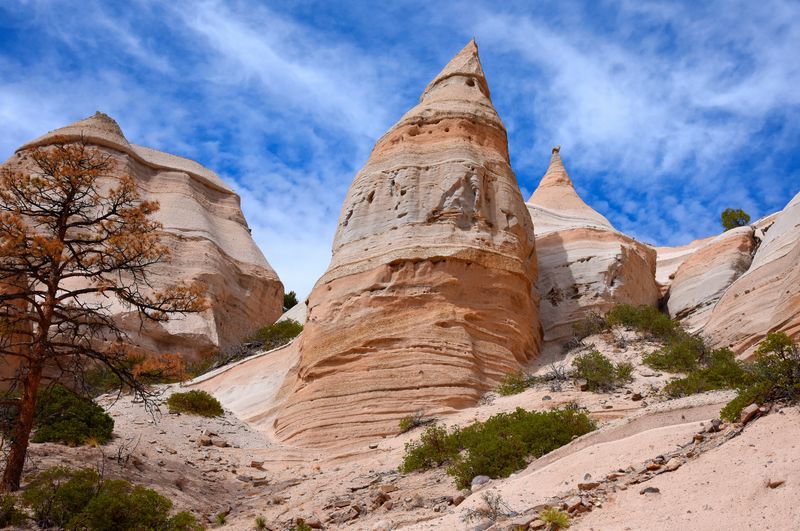
Light bounces beautifully inside the slot, so aim for mid morning or late afternoon when reflected glow softens harsh highlights.
Expose for the brightest wall and lift shadows later, which protects color and keeps sky slivers from blowing out.
Tripods can clog tight spots, so handhold with higher ISO and use walls sparingly for gentle bracing.
Compose upward to include curves meeting the sky, then switch to ground level for ripples in sand and pebble constellations.
Look for converging lines where the canyon narrows, since those angles pull viewers through the frame with natural motion.
On the mesa, anchor images with a foreground cone, then layer distant mesas and cloud stacks common in New Mexico.
Windy days create texture in grasses and branches that adds life to otherwise static rock portraits.
Minimal gear reduces fatigue and leaves hands free for small scrambles between sculpted shelves and gentle ledges.
Clean lenses often, because fine dust settles quickly and softens contrast in the most detailed scenes.
Polarizers can help skies but sometimes mute warmth in reflected light, so test and adjust with quick comparisons.
Respect others by keeping gear tight to your body and waiting for clear moments rather than forcing the path.
Patience turns corners into opportunities, and a few quiet breaths can reveal light you might have missed seconds earlier.
Accessibility notes and options for varied abilities
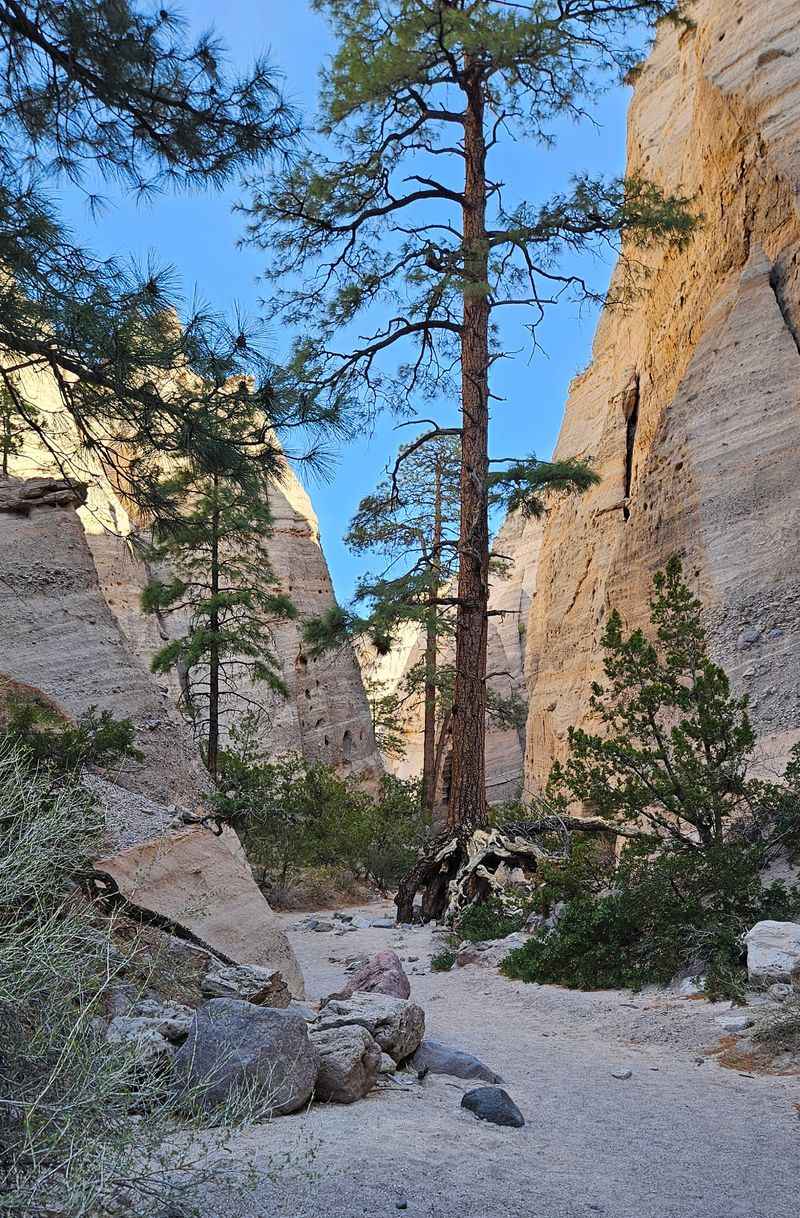
Accessibility at Kasha Katuwe varies by section, with the trailhead area and initial stretches offering the smoothest surfaces.
Parking includes marked accessible spaces near information boards, which shortens the transfer from vehicle to shaded benches.
The Cave Loop begins gently, though natural terrain introduces uneven patches that may challenge some mobility devices.
The Slot Canyon narrows and adds steps and scrambles, which generally do not suit wheelchairs or strollers on typical days.
Benches along wider segments allow restorative pauses, and shade breaks help manage temperature changes between canyon and mesa.
Restrooms at the main area provide basic facilities, though distances to features still require planning and realistic pacing.
Visual contrast on pale rock can be intense, so sunglasses and brimmed hats reduce glare for more comfortable navigation.
Those who prefer level ground can enjoy expansive views from the start area where sculpted cones appear across the flats.
Friends and family can coordinate out and back plans that keep everyone within communication range near the earlier junctions.
Speak with rangers if available, since current conditions like sand depth or ice affect the practical feel of each segment.
Photos and vantage points near the entrance provide satisfying glimpses without committing to steeper grades above the slot.
Thoughtful pacing and clear expectations make the site welcoming for mixed groups seeking a shared New Mexico experience.
Leave No Trace and wildlife awareness in a fragile place
Leave No Trace principles guide every step at Kasha Katuwe, protecting delicate soils and the living communities they support.
Stay on established paths to prevent crust damage, which takes years to heal and stabilizes sand against wind and rain.
Pack out all trash and micro litter, including tissue and tape, to keep habitats free of invasive fragments and hazards.
Wildlife lives quietly here, and observing from a distance lets animals pursue daily routines without altered behavior.
Never feed birds or small mammals, since human food changes diet patterns and reduces natural foraging instincts.
Keep gear close to the ground during breaks, because wind can lift bags and scatter items across gentle slopes in New Mexico.
Photographers can step aside for shots rather than trampling vegetation, which protects roots that anchor erodible edges.
Respect seasonal advisories that limit access for nesting or restoration projects, and tell companions why those rules matter.
Sound carries in the slot, so quiet voices help preserve the calm and allow you to hear subtle wildlife cues.
Water management matters in arid places, so choose biodegradable sunscreen and avoid washing in sensitive puddles.
Teach kids simple checks like spotting cryptobiotic crust and recognizing burrows, which turns care into a shared game.
Every small habit adds up, leaving the monument resilient and ready to inspire others who visit after your day ends.
Dear Reader: This page may contain affiliate links which may earn a commission if you click through and make a purchase. Our independent journalism is not influenced by any advertiser or commercial initiative unless it is clearly marked as sponsored content. As travel products change, please be sure to reconfirm all details and stay up to date with current events to ensure a safe and successful trip.
