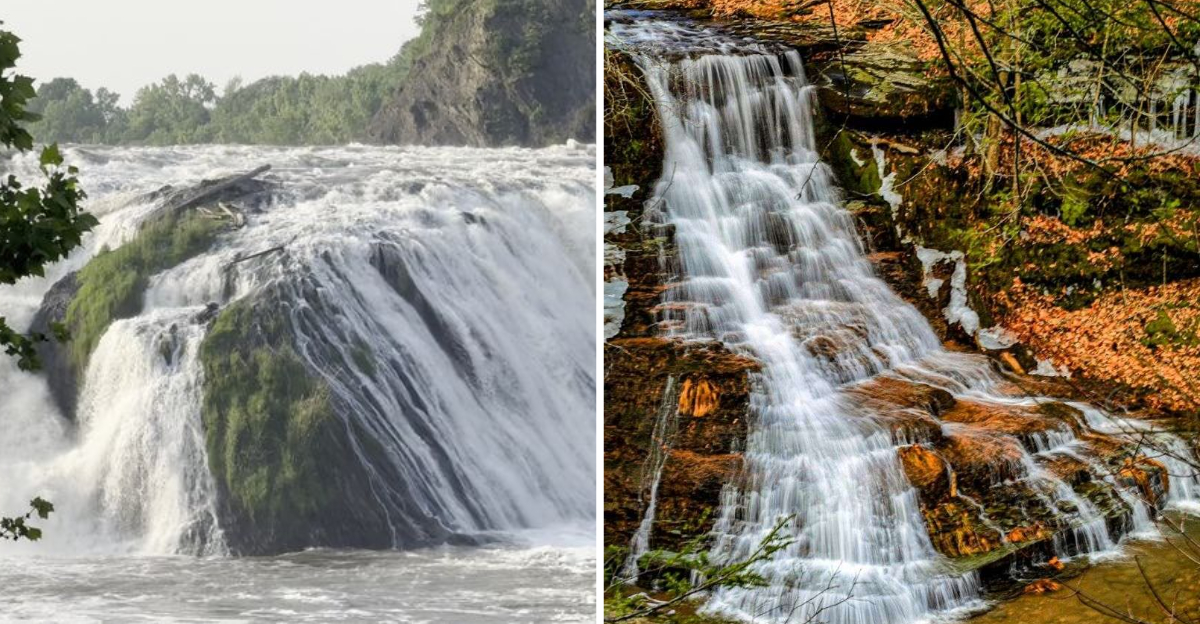
New York hides jaw-dropping surprises along rocky gorges and quiet creek beds. Waterfalls with wild stories wait in forgotten corners of the state.
One waterfall engineers literally turned off. Another had its water rerouted so completely that locals barely remember it existed.
These are not polished tourist stops you see on postcards. What makes this journey so unforgettable is a mix of natural beauty, human interference, and a little bit of outright theft tying all five locations together.
Traveling through New York chasing these falls felt less like sightseeing and more like solving a mystery with muddy boots and a lot of curiosity. Each stop revealed something new about how people and water have wrestled for control of the landscape for well over a century.
A turned valve here, a stolen stream there, and suddenly a waterfall vanishes or reappears like magic. Nature always fights back, but humans keep trying anyway.
Bridal Veil Falls, Olean
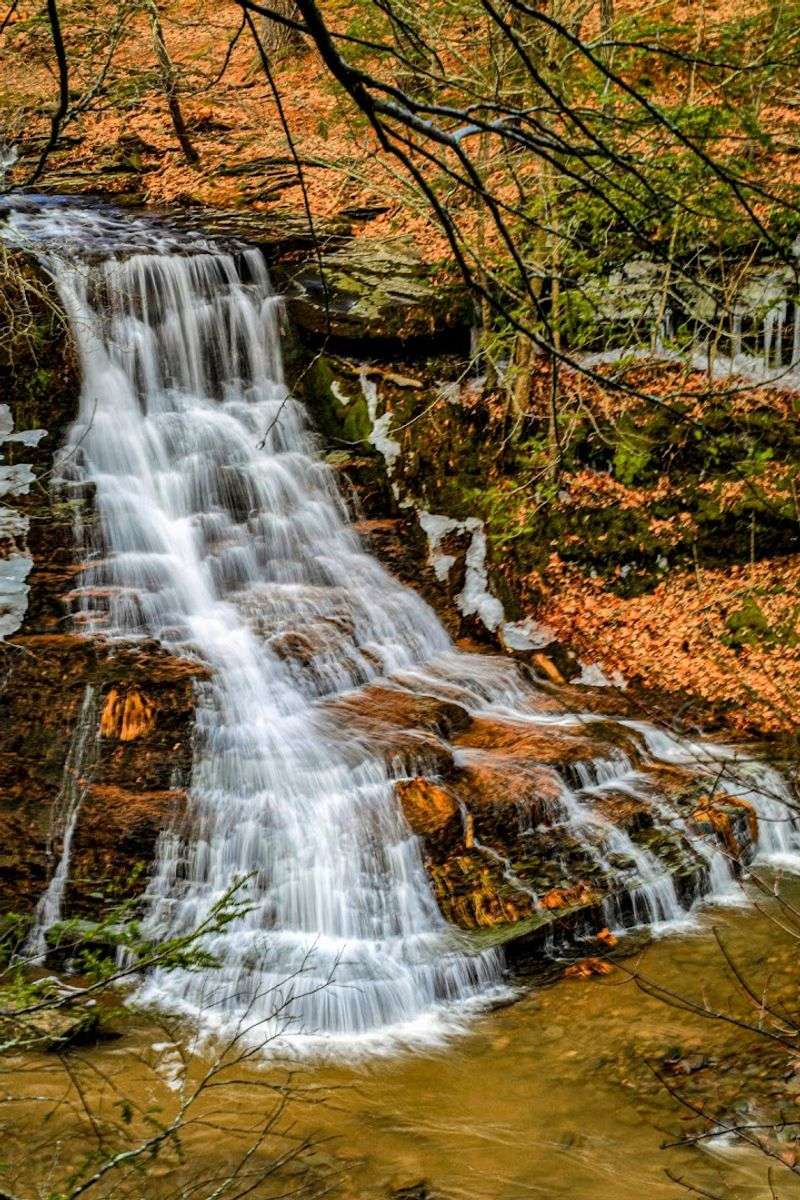
There is something quietly dramatic about Bridal Veil Falls in Olean that catches you off guard the first time you see it. The falls drop in a thin, elegant sheet over a ledge that looks almost too perfectly shaped, like someone carved it by hand.
That impression is not entirely wrong.
Over the decades, the flow here has been reduced significantly due to upstream water diversions tied to local development and municipal water management. What once roared now whispers, and longtime residents of the area will tell you the falls are a shadow of what they used to be.
That half-gone quality gives Bridal Veil a melancholy kind of beauty. The surrounding forest is lush and the trail leading down to the base is short but rewarding.
You can still feel the cool mist on your face even when the volume is low.
It is a place that rewards patience and a slow pace. Bring a light jacket because the air near the base stays noticeably cooler than the surrounding woods.
The falls may be quieter than they once were, but the atmosphere around them is anything but forgettable.
Cohoes Falls, Cohoes
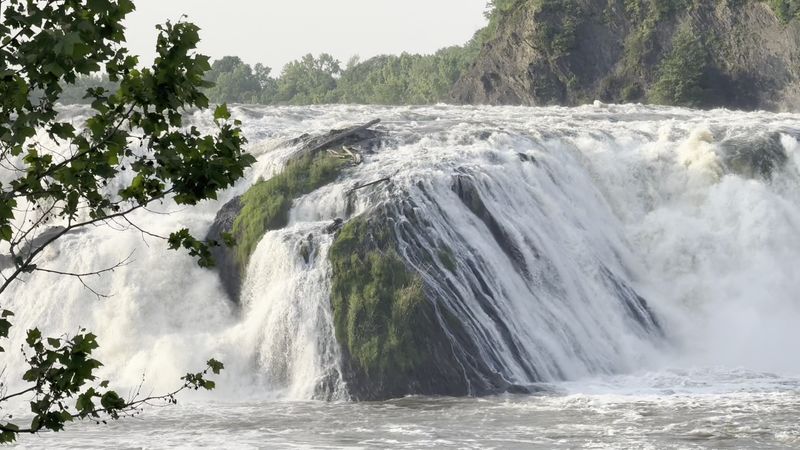
Cohoes Falls has one of the most unusual histories of any waterfall in the entire northeastern United States. At full flow, it stretches nearly 1,000 feet wide and drops about 70 feet, making it genuinely massive.
But full flow does not happen very often anymore.
The Mohawk River, which feeds the falls, has been heavily managed since the 19th century to power the textile mills that once made Cohoes a manufacturing powerhouse. Today, most of the water is diverted before it ever reaches the falls.
During dry seasons, the entire drop can run nearly bone dry, leaving only bare rock where a thundering curtain of water once stood.
Seeing it in that state is both eerie and fascinating. The exposed shale and limestone tell a geological story that the water usually hides.
Fossils have been found in those rocks, including the famous Cohoes Mastodon discovered nearby in 1866.
When the water does run high after heavy rains or snowmelt, Cohoes Falls transforms completely and becomes one of the most powerful sights in the state. Timing your visit after a good rain is absolutely worth the effort.
The viewing area off Cataract Street gives you a front-row seat to the whole spectacle.
The Cascades, Upper Lisle
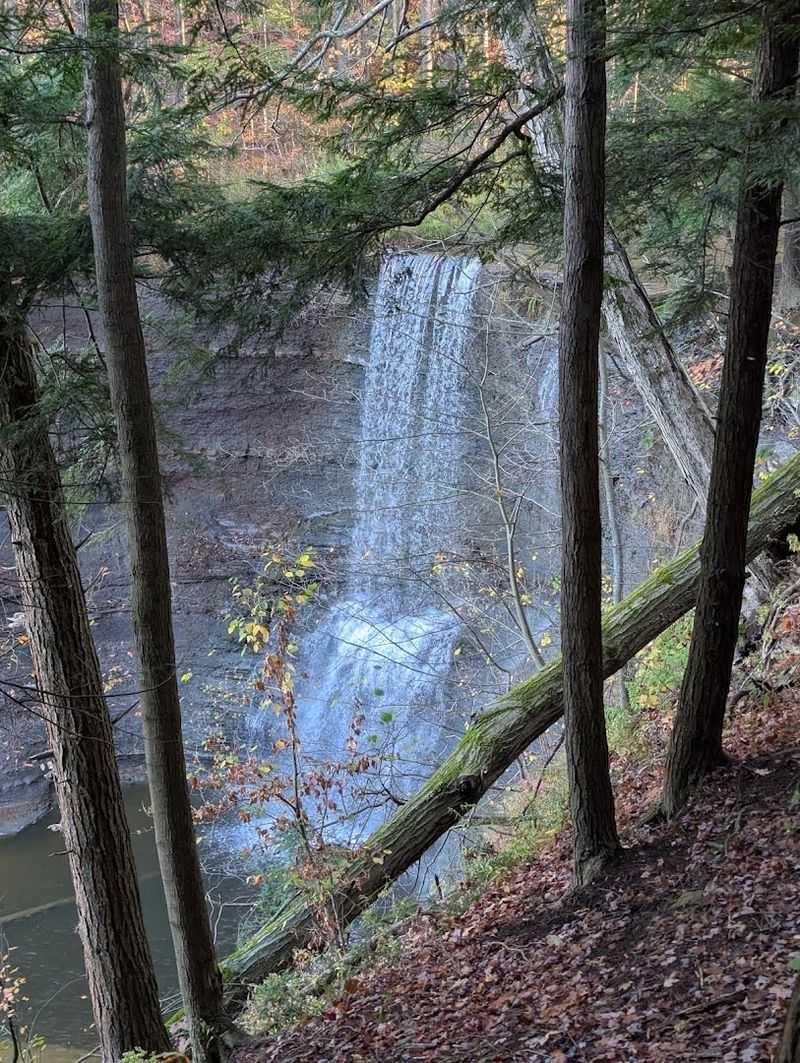
Upper Lisle is the kind of place that does not show up on most travel itineraries, which is exactly what makes it worth seeking out. The Cascades here are a series of stepped drops along a small creek that cuts through a narrow gorge lined with hemlocks and ferns.
It feels genuinely remote even though it is not far from the road.
The story that draws people here beyond just the scenery involves a long-running dispute over water rights that effectively reduced the flow through this section of creek for years. Upstream agricultural operations and a small dam project altered how much water reached the cascades, and at certain times of year the drops barely trickle.
There is something oddly compelling about a place that has been quietly fought over for so long. The landscape holds that tension in a way you can almost feel underfoot on the slippery shale ledges.
Locals who grew up exploring here remember when the sound of the water could be heard from the road.
The best time to visit is spring, when snowmelt pushes the creek back to something close to its original volume. Even at lower flows, the layered rock formations and the hemlock canopy overhead make this a genuinely atmospheric stop on any upstate road trip.
The Vanishing Falls of Split Rock, Syracuse
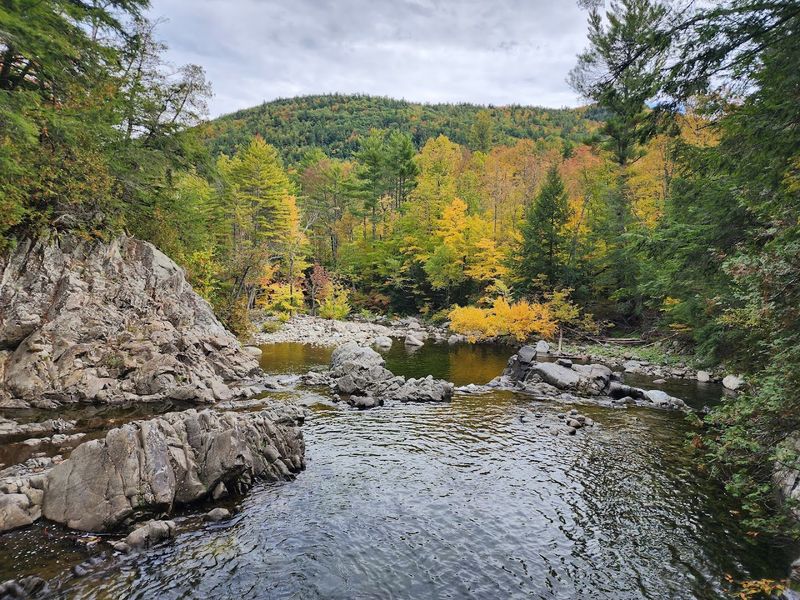
Few waterfall stories in New York are as genuinely strange as what happened at Split Rock near Syracuse. There was once a notable cascade here fed by a small but steady stream that carved its way through the local limestone over thousands of years.
Then it essentially vanished.
The culprit was a combination of industrial-era quarrying and a deliberate rerouting of the water source to serve a nearby processing facility. The stream was redirected so completely that the original channel dried up, and the falls ceased to exist in any meaningful way.
What remains today is a dry gorge with water stains on the rock walls that serve as the only evidence of what was once there.
It is a haunting place to visit. The absence of sound is the first thing you notice, that hollow quiet where rushing water should be.
The rock walls still bear the smooth, curved shapes that only moving water carves over centuries.
Local historians and geology enthusiasts have documented the site carefully, and there are occasional community discussions about whether any restoration is feasible. For now, it stands as one of the most complete examples of a waterfall that was not just altered but effectively stolen from the landscape entirely.
Visiting it feels like paying respect to something lost.
The Hijacked Falls, Ithaca
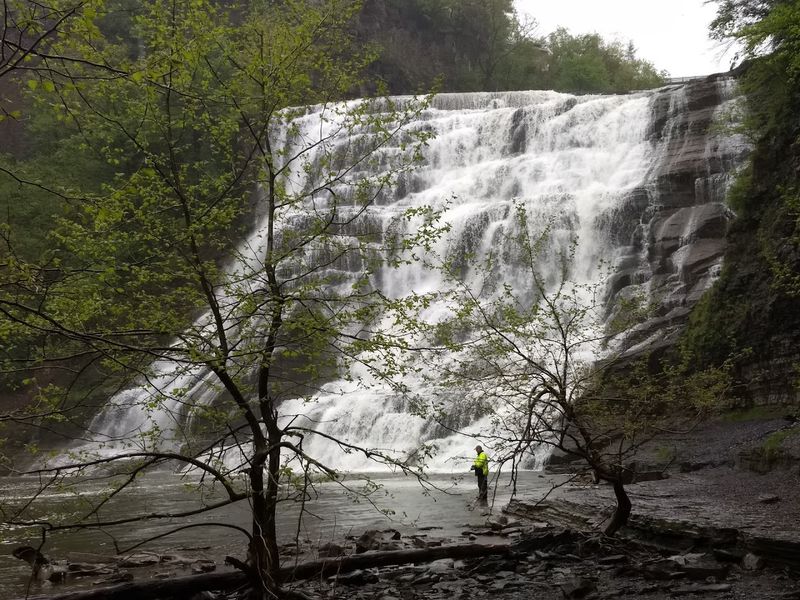
Ithaca is famous for its gorges and waterfalls, and the phrase “Ithaca is gorges” gets printed on enough bumper stickers to prove it. But tucked behind the well-photographed classics is a smaller falls with a genuinely aggravating backstory that locals have not entirely let go of.
In the early 20th century, a private landowner constructed a diversion channel that redirected a significant portion of the stream feeding this particular cascade toward a private mill operation. The falls did not disappear entirely, but they were cut down to roughly half their original width and volume almost overnight.
The diversion infrastructure is still visible today, a crumbling concrete channel that sits just upstream from where the full falls once ran.
What makes this stop so interesting is how the landscape tells the story without any signage needed. You can trace exactly where the water was stolen just by following the old channel with your eyes.
The remaining falls are still beautiful, framed by the kind of dramatic gorge walls that Ithaca does so well.
Getting here requires a bit of a walk on an unmarked trail, which keeps the crowds thin. That quiet, combined with the visible evidence of old interference, gives the whole place an investigative energy that feels different from anywhere else on this route.
It rewards the curious traveler above all others.
