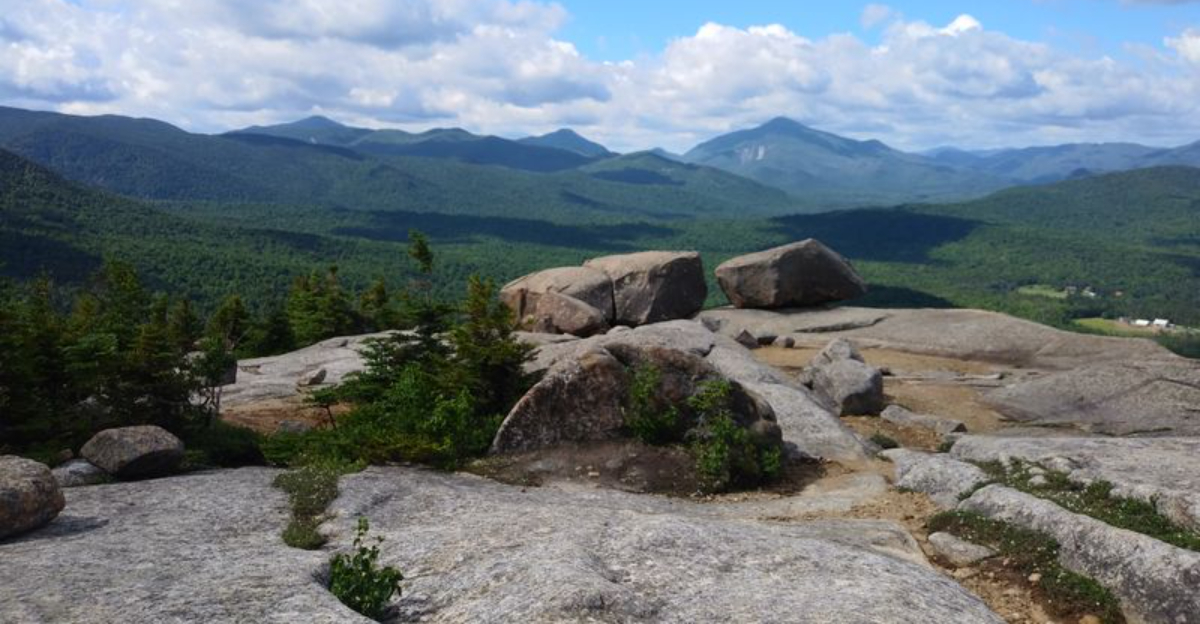
New York State holds more than skyscrapers and city streets within its borders.
Mountain ranges stretch across the landscape, offering adventurers countless opportunities to explore nature’s wonders.
While popular peaks attract crowds year-round, lesser-known mountains harbor secret pathways that few hikers ever encounter.
These hidden trails wind through forests, climb rocky outcrops, and reveal breathtaking views that reward those willing to venture off the beaten path.
Discovering these secluded routes requires curiosity, preparation, and a sense of adventure.
Each mountain featured here contains trails that remain relatively undiscovered, providing peaceful experiences far from crowded tourist spots.
Whether you seek solitude in nature, challenging climbs, or simply new places to explore, these seven mountains deliver unforgettable journeys.
Pack your hiking boots, grab your water bottle, and prepare to uncover trails that have been waiting for explorers like you.
Sleeping Beauty Mountain
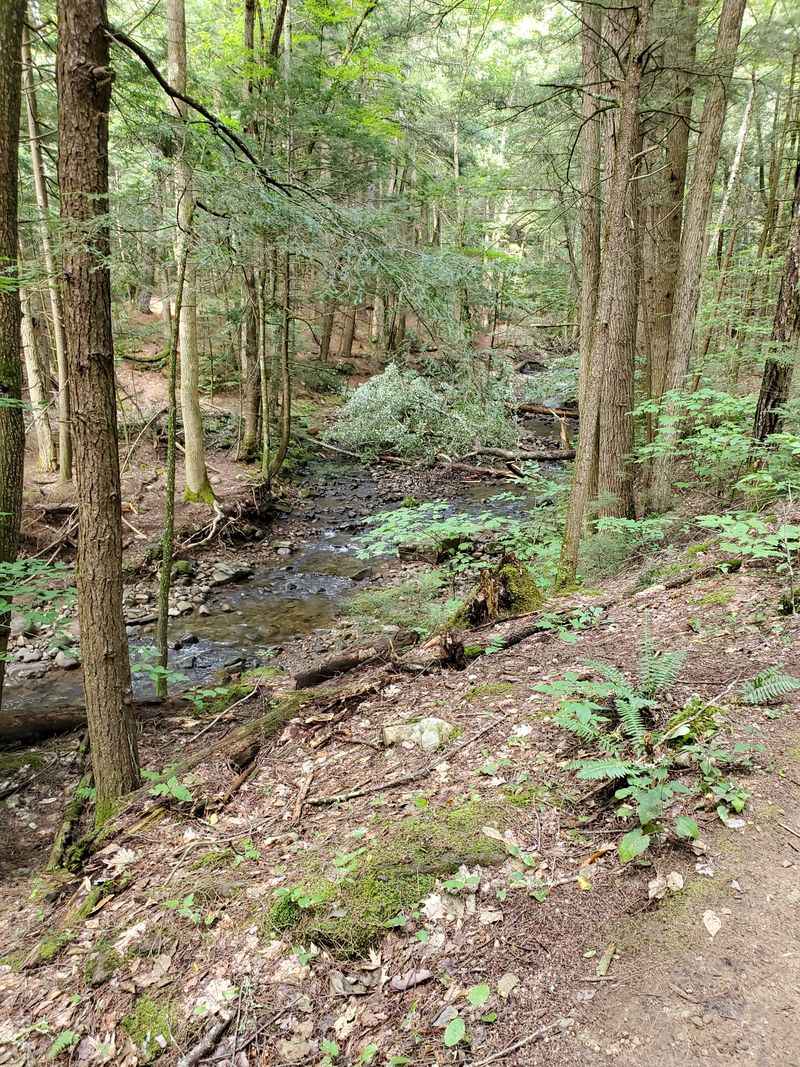
Tucked away in the southeastern Adirondacks near Lake George, this mountain earned its name from the profile its ridgeline creates against the sky.
Most visitors flock to more famous Adirondack peaks, leaving Sleeping Beauty’s trails refreshingly quiet throughout most of the year.
The main trail stretches roughly three miles round trip, climbing steadily through hardwood forests that burst into brilliant colors each autumn.
Hikers encounter smooth bedrock sections that require careful footing, especially after rainfall when surfaces become slippery.
The summit rewards climbers with panoramic views of Lake George stretching northward, its islands dotting the blue water like scattered emeralds.
Beyond the standard route, experienced hikers discover unofficial side paths that branch toward hidden overlooks and secluded rock formations.
These unmarked trails demand navigation skills and caution but offer solitude impossible to find on busier routes.
Spring brings wildflowers to the lower elevations, while summer provides shade under the thick forest canopy.
Winter transforms the mountain into a challenging snowshoe destination, though ice on exposed rock requires extra equipment and experience.
The trailhead sits along Shelving Rock Road, accessible from Route 149 east of Lake George village.
Parking fills quickly on weekend mornings during peak seasons, so arriving early ensures a spot and maximizes your chances of hiking in peaceful solitude.
Remember to carry plenty of water, as no reliable sources exist along the trail.
This mountain perfectly balances accessibility with the feeling of discovering something special that not everyone knows about yet.
Overlook Mountain
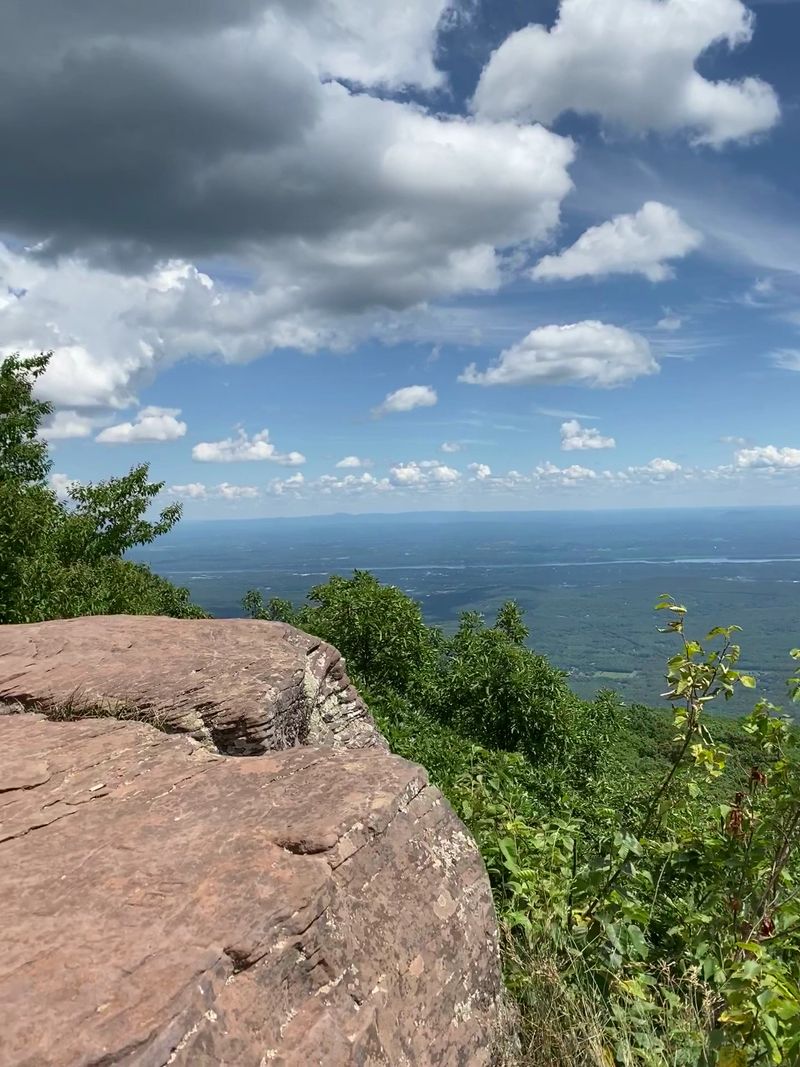
Rising above the artistic community of Woodstock, this Catskill peak holds secrets that extend beyond its well-traveled main path.
The primary attraction draws hikers to the abandoned Overlook Mountain House ruins, a once-grand hotel now reclaimed by nature.
However, adventurous explorers find lesser-known trails branching from the main route, leading to quiet spots where few footsteps have trodden.
The ascent begins on a wide carriage road that served the historic hotel, making the initial climb gentle enough for families.
As elevation increases, the forest transitions from mixed hardwoods to evergreens that fill the air with their distinctive scent.
Near the summit, the crumbling concrete hotel ruins stand as haunting reminders of past grandeur, their empty windows framing mountain vistas.
A fire tower rises above the ruins, offering 360-degree views that stretch across the Hudson Valley toward distant ranges.
The hidden trails appear as faint paths diverging from the main route, requiring sharp eyes to spot their entrances.
These secret routes wind through dense undergrowth to secluded clearings perfect for quiet contemplation or private picnics.
Wildlife sightings increase along these quieter paths, with deer, foxes, and countless bird species making regular appearances.
The trailhead begins at the end of Meads Mountain Road in Woodstock, where parking spaces fill rapidly on pleasant weather days.
Local hikers recommend visiting on weekday mornings or during shoulder seasons to avoid crowds concentrated around the ruins.
Bring a flashlight if you plan to explore the hotel remains, though caution is essential as structures continue deteriorating.
Black Mountain
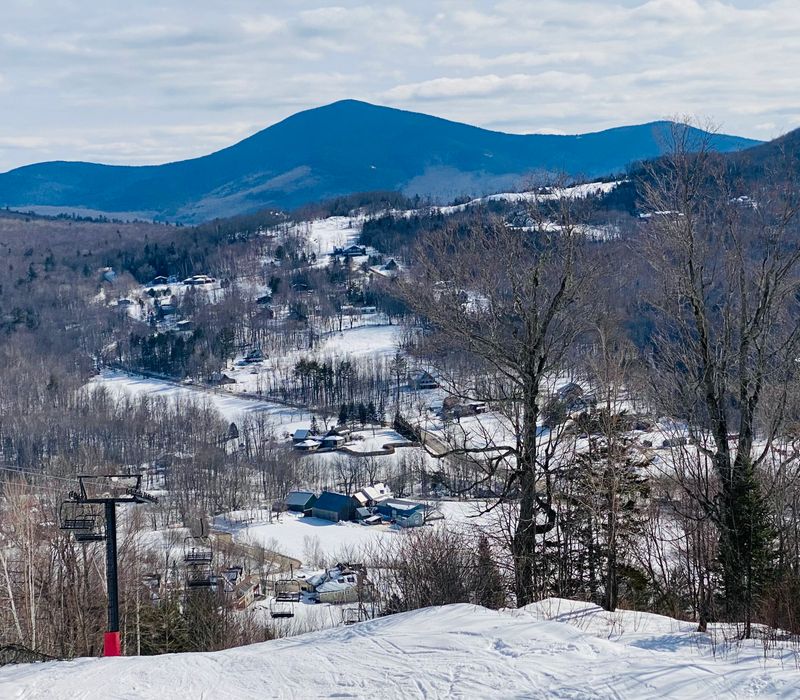
Standing as the tallest peak in the Lake George Wild Forest, this mountain offers more than just its popular summit trail.
Experienced hikers discover a network of unmarked paths that crisscross the mountain’s flanks, leading to forgotten viewpoints and pristine wilderness.
The standard route climbs steadily for about five miles round trip, passing through diverse ecosystems that change with elevation.
Lower sections wind through mature hardwood forests where spring brings trilliums and other wildflowers carpeting the forest floor.
As you ascend, the vegetation shifts to boreal species more commonly found hundreds of miles north.
The summit provides breathtaking views across Lake George, with the High Peaks visible on clear days to the northwest.
What many hikers miss are the side trails that branch off before reaching the top, leading to quiet ponds and moss-covered boulder fields.
These hidden routes require map-reading skills and careful attention to subtle trail markers like cairns and blazes.
One particularly rewarding detour leads to a natural spring where cold, clear water bubbles from the mountainside year-round.
Another secret path descends to a cliff edge offering dramatic views without the crowds gathered at the main summit.
The trailhead sits on Pike Brook Road, reached via Route 22 and County Route 6 near Whitehall.
This remote access point means fewer hikers compared to mountains closer to major towns.
Pack layers regardless of season, as temperatures drop noticeably with elevation and wind exposure increases near rocky outcrops.
This mountain rewards those willing to explore beyond the obvious paths with solitude and natural beauty.
Tongue Mountain
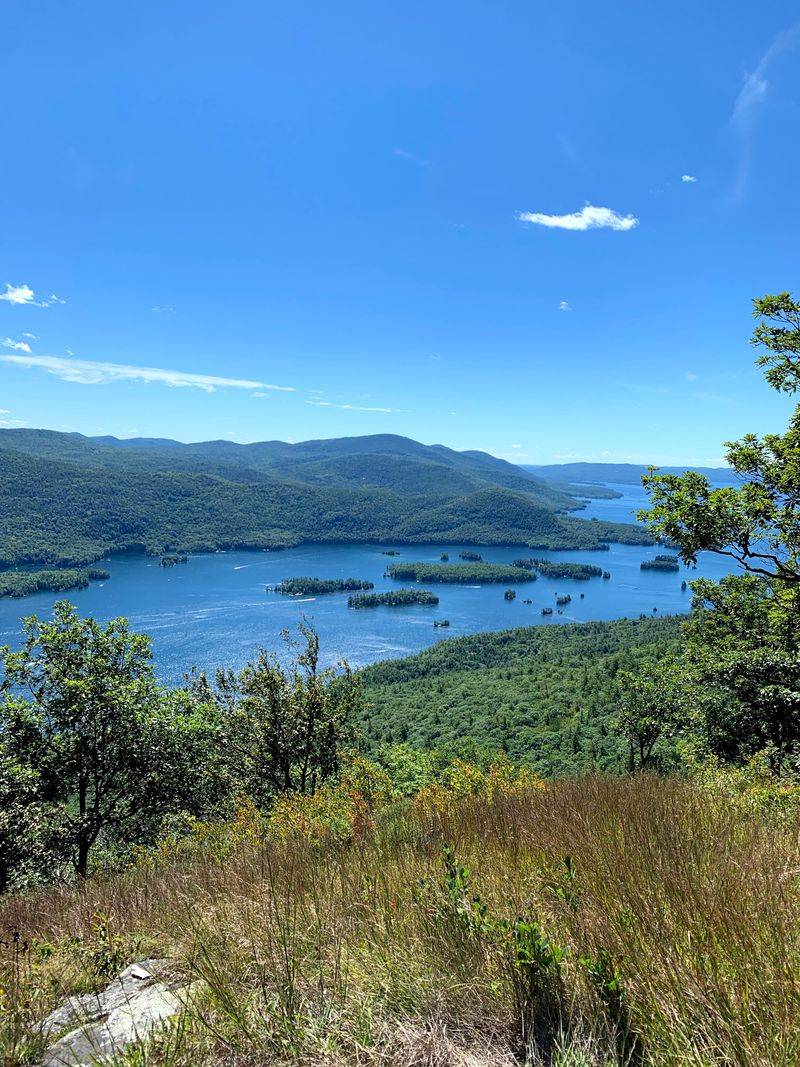
This distinctive peninsula juts into Lake George like a giant finger, creating one of New York’s most unique hiking experiences.
While the Tongue Mountain Range Trail sees moderate use, numerous unmarked paths branch from it, offering solitude seekers alternative routes.
The range actually consists of multiple peaks connected by a ridgeline trail that stretches approximately thirteen miles end-to-end.
Most day-hikers tackle shorter sections, but the entire traverse rewards backpackers with primitive campsites and ever-changing lake views.
The ridge walk alternates between forested sections and open rock outcrops where hikers can spot boats far below on the sparkling water.
Hidden trails descend from the ridgeline toward the lakeshore, though these steep routes demand careful navigation and strong knees.
Some paths lead to secluded coves accessible only by foot or boat, perfect for swimming on hot summer afternoons.
Spring peepers and wood frogs create a chorus in the wetlands at lower elevations, while hawks and eagles soar along the ridge.
The northern trailhead begins at Clay Meadow, while the southern access point sits near Montcalm Point, both off Route 9N.
Through-hikers often arrange car shuttles or use the seasonal water taxi service that operates on Lake George during summer months.
Water sources along the ridge remain scarce, so carrying adequate supplies becomes essential, especially during dry periods.
Rattlesnakes inhabit the rocky areas, particularly on south-facing slopes, so watch your step and give these shy creatures space.
The varied terrain and multiple access points make this range perfect for customizing hikes based on skill level and available time.
Pitchoff Mountain
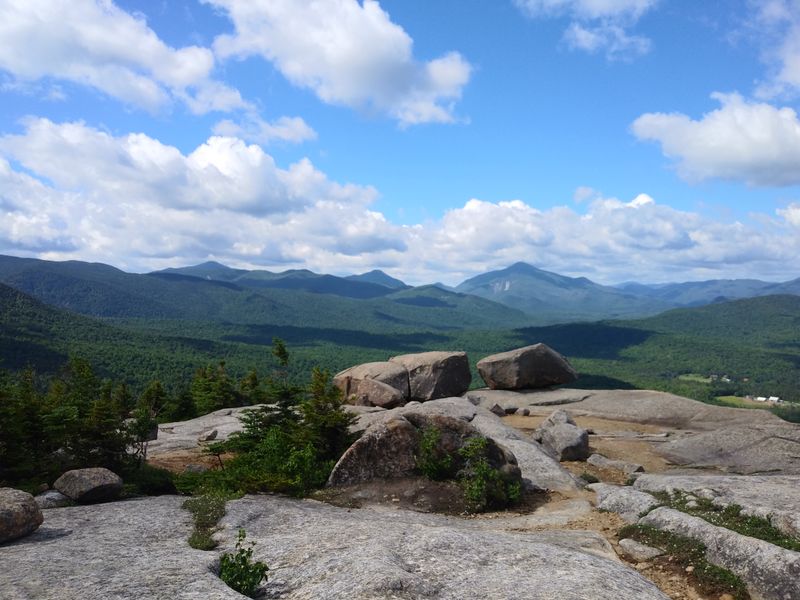
Overshadowed by its taller neighbor Cascade Mountain across the highway, Pitchoff remains delightfully under-hiked despite offering equally stunning views.
The mountain features a dramatic ridgeline with multiple summits connected by a trail that challenges hikers with steep climbs and exposed scrambles.
Between the official peaks lie hidden nooks where adventurous souls discover private perches overlooking the High Peaks region.
The eastern approach from Route 73 climbs steeply through dense forest before breaking onto open ledges with heart-stopping dropoffs.
These exposed sections require sure footing and a head for heights, but the payoff includes views of Cascade Lakes gleaming far below.
The western descent offers a gentler grade, making a traverse hike possible for those willing to arrange transportation between trailheads.
Off the main trail, faint paths lead to cliff edges and hidden caves formed by massive boulders leaning against each other.
These secret spots remain known primarily to local climbers who use Pitchoff’s cliffs for technical rock climbing practice.
Hikers should exercise extreme caution near cliff edges, as falls have occurred on this mountain’s exposed sections.
Autumn transforms the surrounding forests into a tapestry of reds, oranges, and golds that contrast beautifully with the gray bedrock.
The trailhead parking areas sit directly along Route 73 between Keene and Lake Placid, making access straightforward.
This convenient location means you can easily combine a Pitchoff hike with visits to nearby attractions or other trail systems.
Despite its accessibility, the challenging terrain keeps crowds manageable compared to neighboring peaks.
Bring trekking poles for stability during steep sections and pack extra snacks to fuel your scrambling efforts.
Crane Mountain
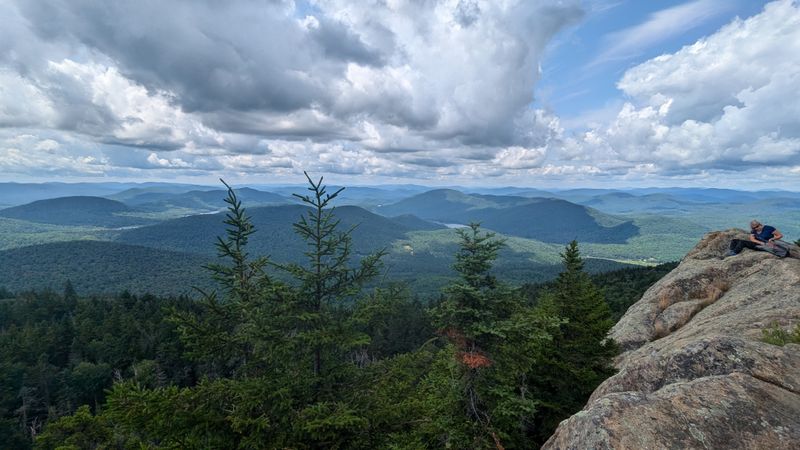
Located in the southern Adirondacks near Johnsburg, this mountain offers a wilderness experience that feels far more remote than its modest elevation suggests.
The summit provides a rare combination of features: dramatic cliffs, a pristine mountain pond, and sweeping views across endless forest.
Most hikers follow the standard trail to the top, but explorers find numerous unmarked paths circling Crane Mountain Pond and leading to hidden overlooks.
The main trail climbs steadily for about three miles, passing through forests that transition from hardwoods to evergreens as elevation increases.
Near the summit, the trail emerges onto open bedrock where hikers must carefully navigate smooth stone slabs.
Crane Mountain Pond sits in a natural depression just below the highest point, its dark waters reflecting surrounding cliffs and sky.
Primitive campsites dot the pond’s shoreline, offering backpackers a chance to wake up to pristine wilderness views.
The hidden trails around the pond lead to private swimming spots and fishing locations where brook trout still thrive.
Another secret path branches from the main route before the summit, descending to a series of caves formed by house-sized boulders.
These natural shelters once provided refuge for hunters and trappers, their stone fire rings still visible after decades.
The trailhead begins on Ski Hi Road, accessible from Route 8 west of Johnsburg via several turns on rural roads.
Detailed directions and a good map become essential, as cell phone service disappears long before reaching the parking area.
This remoteness contributes to the mountain’s appeal, ensuring that those who make the effort enjoy relatively solitary experiences.
Pack everything you need, including first aid supplies, as help lies far away if emergencies arise.
Giant Mountain
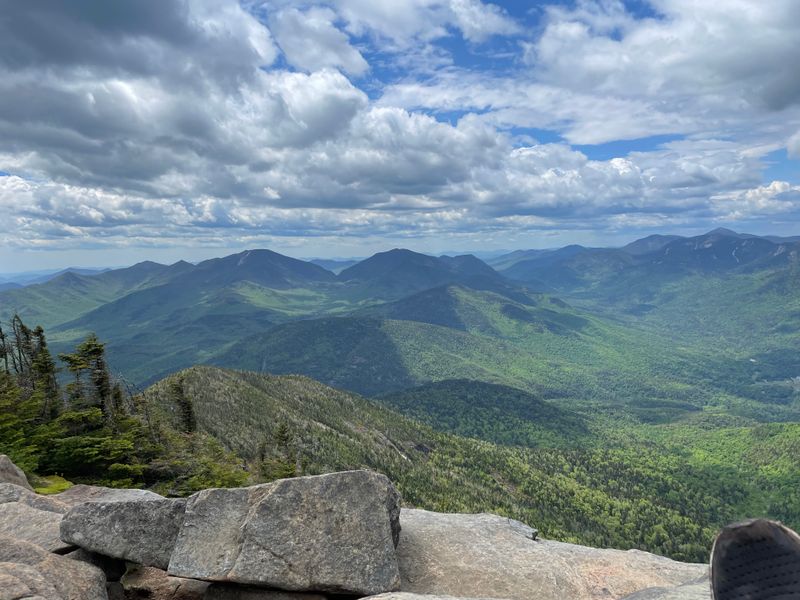
Despite its name suggesting intimidating difficulty, this High Peak offers multiple routes ranging from moderate to challenging.
The most popular trail ascends from Route 9N near Chapel Pond, but alternative approaches from the east provide quieter experiences.
Standing at over 4,600 feet, Giant Mountain ranks among the dozen tallest peaks in the Adirondacks, guaranteeing spectacular summit views.
The standard route climbs steeply through forests and over rocky sections, gaining significant elevation in just a few miles.
However, the Ridge Trail approach from the east follows a gentler grade along a scenic ridgeline with multiple viewpoints.
This longer route sees fewer hikers, providing opportunities to spot wildlife and enjoy nature without constant human presence.
Hidden paths branch from both main routes, leading to waterfalls, caves, and secluded clearings perfect for rest breaks.
One particularly rewarding detour leads to Roaring Brook Falls, where water cascades dramatically over moss-covered rocks.
The summit itself features extensive open bedrock with views stretching across Lake Champlain toward Vermont’s Green Mountains.
On exceptionally clear days, hikers can identify Mount Marcy, Algonquin, and dozens of other High Peaks from this vantage point.
The exposed summit makes Giant Mountain particularly vulnerable to rapidly changing weather conditions and lightning during storms.
Multiple trailheads provide access, including parking areas along Route 9N and at the end of East Hill Road in New Russia.
Each approach offers distinct advantages, so research options before deciding which route matches your fitness level and desired experience.
This mountain perfectly exemplifies how popular peaks can still harbor hidden trails for those willing to explore beyond the most obvious paths.
Dear Reader: This page may contain affiliate links which may earn a commission if you click through and make a purchase. Our independent journalism is not influenced by any advertiser or commercial initiative unless it is clearly marked as sponsored content. As travel products change, please be sure to reconfirm all details and stay up to date with current events to ensure a safe and successful trip.
