Nestled in the East River between the Bronx and Rikers Island lies a rarely spoken of entity: North Brother Island.
Once a quarantine zone for contagious diseases, this mysterious island now stands locked away from the public. It holds stories of sorrow and intrigue, with whispers of ghosts adding to its eerie charm.
The island’s history is rich and complex, offering a glimpse into a past filled with challenges. Its crumbling structures speak of forgotten times and lost souls.
Today, nature slowly reclaims the land, making it a haven for wildlife. Despite its inaccessibility, North Brother Island remains a symbol of New York’s hidden past.
The Quarantine Hospital
Imagine a place where whispers of the past echo through crumbling hallways. The quarantine hospital on North Brother Island was once a bustling center for treating contagious diseases. Opened in the 1880s, it served as a refuge for those battling illnesses like smallpox and typhoid fever.
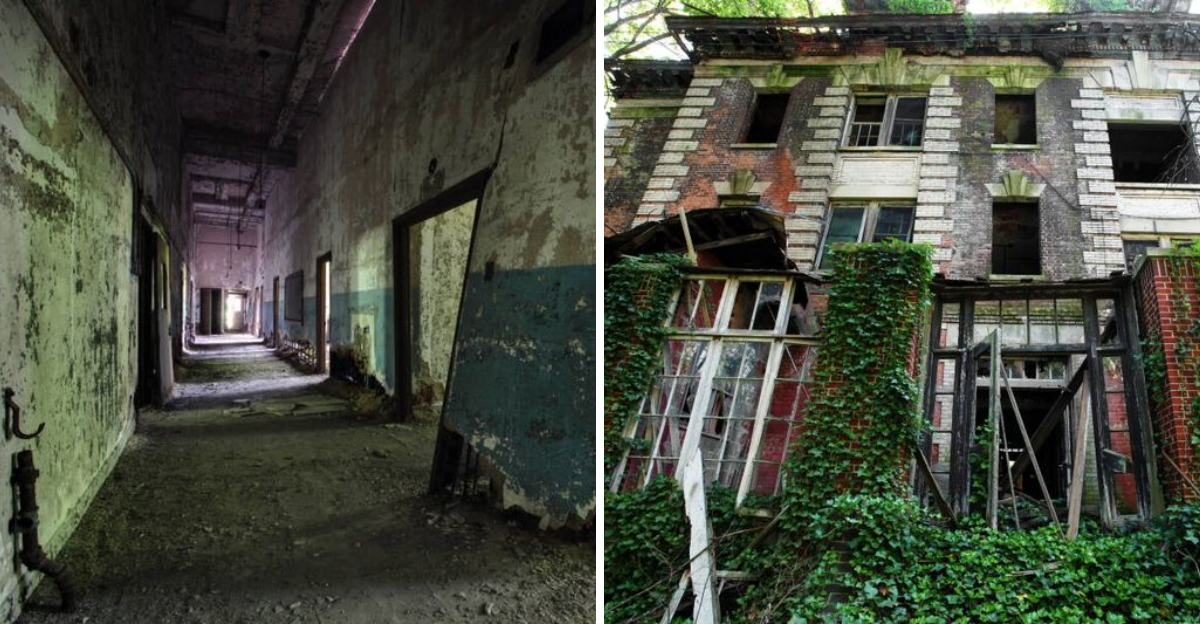
While the world outside continued to evolve, these walls witnessed countless stories of hope and despair. The hospital’s architecture now weathers the test of time, with vines creeping over its façade. Inside, remnants of medical equipment lie scattered, silent testimonies to its storied past.
A walk through these ruins feels like stepping into another era. The air is thick with nostalgia and mystery. Today, the hospital serves as a stark reminder of New York’s medical history, a place where life and death walked hand in hand.
The Infamous Typhoid Mary
The tale of Typhoid Mary is one of the most notorious in North Brother Island’s history. Mary Mallon, a cook by trade, became infamous as the first identified asymptomatic carrier of typhoid fever. Her story is a chilling reminder of the power of disease and the fear it incites.
Confined to the island for over two decades, Mary spent her days under constant surveillance. Her presence brought attention to the need for understanding and controlling disease outbreaks. Her life on the island was one of isolation, filled with melancholy and reflection.
Despite her notoriety, Mary remains a complex figure, both a victim and a source of public concern. Her story is a poignant chapter in the island’s history, a testament to the intersection of science, health, and human rights.
The General Slocum Disaster
A tragedy etched into New York’s history occurred near North Brother Island in 1904. The General Slocum steamboat, carrying over a thousand passengers, caught fire and sank near the island’s shores. The disaster claimed the lives of more than a thousand people, marking it as one of the city’s deadliest maritime tragedies.
The island became an impromptu morgue, with bodies washing ashore in the aftermath. Residents and staff from the island’s hospital rushed to aid survivors, offering what help they could amidst the chaos.
This heartbreaking event left a lasting impact on the city and the island. Memorials and writings continue to honor those lost, and the tragedy serves as a somber reminder of the fragility of life.
Nature’s Reclamation
Once bustling with human activity, North Brother Island now stands as nature’s sanctuary. The absence of people has allowed the flora and fauna to reclaim the land. Overgrown trees and plants cover the structures, creating a unique blend of nature and decay.
Birds and other wildlife have made the island their home. It’s a designated bird sanctuary, providing a safe haven for herons and other species. The symphony of chirping birds fills the air, offering a stark contrast to the island’s somber history.
This transformation from quarantine zone to wildlife refuge is a testament to nature’s resilience. The island’s current state offers a peaceful, healing atmosphere, illustrating the cycle of life and renewal.
Restricted Access
Though curiosity beckons, access to North Brother Island is strictly prohibited to the general public. Managed by the New York City Department of Parks and Recreation, the island is off-limits to preserve its fragile ecosystem.
Only researchers and city officials are permitted to visit, and even then, access is limited. This restriction adds an air of mystery and allure to the island. Its secrets remain locked away, visible only from afar, tantalizing those who wish to uncover its hidden stories.
This inaccessibility has kept the island’s history frozen in time. It remains a ghostly specter on the horizon, a forbidden place shrouded in enigma.
The Riverside Hospital
Riverside Hospital was the heart of North Brother Island’s medical mission. Established in the 19th century, it served as a quarantine facility for patients with infectious diseases. Its purpose was vital in protecting the city from outbreaks.
The hospital’s structure now stands in ruins, a poignant reminder of the island’s past role in public health. Echoes of its bustling activity can almost be heard in the wind that sweeps through its corridors.
Though the hospital has long been abandoned, its legacy endures. It represents a significant chapter in New York’s efforts to combat disease, a symbol of both hope and hardship.
Haunted Legends
Legends of ghosts have long been a part of North Brother Island’s lore. Visitors and workers have reported eerie sightings and unexplained sounds. Some claim to see shadowy figures wandering among the ruins, believed to be spirits of past patients.
These ghostly tales add an extra layer of intrigue to the island’s already mysterious aura. Though unproven, they capture the imagination, weaving a rich tapestry of folklore.
Whether believed or dismissed, these stories contribute to the island’s haunting charm. They invite speculation and wonder, inviting those who hear them to ponder the mysteries that may lie within.
A Haven for Herons
Amidst the island’s ruins, a thriving community of herons has found sanctuary. The secluded environment provides an ideal nesting ground, away from the bustling city. These majestic birds have made the island one of their primary breeding sites.
Their presence contributes to the island’s designation as a bird sanctuary. The sight of herons gracefully soaring above the abandoned buildings is both mesmerizing and calming.
This avian occupation adds a dynamic element to the island’s ecosystem. It highlights the delicate balance between nature and history, a coexistence of life past and present.
The Island’s Architectural Decay
Time has taken its toll on the structures of North Brother Island. The buildings, once vibrant and full of life, now stand in various states of decay. Their crumbling walls tell stories of an era long gone.
Vines weave through windows and doors, while graffiti adds an unexpected touch of modern art. Despite their dilapidated state, these structures possess a haunting beauty.
This visual decay is a testament to the passage of time. It’s a captivating sight for those fascinated by urban exploration, offering a glimpse into the island’s multifaceted history.
Environmental Renewal
North Brother Island is not just an emblem of history; it’s also a symbol of environmental renewal. Efforts have been made to restore and protect its natural habitats. These initiatives focus on preserving the island’s biodiversity and ecological balance.
The rejuvenation of the land has been a priority, ensuring that wildlife can thrive. This commitment to conservation adds a hopeful note to the island’s narrative.
Though its past is filled with challenges, the island’s ongoing transformation represents a new chapter. It’s a place where history and nature coexist, offering a hopeful vision of resilience and rebirth.
Dear Reader: This page may contain affiliate links which may earn a commission if you click through and make a purchase. Our independent journalism is not influenced by any advertiser or commercial initiative unless it is clearly marked as sponsored content. As travel products change, please be sure to reconfirm all details and stay up to date with current events to ensure a safe and successful trip.
